
by Peter Boyles | Sep 29, 2026 | Blasting with Boyles
Blasting with Boyles
OPINION
 After 9/11, during the George W. Bush presidency, the unity in this country was amazing. Americans rallied around Bush and the government. Bush’s approval rating went from 51% before to 86% within weeks. Seventy-eight percent of Democrats approved of W’s performance. There was bipartisan support for going after Al-Qaeda and the Taliban. Pew Research Center describes the response as initially characterized by national unity. And then it starts to fall apart.
Bush signed the Patriot Act; the Senate voted 98 to 1. Bush, Cheney, and company emphasized fighting terrorism and somehow protecting you.
But Iraq became the Bush administration’s used car. They told us of the danger posed by Saddam Hussein, Iraq, and his involvement in 9/11. The decision to invade Iraq in 2003 begins the total downfall of it all.
The political divide widened. By January 2003, fewer than 4 in 10 Americans thought Bush had made his case for an Iraq invasion.
There was no justification for this war. Think back. As casualties accumulated and the occupation became prolonged, by the end of W’s presidency only 24% approved of his job performance. The unity that we all felt in those terrible days was destroyed by Bush and Cheney. The post-9/11 rally faded and ordinary politics returned.
Iraq was the major catalyst. Pew’s retrospective assessment specifically identified the Iraq war that followed 9/11. Also, the schizophrenic behavior. For example, George Bush went to the Islamic Center in Washington, D.C., and explicitly defended Muslims. We know Saddam was not a religious man. That makes his claims of Muslim terrorism more complicated than just saying Bush abandoned unity.
Bush/Cheney claimed Saddam Hussein and Iraq possessed chemical, biological, and nuclear weapons. In December 2002, Bush/Cheney claimed disarming Iraq was the central commitment of the war on terror. And we all know now what total lies they were. On March 17, 2003, Bush told Americans that Iraq had failed to disarm after 12 years of demands and efforts that failed. And, of course, it came as no surprise that after the invasion, investigators did not find any stockpiles of chemical, biological, or nuclear weapons. Iraq was not responsible for 9/11, and by this time all unity and love for one another had totally faded.
Saddam never cooperated with Al-Qaeda to attack our country. And when the weapons were not found, it didn’t seem to matter to Bush, Cheney, and Rumsfeld. They said that Saddam needed to be removed from office regardless. Senate Intelligence later concluded the intelligence community openly lied.
There was no certainty with the intelligence that was presented to go on to lose more than 4,400 American lives. No one will ever know the number wounded, both physically and emotionally. No one knows how many Iraqis suffered the same. Or Afghans, or anything that was to come our way.
I’ve read the Senate Intelligence Committee report. There was nothing that supported Bush/Cheney/Rumsfeld claims about underground WMD facilities. Bush lied. There were no weapons.
In the immediate aftermath of 9/11, the basic message was: We’ve been attacked, so find the people responsible. Turns out, a handful of American-hating, by-and-large Saudis hiding in the caves of Tora Bora. They were the ones.
Now we’re left with two separate historical questions: the intelligence community, and the need for clarity before any president takes this nation into war.
Had Bush/Cheney policies been in place, the headline would be December 7, 1941: “The Japanese attack Pearl Harbor.” December 8, 1941: “FDR invades Mexico.” We now know 14 of the 19 murderers on that terrible morning were Saudis. And the trail leads back to many prominent Saudi Arabians as funders of the killers.
And I leave you with this: We gotta stop these people from getting a nuclear weapon, so let’s go to war. Where have we heard this before? History is a study of not what we want to remember, but rather what we need to remember.
— Peter Boyles
by Jessica Hughes | Sep 29, 2026 | Main Articles
by Jessica Hughes
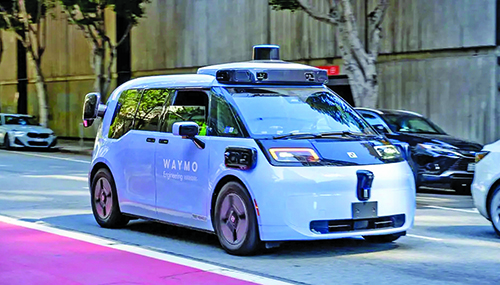
New Kid In Town: The distinct Waymo autonomous vehicles have been hitting the streets of Denver and Glendale since September 1.
While you may not be ready to hand over the keys quite yet, driverless cars have officially arrived in Denver. Waymo began welcoming its first public riders in Denver and Glendale on September 1, 2026, bringing fully autonomous ride-hailing service to the Mile High City and putting the Cherry Creek Valley at the forefront of a rapidly changing transportation industry.
The rollout places Denver and Glendale among a growing number of American cities where residents can hail a vehicle using a mobile app and travel across town without a human driver behind the wheel. Waymo launched public rides in Denver and Glendale simultaneously with San Diego and Tampa, and has continued expanding into additional markets.
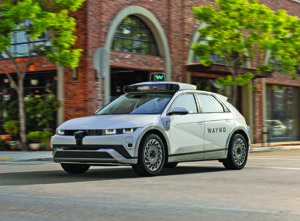 For some, the sight of a car navigating busy city streets with nobody sitting in the driver’s seat may still look like something out of a science-fiction movie. But Waymo’s arrival is the culmination of more than 15 years of research and development.
The technology began as Google’s self-driving car project in 2009. Waymo later became a separate company under Google’s parent company, Alphabet, and has spent years testing autonomous vehicles on public roads and gradually introducing commercial ride-hailing service.
The Cherry Creek Valley presents a particularly interesting challenge. Unlike many of Waymo’s earlier markets, the Mile High City experiences snow, ice, freezing temperatures, and rapidly changing weather conditions. Denver therefore offers an important proving ground for autonomous vehicles operating in a four-season climate.
Waymo announced its arrival to the area in September 2025, initially bringing a mixed fleet that included Jaguar I-PACE vehicles equipped with its fifth-generation autonomous driving technology and newer vehicles using its sixth-generation system. The company said its newer technology had benefited from previous winter-weather testing in Michigan, upstate New York, and the Sierra Nevada.
During the months leading up to the public launch, Waymo vehicles became an increasingly familiar sight on Denver-area streets as the company validated its technology under local driving conditions.
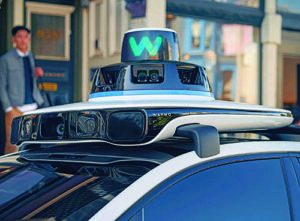
Rather than relying solely on GPS to determine where a vehicle is and where it needs to go, Waymo vehicles use a sophisticated combination of cameras, radar, and lidar sensors to continuously monitor their surroundings. The company’s autonomous driving system, known as the “Waymo Driver,” is designed to recognize other vehicles, pedestrians, cyclists, traffic signals, construction zones, and unexpected obstacles while making driving decisions in real time.
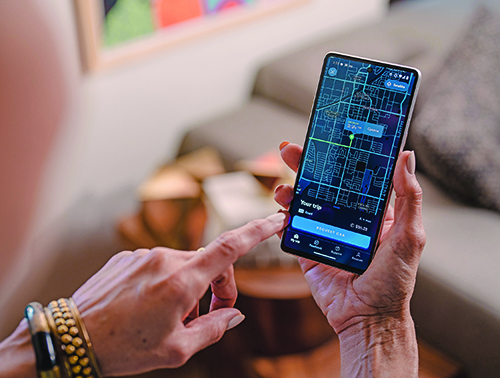
Ride At Your Fingertips: A rider uses the Waymo app to request an autonomous vehicle. Similar to other ride-hailing services, the app allows passengers to request a trip, locate their vehicle, and follow their ride — with one major difference: there is no human driver.
For passengers, however, the experience is designed to feel surprisingly ordinary. A rider requests a vehicle through the Waymo app much like requesting a ride through Uber or Lyft. When the vehicle arrives, there is no driver to greet the passenger. Riders can identify their assigned vehicle through the app and use features such as displaying their initials on the vehicle or remotely sounding its horn to help locate it.
Once inside, passengers buckle up, select their destination, and let the vehicle do the driving.
There is also no awkward question about how much to tip at the end of the trip. Because there is no human driver, tipping is not part of the Waymo experience.
The Appeal Of A Driverless Ride
Supporters of autonomous vehicles see considerable potential in the technology, with safety at the top of the list. Unlike human drivers, computers don’t get tired, distracted by text messages, angry at other motorists, or impaired by alcohol. Autonomous vehicles are also designed to monitor their surroundings continuously in every direction.
 Waymo says its safety data shows its autonomous driving system has been involved in substantially fewer serious crashes than comparable human drivers. The company reported at the Denver launch that its vehicles had experienced 94 percent fewer serious-injury-or-worse crashes compared with human drivers traveling comparable distances.
Those figures come from Waymo’s own analysis and will undoubtedly continue to receive scrutiny as autonomous vehicles accumulate more miles and expand into more cities. Another potential advantage is mobility.
Driverless transportation could eventually provide greater independence for people who cannot drive because of age, disability, or certain medical conditions. Older residents who have stopped driving, for example, could potentially maintain greater independence without relying entirely on family members, public transportation, or traditional ride-hailing services.
There are lifestyle benefits as well. Passengers don’t have to make small talk with a driver, worry about a driver canceling a trip, or wonder whether the person behind the wheel has been driving for too many hours. Some riders may simply prefer the privacy of having the vehicle to themselves.
Autonomous vehicles could also provide another option for people who have been drinking. A readily available driverless ride could give someone leaving a restaurant, bar, sporting event, or concert another alternative to getting behind the wheel.
Waymo’s vehicles are electric, adding another transportation option for cities attempting to reduce vehicle emissions.
Not Everyone Is Ready
For all of those potential advantages, there are also legitimate questions surrounding driverless cars. Perhaps the biggest is a simple one: What happens when something goes wrong?
A human driver can encounter a police officer directing traffic around an accident, a construction worker giving unusual hand signals, an unexpected road closure, or any number of situations that require judgment and communication. Autonomous vehicles must interpret those situations through software and sensors.
And the Denver area adds another variable: weather. A sunny September afternoon is considerably different from a January morning following eight inches of snow. Lane markings can disappear beneath snow and ice, visibility can deteriorate quickly, and residential streets may remain snowpacked long after major roads have been cleared.
The Denver area could therefore become an important real-world test of whether autonomous vehicles can operate as reliably in difficult winter conditions as they do in the warmer climates where much of the technology was initially deployed.
There are economic concerns, too.
Uber and Lyft created an enormous gig economy built around human drivers. If autonomous vehicles eventually capture a significant portion of the ride-hailing market, fewer human drivers could be needed. Taxi drivers, rideshare drivers, and eventually workers in other transportation industries could face increasing competition from vehicles that don’t collect wages, take breaks, or call in sick.
Privacy is another consideration. Autonomous vehicles necessarily rely on numerous cameras and sensors to understand their surroundings. Riders may reasonably want to know what information is collected during a trip, how long it is retained, and how it is used.
There is also the question of accountability. When a conventional vehicle crashes, responsibility typically rests with one or more human drivers. A crash involving a fully autonomous vehicle raises more complicated questions involving the vehicle operator, software developer, manufacturer, and insurance companies.
Those issues will likely become increasingly important for lawmakers and regulators as autonomous vehicles become more common.
Waymo Versus Uber And Lyft
Although Waymo, Uber, and Lyft can all get a passenger from Point A to Point B, the experience is fundamentally different.
The most obvious distinction is the empty driver’s seat.
Waymo’s vehicle is operated by an autonomous driving system rather than a rideshare driver using his or her personal vehicle. That means there is no driver to tip, no conversation unless the passengers are talking among themselves, and no individual driver deciding whether to accept a particular trip.
Pricing can vary depending on the trip and demand, much as it does with other ride-hailing services, so Waymo will not necessarily always be cheaper than Uber or Lyft.
The companies are not necessarily destined to be competitors everywhere, either. Waymo has already partnered with Uber in some markets, demonstrating that autonomous vehicles could eventually become another type of vehicle available through existing ride-hailing networks.
Denver And Glendale
Become A Testing Ground
Waymo’s arrival does not mean the Denver area’s streets will suddenly be filled with thousands of driverless vehicles. Access is being introduced gradually. When Waymo launched public rides in Denver, San Diego, and Tampa on September 1, the company said tens of thousands of people in each city had already expressed interest in riding. Waymo said it would steadily add riders as it worked toward opening service more broadly.
The company has also said it intends to expand its service areas over time as the technology and operations develop. That gradual approach means residents are likely to see more Waymo vehicles on local streets even if they haven’t yet taken a ride themselves.
And that may be the most significant part of Waymo’s arrival. For decades, the driverless car was one of those technologies that always seemed to be just around the corner. Engineers promised it, futurists predicted it, and automakers demonstrated prototypes, but most Americans continued to get into vehicles with a person sitting behind the wheel.
That is beginning to change. There are still important questions involving safety, employment, privacy, regulation, winter-weather performance, and public acceptance. Some residents will undoubtedly download the app at the first opportunity, while others may need considerably more convincing before they are comfortable climbing into a car with an empty driver’s seat.
Either way, the Cherry Creek Valley is now part of that experiment. The future of the driverless automobile isn’t simply coming anymore. It’s already navigating our streets.
High-Tech Driver: Waymo’s fifth-generation autonomous driving system sits atop an all-electric Jaguar I-PACE. Cameras, radar, and lidar sensors allow the Waymo Driver to continuously monitor its surroundings and navigate without a human behind the wheel.
by Editorial Board | Sep 29, 2026 | Editorials
Editorial —

Voter’s hand holding a YES vote ballot, inserting the vote card into the ballot box. Concept image of democracy and the election process for corporate election, board election, and governmental or business policy decisions. Voters making their selection and voting through a proxy ballot. Photographed in horizontal format.
The 2026 ballot will be arriving in registered voters’ mailboxes in a few weeks and a “beast” of a ballot it is. Voters will have many elective offices to fill from governor, attorney general, secretary of state, etc., to state house and state senate seats. Voters must also choose whether or not to retain various judges. In some jurisdictions there will be municipal and county offices to fill.
After completing the section on political and judicial offices the voter will have just begun his or her voting task. There are a record number (14) of ballot measures, 13 of which were proposed by citizen initiatives, as well as, one placed on the ballot by the state legislature.
The Colorado Blue Book is sent out to voters which is supposed to be an official, nonpartisan guide on ballot measures, purportedly to give voters neutral and clear information. But like all things involving humans, it has been corrupted over time, but what else is new?
The bilingual version (English/Spanish) of the Blue Book runs 260 pages. It looks more like a paperback version of the 19th century novel War and Peace than a concise voters’ guide.
We are not fans of ballot elections, but we feel sorry for any voter who goes to the polls to vote in person who isn’t already sure of how he or she is going to vote.
Partisan-oriented voters have, in the past, often simply voted all “Yes” if they are Democrats, as ballot measure in the past have tended to grow government and its revenues, while Republicans have voted “No” hoping for the opposite.
No such luck this year. Both liberals and conservatives have placed measures on the ballot including ones that are in effect mirror opposites.
Denver voters will be voting on a proposed mil levy increase for area schools, placed on the ballot by the dysfunctional Denver Board of Education, which tax is opposed even by The Denver Post. Both Denver and Glendale residents will vote whether to have a sales tax increase to support Colorado Front Range’s “train to nowhere” known as CoCo.
Who knows what mood voters will be in by the time they get to the energy measures (2K in Denver and 2B in Glendale) asking voters in those two municipalities to approve 20-year franchises with Xcel Energy to use municipal rights of way and streets for energy lines.
There is almost no opposition to either measure in either town. Glendale’s City Council voted unanimously to send the measure to its voters while Denver City Council passed theirs by an overwhelming 10-2 margin. Both city councils fought hard to extract concessions from Xcel on issues important to their citizens. Both cities will, over the terms of the agreements, receive millions of dollars they can use to underground power lines, upgrade parks and open space, and various other important city programs.
We suggest that once you get your ballot you turn to the municipal section and vote “Yes” on 2K in Denver and 2B in Glendale. You can then begin the long slough through the rest of the ballot.
Here’s hoping that the two measures that virtually everyone agrees should pass, do in fact pass.
— Editorial Board
by Mark Smiley | Aug 20, 2026 | Main Articles
Jobs, Housing, And Redevelopment Form City’s Strategy For Reviving Urban Core
by Mark Smiley
 Denver leaders are confronting a downtown economy that looks markedly different from the one that existed before the pandemic. Office towers remain partially empty as hybrid work continues to reshape the workplace. Restaurants and retailers have had to adjust to reduced weekday foot traffic, while declining commercial property values have created additional concerns for property owners, lenders, and city government.
The Johnston administration’s response is an ambitious combination of job creation, business recruitment, housing development, and public investment designed to help downtown adapt to those changes. In July, Mayor Mike Johnston unveiled the Denver Jobs Agenda, a $100 million economic development initiative with a goal of creating 10,000 jobs over three years. The program includes workforce development, incentives for businesses, and a $40 million effort to attract major employers to Denver or encourage existing companies to expand.
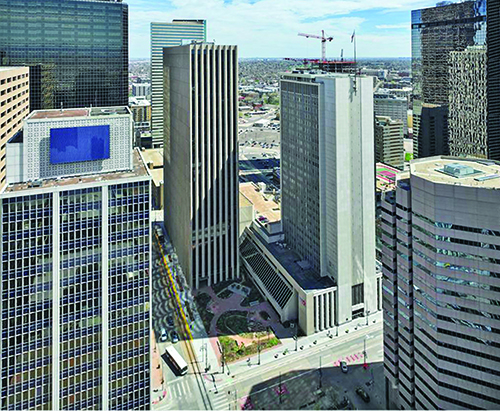
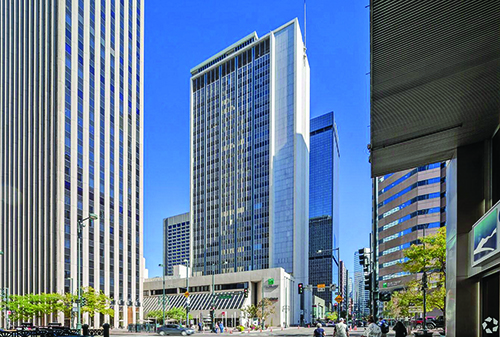
At the same time, Denver is supporting efforts to give obsolete or underused office buildings a second life as housing. One of the most prominent examples is High Fidelity Plaza, where the Downtown Denver Development Authority approved a $63 million low-interest loan toward the redevelopment of two largely vacant office towers at 621 and 633 17th Street. Plans call for the buildings to be converted into a mixe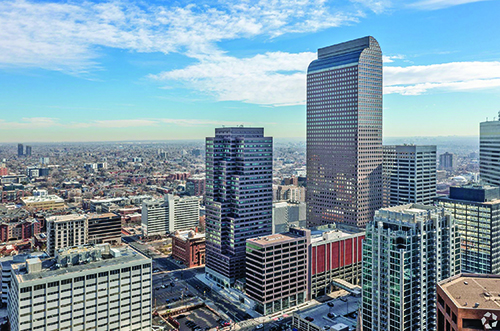 d-use development containing more than 700 apartments as well as restaurants, retail, childcare, and other amenities.
The two initiatives illustrate Denver’s broader strategy: attract more employers and workers while simultaneously creating a larger residential population downtown. City officials believe those goals can complement rather than contradict each other. More employers could increase daytime activity and support downtown businesses, while additional residents could create demand for restaurants, stores, and services during evenings and weekends. A more diverse mixture of workers, residents, and visitors could also make downtown less dependent upon the traditional five-day-a-week office population.
That dependence became a significant weakness after 2020. Denver’s downtown office market continues to struggle with elevated vacancies as employers reconsider how much space they need in an era of hybrid work. Properties that once commanded significant prices have changed hands at substantially lower valuations, creating challenges for building owners and lenders and potentially affecting the city’s commercial property tax base.
The situation has left Denver facing a question confronting downtowns throughout the country: What should a central business district become if office workers no longer fill its buildings five days a week?
The Johnston administration has chosen to take an active role in answering that question. Rather than relying exclusively on private investment and market forces, the city is using incentives, loans, and economic development programs to encourage both employment growth and redevelopment.
Office values in downtown Denver have fallen dramatically since the pandemic, with some properties selling for a fraction of their previous value. City officials hope redevelopment incentives and office to residential conversions will help reverse the trend.
Supporters argue that government involvement is warranted because allowing large portions of downtown to deteriorate could have consequences extending well beyond individual property owners. Vacant buildings can reduce surrounding property values, weaken nearby restaurants and retailers, and diminish tax revenue. Those conditions, supporters contend, can discourage additional private investment and create a cycle that becomes increasingly difficult and expensive to reverse. From that perspective, public investment today could help protect a much larger economic asset over the long term.
The strategy nevertheless raises legitimate questions about how much financial risk taxpayers should assume. Critics question whether public money should be used to provide incentives to corporations or financing for privately owned real estate developments, particularly when Denver faces other demands on city resources. Homelessness, public safety, aging infrastructure, and neighborhood services remain significant concerns throughout the city.
There is also debate over whether office-to-residential conversions will meaningfully address Denver’s housing affordability problem. Many apartments created through such projects are expected to rent at market rates rather than being dedicated primarily to lower-income residents. Supporters of the conversion strategy counter that adding residents at a range of income levels can still strengthen downtown by increasing the number of people patronizing businesses and using the area outside traditional office hours.
The debate therefore extends beyond whether individual projects are worthwhile. It centers on what role city government should play in reshaping downtown during a period of unusually rapid economic change.
At first glance, spending money to attract office employers while simultaneously helping convert offices into apartments can appear contradictory. The city’s approach, however, reflects an acknowledgment that downtown Denver will probably need both. Not every office tower is obsolete, and employers will continue to require office space. At the same time, the pre-pandemic model in which tens of thousands of commuters arrived downtown each morning and departed each evening appears unlikely to return in exactly the same form.
A successful downtown of the future may therefore need a broader mixture of employment, housing, entertainment, restaurants, retail, and public spaces. The Denver Jobs Agenda represents an effort to strengthen the employment side of that equation, while office conversions such as High Fidelity Plaza are intended to strengthen the residential side.
Whether those investments will generate enough private development and economic activity to justify their cost remains uncertain. That makes accountability and measurable results particularly important.

Mayor Mike Johnston has made downtown revitalization a major focus of his administration, combining job-creation programs, business incentives, and redevelopment financing in an effort to attract employers, residents, and investment to Denver’s urban core.
The Denver Jobs Agenda comes with a clearly stated target of creating 10,000 jobs over three years. Redevelopment projects can likewise be evaluated by the housing they produce, private investment they attract, occupancy they achieve, and economic activity they generate. Other measurements will take longer to assess, including commercial property values, retail occupancy, downtown foot traffic, and tax revenue.
Those benchmarks should eventually provide a clearer picture of whether Denver’s strategy is producing a lasting recovery and whether the public investments are encouraging economic activity that otherwise would not have occurred.
Denver’s leaders are betting that a combination of jobs, residents, and private investment can create a downtown that is less dependent on the traditional office economy. Supporters see public involvement as necessary to accelerate that transition and prevent further deterioration. Critics question whether taxpayers are assuming too much of the cost and risk for projects involving private businesses and property owners.
Both sides agree on at least one point: downtown Denver remains an important economic and civic center whose future will affect far more than the property owners and businesses located within its boundaries.
What is clear is that Denver is no longer waiting for downtown to return to its pre-pandemic form. City leaders are committing significant public resources to help shape what comes next. The next several years should determine whether that investment succeeds in creating a more active and resilient downtown, and whether Denver taxpayers receive an adequate return on one of the city’s most ambitious economic development efforts in years.
The 28-story office tower at 621 17th Street is one of two historic downtown buildings slated for conversion into housing as Denver attempts to revive its struggling central business district after years of elevated office vacancies.