by Mark Smiley | Aug 20, 2026 | Main Articles
Longtime Denver Talk Radio Host And His Close Friend Alan Berg To Join 2026 Class Honoring Some Of State’s Best Known Broadcasting Voices
by Mark Smiley
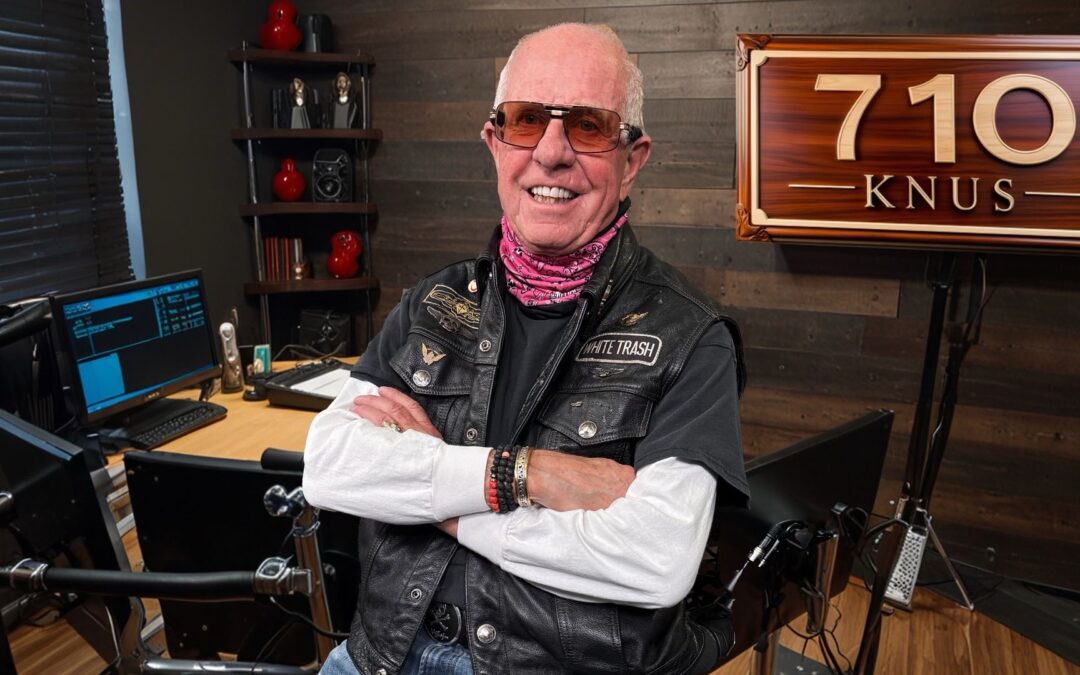
Peter Boyles
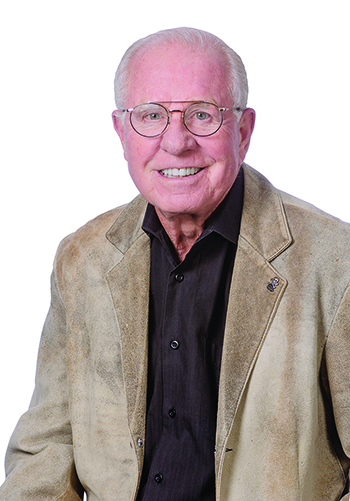
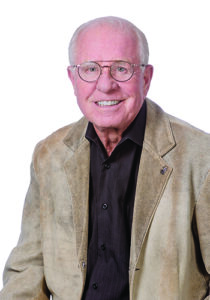
For decades, Peter Boyles has been one of the most recognizable, provocative, and enduring voices on Denver radio. This fall, his long career behind the microphone will receive one of the Colorado broadcasting industry’s highest honors.
The Colorado Broadcasters Association has selected Boyles for induction into the 2026 Colorado Broadcasters Hall of Fame, recognizing a career that has made him a fixture of Denver talk radio and a familiar voice to generations of Colorado listeners. The induction ceremony will be held Friday, October 23, at The Dome at AMG in Greenwood Village.
Boyles initially refused the honor unless his good friend Alan Berg was also admitted. Berg was a Jewish Attorney and highly abrasive liberal host on KOA radio who liked to tease and confront callers. He was assassinated by his home in 1984, machine gunned down by the white supremacist group called the Order; his murder became a national cause célébre.
The Broadcasters and Boyles reached an accommodation where Boyles would induct Berg after his own admission.
Boyles is one of nine broadcasters selected for the 2026 class. Joining him are Alan Berg, Bob Gourley, Stu Haskell, Steve Kelley, Bob Martin, Reyn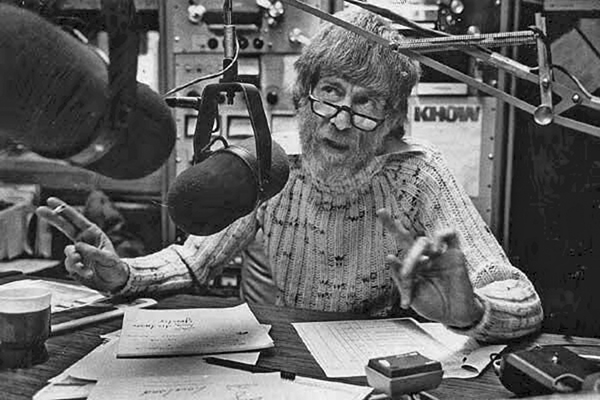 elda Muse, Roger Ogden, and Ron Zappolo. The group represents a wide cross-section of Colorado broadcasting, including radio personalities, television anchors, sports broadcasters, and industry executives.
For Boyles, the honor recognizes a career built largely on a willingness to ask uncomfortable questions and take on controversial subjects.
Long before podcasts and social media gave virtually anyone an opportunity to broadcast an opinion, Boyles was doing it live on Denver radio. His programs became known for lengthy interviews, spirited exchanges with callers, and discussions of subjects ranging from local politics and crime to national controversies and Colorado history.
Listeners did not always agree with him, and agreement was rarely a prerequisite for listening.
That confrontational style helped make Boyles both popular and controversial. Admirers have viewed him as an independent voice willing to pursue stories and opinions other broadcasters might avoid. Critics have objected at times to his rhetoric, conclusions, and choice of subjects. Through both praise and criticism, however, Boyles remained part of Denver’s public conversation for decades.
His best-known tenure was at KHOW 630 AM, where he hosted a long running morning drive program until 2013. He later returned to Denver radio and currently hosts a four-hour Saturday morning program on 710 KNUS.
The Hall of Fame recognition is significant because the Colorado Broadcasters Association created the institution specifically to recognize broadcasters whose work has had a lasting effect on the industry, their communities, and Colorado audiences. The Hall honors not only prominent personalities heard or seen on the air, but also executives and behind the scenes figures who helped build broadcasting in the state.
Boyles’ induction also places him alongside several names closely associated with Denver broadcasting history in addition to Alan Berg.
Bob Martin was a longtime KOA sports director and the voice of the Denver Broncos for 499 broadcasts. Reynelda Muse broke barriers in Colorado television and later became one of CNN’s founding anchors. Ron Zappolo became one of Denver television’s best-known sports personalities and anchors.
The diversity of the class illustrates how dramatically broadcasting has changed over the decades. Radio once dominated the way people received immediate news and commentary, while local television anchors became some of the most recognizable personalities in Colorado. Today those traditional broadcasters compete with podcasts, streaming video, social media, and an almost unlimited number of digital information sources.
Yet personalities such as Boyles and Berg developed their audiences in an era when the relationship between a broadcaster and listener could last for years or even decades.
Boyles’ career is particularly associated with the intimacy of talk radio. Unlike a television newscast built around relatively short reports, his format allowed subjects to unfold over extended conversations. Guests could be questioned at length. Callers could challenge the host. A local issue that might receive a few minutes elsewhere could occupy an entire segment or program.
It was sometimes contentious, occasionally unpredictable, and unmistakably Boyles.
The Colorado Broadcasters Association describes its Hall of Fame as recognition for broadcasters who have left an enduring mark on Colorado. CBA President and CEO Justin Sasso said this year’s honorees helped connect communities and build the broadcasting industry that exists in the state today.
This Hall of Fame itself is relatively new and supercedes the Hall of Fame sponsored by the Colorado Broadcasters Association but run by the Broadcast Pioneers of Colorado from 1998 to 2019. This new Hall of Fame launched it in 2025, with its inaugural class including longtime Colorado broadcasters such as Murphy Huston, Denise Plante, Tom Green, and Mark Cornetta. The first induction ceremony was held last October in Greenwood Village. Members admitted to the new Hall of Fame include individuals like Reynelda Muse who are already in the Hall of Fame conducted by the Broadcast Pioneers of Colorado.
The October 23 ceremony honoring Boyles and the other members of the second class begins with doors opening at 6:30 p.m., followed by the induction ceremony at 7:15 p.m. A portion of the proceeds will support the CBA’s Broadcast Education and Development Scholarship Fund, which assists the next generation of broadcasting professionals.
For Boyles, whose career has been defined by conversations, arguments, interviews, and an unmistakable presence on the Denver airwaves, the Hall of Fame selection represents recognition from the industry in which he has spent much of his professional life.
Listeners may have loved what Peter Boyles had to say or vehemently disagreed with him. Sometimes they managed to do both during the same program.
But after decades on Denver radio, few could argue that they didn’t know who he was.
On October 23, Peter Boyles will officially take his place among the broadcasters recognized for helping shape the history of Colorado radio and television.
by Ashe in America | Aug 20, 2026 | Feature Story Bottom Left
ASHE IN AMERICA
— OPINION
 Judge Philip Brimmer in the US Federal Court for the District of Colorado threw out a lawsuit filed by the US Department of Justice against Colorado Secretary of State Jena Griswold, after she failed to share voter data to support the Trump Administration’s efforts to ensure only eligible voters are accessing US elections.
Secretary Griswold claims the requested information contains sensitive information — including driver’s license numbers and partial Social Security numbers — and that the administration has no legitimate right to demand the data. The DOJ argues Title III of the Civil Rights Act requires Colorado to turn the records over. Brimmer disagreed with the DOJ, dismissing the case with prejudice.
Griswold took a victory lap, saying in a statement quoted in CPR, “Trump and his DOJ are attacking elections and democracy. We will not let them win… Today’s victory affirms that Trump’s DOJ has no right to Coloradans’ sensitive voter information.”
This was a procedural victory for the secretary, not a constitutional one. Brimmer dismissed the case narrowly, reading that voter registration lists aren’t “records” covered by 52 U.S.C. § 20701, and even if they were, the DOJ’s December 1 demand didn’t state a valid basis and purpose as the statute requires.
The lack of a valid basis is confusing considering the document and witness testimony that was recently declassified by the Trump Administration. Newly declassified records reveal that, “voter registration rolls from at least 18 states (not all identified by name) have been compromised by the People’s Republic of China (PRC).” Colorado is on that list, revealed by the White House Government Transparency taskforce on July 13, 2026.
Ostensibly, Chinese hackers did target Colorado voters’ sensitive data; further declassification revealed that some voter data was obtained through unauthorized access across the country, though names of the states remain redacted. Those records also reveal that intelligence officials deliberately withheld that information from the Presidential Daily Briefing, admitting in the previously classified communications that, “We have deliberately massaged our one pending PDB to avoid any direct links to the election.” These communications are posted on The White House website under the “Election Integrity” tab.
The implication from the declassified documents is that federal intelligence officials were hiding a major national security threat from the Commander in Chief.
Considered in that context, is Brimmer preventing the DOJ from mitigating a national security threat of unauthorized Chinese data access? Not according to the record of the arguments presented before him.
The DOJ didn’t argue national security. They argued voter roll hygiene, an activity and authority directly under the purview of the states and, for Brimmer, that was insufficient. Since the case is dismissed with prejudice, the DOJ can’t bring the voter roll hygiene case again.
They should bring the national security one.
There is no indication that Secretary Griswold is mitigating a Chinese data breach. She doesn’t even seem concerned about it, despite credible, documented evidence of a foreign threat to Colorado elections. Almost like it’s not a surprise.
Instead, the secretary is concerned that federal authorities might check the work of her and her office. This is the same office that “accidentally” sent 29,997 invitations to register to vote to ineligible voters (non-citizens). It’s the same office that posted over 600 election equipment passwords on the internet for a period that spanned two separate election events.
This is the same office that was caught in a coverup of that password breach. Then Deputy Secretary of State Chris Beall was outed on a recorded line telling the Adams County Clerk and Recorder, “We were not going to tell counties because we could not tell counties without it becoming the media storm that it’s become.” Note that they can’t investigate a breach without the clerks — who control the machines, the cameras, access logs, etc. — so they likely didn’t investigate at all.
Given the revelations about Chinese access to US elections, which were declassified nearly two years after the Beall scandal, the conduct and focus of the secretary’s office raises new questions about a national security threat. If the courts won’t let the feds access information required to combat foreign threats in our elections; and the state outright refuses to combat foreign threats in our elections; is anyone actually combating foreign threats in our elections?
This isn’t on Brimmer. The DOJ didn’t bring a national security argument into his courtroom.
They should.
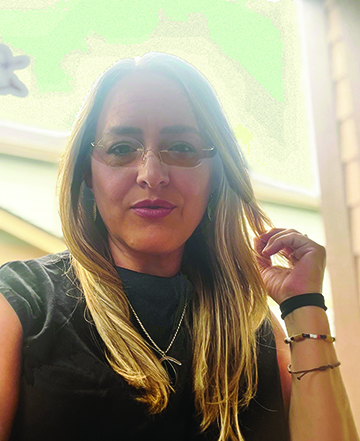
Ashe Epp is a local writer, host, and activist. Find all her work at linktree.com/asheinamerica.
by Peter Boyles | Aug 20, 2026 | Blasting with Boyles
OPINION
 I don’t think it’s any great surprise to anyone with a room-temperature-or-above IQ that the principal state races are a joke and have already been predetermined.
The Democrat Party has done too good a job in Colorado, turning a purple state into a true one-party state, a little like the good ole Stalinist USSR. They’ve done this, starting in 2016, by combining mail-in ballots and ballot harvesting. As one sage political analyst noted, “Where one political party ballot harvests votes in an election and the other political party doesn’t, the ballot-harvesting party will win every time.”
Why doesn’t the Republican Party in Colorado engage in the perfectly legal practice of ballot harvesting? It’s in part due to a lack of funds and any appreciable ground game, but, as the sage political analyst opined, “There is a reason why the Republican Party is known throughout Colorado as the ‘Party of Stupid.’”
Yes, the Dems are going to take their brooms out on election night and sweep every important statewide race in Colorado. But that does not mean you should not bother to vote in November, as there are at least 15 statewide ballot initiatives, including two tax measures that will help determine the future economic status of the state. Moreover, the Democrats haven’t yet figured out how to rig the results of statewide ballot measures, at least as far as we presently know.
There are different kinds of propositions. You’ve got citizen-initiated ballot measures that require a certain number of petition signatures. We’ve all been approached by people at a shopping center asking us to sign our names. Eight measures have already qualified for the ballot under this procedure. The other route is when the legislature refers issues to the ballot.
There are competing income tax proposals headed for voters. Proposition 195 creates a graduated income tax soaking the rich — which will undoubtedly eventually comprise anyone not at the poverty level or below — while Proposition 232 caps the tax rate. If they both pass, then we are in the Wild West. If the graduated tax passes, it is effectively the end of TABOR, and that will bring you the economy of Chicago and Illinois.
It’s not as if the State and the City and County of Denver haven’t already done enough to drive companies out of Colorado. If Proposition 195 passes, a lot of economists view this as the beginning of the end times for the Colorado economy.
If the tax-rate cap passes, it will prevent endless efforts by the legislature to raise your taxes.
Another measure that caught my eye is Proposition 175 — roads. I just came back once again from the Hajj to Sturgis, South Dakota, and I could not help but notice how incredible the roads in South Dakota and Wyoming are. You know when you’re back in Colorado even without a sign because the roads are so bad. Proposition 175, in essence, says money raised by taxes on roads must be spent on roads, not whatever pet project the Democrats come up with that has nothing to do with roads.
Another interesting measure is Proposition 177, which gives a constitutional right to buy natural gas for cooking and heating, as well as providing producers with the right to sell it. I am sure that, like you, I have always subconsciously read the U.S. Constitution as guaranteeing all citizens the right to “life, liberty, the pursuit of happiness, and buying natural gas for cooking or heating in homes or businesses.”
Gee, I wonder if oil and gas producers and public utilities are behind this one.
Finally, there are two propositions concerning trans issues — Propositions 109 and 110.
Proposition 109 would prohibit biological boys from competing in girls’ sporting events in schools, while Proposition 110 would prohibit health care professionals from performing certain surgeries on minors “for the purpose of altering biological sex characteristics.”
Opponents of these measures properly point out: How dare these right-wing do-gooders interfere with those people who enjoy watching biological males beat up on biological females in sporting events and the huge sums some doctors in Colorado are raking in while they gender-mutilate minor children.
There will be at least 10 other measures for your reading pleasure whenever you undertake the no-small task of filling out your ballot.
If you’re a Democrat, be sure to fulfill your traditional duty of voting early and voting often.
Colorado Republicans, you are so pathetic, what difference does it make?
— Peter Boyles

by Valley Gadfly | Aug 20, 2026 | Valley Gadfly
The mornings finally begin to cool down, the afternoons are still warm enough for a patio, football returns, school is back in session, and before long the mountains will begin putting on the annual fall-color show that reminds us why people keep moving here despite our repeated requests that they stop.
Around the Cherry Creek Valley, September also brings something else: a return to the rhythm of community life.
Summer vacations are ending. Business groups are gathering again. Arts organizations are launching their fall seasons. Restaurants and shops are preparing for a busy final stretch of the year. And local governments, never known for taking an extended vacation, have plenty on their agendas as well.
Cherry Creek Keeps Growing
The latest State of Cherry Creek numbers provide some perspective on just how significant the area has become. Cherry Creek now attracts more than 16.8 million visitors annually, is home to 1,694 businesses, and supports more than 16,800 workers.
The district also generated more than $119 million in tax revenue for Denver during 2025, including retail sales, property and lodging taxes, and parking revenue.
And the building cranes aren’t disappearing anytime soon. Eight projects were reported under construction with another eight announced, including major developments such as Cherry Creek West, the Waldorf Astoria Residences, and Cherry Lane.
All of that development naturally produces debate about traffic, parking, density and what Cherry Creek should look like 10 or 20 years from now.
Those are worthwhile discussions. But amid all the arguments over growth, it is worth remembering that thousands of small and locally owned businesses are part of the Cherry Creek economy. The State of Cherry Creek report counted more than 462 ground-level retail and service businesses, with 87% qualifying as small businesses.
So this September, perhaps buy lunch from somebody who knows your name.
Amazon will survive.
The Arts Wake Up For Fall
September also means Denver’s cultural calendar starts getting serious again.
The Denver Center for the Performing Arts begins its 2026-27 Theatre Company season with Destiny of Desire, opening September 11 at the Wolf Theatre and running through October 4. The production is a telenovela-inspired play with music by Karen Zacarías, directed by Marcela Lorca.
After a summer of concerts, festivals, and outdoor entertainment, September is the month when Denver’s theaters, galleries, and performance spaces begin filling their calendars again. The Gadfly recommends taking advantage. There are only so many evenings one can spend watching television while scrolling through a telephone and simultaneously complaining that nobody does anything interesting anymore.
Colorado Boulevard Remains A Conversation
One subject that will continue well beyond September is the future of Colorado Boulevard. The proposed Bus Rapid Transit project has generated substantial discussion over dedicated transit lanes, automobile capacity, pedestrian safety, neighborhood traffic, and how construction could affect businesses along the corridor.
At an April stakeholder meeting, participants expressed strong interest in safety improvements and more reliable transit, while also asking for additional technical information about traffic modeling and raising concerns about vehicles being diverted onto residential streets. Businesses and residents have also asked planners to consider construction impacts and access. Those aren’t unreasonable questions.
Colorado Boulevard is one of the region’s most important north-south corridors, and improving transit and pedestrian safety while keeping businesses accessible and neighborhoods livable is a balancing act worth getting right.
The Gadfly’s contribution to the planning process remains simple:
Anyone making a major decision about Colorado Boulevard should first be required to drive it during rush hour. Call it field research.
Enjoy September While It Lasts
Colorado September never seems long enough.
Soon enough we’ll be scraping windshields, arguing about snowplows, and watching television meteorologists stand beside Interstate 70 explaining that driving into the mountains during a blizzard might involve delays.
For now, however, we have cool mornings, warm afternoons, football weekends, community gatherings, theater openings, busy patios, and the beginning of fall in the Rockies.
Get outside. Visit a local business. Attend an event. Meet somebody new. Take in a show. Spend an afternoon in the neighborhood.
And sometime this month, look west. The leaves will soon begin changing.
For once, that’s a change everyone around here can probably agree on.