by Mark Smiley | Mar 27, 2015 | Editorials
An election for the mayor of Denver and the entire City Council will be held on May 5, 2015, much to the surprise of many Denver residents. Part of the reason for the lack of publicity of the election is the strange form of democracy we have going on here in Denver. Our municipality has informally adopted what they call the “one and done” rule sometimes seen in third world kleptocracies, i.e., once you are elected you never face another competitive election ever again. Unfortunately for city officeholders there are term limits in the municipality or they would never have to leave office except feet first as they go on to their heavenly reward.
By way of illustrative example, Mayor Michael Hancock has been incredibly inept in everything he has handled from the Sheriff’s Department scandals to the police protest debacle to the disastrous development policies. Succeeding two very strong mayors in Wellington Webb and John Hickenlooper, Hancock is an incredibly feckless and weak character, although highly personable.
Our mayor was at one time a mascot for the Denver Broncos football team and in office he has continued that role as the official team mascot for the greediest of real estate developers and most corrupt of union bosses. Yet he runs for a second term virtually unopposed.
Turning to the City Council, we are still attempting to determine when the last time was that an incumbent Denver City Council member lost in an election. Most incumbents never even have an opponent after their first election.
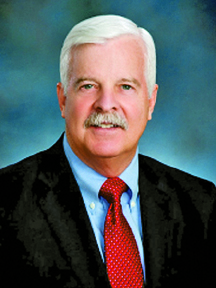
Timothy O’Brien
The reason, of course, is not that we love our incumbents so much here in Denver, but rather money — the mother’s milk of politics. To attempt to beat an incumbent in a city council district race costs at least $100,000; $500,000 for a city-wide position other than mayor; and for mayor at least $1,000,000. The only people who will provide you such sums to run for city office are real estate developers and labor unions, but they already own the incumbents and so why would anyone provide money for any putative challengers. Of course, if you are very wealthy you could self fund, but you may have noticed wealthy people do not want to run for municipal office in Denver other than perhaps mayor. The rich will consider running for governor, or senator or even congressman, but not a spot on the Denver City Council. This is why Denver City Council members are always voting themselves never-ending raises, i.e., they need the money.
As a result there is no real race for the mayor’s position or a majority of the council seats which is why the public is paying little or no attention to the election. You never saw the Russian public get real excited either about essentially non-elections in the old Soviet Union.
But that does leave elections for six open council seats as well as city auditor. These competitive races include Council Districts 4, 6 and 10 which the Glendale Cherry Creek Chronicle serves in whole or in part.
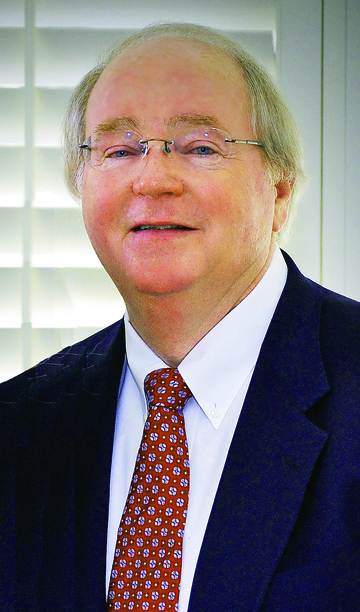
Wayne New
But who should one vote for in these races? It’s actually pretty easy. Go to www.den vergov.org/elections and download the financial disclosure statements of the candidates. In each race there will be one candidate that has raised an incredible amount of money. In their disclosure statements you will see the lawyer lobbyists from CRL Associates and Brownstein Hyatt Farber Schreck LLP as well as endless developers and real estate investors. You well also see a smattering of unions such the Teamsters Local 17 PAC. These candidates have already been acquired by those who control and own Mayor Michael Hancock.
Sadly, but understandably, another name you should be on the lookout for is the Greater Glendale Chamber of Commerce. Our publisher, Chuck Bonniwell, is a co-founder of that organization and sits on its Board of Directors but, of course, only has but one vote. Glendale since its founding in 1859, and particularly after its incorporation in 1952, has had to fight Denver tooth and nail for its very existence. Starting in the 1990s, thanks to mayors Wellington Webb and John Hickenlooper and the Glendale powers that be, there has been a rapprochement. As a result there has been the fire department merger, the beautification of Cherry Creek South and the building of the Infinity Park complex among other positive projects that have benefited both cities.
Glendale, as well as its business chamber therefore, seeks to have a positive relationship with the powers that be in Denver, which today is Mayor Michael Hancock and the people who control him. On page 24 you will locate the Glendale Chamber’s endorsements and you can judge for yourself how convincing you find its logic and rationale.
The unions, the developers and the Glendale Chamber suggest you support Kendra Black in Council District 4; Liz Adams in Council District 6; Anna Jones in Council District 10; as well as Chris Nevitt for City Auditor.
If you want more 30-story Broe Towers eliminating the view of the mountains for all of Cherry Creek and the Country Club area, along with more massive apartment buildings blocking sunlight from ever reaching certain streets in Cherry Creek North, these are your candidates. If you think that the endless traffic jams along Colorado Boulevard and 1st Avenue and the rest of the city are not long enough and can be made even worse, these are your candidates. If you want to see a corrupt and unethical Planning Board with no consideration ever for the parking and traffic concerns continue, these are your candidates. These candidates will religiously follow the political Golden Rule, i.e., he who has the gold rules, and that is not the average everyday citizen or voter.
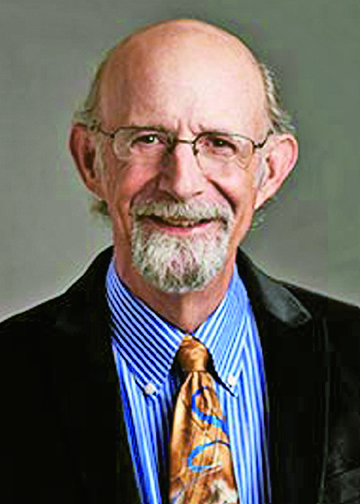
Paul Kashmann
That is not to say Black, Adams and Jones are not pleasant people, but so is Hancock. On a personal basis, we particularly like Anna Jones who has an infectious laugh and wonderful wit. But she served on the mayor’s Planning Board for several years and that is a disqualifier for us.
Concerning the auditor’s race Chris Nevitt is their choice. He is the councilman from District 7 who brought you the hideous twin 30-story Broe Towers. Unlike their other candidates, Chris Nevitt is most definitely not a nice person. He is best known, by most, for his screaming rants at citizens who came to City Council to oppose projects Nevitt’s money men backed. One longtime Denver resident and politico, whose opinion we respect, said of Nevitt, “He is the worst human being I have ever met on the Denver City Council and that is saying something as there have been some real doozies.” Nevitt at one time was simply a union shill on City Council but in recent years he has expanded to prostituting himself out to every developer in Denver he could find. He has no background in, or experience, auditing and wants to use the office as a stepping stone, God forbid, for a run for mayor after Hancock is term limited. He is the weakest and least qualified candidate for any office in Denver in many a year, which no doubt explains why he is undoubtedly the favorite in the race.
So who should you vote for? Well, in the auditor and in District 6 races there are only single opponents. Luckily Timothy O’Brien in the auditor’s race and Paul Kashmann in District 6 are wonderful candidates who need no introduction to many voters. O’Brien, in fact, is a C.P.A. who is qualified and experienced in auditing, having served as the Colorado State Auditor. He is a resident of southeast Denver, and he and his wife are proud parents of three daughters. He is also truly independent and not beholden to anyone. While an argument can be made for endorsing an Anna Jones for City Council, no one with a straight face can claim that the morally repugnant Chris Nevitt deserves to be elected over the qualified, decent and honorable Timothy O’Brien. But this is politics in Denver and the normal rules of minimum decency simply do not apply.
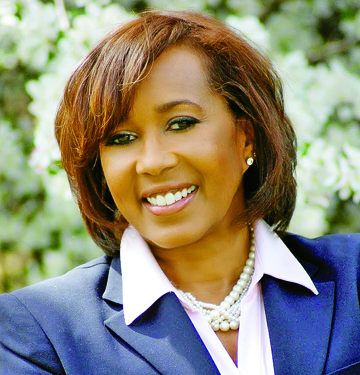
Halisi Vinson
Kashmann is the longtime publisher of the Washington Park Profile who just recently sold his interest in that well-respected and beloved publication. A gentle and convivial soul, he prides himself in seeing an issue from many different sides. He even has a Colorado State Senate Commendation for 20 years of community service. He is not a believer in the political Golden Rule, but rather the original one of treating people as he would like to be treated himself. Kashmann would actually listen to citizens who would come before the City Council to make their case. Any municipal council, but in particular the Denver City Council, would benefit from having a Paul Kashmann.
In the other two races there are a myriad of candidates. In Council District 10 the person who has the greatest prospect of beating the money boys behind the mayor is Wayne New, the past long-term president of the Cherry Creek North Neighborhood Association, who has been fighting the good fight for decades. For our tastes we would prefer if New would have battled the greediest of the developers in Cherry Creek North even more fiercely, but that is not his personality. He wants to make things work for all involved.
Wayne New apparently has the money boys a little worried as they sent out the dirty tricks guys to gin up a phony ethics violation by the contemptible Colorado Ethics Watch. A neophyte at campaign financing, he forgot to add to some of his campaign literature the standard “Paid for by Wayne New for City Council” in microscopic print. Oh, No! The crooks behind the mayor are really, truly desperate to defeat Wayne New which in our book is all the more reason to vote for him.
Finally in District 4 the person putting up the best fight is Halisi Vinson who has the backing of major park advocates as well as Wellington Webb. Webb, like many Denverites, is desperate to have at least one park advocate on the City Council. When he wrote to the Friends of Denver Parks, “First they took our park and now they want to buy a council seat,” he was directly referring to Mayor Michael Hancock and his despicable developer friends. Webb’s daughter Stephanie O’Malley is Hancock’s Manager of Safety and his support for Vinson could cost his daughter that highly coveted job. We at the Chronicle agree with former Mayor Webb in this instance, that the only honorable thing to do is to stand with Ms. Vinson.
We ask you to consider the candidates in your District and vote for the ones who might actually make a difference at the City and County Building. In our mind the choices are clear.
— Editorial Board
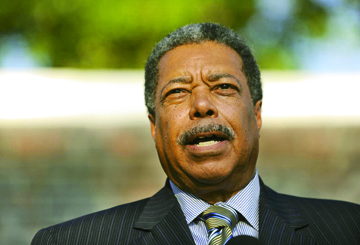
by Mark Smiley | Feb 27, 2015 | Editorials
February 6, 2015
Dear Friends,
First they took our park, now they want to buy a council seat.
I joined the Friends of Denver Parks with an undying belief that no matter whom the foe that we as “citizens” — the most important title an American can hold — gives us the right to stand up against the rich and powerful. During my entire 12 years as mayor, I always looked for ways to maintain and acquire new park space. The parks we have are a contract we take out between us and the citizenry, and the legacy we leave for future generations.
I joined your effort publicly and financially because it is my belief that what happens in one part of the city will then be repeated in another part of the city. My message is a resounding: “Leave our park land alone.” Do your business deals on non-parkland. If they get away with this, the rich and powerful will try to take other parks and buy our council seats.
I believe this is already happening in Council District 4. The reason I so strongly support candidate Halisi Vinson for the Council District 4 seat is that the group who took the park are now supporting one of her opponents, a nice woman whose main interests really has been school issues.
What residents of District 4 need to be aware of is that Halisi’s opponent is taking thousands of dollars for her campaign from the people who took the park. They even rejected your signatures calling for a public vote on taking the park land, which has been officially called a park since 1955.
First they take your park, now they think they can buy your council seat.
Halisi Vinson supports District 4 residents and the city’s parks. I urge you and your friends to support Vinson because she is the candidate whose only interest is District 4.
I am engaged is this race because I don’t like any business deal that takes our parks. I will never forget in 1991 you stood up against big money to support a man in tennis shoes for your mayor.
Let’s do it again, and donate today. Remember they first took our park now they want to buy a council seat.
To learn more about Halisi and how you can help her campaign visit: http://halisivinson.com/
Or contact her at: halisi@halisivinson.com
303-550-1247 (cell)
Donate Today
Wellington E. Webb
by Mark Smiley | Feb 2, 2015 | Editorials
 That Is Always The Question For A Newspaper
The international dispute on whether to publish one or more of the Charlie Hebdo cartoons that lampoon Islam is a question that faces publications from the “newspaper of record” The New York Times down to local papers such as the Glendale Cherry Creek Chronicle. We at the Chronicle are fiercely proud of being a local paper covering local news in the Cherry Creek Valley. We, as a matter of general editorial policy, do not cover state, national or international events except where the event directly affects the Cherry Creek Valley.
But the Charlie Hebdo cartoons and their censorship does directly affect us in the Cherry Creek Valley. Charlie Hebdo is a French publication out of Paris, that until the controversy and butchering of 12 people in the offices of that publication by two French jihadists, had a circulation that was significantly smaller than the Chronicle. As an editorial board we are saddened by the decision of The New York Times and certain other national publications not to publish the cartoons. The reason given by the Times executive editor Dean Baquet was, “Out of respect to our readers we have avoided those we felt were offensive.”
The rationale rings hollow. The Times relishes printing materials offensive to some of its Jewish and Christian readers including artwork from a Holocaust-denying Iranian cartoonist Maziar Bijani, and Andres Serrano whose most famous work of “art” is titled “Piss Christ.” When a University of Southern California journalism professor challenged Baquet calling his decision “absolute cowardice,” Baquet went on Facebook to call the professor an “A**hole.” It is said that if you’re taking flak, you’re over the target.
The New York Times is not just any paper. Most of the members of this editorial board grew up venerating that publication. The failure to publish the cartoons reveals far deeper problems at that institution. It was reported that one of the killers in Paris stated to a woman, “I’m not going to kill you because you’re a woman, we don’t kill women, but you must convert to Islam, read the Quran and cover yourself” before shouting “Allah Akbar.” The Times bizarrely changed the quote to “Don’t be afraid, calm down, I won’t kill you. You are a woman. But think about what you are doing. It’s not right.”
Why would the publication falsely change a quote except that the editor understands that the Times fears offending the sensibilities of some of its Muslim readers that it will falsify quotes. What a fall from grace by what was once America’s most respected and courageous newspaper.
We print here five Charlie Hebdo cartoon covers including the edition printed after the massacre, at right, which has sold over a million copies. What is surprising is how relatively bland the cartoons are. France does not have a particularly strong tradition of free speech, notwithstanding the parade of the notables in Paris and the holding up of pens and pencils. In 1990 under the Gayssot Act, it became illegal to question crimes against humanity under the London Charter of 1945 which would cover the Holocaust but potentially much more.
French laws also make any communication deemed hate or discriminatory speech criminal which are so broadly defined that it conceivably covers virtually any type of statement that a governmental official may deem offensive. Under this very broad law septuagenarian actress Bridget Bardot was convicted of hate speech in 2008 and fined $11,920 for alluding to Muslims as leading “us around by the nose, which destroys our country.”
Following the Charlie Hebdo massacre French comedian Dieudonné was arrested for simply saying on a Facebook entry, “Tonight, as far as I’m concerned, I feel like Charlie Coulibaly” mixing the last name of the killer who held hostages at a Jewish deli and the first name of the magazine. In France, as is the case of The New York Times, what is highly offensive is very much subjective.
We do not think it is of any great act of courage for us to print the Charlie Hebdo cartoons although, as noted above, the French magazine had a circulation significantly less than this publication at the time of the massacre. When we printed a story on “How Powerful Is Islam in the Valley — Could Rioting and Bombing in Europe Come Here Some Day (Local Islamic Center Asserts It Is The Victim of Discrimination)” on the front page of the December 2005 issue of the Chronicle, we certainly received our share of irate calls that suggested acts of violence against the paper. But that goes with the territory.
The Editorial Board has to consider whether to print or not to print what may be considered controversial stories virtually every edition. We view as part of our job to comfort the afflicted and afflict the comfortable. We have printed stories that have offended, among others, the mayor of Denver, the Denver D.A ., the executive director of the Denver Department of Planning and Development, well connected real estate developers in the Cherry Creek Valley, powerful union officials, and certain powers that be in Glendale.
As a result we have lost our fair share of advertising along with access to various public officials. But what is the point of publishing a newspaper if it is not to print the truth, at least as we see it? We understand we do not have a monopoly on the truth as readers are happy to point out in the letters and emails to the paper. Occasionally a reader will write that this paper is certainly “not” The New York Times. Sadly that statement is no longer the insult that it once was intended to be.
— Editorial Board
by Mark Smiley | Dec 22, 2014 | Editorials
— A Modest Proposal
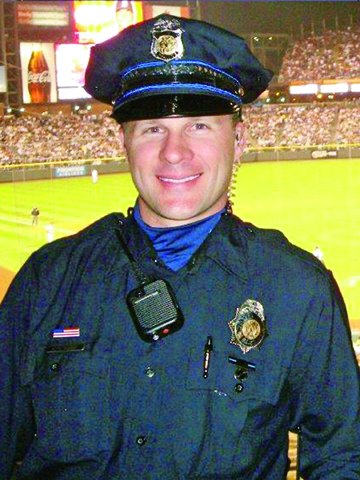
There has probably never been a time as difficult as the present to be a Denver municipal peace officer whether in the police or sheriff’s departments. Everyone is more than happy to tell you exactly why you suck and there does not appear to be anyone who seeks to back you up from the President of the United States, the U.S. attorney general, the mayor of Denver and even the police chief of Denver. Across the country protesters are screaming “What do we want — Dead Cops. When do we want it — Now.”
 In Denver they almost got what they wanted during the Ferguson protests outside East High School. A driver, who was cheering the students on, ran into four police officers on bicycles, dragging Officer John Adsit under his car, almost killing him. A police union official indicated that the protesters cheered and chanted “hit him again.” So deep is the suspicion of Mayor Michael Hancock and Police Chief Robert White that when they declared the incident to be an accident caused by the driver’s medical condition, many people simply assumed that they were lying. Believe it or not there was a time when most of the Denver public assumed the opposite — that most police officers told the truth most of the time. Now police officers in Denver will be required to wear body cameras because the public does not believe much of what they are told by the Denver Police Department.
The police have traditionally counted on support from older citizens. The Greatest Generation had a high level of respect for law enforcement. But that generation is quickly disappearing and is replaced by Baby Boomers, some of whom grew up calling police officers “pigs.” President Obama has demonstrated that he does not support police whether in Cambridge, New York City or Ferguson. Attorney General Holder clearly views many police departments as “racist” even if in places like New York City where the police force demographics mirror the racial composition of the city.
In Denver the sorry spectacle at the Denver City Jail has not helped with embarrassing videos coming out seemingly daily. Denver citizens do not regularly distinguish between Denver police officers and Denver deputy sheriffs and perhaps there is no reason why they should. Denver law enforcement is Denver law enforcement. The six millio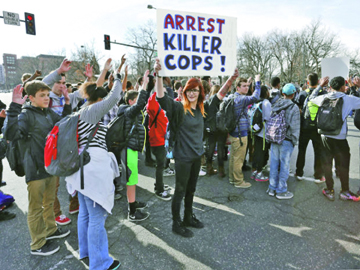 n dollar verdict handed out in the Marvin Booker wrongful death case in United States District Court in October certainly indicates that the city is in a great deal of trouble if a case of excessive force by a Denver law enforcement officer reaches a Denver jury.
Mayor Hancock is definitely not a fan of the rank and file of the Denver Police Department. He has worked hard to be sure that the firing of Denver cops, which are almost all rank and file and never the brass, is made easier and more expeditious. When he went to look for a new police chief it was clear he was not going to promote from within the Denver Police Department. Chief Robert White has taken a number of meritorious actions in shoring up the department including making sure that more officers are walking a beat and not sitting behind a desk.
But White has no history with the Denver police force and he owes his job and allegiance to Michael Hancock, even to the point of lying straight into television cameras in declaring that the sole purpose of photo radar cameras was public safety while refusing the demands of the City Auditor and others to conduct any studies to back up his claims. While Hancock may not be a fan of rank and file police officers he does strongly support photo radar cameras and apparently is adamant that no studies occur lest they threaten a growing revenue bonanza.
So where do law enforcement officers in Denver go to get support? It is not the police union which was long ago discredited by its actions in supporting police officers no matter how heinous the purported misconduct.
No it is going to have to be from average everyday citizens whom the officers are sworn to serve and protect. Earning that support, which has been by and large lost, will not be easy. The bigwigs in Denver have cast the average police officer into the wind. The only port in this storm for everyday Denver cops is the common man and woman. An alliance of everyday people and the rank and file police could be in its own way revolutionary. No longer would there be one set of rules for the elite and another for the rest of us. No more John TV while the mayor has been and maybe still is an important patron of prostitutes. No more special license plates for politicians which evade the ever present Denver photo radar cameras while citizens literally pay millions in fines every year. A citizens’ police force and not the politicians’ police force. It’s worth giving it a try. Ultimately it will take changes to the Denver City Charter to get the police out from the politicians’ grasp, but it can be done and should be done.
— Editorial Board
by Mark Smiley | Nov 21, 2014 | Editorials
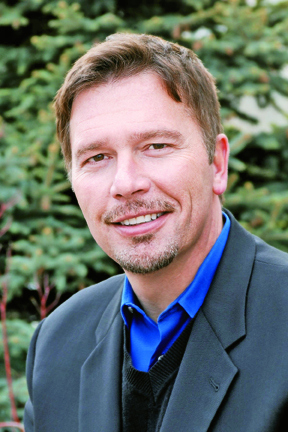
Brian Vogt
In letters and e-mails to the Glendale Cherry Creek Chronicle, readers have asked us if we remember as many people working for the City and County of Denver that are totally devoid of ethics and competency as there are under Mayor Hancock. We admit that individuals like Lauri Dannemiller, the Manager of Parks and Recreation; Scott Martinez, City Attorney; and Brad Buchanan, Executive Director of Community Planning and Development, are sadly lacking in the skills and morals that any decent administration would seek along with many of the Mayor’s disgraceful appointments at the Sheriff’s Department. But that does not mean there are not tremendous people who work for the City and County of Denver.
One of the greatest of the public servants in Denver is Brian Vogt, the CEO of Denver Botanic Gardens. Appointed in 2007 to his post during the Hickenlooper administration he hit the ground running at the Botanic Gardens and hasn’t let up. In addition to being a highly adept businessman and administrator his warm outgoing personality has won the Botanic Gardens myriads of friends in the areas around the facility which has not always had the best of neighborhood relations. Given the enormous growth involving construction at the Botanic Gardens during his tenure the good neighborhood relations is no small feat.
Vogt came to his position as the ninth CEO of the Botanic Gardens with extraordinary curriculum vitae. He went to the University of Colorado at Boulder and spent a year in England studying Greek Stoic Epicurean philosophy. He served for 14 years as the president of the South Metro Chamber of Commerce, growing that organization into a regional powerhouse. He occupied three cabinet positions in Governor Bill Owens’ administration including the director of the Colorado Office of Economic Development where he supervised the Colorado Tourism Office and the Colorado Council on the Arts. After leaving the employ of government when Bill Ritter came to the governor’s office he had his own consulting company, ProCounsel Co. LLC. where he was able to understand the challenges of running a small business up close and personal.
He needed all of his skills developed over a lifetime when he began his hegemony over the organization. Attendance was down with a perennial lack of funds for projects and poor morale among the employees. He first addressed staff concerns by providing opportunities for employees to use their own initiative for projects which paid enormous dividends for the Gardens. He then hit the street looking for additional funding, a task that is an ongoing critical part of this job. He discovered he was good, very good, at raising funds for the Botanic Gardens.
As a result of the fundraising efforts, there began an $80 Million Master Plan Development Plan which included a badly needed three story parking garage, a visitor’s center, a greenhouse and a Children’s Garden that has been a spectacular hit. The building and renewing has never stopped and this last year a Japanese Garden and a Bonsai Pavilion and Tea Garden opened up.
Making the Gardens a fresh new and abundant experience is all part of the challenge. Having overseen the Colorado Council on the Arts he recognized how the visual arts could greater further the Botanic Gardens mission of bringing plants and people together. He brought in the sculptures of Henry Moore to the Gardens in 2010 to rave reviews. In 2014 came the incredible art of Dale Chihuly to the Gardens which to Vogt’s delight the exhibit was controversial to some greatly increasing attendance. The exhibit was such a success that Chihuly himself came last month to the Gardens and generous donors paid for one of the sculptures to be permanently installed.
The difference between Brian Vogt and Brad Buchanan, Scott Martinez and Laura Danamiller is that the former is trying to make something great for the people of the City and County of Denver and Colorado as a whole while the latter are individuals hoping to line their own pockets or at least are so desperate for a government sinecure they will do anything to retain their jobs.
We all would like to think that the majority of the employees of the city are closer to an admirable Brian Vogt than a widely reviled Brad Buchanan. Yes the appointees of Mayor Michael Hancock are by and large a disappointment to all honorable citizens of the city but they are only a fraction of the whole. Hancock and his real estate developer overlords hold sway today but even they will pass on and hopefully there will be enough Brian Vogt types who will remain for a great city to build anew from all the damage that the greed and avarice of the Michael Hancock era has brought.
— Editorial Board
by Mark Smiley | Oct 24, 2014 | Editorials
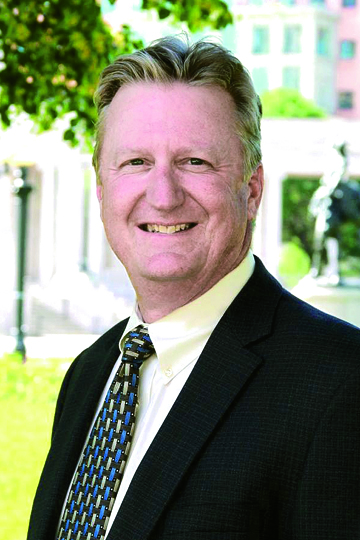
An old proverb declares that “It’s a foolish bird that fouls its own nest.” Brad Buchanan, the beefy, bloated, ethically challenged, new executive director of Denver’s Department of Community Planning and Development is no one’s fool. Prior to taking on the top job in planning Denver’s future growth he moved out of the city, over an hour away to a 1,500 acre ranch on the Eastern Plains beside Kiowa Creek so he would not have to personally suffer from what he and the city government are doing to Denver’s neighborhoods one at a time.
Larry Ambrose, president of the Inter-Neighborhood Cooperation which is the umbrella group for all of Denver’s neighborhood associations, summed the situation up well when he told The Denver Post, “It’s very easy for Brad to come into the city and shove this density down our throats and then drive back home to his ranch.”
Considered by some an uninspiring and somewhat hackneyed architect he eventually became highly politically connected. He was the chairman of the Downtown Denver Partnership but hit real pay dirt when he was appointed to the Denver Planning Commission by then Mayor Hickenlooper. He eventually was made chairman of that entity. The 11 member board advises the mayor and Denver City Council on land use matters including making recommendations on rezoning requests.
There was no direct remuneration for the positions he held but he made the appointments highly profitable for himself. He became the man developers hired when they had a questionable project that had to get past the Planning Board. He was hired for the highly controversial Red Peak development at the Denver Highlands that many in the neighborhood considered the buildings to o high and the density excessive for the historic area. The citizens unsuccessfully sued to stop the project.
He was also hired for the redevelopment at the St. Anthony’s Hospital site on West Colfax where his design included downtown density and heights in a single-fam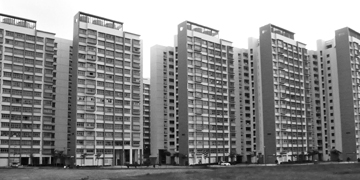 ily residential area. Ethical questions were raised by his actions including a formal complaint filed by former Denver City Council President Cathy Donahue who objected to his making presentations to the Planning Commission shortly after leaving as chairman, but to no avail. In Denver, ethics appears to offer little or no constraints to politically connected individuals like Brad Buchanan.
Mayor Michael Hancock declared that Buchanan was his “dream pick” which is very bad news for Denver’s neighborhoods. Buchanan has preached the need for ever more density in the form of high rise apartments and condos in every neighborhood across Denver. At the same time he opposes open space requirements that exist in the present code and intends to bring forward controversial amendments which will drastically limit open space requirements in large developments despite vociferous objections by neighborhood groups.
Upon being appointed executive director in March, Buchanan threw a bone to the neighborhood associations saying they will be notified of a rezoning application after it has been submitted a second time as opposed to after it has been formally vetted and approved. But neighborhood groups understand that the concession was one without any real meaning as they will have no possibility of any real input unless they are notified when the Planning Department first receives a request to rezone.
Neighborhood groups moreover realize the deck is stacked against them no matter when they are notified. As it stands the Denver Planning Department is little more than a minor speed bump today for well connected developers. The Planning Board is packed with pro-developer advocates appointed by Mayor Hancock who learned his lesson when a majority of the Denver Parks Board stood up to him over the Hentzell Park giveaway. He made sure anyone who opposed him was replaced by individuals who will do what they are told.
At one time being appointed to a volunteer board in Denver government was a mark of true honor and distinction. Under Hancock it has become something of a badge of shame as appointees are viewed for the most part as pliable hacks that will do the Mayor’s bidding without question or independent judgment.
Buchanan has expressed his admiration for cities that have incorporated “incredible density” such as Singapore. He has also repeatedly toted “walkability” by which he means citizens in new developments with minimal required parking will be forced to walk in the shadows of towering apartment and office buildings. The walking will be in an urban setting devoid of trees or grass or anything else that once served as open space. Under Buchanan paved streets are in some cases argued to be what serves as open space in the new Denver.
He has personally helped in the design of some of the worst projects and ugliest developments in Denver from the Highlands to Sloan’s Lake. His appointment means no neighborhood is safe from a high density makeover as the denizens of Cherry Creek, Observatory Park and the Country Club areas have discovered, to their chagrin.
Buchanan wants to place the majority of the residents of Denver into dense vertical structures with families living in 1,000 square feet or less of living space while he and his wife and two children enjoy the luxury of 1,500 acres of land in Strasburg, at his Flying B Bar Ranch. As the pig Napoleon declared in George Orwell’s Animal Farm: “All animals are equal; but some are more equal than others.”
Brad Buchanan most definitely sees himself as being one of the “more equal” animals. His appointment was a disgrace — what he is doing to the formerly livable neighborhoods should be a crime. Instead, it is deemed “progress” in Michael Hancock’s Denver.
— Editorial Board