
by Mark Smiley | Sep 29, 2014 | Editorials
Bob Coté the founder of the alcohol and drug rehabilitation center Step 13 was truly one of a kind as was the charity he founded. A former boxer from the mean streets of Detroit he knew what it was to be an alcoholic and homeless in Denver. He had been a white collar salesman who was able to hide his addiction for a while before spiraling down into alcohol dependence and hopelessness. He was at heart a “street fighting” man who took no gruff from anyone no matter how important or mean they were.
Having saved himself from addiction and despair he walked the alleys and byways of pre-yuppieized downtown Denver carrying a baseball bat searching for souls to save from the hell he personally knew all too well.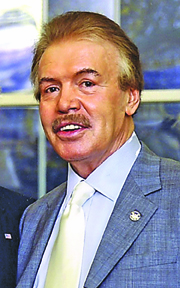
Even the name of the charity he founded “Step 13” was as idiosyncratic as its founder. It is almost universally initially assumed that it refers to a proposed next step after the 12 step program of Alcohol Anonymous, but instead it is homage to the original 13 colonies of America and Jesus and his 12 disciples. He quickly found out that modern American governmental agencies (federal, state and local) wanted absolutely nothing to do with any charity whose name was picked to honor patriotism and Christianity. They would do whatever they could to destroy a man who was quickly succeeding in making a real difference in lives of homeless drug and alcohol addicted men in Denver.
He said he knew what these men needed, as he had needed it so badly in his time of despair — “A hand up, not a hand out.” He wanted for those he helped what all men wanted (including himself) — dignity and self respect. He believed that only came from work and self reliance. He could never figure out why people like John Hickenlooper for all his purported concern about these men never got it. In his mind all that the Hickenloopers of the world offered these men was dependence and suffering or as he called “suicide by the installment plan.”
He viewed most of the members of the Denver City Council as “jackals” and “hyenas” who poured money into programs like the “Ten Year Plan to End Homelessness” (now known as “The Road Home”) which in his mind were simply bureaucratic sinecures for those who have never actually helped another human being in their entire lives. He viewed the Coalition for the Homeless as little more than the “Coalition to Exploit the Homeless” where the top personnel pay themselves handsome six figure salaries on the backs of the homeless.
That his charity Step 13 succeeded without ever taking any money from the government was amazing to him. He saw himself as a type of rough-hewed Forest Gump. More by accident than design he found businessmen like Bill Daniels and Cortlandt Dietler who were will willing to support and fund his vision while he worked tirelessly to make Step 13 a self-sufficient enterprise.
When he died last September replacing him seemed impossible. But the individuals who are on the Board of Directors had seen with their own eyes how Step 13 had literally saved men from their own destruction and that for such an organization to die while the harmful and invidious government funded programs lived on to exploit and destroy the lives of the humans they purported to help was too much to bear.
After months of fruitless efforts they found a man who seemed to be just the type of person they were looking for — Peter Droege. He was not in any sense a younger Bob Coté — that mold had been broken and thrown away when Coté came into the world.
Moreover, Peter Droege is most definitely not a “street fighting” man but rather the son of two artists who went to Central City to escape the real world and open up a gi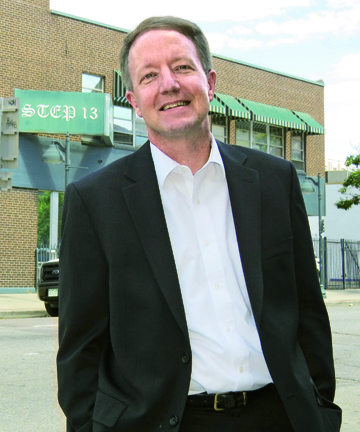 ft shop to display and sell artistic items. He attended the University of Wyoming and then headed out to California to be a journalist in Los Angeles. He returned to Colorado to work on various local publications. He joined the Daniels Fund, the billion dollar legacy of cable pioneer and Step 13 supporter Bill Daniels, where he rose to Vice President of Communications before coming over to Step 13 as its executive director.
Droege has had his own battles with “demon rum” and knows what addiction can do to you. He met Coté in 2001 and helped co-chair the 25th Anniversary of Step 13 held at Infinity Park just prior to Coté’s death.
Bob Coté made it abundantly clear to you whether he liked you or not. His magnetic personality attracted many people, but he also repelled more than his share of individuals sometimes unnecessarily. He just couldn’t help himself when he found himself in the presence of someone he believed to be a self important phony whether or not the person could have been of great aid to his enterprise.
Peter Droege on the other hand is a uniter. Quickly after meeting him, he makes you feel that you have known him your entire life and the two of you are the closest of friends. His infectious, positive enthusiasm makes you feel that just about anything can be accomplished.
He has already made important alliances including one with Goodwill Denver. He has adopted as his own the mantra “Get a job, get a better job, get a career.” He believes to his core, like Coté before him, that finding jobs and careers for the men who Step 13 assists is the key to making them whole again. Goodwill Denver’s Career Connection Centers are one-stop shops for career developments that work perfectly with Step 13’s mission.
He has also been successful in getting more and more people to contribute cars, boats, motorcycles etc. to Step 13 for them to repair, fix and resell while making sure the donor gets the highest allowable tax deduction for his or her donation.
The unique Step 13 organization appears in good hands with Droege, although when you refuse all governmental funds you are constantly going to be challenged in obtaining necessary funding.
If you want to give to a charity to make yourself feel good there are lots of organizations out there with which you can accomplish your goal. If you want give to an organization that really does make a life-changing difference in the lives of others, Step 13 has proved to be just such a charity, first under Bob Coté and now under Peter Droege.
— Editorial Board
by Mark Smiley | Aug 29, 2014 | Editorials
The Denver City Council was once a political body that the news media in Denver, including newspapers and television stations, regularly covered. John Hickenlooper’s rise to the office of mayor changed all of that. His approval ratings stayed well into the 70s for his entire two terms in office and that cowered many City Council members. Hickenlooper privately would mock how supine and powerless certain individual council members were. He would note that all he had to hang on to was five council members as it took nine votes out of 13 to overturn any veto the mayor might come up with.
However, the City Council as a relevant political entity may be returning as a result of the Denver Sheriff Department scandal. While Hickenlooper keeps his contempt of the individual members of the City Council private, a less adept Mayor Hancock has made it publicly obvious. He appointed a Sheriff Department Executive Steering Committee to hire an outside firm to review the Sheriff Department and recruit candidates for the sheriff’s position. He chose six people, all of whom were appointees he controlled, such as City Attorney Scott Martinez and Chief of Staff Janice Sinden.
The City Council has been under a lot of public pressure for simply rubber stamping multi-million dollar settlements with jail inmates and not being more involved in demanding reforms. The City Council reasonably requested a representative on the steering committee. Hancock, incredibly, stiff armed them declaring he would update them at the weekly meeting he and his staff have with the City Council.
When the first such meeting occurred Mayor Hancock didn’t even bother to attend saying he needed to spend more time with his family. He was, in fact, inside the City and County Building when the meeting occurred.
The City Council had finally had enough. The usually meek and compliant Jeanne Robb erupted at David Edinger, who is overseeing the steering committee, and Stephanie O’Malley, Denver’s public safety director: “What are you thinking. I am astonished. You’ve set up council to be included to question every move. The public is upset, and I’m very upset.”
The mayor’s representatives had come to the meeting unprepared with no reports or materials for the council to review emphasizing how little they thought of the City Council. Councilman Charlie Brown was incredulous stating, “Let’s be more professional about how we are treated here.”
Mayor Hancock was informed by his staff that it was actually possible to offend Denver City Council members. Hancock relented and added two members of the City Council, Jeanne Robb and Paul Lopez, to the committee. Hancock, of course, did not want council members to think that they were all that important so he also added four regular citizens to his committee. The 13 person committee is now as large as the Denver City Council itself.
Denver has the so-called “strong mayor” form of government. Notwithstanding the same, City Council has a great deal of power under the City Charter if it elects to exercise it. The City Council is the only branch of government that can adopt or revoke legislation. It also controls all budgetary matters. The mayor’s staff wrote on the City’s website describing how the City Council actually performs its critical role in the budgetary process as follows: “to date, council modifications of the budget have been relatively minor.” It is an unintentional, but damning, critique on how the City Council members as a whole have undertaken their statutory obligations to the public in recent years.
It is about time City Council members start acting like real elected officials with constituents and not simply potted plants. There is more to being a Denver City Council member than simply approving by large margins every ill conceived real estate project that comes along. The Sheriff Department Executive Steering Committee debacle shows that City Council members can make a difference if they choose to do so.
— Editorial Board
by Mark Smiley | Aug 1, 2014 | Editorials
James Carville, Bill Clinton’s campaign manager for his successful 1992 presidential run, is famous for his quote of “It’s the economy, stupid” when trying to explain to his campaign workers that there was a simple solution to winning the seemingly very complicated presidential race. Similarly there seems to be the feeling these days that solving the endless scandals over prisoner abuse at the Denver city jail is extremely complicated.
Denver Safety Director Stephanie O’Malley has declared, “The question that continues to present itself is, ‘Is there something we’re missing?’” To answer that question, the city is about to embark on one more highly costly independent review. Actually we can save the city of Denver quite a bit of money as the answer to her inquiry is, “Yes. It’s the city’s lawyers, stupid!”
The Denver Sheriff’s Office of course has an honest method by which prisoners can file complaints against their jailers most of which, but certainly not all, will be bogus and the complaints must be fairly investigated, which has not previously occurred.
But most important of all is that something should actually happen when a police officer or sheriff’s deputy is found to have engaged in criminally wrongful behavior. Shockingly only a single criminal excess force charge has ever been filed against a Denver police officer (Charles Porter) or sheriff’s deputy in this century by the Denver District Attorney or the City Attorney. It points out the real culprit in the jail house scandals is in fact — the city’s lawyers.
By all accounts Denver Sheriff’s Deputy Gaynel Rumer helped run drug and pornography rings at the jail and had prisoner s torture and administer beatings to inmates who displeased him.
But what did the City Attorney’s Office do about it? The lawyer(s) ran a phony investigation with the help of the Internal Affairs Bureau of the Denver Police Department to intimidate and tamper with witnesses to Rumer’s crimes.
What did the Denver District Attorney’s Office do about it? It refused to bring any criminal charges against Rumer with its entire justification for this outrageous decision being a hastily hand-written sentence on a standard form. Gaynel Hunter remains a sheriff’s deputy to this day free from any concern that the city’s lawyers will do anything about it.
Every city is confronted with charges, claims of excessive force in their law enforcement offices, but few have the massive level of indifference and malfeasance in their city attorney and district attorney offices that Denver has.
Federal District Court Judge John Kane is calling for the United States Attorney for the District of Colorado to investigate Denver’s law enforcement agencies. But what is the point of investigating the law enforcement agencies concerning how they addr ess excessive force complaints in a city where the City Attorney and the District Attorney refuse to ever bring charges even in the most egregious cases. Moreover our City Attorney’s Office actively corrupts the investigations themselves.
Until the egregious cultures at the City Attorney’s and District Attorney’s Offices change, the corrupt culture at the Denver city jail will in fact never change. That is the simple fact that Ms. O’Malley and the mayor of Denver are apparently “missing.” Playing musical chairs with the position of Denver Sheriff will not accomplish anything. But perhaps all of Mayor Hancock’s commotions concerning the scandals at the city jail are simply as Shakespeare noted, “full of sound and fury, signifying nothing.”
— Editorial Board
by Mark Smiley | Jun 20, 2014 | Editorials
The Chronicle has received scores of emails and telephone calls relating to our June editorial “Task Force’s Solution For Cherry Creek’s Parking: Of Course Provide Even Less Parking.” Most of the communications from residents and businesses praising us for bringing forth the apparent absurdity of solving Cherry Creek North’s parking and traffic problems by approving massive height and density while at the same time providing a fraction of the needed parking, a point every other news outlet ignored or failed to mention.
However, we also received communications from various members of the Cherry Creek Zoning Technical Task Force and its supporters informing why we were wrong. We reproduce in full, three of the more articulate critiques of our editorial from two members of the task force (Brooks Waldman and Wayne New) as well as a leading candidate to replace Jeanne Robb as the councilmember for District 10 which includes Cherry Creek (Roger Sherman).
Each of the individuals is an articulate spokesman for the work of the Task Force. In addition members of the Editorial Board have met in person with each of them and each evidenced a real concern for the well-being of the Cherry Creek neighborhood and the people who live and work in the area. Nevertheless, it is not easy to defend the indefensible as they valiantly try to do.
Various members of the Editorial Board have been part of developer teams and/or have represented developers before city boards and city councils. We know that most developers almost always underestimate the amount of parking that their projects need and demand that the public fix the problem on the public’s dime after the project is completed. Case in point is the highly successful City Set project in Glendale recently completed at the corner of Colorado Boulevard and Cherry Creek Drive South.
The developer Stonebridge Companies based in Englewood demanded that the city approve the development plan with 20% less parking than required under the city’s regulations and ordinances based on a misleading parking study. Now that the project is a success the entire development is constrained by the lack of parking Stonebridge refused to provide. As is standard operating procedure Stonebridge wants the city to solve Stonebridge’s self-induced parking problems by giving the development 70 dedicated parking spots along Ash and Exposition streets. In the end, Glendale will undoubtedly be helpful and give Stonebridge what it wants with some modest modifications.
The problem with the recommendations by the Task Force is that they are so extreme in favor of developers that any future attempts to remedy them will be impossible or so expensive that they will bankrupt the area, its residents and small businesses. With that caveat in mind, here are the responses to our editorial without edits or deletions:
The opening statement in the Glendale Cherry Creek Chronicle’s editorial of June 2014 is: “Notwithstanding the general popularity of the Cherry Creek area, the reasons some people give for not wanting to visit Cherry Creek North include the lack of off-street parking and, more recently, traffic jams.” This is probably accurate, as far as it goes, but just one piece of a much larger story behind the BID/rezoning Task Force’s work.
The Cherry Creek Business Improvement District (BID) and the Cherry Creek area in general is experiencing a surge of residential growth, predominantly multi-story rental housing, which reinforces the “regional center “ designation identified in the 2012 update of the Cherry Creek Area Plan. Traffic and parking were a big part of the 2 year community discussions leading up to the approval of the plan. Currently the surge in building and infrastructure construction (University out-fall storm sewer) has contributed to the validity of the opening statement in the editorial. However, the much larger and overlooked story that should have been told is about the start of implementation of a vision for Cherry Creek as a multi-modal and transit connected town center with much more reliance on biking, walking and transit connectivity. Indeed, Transportation Solutions, the area transportation management association, has worked with Glendale, Cherry Creek, and RTD leadership toward that goal.
The charge given the Rezoning Task Force, by Councilwoman Robb, was to create a new zoning district that encourages and supports the plan vision. The parking recommendation from the Task Force is equal to or higher than minimum suburban parking ratios in the 2010 Denver zoning code (though slightly less than what the Urban Form Study recommended for retail/ restaurant parking). In discussion, the Task Force realized that with viable and inviting alternative modes of movement people are making transportation choice less dependent on automobile ownership. In fact, the recent growth in Cherry Creek of B-Cycles, Car2go and other alternatives are rapidly changing the equation. An explosion of new residents, living, walking, working, shopping and playing in CC will help support the lower parking ratios. I would bet that nearby Glendale will find themselves moving in the same direction in years to come. Thank you for the parking piece, but more complete coverage of the larger story would be appreciated.
Brooks Waldman
Past President, Cherry East Association
Vice Chair, Cherry Creek Steering Committee
Member, BID/rezoning Task Force
The Cherry Creek Area Plan was adopted two years ago and there has been considerable effort to implement the plan since then. The Cherry Creek Steering Committee and the Zoning Technical Task Force are to be commended for accomplishing one of the plan’s most important recommendations — recalibrating the C-CCN zoning.
Contrary to your editorial position, the Task Force’s recommendation strikes the right balance on parking requirements. The task force evaluated parking conditions in Cherry Creek North and reached consensus on the appropriate parking requirements for an area that prizes its walkability. Too much required parking can prove to be just as challenging to the prosperity and quality of a district such as Cherry Creek as too little.
Now, it is time to implement the plan’s multimodal transportation recommendations. Enhancing the quality of place throughout Cherry Creek should be our focus — along with making walking, biking, transit and, yes, driving viable options for all our trips in and around Cherry Creek. If you design communities for automobiles, you get more automobiles. If you design them for people, you get walkable, livable communities.
As a candidate for City Council, I know people are rightfully looking to me for ideas on these critical issues, so let me suggest we start with four priorities:
- Improve transit service between Cherry Creek and downtown and along Colorado Blvd. The private-sector and city are rightly looking at alternate funding scenarios as RTD can’t do it alone.
- Designate the Cherry Creek area as a “Pedestrian Priority Zone” and fund additional pedestrian improvements such as raised crosswalks, median crossing islands and sidewalk bulb-outs, which are especially needed along Steele as well as Alameda Parkway and First Ave.
- Install protected or dedicated bicycle lanes and improve connections between Cherry Creek and surrounding neighborhoods as well as the Cherry Creek Bike Path.
- Identify traffic calming measures to lower speeds along Speer Blvd. and 6th Ave. which might include wider sidewalks and narrower travel lanes. Perhaps if we actually reduce speeds, safety would be improved and the photo-radar debate would become moot?
I appreciate your interest in Cherry Creek and enhancing the area’s best qualities. I look forward to continuing a spirited dialogue about this community that we all care about so much.
Sincerely,
Roger Sherman
Candidate, Denver City Council District 10
I would like to state right off the top that I appreciate the Chronicle’s questioning the decisions of both elected officials and community leaders, especially including those of us who are running for office. Transparency and accountability are of paramount importance, and I hold myself to these ideals. I also appreciate your inviolate commitment to these ideals.
In your June 2014 Editorial, you quoted me correctly. I did say that the proposed Technical Task Force zoning parking ratio recommendations fit “very well” (with proposed CCN BID development). The mistake I made was that I did not take the time to explain that, if the parking ratios are not met, then it will require a decrease in building size and density. My support was due to a thorough analysis of the issue and was discussed with CCN residents. It was surely not an overnight decision nor one that was pressed upon me at all by Planning, developers, or any other party.
The parking ratios were thoroughly analyzed and discussed by Task Force members, BID property and business owners, and neighborhood residents who attended our meeting. With professional architect advice I personally analyzed over 40 parking ratio test cases on BID properties to determine parking ratio fitness and building effect. As shown in the parking ratio comparison chart*, there is no doubt it was a zoning compromise but one that should benefit all residential and business parties.
I am confident you realize that these C-CCN District rezoning recommendations were determined through years of volunteer hard work, time consuming research, expensive analyses, discussions, and negotiations with our residents and community leaders. To explain further I am attaching a more detailed description on how parking has been a major concern over the past several years.
All members of the Technical Task Force have worked diligently and thoughtfully to reach the best possible balanced outcomes on C-CCN Rezoning. My only hope is that zoning agreements will be fully enforced and utilize “smart development” — a balanced approach that enhances the quality of residential life while promoting commercial growth and success.
Thank you for expressing your concerns and allowing me the opportunity to explain and emphasize how the C-CCN rezoning was determined and will benefit Cherry Creek North.
Sincerely,
Wayne New
Past President, Cherry North Neighborhood Assn.
Member, Rezoning Task Force
Candidate, Denver City Council District 10
Supporting Documents Submitted by Wayne New:
Document #1
Document #2
by Mark Smiley | May 27, 2014 | Editorials
 Notwithstanding the general popularity of the Cherry Creek area, the reasons some people give for not wanting to visit Cherry Creek North include the lack of off-street parking and, more recently, traffic jams. Luckily a Cherry Creek Zoning Technical Task Force was put together to look at the problems in the area. The Task Force is composed of residents, city planning officials, a Cherry Creek North Neighborhood Association representative, landowners, business owners, developers and, of course, City Councilwoman Jeanne Robb, whose district includes Cherry Creek North. After months and months of study what did the Task Force come with?
Yep, you guessed it. Parking problems can be solved by providing even less parking while approving even higher buildings than the six behemoths that are already being built. Brilliant!
Currently zoning mandates 3.3 parking places per 1,000 square feet of commercial area which has created severe parking problems in Cherry Creek North in the first place. Adjoining Glendale in line with recommendations from the Urban Land Institute mandates four parking places per thousand feet which Deputy City Manager Chuck Line calls “anemic” at times, noting that major retailers in Glendale often require five to six parking spaces per thousand feet of commercial space. The Cherry Creek Mall has 5,000 parking spaces or five parking spaces per thousand feet of commercial space as major retailers demand adequate parking before they will consider leasing in a commercial mall.
So what does the Task Force suggest? Cut the 3.3 to 2.5. Even better the Task Force also recommends cutting the parking in half for residential units from two per unit down to just one. Where in the world are all these people going to park? The business district has a grand total of 555 on-street metered parking spaces. The single family home areas of Cherry Creek North will soon be flooded with overflow parking from the commercial area regardless of whatever signs are posted or how many parking tickets are handed out.
At the Cherry Creek Chamber of Commerce luncheon held on May 8, the keynote speaker Ajay Menon, Dean of the CSU Business School, noted that in urban areas one-third of the traffic backups are created by motorists looking for parking places. With the Task Force’s recommendations in place a shopper finding parking in Cherry Creek North will be like the Kingston Trio song “M.T.A.” where the commuter “couldn’t get off” and “never returned.”
Of course, the pro developer members of the Task Force were giddy. Even Wayne New, the representative from the Cherry Creek North Neighborhood Association, is quoted as declaring, “We studied parking backwards and forwards and the (proposed) parking ratios fit very well.” If these parking ratios fit “very well” perhaps eliminating any and all parking spaces would work even better.
Wayne New is a veteran of many wars with developers in Cherry Creek North and we have, in the past, praised his efforts, but perhaps they have finally beaten him into submission. He recently announced his candidacy for City Council to replace the term limited Jeanne Robb. The whole point of his candidacy for many was that he would not sell himself out to developers as has Ms. Robb.
But this sad, if not pathetic, effort of the Task Force does away with any reason to vote for him. His opponent Roger Sherman is a CRL lobbyist and that firm represents its fair share of Denver real estate developers. Of course, once elected, he will sell the residents out in favor of real estate developers, but he doesn’t pretend otherwise. He is already bought and paid for and he doesn’t try to kid you about it.
One wonders when the Task Force’s recommendations are adopted what will there be left to destroy in Cherry Creek North? Councilwoman Robb helped developers to build a road destroying the only open space in Cherry Creek North, Fillmore Plaza.
The Task Force is also recommending that developers get even extra density and height if they are kind enough to provide open spaces like plazas, accessible to the public at street level. Gee, sounds a lot like Fillmore Plaza. We are sure the developers are savvy enough to figure out what has gone on in the past. They will get the extra density and height and then later come back and get the duly elected representative to roll over and allow the developer to destroy it.
The recommendations face public hearings and must go before, and be approved by, the Denver Planning Commission and the Denver City Council. You know, the public hearings where the commissioners and councilmembers utterly ignore anything the public has to say while surfing the Internet on their cell phones. In the case of the City Council, as recently confessed by former City Councilwoman Marcia Johnson, the process is a matter of simply paying “due deference” to the elected representative where the land is located (Ms. Robb) and voting whatever way she tells them. This rigged process even has a nice name, “courtesy zoning.”
Now that she has helped to destroy the Cherry Creek North neighborhood, Councilwoman Robb still has almost a year left in her position representing the 10th District. What to do with her time?
There is, in fact, plenty of time for her to do a Hentzell Park on Cheesman Park or other open spaces in her District. Just declare them “urban blight” as Mayor Hancock did with Hentzell Park. We are sure Assistant City Attorney David Broadwell can direct her on how to get the open space areas done away with notwithstanding what would appear to be very difficult legal constraints. He has done it before and he can do it again. Just ask the folks living over in the Hampden Heights area.
— Editorial Board
by Mark Smiley | Apr 28, 2014 | Editorials
 There is probably no more obvious municipal government rip-off than the photo radar and red light camera program run in Denver, Aurora, and seven other cities in Colorado. Its ostensible purpose is so-called “public safety” but everyone knows that its real purpose is a way for municipalities to pick the pockets of its citizenry.
State Senator Scott Renfro has for years been introducing legislation which would ban cities in Colorado from utilizing red light and speed cameras. The legislation is traditionally shot down in the first committee that it is sent to at the State Legislature. But this year something is afoot and the likelihood of the bill actually becoming law has dramatically increased.
Florida’s experience regarding red light and speed cameras is instructive. Florida’s red light cameras were not producing revenues at anticipated levels. Ways were sought to increase revenues and shortening yellow lights was viewed as an effective method. Unfortunately, there were, in fact, federal guidelines on the duration of yellow lights in order to best prevent accidents and Florida had adopted those guidelines. But as discovered by Channel 10 News in Tampa, the Florida Department of Transportation (FDOT) quietly changed the state policy on yellow below the federal recommendations. This was followed by FDOT and local municipalities working together to decrease yellow light length at intersections with red light cameras. This collaboration had its intended effect of greatly increasing the amount of red light tickets issued in Florida, but in turn increased the amounts of accidents at these intersections.
The mere fact that these Florida bureaucrats were willing to increase the number of individuals maimed and killed at these intersections provided it increased revenues is highly instructive. As stated by James Walker, executive director of the nonprofit National Motorist Association, “Red light cameras are a for-profit business between cities, camera companies and the state.”
In Denver, the increase the profits at all costs attitude regarding red light cameras was also demonstrated when Denver’s red light cameras were not producing the anticipated profits. The solution was once again to move the goal posts. In this case in lieu of shortening duration of the yellow lights, which was getting bad reviews across the country due to the carnage it was creating, the Denver red light camera company had a different idea — deem a car to have run a red light even if it just touched the pedestrian white line — well before the intersection itself. Voila! The number of red light tickets grew exponentially.
Study after study has shown red light cameras tend to increase accidents even when the yellow lights are left at the federally recommended levels as drivers try to avoid a ticket by jamming on their brakes.
Regarding photo radar, many studies have shown the most effective way to slow traffic down is to place an interactive LED sign that alerts motorists at what specific speed they are traveling and what the legal speed limit is. Of course the interactive LED signs do not produce revenue and that is why Denver has many more photo radar vans than LED signs.
Red light and speed cameras are also a lucrative source of municipal corruption. A fired executive of Redflex Traffic Systems admitted that the company doled out bribes and gifts to dozens of municipalities in 14 states, including Colorado, to get them to utilize red light and speed cameras.
Could all of the evidence have finally gotten the attention of state legislatures? Well, something has. Renfro’s bill, S.B. 181 was sent to the State Senate’s Veterans and Military Affairs Committee which is known as the “kill committee,” as the members for the majority party take a blood oath to kill any bill the leadership of the majority party does not like. Miraculously the bill passed by a 3 to 2 bipartisan margin. That means that the Democratic leadership in the Senate supports the bill. The Democratic Speaker of the House Mark Ferrandino tweeted that he too supports the bill and will work for its passage in the House.
Further evidence of the favored status of the bill is the fact when it reached the floor of the Senate it passed by a “voice vote” which means opponents of the bill had no way of knowing who was for the bill and who was not before coming to final vote. The bill got final Senate approval by a wide 21-14 bipartisan margin.
Will S.B. 181 become law? It certainly looks like it will with House approval highly likely given the Speaker’s strong public support for the legislation. Governor Hickenlooper has been doing his standard Hamlet routine concerning the legislation saying he is studying the matter. This assertion by the governor is of course total malarkey. The President of the Senate (Morgan Carroll), Speaker of the House (Mark Ferrandino) and the Governor are all Democrats and jointly work out in advance what legislation will be allowed to become law and what will not. This is all Kabuki theater. If Hickenlooper opposed the legislation he would have had Carroll stop it in the “kill committee.” There is no political upside to vetoing a highly popular bill, especially when this is the year you are seeking re-election and may have a tough fight ahead.
It is too early to celebrate but a major victory for the citizenry may be just over the horizon. The city councils of Denver, Aurora and seven other cities may have to figure out another way to fleece their citizens from their money to make up the shortfall, but they will undoubtedly be up to the task. In the meantime, chalk one up for average everyday citizens in Colorado.
— Editorial Board