If love conquers all, can it overcome the coronavirus as Valentine’s Day 2021 approaches? The pandemic hit last year just weeks following Valentine’s day, making this year’s celebrating somewhat of a dilemma. Hopeless romantics, love is what people breathe here, so they are approaching the day with cautious optimism hoping tender hearts won’t be broken.
Notwithstanding vaccination availability plus reopening of dine-in service and easing of other restrictions, there is still uncertainty that the end is in sight. The number and variety of choices have noticeably narrowed.
As February 14 looms, Denver is ranked the nation’s 14th best city to celebrate Valentine’s Day. The Chronicle, acting as Cupid-in-Chief, identifies how to live life and celebrate love in this uncertain year:
Candy Man Can
Sweet Attraction: Candy from top shops will please your sweetheart’s palette. Stargazer Fine Chocolates’ chocolatier creates truffles, chocolate bars, nut & fruit filled bark to love.
Enstrom Candies, 201 University Blvd., 303-322-1005. For four generations the Enstrom family of Grand Junction has crafted their Almond Toffee by hand. The perfect gift of taste to delight your connoisseur lover.
Hammond’s Candy Factory, 5735 Washington St., 888-226-3999. A Denver fine candy manufacturer for nearly 100 years. Known for their art candy, candy canes, chocolate bars, hard candy, lollipops and kosher candy.
Lolli & Pops on lower level of the Cherry Creek Shopping Center, 303-390-5701. Store with large selection of gourmet candy, chocolate treats, and gifts. Choose from Belgian chocolate, caramels, truffles, and more.
Stargazer Fine Chocolates in the Colorado Plaza, 700 Colorado Blvd., 303-394-4000. Chocolatier at family-owned shop creates sweets to delight your eyes, please your palette. Choose from truffles, chocolate bars, nut and f
Recipe For Love: Dining out has always been a recipe for love. Mizuna on E. 7th Ave. is featuring a nine-course Valentine meal Feb. 13 & 14 with dine-in or outdoor seating.
ruit filled bark.
Culinary Crush
Carmine’s On Penn, 92 S. Pennsylvania St., 303-777-6643. Family-style Italian eatery known for its hefty portions is serving a Valentine’s “share a special dinner.” Popular eatery is in an unpretentious stucco setting.
Coohill’s, 1400 Wewatta St., 303-623-5700. Chef Tom Coohill is opening his French-influenced eatery adjacent to the Pepsi Center with a Creekside patio for a special Valentine’s Weekend, Feb. 12, 13 and 14th.
Mizuna, 225 E. 7th Ave., 303-832-5778. Frank Bonanno’s flagship restaurant is celebrating V Day with a nine-course meal with dine-in and outdoor seating, Feb. 13 & 14. Rooted in French cooking, first course is Roses and Champagne.
Tamayo, 1400 Larimer St., 720-946-1433. Modern Mexican eatery in Larimer Square is offering a three-course menu for both dine-in and to-go from Feb. 12 through 14. Dine-in dinner includes complimentary champagne toast.
The Lockwood, 1450 Glenarm Pl., 720-269-3246. Rustic yet modern eatery in the Crowne Plaza downtown is offering a “special paired menu” for Valentine’s Day. Regular menu is also available at eatery serving New American fare.
Additional V Day Choices: Restaurant listings are as of mid-January. Since city-state recently initiated dine-in service subsequent announcements are likely from eateries.
Flower Power
Bloom, 300 University Boulevard, 720-941-2862. An independent flower boutique offering contemporary to traditional designs. Stunning cutting-edge arrangements feature a combination of traditional European and modern styles.
Bouquets, 321 17th St. 303-333-5500. Long admired for his floral artistry, BJ Dyer has relocated in the iconic Brown Palace Hotel. His beautiful arrangements make unique gifts for your Valentine, or for an upcoming weddings.
Flower Power, 2027 E. Virginia Ave., 303-777-6266. Specializing in European floral design, the Wash Park floral boutique’s handcrafted arrangements use fresh, seasonal flowers.
Newberry Brothers Florist, 5301 Leetsdale Dr., 303-322-0443. Floral shop creates bouquets to inspire, celebrate and bring people together. Imaginative flowers and plants that make a wonderful gift for that special someone.
Perfect Petal, 3600 W. 32nd Ave. & 1850 Wazee St. Whether you’re a traditionalist who wants to present your partner with roses or an out-of-the-box thinker choosing an elegant orchid arrangement, you can find it at Perfect Petal’s two locations.
Entertaining Love
Celestial Chaos, Exdo Event Center,
Snoopy Sensation: Snoopy and Charlie Brown’s romantic blunders have stolen the hearts of romantics for decades. The TV special A Charlie Brown Valentine has aired for 40 years.
Feb. 4-28. In a time of challenge and separation, this four ring theatrical circus creates artistry that is magical, offering audiences connection, inspiration and hope.
Inspired by Greek mythology, show is filled with aerial dance, acrobatics and juggling, plus cyr wheel performances and Chinese pole dance. Production tells the story of three gods of balance who think they can do a better job than the creators of Earth. Spectators will enjoy contemporary dance, theater, plus live music.
Production combines the talents and expertise of theatrical circus artists with the artistry and creativity of the immersive and visual arts. Celestial Chaos features more than 100 circus performers, actors and musicians. Information: Rainbowmilitia ariel.com.
Stevie Nicks Concert Screening, Wings Over The Rockies Air & Space Museum Feb. 5, shows 6 and 10 p.m. Recorded over two nights during her sold-out 24 Karat Gold Tour, the film fea
Romantic Tune-up: Celebrate with your sweetie during the Stevie Nicks Concert Screening at Wings Over The Rockies, Feb. 5. Film features her sold-out 24 Karat Gold Tour.
tures a set-list of fan favorites and rare gems.
Considered one of the most important female voices in rock music, Nicks has had six Top Ten albums, eight Grammy nominations and is the first woman to be twice inducted into the Rock & Roll Hall of Fame — with Fleetwood Mac in 1998 and as a solo artist in 2019.
The film highlights Stevie’s intuitive and intimate storytelling abilities, captivating audiences with personal stories behind some of the most famous songs in music history. Event is a fundraiser for Wings Over The Rockies Air & Space Museum and The Lowry Foundation. Information: 303-360-5360.
Lovey-Dovey Doings
Cooking With Cupid @ Cook Street, 43 W. 9th Ave., 303-308-9300. Join Chefs at Cook Street School of Culinary Arts for luxe celebration with your special someone, Feb. 11, 12 & 13, 6-9:30 p.m., Feb. 14, 10 a.m.-1:30 p.m.
D Bar Denver, 494 E. 19th Ave., 303-861-4710. The D stands for drinks, dining and desserts. Perfect date night spot on Valentine’s Day or any day with your lover and friends to enjoy comfort food and award-winning desserts.
Horse & Carriage Ride, along the 16th St. Mall, 720-470-9383. Enjoy a romantic evening snuggled in an Irish Rose Cinderella carriage drawn by draft horses. Choose from Mini to Grand Rides to see city sights and lights.
Valentines Bazaar, 4970 E. Colfax Ave., 720-535-8284. Love Bazaar with eight local vendors and music. Shop, listen to music during weekend extravaganza at GVM Studios, Feb. 6 & 7, noon-6 p.m.
“Against the assault of laughter, nothing can stand.” – Mark Twain
by Luke Schmaltz
Perhaps the lowest blow Covid-19 has thrust into the guts of live entertainment is the crippling assault on the art form that thrives within kissing distance of society’s face.
Live comedy shows are casualties of circumstance, as there is too great a price to pay when large crowds of people gather in compact spaces and let loose with the explicit purpose of opening up and laughing out loud.
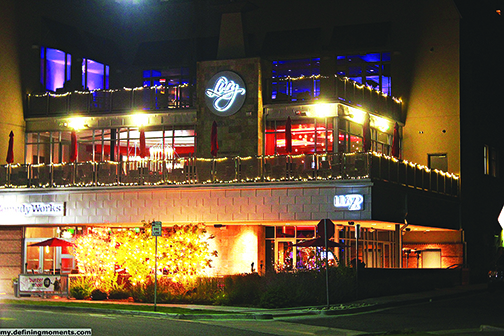
Comedy Works (Landmark location) is a Denver institution and a live comedy mecca; currently shuttered by Covid-19.
The essence of effective live comedy is the proximity of the artist to the audience. It’s an intimate affair, wherein spectators willingly subject themselves to carefully crafted webs of cunning that twist their wits into coils of suspense and then snap the tension with an unexpected conclusion. The result: uncontrollable laughter.
Social distancing and the complete shutdown of indoor venues has put a detrimental damper on this dynamic, placing comedy venues, promoters, managers, booking agents and the essential engine upon which the industry runs — the comedians — in peril. Currently, the world that hawks hilarity is stagnating, yet the resilient nature of the art form pushes on like a river smothered by a landslide — looking for other ways to reach its destination. And, while some do not deem laughter as an “essential” industry, those who create it think otherwise, and are reacting to 2020 in various ways.
An Unfortunate Setup
Comedy Works is widely regarded as one of the finest institutions in the live comedy business, but their business is currently paralyzed. Longtime owner/operator Wende Curtis explains: “Our downtown club closed on March 15 and has never been able to re-open. We were unable to get 50% or even 100 people in to maintain the social distancing requirements. Our south location reopened in late July but was closed again with the recent mandates.”
With no options for operating in an outdoor space, they are looking to the powers that be for assistance. “We are hoping government officials see the impact on live entertainment venues, restaurants and all businesses impacted and will appropriately accommodate us in the stimulus package,” Curtis explains.
Curtis, a universally respected comedy promoting legend, is critical of the government’s role thus far: “These venues and businesses should not have to bear the burden of this pandemic. The government should have stepped up and helped these businesses sooner. The Paycheck Protection Program (PPP) was meant to suffice for eight weeks. It’s been nine months. Without small businesses, we [live comedy] will be a couple of ugly big box companies. A truly sad state.”
Promise Of The Real
Despite the detriments of 2020, comic Christie Buchele is still hopeful — hanging onto the idea that venues, and more importantly comedy fans, will hang on too. The relative newcomer to the jokester trade has quickly blazed a trail to the forefront of the new faces set, earning a reputation for being hardworking and fiercely funny. Staying busy during 2020 hasn’t been easy, she describes performing live after the shutdown: “My first show was a zoom show for a producer in Austin, the first week of April. I didn’t do a live show until Mid-May. We did the show in the parking lot of a brewery with tables spread out and comics all wearing masks when they were off stage. The crowd size was maybe a little smaller than average but it’s hard to tell with everyone spread out.”
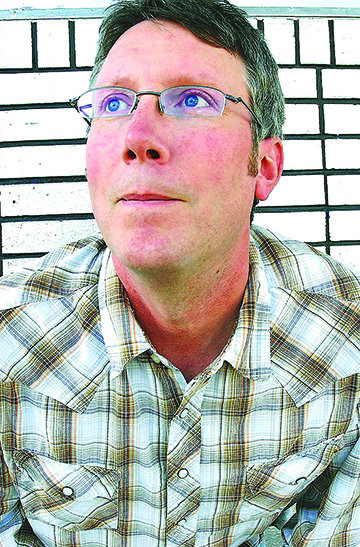
Denver comic Christie Buchele is doing everything she can to keep her chops up during indoor venue shutdown.
The experience of performing under these conditions makes Buchele pine for the good old days of clubs full of patrons packed in sardine-tight. “Before COVID-19 an outdoor show felt like a real pain in the ass. Keeping attention was tough, keeping up your energy and dealing with any distractions was terrible. I do think that audience members are just so happy to have something to do that now when they go to an outdoor show, they are much more attentive and excited. And they realize we are rusty but just so excited to do comedy again.”
Buchele urges comedy fans to stay tuned and support independent venues by subscribing to streaming content and buying tickets for future shows. Of all these, she laments the temporary loss of Denver’s finest room the most: “Of all the venues in Denver, I miss Comedy Works Downtown. It’s the best place in the world to do comedy and I hate not being able to go down there every week and see everyone and have the best time onstage. I never thought I would go this long without stepping foot in that building. I imagine I will cry happy tears the first time I get back up there.”
The Show Must Go On
Ben Kronberg is a Denver comedy stalwart, having begun his performance tenure in the early 2000s with no end in sight. His straight-out-of-left-field-blink-and-you’ll-miss-it style is inimitable and unmistakable. Kronberg’s comedy blurs the line between traditional set-up / punchline joke telling and abstract mentalist conjecture, which seems to have seeped into his perception of linear events in general. When asked to compare his comedic experience post and prior to the shutdown, he says: “I have what you could call a memory blend with shows now. After doing comedy for over 15 years, all the shows seem to blend together and fade together. I have been running shows at The Denver Comedy Lounge for about a year so it [last indoor show] was one of those to be uncertain.”
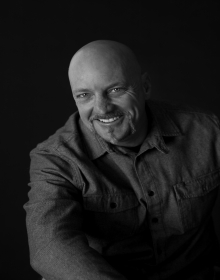
Ben Kronberg has been performing in Denver and beyond for 15 years and is keeping things light.
Once social distancing regulations were in place, Kronberg adapted and kept forging forth. “We kept doing shows however we could, moving to the alley behind the lounge and trying to comply with all of the regulations. When you go to a strip club you want to be close to the performer, and comedy is no different so it gave a cold medicine vibe to the whole thing with the laughter vaporizing because of being outside. We could fit maybe 30-ish people in this situation. People who came out were receptive, but this muted version of a comedy show could be felt by all. But it was better than nothing.”
Kronberg sees virtual shows as a band-aid over an axe wound type of remedy but participates nonetheless — if only for something to do. “The most fun I had [virtually] was probably doing a zoom talent show. Most [attendees] were performers and a few pervy, lonely audience members. It was better than nothing but not a proper substitute for the real thing. Kind of like a homemade fleshlight.”
Troy Baxley is a Mile High comedy legend and may or may not see stage time again.
Give ’Em Hell
Of all the unsung heroes in the Denver comedy scene, Troy Baxley is at the top of the list, having begun performing in the 1980s and since played just about every comedy stage in North America. He ran one of the first open mics in Denver at the Lions Lair on East Colfax and, of late, has taken to mentoring an onslaught of young comics determined to get on the fast track to funny.
Baxley sees the current shutdown as a great equalizer, serving to weed out what he calls “water cooler comics” while testing the endurance and mettle of those who are truly in it for the long haul. “The thing is,” he begins, “most are crumbling under the weight because there’s no end in sight. If you’re a hacky comic, the allure of doing the same two-minute set falls away, and since you aren’t disciplined to be constantly developing new material your skills get rusty fast. With open mic nights gone [for now] you can’t just go tell a couple zingers one night and then go to work the next day announcing yourself as a comedian.”
Unfortunately, Baxley was recently diagnosed with onset Parkinson’s disease, perhaps hindering his ability to perform once clubs are open again. Yet, Baxley shrugs off the shutdown like he’s shutting down a heckler. “I can tell by a heckler’s tone how long they have before I get the room to turn on them. I can tell by Covid-19 that, eventually, things will bounce back and once we all work the rust off, we’ll be cracking wise better than ever.”
“Repeat after me: real estate provides the highest returns, the greatest values and the least risk.” — Armstrong Williams, entrepreneur
by Luke Schmaltz
As of February 25, 2020 — according to Forbes and WalletHub — Colorado had one of the lowest residential property tax rates in the nation — just 7.15% — third to only Hawaii and Alabama.
As of November 3, 2020 — according to some fiscal experts — that glowing statistic may gradually begin to fade.
An Uneven Keel
Consistent with the year’s underlying theme of division and disparity, the commercial tax rate sits at an inverse position at 29% — making the terrain for independent, small businesses especially rough, and increasingly so as Covid-19 looms on. Before the election and the ensuing repeal of the Gallagher Amendment, anyone keen on owning a home, as well as commercial property in Denver, was privy to staggeringly different tax bills — even if their residential property was right next door to that of their business.
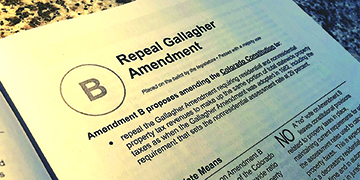
In an election that was overwhelmingly characterized by close races and slim margins, Amendment B (repealing Gallagher) passed in a landslide vote of 57.4% to 42.6%. This means that the low property tax rates Colorado homeowners have enjoyed for decades will, according to opponents of the measure, begin to increase the tax burden homeowners are forced to bear — especially those in the urban middle-class sector.
Wide Appeal
For the uninformed, property taxes are collected in order to pay for local government services that benefit the immediate district. These include schools, fire departments, infrastructure, water, libraries, recreation and county road maintenance.
Tax Increase?: With Gallagher repealed, some say taxes will go up while others say they will not.
As all property owners quickly discover — residential and commercial alike — taxes are determined by complex formulas, dreaded by many and resented by all for their unrelenting consistency. In this election cycle, the convoluted nature of taxes seemed to have influenced the diverse interest in Amendment B vs. the Gallagher Amendment — perhaps the only refreshing thing about the issue in general.
Amendment B garnered a patchwork of varied bipartisan support, both for and against the measure. Proponents included former U.S. Senator Hank Brown (R), current Republican state senators Bob Rankin of Carbondale, and Don Coram of Montrose, current House Representative Daneya Esgar (D) and former Colorado Secretary of State Bernie Beusher (D). Naturally, the measure was opposed by the author of the Gallagher Amendment, former Senator and career public servant Dennis Gallagher (D) along with the right-leaning head of Colorado Rising Action, Michael Fields, as well as with former House Speaker Dickey Hullinghorst (D).
An Outdated Formula?
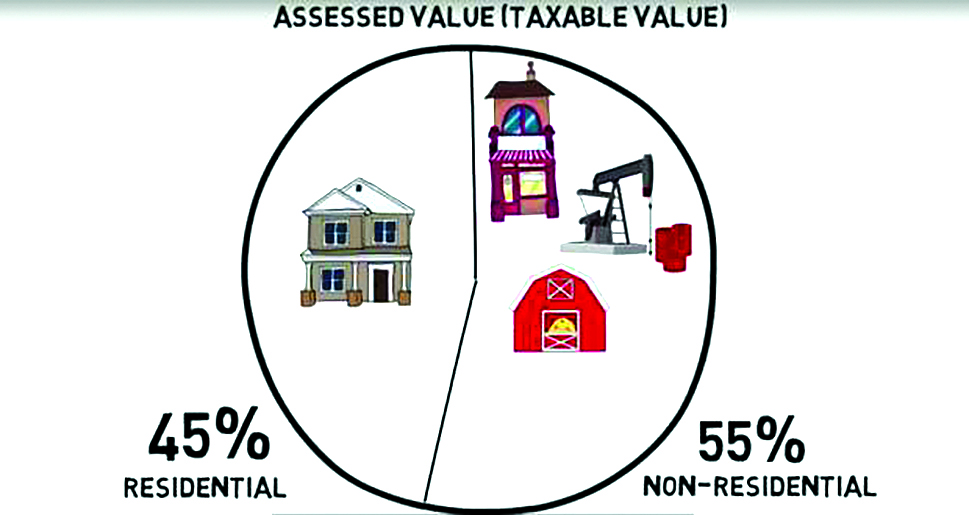
For nearly four decades, Colorado residential property owners have enjoyed consistent tax cuts supplied by the Gallagher Amendment which, until November 3, had rates locked in at 7.15%. The disparity here is stark, however, as commercial property owners were “stuck with the bill” as it were and foisted with tax rates consistently ringing in around 29%. Under Gallagher, residential taxes could only allot for 45% of the total tax base, with nonresidential properties such as retail businesses, factories and farmland making up the remaining 55%. As rising residential property values skyrocketed, the inherent complexity of the tax formula resulted in an unbalanced scale — with the heavy end tipping toward commercial property holders.
While this lopsided provision was great for homeowners in high-growth areas along the front range, owners in rural areas suffered — as their property values were not accruing at nearly the rate of their urban counterparts. Simply put, with Gallagher in place, the more the value of a property increased, the less percentage of tax the owner had to pay. With this protection removed by Amendment B, critics of the measure are predicting that residential property taxes will rise drastically. Meanwhile, supporters of the measure contend that removal of the Gallagher Amendment will leave current rates frozen in place — for now.
Too Much Too Soon?
The recently-televised Colorado Decides: Amendment B debate hosted by PBS 12 featured outspoken public figures weighing in on both sides. Representative Esgar (D) championed the effect a repeal would have on small businesses: “ … right now 20% of the taxpayer base (commercial property owners) are paying 55% of the tax [revenue]. These are small businesses … right now they are being hit the hardest … they want to know, right now, why they are paying four times what [the] residential property tax rate is …” Esgar explained further that leaving the Gallagher Amendment in place would result in commercial property taxes ballooning to up to five times that of the residential rates.
Meanwhile, in opposition to Amendment B, Michael Fields (Colorado Rising Action) explained that a statewide repeal is far too drastic, and rather, measures should be taken to amend the tax code in certain districts who are suffering from loss of revenue. In the aforementioned televised debate, Fields contents that: “ … a solution needs to be more regionally based or county based … I think that makes a lot more sense because there are areas of our state that are either less commercial property or their (residential) values aren’t going up as much …overall, this is a regional problem and there should be a regional solution.
Upwardly Mobile
As fate would have it, the Gallagher Amendment is no more. Without another policy in place, according to TABOR, residential property taxes will rise as the property values increase. So, as Denver renters have recently seen in vivid detail, this could mean yet another rent hike as landlords pass the overall cost of owning property onto their tenants.
The Gallagher Amendment was a major ballot issue in 1982 and again in 2020. It was designed to evenly spread the tax burden between residential and commercial properties.
While proponents of Amendment B downplay the severity of repealing the Gallagher Amendment, others like Fields are quick to point out the costly implications. An October 26, 2020, article published on coloradopolitics.com contends that a repeal leaves no protections in place for property owners. This means that — as required by TABOR — property taxes would increase to the tune of $203+ million and keep climbing — a fact that lawmakers like Daneya Esgar seem to have forgotten to disclose whilst selling this new piece of legislation to an uneducated and most likely distracted public.
Others contend that tax rates that are applied according to the rapid rise of property values, while being inconvenient for owners, can spell ample funds for public services — especially in rural and economically challenged areas. At any rate, the varied implications of how things may play out are a fitting reflection of the complex nature of property tax formulas. To find out what the repeal truly means (just like everything else this year) folks are going to have to just wait and see.
The year 2020 has brought a lot of misfortune to people all around the world, but John Larchick (JL) and his record label Time Stamp Records (TSR) have made good use of the time of solitude due to social distancing. Announcing the official start of the label on January 1, JL and his team have been busy in the lab making 2020 their year to emerge on the music scene with the release of their brand new music video and song Battle Royale.
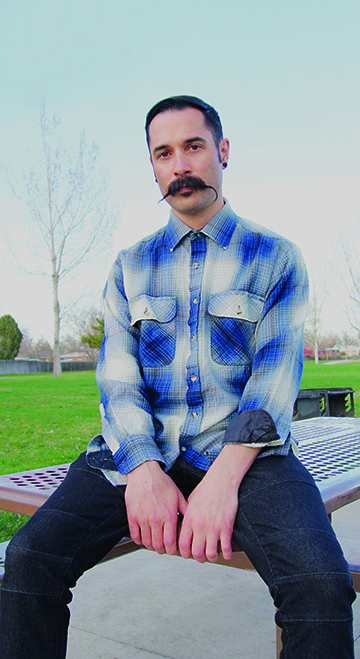
“Battle Royale was an absolute gem to produce. I hate to say it, but my overgrown mustache may have taken the spotlight from even me on this one occasion. But honestly, from the beginning of the song’s inception, everything just started falling into place. From the creation of the beat and the vocal writing, down to the video concept and execution. It all just felt right. Those are the types of workflow that we as artists are searching for when we create,” stated JL, Owner and Producer of Time Stamp Records.
TSR, a childhood dream of JL’s, is a new indie record label out of Aurora/Metro Denver, Colorado. Time Stamp Records produces music and film. They also distribute and cultivate quality art, merchandise and music for film, radio, live events and television. And they have big plans for the future.
“Owning my own label has been a lifelong dream,” stated JL.
JL has been involved in the music industry from a very young age. At 17, he and his high school band, Reverend Orange Peel, sold out the Bluebird Theatre and earned the opportunity to play at the Ogden Theatre for New Year’s eve that same year. Both venues are icons in Denver. Ever since then he knew he had the knack for it and wanted a career in music.
“It wasn’t always glorious venues and big gigs though,” stated JL.
After high school, the band naturally dispersed to various colleges resulting in the dismantling of Reverend Orange Peel. “But I was still set on my musical quest. I was writing the music, learning to play instruments, and honing my craft virtually every waking moment. I started learning how to navigate all the facets of the ever-changing music industry. Everything from working with band members, writing songs, recording, booking, marketing to tours, videos, press releases, radio interviews and so much more.”
JL is no stranger to touring and has diligently booked gigs at countless venues across Colorado and surrounding states. “I’m super grateful for all of my past, present and future experiences, from the coffee shop gigs with no sound system to Boulder’s famous Fox Theatre. It’s my experiences as a musician and recording engineer that set me and this record label apart from others”.
JL has gone on numerous tours, occasionally accompanying some very notable artists. He has performed with acts such as Guru from Jazzmatazz, Fat Joe, Wu-Tang Clan, Ol Dirty Bastard, Pepper, the Pharcyde, Devin the Dude and others.
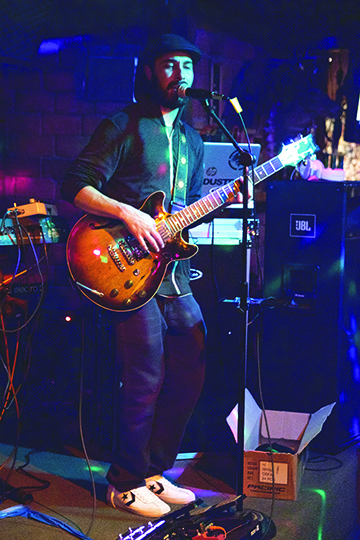
In addition, JL is the owner of a professional recording studio (Green Room Studios), the lead vocalist for JL Universe, a songwriter, multi-instrumentalist and a record producer. JL has released four albums and has helped a few fellow artists release albums of their own. His drive and motivation come from his love for music and the desire to create amazing art. He wants to encompass everything in the industry and assist other aspiring artists to reach their goals. Cultivating Time Stamp Records into a renowned success for all the artists signed under the label is where his sights are now set.
“Running this label, to me, it’s a really big responsibility and it’s a big honor. To be able to provide a service and to be able to put out people’s truths,” said JL. “Music and art are so personal and there are so many really dope artists that don’t get a chance to have a sounding board, to have somebody there to ricochet ideas and concepts, and grow a plan. That is what I am focused on when we sign artists. We are helping the artists generate their vision and then really feed that vision so it can grow and blossom into something bigger.”
JL is drawn to music that resonates with him, as opposed to claiming loyalty to a specific genre of music. He listens to and supports everything from electronic to funk to hip-hop to country. He has a hard time fitting Time Stamp Records into a specific category because he works with artists from across the board. When considering an artist for the label, JL really focuses on the quality of character and integrity presented in their work. He values artists with great work ethic, clarity, and dedication to their craft. He values artists with ambition and a drive to create something amazing for the world. Because of his familiarity with the industry, JL has a keen eye for the foundation required to establish a successful musical career.
“My goal is to become the record label that I always needed as an artist. To create a space and platform for artists and projects to fully develop. I have built, and I am still building, the frameworks and no one style or artist’s journey will be the same, but the process to get to our goals are similar,” said JL. “TSR is here to assist in that self-discovery and execution of plans. My dream is to make art that transforms time and space and that stamps the moment we are living in through expression and human connection. The end goal is to make creations that resonate, fulfill dreams and win Grammys.”
Sometimes all an artist needs is someone to give them a little nudge or to point them in the right direction for success. They can be filled with talent and musical genius, while struggling with the skill of getting noticed and releasing their art. They need a mentor or a leader. And that is precisely what JL and Time Stamp Records is. TSR is paving the way for musicians. He guides them on the path toward achievement. That way, everyone wins. In November, TSR plans to announce a statewide contest which is calling on artists to submit their work for the chance to win a single produced and released by TSR along with other great prizes.
Time Stamp Record’s song and video, Battle Royale was quickly followed by JL’s second single release of 2020, The Other Side. The single is paired with a creative and thought-provoking video and the song is seeing great success in just the first few days of release. In addition, JL Universe has several queued singles ready for release later this year and into 2021.
To listen to JL’s work and to follow JL Universe, Time Stamp Records or Green Room Studios (Colorado), search and find them on Facebook and Instagram. You can also find JL Universe’s video and single — Battle Royale on all digital streaming platforms like Spotify, Apple Music and Youtube.
Time Stamp Records’ long anticipated website has been revamped and reintroduced in an easy to use and enlightening format. Plus, the brand-new winter line of TSR merchandise will be available in November and contains fabulous new clothing styles.
For more news and exclusive music, art and culture, follow TSR on all social media platforms and sign up on the mailing list at www.timestamprecords.com. New artists, new songs, new videos, new merch, new inspirations and new beginnings are all happening, right now, at Time Stamp Records.
Multiple Sites Finishing Up But Only A Couple Commencing; Stunning Newly Built Structures Opening In The District For Fall
by Glen Richardson
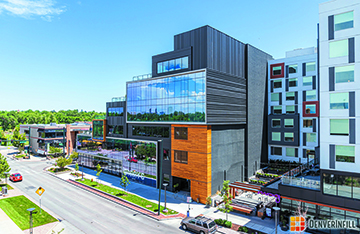
Reshaping Cherry Creek: Holiday shoppers-visitors in the district will be greeted by this new mixed-use retail-office building on the corner of 3rd. Ave. & Josephine. The structure is a standout as most new buildings are far from futuristic.
The pandemic and a weakening economy find Cherry Creek’s construction sites still turning shovels and swinging hammers, but the pace has slowed and few new projects are expected to sprout up. Following eight straight years of new construction, owners, developers, contractors, subcontractors and the supply chain are feeling the shock.
Normally it’s rare for district developers-builders to slow down construction activity. But these aren’t normal times, and the pandemic economy has given rise to a noticeable work cutback. The structure of demand is changing: Fewer hotels are being proposed due to less business-leisure travel. Online shopping is shrinking the demand for retail space and the need for offices is slowing because of remote working.
Multiple projects are finishing up in Cherry Creek plus a couple have commenced construction. Residents and district shoppers can expect those projects to be completed. It is new projects that have been proposed in the district that are likely to see terminations of parties or entire projects. Given the hotel outlook, the AC Marriott in Cherry Creek is likely to be delayed or the site could go up for resale. The Sunridge Hotel Group project is proposed for seven-stories, 150-rooms.
Westside Wait
Redevelopment of Cherry Creek’s west end has been the slowest to take off. Completion of the 260 North office-retail project at Josephine St. and East 3rd Ave. and makeover of the former Inn at Cherry Creek opening as The Clayton at 233 Clayton St. in March of 2021 are notable exceptions.
New Excavation: Despite Cherry Creek’s construction cutback, dirt work is underway at this 240 Saint Paul site. Building will be anchored across the first three floors by an Equinox Fitness Club.
Broe Real Estate Group which owns the bulk of the east side of Clayton St. announced a year ago it would demolish several structures to make way for two new office buildings. Existing two-story structures at 200 and 210 Clayton are to be replaced with an eight-story office building with ground-floor retail. The adjacent four-story building it owns at 216 Clayton would remain but the two-story parking garage to the north would be replaced with a seven-story office building and ground-floor retail. Broe’s headquarters is at 252 Clayton and the firm has deep pockets. Thus the massive project will likely come to fruition but demolition isn’t expected to begin until next year with completion two-five years away.
The promised Clayton Lane Investors redevelopment of the west end of Cherry Creek between 1st and 2nd Ave. from Josephine to Detroit St. is in limbo again. The Invesco Real Estate-Broomfield partnership project isn’t likely to break ground in the next 12-14 month. Completion that would include demolishing the former Sears store that has been vacant since 2015 isn’t likely in the next several years. Should the venture be terminated look for the Nichols Partnership — Clayton Lane’s original developer — who just bought back a portion of the Whole Foods Garage for $6 million — to take over the project.
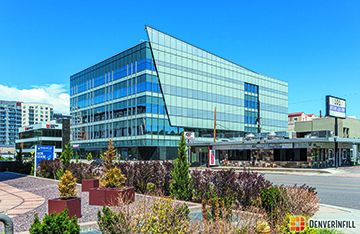
Boundary-Pushing: The just completed UC Health Cherry Creek has opened along East 1st Ave. Sleek all-glass structure creates a new footprint on the eastside as the surrounding buildings are heavy with earth tones and masonry.
New For Fall
Newly completed projects scattered through the fashionable neighborhood are beginning to open for fall. The project known as 260 North has finally opened, creating the west end’s first high-end, mixed-use space. Situated adjacent to the BMC built MOXY and Halcyon Hotels — the only other new westside structures — it is a compelling building with a stepped-up design. Located on the corner of 3rd and Josephine streets, it adds office, retail and parking space while allowing daylight into the streetscape.
On the east end, the just completed modernistic 88,000-sq.-ft. UC Health Cherry Creek has opened. With an all-glass façade, it stands out alone on East 1st Ave. as most of the surrounding buildings are heavy with earth tones and masonry. The health center offers primary care, state of the art imaging, a surgery center and comprehensive oncology treatment.
Over in the Cherry Creek Triangle, two major multi-family projects are also open. Between the step down, brickwork and landscaping, Gables Cherry Creek II helps reduce the harshness of East Alameda Ave. Gables Vista, rising 12-stories, is one of the tallest in the triangle. All together the three Gables projects have added 579 homes in the district.
On The Rise
Two projects, both BMC developments, are currently under construction in the district. Newest is the 240 Saint Paul project to be anchored across the first three floors by the Equinox Fitness Club. Most of the office space is pre-leased and at last report half of the 12,000-sq.-ft. of retail space had been rented. Construction is anticipated to take at least 14 months, with completion in summer-early fall of next year.
Urban Lifestyle: Gables Cherry Creek II in the Cherry Creek Triangle offers a walkable urban lifestyle with enhanced amenities. Step down brickwork and landscaping reduces the harshness of East Alameda Ave.
Renamed The Clayton, Matt Joblon signed a 99-year ground lease on the 233 Clayton St. property in the fall of 2017. Since renovation started a year ago, BMC is spending $30 million to add onto the property that’s expected to open next March.
What will make the project unique in Cherry Creek is Joblon’s goal to create a “real culture center.” In addition to 37 hotel rooms, the six-story building will feature 12,000-sq.-ft. of “hip retail” on the ground-floor plus scores of music, culinary and art venues for entertainment, exploration and enjoyment.
Projects On Horizon
Despite the district’s construction slowdown, there are several new projects on the horizon in Cherry Creek. They range from office buildings to apartment complexes, two potential hotels plus an independent living community for seniors.
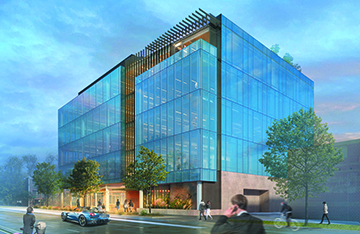
More Glass: Construction could soon get underway on this proposed glass structure at 2nd Ave. & Adams. Retail-office site would extend the existing stretch of retail on East 2nd Ave further east.
Most likely to begin construction is the 2nd Ave. & Adams project where a two-story office building and a single-family home have already been cleared. Purchased by Blair Richardson, the 0.29-acre site would feature an all-glass building with ground floor retail plus four levels of office space. When it is developed it will extend the existing stretch of retail on East 2nd Ave. further east.
Due to the project’s nature, a proposed seven-story, 136-unit senior living project could also break ground next year. Named Solterra Senior Living, the site is near the intersection of Alameda Ave. and Colorado Blvd. A self-service car wash was recently demolished at the site to make way for the project. The infill site at 235 Fillmore that has set vacant for several years has been purchased by BMC, making development more likely. An office building with ground-floor retail is proposed.
(BPT) – Before COVID-19, you probably didn’t put much thought into washing your hands. A bit of soap and a quick lather seemed adequate. Now, hand washing is center stage as a main step to fight the spread of the virus and help people of all ages stay healthy.
Regular hand washing is one of the best ways to remove germs, avoid getting sick and prevent the spread of germs to others, according to the United States Centers for Disease Control and Prevention. This not only helps with the COVID-19 virus, but also helps protect you from other viruses, such as cold and flu germs.
COVID-19 is efficiently killed with soap and water, which is why the CDC recommends scrubbing your hands several times a day. However, parents and caregivers may struggle with getting their kids to wash their hands the right way. From impatient toddlers to distracted teens, hand washing may not be happening correctly.
To help your family wash their hands the right way and have fun while doing it, the health experts from Colgate offer some simple steps to consider:
Step 1: Have a family meeting
Talking about hand washing casually won’t make a lasting impression. Hand washing is important, especially during the pandemic, so give it the attention it needs by calling a family meeting. Talk about how hand washing kills germs and stay positive, saying how your family wants to be a part of the solution in preventing the spread of COVID-19.
Step 2: Discuss proper hand washing
Proper hand washing is simple once you know how to do it. First, wet hands with clean water. Apply soap and scrub the entire hand for at least 20 seconds, including between the fingers. Finally, rinse and air dry or use a clean towel. Availability of soap and washing correctly is essential. That’s why Colgate is donating 1.4 million bar soaps distributed in the U.S. as part of the #SafeHands challenge, featuring instructions for effective hand washing. The bar soaps, along with other health and hygiene products like toothbrushes, toothpaste, and body wash, will be delivered to food banks and school lunch programs nationwide via Colgate’s trademark Bright Smiles, Bright Futures mobile dental vans. In total, Colgate’s product donations across the country is valued at over $8MM.
Step 3: Make it fun
What’s typically the hardest part of proper hand washing is the length of time. To make hand washing fun, sing a tune for that length of time. For example, sing “Happy Birthday” twice to hit the mark. Or, customize a favorite nursery song and sing it for that length. To the tune of “Row your boat” sing: “Wash, wash, wash your hands. Wash them every day! Scrub with soap, rinse it down, wash those germs away!”
Step 4: Praise and rewards
Make hand washing a part of children’s responsibilities, much how they are expected to make their bed and read daily. You may want to add posters and other reminders to help the family remember the importance of hand washing. Remember, positive reinforcement and recognizing a job well done goes much further than scolding when stressing new habits. You may even decide to set up a rewards program; for instance, young children get a sticker every time they wash their hands.
Mixed race woman washing her hands
Step 5: Be a role model
When encouraging your family to adopt healthy habits, it’s best to lead by example. Wash your hands regularly using the correct procedures. Sing loud and proud so people know you’re doing it for 20 seconds. Show it’s a priority for you so your family knows it should be a priority for them.
For more information on Colgate’s support of the #SafeHands Challenge and their global impact of donation more than 25 million products globally, visit ColgatePalmolive.com.
Regular handwashing is one of the best ways to remove germs, avoid getting sick, and prevent the spread of germs to others.