Jayson Penn Indicted By Federal Grand Jury In Denver; Feds Find A Chicken Conspiracy At Greeley-Based Firm
by Glen Richardson
A federal grand jury in Denver has indicted Jayson Penn, the CEO of Greeley-based Pilgrim’s Pride, and three other current or former chicken industry executives for price fixing. The grand jury in U.S. District Court here indicted all four with one count of conspiring to fix prices for broiler chickens from at least 2012 through 2017. A trial is scheduled to begin this month (August).
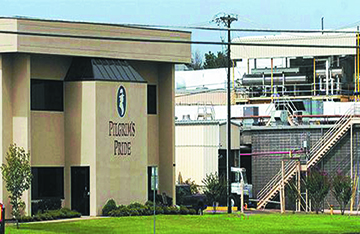
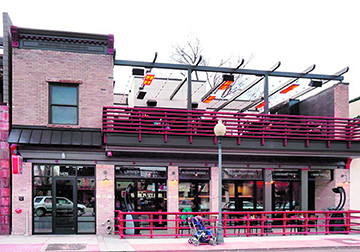
Scratching Out A Living: Headquarters of the second-largest U.S. chicken company Pilgrim’s Pride is in Greeley. The entrance includes a bust of founder Lonnie “Bo” Pilgrim. The firm reported annual revenue last year (2019) of $11.41 billion.
The indictments came after grocers, retailers and consumers accused Pilgrim’s Pride, Tyson Foods Inc., and other poultry processors in a lawsuit of conspiring since 2008 to inflate prices for broiler chickens. Fabio Sandrio, chief financial officer, is serving as interim president and CEO.
The other executives allegedly involved in the scheme include former Pilgrim’s Pride vice president Roger Austin, Claxton Poultry Farms President Mikell Fries, and Scott Brady, a former Pilgrim’s Price executive who joined Claxton in 2012. Pilgrim’s Pride supplies chicken for Costco and Yum Brands’ KFC, while Claxton is a supplier for Chick-fil-A.
$11.4 Billion Income
Pilgrim’s Pride is the second-largest U.S. chicken company, with reported annual revenue last year (2019) of $11.41 billion. It is majority-owned by Brazilian meat giant JBS. Tyson Foods Inc. — the largest U.S. poultry processor by sales — meanwhile says it is cooperating in the Justice Department’s probe into the matter, under a leniency program that will let Tyson avoid criminal prosecution.
Penn pleaded not guilty to the federal charges, while a judge barred him from contacting poultry buyers allegedly victimized by the scheme. He also agreed to surrender his passport and not leave the country.
U.S. Magistrate Judge Kristen Mix said at the hearing that Mr. Penn can remain free on personal recognizance, and can travel. She imposed conditions on his actions while he awaits trial, most notably that he can’t contact employees of eight companies that are customers of Pilgrim’s and are alleged victims of price-fixing by Mr. Penn and co-conspirators. The Judge also said Mr. Penn couldn’t contact price negotiators at other chicken suppliers who allegedly participated in the price fixing.
Penn On Paid Leave
Jayson Penn joined Pilgrim’s in March of 2011 as Senior Vice President of the Commercial Business Group. He moved up to President of Pilgrim’s USA in 2017 and was promoted to President-CEO in March of 2019.
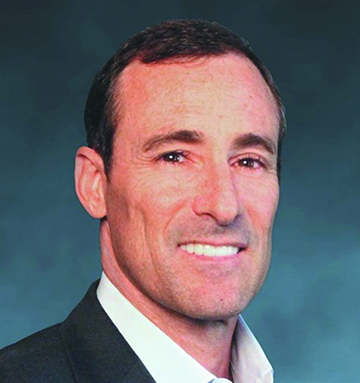
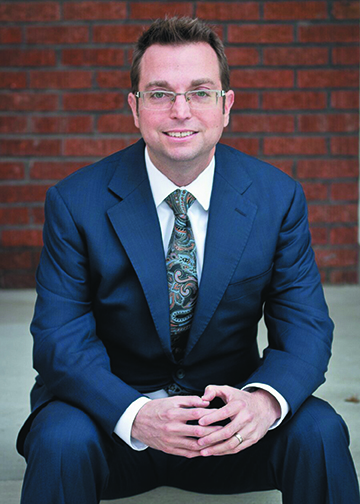
Indicted CEO: Jayson Penn, the CEO of Greeley-based Pilgrim’s Pride, has been placed on paid leave following pleading not guilty to the federal charge.
Pilgrim’s Board placed Penn on leave with pay following the hearing. He makes $4,418,340 as President-CEO at Pilgrim’s Pride.
“The Board takes the recent allegations very seriously and believes it is in the best interest of both Jayson and the company that he is given the opportunity to focus on his legal defense at this time,” Board Chairman Gilberto Tomazoni said in a statement.
Ruffled Feathers
“After years of talk, the feds finally pounced,” observe legal experts familiar with how the Department of Justice executes prosecutions of business organizations. They say it is one of the stranger examples of alleged market-rigging in a long history of cases, made more unusual in that the chief executive of a company that big is actually facing criminal charges and as many as 10 years in prison. The maximum fine may be increased to twice the gain derived from the crime or twice the loss suffered by victims if either amount is greater than $1 million, according to the Department of Justice.
Chicken House Pride: Founder Bo Pilgrim, at right, performed in ads dressed in pilgrim garb with a pet chicken named “Henrietta.” His Texas mansion was nicknamed “Cluckingham Palace” by neighbors. He sold the company to JBS in 2009 and it was moved to Greeley.
The charges the U.S. Justice Department laid out in its indictment appear to document executives at competing companies colluding to share pricing and bidding information from 2012 through 2017 in the cut-throat world of commodity chicken. Makan Delrahim, the head of the government’s antitrust division, said in a statement: “Executives who cheat American consumers, restaurateurs, and grocers, and compromise the integrity of our food supply, will be held responsible for their actions.”
Vertically integrated, Pilgrim’s Pride is involved in breeding, hatching, raising, processing and distributing chicken. The company produces some 11 billion pounds of chicken products annually and serves more than 6,000 retail food outlets, distributors and food service operators.
Chicken Feed Start
Pilgrim’s Pride traces its roots to Pittsburg, Texas, where Lonnie Alfred “Bo” Pilgrim opened a chicken feed store in 1946 with his older brother, Aubrey. They grew the fledgling company by handing out free chicks along with purchased bags of feed sold to customers.
Bo Pilgrim would often dress in pilgrim garb, complete with a pet chicken named “Henrietta,” to perform in advertisements. The extravagant Texas mansion where he lived was dubbed “Cluckingham Palace.” Set on 43 acres, it had 10 bathrooms, an indoor pool, cinema and gymnasium.
He sold the international poultry operation to Brazilian company JBS in 2009, and its headquarters was moved to Greeley. He died in 2017 at age 89.
Out of everything that’s been lost over the past few months, one of the few things that won’t be lamented is the brown cloud of pollution hanging over Denver like a giant swarm of gnats.
Composting is a clear, logical way to reverse global warming on an individual scale.
As the city reopens, the brown cloud will return, but if you happened to go outside and glance upward anytime in late March, April or May 2020, you were probably shocked at how blue the sky actually is — even over a large city. In early April, The Denver Post reported an 80% decrease in sulfur oxide in the downtown area and up to 50% reduction of particulates such as nitrogen dioxide and nitric oxide compared to data from the same time in 2019.
Although the shutdown briefly reduced carbon emissions at home and across the globe, the respite is not nearly enough to reverse 200+ years of industrialization. If a significant reversal of global warming is to occur, everyone has to do their part. This does not mean you have to wear hemp sandals and ride a bamboo bicycle to work. You can actually help the planet out by doing less, that is, when it comes to throwing away grass clippings, dead tree branches and other detritus generated from landscaping and routine yardwork.
The Basics
But first, for those who may yet be unaware, the combustion of fossil fuel in automobiles, industrial machinery and farming equipment along with other agricultural activities releases carbon dioxide into the atmosphere. According to the U.S. Energy Information Administration, energy-related CO2 emissions across the globe are projected to increase from 32 billion metric tons in 2016 to 35 billion by the end of 2020. This atmospheric carbon, combined with methane, sulfur oxide, nitrogen dioxide and nitric oxide make up what are known as “greenhouse gasses.” The greenhouse effect occurs as these gasses allow sunlight to pass into the atmosphere, yet they do not allow heat from the planet to radiate into space. The result is global warming, which if allowed to continue, can have devastating effects on human populations worldwide — especially in coastal areas.
Carbon emissions from here can be reduced from the same place, one yard at a time.
Make The Yard Work
While the population as a whole might be able to reduce how much they travel via automobile, bus and airplane, curtailing the use of fossil fuels is not enough to reverse global warming. As an individual, however, you can lessen your carbon footprint by decreasing the amount of atmospheric carbon that originates from your front and back yard. Activities once deemed as essential must be reexamined through a CO2-awareness lens. Upending the soil for gardens, incessant cutting of grass, trimming of hedges and pruning of trees all release carbon in one form or another. Tilling and digging opens up the topsoil — and the escaping carbon mixes with the ever-present atmospheric oxygen and becomes CO2. Meanwhile, organic material in the form of grass clippings, hedge trimmings and tree twigs that gets hauled off to the landfill generates methane as it decomposes.
A Novel Approach
The brown cloud was lifted, but global warming is bigger than a brief shutdown.
Carbon sequestration is the process of removing carbon dioxide from the atmosphere and storing it through either biological or geological means. Plant life on your property is already doing this, all you have to do is to not interrupt the process with traditional yard maintenance protocols. Instead, you can leave dirt and soil undisturbed by growing flowers, plants and vegetables in raised garden beds. This leaves the soil intact while producing more oxygen and more plant material to reintroduce back into the ground. When you mow the lawn, prune trees, pull weeds and trim shrubbery you can take the trapped carbon in this “yard waste” and sequester it by breaking it down into small pieces (use a wood chipper for branches and twigs) and integrating it back into the soil through a deliberate process.
Composting Yard Waste
1.Air, water, nitrogen and carbon are the four essentials for compost. Nitrogen is supplied in the form of organic kitchen waste and green grass clippings. Carbon is just about anything organic that is brown such as pine needles, dry leaves, grass clippings, hay and sawdust as well as shredded paper and cardboard. The ratio of carbon to nitrogen (C:N) should be anywhere from 25:1 to 40:1 — which basically means material that is drier than fresh waste.
2.Choose a space that is approximately a cubic yard in dimension (3x3x3) and that is removed from high traffic pathways and living quarters. To partition off the area, you can use old wooden shipping pallets, hay bales, chicken wire or anything similar you have sitting around.
3.Next, build your compost pile keeping C:N ratios in mind. Be sure to place food scraps beneath pine needles, leaves, dry grass, etc. in order to keep odors down and insects and rodents away. Next, wet the pile and then simply allow worms, microorganisms, bacteria and fungi to break down the material. You can add air by poking the pile with a pitchfork or a rake or by turning it every few days with a shovel. Add a small amount of water every few days to keep the breakdown agents moist, and when you add more to the pile be sure to integrate the new material in with the old.
4.Once your compost is dark brown with an earthy texture, it can be added to your raised beds, placed at the base of trees and shrubs and sprinkled about the lawn. Composting can save you money on fertilizer, generate less waste that needs to be hauled away by a fossil fuel-burning engine and help yield lush plants and trees. Basically, to do your part for the planet, keep the carbon in the yard.
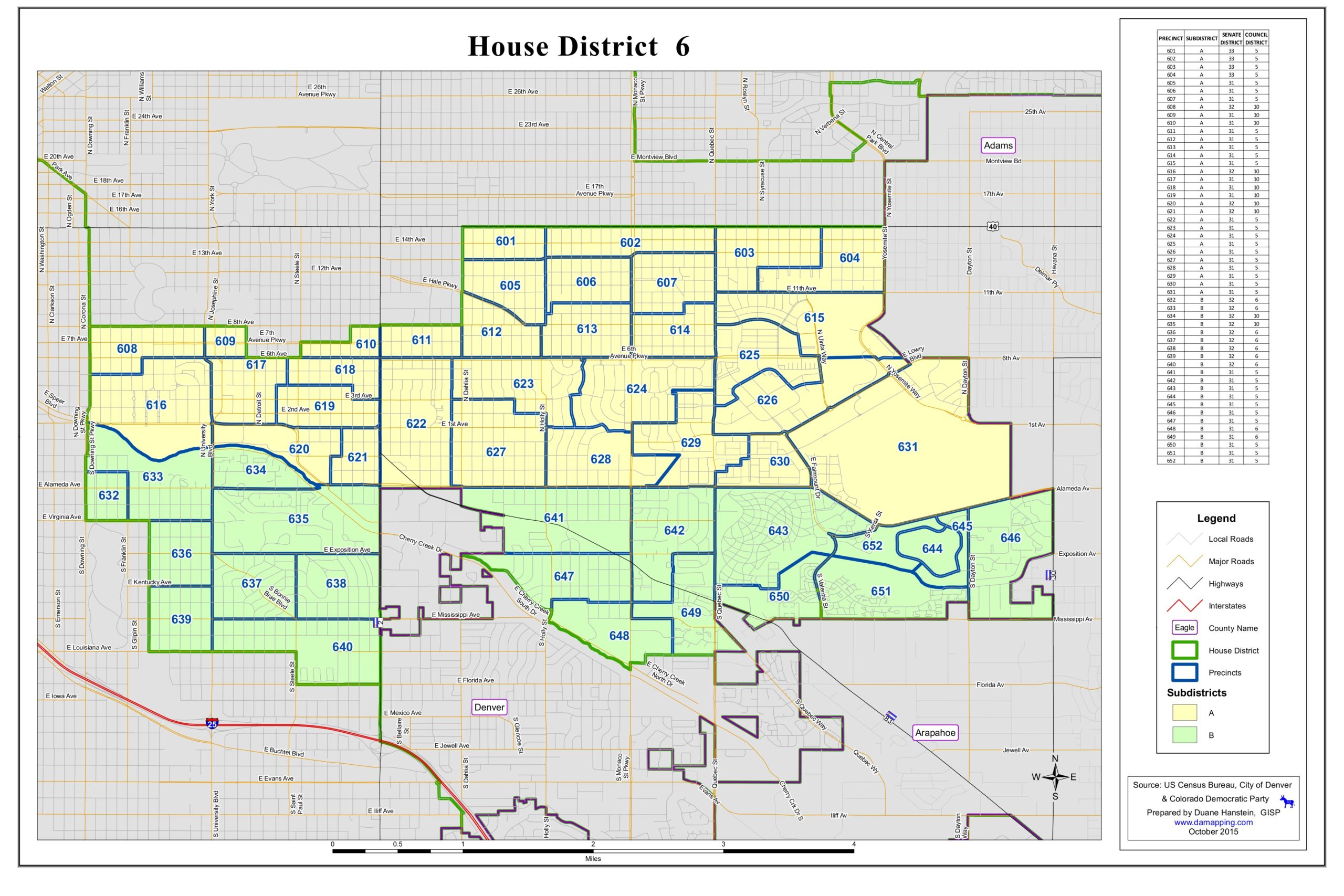
One of the most animated races this primary season is House District 6 in East and Central Denver. Three candidates are vying for the nomination and the Democratic primary is set for June 30, 2020. Steven Woodrow currently holds the seat he was appointed to by the vacancy committee and has since February 4, 2020. His current term ends on January 13, 2021, and he is running for re-election.
The vacancy for the House seat occurred when the previous representative, Chris Hansen, received an appointment on January 16, 2020, to fill the unexpired term of Senator Lois Court, who resigned due to health problems. Woodrow won 45 of the 71 votes from the vacancy committee beating out six other candidates.
Now, Woodrow must win the vote of the registered voters in District 6 and many are calling this the race to watch. It appears the election may be close with three candidates vying for the nomination. The challengers to Woodrow are Dan Himelspach and Steven Paletz who are engaging in active campaigns.
Forty-two percent of the registered voters in the district that covers East and Central Denver are registered Democrats while 17 percent are registered Republicans. It is deemed likely that whoever wins the primary later this month will win the seat in the state House.
Himelspach is challenging Woodrow based on the flawed vacancy committee process. “Colorado has the highest number of bureaucrats appointed through the vacancy process than any other state in the country,” said Himelspach. “Although many people who were part of the vacancy committee are supporting our campaign, the process is not reflective of a strong democracy. That’s why I did not participate in the vacancy committee.” Himelspach has been endorsed by District 5 Denver City Councilmember, Amanda Sawyer as well as former City Councilmembers Ed Thomas and Cathy Donohue among others.
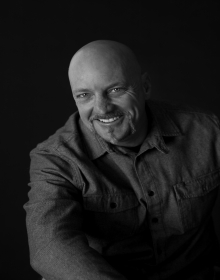
Dan Himelspach
Steven Paletz has a similar view as to why the vacancy committee is not a true representation. “The vacancy committee is not representative of the values of the voters of the district and does not include the voices of unaffiliated leaning democrats that make up a significant portion of the primary electorate in HD6,” said Paletz. “The vacancy committee was also not an issue focused vote, but what some committee members described as a ‘popularity contest.’” Paletz’s endorsements include State Senator Robert Rodriguez and State Representatives Kerry Tipper and Cathy Kipp among others.
Although Paletz recognizes that the vacancy committee does not represent the values of the voters, he sees this election as an extension of what he started last year. “I don’t see this campaign as a challenge to Mr. Woodrow,” said Paletz. “Rather, it is a continuation of the campaign that I announced in October of 2019, as I was the first person to formally declare candidacy in the Democratic primary for HD6. I believe HD6 voters deserve the opportunity to have a voice in who will represent them in the state legislature and should have the opportunity to choose a candidate that shares their values.”
Dan Himelspach also jumped into this race early collecting signatures to be on the ballot the first day they became available. “Our campaign has been focused on listening to the concerns of our neighbors and making our state government work for, ‘We the People’ again,” said Himelspach. “The fact that we were the first campaign in all of Colorado to collect the necessary signatures and be placed on the ballot by the Colorado Secretary of State — all without excepting a dime from Corporate PACs, is a testament to the grassroots support our campaign has.”
Himelspach, who has lived in Denver for four decades has a clear sense of what he would do if elected. “When elected, I am going to focus on fighting for our teachers and students by supporting strong public schools, protecting our environment, and supporting our LGBTQ neighbors and protecting a women’s right to choose,” said Himelspach. “Right now, our state is faced with tough decisions on how to properly open and support our small businesses and protect our workers and families — not just economically, but also in relation to our public health and safety. As someone who runs a small family-owned business with my daughter [selling innovative products to brain researchers all over the world] and who is a dispute resolution professional — mediating over 7,000 disputes, I am most qualified to navigate us through this pandemic.”
Steven Paletz
Paletz also outlines what he would do focusing on mental health and economic recovery. “If elected, I will lead with empathy on addressing our state’s mental health crisis, including addressing the highest increase of teen suicide in the nation and the nation’s highest teen depression rate,” said Paletz. “Having worked in both the business community and all three branches of government, I will also be a leader on our state’s economic recovery from COVID-19. This includes securing support for Colorado’s workers and small business communities throughout this recovery. Lastly, I will protect public education and look for creative ways to ensure our teacher shave the resources they need to effectively lead in a post COVID-19 classroom.”
Steven Woodrow
Steven Woodrow was contacted for comment but did not respond. His website states: “As State Representative, I advocate for social, racial, environmental and economic justice down at the Capitol. Standing up against predatory lenders, unfair credit practices, privacy violators and other powerful interests (including the NRA!) I have a detailed understanding of law and policy, the proven experience of how to make our case most effectively, and unwavering resolve. I’m simply not afraid to compete in the marketplace of ideas in the face of well-funded opposition.”
Woodrow, who is attempting to win re-election, lives in Wash Park with his wife and two sons. Woodrow has served for the past several years as Co-Captain of House District 6B for the Denver Democratic Party.
Go outside at 8 p.m. anywhere in Colorado and you’re guaranteed to hear hundreds, if not thousands, of members from a Colorado-based Facebook group howling to support anyone and everything during the COVID-19 pandemic.
Founders: Shelsea Ochoa and Brice Maiurro founded the howling at the moon movement in support of healthcare workers and first responders in late March. The group has become a way for people to connect during a time when quarantines and shelter-in-place orders have greatly disrupted our way of life.
Founded by partners Shelsea Ochoa and Brice Maiurro in late March, the group has become a way for people to connect during a time when quarantines and shelter-in-place orders have greatly disrupted our way of life.
“It really shows that we can still interact within our communities and have fun while obeying the shelter at home orders, and also release some pent up feelings in a healthy and cathartic way,” Anna Beazer, one of the group’s organizers, told Glendale Cherry Creek Chronicle in an email statement.
Ochoa, a performer at Denver’s Museum of Nature and Science, and Maiurro, a poet and activist, got the inspiration to howl from a friend of theirs in Topanga, California, who told the duo that they howl at the sunset together. So, Ochoa and Maiurro decided to give it a try, too. They had no idea that what they considered a “fun social distancing activity” would resonate with people around the country — and the world.
The duo initially intended the group to include about a hundred of the couple’s friends and family. However, once word got out about the group, its membership swelled to over 8,000 members in the first day.
Now, members live in all 50 U.S. states and 46 countries around the world, including Tuvalu, Columbia, and Togo.
“There’s no wrong way to do it,” Ochoa told the Chronicle. “People can subscribe any kind of meaning they want to it.”
Many howl to support the medical professionals working late into the night. Others do it to support the homeless, or in remembrance of a lost loved one. No matter the reason, the group embraces any reason for howling as long as it’s healthy and positive, according to Beazer.
Like Clockwork: Colorado residents have been howling at the moon every night at 8 p.m. as a way to support healthcare workers and first responders.
“The group purposefully is open to interpretations and reasons for howling,” she said. “We didn’t expect the amount of posts and comments dedicating their howling to lost loved ones but we embrace members sharing their stories about them.”
And there is no shortage of stories shared about grief and joy in the group’s discussion. Others purposefully ask seemingly innocuous questions like “What is your favorite quarantine snack?” but receive a wealth of positivity from members in return and connect with others who want to share their similarities.
“I had an accident last year and eventually chose to amputate my leg after several failed surgeries and being basically bedridden for the past year,” Cori Kolhagen, a Colorado resident, posted in one of the discussions.
“I finally accepted my ankle was never going to get better and that this would be the best option for me to return to my active lifestyle. My surgery was on March 3 and I have started to learn how to walk again using a prosthetic. I howl because we can get through this together, as a family.”
Every night, rain or shine, howlers from California to North Carolina, and up to Maine participate. Some howls have been capped off by fireworks or singing similar to the songs Spaniards and Italians sang from their balconies in a show of appreciation for their country’s healthcare workers.
Governor Polis has encouraged Coloradans to participate, calling it a necessary way for people to socialize and connect during this time of isolation.
For Beazer, the group’s message is more primal. It’s about letting go of all the anxieties people have been holding onto since the quarantines began. .
“We get lots of comments from first-time howlers that tell us they didn’t know that simply howling would help them release some emotions from being quarantined and help them feel connected to others when they hear howls back,” she said.
The Denver Public School system is seemingly hell-bent on embedding a sense of irony into its students.
skills of children and the awareness of the world in which they live are systematically countering those efforts by exposing kids to potentially toxic levels of lead.
A Well-documented Threat
It is known throughout the developed world that lead can be harmful and even fatal to human beings — especially children. Yet, its presence remains in the water flowing into many schools (and homes) in Denver, across Colorado and throughout most urban sectors of the United States.
Old Buildings: Long standing buildings, like Denver’s East High School built in 1924, sit atop buried poison.
According to a recently published “key facts” page on the World Health Organization (WHO) website: “Young children are particularly vulnerable to lead poisoning because they absorb 4–5 times as much ingested lead as adults from a given source.” The report goes on to describe a series of effects exposure to lead can have on kids, stating “… lead can affect children’s brain development resulting in reduced intelligence quotient (IQ), behavioral changes such as reduced attention span and increased antisocial behavior, and reduced educational attainment.” Further, the WHO states that lead exposure causes renal impairment, anemia, hypertension, immunotoxicity and damage to reproductive organs and that all effects — be they behavioral or neurological — are irreversible.
The Underlying Problem
The primary source of lead-tainted water that is being pumped into drinking fountains, sinks and kitchen areas in schools lies hidden. It does not come from the municipal source, rather, it is picked up in the service lines running from the main municipal water conduit and into a network of pipes made of — you guessed it — lead. Most buildings erected (approximately) between the late 1940s and the early 1980s are serviced by lead pipes. While proactive measures in places like Madison, Wisconsin, and Lansing, Michigan, have completely removed lead pipes from beneath homes and schools, the American Water Works Association estimates that six million lead service lines remain in use nationwide — affecting anywhere from 15 to 22 million people. Additionally, the presence of lead in school drinking water can come from pipe fittings, fixtures and the soldering in brass pipe joints.
Tainted Water: Retrofitted filters can temporarily block tainted water.
As far as Colorado is concerned and Denver in particular, many schools in current operation were built between the “lead window” cited above and contain some if not all of the lead-leaching components mentioned thereafter. The WHO and the Centers for Disease Control (CDC) both contend that no level of lead in drinking water is safe for children. Similarly, Zeke Campbell, Denver Water Director of Water Quality and Treatment, states on the DPS Takes Proactive Approach to Lead Testing Video that: “There is no safe level of lead. The most important thing you can do is have a test done.” Visit the following website to view the video: https://facilities.dpsk12.org/ 2016/11/21/leadtesting2017/.
Meanwhile, the EPA claims that water containing any measure that is at or below 15 parts per billion (PPB) is safe for human consumption — even children. Recently, Denver Water conducted a comprehensive testing initiative of all drinking water fixtures across the entire Denver Public School system. Over 3,300 samples from 160 schools were tested which revealed that most facilities have traces of lead in the majority of their faucets, drinking fountains and kitchen fixtures — some revealing levels of lead near or past the 15 PPB minimum set by the EPA. Water fountains and bottle filling stations testing near 15 PPB were partitioned off and retrofitted with filters which, while offering a temporary solution, do not remove the fact that there are lead pipes beneath the school structure. Ironically (once again), the EPA is the government agency which must grant Denver Water permission to dig up, remove and replace the underground pipes — a project with a price tag in the hundreds of millions.
An Ambitious Plan
Recently, Colorado Public Radio and The Denver Post cited article have reported that Denver Water has presented a plan to the EPA for doing exactly that. Beginning sometime in 2020 (theoretically) the plan would “issue tens of thousands of water filters … make adjustments to water chemistry, increasing the pH value from 7.8 to 8.8 and replace all lead lines in all areas served by Denver Water.” While this initiative undoubtedly springs from good intentions, none of the above measures can commence without pending EPA approval.
Standards: The EPA sets the standards, yet hinders progress
A precursor to this solution was proposed last year by the Colorado Department of Health and Environment. The proposal has been criticized because it called for Denver Water adding orthophosphate to the entire municipal water supply. While this element is an algae growth-promoting nutrient, it can also be harmful in high doses. The measure is already in use in Philadelphia, New York City, and Washington, D.C., and has reduced lead levels because orthophosphate clings to the inside of lead pipes — forming a sort of barrier between the water and the would-be leaching lead. However, it has been determined that it would cost a fortune to purchase, treat the water, then extract it from the effluent before adding it all over again — far more than simply replacing the lead pipes.
The plan was scrapped for the current strategy of testing fixtures and installing filters while Denver Water waits for the EPA to approve the pending proposal. Meanwhile, students and teachers hope the water filters are being changed at the appropriate intervals. Any student or teacher who does not bring pre-filtered water from home risks absorbing an unhealthy or even dangerous level of lead.
Denver’s South Pearl Street saw three
businesses exit the market between November and December 2019, becoming the
latest victims to the city’s rising minimum wage and property taxes.
Tavern: Slumping sales and high taxes forced The Tavern Platt Park to close its doors on December 31, 2019.
Hanson’s Grill & Tavern, a 21-year
neighborhood staple, shut its doors in December. The Platt Park Tavern closed
on New Year’s Eve after four years of business, and Palizo Italiano closed in
November after just two years.
While it’s reasonable for neighborhood
residents to be concerned about the health of their local shopping district,
Mark Gill, Vice President of the Pearl Street Merchants Association says the
closures remind him of a time in South Pearl’s recent past.
“Seven or eight years ago we had a similar
situation where three restaurants all closed at once,” Gill told the Glendale
Cherry Creek Chronicle in an interview. “People were worried then, but the
neighborhood bounced back just fine, in my opinion.”
As a 21-year veteran of the neighborhood,
including the last 14 years as a member of the Merchants Association and an
owner of two buildings in the neighborhood, Gill says the neighborhood has seen
a steady upward trend. However, that hasn’t kept him from seeing some of the
issues businesses in the area face.
“The nature of the neighborhood hasn’t
really changed much,” Gill said. “A majority of the businesses are mom-and-pop.
But, there’s no denying that rents and property values are going up.”
The Chronicle reached out to Hanson’s, the
Platt Park Tavern and Palizo Italiano for comment but didn’t receive a
response.
Outdated Gallagher Problems
The state’s population boom and continued
residential development that follows are causing problems for businesses all
over Denver because of the criteria set forth in the Gallagher Amendment, a
state constitutional amendment passed in 1982 that altered the way Colorado
assessed and collected property taxes.
Long Standing Grill & Tavern: Hanson’s stood at the corner of Louisiana and South Pearl for over two decades before closing shortly before the New Year 2020.
Before the amendment was passed, Colorado
collected its property taxes through a complex set of formulas that most
property tax professionals couldn’t fully comprehend. Afterward, Gallagher
effectively decreased the assessment rates whenever statewide residential
property values increased faster than business property values.
The problem? By maintaining this constant
ratio between residential and business property tax assessments, Gallagher has
essentially prevented Colorado from capitalizing on its expansive residential
growth, leaving businesses to pick up the revenue shortfalls.
The Platt Park Tavern provides a perfect
example of this problem. In 2019, the land and real estate tied to the business
was assessed at value of over $4.5 million. The Tavern ended up paying a little
more than $123,000 in property taxes, according to Denver County property tax
records. In 2018, the business paid just under $97,000 in property taxes.
Meanwhile, a 32,000 sq. ft. mansion in
Cherry Hills Village valued at $22 million paid just under $74,000 in property
taxes for the same year. The mansion’s property tax assessment has dropped
nearly 24 percent since 2016 as well.
For perspective, a residential property
with a tax assessment comparable to the Tavern’s paid roughly $37,000 in
property taxes, according to Zillow.
“Right now, we’re seeing far more residential
development than we were two or three decades ago,” Gill said. “In the end
businesses end up paying for a larger part of a shrinking pie.”
New Minimum Wage Problems
Outside of the property tax issue, small
businesses in Denver have to contend with a minimum wage that is slated to
reach nearly $16 per hour by 2022.
For restaurants, a business with
notoriously tight profit margins, even the slightest increase in labor costs
can be detrimental.
The Colorado Restaurant Association reports
that over 200 new restaurants opened in Denver in 2019. On top of that, the
explosive growth of Colorado’s population and its increased reliance on tourism
to bring new faces to the Centennial State has sent restaurant sales
skyrocketing to $13.9 billion annually.
But, between the lines, Denver’s restaurant
scene is becoming more homogenized with chain and franchise restaurants taking
up most of the retail space in Denver County. Local staples like the original
Snarf’s Sandwiches has had to move through multiple locations as it battles
against its labor costs and property tax assessments.
Even The Denver Post is not sold on the
idea that increasing the minimum wage is right for Colorado. In an article from
October 2019, the Post lamented the wage increase as “an exacerbation of the
cost of living issues in Denver.”
Currently, a restaurant worker making the
city’s $12 per hour minimum will need to work 103 hours per week to afford an
average one-bedroom apartment costing $1,652 per month without paying more than
30 percent of their income on rent.
Meanwhile, restaurant owners are concerned
that the new wage hikes won’t be enough to account for the industry labor
shortage.
“Everything we’ve been hearing from our
members, (they) have been saying, ‘How do we find more workers? We need more
people to be working in our establishments,’” Carolyn Livingston, the
spokeswoman for the Colorado Restaurant Association, told CBS 7.
About one-tenth of Colorado’s workforce
works in the restaurant industry. However, the state’s record-low unemployment
rate has elongated the replacement rate once an employee decides to leave.
Sign Of What’s To Come?
Still, there are signs that South Pearl
Street will pull through. One aspect Gill always points to is that there are
hardly any “For Sale” signs hung in the windows of Pearl Street businesses. In
fact, most are sold by word of mouth these days, Gill says.
The neighborhood is also planning on adding
arches at the Jewel, Iowa, and Louisiana entrances as the Merchants Association
awaits the next rotation of businesses. Gill hopes the aesthetic additions will
help spur growth in the area for years to come.
“South Pearl will rebound. These businesses closing at the same time was just a coincidence,” Gill said. “There will always be people coming and going, and people wanting to come in once the others have left.”