
by Mark Smiley | Jun 20, 2014 | General Featured
 Ben Todd’s Business Pitch Scores
by Kirsten Kreiling
Benjamin Todd — a 5-ft., 11-inch, 210 lb. flanker for the Glendale Raptors rugby team — has scored on his first try. Not in a rugby game where grounding the ball in the in-goal area is known as a try, but rather when ABC TV’s hit reality show Shark Tank held a casting call at Infinity Park May 30.
More than 200 entrepreneur hopefuls came to Infinity Park to give their pitch at the site where the rugby playing field is also known as a pitch. To score in this competition contestants were given only 60-seconds to try for a winning pitch to producers. The show that was renewed for a fifth season in 2013 features business pitches from aspiring entrepreneurs to a panel of six multimillionaire “sharks.” The sixth season will start this September.
For an infusion of cash in exchange for a stake in their business, contestants face long odds and multiple screenings to present their business concepts. Nevertheless, a few days after his first attempt at goal, Todd received an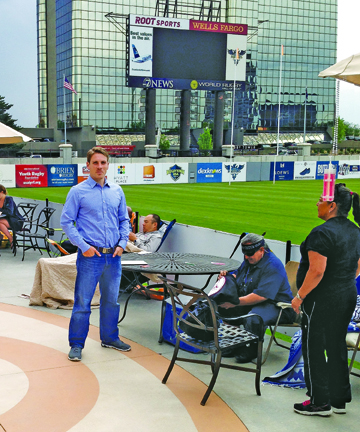 email divulging that he had scampered past 180 others and had made it to the second round. “I am so excited. I had to submit a 5-10 minute video to them by June 13. If the producers of the show like it, I’ll be invited to come and pitch to the Sharks for real,” he tells the Chronicle.
Sharp Shark Skills
“I’ve been watching Shark Tank since 2008. I remember the first time I saw it, I immediately knew that I wanted to pitch ideas to investors. I usually come up with about three new business ideas per week. I’ve had 27 jobs throughout my life,” Todd admits. One of my college mentors often said entrepreneurs have trouble working for other people because they keep coming up with better ways to do things, he recalls, “Some call it being a control freak, some call it marching to the beat of your own drum. I like to call myself terminally entrepreneurial.”
Todd jumped at the chance to participate in pitching his idea to the Shark Tank associate producers, taking the whole day off from work. He even brought donuts to the field for contestants that had arrived earlier than he did. “I was pumped and ready to go. I arrived at 7:30 a.m. and was nervous all morning, practicing my pitch-points. Then the producer came out and told everyone they would only get 60 seconds to give their pitch. We all freaked out. It was time to really hone in on what was important about our ideas.”
His winning pitch is for a business he has started calling Mobile Menu. It’s an iPhone app (Android as well) that allows the user to browse a restaurant’s menu visually with a full-screen professional photo of every single menu item. “It’s been well-received over the last four years,” he reveals. But, he adds, “I’ve decided it’s time to scale the business up and grow exponentially instead of one spot at a time.”
Mix Of Shark Bait
Start-up business contestants at the Infinity Park casting call — one of three locations selected for the nationwide search — presented a full gamut of products, including a disposable cardboard device that women can use to stand up and urinate, to a multi-temperature “barbecue booster,” and a cheerleader-training device. A Colorado Springs couple auditioned for their SALUS Natural Body Care, a business that has opened its first store in Manitou Springs. One enterprising entrepreneur even camped out at Infinity Park selling umbrellas for $20 each to the crowd, many who came unprepared for the light showers that fell in the morning.
“We were delighted to be asked to host the casting call for Shark Tank and looked at it as a wonderful opportunity to show off the Infinity Park campus,” says Infinity Park Event Center General Manager Bobbi Reed. “The ABC casting crew was wowed by the Event Center’s ballroom production technology and loved the Shark Tank logos that were ‘swimming’ around the ballroom.” She adds that the Stadium was the perfect site to stage the applicants as they waited to be called to the tank for their presentation.
Business owners who have appeared on the show say the exposure is invaluable, even without a shark’s offer to invest. Meg and Matt Meyer, owners of The Bear & The Rat in Denver, came away empty after appearing on Shark Tank in 2012. But when the episode about their business selling cool treats for dogs (an alternative to ice cream) aired for the third time in repeats, it caught the attention of some dog-loving investors in New York. After negotiations, the investors put $130,000 into the business to be used for salaries, marketing and distribution of the frozen goodies. “We doubled our sales last year, and I’m anticipating we will at least quadruple this year,” reports Meg Meyer. “The exposure is huge. Every time the episode airs, it’s in front of six to eight million people, which is pretty awesome.”
by Mark Smiley | May 28, 2014 | General Featured
by Charles C. Bonniwell
David Steel, President, Chief Operating Officer and Partner in Western Development Group, LLC, was presented the prestigious “Business Leader of the Year” by the Cherry Creek Chamber of Commerce at its annual luncheon on May 8, 2014, at the JW Marriott in Cherry Creek.
Western Development is a company capitalized by Philip Anschutz, the wealthiest man in Colorado according to Forbes magazine. The company built and developed the NorthCreek, a mixed use condominium project on Fillmore Street in Cherry Creek North. Units in the project sell for one million dollars o r more. Western Development is also in the process of building and developing 250 Columbine, a $100 million mixed use project and also in Cherry Creek North. Western Development will construct a seven story building that will have 71 luxury high end residences as well as retail stores on the ground level.
At the luncheon, Steel was praised for his “honesty and forthrightness.” He was also lauded for his work as past chair of the Cherry Creek North Business Improvement District as well as his work with the Cherry Creek Steering Committee and his role in founding the Cherry Creek Business Alliance. It was stated at the luncheon that Steel was “controversial on occasion” apparently referring to his leading role in turning the only open space in Cherry Creek North, Fillmore Plaza into a roadway in order to improve the traffic to the stores on the ground floor of the NorthCreek development. Attendees noted that while he was not always loved by businesses or residents for his role in the Fillmore Plaza destruction, he never hid or refused to talk to the public no matter how difficult some meetings were.”
“He is an incredibly upfront person,” noted Jeff Allen, COO of the Greater Glendale Chamber of Commerce, who was at the luncheon. “He never lies to people and doesn’t try to deceive anyone which are unusual traits for a developer in Colorado. Part of the reason he can be controversial is that while everyone else is hiding under the table, he stands tall and takes the shots. He is never unpleasant or angry no matter how heated the conversation gets. That is part of the reason why even his adversaries hold him in very high regard.”
The Cherry Creek Chamber head Christine Des Enfants called Steel one of the nicest, most professional businessman she has ever known.
In accepting the award Steel told the packed audience: “It has been a tough road, but worth it and we’re not done yet.”
Born in Canada, Steel started his business career in 1973 as a sales representative in Calgary for Xerox of Canada and held a similar position with IBM of Canada until shifting over to real estate in 1975. He came to Denver in the late 1970s with Oxford Development Group working on large scale, mixed use developments. He was hired by Philip Anschutz in 1983 and eventually became the President of Real Estate for The Anschutz Corporation. In 2004 he took over the reins of Western Development Group whose officers include Christian Anschutz, son of Philip Anschutz, who has a residence in NorthCreek.
Steel and his wife Cathy have been married for over 26 years, have two sons, and live in a home in the Country Club area adjacent to Cherry Creek North.
by Mark Smiley | May 27, 2014 | General Featured
 by Keith Thompson
Glendale is one of the oldest towns in Colorado formed in 1859 with the building of what is now called Four Mile House by the Bratner brothers who sought to provide meat and produce to the just established city of Denver. The building became known as Four Mile House in the 1860s as it was the last stop on the stagecoach route before Denver, and the house was located four miles from the stage terminus at Broadway and Colfax. Four Mile House is today a park located in both Glendale and Denver.
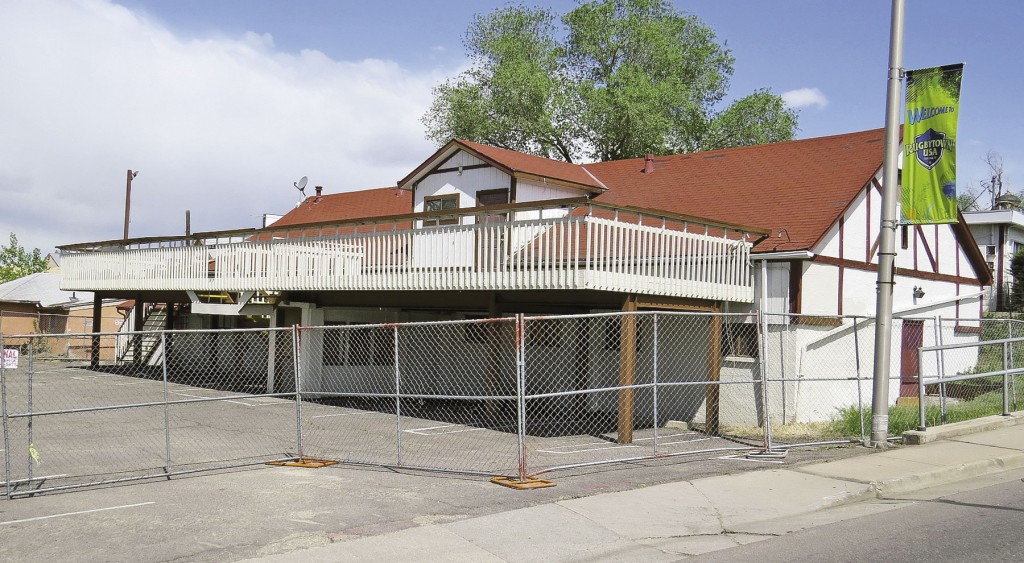
Rite Aid, the third largest drugstore chain in the United States, is in the process of bulldozing two of the most historic buildings remaining in Glendale to put up a drugstore.
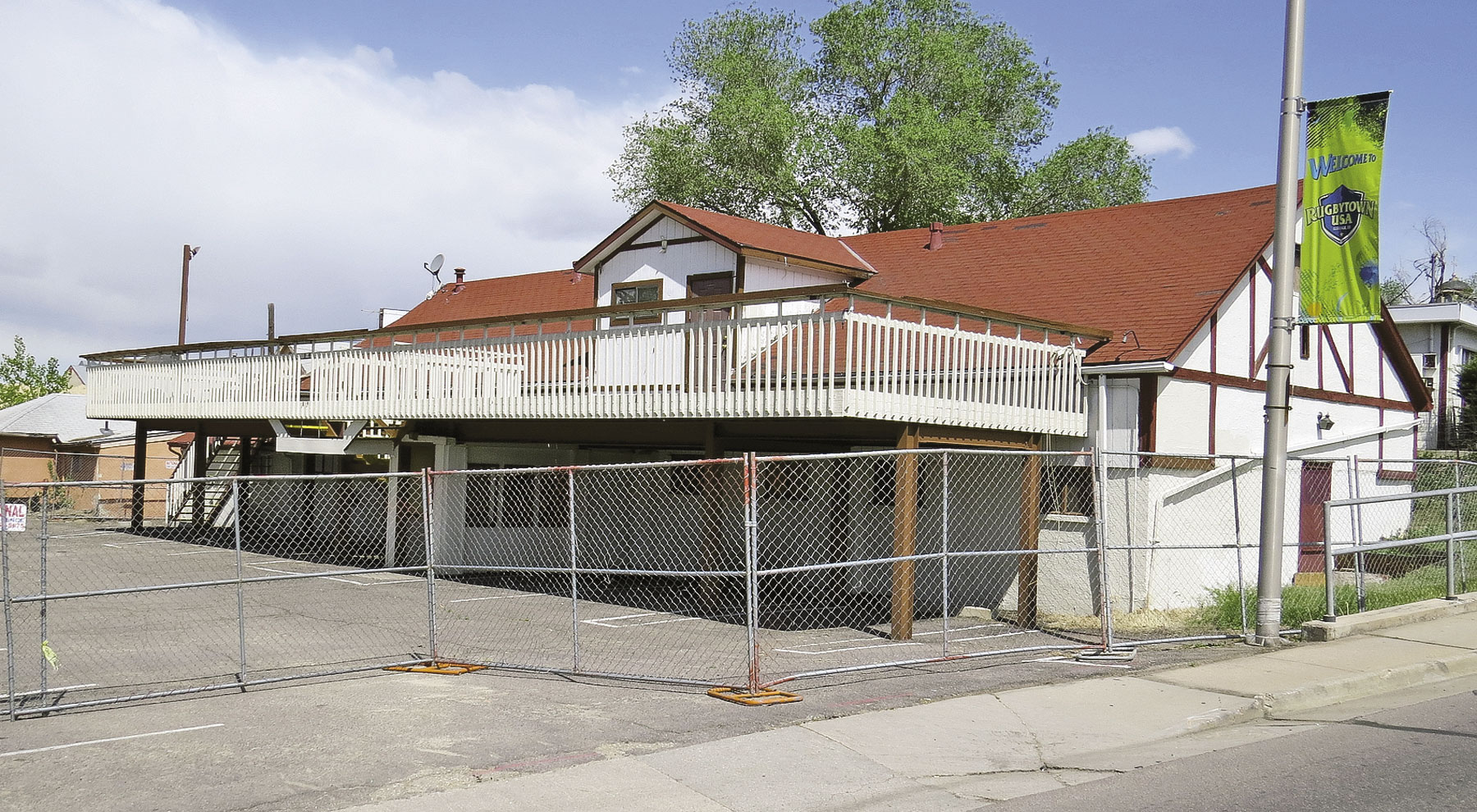
On the chopping block is the 4500 block of Leetsdale Drive just west of South Cherry Street that contains two of the four single family homes in Glendale, and the historic Chicago Dairy barn that, since 1967, housed the oldest sports bar in Denver, Four Mile Bar.
Rite Aid’s History
Rite Aid was founded in 1962 by Alex Grass with the first store called Thrift D Discount Center. In 1968, the name officially changed to Rite Aid Corporation and they made their first public offering and started trading on the American Stock Exchange.
In 2004, Rite Aid’s CEO Martin Glass (son of the founder) was sent to federal prison along with other Rite Aid executives for accounting fraud relating to the company. The company also agreed to pay $7 million to settle allegations that it had engaged in submitting false prescription claims to the federal government relating to United States health insurance programs.
Martin Grass was released from federal prison on January 18, 2010. Founder Alex Grass died of cancer on August 27, 2009.
Historic Glendale
Long before Glendale became Rugbytown USA it was known as Cowtown for the extraordinary number of dairies within the community. At the entrance to the town was a sign on a gas station that declared “Welcome to Cowtown — Where the West Remains.” Among the houses to be bulldozed is the one built by Agnes Riddle, a German dairywoman who was the first female state senator in Colorado. She is also credited for coming up with the name Glendale for the town. Glendale’s prior Recreation Center was named in honor of her. The house sits directly across Leetsdale Drive from the old Glendale Grange building that was built in 1897 and now is a commercial property.
In addition to destroying the Agnes Riddle home the development of the area will also scrap the former Four Mile Bar. The bar was located in a historic barn of the Chicago Dairy founded in the late 19th century by Harvey Sender and built by C. W. Snyder. It was purchased in 1903 by Lee Gasier.
The Chicago Dairy was closed down in 1967 and the old barn was converted into one of Denver’s first sports bars — Four Mile Bar. It was operated by Jack Casey for the next 46 years as a bar until last year when repeated liquor license violations forced the city to revoke the establishment’s liquor license and the property was put up for sale.
The Rite Aid Look
Rite Aid’s at times imperfect reputation extends to the physical look of its stores. “drugstores have never been known for their beauty,” stated John Gay, downtown resident. “But Rite Aid seems to some at times to have almost an intentionally shabby quality to them. Just look at their stores around Denver including the one at University Hills South Shopping Center on Colorado Boulevard. Their seedy look makes you assume that the prices must be rock bottom whether they are or not.”
On the remaining undeveloped ground it has been suggested that a bank might locate on the property. But Gay states, “I don’t see a bank wanting to house next to a Rite Aid. Perhaps a pawn shop or a payday loan operation might be a lot more synergistic.”
After the destruction of the Riddle home and the old Chicago Dairy structure, historic Glendale structures within the city limits are limited to the old Glendale Grange and the manor home of the Cambridge Dairy which was originally located on Colorado Boulevard and Cherry Creek Drive South. When that property was developed in the 1960s the manor home was moved to South Dexter near the Bull & Bush Pub and Brewery.
Few experts believe that the city of Glendale could have done anything to save the historic buildings even if it wanted to. “The property owner gets to develop his property any way he wants within certain parameters and Glendale is in general a fairly libertarian city,” states John Gay. “A drugstore is clearly a legal use. If Leetsdale Drive is now going to be a denser, uglier place what do you think is happening in the Denver portion of that roadway? It’s a brave new world and that is just the way things are today in the area.”
Rite Aid is projected to open in Glendale sometime in 2015.
by Mark Smiley | Dec 5, 2012 | Featured Articles, General Featured
Denver Public Schools’ Minor Boundary …