
by Mark Smiley | Jul 23, 2026 | Editorials
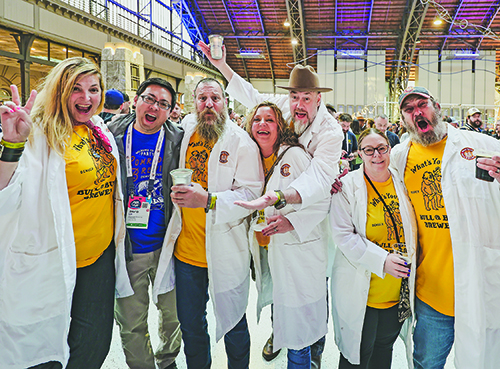
Best in the World: Bull & Bush Brewery team members celebrate their award-winning performance at the 2026 World Beer Cup in Philadelphia, along with David Lin, owner of Comrade Brewing (second from left). The Glendale brewery earned a gold medal for Ghoul Fuel: Rum Diaries Edition and a silver medal for Kauai Pie, adding two more international honors to Colorado’s rich brewing legacy.
Bull & Bush Brewery is celebrating 55 years of serving award-winning craft beer, classic pub fare, and unforgettable memories with a full day of festivities on Saturday, August 8. The anniversary celebration will feature exclusive beer releases, special whiskey selections, brunch with DJ High Deaf, an evening performance by Colorado favorite DeVotchKa, and commemorative merchandise honoring Glendale’s most beloved family-owned brewpubs.
Bull & Bush Brewery, one of Colorado’s most iconic family-owned brewpubs, is proud to celebrate its 55th Anniversary, marking more than five decades of serving exceptional handcrafted beer, classic pub fare, and elevated hospitality located in the heart of Glendale.
The 55th Anniversary celebration will take place on Saturday, August 8, 2026, featuring a full day of festivities, including an evening celebration with live music from Colorado’s very own DeVotchKa.
Guests attending the anniversary celebration can look forward to:
- Exclusive 55th Anniversary beer releases
- Special anniversary whiskey selections
- Brunch with DJ High Deaf
- Evening live music with DeVotchKa
- Commemorative merchandise
“For 55 years, Bull & Bush Brewery has been more than a restaurant or brewery hub where friendships are made, milestones are celebrated, and traditions are passed from one generation to the next,” said Erik Peterson, Minister of Progress at Bull & Bush Brewery. “We’re incredibly grateful to everyone who has supported us over the years, and we’re excited to celebrate this milestone with the community that has made it all possible.”
Since adding its brewery in 1996, Bull & Bush Brewery has earned numerous awards at prestigious competitions, most recently:
- Gold Medal, 2 Silver Medals, and 3 Bronze Medals 2026 US Open Beer Championship
- Gold Award and Silver Award 2026 World Beer Cup
- Gold Medal 2025 Great American Beer Festival
- 2025 Grand National Champion and Brewery of the Year at the US Open Beer Championship
Bull and Bush Brewery is located at 4700 Cherry Creek Drive South in Glendale. For more information, visit www.bullandbush.com.
by Mark Smiley | Jul 23, 2026 | Travel
by Mark Smiley
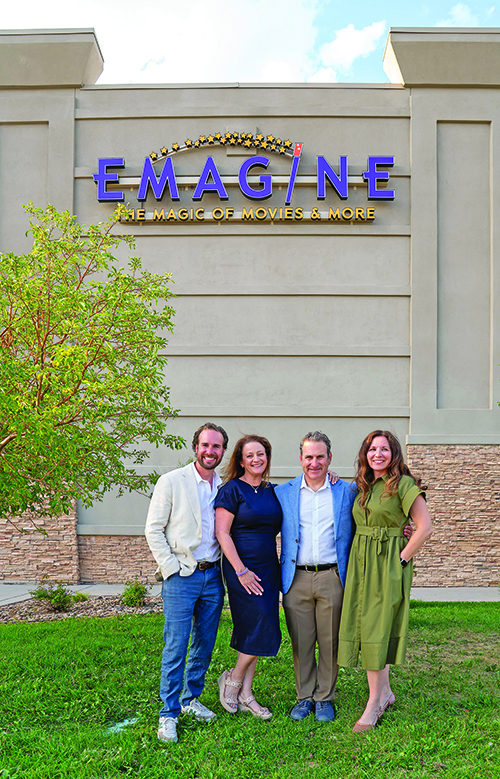
Leadership: Emagine Entertainment’s leadership team celebrates the opening of Emagine Parker, the company’s first Colorado theater and first location west of the Mississippi River. Pictured (left to right) are Chris Becker, Chief of Staff and Finance; Lauren Goldstein, Owner/Bookings; Jon Goldstein, Partner/Owner; and Melissa Boudreau, Chief Experience Officer. Photo courtesy of Emagine Entertainment
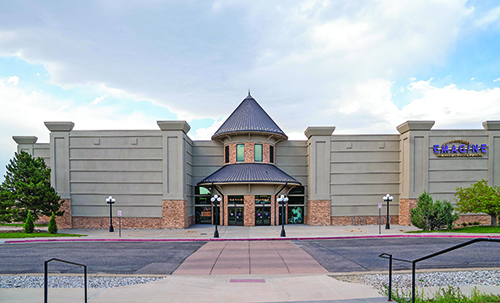
Emagine: Emagine Parker, located at 18625 Stage Run in Parker, is Emagine Entertainment’s first Colorado theater. The fully renovated, 32,000-square-foot entertainment destination features 10 auditoriums, including two premium large-format EMX theaters, luxury heated recliner seating, a full-service bar, expanded dining options, and state-of-the-art 4K projection with Dolby Atmos sound.
After more than 40 years of vacationing in Colorado, Jon Goldstein has finally brought a piece of his family’s business here.
The CEO of Northwoods Theater Group, an affiliate of Emagine Entertainment, recently opened Emagine Parker, the company’s first Colorado location and its first theater west of the Mississippi River. The former AMC theater at 18625 Stage Run has been transformed into a completely reimagined, 32,000-square-foot entertainment destination featuring luxury heated recliners, premium large-format EMX auditoriums, Dolby Atmos sound, 4K laser projection, a full-service bar, expanded food offerings and the company’s first self-ordering concession kiosks.
For Goldstein, opening in Colorado is more than a business decision. “I’ve been coming to Colorado since I was 16 years old,” said Goldstein. “My parents decided they were skiers, and they came out here one time. They came home and said, ‘We’re never going to Vermont again.’”
His family eventually bought a mountain getaway, his brother now lives in Edwards, and his daughter recently graduated from the University of Colorado Boulder. “We love the mountains,” Goldstein said.
The Parker theater had also been on his radar for years. Goldstein first considered purchasing the building in 2012 while AMC still operated the location. At the time, he wasn’t convinced his growing company had the infrastructure to operate another theater if necessary. After expanding through the acquisition of eight Minneapolis-area theaters in 2016, Emagine had the leadership team and operational experience to take on larger projects.
When the Parker property became available again about 18 months ago, Goldstein didn’t hesitate. “They asked me if I would do it, and I said yes, and that’s how I got here,” he said. Rather than simply reopening the theater, Emagine invested heavily in creating an experience that Goldstein believes today’s audiences are looking for.
“I don’t really compete with Netflix and HBO Max,” he said. “They’re in the home entertainment business. I compete with the Rockies or the Avalanche or going to Red Rocks or even just going to a restaurant.”
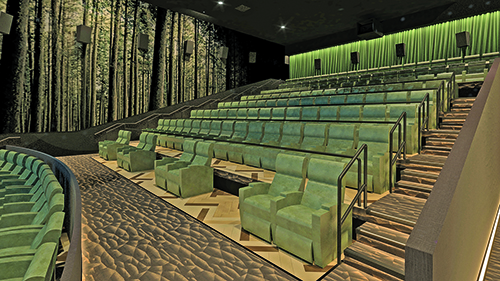
Luxury Seating: Every auditorium at Emagine Parker features luxury heated recliner seating, including spacious front-row recliners, along with immersive Dolby Atmos sound and state-of-the-art 4K projection. The theater’s redesigned interiors are intended to create a premium moviegoing experience that rivals any home theater.
Goldstein believes movie theaters must offer something people cannot get in their living rooms. “You have to upgrade the experience for people to make it great,” he said. “If you don’t make it great, they have other options, and they’re going to vote with their wallet.”
That philosophy is reflected throughout Emagine Parker. Every auditorium features heated luxury recliners, while guests can enjoy craft cocktails, beer, and wine from a full-service bar, an expanded food menu, and enhanced gathering spaces before and after the movie. The theater also serves as the launch site for Emagine’s first self-ordering kiosk system, designed to reduce concession wait times and improve the guest experience.
Although Emagine has grown into a regional chain, Goldstein said the company still thinks like a family-owned business. “We like to think of ourselves as a mom-and-pop company,” he said. “I still read every customer email for every single one of our theaters.”
His attention to detail extends even to popcorn containers. While many theaters use paper bags, Emagine serves popcorn in sturdy tubs to prevent butter from soaking through. “It’s just part of the experience,” Goldstein said.
Goldstein believes customers are willing to pay for quality if they receive value in return. “People nowadays are going to pay for whatever, as long as you deliver to them something that’s worth the price,” he said. “It’s about value more than anything.”
Despite years of predictions that streaming services would replace movie theaters, Goldstein never believed the industry was dying. “I’ve been in this business 25 years, and I’ve been told I’m going out of business for 25 years,” he said.
He believes the communal experience of watching a film together remains something streaming cannot replicate. “I always say the best effect of a movie is an audience,” Goldstein said. “You can share a laugh or a horror scene or a drama and cry. People like to do that with other people.”
Emagine officially opened to the public on July 1, after hosting a private preview benefiting HopeKids Colorado, raising support for families with children facing life-threatening medical conditions. Looking ahead, the company plans a second phase of development that will add a dedicated venue for local live music and performances, further expanding the theater’s role as a year-round entertainment destination.
Goldstein hopes movie lovers from across the Denver metro area will make the drive to Parker. “I hope they’ll come and check us out,” he said. “I think that we provide the best experience. We differentiate ourselves from the other theaters in town, and we just hope people appreciate that and will support us so that we can keep supporting the community.”
For more information, visit www.emagine-entertainment.com.
by Amber Wyatt | Jul 23, 2026 | General Featured
by Amber Wyatt
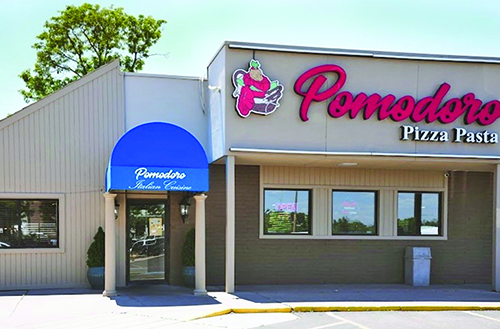
The family’s latest location and a Virginia Village staple in Monaco Square, at 962 S. Monaco St. Pkwy., Denver, CO 80224.
Nestled in the heart of Virginia Village, Denver’s newest Italian standout, Pomodoro Pizza Pasta, isn’t just another neighborhood trattoria, it’s a warm and loving ode to family, from the owners to the tables they welcome.
The dream behind Pomodoro began in New York City, where the founding family, New York City immigrants in the early 1980s, worked in restaurants where they crafted an idea rooted in what they value most, teamwork and camaraderie. Their first restaurant, located in Aurora, aimed to serve a diverse range of quality Italian fare, catering to Coloradans of finer tastes.
Founders Luis and Gloria Enriquez, along with Gloria’s cousin, Jesus, combined decades of experience in both the front and back of house to create something truly special. Together, they form the restaurant’s heart and soul: Luis and Jesus crafting fresh dishes and signature sauces with remarkable precision, while Gloria welcomes guests with the warmth and hospitality that have become synonymous with the restaurant itself.
What makes this team exceptional goes beyond the food. Gloria is more than a founder, she is the face of the restaurant and the reason so many customers feel like family. She greets regulars with warm hugs, remembers names and favorite orders, and makes every guest feel seen. She never forgets a face, and it’s not uncommon for her to remember the smallest details about you, like serving my ice water with two lemons without ever being asked.
In the kitchen, Luis and Jesus move with the rhythm and confidence that comes only from years of experience. Every dish is prepared with care, consistency, and pride. Together, the Enriquez family has built more than a successful restaurant; they have cultivated a community. Their dedication to authentic Hispanic hospitality, hard work, and genuine human connection has helped redefine the dining experience in Southeast Denver, bringing warmth and heart to an area that was longing for both.

Shrimp Arrabiata (with a spice).
After the collapse of the Soviet Union in 1991, while the Enriquez family found stability in the glow of the New York City lights, Denver became home to growing communities of immigrants from Russia, Ukraine, Belarus, and other former Soviet republics. Many settled in southeast Denver and nearby Aurora because of affordable apartments and access to public transportation. As those communities grew, businesses followed and over time, Monaco Square, home to the latest Pomodoro location, became one of the area’s informal cultural hubs.
Its current identity developed organically as southeast Denver became one of the city’s largest centers of immigrant communities, which not only created demand for specialty eateries but a warm and inviting rustic culture of connection that still gives the area its distinctive character today. The reality of immigrant families landing here was never part of the mission but a beautiful, well fitting irony, especially for the owners of Pomodoro.
That mission: good food and real people, followed them west in 2024. Where they opened their second Italian joint in Virginia Village, at the infamous Monaco Square plaza, it instantly blew up. The 750 sq ft space could not contain all of the foodies flooding in to try their menu. When the opportunity arose to open a second Pomodoro in Denver, they seized it, as the Aurora location, loved for its intimate atmosphere, simply couldn’t contain all of the Colorado love it was receiving. What makes this new spot special isn’t just the red sauce or the freshly-made pastas though, it’s the family behind the stove.
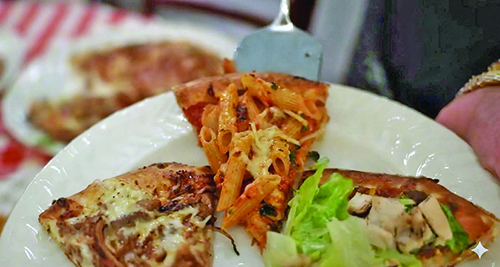
Sebastian, Nicolas, and Angel – Pomodoro’s specialty pizzas.
Pomodoro is a family affair: from behind-the-scenes prep to front-of-house smiles, everyone shares an important role and a promise. A restaurant regular I caught on his way out, reflected on the origin story, recalling the family’s New York dream as driven by “an immigrant’s desire to make delicious and affordable Italian food for the working people of Denver.” That mindset didn’t fade and they’ve carried it into every corner of the Denver space.
Look around the dining room and you’ll catch genuine moments: the matriarch and owner Gloria checking each table’s satisfaction, the youngest member skipping between stations with a cheeky grin, and diners greeted not as customers, but as part of the weekly feast. Regulars already describe the scene as “like visiting an aunt’s house”, where hugs replace handshakes, and unfinished wine glasses are refilled before they have to ask.
The Menu:
Hearty, Homemade, Heartfelt
While the ambiance exudes familial comfort, the kitchen’s offerings shine with rustic simplicity and fresh quality ingredients. Expect all the classics done right:
- Cheese Tortellini Carbonara – A love letter to the restaurant’s ethos, this salt-cured pork belly in a creamy guanciale sauce envelops perfectly al dente rounds, with a sprinkle of parmigiano-reggiano.
- Penne Alla Vodka – From their custom menu, and my personal favorite, this creamy, with a hint of spice, dish reflects the “freshest and finest ingredients” philosophy that the family lives by.
- Famous Pizzas – A humble marriage of savory, each named in honor of the founding family’s grandchildren.
– Sebastian’s Pizza – Pizza with penne, vodka sauce, and sun-dried tomatoes
– Nicolas’ Pizza – Pizza with fresh chicken caesar salad topped with parmesan
– Angel’s Pizza – Pizza with an alfredo sauce base, topped with a medley of bacon, meatballs, and onions
Community, One Meal At A Time

The Virginia Village location hosts a full service bar in the warm and charming ambiance.
Pomodoro’s appeal lies in more than just delicious fare, it’s the simple but powerful way the owners forge connection. They greet newcomers like old friends and catch familiar faces by name. One Denver foodie remarked over their opening weekend, “This feels less like a dinner out and more like coming home.” That connection reminds us that food doesn’t just fill us; it roots us.
Under their roof, tables aren’t just seats, they’re places where conversations happen, stories are shared, and strangers leave feeling part of something warm. The founders remember replicating this vibe in Aurora, saying early on that “every customer gets to leave with memories curated in the pride of a homestyle atmosphere.” Now in Virginia Village, that signature consistency and haven of familiarity is fully intact.
Pomodoro nails the tactile, sensory markers of Italian comfort:
- Checkerboard tablecloths – a visual throwback to family-run pizzerie of the 1950s.
- Evening candlelight and soft jazz – just enough to lean in and laugh with your dining companion over the soothing flicker of natural light.
- Fresh floral centerpieces – echoing those old NYC trattorias full of calming aromas.
It’s here you’ll toast a “salute” to family.
Why It Matters
In a neighborhood rich with independent immigrant-owned eateries, Pomodoro stands out by rewriting what it means to treat customers like kin. You don’t just dine here, you belong. Their secret isn’t in an ingredient list either, it’s in the sum of all parts: heartfelt hospitality, traditions rooted in New York immigrant drive, and food cooked with open hands and open hearts.
For Denver diners craving authenticity, simplicity, and a sense of belonging, Pomodoro is more than another pasta stop, it’s your extended family’s kitchen away from home.
Stop in for a plate of rigatoni, leave carrying a food wallop and a memory. As the family behind Pomodoro would say: Everyone’s welcome, come as you are.
by Mark Smiley | Jul 23, 2026 | Glendale City News
by Mark Smiley

Storm Gloor
Glendale Mayor Pro Tem Storm Gloor has been elected to the Colorado Municipal League (CML) Executive Board, giving the city a stronger voice in statewide discussions on municipal policy and local government issues.
Gloor was elected during the Colorado Municipal League’s Annual Business Meeting on June 24, held as part of the organization’s 104th Annual Conference in Westminster. He joins a 21-member board responsible for overseeing the nonprofit organization’s finances, management, and policy direction while representing the interests of Colorado’s 270 member cities and towns.
His election places Glendale alongside leaders from communities across Colorado who help guide the League’s legislative priorities and advocacy efforts at the state Capitol.
The Colorado Municipal League plays a significant role in shaping legislation that affects local governments. According to the organization’s newly released 2025-2026 Annual Report, CML tracked 218 bills during the 2026 legislative session. The League successfully helped defeat 17 bills it opposed, secured amendments to 18 others, and saw 17 of the 30 bills it supported become law.
Gloor was one of five new members elected to the Executive Board. Others include Boulder Council Member Matthew Benjamin, Northglenn Mayor Pro Tem Shannon Lukeman-Hiromasa, Durango City Manager José Madrigal, and Centennial Mayor Pro Tem Amy Tharp.
Also elected to leadership positions for the 2026-2027 term were Golden Mayor Laura Weinberg as president, Breckenridge Council Member Carol Saade as vice president, and Parker Mayor Joshua Rivero as secretary-treasurer. Lone Tree City Manager Seth Hoffman will serve as immediate past president.
The Colorado Municipal League is a nonpartisan organization dedicated to serving and representing Colorado’s municipalities through advocacy, education, training, and legislative leadership. Gloor’s election gives Glendale direct representation on the organization’s governing board as it continues to address issues affecting cities and towns across the state.

by Mark Smiley | Jul 9, 2026 | Travel
By Mark Smiley

Mike Menter, Driver of Tiger Shark
Mike Menter was growing up in Virginia, he spotted a line of monster trucks parked outside the Hampton Coliseum. On a whim, he pulled off the highway, bought tickets to all three shows that weekend and discovered a passion that would shape the rest of his life. “I was absolutely hooked,” Menter said.
Today, Menter is living that childhood dream as the driver of Tiger Shark, one of the fan favorites in Hot Wheels Monster Trucks Live: Glow-N-Fire, returning to Denver’s Ball Arena for three performances on July 11 and 12.
The award-winning family show, named 2025 Pollstar Family Show of the Year, returns with an all-new attraction for 2026: Rhinomite, a rhinoceros-themed monster truck charging onto the tour for the first time. Fans will also witness never-before-seen stunts, including a spectacular no-handed front flip by the freestyle motocross team.
For Menter, however, the biggest thrill isn’t behind the wheel. It’s watching children experience the show for the first time.
“When you see the doors open and the kids walk through the door for the first time and they’re actually holding a Tiger Shark toy or a Rhinomite toy in their hands, you can see the wheels spinning in their heads,” he said. “Their parents are telling them, ‘Look, this is the truck you’ve seen on TV.’ To see their reaction when that real-life monster comes to life in front of them, it’s kind of hard to describe.”
Unlike many professional monster truck drivers who spend years working as mechanics or crew members before earning a chance to compete, Menter took a different route. Determined to control his own future, he purchased a competition chassis, assembled his own truck using specialized monster truck components and began performing at county fairs across the country.
“I wanted to do it on my schedule, on my time,” he said. “I wanted to be in full control.”

Tiger Shark
years ago, Hot Wheels Monster Trucks Live came calling, and today Menter spends roughly 34 weekends each year entertaining families across North America.
“This is what I do. This is what I love,” he said. “Going to different cities like Denver and getting to entertain people for two hours and seeing the smiles on the families’ faces and the kids—for me, that’s what it’s all about.”
Every Hot Wheels Monster Truck has its loyal fans, but Menter says Tiger Shark has developed something of a cult following.
“We call it Tiger Shark Nation,” he said with a laugh.
Some children love sharks. Others love tigers. Tiger Shark combines both into one monster truck that has become one of the tour’s most recognizable vehicles.
While spectators see gravity-defying jumps and crushed cars, Menter says most of the work happens long before the engines start.
“It’s a 10,000-pound monster truck,” he said. “You’re flying these things. You’re beating them up.”
Although he only spends about 20 to 25 minutes actually driving during an entire weekend of performances, his team spends countless hours inspecting tires, engines, suspension components and every bolt on the truck.
“The preparation is key,” Menter said.
 Even with meticulous maintenance, mechanical failures are simply part of the sport.
“You can do all the preparation, and something can still break,” he said. “It’s just the nature of the beast.”
Competition on the arena floor also gives way to teamwork behind the scenes. Each truck has its own crew, but when another team runs into trouble, everyone pitches in.
“When we put the helmets on, we’re competitive,” Menter said. “But if my truck’s good and another truck is down, everyone’s going over there to help. At the end of the day, the goal for everybody is to see a smile on a kid’s face.”
That family atmosphere extends to Menter’s own family. His 16-year-old son, Mason, travels with him as his crew member, helping prepare Tiger Shark before every show.
“He’s been with me since day one,” Menter said. “I can step away to do an interview, and when I come back he’ll tell me, ‘The tires are on. I did this and this.'”
Mason has already driven a mini monster truck and hopes to eventually follow his father into the sport.
“I can’t wait for him,” Menter said. “It’s going to be something magical.”
This year’s Glow-N-Fire production promises more than just monster trucks. Fans will see seven trucks compete in wheelies, donuts, long jump and freestyle competitions while freestyle motocross riders perform gravity-defying aerial tricks, including the debut of a no-handed front flip.
“Seeing this guy do a front flip is something magical that you have to see in person,” Menter said.
The production also features a fire-breathing, car-crushing robotic dinosaur during intermission, adding another layer of excitement to the family-friendly show.
Fans looking for an even closer experience can purchase tickets to the popular Pre-Show Party, held before every performance. The event allows guests onto the arena floor to see the trucks up close, collect autographs, meet the drivers and snap photos before the competition begins.
“If you have a special question you’ve always wanted to ask, come out to the pre-show,” Menter said. “Bring your toy truck with you and get it autographed.”
New VIP packages for 2026 offer additional behind-the-scenes experiences, including exclusive merchandise, backstage tours and opportunities to meet drivers and freestyle motocross performers.
For Menter, however, the trucks, trophies and packed arenas all take a back seat to one thing. “For me, interacting with the kids and interacting with the fans is something magical,” he said. “It’s kind of hard to describe unless you’re in the moment. That’s what it’s all about.”
If You Go
Hot Wheels Monster Trucks Live: Glow-N-Fire
Where: Ball Arena, 1000 Chopper Circle, Denver
When:
- Saturday, July 11, 11:30 a.m. (Pre-Show Party: 9–10:15 a.m.)
- Saturday, July 11, 6:30 p.m. (Pre-Show Party: 4–5:15 p.m.)
- Sunday, July 12, 1:30 p.m. (Pre-Show Party: 11 a.m.–12:15 p.m.)
The show features Tiger Shark, Mega Wrex, Rhinomite, Bigfoot, Bone Shaker, HW 5-Alarm and Skelesaurus, along with freestyle motocross riders, spectacular stunts and a fire-breathing robotic dinosaur. Special children’s ticket pricing and VIP packages are available. Tickets and additional information are available at HotWheelsMonsterTrucksLive.com.

by Editorial Board | Jun 29, 2026 | Editorials
Editorial —

New Colorado Republican Party Chairman Craig Steiner
As everyone is aware, Colorado is a one-party state (i.e., the Democratic Party), much like California and New York, but even more so. There are no Republicans holding any statewide office and there haven’t been since ballot harvesting was legalized in 2016. Democrats have overwhelming majorities in the State House and Senate. There is not a single judge at any level in the state who is not a Democrat.
But the state’s top Democrats recognize that for Colorado to be literally a single-party state like the Stalinist U.S.S.R. is not really a good look. Better for the Democrats to be like the old Harlem Globetrotters and the Republican Party to be like the plucky Washington Generals. The Generals almost never won a game, but it was, in theory, possible.
The Republican Party at the end of May elected a new chair, Craig Steiner of Douglas County. The position had become available due to the resignation of Brita Horn, the former Routt County Treasurer. She is almost universally recognized as the worst party chair in the 150 years since Colorado became a state in 1876.
The present Colorado Republican Party is split into two factions, and the essential battle is over how the party should pick its candidates for the general election. In 2016, the Democrats, with money from so-called independent Kent Thiry, put Proposition 108 on the ballot. It overturned past precedent and forced both parties to have semi-open primaries.
Under this scheme, unaffiliated voters were mailed primary ballots from both parties, and they could choose which party’s primary they wanted to vote in. It greatly weakened the rationale for a person to be affiliated with a party.
Today, approximately 54% of all registered voters are unaffiliated, swamping the Democrats at 24% and Republicans at 22%. Because Democrats, far more than Republicans, generally do not have contested primaries (with this year being an exception), many Democratic-leaning unaffiliated voters cast ballots in Republican primaries, choosing the more moderate or liberal candidate. As a result, many Republicans in the State House and Senate are little more than Democrat-lite politically.
For example, Cleave Simpson, the Republican leader in the Senate, has an “F” rating from the Liberty Scorecard, a leading conservative rating organization. His colleague in the State Senate and leading candidate for the Republican gubernatorial nomination, Barb Kirkmeyer, has a similarly dismal (from a conservative perspective) “F” rating. If you are a conservative Republican, there is often little reason to vote in a general election in Colorado.
Proposition 108 barely passed in Colorado, with a majority of Republicans believed to have voted against it. To pass constitutional muster, Proposition 108 provided that a party could opt out of the semi-open primary system only if an impossibly high percentage of its governing committee (75% of all members) approved. A federal district court judge recently ruled that the threshold was unconstitutionally high.
While the moderate/liberal wing of the party is in the minority, it does constitute more than 25% of the membership and has therefore been successful in keeping the Republican Party in the highly disadvantageous semi-open primary system that greatly favors moderate/liberal Republicans.
They have been able to do so by playing a deception game in which they pretend to support opting out while doing everything they can to prevent it. Every Republican chair since 2018 has played that game except one, Dave Williams (chair from 2023 to 2025), who is now in Washington, D.C.
The newest chair got elected by pretending he was for the opt-out, but since being elected has shown himself to be what they call a “DeceptiCon.”
The previous chair, Brita Horn, had to resign when it was discovered that she had allowed her attorney to loot the party of all its funds. Craig Steiner, since becoming chair, has done nothing to prevent all cash funds from being scooped up by the attorney, making it impossible to raise new funds.
Why in the world would Republican chairs like Horn and Steiner want to destroy the organization they head? It’s simple. The big donors to the Republican Party, who long propped up the moderate/liberal wing, no longer want a Republican Party to choose candidates at all. They and Kent Thiry want Colorado to move to jungle primaries, where candidates petition and/or pay to get on the ballot and the top two vote-getters, regardless of party affiliation or lack thereof, advance to the general election, just like California.
It is a system dominated by multi-millionaires and billionaires, and no one else need apply.
Perhaps it is all for the best. Instead of the present one-party state, we will become a no-party state where the very wealthy control all.
— Editorial Board