by Regan Bervar | Jul 23, 2021 | Glendale City News
 by Luke Schmaltz
Thus far in 2021, active shooter events have occurred over 150 times in the United States. People are going about their business — be it school, work or play — and in an ear-splitting instant, life turns from normalcy to chaos, confusion, and potential death. This is when the instinct to survive kicks in, and you have three options: Run, Hide, Fight (RHF).
However unfortunate, this patently American phenomenon could occur at any point. It is important for survival to understand the RHF protocol and why it presents an actionable methodology for dealing with danger.
Run For Your Life
When the shots ring out, the shock of gunfire could make you freeze — as panic temporarily seizes your ability to move. You must overcome crippling fear
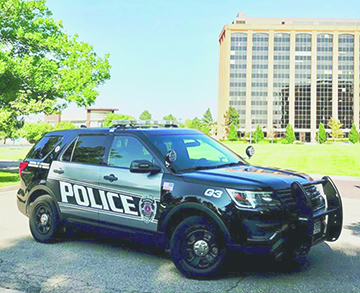
Glendale Police Department offers sound advice for responding to an active shooter situation.
and use your ambulatory efficiency to create as much space as possible between you and the shooter. If you are outdoors, you have the advantage of square footage, and you are wise to get as far away as possible as quickly as you can. As you flee, even if you assume others have called 911, call anyway. Your coordinates and your perception of the events could give police responders crucial intel for handling the situation. Captain Michael Gross of the Glendale Police Department offers a bit of sound advice, “Don’t run blindly, pick a direction based on good knowledge, and encourage others to run with you.”
Hide Smart
If you are indoors during an active shooter event and you run, seek to escape the confines of the building immediately. If exit is not an option, you must use the building itself and its internal structure as defense. A room with a door which can be locked is an excellent option, turn off all lights and be as silent as possible. Close all blinds and, as you call 911, speak quietly and be sure to silence your phone — as a ring-back or text notification could alert the shooter to your whereabouts. Brick walls are preferable, as they can be impenetrable by some bullets, but the main idea is to put as much physical matter between you and the shooter. Stairwells, while seemingly protective, can also be a trap if you are in a high rise building and there are multiple shooters. Captain Gross offers actionable advice for this situation. “We have never had an active shooter breach a locked door.” He explains. “Getting behind a locked door is your best chance for survival. But don’t lock yourself in, someplace easy to get into and out of is best.”
Fight Like Hell
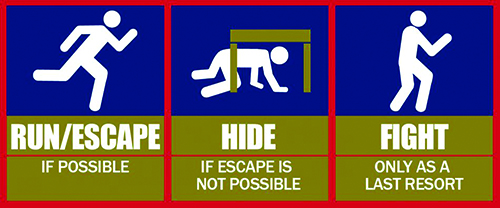
The RHF Protocol can save your life in the event of an active shooter.
If your hiding place is discovered, you may be in a position where fighting is your only option for survival. Your 911 call, while received, will take crucial minutes (anywhere from seven to 10) to be acted upon by the local law enforcement authorities. You must fight back with whatever tools are at your disposal. Captain Gross reinforces the notion of using the resources at hand to fight back, “Anything can be used,” he begins. “One of my personal favorites is the fire extinguisher. They are present in all buildings per the fire code, they make it difficult to see, difficult to breathe and really hurt when you get hit with one.”
Inside Reasons
Captain Gross also offers key insight into the backgrounds of many active shooters. “Active shooters are not trained; they have very little skill; the average person can succeed against them easily. Because they have no or little training they are not prepared for resistance. Dr. John Nicoletti [an expert in workplace and school violence based in Lakewood, Colorado] calls this the ‘thrill of the thought.’ When they plan out their act, they don’t plan for resistance, so they don’t know what to do when it comes. This is also one of the reasons why active shooters commit suicide in such high numbers.”
Captain Gross also presents important insight into the motivations of many active shooters, citing workplace discord as a catalyst. “70%-ish of active shooters come from inside the business (employees or recently fired).” He explains. “They exhibit behavior over time that, if you are sensitive to it, telegraphs their intentions and gives opportunity for intervention. 82% or so broadcast their intentions to others (usually through social media). Of the roughly 30% left, the vast majority of those are domestic violence attackers. Active shooters plan their assaults. They make these plans for very different reasons.”

Fire extinguishers are common throughout public buildings and can be used to distract or disable an assailant.
If you find yourself in the confines of an area which you cannot escape, attempting to reason with an active shooter will only give them a greater focus on your whereabouts. Also, whilst under duress, talking will only drain your energy from the mission at hand which is to subdue the shooter by any means possible. Any martial arts training you may have could serve you well here — as in most disciplines, self-defense is the directive.
Addendum To The Protocol
Since the RHF protocol was established in 2012, a fourth element is becoming an apparent addition to the mindset — hemorrhage control. This is the idea that every citizen — while understanding running, hiding and fighting — should also have fundamental knowledge on how to stop bleeding caused by a gunshot wound. This applies not only to yourself, but to those around you. Applying a tourniquet to a limb or direct pressure to a wound can buy a victim precious minutes while help arrives. Captain Gross explains, “Have an active shooter plan for your business, get training (both in active shooter response and basic hemorrhage control). Give good information, description and whereabouts. When police arrive, have NOTHING in your hand, don’t grab the officer, don’t pull the fire alarm.”
Hemorrhage Control
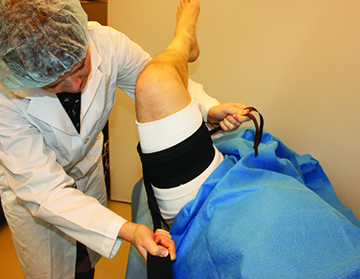
Knowing how to improvise and apply a tourniquet is a crucial part of hemorrhage control.
Injuries to the head or torso require direct pressure with some sort of dense, absorptive material. In the event of a wound to an arm or a leg, a tourniquet can be used to control the bleeding. In an active shooter scenario, you will have to improvise with whatever materials you have immediate access to. Begin by pinpointing the exact location of the wound and exposing the skin. Inform the victim that you will be applying a tourniquet, as their already severe level of pain will be temporarily increased. It is important that the tourniquet be applied between the extremity wound and the heart. The American Red Cross recommends placing the tourniquet two inches above the wound. Use a cloth, towel, scarf or strip of clothing to wrap around the limb and tie it with a regular square not. Then, you will need to apply what is known as a windlass, which is a stick or a ruler — anything strong enough to be used to twist the tourniquet tighter. Place the windlass on the square knot and use the loose ends of the tourniquet to secure it with another square knot. Then, twist the windlass to tighten the tourniquet until the bleeding stops. Once the bleeding has stopped, use another strip of material to tie the windlass to the victim’s limb so that it stays tight. First responders will take over once they arrive, yet be advised that no tourniquet should be left in place for more than two hours.
Regardless of whether you run, hide or fight — the life you save could be your own at the very least. In a best-case scenario, you could help those around you, and if they have the same mindset, perhaps they can help you.
by Laura Lieff | Jun 25, 2021 | Glendale City News
Two Players Signed By MLR Teams And New Docuseries Slated For Worldwide Distribution
by Laura Lieff
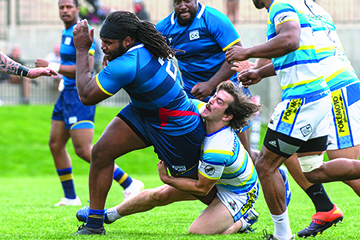
Athletic Prowess: Former XFL defensive tackle Gelen Robinson plays hooker for the Colorado XOs and has been signed to the LA Giltinis for the summer.(Photo by Seth McConnell)
In January 2021, Glendale formed the biggest, fastest, and most athletic rugby team in the world called the Colorado XOs. But instead of populating the team with athletes who have been playing rugby their whole lives, this team was comprised of elite American players from other sports. What these players lacked in rugby experience they made up for in size, strength, and speed as some played in the NFL, XFL, or CFL. The athletic prowess was definitely there but the question was whether or not these men could learn to play and excel at rugby.
“The US rugby player pool is pretty limited, so we believe the only way to add depth to that pool quickly is to recruit players from other sports,” explains Glendale City Manager Linda Cassaday. “That was the idea behind our Crossover Academy — find the best athletes from other sports and teach them the game of rugby.”
With the goal of finding American athletes whose talent outweighed their lack of experience, Glendale signed 30 players who showed enough potential to ultimately help the United States win the World Cup. When Glendale made the controversial decision to leave Major League Rugby (MLR) — due to the organization’s choice to use foreign players rather than American players — many naysayers scoffed at the strategy.
Introducing New Faces To Rugby

Standout Player: At 6’ 8’’, Shawn Clark shows off his natural aerial skills in the lineout. Clark will also play for the Giltinis this summer. (Photo by Seth McConnell)
Now, just a few months later, two of the crossover players — Gelen Robinson and Shawn Clark — have signed with the LA Giltinis, an MLR team based in Los Angeles, California. Giltinis General Manager Adam Freier says he was delighted to sign two promising American talents and strengthen the club’s links with the Colorado XOs.
“Gelen has a unique skill of multiple disciplines as an athlete, from wrestling, football and basketball, while Shawn is one of those athletes that has an incredible engine, who could play multiple positions,” Freier explains. “They are both great signings and young men, which is a real credit to the Colorado XOs coaching staff and officials.”
Both Robinson and Clark took their first strides in the game over the past 19 weeks in this unique crossover experiment to coach talented football, basketball, and track athletes into potential professionals for the USA Rugby player pool.
“We at the Colorado XOs and the City of Glendale are extremely proud of both Shawn and Gelen,” Colorado XO Director of Recruitment Peter Pasque says. “They’ve done everything we’ve asked of them and more. We also would like to thank the LA Giltinis for taking an early interest in our program.”
Although Robinson and Clark will be playing for the Giltinis this summer, Pasque makes it clear that the players are only on loan. “The reason we are releasing these athletes to play for other teams for two months is because it will be a positive experience for them which will work out in the long run for our team.” After spending two months in Los Angeles, both players will return to Glendale in August to train, practice, and play for the Colorado XOs.
Successful But Challenging Experiment
While a 5-5 record may not sound impressive on paper, the XOs spring season record is admirable considering this group of men had never played together before nor had they ever picked up a rugby ball.
“We’re trying to bring in the best athletes and teach them the fundamentals,” Pasque explains. “The fact that we have only been working with these guys for 19 weeks and already have interest from the United States National Team speaks for itself.”
But there are still a few issues to address. While many individual players are thriving, others have succumbed to various injuries that Glendale did not anticipate.
“Overall this recruiting experiment has gone well, but there have been some unexpected challenges,” says Cassaday. “The injury rate was astounding and definitely took a toll on the team but we’ve learned from that, analyzed the injuries, and are understanding how to avoid them in the future.”
One of the most significant adjustments some XO athletes, especially those who are former football players, had to make was learning how to play without a helmet or pads. Cassaday says that aspect has been a major part of the learning curve when it comes to tackling and overall movement.
“Initially, all we could evaluate was their physical stats,” she explains. “Some players were not invited back because they weren’t able to make the change to rugby so there are definitely recruiting changes that will be implemented for the fall season.”
Pasque adds that individually the majority of the athletes are doing well but there is significant work to be done in terms of the team as a whole. Of the 30 players recruited, he says that approximately one third were cut, one third are serviceable, and the rest have the potential to develop into elite rugby players that can make a difference in the World Cup.
“At the moment we’re seeing more individual successes than team successes but we’re going in the right direction and learning quickly,” he explains. “This whole thing, which was sponsored by the City of Glendale, has a great mission and purpose and we are taking steps to make it even better.”
Worldwide Docuseries Release

Film Crew: A behind-the-scenes look at the making of the docuseries that will be released to a global audience in the coming months.
Further exemplifying the significance of Glendale’s crossover experiment is the attention it has garnered from Spring Media, an international full-service sports media agency, along with Rugby Factory TV. The two entities have partnered in the worldwide distribution of a new documentary series about Glendale’s crossover program. Slated for global distribution this fall, the first season of the docuseries (appropriately called RugbyTown) will show how the Crossover Academy has been recruiting NFL-quality American athletes and training them full-time in a residential high-performance environment.
“RugbyTown USA’s mission is to help the United States win the Rugby World Cup within the next decade,” says Glendale Mayor Mike Dunafon. “The rugby world has long seen America’s greatest athletes on the football field or the basketball court, but now the RugbyTown Crossover Academy is training those athletes to play rugby at the highest levels internationally.”
He continues, “We are delighted to be working with Spring Media to offer the RugbyTown series to the world so that viewers can get to know the players and coaches who have set out on this incredible life-changing and historic journey.”
According to Spring Media Commercial Manager Craig Neilson, the docuseries is “tailored to both the global sports audience and those looking for high-quality entertainment in general.” The premiere season will feature 10 episodes ready for distribution on August 1, with season two dropping at the end of 2021.

Documenting The Action: Slated for release this fall, RugbyTown will showcase how Glendale broke new ground by training elite American athletes how to play rugby.
“With our embedded production team, we’ve captured the players’ transformation from individual athletes into a cohesive rugby squad,” says Patrick Guthrie, Co-Founder & Chief Content Officer at Rugby Factory TV. “RugbyTown is the story of these extraordinary young men, their coaches, their families, and their mission to win the World Cup, all told by the players and coaches themselves.”
Upcoming Season
Looking ahead to the fall, the focus of the XOs will be competing against teams in South Africa — a country where rugby is extremely popular and the competition is intense. The plan is to do a three-week tour, play as many games as possible, and train with high level clubs — especially the Sharks and Blue Bulls which are two of the top South African rugby teams.
Stateside, Glendale is working on compiling a fall schedule for rugby enthusiasts to look forward to at Infinity Park. Cassaday says they are hoping to play against D1 programs, MLR academies, and teams like the Blue Bulls who are willing to travel to compete.

Frontline Footage: Rugby Factory’s film crew has been documenting the Crossover Academy’s progress over the last few months.
Although rugby is clearly a significant part of the Glendale culture, Cassaday says that ultimately the program is part of the City’s economic plan to put Glendale on the map. By attracting visitors to enjoy all the bars, retail, restaurants, and hotels Glendale has to offer, she hopes that other rugby teams will want to visit and train here as well. Additionally, Cassaday says that the idea is that if Glendale invests in travel to play and train with foreign teams, the foreign teams will reciprocate.
Fans can look forward to watching the XOs play in the RugbyTown 7s tournament August 20-22 at Infinity Park. For more information and updates, visit www.infinityparkatglendale.com/colorado-xos.
by Regan Bervar | May 26, 2021 | Glendale City News
by Luke Schmaltz
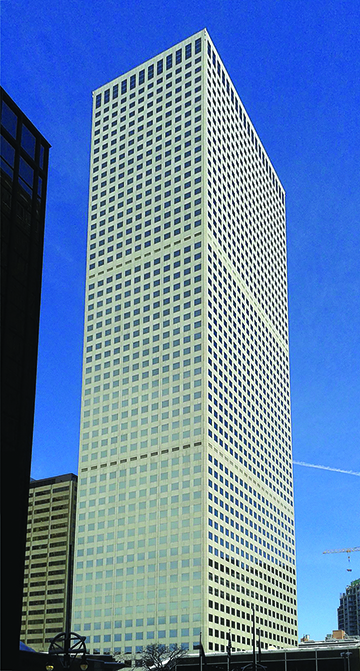
In the past year, the Denver commercial property market has been flipped upside down, run through the wringer, and hung out to dry. While circumstances appear bleak in some areas, the twists and turns of pandemic-induced social upheaval are not without glimmers of hope and outright indications of future solvency.
Commercial and residential real estate are symbiotic halves of a larger whole, and just as one directly affects the other, the balance between the two can take on surprising configurations. Such is the current state of affairs in the Mile-High City, and property professionals from both sides of the fence are forging forth with equal amounts of bullish determination, speculative flexibility and hopeful trepidation.
Downtown offices may not quickly repopulate, as many work-from-home folks have relocated to the suburbs.
Parallel Perceptions
From the viewpoint of residential real estate professionals, the commercial market is a cliffhanger, a head-scratcher, and an anomaly compelling enough to draw curiosity that is far beyond casual observation. Jennifer Barnes of eXp Realty, LLC has considerable experience in the residential sector, and has watched with piqued interest as her area of the market reacts to the changing commercial sector. This area of the market is inevitably affected by the overnight replacement of traditional office settings with entire industries of remote workers. “The draw to being in the city is gone,” she begins. “There has been a huge run [on residential properties] across the whole Front Range — especially places like Conifer, Evergreen, and Elizabeth,” she explains. “The whole downtown Denver market is not what it was — people are not clamoring to be down there right now because they are working remotely. I mean, why would you want to live in a congested area if you don’t have to?” Barnes was fortunate enough to be on the upside of the remote worker trend, unlike other large real estate firms with huge offices and sizable leases to boot. Her firm, eXp, grew during the pandemic due to low overhead while others were forced to downsize because “they didn’t have the revenue from home sales because they were shut down during Covid, but they still had huge office building leases to pay.”
Meanwhile, from a real estate inspector’s viewpoint, the commercial property shift has created circumstances reminiscent of the pre-marijuana retail boom. Robert Crawford is owner/operator of Colorado Complete Home Inspections, and he points out, “Before we had the cannabis industry, we actually had a lot of empty warehouses and empty retail spaces. Then, something came along which allowed new investors to buy up the available spaces at a fraction of the price. The vacuum left behind by the Covid reminds me of that. The landscape now versus back then bears a striking similarity,” Crawford explains. “You’re seeing ‘for sale’ and ‘for lease’ signs on retail spaces in some districts and among commercial warehouses alike.” So, it seems the stage is once again set to favor a buyer’s market. Perhaps this indicates that once again, another influx of outside investment capital and enterprise is already underway.
A Dual Perspective
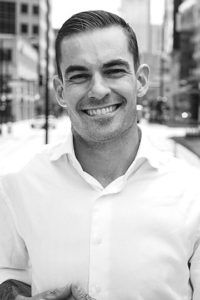
Shane Henry of 303 Property is amazed at how many cash-solvent investors are standing by to scoop up retail spaces.
Shane Henry, owner of 303 Property, has been working as a broker in the Denver commercial and residential markets for eight years. “When Covid hit, I thought commercial real estate was going to totally take a dive, but it didn’t,’’ he begins. “There’s still a lot of people out there with money, so as soon as a retail space becomes available, someone else is waiting to swoop in and scoop it up. So, it’s really interesting because I thought for sure it was going to be the opposite. It blows my mind, to be honest.” Henry continues, “A lot of people are showing up from other states like California with a lot of money from having just sold property there. So, they can come in and pay cash for spaces in Colorado.” Case in point: strip malls. Henry explains the robust state of occupancy in most of these retail destinations, “I’m not seeing lots of vacancies in them. If anything, I’m seeing almost more of a demand for these spaces.”
Letters From The Front
Meanwhile, a cross-section of those working exclusively in the trenches of Denver commercial real estate reveals a wide variety of viewpoints.
-

Vincent Grandi with Keller Williams Realty Urban Elite thinks vacant commercial properties offer some obvious social solutions.
Vincent Grandi of Keller Williams Realty Urban Elite contends that the work-from-home directive has gained momentum that may not be totally reversed. He sees the vacancies in the office building sector of the commercial market as an opening to address the 500 lb. elephant in the proverbial room. “This could be an opportunity to address the homeless crisis with a windfall of micro-type condos” he explains. While this is merely speculation and not a hard-and-fast solution, Grandi is also quick to point out the consequences of office buildings and warehouse properties which remain empty for too long. “Leaving all that property vacant is just presenting opportunities for things that aren’t good such as graffiti, arson, vandalism, and theft.”
- Mark Ryan, a broker with eXp Commercial Real Estate, lays it out plain and simple with the office building situation. “The biggest eye opener for me was how people working from home had such an effect on property values. Commercial property shifted from a landlord’s market to a tenant’s market overnight,” he begins. “What I’m seeing is a whole lot of properties coming on as ‘reduced rate’ listings.” While this is the case with office buildings due to the rigid nature of their intended use, it may not apply to other commercial properties. “Retail is different, because it can be sliced up in so many different ways,” Ryan explains.
-

Michael Griffin of Madison Commercial Properties feels that office building occupancy will return as a fiscal necessity.
Michael Griffin is a Managing Partner at Madison Commercial Properties in Cherry Creek, and he sees the effect of the work-from-home contingency on office space as a temporary circumstance that will correct itself. “Over time,” he attests, “people will be getting back to work [in offices]. Yes, Covid affected office space, for sure, but the last six weeks have been really busy,” he explains. “For some industries, office dynamics and corporate culture rely heavily on in-person workplace environments. As a business owner, I know for a fact that it is crucial to directing, motivating and communicating with your staff.”
- Yvette Kimmel is a broker with Ai3 Properties, which handles a network of 10 office buildings in Southeast Denver. She paints an upbeat picture of the commercial real estate market, at least as far as her properties are concerned. “We have every reason to be encouraged” she begins. “We have been extremely busy, and the only thing that is different in our business is that our tenants are just kind of moving around. In some cases, it is to smaller suites … but for the most part, we are staying very full,” she explains. “I think we are in an enviable position because we are not in prime downtown real estate, and we are not in prime DTC real estate — we’re right between those, so we’ve got people moving out of those expensive suites into something that is still in a prime location without those high prices per square foot,” she continues. Kimmel is confident that office culture is an integral part of American work life, saying, “Part of the experience is the social experience.” Kimmel also contends that, as society opens back up, in-person retail may also be in for a much-needed surge. “We don’t all want to be buying from Amazon for the rest of our lives,” she says.
-

Rachel Colorosa of Colorosa Commercial Properties takes a data-driven approach to her informed speculations.
Rachel Colorosa, Executive Director of Colorosa Commercial Properties, is a self- professed “statistics geek” and a graduate of Colorado College with a B.A. in International Political Economics. When analyzing the effect of Covid-19, the work-from-home contingency and the stark vacancies in large commercial office buildings — she dug into the numbers. She cites a series of recent surveys by Gensler — a global (50 locations worldwide) architecture, design, and planning firm focused on data-driven insights. “The data shows that, because of Covid and social distancing, people don’t like confined spaces — especially elevators,” she begins. “This means large downtown office buildings may not recover, but suburban office facilities under four stories will be at capacity.” Colorosa sees the current trends in retail, office, and industrial real estate as three intersecting lines which form an “x” with a horizontal line through it. “There’s a negative trend in retail, office is flatlining, and industrial is going way, way up,” she explains. Based on the Gensler data, Colorosa feels “we’ll see a lot of retail turned into offices” and “empty big box retail spaces will be repurposed as call centers or Amazon fulfillment centers.”
Currently, diagnosing the status of commercial real estate in Denver is speculative, and relies heavily on the informed perception of the beholder. At least one thing is clear — things are happening — which is a welcome change from last year’s grim alternative.
by Regan Bervar | Apr 23, 2021 | Glendale City News
“The world is divided into armed camps ready to commit genocide just because we can’t agree on whose fairy tales to believe.” — Ed Krebs
by Luke Schmaltz
Daniel Woldu is a resident of Aurora, Colo., and a member of the international Tigray community. He has family members living in the Tigray region of northern Ethiopia. He watches in horror as online CNN footage (leaked from a soldier-turned-whistleblower) shows a military squadron slaughtering his ethnic peers in illegal extrajudicial executions. He is witnessing the genocide of his people — which is concurrently taking place.
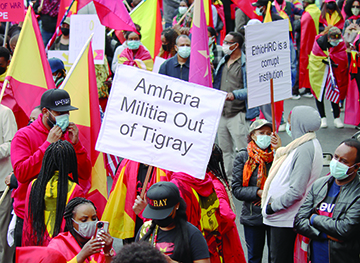
Stateside demonstrations raise awareness of a humanitarian crisis. Photo by Endale Getahun
Woldu is becoming increasingly distressed, as a member of his immediate family traveled to the Tigray region in early September. The region has since been invaded by its own country’s army — an initiative ordered by Ethiopian Prime Minister Abiy Ahmed. As a result, all communication was completely disabled. Although some telephone service has recently been restored, Woldu endures long stretches of worry — not knowing the fate or whereabouts of his gravely endangered family member. (Identity withheld at Mr. Woldu’s request). Speaking for his Tigray community at large, Woldu explains, “This is something the majority of our community members are facing. They have family members who are stranded and it’s hard to know their whereabouts or even if they are still alive or not.”
The Walls Close In
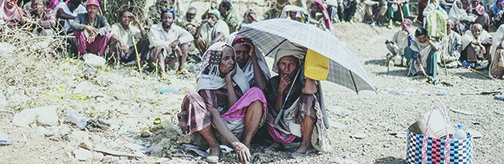
On November 4, 2020, while the rest of the world was fixated on the results of the U.S. election, the invasion of Tigray went largely unnoticed. The initiative began by blocking the main conduit of goods, services and commerce into the region and by cutting off all telephone and internet connections and shutting down the electrical grid. The Ethiopian National Defense Forces were then deployed along with aerial bombardments. Abiy declared the campaign was a “law and order” operation against domestic terrorists. Yet, the atrocities being committed by Abiy’s forces — which reports confirm as weaponized rape and indiscriminate murder — did not come to light until they were brought to the fore by Amnesty International. To make matters worse, the campaign has been joined by troops from the northern neighboring country of Eritrea, who are acting in allegiance with Abiy’s federal troops. To further complicate matters, Tigray is in an ongoing retributive dispute with militias from the western bordering region of Amhara, who are attempting to annex Tigrayan territories. Essentially, Tigray is surrounded on all sides.
Ulterior Motives

Ethiopian Americans of Denver show their support for their families in Tigray. Photo by Endale Getahun
Although Abiy’s campaign was presented to the global community as a peacekeeping necessity, it is largely recognized that the invasion was a result of long-simmering tensions between Ethiopia’s federal government and the regional government of Tigray. While the conflict is taking place on the other side of the globe, it is having a profound effect on many stateside communities. One such community is the Ethiopian populace of the Denver/Aurora region which includes around 30,000 residents — some foreign born and others first-generation Americans. A small segment of this community identifies as Tigrayan, which is ethnically distinct from other Ethiopian communities. This dynamic makes matters worse for people like Daniel Woldu, as long-held tensions between ethnicities driven by religious differences and cultural bias are being reignited by the conflict in Ethiopia and carried out in American communities. Woldu explains. “Abiy’s propaganda is so that the general population does not feel bad for being complicit with genocide.”
To The Streets
War-torn Tigray region of Ethiopia hits home with Denver/Aurora residents.
For this reason, members of the Tigray community in Colorado and in cities across the nation have taken to staging protests. Their mission is to spread awareness of the humanitarian crisis and to put pressure on American authorities to take action and stop the ongoing genocide of their people. Peaceful protests are taking pace in Washington, D.C., Denver, Los Angeles, New York City, Louisville, Las Vegas, and many others. Multiple marches on Colorado’s State Capitol as well as candlelight vigils at area religious centers are bringing the local Tigray community together, but so far, they have not swayed local officials to appeal to their counterparts in Washington to intervene. The overarching concern of the citizens is that Ethiopian federal troops are not allowing the United Nations into the region to provide humanitarian support to refugees, many of whom they are related to. While this is having some influence, activists like Daniel Woldu are painfully aware that it is not enough. “While they [U.S. Government] have put demands out there,” he says, “they have not been able to stop the [Ethiopian] military.”
To The Airwaves
Denver’s Endale Getahun broadcasts the ongoing crisis in his home country.
Among members of the Denver/Aurora Ethiopian community, journalist Endale Getahun is working overtime reporting the events in Tigray as well as the ongoing protests in communities across the United States. Getahun broadcasts via Ethiopian Community Television and radio station KETO 93.9 FM. He explains that not all stateside Ethiopians are sympathetic to Tigray. “The majority of Ethiopians do not have sympathy for Tigrayans due to predisposed bias,” he says. Getahun also makes a clear distinction between Abiy’s propaganda, his claimed intentions and the subsequent actions of his military campaign. “When the government of Ethiopia launched the attack — to convince the general population — they said Tigrayan insurgents had attacked the military base in Tigray where the federal troops were stationed. But those troops have been there for 20-plus years — some of them are married to Tigrayans — so that was just an excuse.” He explains. “And now, since the power, communications and internet have been down, a lot of loved ones, a lot of people around the world, cannot reach their families, send money, food or medicine. Instead of apprehending the local [Tigrayan] leadership like they said they were going to do, they are trying to wipe out the whole Tigrayan population.”
The War At Home
Meanwhile, Daniel Woldu is still hopeful that his stranded family member can somehow, by some means, make it out of war-torn Tigray and back home to Colorado. “[They] are scared to travel because of what might happen.” he says. “Who knows, they may be one of the unlucky ones who steps out the door and is met by Eritrean troops.”
Woldu and others have met with local representatives to voice their concerns. “We’ve had conversations, as a community, with our congressman — Jason Crow — but those are just conversations. There are no actions behind them,” he explains. “The problem is that there are other Ethiopians in our community who are saying ‘you have to stay away from internal problems in Ethiopia.’ There is a genocide going on and they are advocating that the U.S. should not take any action.” Woldu cites the ongoing divide between Ethiopian ethnicities and how the Tigray people are just 7% of the country’s total population, which is reflected in Ethiopian communities the world over.
Daniel Woldu is also a member of Omna Tigray — a national organization of young professionals dedicated to spreading awareness of the humanitarian crisis affecting the Tigray people (omnatigray.org).

by Regan Bervar | Mar 19, 2021 | Glendale City News
“We cannot change anything until we accept it. Condemnation does not liberate, it oppresses.” – Carl Jung
by Luke Schmaltz
At the onset of 2020, most folks were not familiar with the term social distancing. For all the average citizen knew, it could have meant that your network of friends and associates was so big that it covered vast distances. But, as everyone knows all too well, that’s not what it meant. The result was a pandemic-distressed public that had to quickly train itself to curtail a deep-seated set of automatic social behaviors.
Social Distancing: A little over a year ago, few people knew what this meant. Now, it’s an all too familiar phrase.
Several hallmarks of normal social behavior were pinpointed as instances of human interaction that accelerated the spread of Covid-19. And so, in the spirit of self-preservation, an outgoing society deeply invested in handshakes, hugs and hellos became a sequestered, suspicious, lonely, paranoid populace — resentful of itself for being deprived of itself.
Social distancing restrictions are expected to lift in tandem with the vaccine rollout. There is a pervading hesitancy among many, however, to become relaxed too soon — floating the possibility that another surge in cases could take hold and then the whole mess starts over again. Yet, in the backs of the minds of many, are those blurry, joyous, pre-pandemic memories of exuberant greetings, boisterous gatherings and loving embraces. Lest they be lost to the righteousness of newly-converted germaphobia, a refresher course of America’s beloved social customs is in order.
Handshakes

Handshake: There is some speculation that the Coronavirus may spell the end of handshakes.
This universal gesture of goodwill has been in use for millennia and is evidenced in the archaeological record as far back as 500 BC. The handshake exists as a greeting, in one form or another in most cultures the world over and symbolizes alliance and trust between parties. Historians theorize that it was originally designed to show that neither person was carrying weapons in their right hand, with the shaking motion designed to dislodge any knives or other implements hidden up the sleeve. Today, elaborate variations on the palm-to-palm clasp have been invented as specialized greetings between members of an exclusive group or a codice of a secret affiliation. Regardless, this ice-breaker of a social mannerism is an essential conversation starter in the worlds of business and in leisure alike.
Pro tip: Do not deliberately crush the hand of the person you are greeting, as it eradicates the entire purpose of the gesture. Also, grabbing the offered hand and yanking the person toward you as a show of dominance can guarantee they will not be shaking your hand again anytime soon.
Fist Bumps And High Fives

High Five: The high five is another greeting that may have contracted a permanent case of Coronavirus-itis.
While the former could be a toned-down version of the latter, both are internationally renowned gestures of affinity which originated in America. The fist bump first became popular in the 1970s and is thought to be dually appropriated from an incognito version of the Black Panther power symbol and the catalyzing magic ring touch of the Wonder Twins in the popular Super Friends cartoon. Also, the fist bump is the most benign of the hand-based greetings — used exclusively by the germ-conscious such as TV game show host Howie Mandell. Meanwhile, the high-five can be traced back to professional baseball players in the 1950s. As a celebration of success while the world was watching, it was a much-needed salute for triumph during intense moments when a handshake simply would not suffice.
Pro tip: First bumps are just that, a friendly tap so no matter how excited you are to see someone, do not punch their knuckles. To avoid embarrassing misses on high-five attempts, be sure to focus on your target — the center of your acquaintance’s palm. Otherwise, a spirited swat could turn into a flailing flap.
Hugs

Free Hugs: It is a proven scientific fact that hugs are good for you and free — most of the time.
Hugs in private between family members, especially mother and child, have been around since the dawn of mankind. Yet, the hug did not become a staple of Western public life until American celebrities and leaders co-opted it from their Latin and European counterparts in the mid-to-late 20th Century. The hug was popularized by entertainers like Sammy Davis Jr. and politicians like Jimmy Carter. Until recently, it was ubiquitous in relaxed, informal social situations and was an unspoken essential between family and friends. The expression, “You look like you could use a hug” is a result of this, because it has been found that the human embrace can provide comfort and reassurance in powerful ways where words and facial expressions fall short. In an article recently published by Time.com, researchers at Carnegie Mellon University’s Laboratory for the Study of Stress, Immunity and Disease reported, “ … [hugs] were associated with an uptick in positive mood markers and a reduction in negative ones; the opposite was true of relationship conflict. And on days when both occurred, people tended to report fewer negative feelings and more positive ones than on days when they experienced conflict but no hugs.”
Pro tip: Don’t be a long hugger unless the occasion is one of intense emotion. A momentary embrace will suffice. Also, the side hug where just one shoulder is offered rather than a full embrace is like shaking hands with just your thumb and forefinger. Go all in or don’t go at all.
Verbal Greetings

Screaming: Screaming at one another is a time-honored Western birthright.
Over the last year, folks going about their business in public have been trying to decipher mask-muffled language and the internal moods of their counterparts by just the emotions shown in the eyes. Yet, since talking and yelling (among other mouth-related functions) are the very mechanism through which the disease has been shown to spread, this behavior is under considerable scrutiny. In America, however, the freedoms of self-expression guaranteed by our first Amendment rights are practically ingrained in every citizen’s DNA. It’s only a matter of time before dudes are yelling across lanes of heavy traffic to get the attention of their buddy across the street and tipsy women are shrieking like banshees upon recognizing an old friend in a crowded bar. Spoken language is essential to the human condition and using it at high volumes is a distinct characteristic of Western culture.
Pro tip: For the last year, you’ve been observing the practice of not spitting into the face of the listener when you speak. Try to keep that.

by Regan Bervar | Feb 19, 2021 | Glendale City News
by Luke Schmaltz
The broadcasting topography across the Mile High City is as varied and diverse as the populace of the city itself. Listeners interested in local happenings, extreme opinions, artistic outlooks, nerd-tastic observations and business savvy can tune in and sink their teeth into just about any narrative that resonates with their worldview.
If you were to amass the vast amount of topical content originating from the greater Denver area into one giant mountain of sound, slice it in half and observe it like a geological map, you would see the musings of artists, sports fans, lowbrow freaks, highbrow sophisticates, political pundits, and many more swirling about one another like independent swarms of busy bees. Podcasting is alive and thriving in Denver and if you’re not tuning in, you’re missing out.
Brotherly Love

Brothers Joseph and Jonathan Garcia debate the superiority of Marvel and DC Comics, respectively.
Jonathan and Joseph Garcia love comic books. As twin brothers, their natural proclivity to tangle manifested in spirited debates about which brand of heroes and villains was best. Thus, was the genesis of Dynamic Duel — a podcast determined to either settle or perpetuate an ages-old Marvel vs DC debate. “Since we were young children, we’ve had an interest in the colorful, fictional worlds of Marvel and DC,” Joe explains, “and would regularly discuss which was better even as we grew up. We decided to record those conversations in 2016, leading up to the Batman v Superman: Dawn of Justice release, when we figured the Marvel and DC rivalry would further permeate the public’s perception.”
The Garcia brothers orchestrate each episode with precision and well-researched insight. Unlike some podcasts that are sent over the wire warts and all, Marvelous Joe and Johnny DC — their “super” podcaster names — edit for consistent pacing and flow in order to maximize listener experience. Content themes oscillate between comic book movie reviews and character match-ups such as Green Lantern vs Iceman, Plastic Man vs Mr. Fantastic and Batgirl vs Hawkeye. Whether you’re a fellow comic book nerd or a newbie, this podcast is a wealth of insight into the two most popular publishers of modern mythology.
While the past year has been a major bummer for some, this is not the case with the Garcias. Joe explains, “A common gripe from our friends and family over the past year [is] that they’ve been bored and experiencing cabin fever. That’s not been the case with us. In addition to never missing an episode drop date, we spent a lot of time this past year honing our craft and were lucky enough to win three Colorado Podcast Awards in 2020.”
From The Ground Up

Chuck Bonniwell and Julie Hayden are interested in revealing the truth about important issues.
Chuck Bonniwell and Julie Hayden are perhaps the hardest working team in Denver podcasting, producing three shows every week on Mondays, Wednesdays and Fridays at 3 p.m. MST. Like many of their contemporaries, they began in a basement with very little technical know-how but with one distinctive difference: they had a pre-existing listenership. After their show on KNUS was canceled, they were compelled to switch to the podcast format in order to stay in touch with their hard-won audience.
The show takes definitive stances on hot-button issues, and in a hypersensitive environment, they are feeling the effects — both positive and otherwise. When asked about the show’s stance on state-sponsored censorship, Hayden explains, “I would not describe our show as a ‘stance against the idea of government control.’ Rather, I would say we have a populist, grassroots take on things, whether it be Denver, Colorado, or national issues. And we are definitely being censored by YouTube, Twitter and Facebook. We have lost roughly a third of our Twitter followers since the election. YouTube deleted one of our shows over election content and Facebook regularly “throttles” the number of people who see our posts. We have created new accounts on Gab .com and Rumble.com.”
Undaunted, the duo forges forth in relentless pursuit of the examination, exploration, and dissection of the issues they are passionate about. They roll with the unfolding of current events, reacting in “real time” as much as possible. “We focus on current events, especially Denver and Colorado issues,” Hayden says. “We book guests a few days ahead of time but there is so much going on these days we do not plan more than a week ahead.”
When asked about the show’s format and content curation strategy, Hayden explains, “We want to provide an informative and entertaining show focusing on current events where everyone feels heard and welcome. We have leftist/Democrat guests and callers [and] we have more populist callers and guests who hold a wide variety of opinions that we often disagree with. We describe it as everyone sitting around the ‘kitchen table’ talking about the day’s events. Our hope is not to change anyone’s mind but to get people thinking and talking and hopefully [being] glad that they spent an hour with us.”
The Chuck and Julie Show shoots from the hip — so to speak — as each episode streams live across numerous channels. “Our show is somewhat unique in that we do video and audio. The show is live streamed on YouTube, Facebook, all of the major podcast apps like iTunes, iHeart, Google, etc. We also post the show on Podbean and Rumble… so there is no editing and anytime we have a scramble, (which happens all the time) [and] everyone sees and hears that.” Listeners who love this sort of authenticity can also anticipate high profile guests from time to time such as Fox’s Judge Jeanine Pirro, national columnists and authors like David Horowitz, John O’Connor, Jennifer Kerns, Rep. Ken Buck, and Democratic strategist Ted Trimpa.”
The Business Wizard

Dave Tabor of the PROCO360 Podcast is a business expert who has found his second calling. Photo credit: Chris Clark
Dave Tabor does his homework. As a former business owner, company executive, holder of an MBA from CU, and senior executive for the Colorado Chamber of Commerce, he approaches each episode of the ProCo360 podcast like a high-level business presentation. He explains, “My approach is this: explore what makes me deeply curious about a leader and her/his company and dig into that. It takes research and preparation, and it takes some deep thought. I don’t quit my prep work until I feel excited for the interview. The most gratifying moment is when a guest pauses and says, ‘hmmm, that’s a great question.’”
After selling his company — Tabor Interactive — to a NASDAQ company, the former CEO was restless, and discovered that he missed the entrepreneurial world. Luckily, his business expertise was in high demand, and he was invited to be an intermittent guest host on a morning talk radio show. This developed into a steady hosting gig at a weekly morning show. Tabor felt his audience was better suited for evenings and he switched to the podcast format.
Thus far, he has delivered invaluable insight into the world of commerce through interviews with more than 100 Colorado business leaders including John Hayes (Ball), Jake Jabs (American Furniture Warehouse), Andre Durand (Ping Identity), Antoinette Gawin (Terumo BCT), Nancy Fitzgerald (iLending Direct), Tory Bruno (United Launch Alliance), Adam Contos (RE/MAX), and Troy Guard (TAG Restaurant Group).
To The Letter
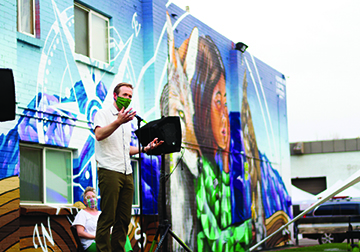
The Narrators co-host Ron Doyle and actor/ teacher Adrian Holguin at The Narrators, August 2020 at EXDO Events Center.
Producer Ron Doyle is no stranger to the show running world, with over 10 years of experience under his belt across numerous formats. His current endeavor, The Narrators, is a hybrid balance of live production and curated podcast content. The live shows are taped every third Wednesday, and the stories that are shared by guests of those events are edited into podcast content. “During normal times,” Doyle explains, “the show happens at Buntport Theater. Right now, we’re doing virtual shows and will likely shift to outdoor shows at EXDO Events Center when the weather warms up.”
The Narrators strives to explore a breadth of themes, brought to the storytelling stage through the expertise of Denverites from all walks of life. After 10 years of shows, they have explored just about every topic imaginable. Doyle elaborates, “We invite comedians, actors, musicians, artists, and other interesting folks from around Denver to share true stories, and occasionally folks reach out to us when they have a story that matches the theme. We don’t screen or edit our storytellers, so we’re just as surprised as the audience by the stories they share.”
Adapting to restrictions Covid-19 placed on The Narrators live shows has been a challenge, but Doyle remains upbeat, “Our podcast actually took a hiatus for part of the year, because we were busy shifting the live show to virtual and outdoor venues (we just relaunched at the beginning of 2021), but we still had folks tell us how much they appreciated our back catalog of 200+ episodes. It’s soothing to hear the live audiences in those recordings, clapping and laughing. After a year of social distancing, it feels nice to hear how the world worked before the pandemic — and hopefully makes folks feel optimistic about the future.”
Making A Ruckus

The MF Podcast examines society’s underbelly through the lenses of musicians and artists.
True to their DIY musical roots, Aaron Howell and MF Ruckus bandmate Tony Lee started the MF Podcast in a spare bedroom on secondhand gear with a healthy sense of humor. “We’ve always enjoyed talking and cracking wise, so it seemed like something we could pull off pretty easily,” Howell explains. The longtime friends navigated the steep technical learning curve and steadily progressed from putting together episodes with whatever gear was at hand to working with a remote producer to moving operations into the Burn TV studios where Howell worked as a voice actor for Nug Nation. As the show grew, it was soon apparent that a local producer was in order and Denver music maven Gordon Leadfoot of the band Granny Tweed came aboard. Soon after, Lee, a Chicago native, was called back home which left Howell to lean on Leadfoot and MF Ruckus bass virtuoso Logan for support.
The podcast content is an expansion on the fascinating, wide-ranging and tragically fleeting conversations that take place in and around the world of live music — usually backstage or somewhere on the venue floor between acts. The format aims to magnify the dynamic of interesting people from all walks of life who meet, explain their unique insights, and laugh about shared experiences. “I’m sort of a hobbyist when it comes to heterodoxy, so I really like talking about the big issues happening in the world.” Howell explains “I like to talk philosophy, politics, life experiences, explore and learn. Mostly, we tell stories, crack jokes and let our guests lead the way. I sincerely believe we’ve never had a bad episode. The conversations are always good, wherever they may roam.”
Viewers who tune in to a live episode will be treated to the raw content as it unfolds between hosts and guests. Leadfoot, who has become an influential host/voice of the show in addition to producing, cleans up the audio, adds music and bumper for the audio feeds. Howell beams about the wide array of guests he has had the pleasure of interviewing over the show’s 121 episodes. Among these are Blaine Cartwright of Nashville Pussy, Ben Hutcherson of Khemmis, Apartheid activist-turned aeronautical engineer Eric Stranger, musician and record label head Reed Wolf, and comic book writer/professor/Ted Talker R. Alan Brooks, to name a few.
Those Who Can
The Grawlix continually prove that just about anything is possible with enough laughter at hand.
The trilateral axis of thinking people’s comedy known as The Grawlix is on a mission to save the world. Comedians Adam Cayton-Holland, Andrew Overdahl, and Ben Roy have been in each other’s orbit for the better part of 16 years. As individuals they have been forging their own standup careers which converge from time to time as The Grawlix — a name borrowed from the term used for typographical symbols used in place of obscenities. The group is best known for their outstanding television show Those Who Can’t which is available for streaming on HBO Max.
“We wanted to start a podcast,” Cayton-Holland begins, “because when our TV show ended after three seasons, we all kind of regrouped and thought, ‘Well we really like working with one another. Let’s do another project together.’” Cayton-Holland continues, “Unlike the pressure cooker of television, a podcast seemed like just a really easy, DIY format where there are no gatekeepers or anything, you just start one and off you go! We liked the freedom of that. We kicked around a few ideas for the format and then Ben (Roy) had the idea of doing a show where we try to improve ourselves and that just was the perfect spark. We reached out to our friend Ron Doyle (of The Narrators) who’s a wizard at this kind of stuff and he agreed to produce the podcast and off we went!”
The show’s format, while set with the clear directive of exploring self-care and personal improvement, allows an underlying comedic current to carry the momentum. Topics such as meditation and yoga are counterbalanced by slapstic spatula-slapping for overuse of the word “like” and self-inflicted, torturous binge-watching assignments of The Fast and the Furious movie series.
This healthy balance of self-care and silliness seemed to almost intuitively anticipate 2020 and the challenges it would bring. “The pandemic hit and the world as we knew it changed and everything was really frightening and anxiety-inducing and here we had this great format that we were already doing where we try to take care of ourselves, to try to counter the poison that we see in the world.” Cayton-Holland says. “The podcast is funny, first and foremost, but we always wanted the podcast to be positive and uplifting as well. So, really, it’s been something that I’ve come to look forward to over the lockdown. I get to check in with my friends every week and laugh a lot, and then put into practice a new way of looking at the world for a week. It’s been really good for my spirit, and our listeners tell us it has for theirs too.”