by Charles Bonniwell | Apr 23, 2021 | Editorials

Kyle Clark, 9NEWS superstar, is beginning to feel the vultures circling.
At one time, not that long ago, KUSA 9News was a powerhouse in the Denver media market with massive ratings and was lovingly called the “Mommy Channel” for its popularity with female viewers. But it seems all good things must come to end. Things started “Breaking Bad” when Kyle Clark floated into town from New York in 2007.
Over the years, the acerbic New Yorker eventually came to dominate 9NEWS and is literally almost impossible to escape if you tune into Channel 9. He hosts “Next with Kyle Clark” at 9 p.m. on weekdays, and if that is not enough, he is the news anchor for 9NEWS on its 10 p.m. broadcast. He also contributes reports for 9NEWS political coverage, the 9Wants to Know Investigative unit, and 9NEWS Storytellers. He is perhaps best known for getting into endless Twitter wars with scores of individuals across the Front Range.
Murder by 9News security guard Matthew Dolloff of Lee Keltner at pro police rally on October 10, 2020.
While 9NEWS ratings are beginning to take a dive, in an age where objective television news is considered passé, he gained admirers by putting his leftwing progressive views into all of his reporting. One never needs to wonder what his personal views are as it relates to any story. The bias reporting was clearly fine with KUSA Channel 9 parent company, the giant publicly traded media company TEGNA, Inc.

Lori Lizarraga
In recent times, however, the wheels appear to be coming off the once all-powerful media vehicle. In June 2020, Clark was furloughed by TEGNA as part of a company-wide cost saving strategy. Reporters for 9NEWS started to become so disliked by some the station began hiring armed security guards when they went to events.
Through a third party they engaged an unlicensed security guard, Matthew Dolloff, who shot and killed grandfather and military veteran Lee Keltner at a pro police rally in front of his son on October 10, 2020. Kyle Clark went into hiding with a security detail claiming he was taking an unannounced vacation. 9NEWS boarded up its windows and kept the staff at home for an extended COVID period. Dolloff was charged with 2nd degree murder by the Denver DA, and the Keltner family hired an attorney for possible legal action against Channel 9 and TEGNA.

Sonia Gutierrez
In March of this year Clark’s and 9NEWS’ reputation as being progressive took a tremendous hit. Lori Lizarraga wrote a scathing article in Westword: “LatinXed: 9News Got Rid of Three Latina Reporters This Past Year, Including Me,” detailing a pattern and practice of discrimination at the news station. In addition, one of TEGNA’s largest shareholders demanded that the company open its books and records to investigate what is being called a broad pattern of bias and racially insensitive behavior.
The investor stated that the allegations show “the roots of racist behavior within Tegna/Gannett are ugly and run deep” and are reflected in “egregious practices with Tegna/Gannett dating back decades.”

Kristen Aguirre
Gannett previously owned the broadcast business that is now stand alone TEGNA. TEGNA spun off the publishing business as Gannett in 2015.
And, of course, Kyle Clark went on an immediate unannounced vacation.
Perhaps Mr. Clark, TEGNA, and 9NEWS, and their phony “wokeness,” might just like to leave town and sell the station to some entity who would like to bring the station back to what it once was.
by Regan Bervar | Mar 19, 2021 | General Featured
“The number one rule of thieves is that nothing is too small to steal.” – Jimmy Breslin
 by Luke Schmaltz
A large number of Denver residents are sitting on top of a hidden treasure and they don’t even know it.
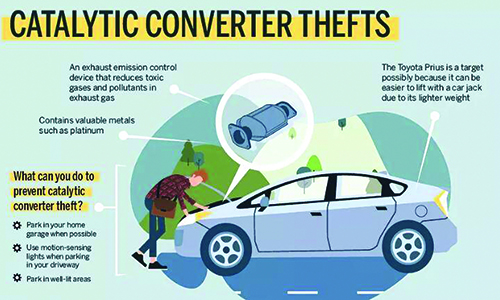
Below the interior cabs of all modern cars, along the vehicle’s undercarriage parallel to the driveshaft, sits the exhaust system in a series of pipes, gaskets and couplings. Within this assembly, for all cars made after 1975, is a catalytic converter — a filter which transforms harmful exhaust compounds (hydrocarbons, nitrogen oxide and carbon monoxide) into inert gases.
This piece of automotive technology contains semi-precious metals which are crucial to the catalyzing process. These include palladium, rhodium and platinum — rare metals that are sought after and valued on par with gold. It is no secret to enterprising thieves that these components can fetch between $150 and $300 per unit from scrap yards and chop shops — and sometimes even more.
Amid the economic hardship of the past year, the risk-to-reward ratio of catalytic converter theft is attractive enough for someone with a few tools and nothing to lose to take action. Anyone with enough nerve and a bit of know-how can simply crawl beneath a car in the middle of the night and start hacking away. Vulnerable cars are everywhere — parked
Theft On The Rise: Catalytic converter theft is up 1600% in the Denver area from 2019.
on the street, in parking garages, strip malls and driveways. As jobs disappear, pandemic relief runs out, and perhaps a bad case of cabin-fever boredom takes hold — car part pirates set out to find their livelihood amid a vast urban landscape abundant with low-hanging fruit.
The number of thefts across Denver is on the rise like the temperature gauge on an overheating vehicle. In 2019, a total of just 15 were reported, while in 2020, the cases jumped up to a staggering 257. Meanwhile, 2021 is on par to leave that number in the dust, as 108 cases of stolen catalytic converters were reported by the end of January.
The Winners

Junkyard: Catalytic converters make a quick stop at a place like this so the precious metals therein can be removed.v
Experienced thieves who know where to slither and hack can get away with half a dozen or more converters per night. Doorbell cameras have captured these heists taking place with alarming speed — some in under two minutes. Once these are sold to a scrap yard or fenced to a black-market processing facility, the thief makes a few bucks and the next guy (the fence) digs into the devices, harvests the precious metals therein and sells them to a dealer. While laws are in place that supposedly forbid scrap metal dealers and junkyards from accepting stolen goods, there is by no means a task force monitoring these markets. If thieves are bold enough to break the law in plain sight, what’s to stop them from continuing to do so until the valued goods find their way back into the supply chain?
Next in the catalytic converter economic stimulus line are the auto repair shops. As this is becoming a routine procedure, the parts can be replaced with a fair degree of quickness and ease. Yet, parts and labor cost money and even if the mechanic is an honest one, they’ll be billing each client anywhere from $1,000 to $3,000 per job.
The Losers
The victim’s experience is invariably the same. A vehicle owner gets in their car, turns the ignition key to start the engine and is jolted upwards by a roaring blast of exhaust from beneath. In previous years, the individual may have thought it was just a temperamental automotive glitch that would work itself out. More recently, however, a person in this scenario quickly comes to the harrowing realization that part of their car has been stolen right out from underneath them.
After a sputtering, cantankerous trip to the mechanic, they are hit with a repair bill that most likely places yet another degree of economic strain on an already dire situation. While folks with comprehensive insurance coverage can send the bill to their carrier, a great many drivers out there do not have such coverage because they are trying to save money, and when they bought their insurance, rampant car part theft was probably not yet on their radar.
The Also-rans

Catalytic Converter: If you want to keep your catalytic converter, knowing how to weld is a valuable skill.
The associated fallout of these thefts is the additional burden that is placed on the Denver Police Department. While there is little or nothing that responding officers can do to recover the stolen part, there is considerable strain in terms of the man hours it takes to follow up on every case, to fill out paperwork and to listen to the victims tell their stories.
Enough Is Enough
Across the Mile High City, people are becoming increasingly aware that they could very well be the next victim in line to have their catalytic converters stolen. The obvious solution is to park your car in a garage, lock it up for the night and the problem is solved. The problem with that, is that the vast majority of car owners, especially in neighborhoods near the city center, do not enjoy such luxuries.
High profile vehicles like SUVs, Hummers and 4×4 trucks are the easiest targets, as they do not need to be jacked up off the ground in order for the thieves to access the converter. A smart driver on a shoestring budget can opt to park their Prius between a Ford F-250 and a Land Rover and hope their neighbors bear the brunt of the thievery instead of them.
Proactive citizens can sit up all night and guard their cars with a flashlight and a baseball bat. Yet, most people enjoy their sleep and do not wish to confront criminals in the pale moonlight. Thankfully, this scourge of theft has necessitated a suite of new inventions designed to keep your catalytic converter attached to your car’s exhaust system and out of the hands of criminals. In yet another economically beneficial outcome of the rise in theft, these devices range anywhere from $125 to $700 or more apiece, plus installation if you’re not handy with tools. These products are carving out a market niche for themselves under names such as The Cat Clamp, Cat Security, Cat Strap and more.
- Cat Strap: This alarm-style device features contact and motion sensors. The strap is tethered along the length of the exhaust system (which includes the catalytic converter) by a series of metal clamps and rings. The sensor is then wired to the battery and the alarm receiver is mounted beneath the hood. Contact with the exhausts system or significant motion beneath the car in the vicinity of the catalytic converter will set it off. Thief activity beneath your car sets off the alarm, which then deters the perpetrator. Professional installation is recommended.
- Cat Security: This device is strictly hardware, and acts as a type of shield between your catalytic converter and the ground. The product is essentially sheet metal which is pre-fabricated to fit the undercarriage of specific models of cars. The shield is then bolted into place with a combination of security rivets, bolts and self-tapping screws. The protective barrier is immediately obvious to and should convince most thieves to think again. Professional installation is optional.
- Cat Clamp: Another hardware-based product, this invention uses braided, heavily-rated steel cables and heavy-duty steel clamps and adaptor plates which, once mounted and installed, surround your catalytic converter in a metal cage. The various product sizes can accommodate everything from regular sized cars to large, heavy duty diesel trucks. Hardware and cable run the length of the exhaust system and present an immediate visual deterrent to thieves — as it is obvious the catalytic converter is not coming off without a whole lot of effort and noise. Professional installation recommended.
Extreme Measures
A similar approach is to have the catalytic converter welded to your car’s frame, which would make it much harder and far more time consuming to steal. Another method is to have your car alarm system recalibrated to detect the subtle humming of a reciprocating saw or the light tog of a ratchet wrench. Other folks are engraving their car’s VIN number to the housing on the converter, which to an average thief might be a deterrent, but to an enterprising criminal — it might be an invitation to pursue identity theft.
The other options are to string barbed wire around your car every night and risk getting cited for littering or reckless endangerment. You could train rattlesnakes to coil up in the undercarriage at night and take a swipe at anything that crawls under the car. Or you could just sell the damn thing and get a bike — along with an arsenal of four or five heavy duty U-locks.
by Regan Bervar | Mar 19, 2021 | Glendale City News
“We cannot change anything until we accept it. Condemnation does not liberate, it oppresses.” – Carl Jung
by Luke Schmaltz
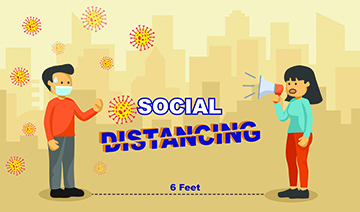
At the onset of 2020, most folks were not familiar with the term social distancing. For all the average citizen knew, it could have meant that your network of friends and associates was so big that it covered vast distances. But, as everyone knows all too well, that’s not what it meant. The result was a pandemic-distressed public that had to quickly train itself to curtail a deep-seated set of automatic social behaviors.
Social Distancing: A little over a year ago, few people knew what this meant. Now, it’s an all too familiar phrase.
Several hallmarks of normal social behavior were pinpointed as instances of human interaction that accelerated the spread of Covid-19. And so, in the spirit of self-preservation, an outgoing society deeply invested in handshakes, hugs and hellos became a sequestered, suspicious, lonely, paranoid populace — resentful of itself for being deprived of itself.
Social distancing restrictions are expected to lift in tandem with the vaccine rollout. There is a pervading hesitancy among many, however, to become relaxed too soon — floating the possibility that another surge in cases could take hold and then the whole mess starts over again. Yet, in the backs of the minds of many, are those blurry, joyous, pre-pandemic memories of exuberant greetings, boisterous gatherings and loving embraces. Lest they be lost to the righteousness of newly-converted germaphobia, a refresher course of America’s beloved social customs is in order.
Handshakes

Handshake: There is some speculation that the Coronavirus may spell the end of handshakes.
This universal gesture of goodwill has been in use for millennia and is evidenced in the archaeological record as far back as 500 BC. The handshake exists as a greeting, in one form or another in most cultures the world over and symbolizes alliance and trust between parties. Historians theorize that it was originally designed to show that neither person was carrying weapons in their right hand, with the shaking motion designed to dislodge any knives or other implements hidden up the sleeve. Today, elaborate variations on the palm-to-palm clasp have been invented as specialized greetings between members of an exclusive group or a codice of a secret affiliation. Regardless, this ice-breaker of a social mannerism is an essential conversation starter in the worlds of business and in leisure alike.
Pro tip: Do not deliberately crush the hand of the person you are greeting, as it eradicates the entire purpose of the gesture. Also, grabbing the offered hand and yanking the person toward you as a show of dominance can guarantee they will not be shaking your hand again anytime soon.
Fist Bumps And High Fives

High Five: The high five is another greeting that may have contracted a permanent case of Coronavirus-itis.
While the former could be a toned-down version of the latter, both are internationally renowned gestures of affinity which originated in America. The fist bump first became popular in the 1970s and is thought to be dually appropriated from an incognito version of the Black Panther power symbol and the catalyzing magic ring touch of the Wonder Twins in the popular Super Friends cartoon. Also, the fist bump is the most benign of the hand-based greetings — used exclusively by the germ-conscious such as TV game show host Howie Mandell. Meanwhile, the high-five can be traced back to professional baseball players in the 1950s. As a celebration of success while the world was watching, it was a much-needed salute for triumph during intense moments when a handshake simply would not suffice.
Pro tip: First bumps are just that, a friendly tap so no matter how excited you are to see someone, do not punch their knuckles. To avoid embarrassing misses on high-five attempts, be sure to focus on your target — the center of your acquaintance’s palm. Otherwise, a spirited swat could turn into a flailing flap.
Hugs

Free Hugs: It is a proven scientific fact that hugs are good for you and free — most of the time.
Hugs in private between family members, especially mother and child, have been around since the dawn of mankind. Yet, the hug did not become a staple of Western public life until American celebrities and leaders co-opted it from their Latin and European counterparts in the mid-to-late 20th Century. The hug was popularized by entertainers like Sammy Davis Jr. and politicians like Jimmy Carter. Until recently, it was ubiquitous in relaxed, informal social situations and was an unspoken essential between family and friends. The expression, “You look like you could use a hug” is a result of this, because it has been found that the human embrace can provide comfort and reassurance in powerful ways where words and facial expressions fall short. In an article recently published by Time.com, researchers at Carnegie Mellon University’s Laboratory for the Study of Stress, Immunity and Disease reported, “ … [hugs] were associated with an uptick in positive mood markers and a reduction in negative ones; the opposite was true of relationship conflict. And on days when both occurred, people tended to report fewer negative feelings and more positive ones than on days when they experienced conflict but no hugs.”
Pro tip: Don’t be a long hugger unless the occasion is one of intense emotion. A momentary embrace will suffice. Also, the side hug where just one shoulder is offered rather than a full embrace is like shaking hands with just your thumb and forefinger. Go all in or don’t go at all.
Verbal Greetings
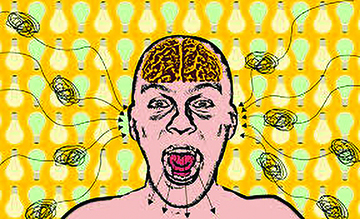
Screaming: Screaming at one another is a time-honored Western birthright.
Over the last year, folks going about their business in public have been trying to decipher mask-muffled language and the internal moods of their counterparts by just the emotions shown in the eyes. Yet, since talking and yelling (among other mouth-related functions) are the very mechanism through which the disease has been shown to spread, this behavior is under considerable scrutiny. In America, however, the freedoms of self-expression guaranteed by our first Amendment rights are practically ingrained in every citizen’s DNA. It’s only a matter of time before dudes are yelling across lanes of heavy traffic to get the attention of their buddy across the street and tipsy women are shrieking like banshees upon recognizing an old friend in a crowded bar. Spoken language is essential to the human condition and using it at high volumes is a distinct characteristic of Western culture.
Pro tip: For the last year, you’ve been observing the practice of not spitting into the face of the listener when you speak. Try to keep that.
by Mark Smiley | Mar 19, 2021 | Travel
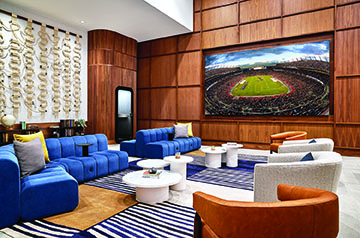
New Lobby Referred To As The 16th Street Mall Living Room
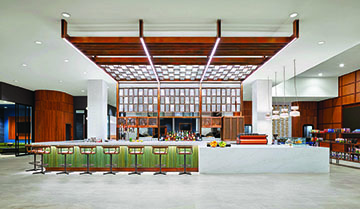
Bar Bar: The 16th Street Commons Coffee Bar Bar transitions guests from day (coffee) to night (cocktails) with food and beverage options that are locally sourced. It sits in the center of the redesigned lobby at the Sheraton Denver Downtown.
by Mark Smiley
The Sheraton Denver Downtown completed a full-scale renovation of its guest rooms, lobby, public and meeting spaces as part of Sheraton’s worldwide transformation of its guest experience vision. Only one other hotel in North America (Sheraton Phoenix) was commissioned for such a renovation. The conceptual phase started in 2013 and continued through 2016 when Marriott International purchased Starwood Hotels & Resorts Worldwide for $13 billion. The concept became a reality in February 2021.
“We are honored to be one of the first hotels to bring the new Sheraton brand to life in the heart of Denver,” said Tony Dunn, General Manager for the Sheraton Denver Downtown. “The renovation will serve to highlight what is already incredible about the local Denver community — and bring the best of the Sheraton brand to downtown. As travel starts to resume, these changes will strengthen Denver’s position as a global gathering place for groups, conventions, guests and locals alike, and will act as a public square for our growing, evolving city.”
The Sheraton was one of the first original town centers in the United States and one of the towers was built in 1959 and was a Hilton Hotel. It was designed by I. M. Pei who is most famous for designing the Louvre Pyramid which sits at the entrance of the Louvre Museum in Paris. In fact, the new fireplace in the lobby nods to Pei’s original tower design, featuring a plaster imprint of the historic ceiling tiles that remain on the tower’s second level.
Media Wall: The 16th Street Commons Sitting Room provides a central gathering area in the lobby bringing the community together with soft seating and a media wall to catch all the big games.
Sheraton Denver Downtown includes Sheraton’s new signature key elements that aim to create an environment where guests can feel comfortable and at ease, whether working, meeting or relaxing. “We want locals to feel like guests and guests to feel like locals,” said Tracy Blair, Director of Sales and Marketing, Sheraton Denver Downtown. “The locals are definitely invited in and if you’re a guest, we want you to experience local flavors. We want you to know you are in Denver.”
The completion of this $80 million hotel renovation changed the face of the hotel and Denver’s iconic 16th Street Mall. Sheraton Denver Downtown has long been a familiar anchor in Downtown Denver, serving as the largest meetings/events hotel in the city. Today, this transformation is officially complete, with all aspects of the hotel updated and refreshed–including a new arrival experience, 133,000 square feet of renovated meeting space and 1,236 newly redesigned guest rooms and 138 suites as well as a new culinary and beverage experience.
“This is a pivotal moment for Sheraton as we see hotel owners embracing the new vision and bringing it to life,” said Amanda Nichols, Senior Director and Global Brand Leader of Sheraton Hotels. “Over the past 80 years, Sheraton has always offered guests the time-honored assurance of a welcoming community. We’re proud to have built on this legacy in the new concept, creating an environment where guests can enjoy all the familiar comforts of the Sheraton brand, but with fresh, contemporary updates. As travel resumes, we look forward to welcoming guests into this new chapter for Sheraton at Sheraton Denver Downtown.”
A Modern-Day “Public Square”
At the heart of the new experience at Sheraton Denver Downtown is the lobby. This has been re-imagined as the “Public Square” of the hotel called the 16th Street Commons; an open space that invites people to join together or be alone amongst others.
Sheraton Denver Downtown features all the signature elements of the new brand vision. This includes the Community Table, a purpose-built workspace that anchors the hotel’s lobby and allows guests to work, eat and drink. Following Sheraton’s philosophy to embrace both form and function, these tables are custom designed with amenities to keep guests productive, including built-in lighting, outlets and wireless charging stations.
The Studios, flexible gathering spaces available to book whenever a guest needs it, is in a less formal setting. Built on elevated platforms and enclosed with glass, the tech-enabled Studios allow guests privacy and focus for everything from small group meetings to private dining experiences. Soundproof booths are also placed around the lobby, ideal for a phone call to connect privately with friends, family or colleagues.
Sheraton Denver Downtown’s new food and beverage offering creates a focal point in the lobby experience. Part bar, part coffee bar, part market, the 16th Street Commons Coffee Bar Bar is a central pillar of the new Sheraton vision, transitioning guests from day to night with food and beverage options that are locally sourced. “It’s really the focal point now for the lobby,” said Blair. “The food and beverage is pulled out from the corners and walls and it is placed as a focal point of the community. We feel we are the living room of the 16th Street Mall.”
Guest Rooms

Remodeled Rooms: All of the guest rooms, including king accommodations (pictured) have been newly remodeled.
The new guest rooms, which were torn down to the studs during renovation, feature a bright, well-lit space with warm, residential appeal, comprised of soft finishes and light wood tones accentuated with black metal accents. The rooms have new tools for productivity, such as a height-adjustable worktable, integrated power and charging and layered lighting; while still retaining some of the classic Sheraton signature amenities, including the Sheraton Sleep Experience platform bed. The guest bathroom has also been completely redesigned with new and modern walk-in showers.
Sheraton Denver Downtown is following all of Marriott International’s Commitment to Clean protocols, created in partnership with leading experts in food and water safety, hygiene and infection prevention, and hotel operations. These protocols include mandated mask-wearing for all guests and associates within the hotel, and the use of electrostatic sprayers and disinfectants recommended by the Centers for Disease Control and Prevention and World Health Organization to sanitize surfaces throughout the hotel.
For more information on the Sheraton Denver Downtown, visit www.marriott.com/dends.
by Charles Bonniwell | Mar 19, 2021 | Editorials
When Amanda Sandoval and Amanda Sawyer were elected to the Denver City Council, from District 1 and District 5 respectively, this Editorial Board could not have been more thrilled. We strongly endorsed both candidates as women who would take strong stands against Mayor Hancock when appropriate. Sawyer upset incumbent Mary Beth Susman, who had decided to become little more than a shill for Hancock and his developer buddies. Sandoval, on the other hand, had been the aide to former Councilmember Rafael Espinoza, arguably the best councilman in the previous Council term. But he decided he could be more effective on the outside rather than in government and would be there to help, and assist Sandoval, when needed.
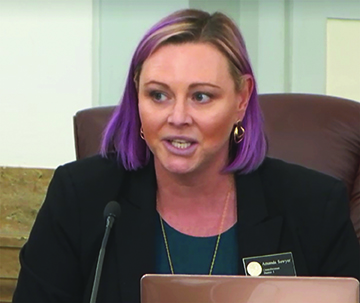
District 5 Denver City Councilwoman Amanda Sawyer
As far as opposing Hancock when needed each has done an outstanding job. But as for being decent human beings each has been an abysmal failure. Lord Acton the famous 19th century historian said: “All power tends to corrupt, and absolute power corrupts absolutely.” He noted that such people are not innately evil. They begin as decent human beings but soon evolve.
We have watched Denver City Council members come and go for decades now. It is an interesting process to observe. Many were relatively powerless prior to coming to office and that certainly was the case with the Amandas. Sandoval came from a highly political family but was known for her kindness and appreciation for others. Sawyer had lots of degrees, both a JD and an MBA. She had moved to Hilltop with her husband to raise their five children and had no political background. With the help of the EMERGE program, which trains Democratic women for political office, she prevailed.
It didn’t take either one very long to begin attacking and denigrating anyone who got in their way. For both, they always asserted that they were being “bullied” when they were, in fact, the biggest bullies. Sawyer claims any opposition to her is “sexist,” and Sandoval quickly claims everything is “racist.”
At times Sandoval appears to represent only the Latinx community. When Sandoval spearheaded the change of the name of Columbus Park to La Raza Park (which means The Race Park) she seemed clueless on why African Americans seemed to wonder whether they were welcome at the park. Her relations with the black community took a deep dive when she was booed at a City Council meeting after stating: “I support a lot of things that are going on. But it’s the same violence that is happening in our community. It’s Black on Black. It’s brown on brown.”
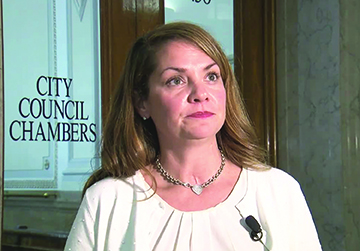
District 1 Denver City Councilwoman Amanda Sandoval
The black community began a “Recall Sandoval” campaign. She claimed she and her entire family were being threatened by something called the Afro Liberation Front and she went tribal. She asserted the Chicanos who had gone before her had been afraid, at times, but always showed up. She asked her supporters to take over the streets of North Denver. While everything eventually calmed down, starting race wars in District 1 was not previously thought to be one of the functions of a Denver City Councilmember.
If anything, Amanda Sawyer has been worse. She decided to try to destroy the career of an employee at the Denver Department of Transportation and Infrastructure (DOTI). She threatened to block every DOTI bill and grind the department into the ground unless she was given her way. When the employee responded in his defense, she declared it was sexist and claimed people were trying to smear her. She and her attorney wrote extremely unprofessional letters, claiming false and sexist attacks and threatening to file legal actions. A spokesperson for Hancock responded: “As far as I know there is no precedent for a member of city council, or any public servant, to communicate with the Mayor’s office this way.” Leave it to Amanda Sawyer to accomplish the impossible of making Mayor Hancock look sympathetic.
The Chronicle’s reporter Robert Davis recently had a chance to experience the full Amandas treatment. In a story on page 15 of the March 2021 edition of the Chronicle, he incorrectly indicated that Amanda Sandoval voted against the Group Living Amendment when it was, in fact, Amanda Sawyer. No apologies were enough for the Amandas. When alerted on Sunday morning, February 28, 2021, The Chronicle’s Executive Editor immediately changed the online version and updated the photo used in the story. This was also not sufficient. Nor was the declaration that a correction would be placed in this month’s printed edition (see Correction below).
If you believe them, Mr. Davis was clearly a misogynist. Amanda Sawyer immediately posted on Twitter where she joined Denver School Board Director Tay Anderson in attacking the paper. Separately, she has claimed that the Chronicle is out to get her, even though she has received overwhelmingly positive coverage from this paper since assuming office.
As a practical matter, newspapers from the Chronicle to The New York Times make inadvertent errors, and all papers can do is acknowledge the mistakes and move forward. As for the Amandas, we have had it with them. We will continue to report on them fairly. But like many people and businesses in Districts 1 and 5, Amanda Sandoval and Amanda Sawyer have lost all goodwill and this newspaper will not hesitate to defend and protect those people they unfairly and viciously attack. You can oppose Mayor Hancock without being total jerks, notwithstanding what Amanda Sandoval and Amanda Sawyer think.
Correction
In the March 2021 edition, on page 15, the Glendale Cherry Creek Chronicle printed a story titled “Denver Approves Controversial Group Living Amendment.” Within the story, we mistakenly identified Councilmember Amanda Sandoval voting against the amendment when in fact it was Councilmember Amanda Sawyer who voted against it. We regret the error.
by Mark Smiley | Feb 19, 2021 | Editorials
In the year 2000 I sat down to clarify my thoughts about the strange circumstances that seemed to be gathering momentum in our American culture. In light of our situation today, I think you will agree; if we would have cared to look, we would have seen this coming and acted sooner!
What will we do today to stop the accelerated loss of our personal liberty? If we do nothing; what will our “Liberty” look like in a few short years or for that matter months?
Today is Sunday January 24, 2021. Almost One year into a worldwide Pandemic and lockdown.
The world as I saw it in the year 2000 no longer exists — without the lessons learned from great past civilizations, will our Grandchildren have the ability to create a future?
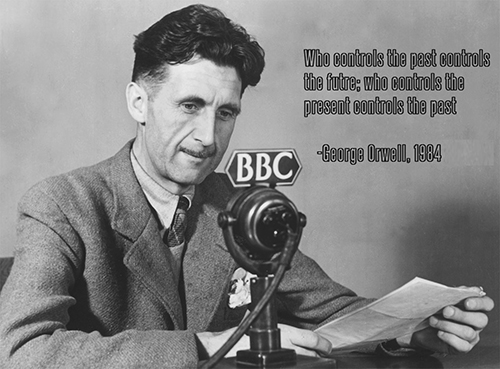
“Who controls the past controls the future. Who controls the present controls the past!”
— George Orwell
March 2000
Personal Liberty is under an assault from a counter culture bent on absolute control of our government and the American way of life. Have I lost my mind — probably, but not on this issue. This statement sounds like I am outside staring at the sky awaiting the arrival of black helicopters. If I had made this comment 20 years ago, around the table, over a few beers you would still be able to hear the laughter. In the same setting today, the reaction would be quite different — disbelief, fear, and discomfort would replace the laughter. Not because the audience disagreed with the statement, but because someone said “such a thing” in public. The insidious, unrelenting Thought Police tasked with destroying “intolerance” with an iron fist have stifled us. We now find ourselves on the outside barely able to look in.
“When I use a word,” Humpty Dumpty said, in a rather scornful tone, “it means just what I choose it to mean — neither more nor less.” “The question is,” said Alice, “whether you can make words mean so many different things.” “The question is,” said Humpty Dumpty, “which is to be the master — that’s all.”
— Lewis Carroll,
Through the Looking Glass
A general malaise infects our culture. The common person knows that a “misplaced” opinion or humorous comment about a “protected” group can destroy their lives. Equality of opportunity has given way to equality of outcome, personal rights to group rights. Personal rights bring personal wealth, personal success, and competition, and those who don’t make the grade are left behind. The counter culture believes in false equality predicated on the lowest common denominator.
To the counter culture, “social justice” has come to mean “protection” for certain groups from attacks by the “enemy” (principally white heterosexual males). It seems that everything we say, or do, can somehow exemplify our intolerance or downright hatred for a “protected” group. The great elixir of mankind, humor, should be avoided altogether. In fact, humor seems to be non-existent in the lexicon of the Thought Police. The ironical self-deprecating humor that was the hallmark of our nation’s immigrants is now considered to be hate speech on the part of the “enemy.” Even if you are the brunt of your own joke, the counter culture believes there exists an underlying “intolerance” that lurks dormant and insidiously hidden in your psyche that must be purged by the counter culture. Ultimately, it is not just our freedom of speech that is under attack, it is the freedom of thought.
“The price paid for intellectual pacification is the sacrifice of the entire moral courage of the human mind.”
— John Stuart Mill
To avoid falling into this “trap” we have developed a habit of self-censorship that has become so unconscious we fail to recognize the mind-numbing subliminal effort involved in maintaining the correct speech necessary to escape the wrath of the Thought Police. At some point it is easier to avoid thinking, and subsequently, disengage.
We are becoming a lobotomized society in which everyone believes that it’s every man for himself. A considerable number of Americans fail to recognize the counter culture’s agenda, and believe that the counter culture is interested in “inclusion” and constructive dialogue. They have become the unwitting foot soldiers that practice appeasement as a way to reconciliation. History shows us that the appeasers (after their usefulness expires) are the last to be executed.
Control The Debate
Frame the debate! Dehumanize your enemy! Call your adversary a sexist, racist or bigot, and you will no longer need to answer his arguments. He is now faced with defending his character. In the courts, there is a presumption of innocence until proven otherwise. However, in the court of public opinion if you are charged with sexism the burden of proof falls squarely on the shoulders of the accused. This is precisely how ideologues entrench themselves in a system; they exploit and ruin those on whose backs they rode to power. They begin by working in the establishment, and through insinuation and infiltration rather than through confrontation, they erode the system from within, all the while claiming that the root of the problem stems from the old guard, and its ideals. Thus, we find ourselves in a situation where the counter culture not only controls the answers but the questions asked. It is attempting to control how we understand the daily events of our lives.
Control History
“Who controls the past controls the future. Who controls the present controls the past!”
— George Orwell
“To destroy a people, you must first sever their roots.”
— Alexander Solzhenitsyn
When attempting to destroy your enemy, destroy the record of their past, and fill the void with a new history. Dishonor or disgrace his heroes, and you can demoralize his people. Besmirch, and degrade your adversary to the point that any and all outrageous comments will go unchallenged. Sit back and watch the crows devour what is left of the past and your future!
Yours in Hope, Etienne