Your Father’s Day Feast Finder Filled With Fun Things To Do, Places To Go With Your Dad This Year
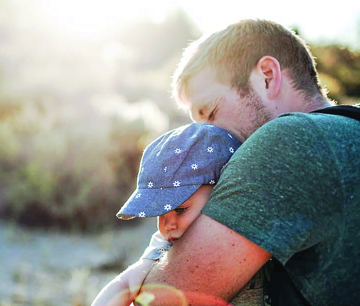
Father’s Day is June 16, will it be a special one for your
dad? Dads are the steady but less sentimentalized parent — the sun in our sky
that warms and gives life but isn’t thought about as often. Nonetheless, the
presence of a loving father increases a child’s chances for success, confidence
and resilience plus a sense of humor. In 1924, President Calvin Coolidge showed
support for it becoming a national holiday. However, it wasn’t until 1966 that
President Lyndon Johnson officially proclaimed Fathers’ Day a national holiday
to be celebrated on the third Sunday in June.
Barbecue Blast
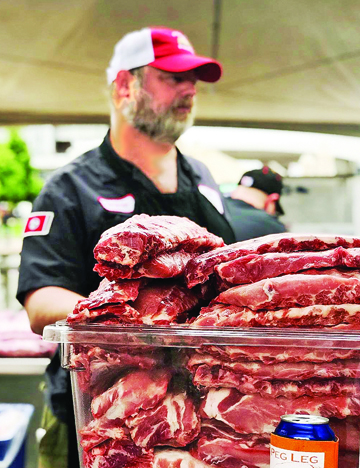
No Bones About It: Denver hosts its 2nd Annual Father’s Day BBQ Festival at Mile High Stadium June 14-16. Event serves up ribs, brisket, chicken and sausage with live band music.
Denver’s Father’s Day BBQ Festival returns to Mile High
Stadium June 14-16. Admission is free, but VIP tickets are also offered.
Legendary pitmasters from Denver and around the nation serve BBQ along with
live music from bands like the Hazel Miller Band, the Rick Lewis Project and My
Blue Sky, a tribute to the music of the Allman Brothers. In addition attendees
can enjoy cold beer and drinks, BBQ tutorials and demonstrations plus games and
activities for the whole family. Last year’s event used 8,000 lbs. of ribs
(3,500 slabs), 5,000 lbs. of brisket, 3,000 lbs. each of chicken and sausage.
In addition, 600 lbs. of potato salad and 2,000 lbs. of beans were served. The
2nd annual event is adding new pitmasters from Kansas City, San Antonio, and
New York City. Times are Friday, 5-8:30 p.m., Saturday 11 a.m.-8 p.m. and
Sunday 11 a.m.-6 p.m. Information:dbbqfest.com.
Dine-Drink With Dad
Feast With Father: Eateries such as the Monaco Inn Restaurant offer lunch and dinner specials plus appetizers and beer. Here Marie Ezman serves draft beer with one of restaurant’s eight appetizers.
The Monaco Inn Restaurant — the Valley’s favorite family
gathering place on major holidays — is an easy choice for dad’s day serving
classic and comfort food with indoor and patio seating. This informal
family-run eatery with reasonable prices is the perfect spot to kick back with
dad, the kids and grandkids. Featuring a Baby Back Rib Father’s Day Special
plus a full bar serving creative cocktails and a large selection of wine and
beer, it has been a lunch-dinner and watering hole hot spot for generations of
residents. Under the direction of chef and co-owner Terry Vaidis, patrons can
choose from traditional Greek fare plus American and Mexican specialties all
weekend long. Information:303-320-1104.
Jax Fish House & Oyster Bar with locations in Glendale’s
CitySet off Colorado Blvd. and downtown in LoDo annually offer Father’s Day
specials. Expect loaded Bloodies, Mimosas, Shrimp & Grits plus Crab Cake
Benedicts. Crawfish Broils are also often offered at the LoDo spot.
Information: 303-756-6449, LoDo 303-292-5767.
Café Marmotte, the classic French Bistro on S. Downing in
Wash Park is one of the Valley’s best brunch spots, making it a great place to
take dad on Father’s Day. This year’s Dad’s Day special hadn’t yet been
released but one was offered last year. Information: 303-999-0395.
Hot Dad Music
Musical Magic: Pop and R&B star Ashanti is this year’s headliner at the Juneteenth Music Festival, one of several musical events on Father’s Day Weekend.
The Juneteenth Music Festival on Father’s Day weekend in the
historic Five Points neighborhood will be one for the books, June 14-16. Pop
and R&B star Ashanti is this year’s headliner. She is the first female
artist to occupy the top two positions on the U.S. Billboard Hot 100 chart
simultaneously when Foolish and What’s Luv were at number one and two
respectively.
The Jacob Jollif Band — the next generation of bluegrass
supergroups led by one of the country’s premier bluegrass mandolinists — plays
Daniels Hall at Swallow Hill on Sat., June 15. Featuring some of the most
virtuosic and innovative pickers in the country, it is a rare, not to be missed
performance.
Another musical blast for dad is Empire of the Sun playing
at the Ogden Theatre on Colfax Sat.-Sun., 8 p.m. The Australian electronic
music duo is a collaboration between Luke Steele of the alternative rock band
The Sleepy Jackson and Nick Littlemore of the electronic dance band Pnau.
Bits & Brews
Take dad on a three-hour food and beer adventure in the RiNo
Arts District on Father’s Day, 2-5 p.m. Tour begins and ends from the Denver
Central Market at 2669 Larimer St. You’ll visit five restaurants and try tasty
local dishes with optional beer pairings. Dad can try wood-fired pizza, beer
sausage, sushi-grade poke with ahi tuna and Mexican tacos from some of Denver’s
top chefs.
Keep Track Of Dad
Get dad off to a great start at the Father’s Day Run in
Stapleton’s Central Park Sun. June 16, 6 a.m.-noon. The 5K and 1-mile kick off
at 7 a.m., the half marathon, 10 mile and 10K starts at 8 a.m.
Cars Drive Dad
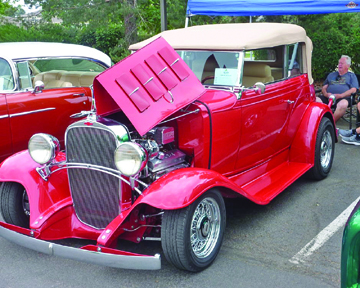
Road Rage: If your dad has an auto obsession, consider taking him to the 15th annual Father’s Day Car Show at the Apex Center in Arvada.
Guys love cars and if your dad is one of those with an
automobile obsession, consider taking him to the 15th annual Father’s Day Car
Show at the Apex Center on W. 72nd Ave. in Arvada, 9 a.m.-3 p.m. This event,
free to spectators, is a perfect outing for dad with cars, music, antiques,
family activities and refreshments. Information: 303-467-5525.
More Dad Doings
Dad’s Special Day: With June 16 approaching, will it be a special one for your dad? From dining out to a BBQ Festival and a Rockies game there are lots of ways to entertain dear old dad.
Need more things to do with dad? Here are more options to
consider for Father’s Day weekend:
• This year’s
Stapleton Fresh Market kickoff is on Father’s Day, 8:30 a.m. to 12:30 p.m. on
Founders Green. It would be a fun way of spending the morning picking fruit,
vegetables and melons with pop.
• If dad’s a
baseball fan, you’ll be a big hit taking him to the Colorado Rockies vs. San
Diego Padres game at Coors Field. Game time is 1:10 p.m.
• Start the
weekend with dad early by taking him to the Free Day At Four Mile Historic Park
on Friday June 14. There are historic demos, a tour of the Four Mile House
Museum plus Hay Bales & Tall Tales, noon-1 p.m.
Normally, the Glendale Cherry Creek Chronicle only endorses
candidates in Districts which are part of our circulation area. This time,
however, we believe this to be a make-or-break election for the future of the
city. We are, therefore, endorsing candidates in all runoff races as well as
Initiated Ordinance 302. We acknowledge if incumbent Michael Hancock wins his
race against Jamie Giellis there is a little hope that the next four years will
be any better than the last disastrous eight years. If Giellis wins, however,
she will need allies to fight against the high-density developers that are not
going to go gently into that good night. Our endorsements are as follows:
Jamie Giellis
MAYOR – JAMIE GIELLIS. Michael Hancock has been the worst
mayor of Denver since Wolfe Londoner (1891-1893) who ended up in jail, which
would be the fate of Hancock if there were any justice in this town. Londoner
was the puppet of the whisky barons of Denver while Hancock is the tool of the
high-density developers. If given a choice between the two, high-density
developers have been a far more malevolent force than the whiskey barons ever
were. Jamie Giellis is a bright new face with an urban planning background
which is badly needed in the city. Can she survive the last minute desperate
and vicious mudslinging of his Honor and his allies? We certainly hope so, but
only time will tell.
Peg Perl
CLERK AND RECORDER – PEG PERL. This one was easy. Paul Lopez
is wholly unqualified for the position as he demonstrated in the only debate.
Moreover, he has indicated that he will politicalize the position which is
exactly what is not needed. Peg Perl is very well qualified to run the office
in a fair and equitable manner for all the residents of the city.
INITIATED ORDINANCE 302 – YES. The city dodged a bullet when
the Olympic Committee chose Salt Lake City over Denver to bid for the 2030
Winter Olympics. Only high-density developers and certain businessmen wanted to
bring the Olympics to Denver and they couldn’t have cared less what the
citizens of the city thought. Next time, if this proposal passes, Denver will
have to ask the voters of the city what they think before wasting large sums of
money for a project that would benefit only a very few.
Wayne New
CITY COUNCIL DISTRICT 10: WAYNE NEW. Wayne was one of four
councilmen who ran in 2015 opposing the reckless and wasteful developments of
Mayor Hancock in Cherry Creek and across the city. Some feel Wayne has not done
enough to oppose the Mayor and his policies, but behind-the-scenes resistance
leader Rafael Espinoza says Wayne was his greatest ally and fought with him in
many of the key fights, not all of which were successful. Newcomer Chris Hinds
is an attractive candidate in many ways, but the behind-the-scenes support for
him of the city’s unions and people who are often allied with high-density
developers make him a risk that he will become just one more person who
actually only listens to the rich and powerful in the city.
Amanda Sawyer
CITY COUNCIL DISTRICT 5 – AMANDA SAWYER. Little controversy
here. Incumbent Mary Beth Susman has been the lackey for high-density
developers in her District and across the city. She was even caught taking
written instructions from developers and their lobbyists on exactly what to say
in City Council meetings. Her door knocker advertisement states: “A Leader Who
Listens.” Anyone who has been to a City Council meeting where a high-density
development is being considered would know that tag line should be: “A
Councilwoman Who Listens Only to Developers.” Amanda Sawyer got involved in the
race after helping with one of the few neighborhood victories in stopping the
ill-considered Green Flats development on Holly. It would be nice to have a
councilwoman who actually does listen to the everyday citizens.
Amanda Sandoval
CITY COUNCIL DISTRICT 1 – AMANDA SANDOVAL. Hopefully, City
Council meetings will have another Amanda on the dais fighting for the
neighborhoods that have been ignored for so long. Sandoval has been the chief
of staff for Rafael Espinoza, the leader in the fight against high-density
developers, and will continue his great work. Her opponent is the
intellectually limited fireman Mike Somma who will be little more than a parrot
for the city’s unions.
Veronica Barela
CITY COUNCIL DISTRICT 3 – Veronica Barela. In District 3
there is only one candidate who has expressly opposed the disastrous Sloan’s
Lake mega project sponsored by the outgoing councilman Paul Lopez and the
Brownstein Farber Law Firm. Barela’s longterm advocacy for the District
demonstrates that she is willing to fight against the powers to be in the city.
Her opponent is immigration rights activist Jamie Torres who has not
demonstrated the same resolve.
Candi CdeBaca
CITY COUNCIL DISTRICT 9 – Candi CdeBaca. Last, but not
least, this race pits Mayor Hancock’s presumed successor, Albus, “The Buddha”
Brooks, who spends his time looking for handouts from the rich and powerful.
Candi CdeBaca’s surprisingly strong showing in the initial round indicates that
District 9’s residents are tired of being forced out of Denver by high-density
developments pushed by Brooks, and are ready for a change.
The 4th Annual Bacon and Beer Classic will be held at Broncos Stadium at Mile High on Saturday, May 11, 2019. Attendees will be treated to unlimited bacon dishes prepared by local chefs from 30+ Denver restaurants, 100+ craft beers from regional breweries, music, games, and more on the Broncos’ iconic home turf. There will be two sessions, afternoon (12 p.m. to 4 p.m.) and evening (5 p.m. to 9 p.m.).
15% Off: Chronicle readers can enter the code GLENDALE to get 15% off tickets to the Bacon and Beer Classic on May 11, 2019, at Broncos Stadium at Mile High.
This fest has quickly become one of the more popular ones in
a sea of beer fests throughout the metropolitan area. One thing that makes this
fest unique is the fact that guests are on the field of Mile High Stadium. And,
those that purchase a VIP ticket are able to have exclusive access to the
visitors’ locker room for a sampling of pork belly and different craft beers.
All attendees will be able to bob for bacon, sample beer in
a blind taste test, strut in the bacon beauty pageant, and compete in the
Hormel bacon eating contest. Guests also will be able to try their hand at
giant Jenga, strike a pose at the photo booth, battle it out on the bungee run,
and brand themselves with bacon and beer-inspired tattoos.
As always, tickets are all-inclusive, which means you can
sample bacon and beer throughout the stadium without ever taking out your
wallet. Choose from three ticket types: General Admission, Power Hour, or VIP.
General Admission tickets start at $69, Power Hour tickets start at $89, and
VIP tickets start at $119.
Bacon And Beer: The 4th Annual Bacon and Beer Classic will be May 11 at Broncos Stadium at Mile High. Tickets are available at www.baconandbeerclassic.com.
VIP and Power Hour ticket holders enter the stadium an hour
early through an expedited line. VIPs also enjoy access to an exclusive lounge
in the visiting team locker room with a pork belly tasting, limited-edition
craft beer, a donut wall, and beer and cheese pairing. All tickets include a
commemorative tasting glass and access to the Bacon and Beer Classic mobile app
for vendor information, a stadium map, and more.
Visit www.baconandbeerclassic.com for information and to purchase tickets. Chronicle readers can take advantage of an exclusive 15% discount by entering GLENDALE at checkout.
Chronicle’s Guide To Showing Your Mom How Much You Appreciate All She
Has Done For You
Mum’s the word in May. The English idiom expressed by
William Shakespeare in Henry VI reminds us May 12 is Mother’s Day. It’s the
special day when you get to celebrate your first best friend and the person you
turn to when you need advice.
Mama’s Day: May 12 is Mother’s Day, the day when each of us celebrate our best friend and the person we turn to for advice.
Mothers are like glue. Even when you can’t see them, they’re
still holding the family together. For most women motherhood is a joy — a least
some of the time. It is the catalyst that opens new connections as well as new
stresses in a woman’s relationships with her partner, siblings and friends.
The idea of honoring mothers with a special day dates from
the 19th century; In 1908, Anna Jarvis led a campaign to celebrate Mother’s Day
in May. In 1914 a resolution by Congress and a presidential proclamation
established the second Sunday in May as Mother’s Day. Here’s Chronicle’s guide
for showing your mother, grandmothers, sisters, aunts and friends how special they
are:
Afternoon Tea
Let mom relax in style at the Brown Palace’s Traditional
Afternoon Tea in the historic hotel’s legendary atrium lobby. You’ll be served
tea, scones, pastries and dainty sandwiches, all artfully prepared by the
hotel’s culinary staff. More: She’ll enjoy the soothing sounds of a harp or
pianist playing classical, jazz and pop standards. Information 303-297-3111.
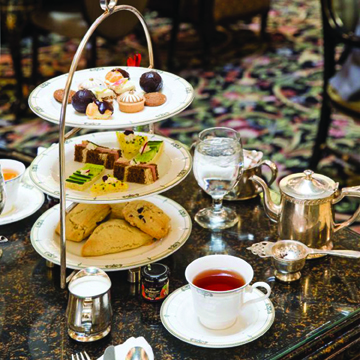
Relax With Mom: For a tranquil afternoon your mom won’t soon forget take her to the Brown Palace for old-fashioned tea service with scones, pastries and sandwiches.
Or, take her to Mother’s Day afternoon tea at the historic
Molly Brown House where she will love the savory sandwiches, sweet treats and
specially blended tea, plus a chance to stop in the museum store. Information:
303-832-4092.
Dining With Mom
Mother’s Day only happens once a year so it’s best to make
the most of it by bringing the family together at the Monaco Inn Restaurant. A
dining experience like no other, specials include Lamb Shank, Lamb Chop &
Grilled Shrimp, New York Steak & Fried Shrimp and Grilled Trout all priced
under $25. The regular dinner menu is also available for mom and the family.
Brunch is being served from 10:30 a.m.-2 p.m. Information: 303-320-1104.
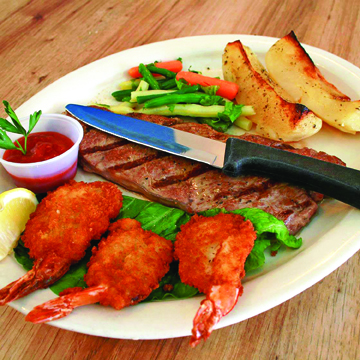
Dining Date: For Mother’s Day dining like none other take her and the family to the Monaco Inn Restaurant. Serving five specials including this New York Steak & Fried Shrimp. Regular dinner menu also available.
Mother’s Day brunches are happening all over the city. A top
choice is the Dom Perignon champagne brunch at Ellyngton’s in the Brown Palace
downtown known for its carving stations and seafood selections. Information:
303-297-3111. Or, dazzle your mom this year at Dazzle Restaurant & Lounge
on Curtis St. with live jazz performed by the Julie Monley Quartet from 9
a.m.-2 p.m. on Mother’s Day. Information: 303-839-5100. Other choices are the
Tavern Lowry (303-366-0007) serving a brunch buffet from 10 a.m.-2 p.m. and the
Del Frisco’s Grill (303-320-8529) in Cherry Creek.
Flowers
Present mom with a fragrant bouquet of freshly cut,
elegantly arranged flowers. Choose from these top floral shops that can help
you find the perfect arrangement for mom:
Remember Flowers: A fragrant bouquet of freshly cut, elegantly arranged flowers are the perfect way to begin mom’s day. This bouquet is by Valley florist Perfect Petal.
Bloom — Upscale florist offering chic floral arrangements
plus accessories for mom on 3rd Ave. at University Blvd. Information:
720-941-2862.
Bouquets — Located in lower downtown, it was named one of
America’s top 10 florists by Bon Appetit Magazine. Information: 303-333-5500.
Flower Power — A cozy, unfussy Wash Park neighborhood
florist offering a sizable selection of flowers. Information: 303-777-6266.
Perfect Petal — Creative Highlands florist providing custom
arrangements plus a boutique section with gifts for mom. Information:
303-480-0966.
Theater
Treat mom to an afternoon of exhilarating musical theatre
with Sweat or Wicked at the Denver Performing Arts Complex or indulge her love
for classical music during a performance of Berlioz Symphonie Fantastique at
Boettcher Concert Hall also in the DCPA. Information: 303-893-4100.
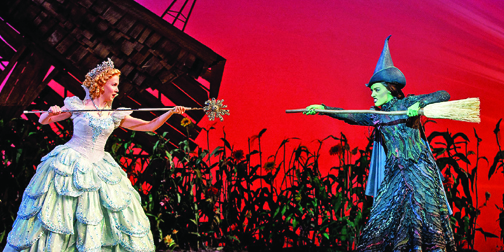
Entertainment: Divert and amuse mom by taking her to the theatre on her special day. The musical Wicked is one of this year’s options.
Or for a hilarious comedy both you and mom will enjoy, get
tickets to Noel Coward’s silly, rebellious 1925 comedy Hay Fever. It opens
Mother’s Day weekend and plays at the John Hand Theater in Lowry each weekend
through June 8, Fri.-Sat. 7:30 p.m., Sun. 2 p.m. Information: 303-455-7108.
‘DaVinci & Michelangelo Battle Of The Titans’ Celebrates
Both Men AND Their Times
by Charles C. Bonniwell
Not To Be Missed: DaVinci & Michelangelo — Battle of the Titans comes to Denver with performances at the Mayan Theater, Scottish Rite Masonic Temple, and Park Hill Masonic Temple Theater. Visit www.discoverdavinci.com for more information or tickets.
2019 is the 500th anniversary of the death of Leonardo
DaVinci which is being noted in Italy and around the world. Denver Museum of
Nature and Science started on March 1 as a much heralded sensory experience
celebrating DaVinci’s “500 Years of Genius.” But another event is starting to
gather equal notoriety, that being a one man play starring Mark Rodgers titled
DaVinci & Michelangelo — Battle of the Titans which will be held
consecutively at two Masonic Temples in Denver, following an opening night of
May 2 at the Mayan Theater on Broadway.
DaVinci’s and Michelangelo’s lives overlapped in 16th and
17th Renaissance Italy with DaVinci being 25 years the senior of the two men.
Mark Rodgers’ play compares and contrasts the genius of each man whose lives
changed the world, and whose influence is still a vibrant force today. Audio
visual wizard Matt Boggs created for Rodgers’ play three screens of high/tech,
high definition laser images that are intended to explode before the viewing
audience.
Producer: Matt Boggs is the Content Producer\Editor\Event Designer for DaVinci & Michelangelo — Battle of the Titans. He has been creating and managing immersive environments in Denver for over 20 years.
Boggs explained, “I wanted to provide a one-of-a-kind,
non-stop, multi-media event featuring movies, videos, 3-D; animations, and
images of DaVinci’s and Michelangelo’s inventions, machines, sketches, codices,
paintings and sculptures.”
“It is a shamanic experience . . . not to be missed,”
exclaimed Anthony Arguello. He goes on to note, “It will change your life.”
Venture capitalist and the show’s producer Fritz Voelker stated, “People will
be amazed. The show is designed to overwhelm your senses while enlightening
anyone who comes about the lives of these two extraordinary men.”
An additional element to the play is that it will be held on
May 3-5 at the landmark Scottish Rite Masonic Temple (14th and Grant), and then
May 9-12 at the Park Hill Masonic Temple Theater at 4819 Montview Boulevard.
Both men were, according to some, Masons and incorporated Masonic symbolism
throughout their work. Rodgers explores often missed Masonic mysteries
contained in the works of both men.
“The performance is so unique, and I am sure most theater
patrons have never seen anything like it,” states Rodgers. Voelker noted that
“you get to see and experience Renaissance Italy through these two men while
being surrounded by the images of the art, sculpture and machines that the men
created thanks to visual genius of Matthew Boggs.”
Director: Mark Rodgers is the Director of the DaVinci Machines and Michelangelo Exhibitions for North America. In this “tour de force” performance … DaVinci & Michelangelo The Titans Experience, Rodgers will take the audience on a fantastic, awe-inspiring journey through the Italian Renaissance as seen through the eyes of these two monumental geniuses.
A version of the play debuted at the Pabst Theater in
Milwaukee, Wisconsin. Paul Ann Water exclaimed, “I left [the performance] with
only one word … WOW!” Riley Redpath agreed, “Mark Rodgers is a tour de force.”
The show runs two hours with a 15-minute intermission. Tickets are $35 general admission and for students with a valid I.D. admission is $20. For tickets and information go to www.discoverdavinci.com or call 720-504-9408.
On Election Day May 7 we will all learn who the leaders are
in the City and County of Denver that we “deserve” particularly as pertains to
the next mayor. There are no excuses for us this election cycle. Four years
ago, Mayor Michael Hancock ran unopposed so we can hardly blame ourselves for
re-electing him to a second term.
Michael Hancock
Eight years ago, our excuse was, sure, he was inexperienced,
badly lacking in basic knowledge of important civic issues, but he was an
engaging African American councilman with an incredible feel good saga of
arising from poverty to prominence. Back then we just didn’t want to look
behind the curtain and see developer Pat Hamill and the executive crony
capitalists of the hilariously named “Colorado Concern” to see who would really
be running the city, with Hancock the mayor in name only.
We now know with absolute certainty that his Honor is a
moral and intellectual pigmy. If his rude, foul mouthed son is any example, he
is an equally disgraceful father as he is husband. Hancock spends his time going to
ribbon-cuttings in between workout sessions and chasing and harassing women
here in Denver, and out of town in Atlanta and Washington, D.C. We discovered
shortly after his first election that he is a john that cavorts with
prostitutes and is shameless in endlessly lying to try to cover it up. We
learned last year from a policewoman that he harasses women who work for him
and uses taxpayer money to gain their silence.
What Hancock has done to the city in eight short years is in
its own way truly amazing. He has destroyed parks and open space throughout the
city at the whim of high-density developers. Homeless street people control
portions of the 16th Street Mall where the smell of urine and feces permeates
the air for outdoor diners. Beautiful boulevards like Speer Boulevard have
become concrete canyons with buildings pushed right up to the street. The
Cherry Creek Bike Path has become, in part, a heroin needle drop-off point. He
championed, along with Councilman Albus “The Buddha” Brooks, to make Denver the
heroin capital of the West with so-called “Safe Injection Sites” only to be
shot down at the state capitol thanks to a state-wide revolt.
A City Hall awash in tax funds has done nothing for the
neighborhoods he and his compliant City Council and Planning Commission are
destroying. Not providing adequate parking in new developments has not stopped
people from using cars but rather made streets clogged and virtual parking lots
at certain times of the day.
Lisa Calderon
The one positive aspect to the homeowners of Denver has been
the ever-increasing value of homes and condominiums in the city. But that party
appears to be over with price of homes decreasing the last few months as the
quagmire that Denver has become is ever more evident to potential home buyers.
There are three great candidates for the office — urban planner Jamie Giellis, former state legislator and lawyer Penfield Tate III and Colorado Latino Forum Lisa Calderón. Each was featured at length last month on Page 3. So why in the world would anyone vote for Mayor Hancock this time? The city’s only daily paper, the sad and ever shrinking Denver Post gave a it a try in its endorsement of Mayor Hancock for a third and final term. It is broadly known that that The Denver Post, (which is no longer located in Denver but housed in its production plant in Adams County) is financially dependent on the City and County of Denver which is bailing it out of its white elephant office building across from City Hall and the State Capitol.
Jamie Giellis
In its endorsement, The Denver Post could not name a single
accomplishment of Hancock in his eight years in office. Instead the paper
proffered that we all should look forward to future projects such as the
revitalization of the National Western Stock Show Complex (which Hancock
originally tried to pawn off on Aurora) upgrades for the 16th Street Mall which
Hancock has effectively destroyed and bond money for roads and bike lanes etc.
How pathetic. The Post notes the many personal failings of Hancock but states
“accusations that he is in the back pockets of developers . . . miss the mark.”
Yeah, right.
In a bizarre, concluding paragraph, the paper declares that
we must re-elect Hancock because “he is the only candidate ready to meet the
challenges if this nation faces an economic downturn.” What in the world is the
editorial board of this 130-year-old paper talking about? Michael Hancock is
utterly inept at everything he has ever done. He could not manage his way out
of a paper bag. Maybe The Denver Post is referring to his handlers like
developer Pat Hamill but the paper should at least have the guts to say so.
Penfield Tate
One could sense The Denver Post Editorial Board was ashamed
of what it had composed and argued. The Comment Section in the paper on the
editorial was devastating with virtually every comment mocking and laughing at
the editorial. One of the less vitriolic, but apt comments, was one that stated
the Editorial Board should have published the editorial on April Fool’s Day
rather than April 12.
On the evening of May 7, we will learn whether we will have
assured a third term for Michael Hancock or we will have a runoff between
Hancock and one of the challengers. If it is a Hancock third term, we can look
in the mirror and realize that Denver’s greatest enemy is ourselves. If it is a
runoff, we can all gear up for a battle royale to try to save the city, we
love.