by Mark Smiley | Aug 30, 2017 | Travel
by Julie Hayden
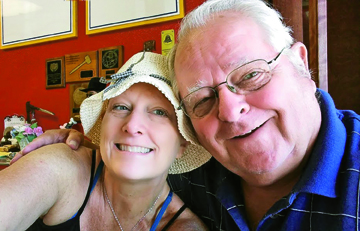
“I try to live normal, whatever normal is,” Christine Howard says matter of factly. That simple statement underscores the courage Howard packs into living every day with Stage 4 metastatic breast cancer. “I’m not a survivor, anymore. It’s gonna beat me. It’s an illness that’s going to kill me. I can’t say I’m okay with that but it’s a reality with me.” But Christine is not going down without a fight — for other breast cancer patients.
“I am very passionate about Sense of Security,” she exclaims. Howard devotes endless energy and time to the Denver-based charity. It gives direct support to breast cancer patients in treatment with $500 a month for six months to help pay for necessities like food, housing and transportation.
Over the past 15 years, Sense of Security has provided nearly $2 million to more than 1,300 Colorado breast cancer patients.
Howard is one of them, receiving the aid when she was first diagnosed with breast cancer a few years ago. “I felt a golf ball in my chest.” Howard started cancer treatment, working hard to keep her job. “I had decent health insurance but the bills were mounting up. No one budgets for cancer,” Howard explains. “I was under so much stress, I was just trying to keep my head above water.”
Then someone told her about Sense of Security.
“Sense of Security came in at the right time so I could get caught up,” Howard says. Executive Director Tim Taravella says Sense of Security was founded in 2000 by two women after they saw what a friend with cancer went through. “Our mission is to help the middle class,” Taravella explains. “Below certain income levels there are state and federal programs that can help. But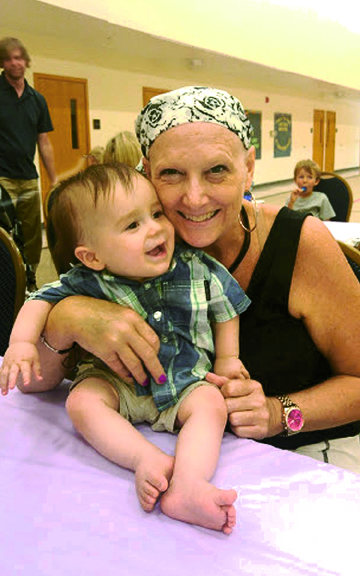 there is no safety net for the middle class.”
Taravella says most Sense of Security grantees are in Stage 1 or 2 cancers and will successfully go through treatment to live full, vibrant lives. But he says the time they are undergoing treatment can be what he calls “financially toxic.” “Cancer is a ruinous disease financially,” Taravella says. “People are looking down the barrel of financial ruin because of cancer. Anyone who needs cancer treatment will face huge expenses and experience financial decline. Sense of Security’s mission is to stop that decline before they hit bottom. We do what we can to help them get through everything better, financially.”
Howard says Sense of Security provides something more. “It helps financially and that helps emotionally and by relieving the stress it also help patients recover faster.
It gives you that relief, “she adds, “It’s one thing that you don’t have to worry about and that trickles down and helps with overall relief and stress reduction.”
Taravella says Sense of Security is unique in that it is completely community supported. “We don’t get a dime from the gover
nment.” The organization’s major fundraiser is coming up September 16, 2017, at Four Mile Historic Park in Glendale from 5 p.m. to 9 p.m.
Taravella describes the “Distinctly Colorado” event as a “un gala.” “Wear your jeans and boots, learn to fly fish, hit some balls at the golf simulator or take two-step dance lessons.” They raised $75,000 last year and hope to hit $100,000 this year. He says, “This fundraiser is crucial to help Sense of Security continue to help Colorado breast cancer patients.
Howard will be there and urges people, “If you want to help, give to Sense of Security.” She adds, “Just be good to each other. If everybody tried to be a little kinder to people every day, it would make such a big difference in the long run.”
For more information or to get tickets to the Distinctly Colorado event go to senseofsecurity.org.
by Mark Smiley | Aug 30, 2017 | General Featured
by Julie Hayden
It’s a peaceful neighborhood tucked just around the corner from Exposition and Quebec. The yards are carefully tended; flowers bloom and shady trees line the street in front of beautifully maintained homes.
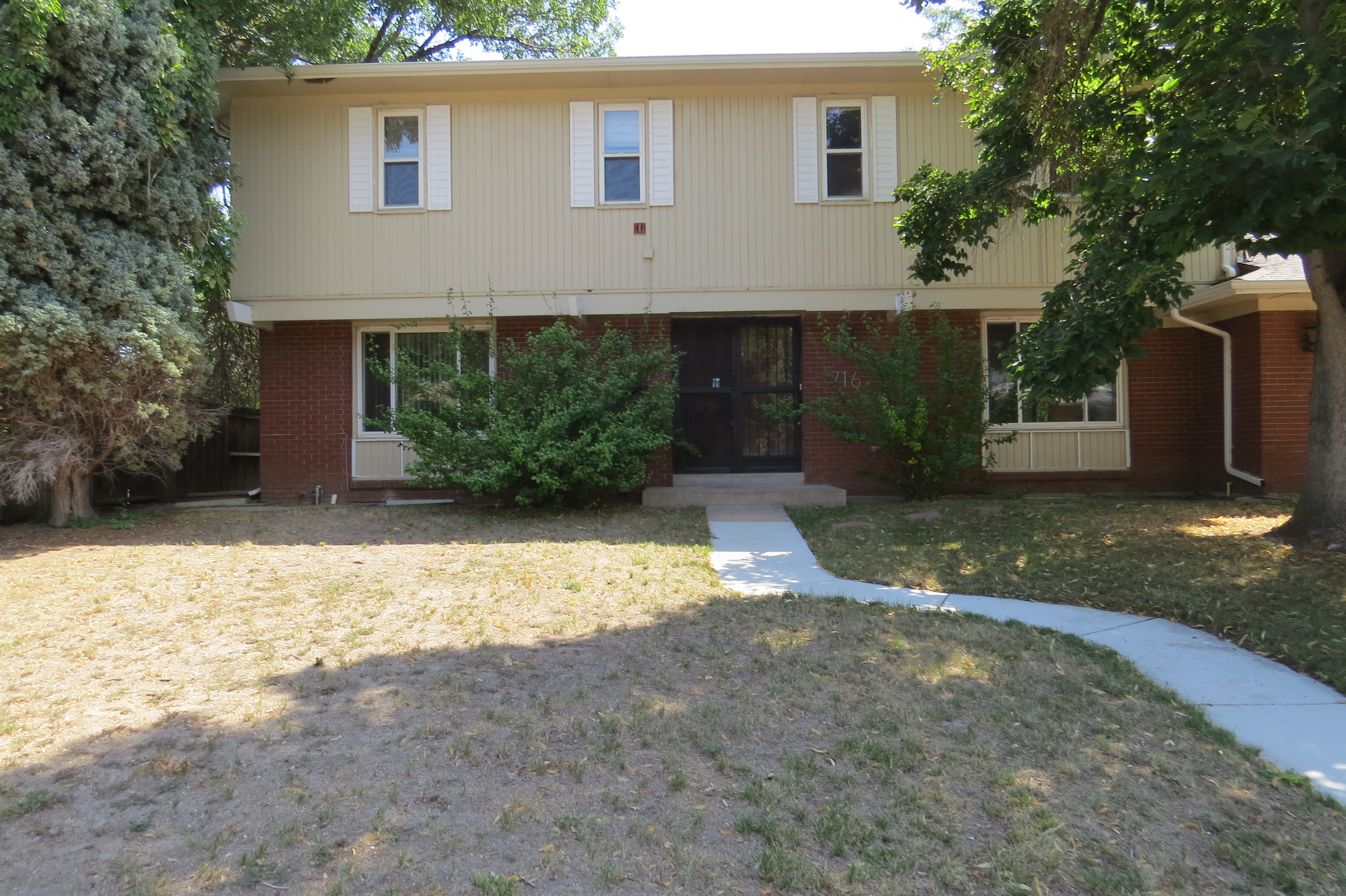
But one house in this quiet neighborhood stands out like a sore thumb. “It’s an eyesore,” complains neighbor Deborah Costin. “The place is a mess. The grass is dead and full of weeds. A tree in the front yard is dead. The exterior paint is peeling and there is trash.”
Normally neighbors would take their complaints to Denver 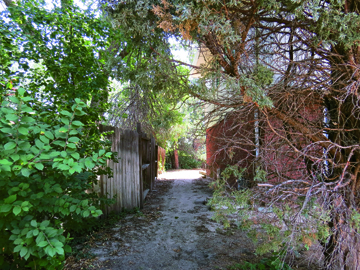 City inspectors. But that doesn’t do any good in this case because the rundown property at 716 South Poplar in Denver, is owned by the City and County of Denver.
Public property records show the three bedroom, two and half bath home with 2,268 square feet was built in 1964. In August 1998, the owners sold it to the City and County of Denver for $209,900. According to public records, a few months later, in October 1998 the City gave it to the Denver Urban Renewal A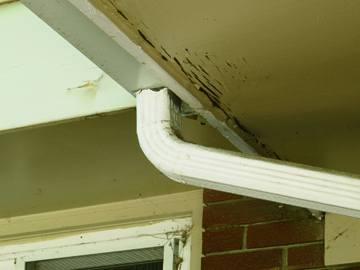 uthority, the property was rezoned and a year later DURA turned it over to Redi Corporation, which contracted with Mental Health Center of Denver (MHCD) to operate it as a group home for mentally ill residents.
According to news reports and official City documents, the home was one of several Denver “scurried” to purchase to comply with a court order following a settlement in a lawsuit filed regarding mental health housing.
The City of Denver hurriedly rezoned the residential property to allow a group home, over the strenuous objections from the neighborhood association and individual neighbors.
But in spite of the frequent paramedic, fire and police sirens responding to 9-1-1 calls from the address the neighbors say they came to accept the group home in their midst and the property was kept in good condit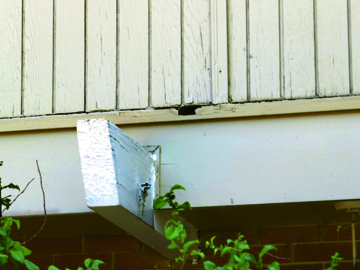 ion.
ion.
That all changed when MHCD closed the group home and on March 25, 2016, the property was turned back over to the care and ownership of the City and County of Denver.
Costin says, “It’s been a year and a half of the house sitting there empty and steadily deteriorating. “She has pictures showing the yard sprouting only weeds with the grass long since dead. Other pictures show aging paperwork stuck in the door from the State of Colorado demanding information about a required inspection. There appears to be a hole in the eaves under the roof, the paint is peeling, roofing materials left as trash sit alongside the house.
“Who knows what is going on in the back as part of the fence fell down,” Costin adds.
The neighbors also have concerns about the inside of the house. They say last winter two neighbors walking their dogs noticed water pouring out the front door, down the sidewalk and into the street. They called 9-1-1 and the fire department responded and shut off the water. But nothing else was done for weeks and neighbors speculate there could be a serious mold problem.
Costin also questions whether the City of Denver is being a good steward of taxpayers’ dollars when it comes to this property. Sold in 1998 for the $209,900, Zillow and other real estate sites estimate the home is worth more than double that today, putting it around $560,000. And while public t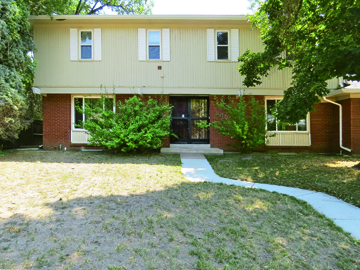 ax assessment records show neighboring families are paying thousands of dollars in property taxes the City and County of Denver pays absolutely no taxes on 716 S. Poplar.
Costin says, “Whatever upkeep is being done, utilities or insurance that are being paid is at taxpayer expense and the property value is rapidly plummeting given the deterioration of the house and yard.”
Costin and other neighbors ask, why doesn’t the City of Denver simply sell the property and let a new homeowner who will actually take care of the home enjoy it. “Why not put the property on the market so it could return to being a single-family residence in keeping with the neighborhood?”
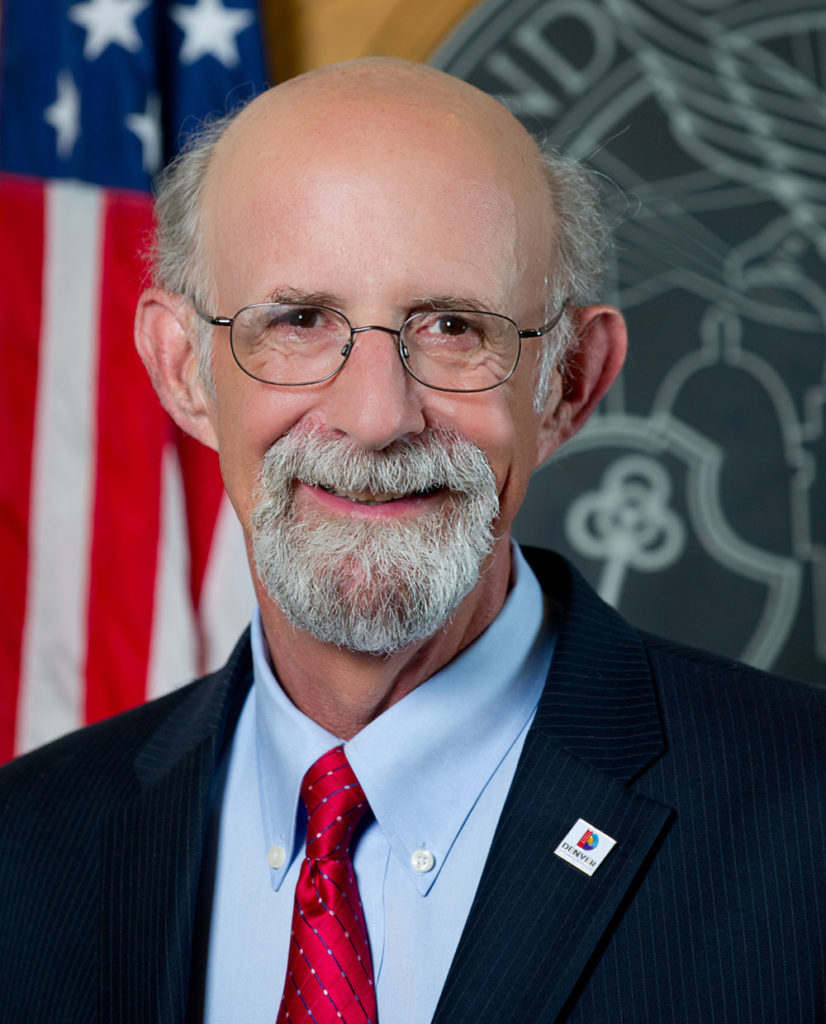
Denver City Councilmember, Paul Kashmann
Denver City Councilman Paul Kashmann, whose District Six includes the South Poplar street neighborhood, says the City of Denver has no plans to sell the property. He explains Denver is in negotiations with a non-profit service provider to turn the house into a group home for homeless women to help them get back on their feet. He says the organization is in the process of applying for grants to fund the program and take over the property.
Kashmann says he understands the neighbors’ frustration with the deteriorating condition of the property, “Without question if I were a neighbor I would not be pleased,” Kashmann says. He adds he will see what he can do to push the City to take better care of the property in the meantime.
Denver City spokeswoman Courtney Law says the City has programs to provide regular maintenance of properties it owns and after being contacted by the Chronicle she passed neighborhood concerns to the maintenance people and says they will respond.
Neighbors remain skeptical and are not happy about the prospect of another group home at the property. Costin says, “Is that the best use for that house? No. It was a bad idea in 1998 and it’s a bad idea now.”

by Mark Smiley | Aug 30, 2017 | Glendale City News
by Kurt Woock
Writer for and on behalf of the City of Glendale
On July 17, dozens of young rugby players arrived at Infinity Park. They came from as far as California, Iowa, New Mexico, Oklahoma, and Idaho. They came to play, learn, and grow in the seventh annual Girls High School Rugby Camp. “This camp gives these girls the opportunity to play more rugby with different levels of players and to get coaching from really strong women and coaches,” said Jenna Anderson, youth rugby programs manager at Infinity Park.
Great coaching is the cornerstone for all youth programming at Infinity Park. Luckily, there’s a deep pool of talent from which to draw. Glendale Rugby coaches, Raptors players, and players from the USA national team were on hand to share what they know with players whom they just might call teammates in a few years. “I think that my favorite part of this camp is the variety of coaches we bring in,” Anderson said. Young players, who might have only ever learned from one or two coaches are suddenly learning from more than a dozen coaches, each of whom has different coaching methods, skills, and experiences. This was a big deal, Anderson said, for young rugby fans , some of whom had seen or read about these top rugby players before coming to camp. “A lot of times, the girls are starstruck,” she said.
The effect of camp reverberates beyond the four days the girls were there, and the camp in some ways reaches an audience larger than those who participated. Young players bring back home with them the various skills and approach to playing they were exposed to. While growing quickly, the rugby resources available in any given area in the country probably can’t match the coaching and experience levels found in more established sports. Even a very good coach can only offer a single perspective. Learning from many coaches, as the campers were able to do, is beneficial in itself. Camps like these can have a pollinating effect; a visitor can take her experiences back home, and those with whom she plays then have the opportunity to learn something new, raising the rugby IQ of the entire group. Anderson said that the involvement of women who are currently playing the game at the highest level makes this phenomenon that much stronger.
In addition to spending time working on specific rugby skills on Infinity Park’s main field, campers learn a holistic approach to developing a healthy lifestyle, including time spent learning about nutrition and exercise. Anderson said that coaches introduce girls to a new kind of workout every year. One year this meant working with kettlebells. Another year campers headed out to Red Rocks to battle the stairs. This year, the girls took part in a yoga class. That was in line with this year’s focus on the mental aspect of rugby.
“It’s important to understand that rugby isn’t just a physical sport; you nee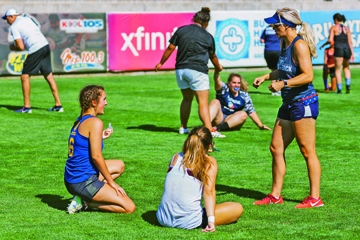 d to take care of your body and your mind,” Anderson said. “We talked all week about how to be your best athlete, and that does not necessarily mean you want to make Team USA.” She said the coaches and players frequently talked about the importance of simply having and sticking to a plan, whether that was a plan for a practice or game, or a plan to get into college. Mealtimes at camp became a time during which coaches coached players on topics that were larger than a single on-field skill. “Each day at lunch, we talked about how to go into the field with confidence. We talked about coachability, and what coaches are looking for: Are you positive? Do you better your teammates? Do you push yourself? We talked about figuring out what your highest level is.”
During the week, campers experienced Infinity Park as if it were their home turf. For many, it was their first time playing in a stadium that big. That, plus the chance to work with some of the nation’s best coaches and players, isn’t something you’ll find at most summer sports camps. “We have all thes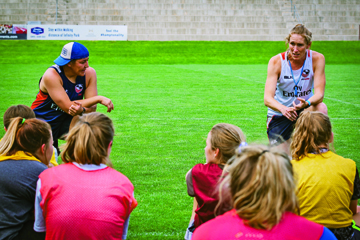 e cool things in Glendale,” Anderson said. “We want to share them.”
The eighth annual camp will take place in July 2018. Anderson always hopes to welcome new girls to camp, but she also expects to see plenty of returning campers. She said she recently heard the highest compliment about the camp from a young camper: “We had one girl who is really talented who comes back every year. And she wants to come back next year. She asked, ‘How do you guys do it? How do you have camp every year and not teach the same thing?’” That was good news for Anderson, who sets out to do just that each year. “We’re always expanding, bringing in different drills. When you do come back year after year, you’re getting a new experience. The only thing that’s the same are the facilities.”
by Mark Smiley | Jul 24, 2017 | Travel
by Mark Smiley
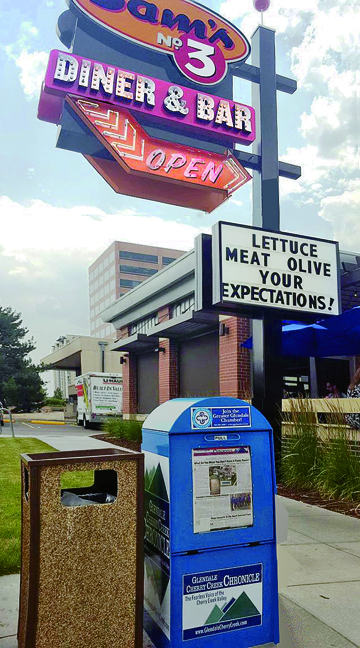
You may have noticed some shiny new blue boxes in popular spots around town. The Glendale Cherry Creek Chronicle has invested in 10 outdoor newsstands that have been placed in high traffic areas around Glendale and Denver.
The newsstands can be found in front of such businesses as Sam’s No. 3, Bonnie Brae Ice Cream, Brown Palace, Snooze, Oblio’s Pizzeria, and Washington Park Grille. Two stands are situated in Cherry Creek North and for the first time, the Chronicle can be picked up in Stapleton as one of the new stands is located in front of Starbucks in 29th Avenue Town Center. As always, copies in these stands and elsewhere are free of charge.
The Greater Glendale Chamber of Commerce helped support the project to boost their membership and the increased distribution of the paper. The Chamber has increased their membership in 2017 and at the time of press, they have climbed to 280 members. On June 23, 2017, the Chamber was ranked number 23 among all chambers in the metro area based on membership.
The Chronicle now has a distribution of 86,200 with over 83,000 of those being mailed directly to homes and businesses from Lodo to the Dam. The remaining copies are distributed to 50 locations including the 10 new outdoor stands. For a complete list, click here.

by Mark Smiley | Jul 24, 2017 | General Featured
by Julie Hayden

George H. Solich, President and CEO
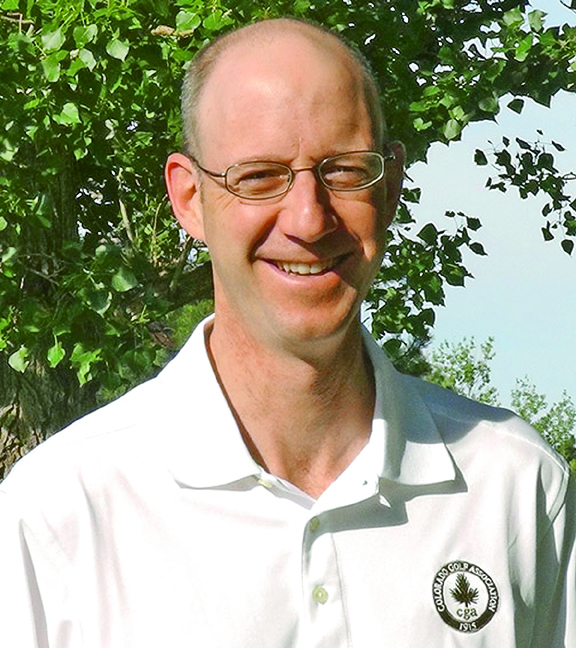


 Merriam-Webster Dictionary has myriad definitions for the word “common” including that the word means “falling below ordinary standards,” “lacking refinement,” and “characterized by lack of privilege or special status.” Undoubtedly, the Colorado Golf Association intended, when it named the golf course it owns and operates, that the complex met the main definition of the word that it “relates to the community at large.”
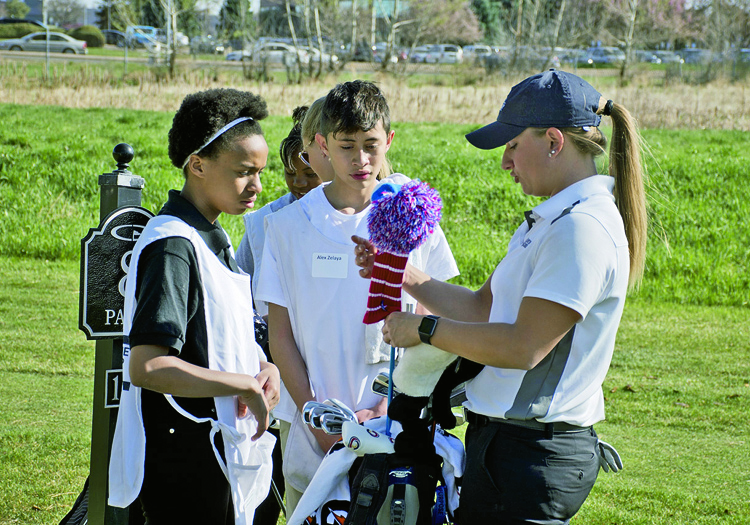
But what is happening at CommonGround Golf Course is in fact “extraordinary” and “phenomenal.” For $45 you can play one of the great golf courses in the Denver area designed by world class golf architect Tom Doak. The course is located off Havana Street between Alameda Avenue and East First Avenue. But that is not all. The CGA will give you your own free personal caddie for 18 holes.
You, of course, would want to tip your caddie as you would a waiter at a restaurant, but that is up to you. You already belong to the CGA if you have a Colorado golf handicap. Joining the CGA only costs $35 and it will allow you to obtain a handicap along with other privileges of membership. For non-CGA members the round costs $54.
How can such an incredible bargain possibly exist?
The Colorado Golf Association was founded in 1915 and had always wanted to have its own golf course. In 2005, in partnership with the Colorado Women’s Golf Association, it was able to acquire the old Mira Vista Golf Course from the Lowry Redevelopment Authority. The course was part of the former Lowry Air Force Base. Tom Doak agreed to design a new course for a nominal fee. Doak is one of the most admired golf architects in the world having designed such top ranked courses as Cape Kidnappers in New Zealand, Barnhougle Dunes in Australia, and Pacific Dunes in Bandon, Oregon. He also designed at CommonGround a separate nine-hole short course for junior golf and player development.
Since the CGA is a non-profit it is not trying to make money off the golf course but rather further the development of golf in Colorado. In fact kids play for free on the nine-hole golf course.
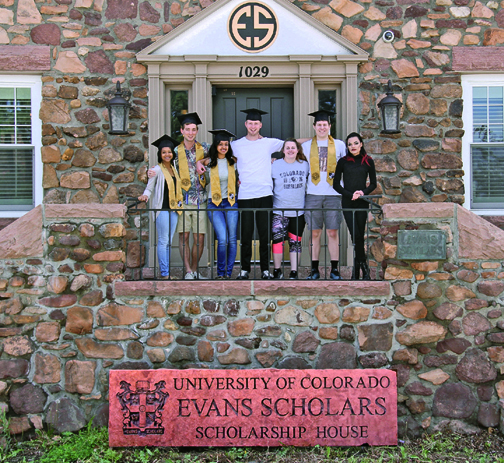
In 2012 oil and gas magnate George Solich and his wife Carol seeded the Colorado Golf Foundation with a donation of $ 2 million. In the early ’70s, George’s brother Geoff got him a job as a caddie at Cherry Hills Country Club. The brothers’ family had modest means and the caddie job resulted in George receiving an Evans Scholarship at the University of Colorado. Evans Scholarships are limited to kids who caddie for a minimum of two years, plus other requirements. Tuition-free housing at the Evans Scholars Scholarship House, which recently went through a $5 million renovation, is part of the scholarship.
The Solich Caddie & Leadership Academy provides a two-year caddie training program in which 14 and 15-year-olds develop leadership skills and enhance character through a foundation built around caddieing.
The executive director of the CGA Ed Mate was as a teenager a caddie at the Denver Country Club and an Evans Scholar at CU. “Caddieing taught me work skills, how to be responsible and how to deal with adults,” states Mate.
Chuck Bonniwell, Publisher of the Glendale Cherry Creek Chronicle, was also a caddie in his teenage years and he declared, “Caddieing was the first job I ever had and I probably learned more from it about people and human nature than virtually any other job I have ever had.”
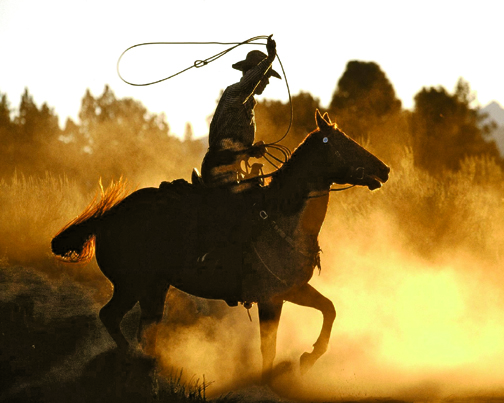
The caddies are given a $1,200 scholarship by the Academy to be used for college provided they caddie 36 rounds, attend a leadership conference once a week, volunteer for six hours of work (which can be at a kids’ development program at CommonGround) and keep a monthly work log. The leadership sessions are based around the “Cowboy Code of Ethics.” See below.
In order to be accepted into the Solich Academy you must have completed 8th grade, show academic excellence, demonstrate financial need (family income should be around $80,000 or less) and show a positive attitude and work ethic.
After completion of the two-year program the graduates are recommended to top clubs in the Denver area including Cherry Hills Golf Club and the Denver Country Club, which are thrilled to have already trained caddies ready to go. All such caddies become eligible to be Evans Scholars at the University of Colorado.
Surprisingly there are far more teenagers who want to go to the Solich Academy and are fully qualified than there are spots available at CommonGround. Mate indicates “A lot of golfers think a caddie is only for the rich or low handicap players. Caddies make the golfing experience incredibly more enjoyable and having a caddie usually results in you having a lower score. Once a person takes out a caddie at CommonGround they seldom want to go back to a cart especially since a cart costs a significant amount of money and the caddies are free.”
“The CommonGround caddies do not care that you are not Tiger Woods,” added Mate. “They are working on a college scholarship. They want you to have an enjoyable experience and thereby earn a good tip. They are there to help you in any manner they can.”
In order to reserve a tee time at CommonGround and sign up for a free caddie, call 303-340-1520. Caddies are available from Memorial Day through Labor Day. For information about the course, visit www.commongroundgc.com and Facebook @CommonGroundGC. Follow them on Twitter @CommonGroundGC.
by Mark Smiley | Jul 24, 2017 | Glendale City News
by Andrew McKenna
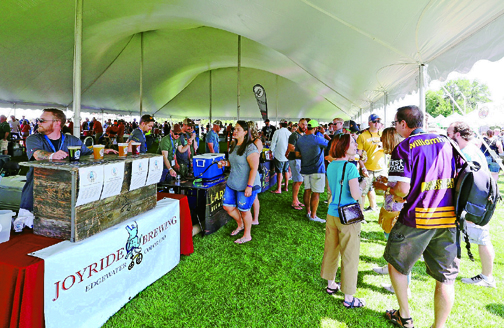 Saturday, August 26, Glendale’s Infinity Park will once again host the popular Bruises +Brews Beerfest. Coinciding with the always exciting RugbyTown 7s rugby tournament, the festival is in its fourth year of providing fans and spectators with enticing local suds and a few spirits. The Saturday event will feature more than 20 local breweries, as well as cider brewers and distilleries.
The United States has a long history with beer. Due in large part to English and Dutch colonists, beer, rather than wine, established itself as a national beverage in the colonial period. Following the repeal of the 18th Amendment (Prohibition) in 1933, brewing, sale, and distribution of beer made a strong return to the American way of life. Today, beer makes up more than 85 percent of alcoholic beverages consumed in the country annually.
In recent decades, craft brewing has seen a meteoric rise in the country, becoming a $22 billion industry as of 2016, with continued growth projected. Colorado has been and remains at the foreground of that growth — the state has one of the highest numbers of breweries per million inhabitants in the country and is among the top five states in craft beer output. New Belgium Brewing in Ft. Collins is among the top five largest craft brewers in the country. The Mountain West is considered a hot spot for beer making because the region supports the growth of many of the hop varietals used in brewing. Local beer makers will display the fruits of their labors with those hops at Infinity Park’s August festival.
 Craft beer making in Colorado and elsewhere is about more than fruitful agriculture, however. Employee and/or family ownership, local ingredients, and themed beers indicate the strong sense of community within the realm of craft brewing. That sort of local, community-based ethos makes craft brewing and Glendale rugby especially well-suited bedfellows.
Annette Gilman is the owner of Scrum Enterprises, the concessionaire that holds Infinity Park’s liquor license. Gilman, who manages the annual beer festival, is in command of securing all of the participating breweries and distilleries. Beginning in August 2014, she has worked tirelessly to combine beer and spirits with the RugbyTown 7s tournament. According to G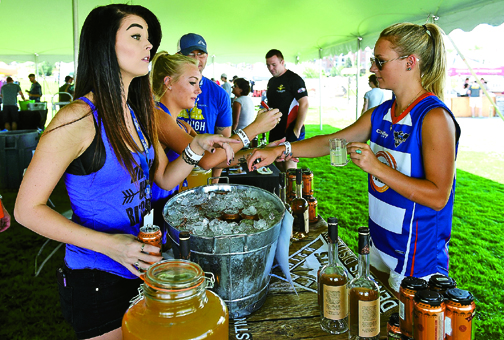 ilman, the festival has grown in size and popularity every year, successfully introducing thousands of beer lovers to the game of rugby. A joint effort between Infinity Park and Scrum Enterprises, Bruises+Brews also utilizes local rugby players as barbacks for the festival. In return, the non-profit, Glendale Youth Rugby Foundation, which supports rugby development for young players, receives a portion of the festival proceeds as a donation.
Barret O’Brien, merchandiser for Infinity Park and Executive Director for Glendale’s Youth Rugby Foundation, says the exponential growth the festival has experienced over the years has been thrilling. “Anybody who’s a beer lover knows that beer festivals are a dime a dozen in Denver. This brings to the table an entirely new experience for most beer enthusiasts — rugby and beer just go together naturally.”
It is noteworthy that the one-day beer festival happens amidst the now internationally renowned, weekend-long RugbyTown 7s tournament. Attracting teams from across the globe, including teams from all five branches of the U.S. military and players from the gold medal winning Fijian team, the tournament promises an action-packed background against which to enjoy Colorado craft brews. Sevens rugby, which debuted in Olympic competition at the Rio games in 2016, is a fast-paced, hard-hitting variation on traditional 15-a-side rugby play. Matches consist of two seven-minute halves — the short duration ensures there will be no dull moments for spectators, and allows an entire tournament to happen over the course of the weekend. Twenty teams from six nations will compete in over 60 matches for the winner-take-all $10,000 purse.
As rugby and craft beer continue to surge in national popularity, so too will Glendale’s annual Bruises+Brews Beerfest — rugby and beer: better together.