
by Mark Smiley | Nov 23, 2015 | Travel
by Casey Bloyer
The holidays are a wonderful time to be a beer nerd. I revel in the opportunity to pair beer with a variety of celebratory meals and gatherings. Those congregations with family and friends can also provide a chance to become a beer evangelist to those less experienced with the variety of flavors local brews offer. Is the impending arrival of in-laws causing anxiety? A nice dose of Colorado craft beer can help ease the tension there, too. Of course the best part is the gifts. Whether giving or receiving, it’s all part of the communal nature of Colorado’s craft scene. Here are a few fun gift ideas for the drinker who has it all.
Personal Growler: ($35-$130) Yes, this is about as cliché as it gets. Yet, you also can’t really go wrong here, either. Brands such as FIFTY/FIFTY, Miir and Hydro Flask offer stainless steel, vacuum insulated carriers for your loved ones’ loved one: beer. They double as durable, insulated carriers for other liquids when the beer’s gone. Just about every local brewery sells and fills its own version as well. Traditionally a growler is 64 ounces but some companies now offer co2 pressurized versions with taps as large as 128 oz. Think of a mini keg in your fridge. Drink Tanks and ManCan are among the offerings in the pressurized growler market. But for looks alone, I prefer the uKeg from Portland’s Growler Werks. The uKeg looks great with copper, steel and brass options, but it is less versatile and more difficult to clean.
Local Brewery Gear: T-Shirts, hats, stickers, glassware. No, we can’t have too much. Some of brewski-reviewski’s favorite local brewery logos include Broken Compass (Breckenridge), Cerebral (Denver), Elevation (Poncha Springs), Liquid Mechanics (Lafayette), Mockery (RiNo), Ska (Durango), 3 Freaks (Highlands Ranch) and 38 State (Littleton), just to name a few.
Laws Whiskey: ($65-$70) Laws Whiskey House has been very good to the local craft brewing community, bucking my own notion that distillers didn’t often embrace the cooperative aspect of the craft brewing culture. Brewers both acknowledged and reciprocated that spirit for the distillery’s recent anniversary celebration, donating a number of free brews, which were available to fans throughout the celebration at no cost. The neighborhood distillery was started by Al Laws and includes some former staffers who left Stranahans, after Proximo Spirits (owner of Jose Cuervo) purchased the Stranahans distillery. Laws employs local family farms, where it sources its wheat, barley and rye. I sampled Laws latest rye batch whiskey at the distillery’s first anniversary party earlier this year. My take away? Smooth. Very, very smooth. Single barrel offerings are available for purchase at the Denver distillery (1420 S. Acoma Street) and at about 20 local liquor stores. A rye was also released by the distillery in mid-November. Find your closest carrier at the Laws website. www.lawswhiskey house.com/whiskey-locator/.
Whiskey Advent Calendar: ($190 -$320) Looking for a new twist on the annual advent calendar tradition? Master of Malt has the answer, offering advent calendars with various spirits including cognac, rum, whiskey and tequila. Behind each of the 24 windows lies a different 3cl “Drinks By The Dram” sample of whisky. Highlights among this year’s 24 drams include a rare 50-year-old Scotch, an award-winning Japanese whisky and the winner of the 2014 World Whiskies Awards. Each handmade, wax-sealed dram allows whisky fans to sample a new whisky, tasting everything from single grain whisky to rare Scotch. In my rudimentary and uncertain conversion, each bottle includes one ounce of whiskey. Purchase online at www.masterofmalt.com
Hops: ($6-$40) You are almost certain to get “unique” points for gifting hops to the beer fan in your circle. Michigan’s Black Creek Hops has you covered, offering everything from hops related ornaments to herbal hops tea and even pillows filled with hops designed to help ease of sleep. Black Creek Hops is a small scale hop farm run by a husband and wife team in Scottville, Michigan. They are also happy to send whole cone, noble hops if you’re shopping for a homebrewer. www.etsy.com/shop/ blackcreekhops.
Hopefully this gets you started on your gift search for the beer lover in your life. We both send you wishes for a healthy, happy and hoppy holiday season. Until next year, raise your glass!
Casey Bloyer is the Executive Producer of The Peter Boyles Show and The Dan Caplis Show. He is the co-host of Brewski-Reviewski with Connor Shreve who is the Sports Director at 710KNUS. Brewski-Reviewski is a bi-monthly podcast talking about all things craft beer in Colorado. Twitter @Breviewski; Facebook www. facebook.com/craftbeerradio; email brcraftbeer @gmail.com.

by Mark Smiley | Nov 23, 2015 | Editorials
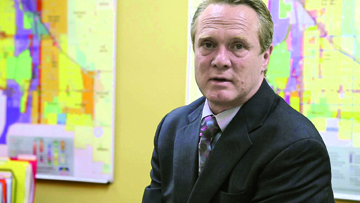 If one was wondering how sleazy and dishonest the Hancock Administration has become, one need look no further than the appointment of former City Councilman Chris Nevitt to the city position of Manager of Transit-Oriented Development (TOD). Nevitt ran for the citywide post of Auditor and lost notwithstanding raising from real estate developers, and their lawyers and lobbyists, over 10 times the amount raised by his opponent Tim O’Brien. Even his supporter, former Auditor Dennis Gallagher, expressed his disgust with Nevitt the day after the election saying, “I haven’t seen such a bad campaign since Mark Udall.”
Nevitt managed to lose by being seen by the voters as little more than a cheap shill for the very worst real estate developers doing business in Denver. He confirmed the people’s low opinion of him when in one of his last meetings before leaving office he gave a speech declaring every part of the city must sacrifice in order to make room for extremely high density rather than risk the horrors of possible suburban sprawl. The speech was too much even for The Denver Post who blasted him in its editorial pages making him a persona non grata throughout the City and County of Denver.
But Nevitt had done the bidding of Mayor Hancock and his real estate buddies ever since Hancock had taken office. Hancock even indicated, prior to Nevitt’s election loss, that Nevitt might make a good successor to him as mayor. After his election loss, Nevitt at age 52 faced difficult job prospects. He was totally devoid of any skills which would make him employable in the private sector and thus it was believed he was only suited for working for the government.
It was extraordinary however, that city department after city department refused to even consider him. An exasperated Hancock was forced to create a whole new job position within the morally bankrupt Department of Community Planning and Development run by the highly controversial Brad Buchanan. Buchanan is considered the only individual in Denver government that the citizens of Denver consider being as or more unethical than Nevitt.
Buchanan’s Department publicly announced, to the guffaws of city insiders, that Nevitt won the job of Manager of TOD “after a competitive hiring process.” Garnering only a $120,000 position in the Hancock administration demonstrated how far Nevitt had fallen. Buchanan knew that Nevitt coming aboard his Department would not be welcomed by his highly demoralized staff who do not like being viewed by the public as simply tools for real estate developers. He put out an internal memo attempting to justify Nevitt’s hiring and the position he would occupy as Manager of TOD.
The job apparently is to be in charge of coordinating city efforts to encourage development along transit stops. Of course as massive development of high-rise apartments in Cherry Creek North showed that developers couldn’t care less about building projects along light rail stops and they control the city government and not the other way around.
Buchanan declared in the memo that Nevitt was “uniquely suited for this position based on experience working with private sector constituencies [i.e. real estate developers] involved with land development” not quite understanding that Nevitt’s job as a city councilman was actually not to work with developers but rather to represent his actual constituents and sit in a quasi-judicial capacity to vote up or down projects that came before the City Council. Buchanan was in essence implying that Nevitt might have been engaged in what some might consider illegal activity with developers.
The fact that this so-called “job” had heretofore never existed is indicative of how necessary it actually is. Luckily Nevitt is well known for his incredible laziness as his losing Auditor race demonstrated. Thus in some ways he is a perfect fit as a no-work politician being matched up with a no-work government job. He will lunch and cocktail with real estate developers he knows and others while they get approved building where they want to build in the city which is normally not next to light rail stations.
But is this the end of Chris Nevitt as a public figure in Denver buried in the belly of the government beast? It turns out that being too incompetent to qualify for an actual mayoral appointment has its real advantages. Unlike Rocky Piro as Planning Director or Lauri Dannemiller as Parks Director Nevitt can’t simply be fired by this mayor or any future mayor. He has full civil service protection. He can spend his next decade and a half or so doing little or nothing while pulling in six figures and a hefty pension. Upon a well-deserved retirement from arduous public service Nevitt can wander down to Florida or Arizona and vegetate until his ultimate demise.
Sure it is not much of a life for a person with talent and ambition but Nevitt never had the talent part anyway. The media, including this paper, will of course miss him as a figure to kick around and make fun of. Surely he will be tempted at some point to try to revive his mayoral ambitions, but he is better suited living the sleepy government apparatchik life. But should he someday unwisely decide to leave his sinecure for a more public role we in the media will certainly be there to greet him with open arms.
— Editorial Board

by Mark Smiley | Nov 23, 2015 | General Featured
So You Think You Can Dance is on the road for the Season 12 tour
December 8 | 8 p.m.
Paramount Theatre | 1621 Glenarm Pl, Denver, CO 80202
The Season 12 tour lineup includes the show’s following Top 10 finalists: Team Street’s Megan “Megz” Alfonso, Eddie “Neptune” Eskridge, Virgil Gadson, Jessica “JJ” Rabone and Jana “Jaja” Vankova; and Team Stage’s Gaby Diaz (Season 12 winner), Edson Juarez, Jim Nowakowski, Hailee Payne and Derek Piquette.
The tour features some of this season’s most popular routines from both Team Stage and Team Street, along with original pieces created specifically for the tour.
Tickets start at $45 and can be purchased by clicking below:
http://www.altitudetickets.com/event/so-you-think-you-can-dance-4096/
For more information on the tour, click here
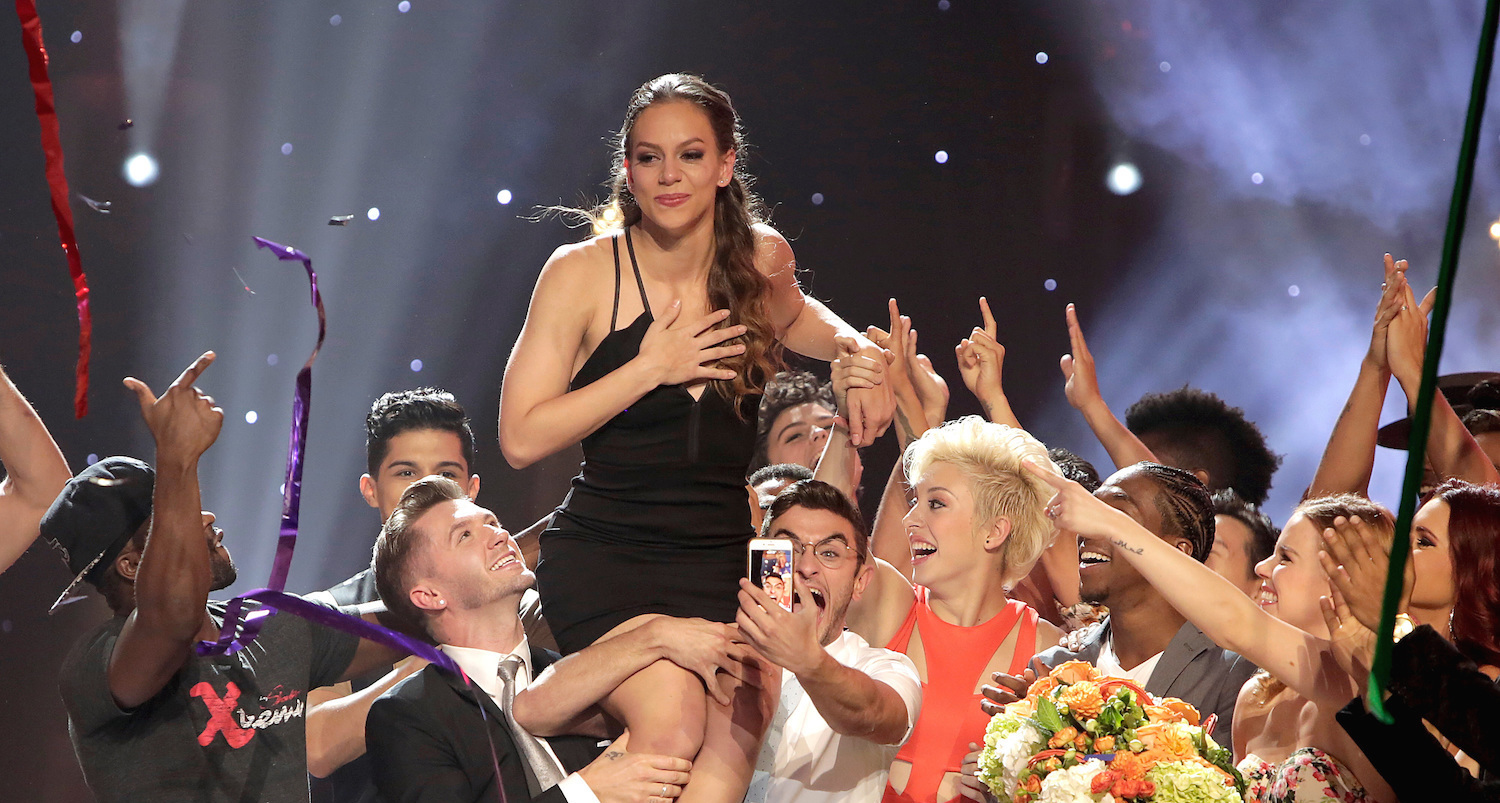
Gaby Diaz is America’s Favorite Dancer on the Season Finale of SO YOU THINK YOU CAN DANCE

by Mark Smiley | Nov 22, 2015 | General Featured
Youth in Government is a longstanding, successful YMCA program and the Glendale Sports Center at Infinity Park is sending two Glendale teens enrolled in the program to this statewide YMCA program during the week of Thanksgiving. Siblings Kelly and Kevin Hernandez will represent the Glendale YMCA.
For three months every year, students learn about the state’s democratic system, and how laws and government shape people’s lives. They explore all major aspects of state government, filling roles as politicians, lobbyists, attorneys, and journalists.
Then they convene for a mock General Session at the State Capitol where they write bills, lobby, debate, and vote, all using the House floor, Senate chambers, and offices of the state capitol. This is the only program of its kind that offers this type of experience and access to Colorado’s legislative offices.
“I am so excited to participate this year in the Youth in Government program because it will help me see how our government system works firsthand, said Kelly Hernandez. “Since I want to be a lawyer when I grow up [focused on translating for Spanish speakers], this will give me a chance to see how the government workings and decisions apply to the field I want to go into.”
“I feel privileged to be inside the State Capitol building during Youth in Government,” said Kevin Hernandez. I have never been there, and am grateful for the chance to see how and where government officials work on a daily basis.”
For more information about the program, visit www.denverymca.org. For more information about the Glendale Sports Center at Infinity Park, visit www.sportscenterglendale.com or call 303-639-4711.
by Mark Smiley | Nov 2, 2015 | General Featured
If Santa Were An Urbanite This Is Where He’d Shop
For most of us, holiday shopping translates into snaking checkout lines, crowded clothing racks, scented candles and parking hassles. Not this year! We’ve found 10 of the best gift-gathering neighborhoods, streets and alleys in the Valley that make shopping a stress-free stroll down the street.
Bonnie Brae
With a flavor of its 1920s heritage, the Bonnie Brae shopping district features delightful retail shops along South University Blvd., many run by the same family for generations. It’s a nice change from the chain stores going in down the road in Cherry Creek. Adding to the neighborhood’s shopping charm the street has welcomed several new boutiques. The latest is Wish, a gift shop in the former Bank of the West space that’s bigger and delightfully decorated with easy parking. Another neighborhood favorite is Pink, offering cutting edge LA fashion for a casual Colorado lifestyle at affordable prices.
Broadway
Cruising South Broadway is one of the most stimulating ways to shop in the Valley. Along this 16-block strip — south of I-25 and north of DU at Evans — you’ll discover hundreds of eccentric stores, and one of the biggest areas in Colorado for antiques. Independent, quirky, vintage and trendy shops are sprouting up here each year. Antique Row — some 50 stores that line the 400-2000 blocks — sell everything imaginable including furnishings, collectibles, clothing and jewelry. Denver’s most magical toy store The Wizard’s Chest is expected to open this month at 451 Broadway albeit the Cherry Creek North store will remain open through the holidays. On North Broadway, make Paulino Gardens your holiday headquarters featuring unique holiday décor, poinsettias, evergreen wreaths, garland and boughs.
Cherry Creek
Once boasting boutiques and galleries, Cherry Creek North now offers 16 blocks with more construction cranes than s hopping contentment. The Cherry Creek Shopping Center’s new section, however, is creating holiday excitement. The mall’s transformation has been worth the wait, featuring RH Denver, the region’s first four-level Restoration Hardware store. Newly opened luxury brand stores include Tory Burch, David Yardman and NightRider Jewelry. Several stores including Free People are relocating into the redeveloped space. It will be the second largest store of its kind in the country. Do consider shopping Cherry Creek North’s tree-lined streets at tranquil Ten Thousand Villages, Robert Anderson Gallery and Oster Jewelers. The stretch along 3rd Ave. is still the Holy Grail for women’s designer clothing with shops such as Adornments, Mariel and Harriet’s.
Colorado Boulevard
Discover well-kept shopping secrets by driving along South Colorado Boulevard’s inconspicuous strip malls. Tucked along this strip is Dardano’s shoe store located at 1550 S. Colorado Blvd. Having tripled in size in the last year, it offers the largest and finest selections of footwear for men and women in the Valley. Socks, gloves, wallets, totes, plus travel and laptop bags make great gift and stocking stuffers. Other stores along here with great gift ideas include Guiry’s, Nordstrom Rack and Michaels.
Downtown Streets
Downtown and the surrounding neighborhoods offer an abundance of retail experiences. For dedicated shoppers the sprawling 16th Street Mall is a cornucopia of shopping options, including Denver Pavilions (500 16th St.) expansive brand name stores and quaint gift shops. Top of the list for a trip downtown is William Crow Jewelers in the University Building (910 16th St. #320). With more than 90 years of continuous operation, it carries a large selection of loose diamonds, gemstones, gold jewelry pearls and watches. If you’re in the mood for a weekend-long spending spree add Molly’s of Denver and Rosey’s in the Pavilions to your shopping list.
Glendale
This Arapahoe County enclave surrounded by the City and County of Denver is a shopping extravaganza featuring major retailers such as Super Target, Sports Authority and PetSmart. Located less tha n one mile from the Cherry Creek Shopping District, Glendale also has several strip malls with popular shops. Moreover, Glendale was named the seventh cheapest overall small city for millennials in the U.S. by Digital Brands, Inc. The Bookies located off Colorado Blvd. and Mississippi is a fairy tale place with gifts for all ages. Price conscious shoppers can also veer into World Market for furniture, home décor and unique gifts.
Golden Triangle
This quirky, artsy, eclectic neighborhood is in the middle of the hustle and bustle of Speer Blvd., Colfax Ave. and Lincoln St. and home to eight of Denver’s museums, including the Denver Art Museum. With more than 50 galleries, fine-art studios and specialty stores, the neighborhood is a great place to find art and unusual gifts. Fend off a shopping slump in the Denver Art Museum Stores offering art-inspired fashions, jewelry and accessories.
Havana Street
Check out the 4.3-mile stretch  of Havana Street that goes from Dartmouth to 6th Ave. in Aurora. You will discover many specialty shops plus the Gardens on Havana, a thriving new shopping area located at the old Buckingham Mall site on Mississippi and Havana. Havana Street is also the place to go for all things automotive, with 25 dealerships as well as auto parts stores and service centers.
Larimer Square
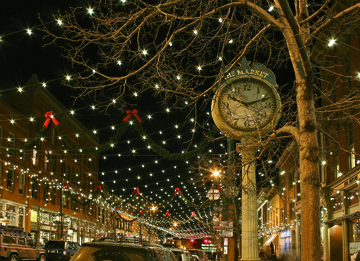
Larimer Square was America’s first revitalization of a historic neighborhood, opening in 1969. Complete with glittering lights strung over the entire block, it is at once charming and elegant. The 18 shops and boutiques carry more than 200 fashion lines. Two of those fashionable shops are contemporary furniture store Element and Moda selling styled attire for men.
Old South Gaylord
One of Denver’s oldest shopping districts, the awning-covered storefronts here capture the feeling of a time when life was simpler. There are 60 shops and eateries to tempt your taste buds and sense of style in turn-of-the-century houses that have been converted into shops selling contemporary fashions, sporting goods, bicycles, and art. If “Fashionista” is your middle name shop Barbara & Company and W for feminine clothing. Other all the rage stores include The Tended Thicket, Hanna by Design and Arts at Denver.
by Mark Smiley | Nov 2, 2015 | Glendale City News
by Marco Cummings
Writer for and on behalf of the City of Glendale
 Other sports stake their own claim to the title of the “world’s game,” but without a doubt, it’s been Rugby that has captured the attention of eyes throughout the world this fall with the Rugby World Cup returning to the sport’s birth country.
Glendale Raptors head coach Andre Snyman was there to catch an early glimpse of the scene as one of several participants in a charity match hosted by Rugby Aid in London, England. Snyman competed alongside several former rugby world stars and pop culture icons as part of the event, which was held in support of the Rugby for Heroes charity. The charity supports military personnel who are making the transition back to civilian life.
“It was a great experience and for a great cause: It helps military folks with the transition to the normal world,” Snyman said of the experience. “We had more than 10,000 supporters at the game watching us play.”
All in all, the event proved to be a lighthearted and enjoyable affair for the participants, one which supported a noble cause but also provided a glimpse of what London had to offer as the hosting city of the Rugby World Cup.
“The atmosphere is absolutely fabulous,” Snyman said. “Everywhere there are people talking about it. Underground in the trains there are posters. There’s a big vibe and everyone is asking what game you’re going to watch. Everyone is getting their TVs and news set up for rugby. It’s going to be a great World Cup.”
While Snyman got a taste of this year’s World Cup buzz, two of his players were blessed to witness the events firsthand, up close and personally. Raptors Zach Fenoglio and Niku Kruger were among the names selected to the 31-man USA World Cup roster. The USA Eagles were one of 20 nations competing during the six-week tournament.
“Making the World Cup squad truly is a dream come true. It was something I set my sights on five years ago and it is surreal to see those goals met now,” Fenoglio said of his selection. “When you first start playing rugby you always imagine what it would be like to play on the World Cup stage and now to have had this opportunity is something I’ll cherish forever.”
“Zach has been a hard worker since his initial selection onto our A side (lower-level Eagle) three years ago. Despite some disappointing squad omissions, Zach continued to remain positive in his approach, and eventually he became a regular squad member for us,” said USA Eagles head coach Mike Tolkin. “His leadership role with the Raptors has helped him become a confident player with the Eagles.”
International play gave Fenoglio, a Denver native and longtime Raptor, time to mesh with Kruger, who will enter next season as one of Glendale’s newest roster additions when the Raptors look to defend their Pacific Rugby Premiership title in 2016.
“I chose Glendale because of the professionalism and culture the club has. I have followed Glendale for a couple of years and really enjoyed the way they played and presented themselves,” Kruger explained. “Then when I spoke to coach Andre [Snyman] and learned of his love and enthusiasm for the game I knew it was the place I wanted to further my rugby career.”
“It has been great getting to work with Niku, he’s a very talented and knowledgeable player of the game,” Fenoglio added. “It’s been great seeing him develop with the Eagles and I know he’ll bring great value and leadership to Glendale next season. Bringing someone of the talent and rugby background will only help grow and better our team.”
Fenoglio and Kruger also played alongside several other PRP players as teammates for the Eagles.
“It shows there’s a quality of our league,” explained Snyman. “We have these international players playing in the PRP and it shows the quality we’re playing against. It shows well for the U.S. and hopefully there will be more players coming through the ranks.”
The pair were part of a USA team which featured 20 World Cup debutants, but played several international matches in preparation for the Rugby World Cup.
“In terms of Rugby World Cup experience, yes, this is a relatively inexperienced group,” USA Men’s Eagles head coach Tolkin said. “However, while the Rugby World Cup is a whole different kettle of fish, many of these players do have a fair bit of international play under their belts since 2011.”
Drawn in Pool B alongside opposing teams Samoa, Scotland, South Africa and Japan, the Eagles had a rough go in this year’s tournament, a campaign which saw a winless record. But win or lose, representing one’s country at the highest level was a badge of honor for Glendale’s participants.
“As a player, I want to ensure that every time I step into that field I represent my country to the best of my ability and hard top quality rugby,” said Kruger.
It also provided a valuable learning experience; one that Snyman hopes to apply to the upcoming domestic campaign.
“From a coaching point of view, I’ll be looking at these games for new ideas, new structures and the way they do things,” He said. “As a coach you always look to find ways to improve and be different.”