
by Mark Smiley | Dec 22, 2014 | Travel
(BPT) – It’s that time of year again, the time of year when you forget about sunburns and start worrying about windburn. Yes, sadly, the cooler months are here and winter is in full swing. That means long coats, scarves and an entirely different skincare routine.
Skincare you say? True, it’s easy to forget about your skin when it’s covered by all those extra layers, but dermatologist Dr. Anne Chapas, who is the founder and medical director of Union Square Dermatology, says cooler months are when skincare, particularly lip care, is most important. “The skin is our first line of defense against environmental elements, but the skin on our lips has extremely unique properties. It is one of the most sensitive areas of skin, so they require special attention in order to maintain a healthy appearance,” says Dr. Chapas.
With that in mind, Dr. Chapas offers these tips to help you keep your lips and the rest of your skin feeling and looking healthy no matter the temperature.
* Nurture your lips. The cooler months are hard on your lips. Not only are they exposed to cooler temperatures daily, behavioral habits like biting or licking your lips can also be damaging. “What most people don’t realize is that common behaviors such as drinking wine or coffee and eating salty or acidic foods can dry out the lips,” says Dr. Chapas. “But drinking plenty of water to stay hydrated and applying a moisturizing lip balm can help counteract the effects of these activities and improve your lip health.” Chapstick Hydration Lock Moisturize and Renew is a dual-ended lip balm that delivers long-lasting moisture to the lips and works great to keep the skin on the lips moisturized and replenished in the cooler months.
* Protect your hands. Your hands are often left exposed during the cooler months, especially if the cold air has dried your skin, making gloves or mittens painful to wear. Dr. Chapas says products that contain shea butter and lanolin are great for counteracting the abuse your hands endure.
* For your scalp. A thicker, moisturizing shampoo will reduce dryness on your scalp and prevent itchiness as temperatures drop.
* Remember the time of day. Don’t use the same skincare products for day and night. Instead, use products with protective, moisturizing benefits to guard your skin during the day. At night, switch to heavier creams that offer more hydration. Your skin will absorb this extra moisture while you sleep. For example, ChapStick Hydration Lock Day & Night contains two distinct formulas specific for day and nighttime use.
* Don’t forget the sun. Just because you’ve traded in your sunburn for windburn doesn’t mean you don’t need SPF. “UV damage can happen year-round,” says Dr. Chapas. “In fact, we are closer to the sun in the wintertime, and the sun can reflect off the snow, further amplifying its rays and causing sun damage. This makes it so important to incorporate sun protection into your skincare routine, regardless of the season.” Areas like the lips where skin is thinner will need even more attention and protection, since they are so sensitive.
On those coldest days when you’re bundled in layers, remember your skin needs extra protection and these simple tips will help your skin stay healthy during the cold weather season. To learn more about protecting your lips visit ChapStick on Facebook or Twitter. For more information on Dr. Chapas visit the Union Square Dermatology website.
by Mark Smiley | Dec 22, 2014 | General Featured
by Brent New
Writer for and on behalf of the City of Glendale
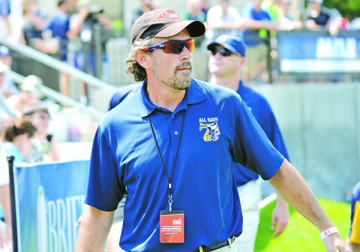
There’s an awakening in Steve Lynch’s eyes — a feeling that after a seven-week journey in rugby-stalwart New Zealand, Lynch has grasped onto a whole new level of understanding for the sport that he has loved for more than a quarter of a century.
The longtime Glendale Raptors coach was encased in something of Rugby Rhapsody, calling his recent trip to play in the prestigious Four Nations Maritime Rugby Cup one of the most valuable experiences of his coaching career.
“I learned more about rugby in the past seven weeks in New Zealand than I have in the past 10 years I’ve coached,” Lynch said. “The experience and the people I met were unbelievable. It’s something I’ll never forget.”
As far as what it means for the Raptors’ growth and success, time will tell. And when and if it does, it will probably be hard to sort his experience from all of the other happenings that will go on to define the organization.
Nonetheless, Lynch is eager to spread his newfound knowledge in an effort to help better the Raptors.
“We realized what things we really need to focus on with our guys,” Lynch said. “We saw what it takes to be elite ruggers and I am excited to bring that experience back here.”
Lynch, who is also the Director of Rugby for the Navy, transformed 28 active-duty service men with rugby experience into full-time ruggers to compete in the 30-year-old tournament in Devonport, New Zealand.
Certainly a slim-to-none favorite in the tournament, and maybe even less than that, his patched-together team actually held its own through most of its matches against the seasoned navy teams from New Zealand, the United Kingdom and Australia. But eventually the U.S. fell in all of its matches and watched rugby power New Zealand upset the United Kingdom for the tournament championship.
The next Four Nations Maritime Rugby Cup will take place in 2017.
“We kind of knew that these were teams who were on another level than we were,” Lynch said. “We had players who played on different temporary club teams around the world, while these teams were full of full-time players that have been together for years. These players have been playing the game their whole lives. It’s like being Alabama in football and playing the Broncos.”
Didn’t feel like a loss though. At least once things settled.
Josh Barry, a homegrown Raptors youth star who played on the U.S. military team, said the tournament helped him realize what it takes to compete at an elite level. When asked about it, he vowed to learn from it and bring his skills to the Raptors’ organization this winter.
“Just the technique and skill of those players was unbelievable,” said Barry, who finished his service two months ago and is currently trying out for the Raptors’ Pacific Rugby Premiership team. “We weren’t elite like the other teams. We definitely saw what it takes to be the best.
“You never want to lose, but we were able to take away experiences that changed all of us for the better. We’re better and smarter players because of this trip, even if we didn’t get the result we wanted.”
The U.S. team’s biggest prize may have come before the tournament anyway.
The makeshift squad spent more than three weeks of training for the tournament, some of it with the likes of international rugby talents such as former New Zealand All Blacks captain and renowned rugby coach Buck Shelford.
The feedback was eye-opening, Lynch said. The international stars said they were impressed with the conditioning and athleticism of the U.S. players, but were just as astounded with the lack of technical skills that accompanied that raw talent.
The team’s focus was clear from there.
“Shelford is a celebrity in the rugby world. To work with him was so invaluable,” Lynch said. “These guys helped us really see that we don’t have the fundamentals down like we need to. I mean the great players perfect it and practice the fundamentals relentlessly. We aren’t close to where we should be in those skills.”
Lynch, who returned to Glendale late last year to coach the High-Performance Academy and help with the men’s team, has already been a pioneer in growing the game of rugby in the United States.
Now, he said he is eager to help take the sport he loves to the next level. And luckily for the Raptors, he’ll start in Glendale.
“Had a couple of drinks with the coaches over there and they believe America is kind of a sleeping giant in rugby,” Lynch said. “If we start perfecting the fundamentals to go along with our superior athleticism, we would dominate the sport. That’s exciting to hear.”

by Mark Smiley | Dec 22, 2014 | Glendale City News
by Marco Cummings
Writer for and on behalf of the  City of Glendale
Glendale Raptors head coach Andre Snyman is no shaman; and he can’t predict the future. But the South African offered up a few words of wisdom when asked about his team’s start of a new campaign entering the 2015 Pacific Rugby Premiership (PRP) season.
“When you’re on the top of the mountain, everyone wants to knock you down. The tallest tree catches the most wind.”
After entering last season as a proverbial sapling amongst bigger and more established clubs within the PRP, the Raptors surprised many by riding the winds all the way to the championship final, only to fall short to San Francisco Golden Gate.
The Raptors entered 2014 widely regarded as underdogs, but the team’s second place finish also places a target on their backs entering a new season in 2015.
“Everyone picked us to finish dead last and that was a driving force throughout the season,” Raptors team captain Zach Fenoglio said of last season’s campaign. “Now, our driving force is to regain our confidence and prove to the competition that we’re a tough team and tough to play against.”
Proving themselves to the competition is just one of several small goals the Raptors have set up for themselves for a new season of PRP play. The team’s ultimate goal for the New Year is to once again make the final, but this time emerge as champions.
Glendale’s method to winning the Pacific Rugby Premiership crown appears simple in theory, but will take a great deal of effort in practice.
“If we want to win the PRP this season we’ll have to improve on all of the aspects from last year.” Snyman explained. “Our skill level has to be higher, our physical level needs to be higher and our defense needs to improve.”
The improvement for the Raptors began in the offseason. This past fall, the Raptors scheduled a slate of games, which included collegiate opponents Lindenwood and Arkansas State as well as the Aspen Ruggerfest, where the team got a taste of hardware as tournament champions.
The majority of the progress Glendale has made during the offseason has not been on the pitch, but in the weight room. After performi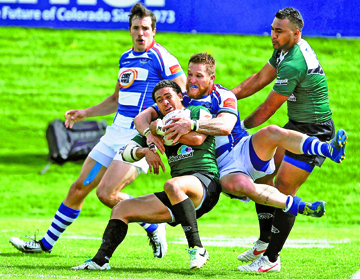 ng a calculated series of tests measuring each player’s physical fitness, the coaching staff placed the team on a regimented strength and conditioning program.
Weeks later, the players were reassessed and the tests revealed a minimum of 10 percent improvement in both weight and repetitions.
Results in hand, the Raptors hope to gain a physical edge over their opponents. Strength is certainly key in a sport like rugby, but so is the ability to outrun and outlast an opponent. The Raptors hope to have enhanced that ability with added depth to the team’s roster.
Said Snyman, “I’ve got about 90 percent of the players from last season back this season. That in itself is a lot. If you can keep continuity within the team that’s a huge contribution to success.”
It’s not simply depth, but quality depth in which Glendale hopes to invest its championship aspirations throughout the course of the 2015 season. Snyman is hopeful that with the remaining 10 percent of new players added, the Raptors have found players that are capable at playing at a high level within the PRP.
One of these “new” faces is a familiar one. Twenty-one-year-old Cody Melphy, a longtime member of Glendale’s developmental programs, is one of several young players Snyman hopes to provide opportunities to throughout the course of the PRP season. Melphy proved to be a factor during the Raptors’ summer 7s season and has since been training with the first team men.
“A player like Cody Melphy has got all the skill and the character to play at that level,” commented Snyman. “The only thing he’s lacking is experience. My job as a coach is to get him that experience whether I start him or bring him in as an impact player. He will definitely be a contributor to the team because he’s a very versatile player.”
Another newcomer to Glendale’s first team is Jake Turnbull. Like Melphy, the Australian has been auditioning throughout the course of the summer and fall alongside a mix of veterans and newcomers.
In fact, keeping everyone happy yet competitive within the group is what Snyman believes will be his biggest challenge as a coach this season, aside from the Raptors’ opponents.
“As a coach, selecting a starting lineup is going to be tough,” he said. “We have at least two or three players who could start at each position.”
But from a player’s perspective, the competition is welcome and healthy, as the team’s captain was quick to point out.
“I think the more competitive training can be, the better. The flexibility of depth is something we’re continuing to work on and haven’t had in the past. In a physical sport like rugby, injuries happen. Having confidence in the guy behind you is a good way to go about the season,” Fenoglio explained.
Competition within the group is just another tool that the Raptors hope to use to propel the team back to the top entering the new season.
“Obviously we have our expectations set pretty high,” Fenoglio added. “We have small and big term goals that will help us throughout the year.”
The Raptors will have a full 14-week season to complete these smaller goals en-route to accomplishing their grander task at hand. Fans will get their first glimpse at the newly energized and determined Raptors when they travel to face OMBAC in their first game of the season on Jan. 31.

by Mark Smiley | Dec 22, 2014 | Editorials
— A Modest Proposal
There has probably never been a time as difficult as the present to be a Denver municipal peace officer whether in the police or sheriff’s departments. Everyone is more than happy to tell you exactly why you suck and there does not appear to be anyone who seeks to back you up from the President of the United States, the U.S. attorney general, the mayor of Denver and even the police chief of Denver. Across the country protesters are screaming “What do we want — Dead Cops. When do we want it — Now.”
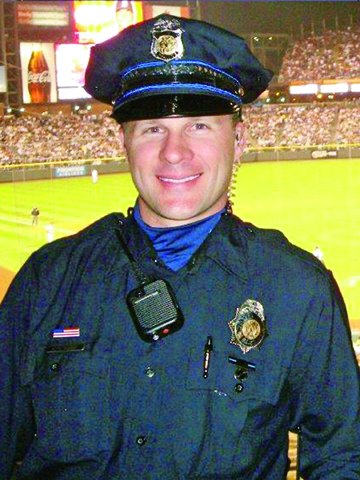 In Denver they almost got what they wanted during the Ferguson protests outside East High School. A driver, who was cheering the students on, ran into four police officers on bicycles, dragging Officer John Adsit under his car, almost killing him. A police union official indicated that the protesters cheered and chanted “hit him again.” So deep is the suspicion of Mayor Michael Hancock and Police Chief Robert White that when they declared the incident to be an accident caused by the driver’s medical condition, many people simply assumed that they were lying. Believe it or not there was a time when most of the Denver public assumed the opposite — that most police officers told the truth most of the time. Now police officers in Denver will be required to wear body cameras because the public does not believe much of what they are told by the Denver Police Department.
The police have traditionally counted on support from older citizens. The Greatest Generation had a high level of respect for law enforcement. But that generation is quickly disappearing and is replaced by Baby Boomers, some of whom grew up calling police officers “pigs.” President Obama has demonstrated that he does not support police whether in Cambridge, New York City or Ferguson. Attorney General Holder clearly views many police departments as “racist” even if in places like New York City where the police force demographics mirror the racial composition of the city.
In Denver the sorry spectacle at the Denver City Jail has not helped with embarrassing videos coming out seemingly daily. Denver citizens do not regularly distinguish between Denver police officers and Denver deputy sheriffs and perhaps there is no reason why they should. Denver law enforcement is Denver law enforcement. The six millio n dollar verdict handed out in the Marvin Booker wrongful death case in United States District Court in October certainly indicates that the city is in a great deal of trouble if a case of excessive force by a Denver law enforcement officer reaches a Denver jury.
Mayor Hancock is definitely not a fan of the rank and file of the Denver Police Department. He has worked hard to be sure that the firing of Denver cops, which are almost all rank and file and never the brass, is made easier and more expeditious. When he went to look for a new police chief it was clear he was not going to promote from within the Denver Police Department. Chief Robert White has taken a number of meritorious actions in shoring up the department including making sure that more officers are walking a beat and not sitting behind a desk.
But White has no history with the Denver police force and he owes his job and allegiance to Michael Hancock, even to the point of lying straight into television cameras in declaring that the sole purpose of photo radar cameras was public safety while refusing the demands of the City Auditor and others to conduct any studies to back up his claims. While Hancock may not be a fan of rank and file police officers he does strongly support photo radar cameras and apparently is adamant that no studies occur lest they threaten a growing revenue bonanza.
So where do law enforcement officers in Denver go to get support? It is not the police union which was long ago discredited by its actions in supporting police officers no matter how heinous the purported misconduct.
No it is going to have to be from average everyday citizens whom the officers are sworn to serve and protect. Earning that support, which has been by and large lost, will not be easy. The bigwigs in Denver have cast the average police officer into the wind. The only port in this storm for everyday Denver cops is the common man and woman. An alliance of everyday people and the rank and file police could be in its own way revolutionary. No longer would there be one set of rules for the elite and another for the rest of us. No more John TV while the mayor has been and maybe still is an important patron of prostitutes. No more special license plates for politicians which evade the ever present Denver photo radar cameras while citizens literally pay millions in fines every year. A citizens’ police force and not the politicians’ police force. It’s worth giving it a try. Ultimately it will take changes to the Denver City Charter to get the police out from the politicians’ grasp, but it can be done and should be done.
— Editorial Board

by Mark Smiley | Nov 24, 2014 | Travel
(BPT) – You know that moving into a new home can be one of life’s biggest stressors – the packing, the paperwork, the unpacking and of course finding the nearest coffee shop. Making your new house feel like your home can help alleviate some of this stress and provide a safe-haven for some much needed relaxation.
“Everyone has a different sense of what home is,” says Elizabeth Lindmier of The Art Institute of Colorado. So while the same aesthetic won’t work for everyone, she offers her top five tips to start you in the right direction.
1. Texture and textiles – Instead of having a bunch of hard surfaces, cozy up your home with something soft or textured. This could be a blanket, curtains or area rugs. These items will also provide some acoustical value so noises aren’t echoing in an empty space.
2. Comfort – Have some place in your home where you can relax, recharge and feel at ease. “Make a space where you would like to spend time,” Lindmier says.
3. Color – A monochromatic scheme with pops of colors can bring you into a place where you feel comfortable and happy. “Do your research on color theory before painting any space,” says Lindmier. “Different colors can spark different moods, emotions and even behavior. Discover what you’d like a given space to accomplish, and use colors as a tool to create such environment.”
4. Lighting – There should be aesthetically pleasing lighting. Look at the difference between warm and cool lighting colors to decide what helps achieve the look you want. Also consider task, ambient and accent lighting for your space. “Lighting plays a key role in any home,” Lindmier says. “Through lighting design you can highlight design and architectural features, create lighting which is more useful to the human eye, and work with natural light while keeping energy use to a minimum.”
5. Clutter/stuff – “Less is more, but make it more meaningful,” says Lindmier. Get rid of your clutter. When sitting in your space, make sure you can look around and adore the things you see.
“Mies van der Rohe’s old adage, ‘less is more,’ certainly holds true here,” says Jackie Barry, Interior Design instructor at The Art Institute of Houston – North. “Select significant pieces of furniture and art to move. You don’t need to have or show everything you have all in one room.”
Barry also advises incorporating a concept called biophilic design, which recognizes the inherent need of humans to interact and affiliate with nature to achieve and maintain optimum health and well-being. “Bring the outside in; don’t neglect good views to the outside, accentuate them,” she says. “Let your garden and landscaping work for you on the inside. Connecting with nature can also have a calming and a comforting effect.”
For more information about The Art Institutes, visit artinstitutes.edu.

by Mark Smiley | Nov 24, 2014 | General Featured
Timely solutions for getting your house ready for the holidays
(BPT) – The fun chaos of the holidays is right around the corner. Family gatherings to plan, delicious meals to prepare, gifts to find and purchase, and a house to decorate … the list goes on!
With entertaining season approaching at warp speed, it’s time to get your home spruced up and looking like new. Your time is precious around the holiday season, so to help make the most of your days – and budget – try these easy solutions to prepare for the holidays while keeping your sanity.
* A fresh coat of paint is a quick and easy way to give your home a new look at an affordable price. Consider starting with the rooms most frequently used, but don’t forget the guest bedrooms and bathrooms. To make the most of your effort, use a paint that has the durability and color-lasting qualities you need. Valspar Reserve, available at Lowe’s, resists stains and fading and allows you to easily wipe away marks without taking off paint, even if your guests accidentally scuff walls with their suitcases.
* A simple way to decorate for the holidays year after year is with an artificial tree. Lowe’s offers four trees pre-lit with color-changing LED lights, meaning you can change the look – and color – of the tree with just a push of the pedal making your decorating process much easier. For a formal dinner event, glowing white light sets a perfect ambiance. Switch to the multi-color option to delight the kids.
* Use holiday decorations in unexpected ways to add festive cheer in every room of your home with minimal effort. Try hanging ornaments to decorate live plants, light fixtures, doorway overhangs, stairwells, mirrors and even the mantel. For this project, don’t use expensive or family heirloom ornaments – just purchase coordinating ones that work with the color pattern you already have in the room.
* Guests in the house mean more foot traffic and chance for a mess, but you don’t have to worry about those inevitable spills or stains. STAINMASTER carpets available at Lowe’s are 30 percent more resistant to stains than other brands, and with new carpets on the floor, you’ll have a fresh new look in your home that won’t cause you stress when everyone arrives for the holiday parties.
* Potted evergreen plants decorated with lights bring plenty of festive feelings into a room. The best news is that when spring arrives, you can plant them outside in your backyard, or donate them to a community project that needs evergreen trees. Using live plants infuses the room with light and good, clean oxygen, and it’s the subtle touches your guests will appreciate and remember.
With these timely tips, you – and your home – will be ready for a holiday season of celebrations.