by Laura Lieff | Apr 1, 2026 | Travel
Head West For A Desert Adventure
by Laura Lieff
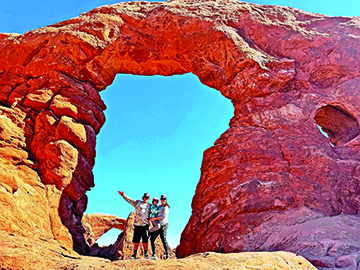
View From The Top: The Fleming family enjoys visiting Arches National Park, which is known for its natural stone arches, towering pinnacles, and massive balanced rocks.
Spring is the time of year when everything and everyone emerges — flowers bloom, spring cleaning starts, and Cherry Creek Valley residents begin looking for places to visit outside of the city. One exciting destination, which is just over the Colorado border in Utah, is Moab. Known for its many outdoor adventure options — including mountain biking, hiking, off-roading, and fossil hunting — Moab is also a gateway to the magnificent Arches and Canyonlands National Parks.
One way to enjoy Moab is on wheels — just ask the hardcore gearheads who love off-roading and are looking forward to the 60th Annual Easter Jeep Safari event which takes place March 28 through April 5. Additionally, Cruise Moab, an annual event that began in 1996, is happening April 15 through 19 this year. Those who prefer riding mountain bikes, dirt bikes, and motorcycles usually journey to Slickrock Bike Trail as it features just over 10 miles of scenic and rugged terrain and is located approximately three miles from town. Founded by Dick Wilson in 1969, Slickrock was originally meant for motorcycles. Over five decades later, nothing has changed as a variety of aficionados flock to the area to spend time on their preferred wheels.
Longtime motorcycle mechanic and enthusiast, Dan “The Wrench” Rolfe, has been enjoying Moab for the last 12 years — both on his mountain bike and on his CT-90 motorcycle. “I like Slickrock because it’s a ‘cycle’ trail with great views and terrain that is easy to maneuver,” Rolfe explains. “Also, the traction it provides allows you to go up and down steep landscapes and traverse laterally in places whe
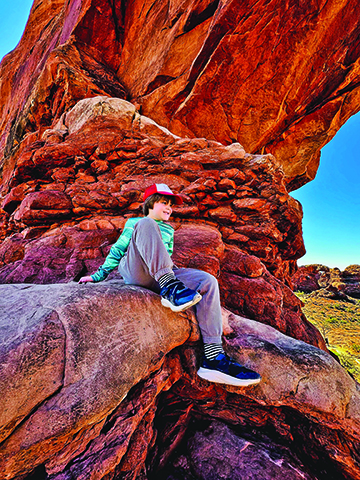
Red Rock View: Fleet Fleming stays cool in the desert heat while climbing around Arches National Park.
re you would normally slip out.” Rolfe is featured in the 2019 documentary film, 50 Years of Slickrock, which chronicles the history and development of the trail that arguably put Moab on the map.
Family Trip
While many Colorado residents head to Moab for camping and mountain biking, there are other ways to enjoy a weekend in the desert and make a family vacation out of it. Depending on where you live in Denver, and the number of stops made while driving, the journey to Moab is about five and a half hours. If that sounds like a trek, keep in mind that the panoramic views along the way are likely to make the time go by quickly.
“We started going to Moab because it is an ideal overnight stopping point when we travel to and from Arizona,” says Boulder native Nicole Ford. “After doing that a few times, we realized that it’s worth spending the weekend there because of all the kid-friendly restaurants and activities offered. Also, we found a dog-friendly hotel with a great pool which is the place to be after a day of exploring in the sun.” Some of the Ford family’s favorite Moab restaurants include Tai Bella, The Sultan, and Antica Forma and her hotel of choice is the Element.
Moab History
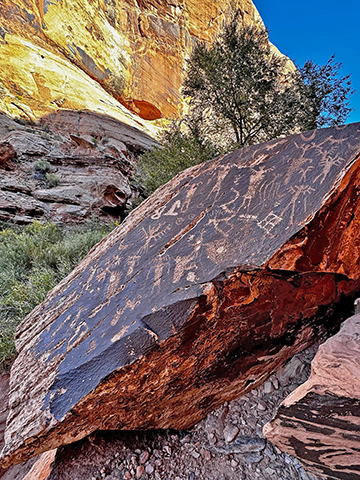
Ancient Artwork: While hiking through Mill Creek Canyon, keep an eye out for pictographs and petroglyphs that show detailed figures, animals, and shapes.
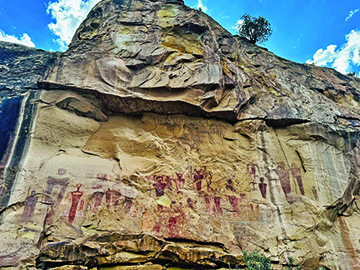
Because there is an abundance of history to explore in Moab — including petroglyphs (pecked/carved art), pictographs (painted art), dinosaur fossils, and dinosaur footprints — a weekend might not be enough to see everything. On the way into town, stop at Sego Canyon to see rock art that reflects three cultural styles: Ute, Fremont, and Barrier Canyon. The petroglyphs and pictographs left behind on the sandstone walls depict humanlike figures, abstract shapes, horses, and shields, among other types of rock art. “Sego Canyon is always our first stop when we travel to Moab because seeing that type of history is always exciting for me, my wife, and our son,” says 30-year Colorado resident Brian Fleming. “Checking out rock art that has been there for such a long time is our favorite way to begin the weekend.”
Another place to see pictographs and petroglyphs is Mill Creek Canyon where the hike along the creek features panels that show detailed figures, animals, and shapes that stand out the most on the black rocks. The trail’s “finale” is a picturesque waterfall that offers a memorable destination point before turning back to the trailhead. For those looking for dinosaur tracks, the Mill Canyon Dinosaur Bone and Track Sites are highlights. Accessible via a short pathway, the Track Site displays footprints from theropods, sauropods, ornithopods, ankylosaurs, birds, and crocodilians. The Bone Trail, located about a mile from the Track Site, has fossilized dinosaur bones embedded in rock along a family-friendly hiking path with educational panels.
Additional family-friendly spots include Moab Giants and the Moab Rock Shop. Since 2015, Moab Giants has offered various exhibits and experiences for people of all ages. The indoor/outdoor dinosaur museum showcases state-of the art, life-size land and sea dinosaurs that roamed the area. Another stop for fossil hunters and rockhounds is the Moab Rock Shop. Founded in 1960 by Lin Ottinger, this family owned and operated store has been a staple for over 50 years. In fact, many of Ottinger’s discoveries were donated to museums and universities and he discovered at least four species of dinosaurs.
Magic In The Desert
The two most well-known attractions near Moab are the national parks — Arches and Canyonlands. For those staying in the heart of town, Arches is a much closer option (five miles away). It’s also a smaller park which is ideal for families with young kids or for people who prefer to spend a shorter amount of time walking around the park. Known for its legendary red rock topography, Arches boasts over 2,000 natural stone arches, hundreds of towering pinnacles, and massive balanced rocks that can be seen while hiking or driving. The Windows Section is a favorite destination within the park as it contains some of the most iconic views.
Conversely, Canyonlands is best-suited for visitors looking for an all-day adventure. Shaped by the Colorado and Green Rivers, Canyonlands is divided into three districts that have dramatic buttes, spires, canyons, and desert landscapes: Island in the Sky (40 minutes from Moab), The Needles (90 minutes away), and The Maze (the most remote and challenging as its ranger station is accessible by 46 miles of dirt road).
If visiting national parks is not part of your agenda, keep in mind that the magic of Moab is the variety of ways to experience the desert. Whether you are camping, staying in a hotel, off-roading, hiking, mountain biking, or fossil hunting, it is a breathtaking destination for all ages and all types of adventure-seekers. Discovering historical petroglyphs and pictographs, finding dinosaur bones, and then cooling off at the pool are definitely memorable ways to spend time. Regardless of
Desert History: Sego Canyon’s rock art dates back thousands of years and features multiple cultural styles.
your chosen itinerary, spring is an ideal season to head west into the desert and see different landscapes and wildlife, enjoy diverse cuisine, explore new terrain, and participate in unique activities.
Pro Tips:
- Check the weather before you leave because you’re going to Moab to be outside.
- Pack a cooler — no matter what your accommodations are — because having water and snacks ready for consumption is essential in the desert.
- Make sure to pack layers and plan for the daytime versus nighttime temperature changes.
- Hats, sunglasses, sunscreen, a bathing suit, and comfortable walking shoes are crucial.
- Arches National Park requires timed entry reservations so plan ahead by booking online.
by Mark Smiley | Feb 13, 2026 | Travel
by Mark Smiley
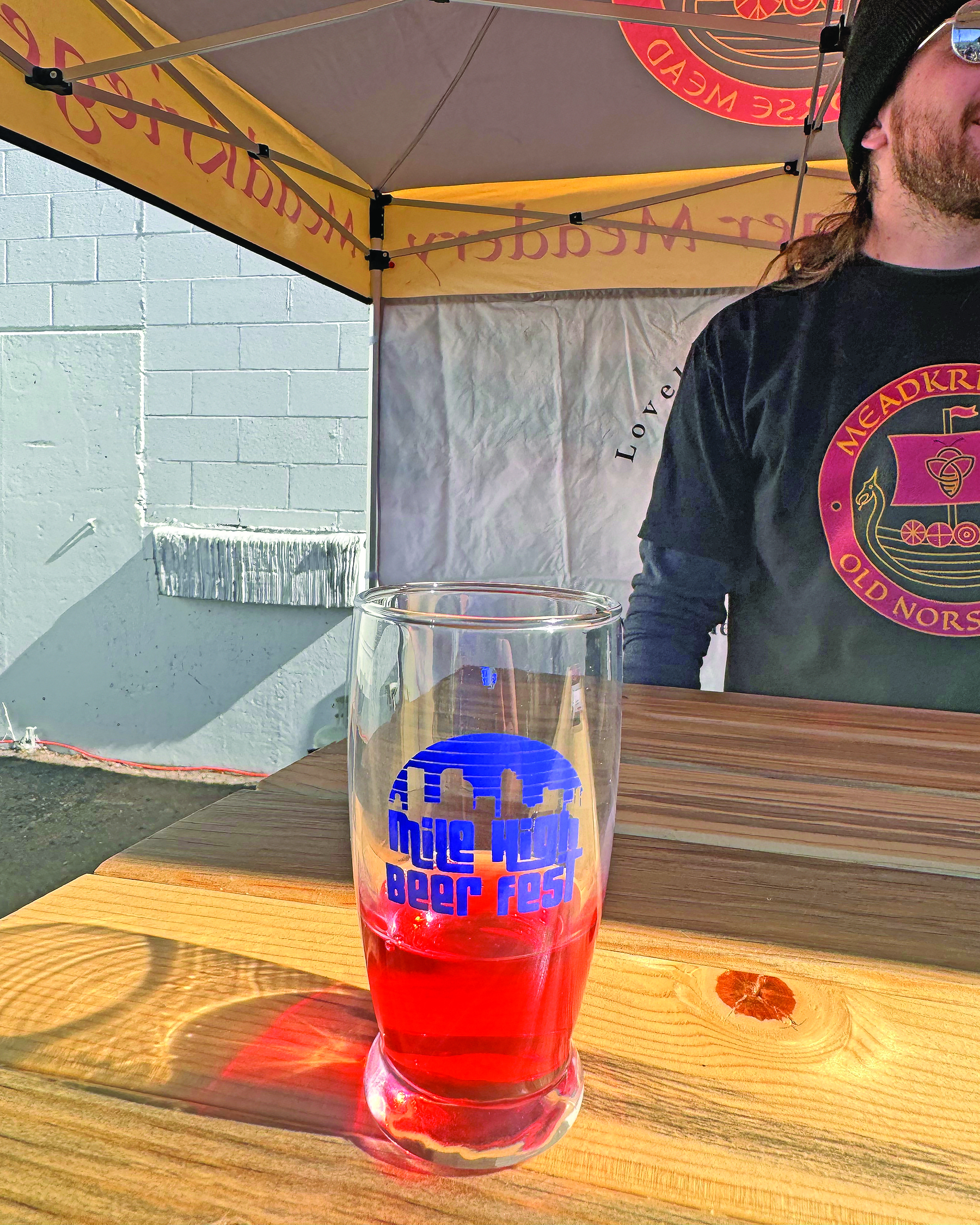
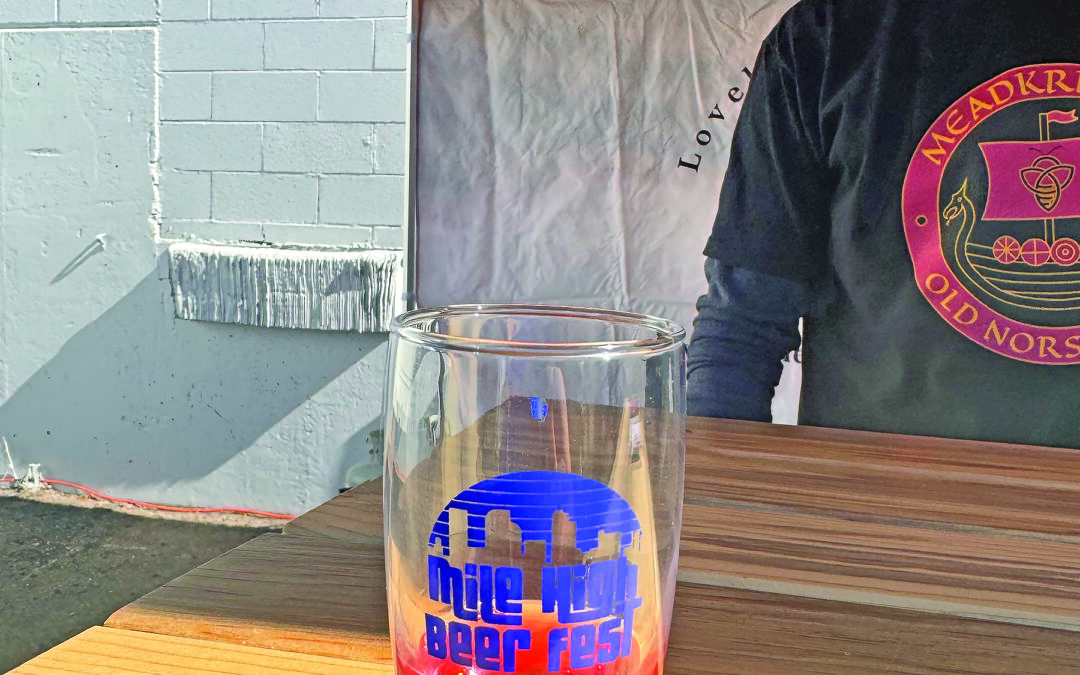
Tasting Glass: A Mile High Beer Fest tasting glass catches the light as attendees sample unique pours from local and regional breweries, highlighting the relaxed, discovery driven atmosphere of the festival.
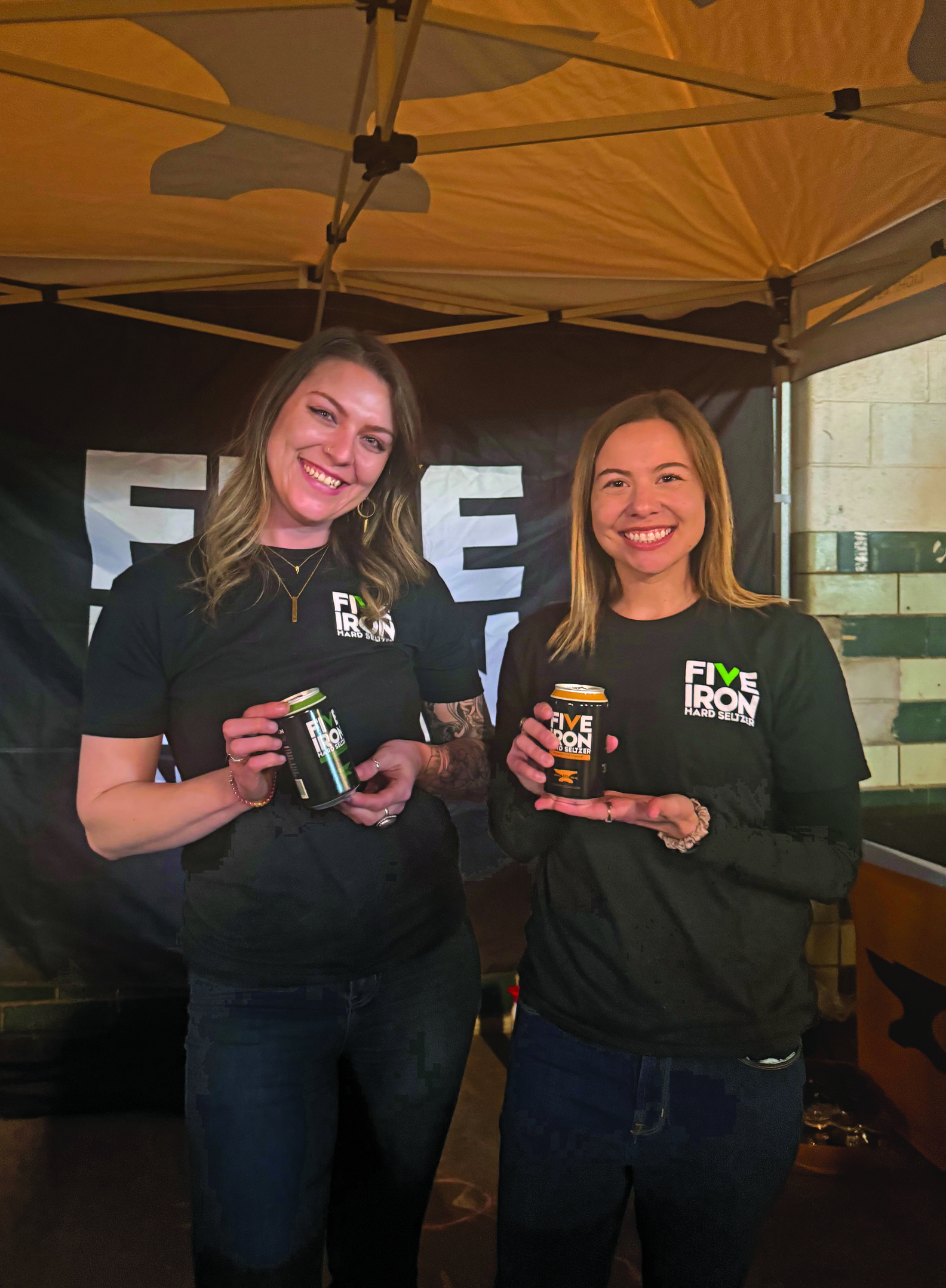
Five Iron: Representatives from Five Iron Hard Seltzer share their offerings with festivalgoers during Mile High Beer Fest, highlighting the growing variety of craft and non-alcoholic beverage options in Colorado’s evolving beer scene.
The Mile High Beer Fest is returning to Denver on March 7, 2026, bringing nearly 50 breweries together for a celebration of Colorado craft beer, community, and creativity.
This year’s festival will take place at Denargo Market in the RiNo Arts District, a new development featuring expansive public spaces, green lawns, and one of the neighborhood’s most recognizable landmarks, the giant climbing rhino.
Festival organizer Lacey Spruce said the move to Denargo Market offers both flexibility and a fresh experience for attendees. “We’re really excited to partner with Denargo Market,” Spruce said. “The space is beautiful, and it gives us the ability to create a fun, easy to navigate festival while keeping the spirit of Mile High Beer Fest the same.”
The 2026 festival is expected to draw approximately 1,500 attendees and will feature breweries from across Colorado and beyond. Registration for breweries filled quickly, prompting organizers to cap participation at nearly 50 vendors.
Spruce credits the festival’s continued success to its strong focus on local breweries and community connection.
“This event is about celebrating local beer,” she said. “A lot of the time, the people pouring the beer are the brewers or the owners themselves. That personal connection is really special for attendees.”
While the craft beer industry has faced challenges in recent years, including brewery closures and shifting consumer habits, Spruce believes events like Mile High Beer Fest continue to resonate.
“Trends change, but there will always be people who enjoy beer,” she said. “We’re also seeing a big increase in non-alcoholic options, and we’re embracing that by offering more variety every year.”
New breweries joining the festival in 2026 include Goldspot Brewing and Fiction Beer Company, adding to a lineup that blends well known favorites with new discoveries.
In addition to beer, attendees will have the opportunity to learn about Hopscotch, a new beer garden opening this spring at Denargo Market. Operated in partnership with Drink Denver, Hopscotch will feature 16 taps, local beers, canned options, non-alcoholic drinks, wine, and cocktails.
Tickets to Mile High Beer Fest are all inclusive, with no tokens or drink tickets required. Attendees can sample freely throughout the event, a feature Spruce says helps maintain a smooth flow and relaxed atmosphere.
With fewer beer festivals taking place in Denver, Mile High Beer Fest has become a standout event for both brewers and enthusiasts.
“Our goal is to keep delivering a great experience,” Spruce said. “We want people to have fun, discover something new, and feel connected to the local beer community.”
For tickets and event details, visit milehighbeerfest.com.
by Mark Smiley | Jan 16, 2026 | Travel
Show Features World Premiere Of Sean Schafer Hennessy’s ‘Guardians Of Time’
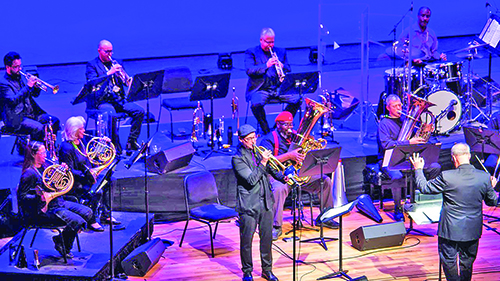
Photo credit: The Denver Brass
The Denver Brass, one of the finest large brass ensembles in the world, presents “Rhythms of the Cosmos” on Saturday, February 7 at 2:30 p.m. at the Newman Center for the Performing Arts on the University of Denver campus. The show will take the audience on a journey into prominent rhythmic textures and expansive sound featuring bold percussion and intricate meters. The program will feature the world premiere of “Guardians of Time” by local composer and The Denver Brass trumpeter, Sean Schafer Hennessy.
“For me, music makes the world go round, and rhythm is the engine that keeps it moving,” said Kathy Brantigan, artistic director and founder of The Denver Brass. “Our deep dive into how rhythm moves music, will be one of the most interesting and exciting concerts The Denver Brass has tackled. We’re going to take our audience on an out-of-this-world journey as we fulfill our role as Guardians of Time!”
“From the beginning of the universe, rhythm has been a force shaping everything we know,” said Sean Schafer Hennessy, composer of Guardians of Time. “This piece explores the connections that have bound us from the start, and reflects on how, even as we may at times drift apart, remain connected by the enduring rhythm of love and the universe that binds us together.”
The show will feature the following pieces:
- Mars & Jupiter from The Planets, Gustav Holst
- Journey to the Red Planet, Sean Schafer Hennessy
- Guardians of Time (World Premiere), Sean Schafer Hennessy
- Danza Final from Estancia, Albert Ginastera
- Quest for the Golden Blade of Truth and the Hunt for the Beast Beyond the Wall, Andrew Wolfe
- Clair de Lune, Claude Debussy
Denver Brass shows combine world-class performance with engaging insights from the stage. Spoken commentary and brief pauses are a natural part of each program, allowing musicians to care for their embouchure and deliver the highest level of artistry — while inviting audiences deeper into the music.
Kabin Thomas from CPR Classical’s Colorado Spotlight will serve as the concert host.
The Denver Brass’ 45th season continues with Celtic Mania on March 7 at 2:30 p.m. and 7 p.m. and March 8 at 2:30 p.m. at the Newman Center for Performing Arts, followed by Pulse of America on May 17 at 2:30 p.m. at Bethany Lutheran Church.
Tickets for “Rhythms of the Cosmos” range from $5 to $54 (plus tax and fees). For more information and to purchase tickets, visit www.denverbrass.org or call 303-832-4676. The Newman Center for the Performing Arts is located at 2344 East Iliff Avenue in Denver.
by Mark Smiley | Dec 15, 2025 | Travel
Grinch Adventure, More Runs Through January 2
by Mark Smiley
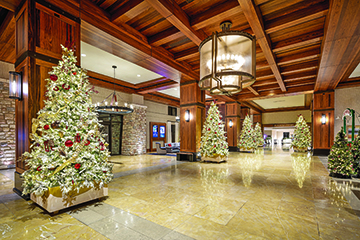
Beautiful Decorations: The inside of the Gaylord Rockies features millions of twinkling lights and more than 200 decorated trees.
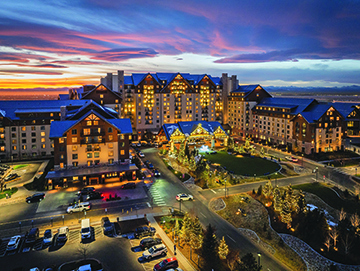
Gaylord Rockies: Twinkling lights drape the massive timber beams of Gaylord Rockies like a Colorado winter wonderland
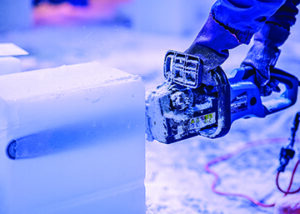 A team of 40 master ice artisans from Harbin, China, arrived at Gaylord Rockies Resort in Aurora, to transform two million pounds of ice into a breathtaking winter wonderland. The group has spent more than 12,000 hours hand-carving intricate sculptures for this year’s ICE! experience, themed around Dr. Seuss’ How the Grinch Stole Christmas!
Hailing from Harbin — famously known as “Ice City” and home to the world’s largest ice and snow sculpting festival — the artisans have traveled more than 5,700 miles to Colorado. Since 2001, Gaylord Hotels has partnered with these highly skilled carvers to bring their centuries-old craft to life for American audiences.
Using tools such as chisels, tongs, hand saws, grinders, and chainsaws, the team begins with over 6,000 blocks of ice, each weighing about 300 pounds. Working from a 300-page design book, the artisans sculpt everything from coin-sized details to 30-foot-tall scenes inspired by Dr. Seuss’ beloved holiday tale.
Guests visiting ICE! at Gaylord Rockies will be transported through the classic story — journeying from the Grinch’s snowy mountaintop lair and his sneaky sleigh ride into Whoville, to the Whos’ joyful celebration and the Grinch’s heartwarming transformation. Brilliant colored ice, dazzling LED lights, and a precisely maintained 9-degree environment combine to create a mesmerizing display. Visitors can borrow signature blue parkas to stay cozy during the experience.
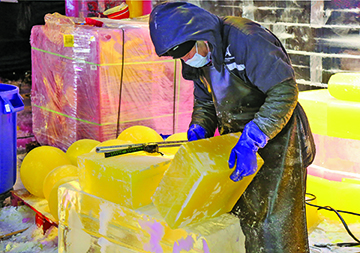
Artisans: Armed with chisels, tongs, hand saws, grinders, and chainsaws, the artisans begin with more than 6,000 blocks of ice to create ICE! at Gaylord Rockies.
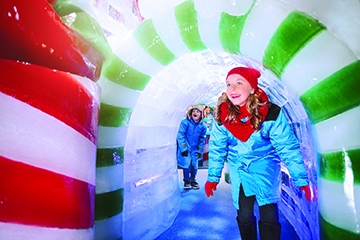
The attraction also includes two-story ice slides, sparkling tunnels, and live carving demonstrations in the Carver Showcase. ICE! concludes in a serene Nativity scene, sculpted entirely from crystal-clear ice. The display runs through January 2, 2026.
While ICE! is the crown jewel of Christmas at Gaylord Rockies, the holiday spirit extends throughout the resort, which features millions of twinkling lights and more than 200 decorated trees. New this year is the Sugar Snow Station, a whimsical area featuring Candy Cane Mountain Indoor Snow Tubing, Gumdrop Gliders Ice Puck Challenge, and the Sugar N’ Spice Bar offering festive treats.
Other seasonal highlights include:
Feast with the Grinch, a family dining event where guests can meet the famously grouchy green guest of honor and his dog, Max.
Sippin’ Santa, a tropical tiki pop-up bar serving island-inspired holiday cocktails in collectible mugs.
Gingerbread Mountain Cabin, a life-sized creation built from over 1,400 pounds of gingerbread, icing, and candy.
Festival of Trees, an annual fundraiser benefiting Lantern (formerly Bright by Text), supporting early childhood development.
Guests can also enjoy festive favorites like the Grinch’s Wonderful Awful Idea Scavenger Hunt, the Gingerbread Decorating Corner, Photos with Santa, the Elf Training Academy, Mrs. Claus’ Christmas Traditions, and the Yuletide Street Market in Mistletoe Village.
For those looking to extend the holiday magic, overnight guests receive special perks such as “Chill Pass” front-of-line access to ICE! and entry to the resort’s indoor Arapahoe Springs Waterpark.
Tickets for ICE! and other Christmas at Gaylord Rockies attractions must be purchased in advance, as peak weekends often sell out. For details, overnight packages, or reservations, visit ChristmasAtGaylord Rockies.com
by Mark Smiley | Nov 17, 2025 | Travel
by Mark Smiley

Ice Slides: Guests can take rides down the two-story-tall ice slides, traverse through ice tunnels and arches, and visit the carver showcase to watch artisans perform live carving demonstrations.
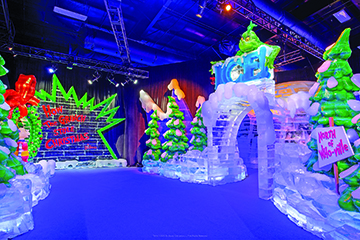
Ice Sculptures: Colorful ice sculptures recreate scenes from Dr. Seuss’ How the Grinch Stole Christmas! inside the ICE! exhibit at Gaylord Rockies Resort.
A team of 40 master ice artisans from Harbin, China, has arrived at Gaylord Rockies Resort in Aurora, to transform two million pounds of ice into a breathtaking winter wonderland. The group has spent more than 12,000 hours hand-carving intricate sculptures for this year’s ICE! experience, themed around Dr. Seuss’ How the Grinch Stole Christmas!
Hailing from Harbin — famously known as “Ice City” and home to the world’s largest ice and snow sculpting festival — the artisans have traveled more than 5,700 miles to Colorado. Since 2001, Gaylord Hotels has partnered with these highly skilled carvers to bring their centuries-old craft to life for American audiences.
Using tools such as chisels, tongs, hand saws, grinders, and chainsaws, the team begins with over 6,000 blocks of ice, each weighing about 300 pounds. Working from a 300-page design book, the artisans sculpt everything from coin-sized details to 30-foot-tall scenes inspired by Dr. Seuss’ beloved holiday tale.
Guests visiting ICE! at Gaylord Rockies will be transported through the classic story — journeying from the Grinch’s snowy mountaintop lair and his sneaky sleigh ride into Whoville, to the Whos’ joyful celebration and the Grinch’s heartwarming transformation. Brilliant colored ice, dazzling LED lights, and a precisely maintained 9-degree environment combine to create a mesmerizing display. Visitors can borrow signature blue parkas to stay cozy during the experience.
The attraction also includes two-story ice slides, sparkling tunnels, and live carving demonstrations in the Carver Showcase. ICE! concludes in a serene Nativity scene, sculpted entirely from crystal-clear ice. The display runs from November 24, 2025, through January 2, 2026.
While ICE! is the crown jewel of Christmas at Gaylord Rockies, the holiday spirit extends throughout the resort, which features millions of twinkling lights and more than 200 decorated trees. New this year is the Sugar Snow Station, a whimsical area featuring Candy Cane Mountain Indoor Snow Tubing, Gumdrop Gliders Ice Puck Challenge, and the Sugar N’ Spice Bar offering festive treats.
Ice!: Guests will embark on a journey through hand-carved ice sculptures depicting iconic scenes from Dr. Seuss’ How the Grinch Stole Christmas!
Other seasonal highlights include:
Feast with the Grinch, a family dining event where guests can meet the famously grouchy green guest of honor and his dog, Max.
Sippin’ Santa, a tropical tiki pop-up bar serving island-inspired holiday cocktails in collectible mugs.
Gingerbread Mountain Cabin, a life-sized (12 foot high) creation built from over 1,400 pounds of gingerbread, icing, and candy.
Festival of Trees, an annual fundraiser benefiting Lantern (formerly Bright by Text), supporting early childhood development.
Guests can also enjoy festive favorites like the Grinch’s Wonderful Awful Idea Scavenger Hunt, the Gingerbread Decorating Corner, Photos with Santa, the Elf Training Academy, Mrs. Claus’ Christmas Traditions, and the Yuletide Street Market in Mistletoe Village.
For those looking to extend the holiday magic, overnight guests receive special perks such as “Chill Pass” front-of-line access to ICE! and entry to the resort’s indoor Arapahoe Springs Waterpark.
Tickets for ICE! and other Christmas at Gaylord Rockies attractions must be purchased in advance, as peak weekends often sell out. For details, overnight packages, or reservations, visit ChristmasAtGaylord Rockies.com.
by Amber Wyatt | Oct 20, 2025 | Travel
by Amber Wyatt
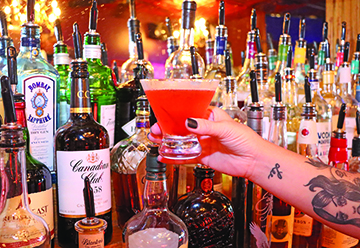
The Skinny Dip: A classic cocktail with a lemon twist, known as The Skinny Dip, awaits at The Bar Car, where the vintage ambiance and neighborhood camaraderie make every sip feel like home, no matter where you’re from.
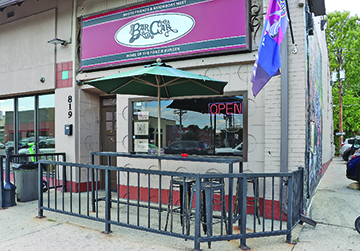
Cozy Patio: The Bar Car at 819 Colorado Blvd. welcomes locals with its cozy patio, signature menu, and the promise of good times where “friends and neighbors meet.”
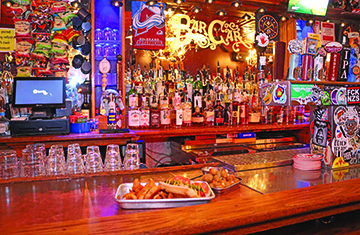
Neighborhood Favorite: With a lineup of craft beers, top-shelf spirits, and hearty pub fare, The Bar Car continues to be a favorite neighborhood stop for both drinks and bites.
On a stretch of Colorado Boulevard better known for fast traffic than lasting community, BarCar has carved out something rare: a true neighborhood bar that doubles as a second home. For majority owner Victor Muñiz and part-owner Andrew Callahan, the mission is clear — create a space where locals feel seen, safe, and connected.
“Working at BarCar is working at a neighborhood spot that is truly a neighborhood spot,” Callahan said. “It is for the neighborhood, by the neighborhood. Most of us live close by.” For Callahan, who has lived in the neighborhood for over a decade, the bar is both a livelihood and a love letter to the community.
That grassroots spirit is built into the very structure of the business. Unlike most establishments, BarCar is largely employee-owned. “We are a mostly employee-owned bar,” Callahan explained. “Almost all of the investors, except for I think one right now, are employees of the bar. We’ve told our entire staff that if they work with us for a couple years and want to become an investor, we’re open to that. That is a path they can take.”
This model has given the bar an unusually high level of buy-in from its team, especially from veteran bartenders who appreciate the stability and the opportunity to shape the place where they work. “Having the opportunity to become financially invested is a big plus,” Callahan noted. “Not a lot of places always offer that.”
That sense of ownership translates directly to hospitality. Muñiz, who also owns the Owl Saloon, describes BarCar as nothing short of a dream realized. “It’s my dream come true,” he said. “Everything about it — friends, family — it’s just a great place to be all the time.”
For Muñiz, the family feel isn’t a metaphor. It’s the guiding principle. “We created a community where we have your makeshift family here,” he explained. “That’s what it’s about. That’s what bars are about in my opinion.”
That philosophy manifests in everyday moments. Neighbors use BarCar as a meeting place before concerts, after games, or just to catch up on life. “A lot of people come before they do other things in life and meet up here or afterwards,” Muñiz said. “Honestly, I think that’s the best thing we do — we keep the neighbors together.”
The idea of BarCar as a community hub is reinforced by personal milestones. When Callahan married his wife, who also works in the hospitality industry, they hosted their wedding reception at another venue — then, naturally, the celebration moved to BarCar. “At around 9:30 or 10, most of the people at our wedding, who were industry workers as well, showed up here,” he recalled. “It became quite a big party to have the neighborhood people getting married, you know?”
Muñiz, who spent years as a bartender and server before stepping into ownership, says that lived experience informs his leadership. “I believe in a bartender-driven industry,” he said. “I know we could have extra staff, but at the end of the day, it’s a staff of people that care and like doing what we do.”
That tight-knit crew has weathered challenges together, particularly during the pandemic. “Coming out of COVID, we had a lot of employees that we needed, and we’re back to the hardcore seven,” Muñiz said. “That’s how we built this bar before COVID, and then we’re back to that again. It’s seven people that give a shit.”
And that’s exactly the vibe patrons notice. BarCar feels less like a business transaction and more like a gathering in someone’s living room — with better cocktails. “We want to be there for everybody that’s looking to have a good time in a cool, comfortable environment,” Muñiz said. “We’re all about being a safe place for people to come and hang out and not worry about the bullshit life has.”
The menu reflects that same spirit of neighborhood hospitality. During my visit, longtime bartender Brandy mixed me a Skinny Dip — a smooth, subtly sweet cocktail built with Deep Eddy sweet tea vodka, a squeeze of lemon, and just enough water to keep it light. It was the kind of drink made for conversation, and sure enough, I enjoyed it while chatting with Callahan and the cook, Will, who proudly shared that the kitchen rotates its cheese curd flavors. The current favorite? Dill pickle. Naturally, I had to try them. Crisp, golden, and tangy, the curds carried just enough bite to spark a round of laughter as the basket quickly disappeared among us.
That theme of comfort and camaraderie carried right into lunch. I went for a proper Chicago dog, stacked with the traditional fixings, and paired it with sidewinder fries that were as hearty as they were shareable. To balance it out, Brandy slid across the bar a Jabroni Negroni — the house’s playful take on a classic. Made with Hendrick’s gin, Campari, and sweet vermouth, the cocktail leaned pleasantly bitter and sour, a bold counterpoint to the rich food and the easy banter flowing through the room.
As Callahan put it, “This neighborhood bar — we focus on just making sure everyone’s taken care of. Everyone knows each other around here. And everyone that’s new to the neighborhood, we always welcome them in.”
On Colorado Boulevard, where strip malls often outnumber handshakes, BarCar has become something enduring: a place where the beer is cold, the people are warm, and the neighborhood spirit is alive and well