by Valley Gadfly | May 27, 2014 | Main Articles
The jaw-dropping Glendale Fireworks — considered the Valley’s premier Fourth of July display — will again light up the Valley Basin on July 3.
One of the oldest and largest in the area, the powerful display of pyrotechnics has become a Cherry Creek Valley Independence Day tradition. Families and friends gather at eateries, bars, patios and porches from LoDo to the Dam to view the dazzling aerial display. The mega fireworks show will flicker across the skies at dusk (generally between 9 and 9:30 p.m.)
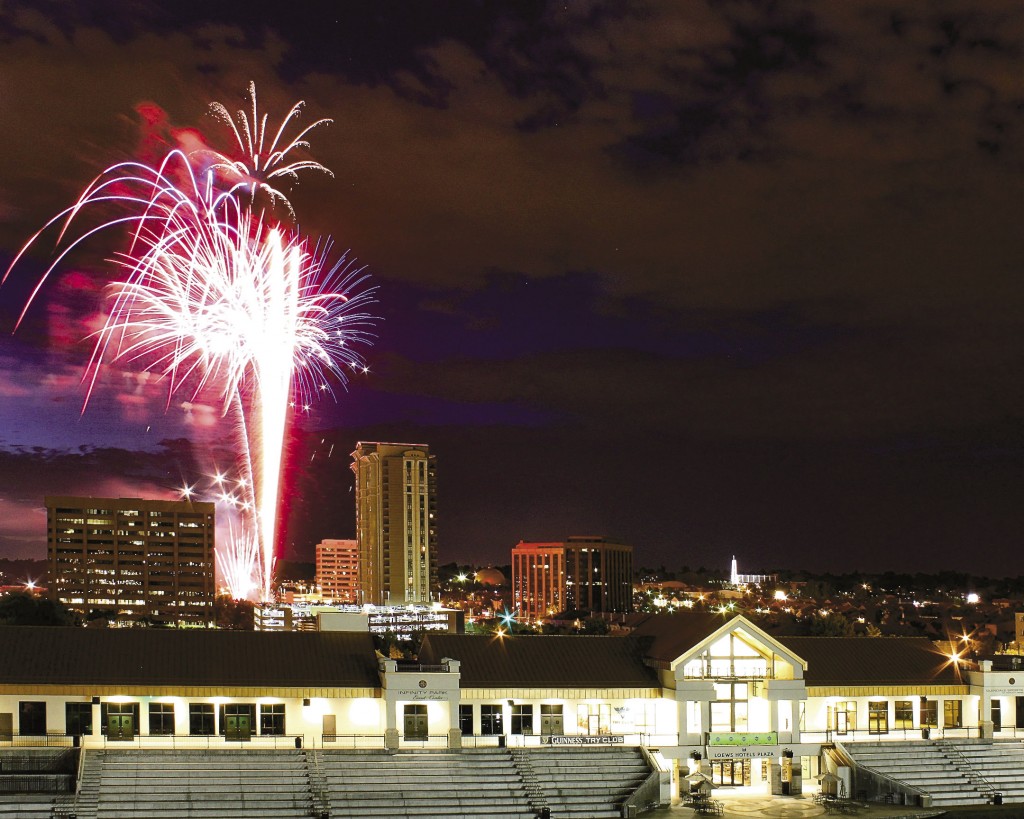
Best places to watch the mesmerizing fireworks are north of Virginia, south of Cherry Creek Drive South, west of Colorado Boulevard and east of Cherry Street. Many families gather in and around the parking lots at CitySet and at Whole Foods for close-in viewing. The City of Glendale sponsors the fireworks show. Rain date is July 26. Information: 303-759-1513 or www. glendale.co.us.

by Mark Smiley | May 27, 2014 | Main Articles
May 19 Denver District Court Trial Vacated
 by Charles C. Bonniwell
For over two years Denver park advocates who formed the entity Friends of Denver Parks have attempted to assert the rights of citizens of Denver as guaranteed by the Denver City Charter and the Colorado State Constitution to vote on matters critical to them and in particular on whether Mayor Michael Hancock could simply trade away 11 acres of open space land for development at Hentzell Park for a rundown office building in downtown Denver.
The city, led by Assistant City Attorney David Broadwell, has blocked all efforts for citizens to have that say. First he claimed that Denver City Charter Sec. 2.4.5., that requires “approval of a majority of registered voters” for the sale or lease of any park or any portion of any park, does not apply since it had not officially been designated a park not withstanding all appearances to the contrary, and even prior statements by the Mayor of Denver in 1979 that the property was “dedicated park land.”
When parks advocates sufficiently gathered signatures under their right of referendum and initiative as seemingly guaranteed by of the City Charter Sec. 8.3.1 and the State Constitution, Broadwell instructed the City Clerk and Recorder Debra Johnson to reject the petitions. He claimed that the swap was an administrative not a legislative action and that vitiated any right of the citizens on the matter.
Municipal law experts noted that the City Clerk and Recorder position was deliberately made by the City Charter as a separately elected officer so not to be under the control of the Mayor of Denver directly or indirectly through the City Attorney. Nonetheless, Johnson took the instructions from Broadwell and rejected the petitions.
The Friends of Denver Parks then sought to have a jury trial on whether the Hentzell Park land was a park prior to 1955 or a dedicated park after that date. Broadwell fought the plaintiffs having the right to argue before a jury of ordinary citizens and demanded a summary judgment from the Denver District Court. If the Friends of Denver could have ever gotten before a jury it appeared to have a strong case, including the proffered testimony of former Denver City Councilwoman Susan Barnes-Gelt who stated that the official City Map designated the land in question as a park.
But all to no avail. On May 2, 2014, District Court Judge Herbert L. Stern III vacated the May 19 trial and awarded Broadwell and the city a Summary Judgment. Friends of Denver Parks attorney John Case has indicated he will appeal the decision but Broadwell’s record in excluding citizens from having a say in the actions of their government appears impressive.
The Real City Attorney
Few Denver citizens have ever heard of David Broadwell but many city watchers consider him for many matters the de facto Denver City Attorney and one of the most powerful people in Denver city government, even though he works very much behind the scenes.
The ostensible City Attorney is 34-year-old Scott Martinez who was appointed to the top spot in January. He is considered by many to be very much a legal lightweight. He was originally appointed by Hancock as deputy city attorney in 2011, and according to The Denver Post he got the job after the Colorado Latino Forum gave the mayor a very hard time about his lack of Latino appointments. A student at a second rate law school, University of San Diego, he apparently graduated without honors or distinction.
His prior appointment even as a deputy city attorney was greeted in some quarters with less than high praise. Then Speaker of the Colorado House of Representatives Frank McNulty declared at the time: “Mayor Hancock should hope that Scott Martinez brings a higher level of professionalism as a member of the city attorney’s office than he displayed as a Democratic hack in the reapportionment process.”
The City Attorney’s office has over 90 attorneys, with the bulk of the staff serving under a myriad of appointed City Attorneys who come and go on a fairly regular basis and not always under the best of circumstances. Then Mayor John Hickenlooper’s City Attorney appointee Larry Manzanares committed suicide while in office after being caught stealing a government laptop and allegedly placing child pornography on it.
While many attorneys in Denver have a very low opinion of Scott Martinez, both personally and professionally, the opposite is true of Broadwell. A graduate of a highly regarded law school, University of North Carolina, he also holds a Master’s Degree in Regional Planning from the University of North Carolina and he has worked exclusively for municipal governments since 1980 including being the lead attorney of the Colorado Municipal League. He has lectured and written articles relating to municipal law and has received various awards for his work.
At the City Attorney’s office, Broadwell, keeps a very low profile including not even being listed as part of the so-called Senior Management Team of 11 lawyers. One Denver City Councilmember who did not want to be quoted for attribution stated, “When David Broadwell gives you a legal opinion you pay attention. When Scott Martinez opines people simply roll their eyes and hope he checked first with Broadwell or someone else who actually knows what they are talking about.”
Ignoble Ends
If there is a criticism of Broadwell, it is that he utilizes his considerable talents and skills for ignoble ends. He has been the lead attorney in ensuring that Denver’s civil forfeiture laws whereby the city seizes the property and assets of sometimes innocent citizens never gets to the courts for review. “Asset Forfeiture Reform Long Overdue,” David Kopel, Independence Institute.
Parks advocate Mary David noted, “Broadwell has managed to manipulate the system so the everyday citizens have no role in important decisions that affect them regarding parks in Denver. That allows Mayor Hancock to get away with his various sleazy development deals. Does he think that the hundreds if not thousands of people that have been involved in the Hentzell Park fiasco think better of their government or the court system after this?”
Another parks advocate Susan Johnson added, “We have had our eyes open about how corrupt our government and legal system really is. At the start of the 20th century when the Denver city government and the courts were controlled by crooked cops and saloon owners the right of the people to vote on key matters was fought for and won. Mayor Hancock, his disgraceful developer buddies and Broadwell have begun to destroy those rights. Maybe David Broadwell ought to look in the mirror some time and see what he has become with all of his many skills. Maybe if he stood for something he wouldn’t be stuck for his legal career in the middle of bureaucratic jungles having to ostensibly report to sad sack city attorneys almost half his age like Scott Martinez.”

by Mark Smiley | Apr 29, 2014 | Main Articles
by Mark Smiley
The municipal election set for April 1, 2014, in the City of Glendale was cancelled due to the exact amount of candidates vying for four open council seats. Paula Bovo and Dario Ka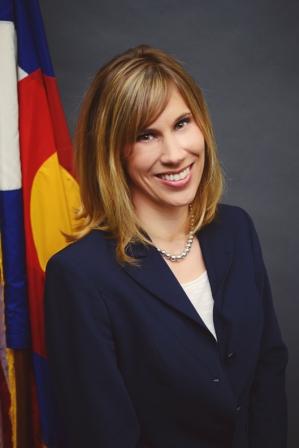 tardzic were re-elected and will each serve four year terms. Doris Rigoni and Joseph Giglio were newly elected to the City Council. They replaced Ricky King and Pat Opper who each served eight years on the council and were term limited. Rigoni will serve until 2018 and Giglio’s term will end in 2016.
Doris Rigoni has been active in Glendale, serving as Planning Commissioner for the past two years, and is passionate about the redevelopment of Glendale. Ms. Rigoni is an Assistant Vice President for Mile High Banks Commercial Real Estate. She specializes in commercial real estate loan origination, special asset restructuring, and disposition. Prior to her time at the bank, she spent 10 years in commercial real estate on the title/due diligence side of transactions. Her early career was in the public sector working directly for Colorado Governor Bill Owens in the Economic Development Community and for the Denver International Airport Partnership.
Rigoni graduated from the University of Colorado, Boulder, holds her Colorado real estate broker’s license, is a past Board Member for the Commercial Real Estate Women (CREW), and is currently active with the local NAIOP Chapter, sitting as the Membership Chair. Rigoni says she doesn’t have any specific plans for her four-year term but rather wants to listen to her constituents. “It is less about what I would like to see happen and more about what the citizens want to see 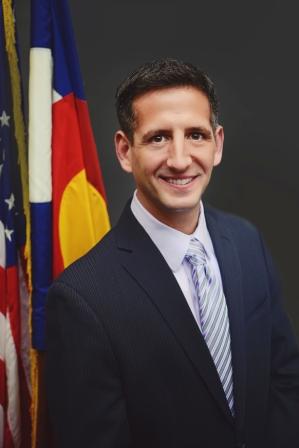 happen,” said Rigoni.
Joseph Giglio has been a Glendale resident since 2001 and has served on the Planning Commission since 2012. Giglio is President and CEO of Oncology Trials Insights, a Colorado company that works with drug developers, research institutions, and patients to improve the speed and effectiveness of oncology research. Previously, he served as President for Accrual Solutions, a Denver-based patient accrual management firm.
Giglio is originally from Rochester, New York. He received a Bachelor’s degree from the University of Buffalo and a Master of Business Administration degree from the University of Rochester.
by Mark Smiley | Apr 29, 2014 | Main Articles
Highly Controversial Development May Yet Fail: Neighborhood Groups Rally
Johnson Admits To Rigged ‘Courtesy Zoning’ On Lowry Vista
by Glen Richardson
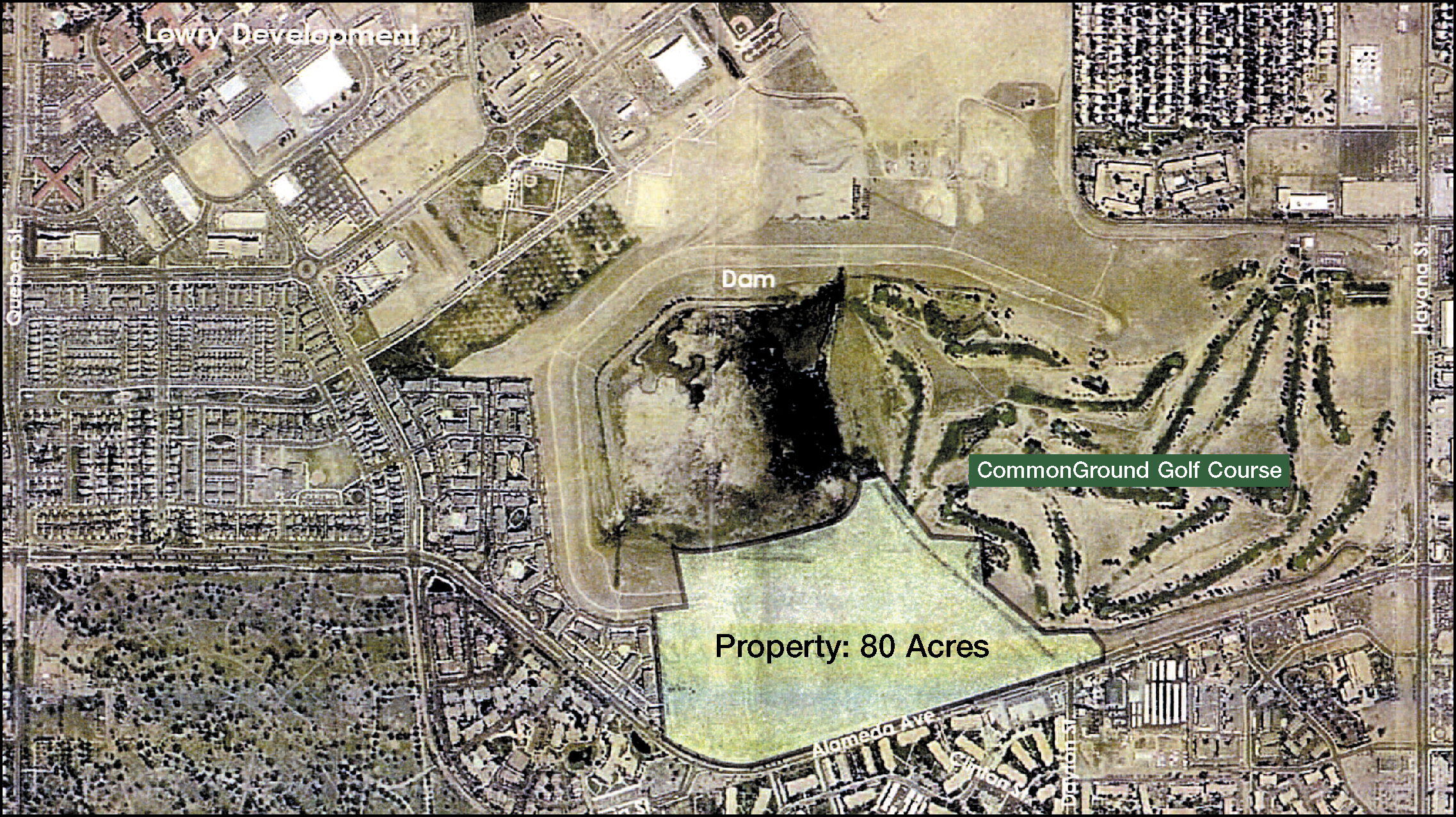
Amemorandum dated November 15, 2013 by Assistant Attorney General for Colorado Jennifer Robbins has thrown the entire massive Lowry Vista development into doubt. Eight years ago International Risk Group (IRG) got the City of Denver and Lowry Redevelopment Authority (LRA) to transfer to an IRG affiliate, IRG Redevelopment I, LLC (IRG-I), 80 acres of land for nothing that was supposed to be used only as a park or open space. Months later IRG sought and was eventually given the right to put a massive mixed use development on the property even though the land was supposed to be so contaminated that even watering the property would present a substantial risk to the public. Lowry Vista is located on East Alameda across from Windsor Gardens.
Open Space To Massive Mixed Use Development
The Denver City Council approved the rezoning of Lowry Vista in January 2010 by a 12 to 1 vote despite adamant and overwhelming opposition from citizen and neighborhood groups. The push for the development by Councilwoman Marcia Johnson in whose district the project was located resulted in such a outcry that Johnson did not run for reelection in 2011 and her actions regarding Lowry Vista permanently stained her reputation in many neighborhoods in the district and across the city.
AG Letter
The Attorney General’s November 15 letter informed IRG that before the Colorado Department of Public Health and Environment (Colorado Health) could consider approval of preliminary development activities for Lowry Vista, IRG-I would need to get the Air Force to void its restriction on its original deed that Lowry Vista could only be used as “open space/non-irrigated park” and to get the Air Force to agree to remain liable for land fill contaminants even if the property was developed, an action which the Air Force previously refused to do.
On December 13, 2013, IRG-I wrote to the Air Force requesting such action in a very oblique manner. Experts indicate there is no reason for the Air Force to subject itself to the potential liability that would result from IRG-I’s requests. They, however, also note that there is a reason why lobbyists in Washington, D.C. are paid millions to accomplish the seemingly impossible from the federal government on behalf of clients.
Moreover, insiders indicate that Mayor Michael Hancock is rumored to be strongly lobbying on behalf of IRG to do away with the open space restrictions. Hancock’s lobbying actions are reportedly being kept sub rosa as he is already in political hot water for destroying open space at Hentzell Park for a development, all the while claiming he is a strong supporter of parks and open space.
IRG has been in an ongoing battle with Colorado Health over Lowry Vista ever since the Denver City Council approved the massive development. In a letter dated November 29, 2013, Ann K. Wei as “Counsel” for IRG-I argued that the term “open space/ non-irrigated park” was not defined and therefore IRG-I’s developmental activities for a massive mixed-use development were somehow not inconsistent with the terms. In the letter IRG-I asserted Colorado Health’s claims to the contrary were “overreaching, arbitrary and capricious.” The Assistant Attorney General’s November 15, 2013, letter basically shot down those claims on behalf of Colorado Health.
The Attorney General’s Office appears to have questions concerning the trustworthiness of IRG-I. On November 18, 2013, Jennifer Robbins for the Attorney General wrote directly to Sam Rupe of the Air Force explaining what it was requiring and why, rather than having IRG act as an intermediary.
IRG-I’s Sly Request
Brent Anderson’s (CEO IRG-I) letter of request dated December 13, 2012, on behalf of IRG-I to the Air Force is a model of obliqueness. It never refers the fact that the Air Force placed a restrictive covenant of use to only “open space/non-irrigated park” nor does the cover letter note that IRG was asking the Air Force to remain on the hook for contaminant liability even when IRG was changing the use to a massive mixed use development. Instead Anderson simply asks that the Air Force should acknowledge that IRG-I’s actions are consistent with the restrictive covenant.
Whether the Air Force will see through the IRG-I sly verbiage whereby a massive mixed use development becomes “consistent” with a restrictive covenant that the property be used only for “open space/non-irrigated park” is unclear and it is unknown what effect Mayor Hancock’s apparent lobbying efforts will have.
The Rise And Fall Of Councilwoman Marcia Johnson
While the City Council’s approval of the Lowry Vista project occurred January 25, 2012, its sordid circumstances reverberate still today. Prior to the Lowry Vista debacle Marcia Johnson was generally a well-respected councilwoman first elected in 2003 and re-elected in 2007 and best known for her work on Westerly Creek. After the Lowry Vista affair she has become loathed by many residents throughout the Cherry Creek Valley and her name synonymous with what is what wrong with the Denver City Council. Even though she was eligible to run for re-election in 2011 she declined to do so as neighborhood groups were out canvassing to find a candidate to oust her. She has, however, continued to assert that she did nothing unethical or wrong regarding Lowry Vista.
Secrets Uncovered
It was discovered by the Chronicle (October 2008) that in 2005 even before IRG got LRA to essentially give it 80 acres of prime land for nothing, a secret $1 million payment had been committed by IRG affiliate to Denver for acceptable zoning for the landfill. Opponents called the million dollar payment illegal contract zoning. Neighborhood groups also discovered that Johnson had taken various campaign contributions from IRG partnerships and affiliates which helped explain to them why it appeared that she was in the back pocket of the developer since 2006.
However, what particularly shocked neighborhood groups was that under the Denver City Council’s unwritten practice of so called “courtesy zoning” all IRG had to do was get Johnson’s acquiescence to its scheme and the rest of the council would turn a blind eye to what was occurring. The outrage by neighbor groups across the city over the Lowry Vista hearing before the City Council on January 25, 2010, continues to this day.
Larry Ambrose, president of the Sloan’s Lake Neighborhood Association in northwest Denver and president of the Inter-Neighborhood Cooperation — the umbrella organization for all neighbor associations in Denver — several months back (December 15, 2013)wrote a guest commentary in The Denver Post titled “Why Developers Win Out In Denver.” He stated: “The most notorious example of the dangers of courtesy zoning is displayed in the Lowry Vista Rezoning in 2009. Eighty-seven percent of the speakers, including every registered neighborhood organization in Southeast Denver, spoke against the plan and stayed at City Hall until 2 a.m. to hear the outcome. Despite the fact that the site was an unmitigated toxic waste dump and citizen testimony was overwhelmingly against the plan, the council obediently followed (by a vote of 12-1) the recommendation of Councilwoman Marcia Johnson to pass the 400,000-square-foot development, which remains vacant today. All that was necessary were the magic words uttered by one council member and the votes fell into place.”
Johnson replied back in The Denver Post two weeks later (December 28, 2013) under the title “Process Was Ethical in Lowry Vista Rezoning” in which she declared:
“When looking at zoning change applications, I applied a bull’s eye with those closest to the center having the most impact on my decision. This parcel is directly across from Windsor Gardens, a community of well over 3,000 people. Residents told me, in public meetings I held, that having a grocery store, the proposed anchor, and other shops just a shuttle stop away would be a huge help since some use public transportation when shopping. Those 3,000 voices were represented by one person in favor of the zoning change, at the public hearing.”
Neighborhood Outrage
Neighborhood groups found her admissions in the article shocking. “Her problem,” stated Mayfair neighborhood resident Trish Abbott, “is that she never was a particularly good liar. She appeared to be in the back pocket of the developer from the beginning. In her entire eight years on City Council she never gave a damn about Windsor Gardens or the retirees that live there. She apparently didn’t even pay any attention at the hearing. The Board of Windsor Gardens before the hearing revoked its original support for the development. She really is one despicable human being.”
In addition Johnson in her article did not dispute Ambrose’s charge that the Denver City Council works on the unofficial policy of rigged “courtesy zoning” which means a developer only needs the support of the councilperson for the district where the development occurs to gain approval from the whole Denver City Council. As a result council members pay absolutely no attention to what the public has to say at public hearings. Johnson confessed “courtesy zoning” had occurred declaring in the article “My colleagues believed I had done my homework and concurred. This deference is hardily unethical.”
Abbott responds, “Of course what she is admitting to in the article is extremely unethical if not outright illegal. What is the point of a public hearing in which citizens give testimony if the council pays no attention to it? If all that happens is her fellow council members ‘believe’ she has ‘done her homework’ and the public be damned then the system totally falls apart. She did not testify or give admissible evidence. She admits that her fellow council members did not consider the five hours of public testimony but acted solely on the belief she had done her homework. This should make the entire Lowry Vista rezoning void. I am not sure that what she is admitting to in the article may not be criminal in nature. It’s time an honest DA or the Colorado Attorney General look at what is going on at Denver zoning approval meetings and bring indictments where appropriate.”
by Mark Smiley | Apr 2, 2014 | Main Articles
Colorado’s Top Butler  Tells You All About It
by Mark Smiley
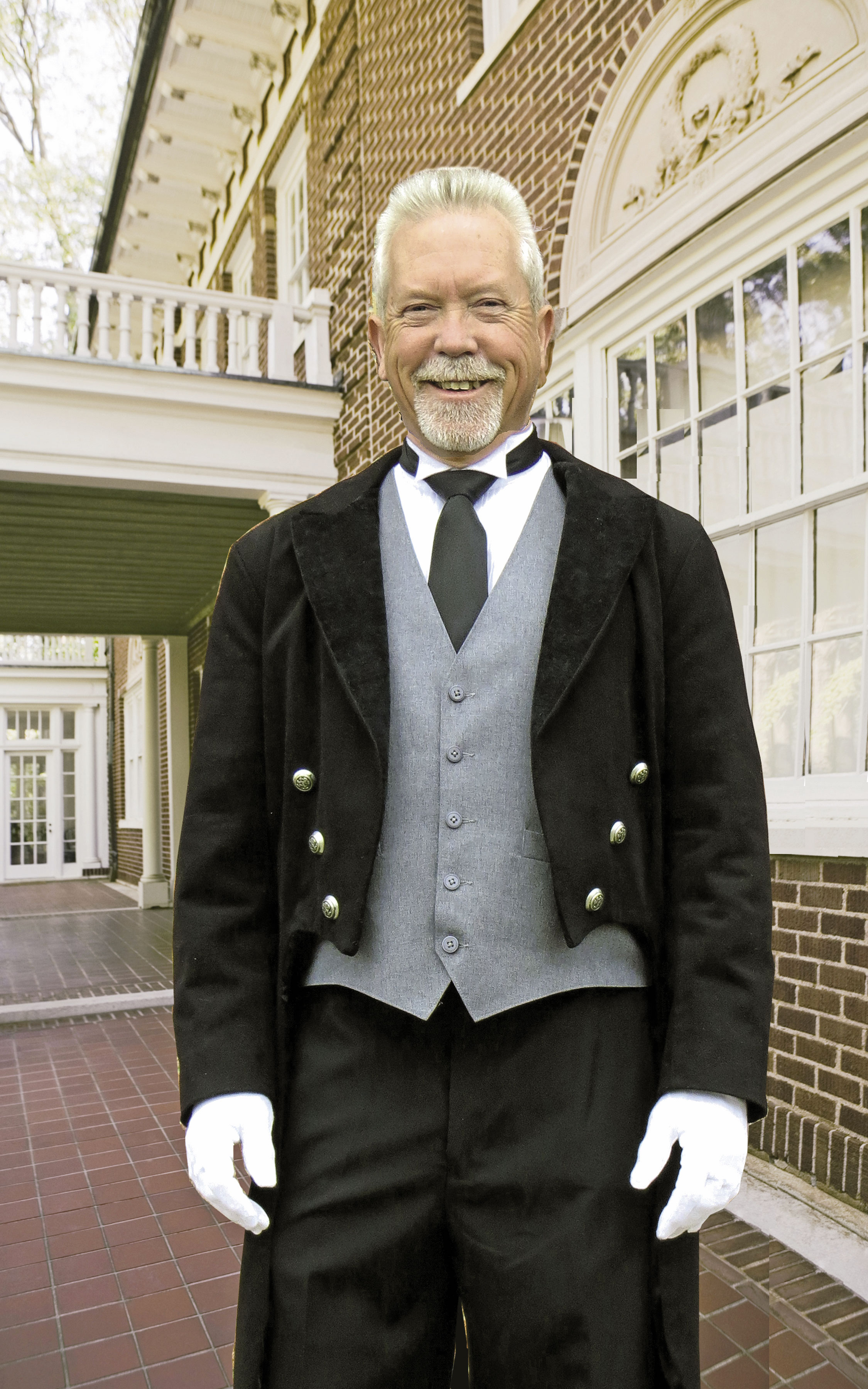
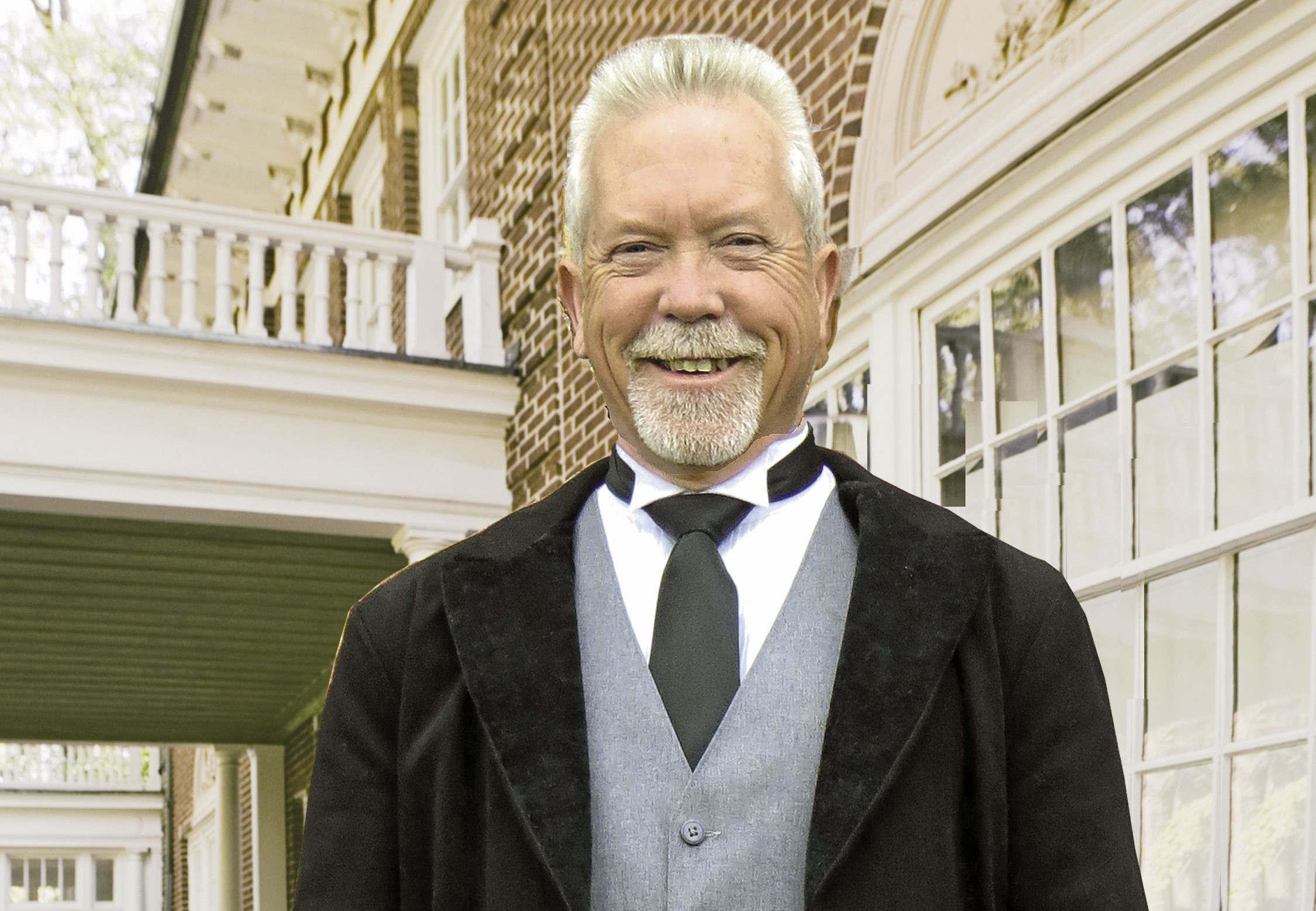
Have you ever wondered what it would be like to have a butler? Perhaps you have watched television shows such as Benson or Downton Abbey. Or you are familiar with Alfred, Bruce Wayne/ Batman’s butler. Chances are that you have seen a butler on television or on the silver screen. But have you ever wondered what it would be like to be a butler? Perry Allen, a Valley resident for decades, is a butler and explains what a day in the life is like for a butler in Denver.
Allen first became interested in becoming a butler in the late ’80s, when a limousine ride and the manner in which the chauffeur conducted himself impressed him. So, in 1988, he was one of 30 applicants for a position as a chauffeur. He was hired by a family with the addition of light duties. Those light duties were what intrigued Mr. Allen to become a full-time butler.
In 1993, Allen was placed with a family in Denver by the Starkey International Institute. The Institute, at 13th and Logan, was founded by Mary Starkey in 1990. They are a state-approved vocational institute Service Management education corporation teaching the art form of Private Service. Starkey is located in a registered historical mansion, built in 1901. This 13,000 square foot high-end private residence in the heart of Denver, is where students are invited to reside while in training and where they conduct their Household and Service Management Programs.
Allen worked for his original family for almost two decades. He was considered an Estates Manager back then because he managed his employer’s five homes. He oversaw a large staff, served as a personal assistant, went on business trips as well as family vacations abroad, and greeted guests who came to the house. One of those guests was former President Gerald Ford.
Allen recalls when the President came for a dinner party, he wanted to have a photo with Ford. The President had requested that no pictures be taken at the dinner. Allen’s employer said that it would be OK to greet the President at his car and shake his hand. When Allen reached for the car door to open it, Secret Service surrounded him and told him to back off. By the end of the evening, the Secret Service were fascinated with what Mr. Allen did for a living and Allen was interested in Secret Service’s job.
One of the most intriguing parts of Allen’s tenure with his first employer was managing a wine cellar with over 10,000 bottles. He set up a sophisticated computer system which tracked all wines coming in and going out. When they ran low on a particular wine, he would know when to reorder. “The system I implemented made it much simpler to track the wines that I needed to order and reorder,” said Allen.
In 2012, Allen decided it was time to move on to a new adventure and worked with a New York placement firm to be situated into a new position. Since 2012, Mr. Allen has been working with a new family, also in the Denver Metro area. His new responsibilities are a welcome change from his former employer. He manages one household, and a housekeeper. His duties include pet care, driving, shopping, valet service, preparing and setting the dinner table (his employer loves to cook), and cleaning up after dinner is finished. He also manages a small wine cellar.
Fascinated with the British lifestyle, and being a fan of Downton Abbey, his new employer sent him to The British Butler Institute in London to refine his skills. He participated in a one-week course where his classmates were from all over the world, including France, England, and South Africa. The British Butler Institute claims that the modern butler should have classic and contemporary butler skills. That is why it offers cooking classes, flower design classes, mixology classes and expert shoe care and valet skills as part of the one to four week programs.
One might wonder after reading this article, what kind of salary a butler would command. Salaries range anywhere from $60,000 to $300,000 per year, most with full benefits according to the Starkey Institute. It can be a lucrative position but certainly comes with its sets of demands. Allen indicated that he was always on call with his first employer. In addition, his hours can be long and the time away from his family takes its toll. However, the rewards far outweigh any of the disadvantages for Perry Allen. “It’s a noble profession, with the perks of living vicariously through the lifestyles of the rich and famous,” said Allen. He also enjoys the adventurous travel.
So who is becoming a butler these days? Individuals with double majors and even law degrees, according to butler expert Robert Davidson. “You need some intelligence, an ability to please along with some very good organizational skills,” Davidson noted. “But how many jobs offer six figure salaries to start in this country? The rich are very rich these days and they are willing to share a little bit of that wealth for the right person who can make their lives easier.”
To find out more about Perry Allen visit his website at www.perryallen.com. To learn about attending butler school you can go to the website of Starkey International Institute at www.starkeyintl.com.
by Mark Smiley | Apr 2, 2014 | Main Articles
Massive University Blvd. Projects Plus
District’s Construction Explosion Snarling Traffic
by Glen Richardson
Mega developments underway in Cherry Creek North are snarling traffic within the district while two massive projects along University Blvd. has traffic grinding to a halt. Commuters complain that during rush hour, traffic on University is nearly at a standstill for up to six blocks in all directions. Normal weekday traffic volumes along University in the Cherry Creek commercial area are approximately 50,000 vehicles per day. The two-hour morning peak period begins at 7 a.m. and ends around 9 a.m., while the afternoon peak is from 4 p.m. to 6 p.m.
Officials say the resulting traffic jams will get worse this summer for people who commute northbound along University Blvd./Josephine and southbound York/University from 6th to 2nd Avenues.
Traffic headaches within the 16-block shopping-dining district are being created, as buildings are demolished and new ground excavations begun for a half-dozen major projects currently underway. Construction related traffic tie-ups have local businesses fuming over lost sales while some report they have had to cut down on staff hours because of the slowdown. More than 11,250 employees work within the district.
University Blvd. Projects
Denver Public Works started construction in January (Chronicle, December 2013) on a new storm drain system plus a street improvement project along University Blvd. in Cherry Creek North. Additional work is taking place east of University and 1st Ave. Officials had said they would keep one or two lanes open in each direction throughout the project. However, in late March northbound University was closed at 1st Ave.
The storm drainage portion of the project is designed to reduce the frequency and impacts of recurrent, localized flooding in the Cherry Creek area. This project will add significant capacity to the drainage system. The main components include a new outfall structure draining into Cherry Creek through a new storm drainage pipe that will ultimately extend north into the Cherry Creek neighborhood.
Building Boom Congestion
The proliferation of high-rise buildings under construction in Cherry Creek North is also causing problems for both district shoppers and businesses. Traffic slowdowns and stoppage due to construction is not only clogging streets but it is also paralyzing business as shoppers and residents flock in and out of the district. In addition, construction vehicles and equipment are monopolizing traffic lanes and parking spaces, reducing the already congested road capacity.
The biggest traffic slowdowns are along 1st Ave. where work is underway on the enormous FirstBank building at St. Paul. Just east of that project on 1st Ave., construction is creating traffic congestion, where the 12-story Steele Creek Apartment project is being built, at the intersection of Steele that has always had traffic flow problems. Adding to the streets woes will be construction traffic as the RH Gallery project gets started to replace the former Saks Fifth Avenue space along 1st Ave.
Perfect Storm
Cherry Creek North shop owners, restaurants and other businesses say the work along University Blvd. plus the massive building projects within the district are creating substantial business difficulties. Furthermore the timing of projects particularly along University couldn’t have been worse. “The spring and summer months are our busiest time other than Christmas and they waited until we were starting to get busy and started closing down streets,” said one retailer. Added another: “This is the perfect storm!”
On the positive side, at Ten Thousand Villages on 3rd Ave. next to the 250 Columbine development, manager Charlotte Otto says that while it has impacted business, customers are still coming in. “We are finding ways to thrive despite the challenge. Our loyal customers have been a huge strength.” Many in the district, while declining to give their name or that of their business, say on average they have seen foot traffic drop 15-20 percent, with sales off 10 percent. Owners and managers also say they felt shut out of construction decisions, including the timing of work.
A customer in one shop told the Chronicle, “We were so determined to make it we drove around the detours three times before we found the correct turn into the store.” The manager at one business stated that while driving down 2nd Ave. going to FedEx kinkos, construction flaggers refused to let him make the turn until he became belligerent. Businesses and restaurants all complain that employees are late to work. What once took two minutes now takes 20. Moreover, they note it is increasingly difficult for both customers and employees to find parking. One business along University/York noted they had seen escalating road rage and fender benders plus cars cutting through their parking lot. Several businesses told the Chronicle they had just received notification via a pamphlet of the upcoming closure of Josephine. The reaction of one manager: “Oh my God!”
Cherry Creek’s Woes
Benefit Competitors
The traffic jams throughout Cherry Creek have not escaped the notice of the area’s competitors. Jeff Estey, a restaurant entrepreneur who owns three restaurants in Old Gaylord by Washington Park (Wash Park Grille, Max Gill and Grille and Agave Taco Bar), drives his child to the Cherry Creek area for lessons and knows well the traffic woes the area is suffering from. He began a radio advertisement campaign developed by Entercom which notes the parking and traffic problems in Cherry Creek due to construction and invites potential diners to come to the Washington Park area where those issues are not impediments for customers. He states, “Our idea was not to be malicious, but rather poke fun at Cherry Creek’s woes and give people a pleasant alternative.” Restaurants and shops in Glendale are considering similar advertising campaigns.
The City and County of Denver anticipates that the street and storm drainage work will be completed by November of this year. By that time the first of the already approved mega developments will begin to be completed. The effect of those developments on traffic and parking is unknown as the city declined neighborhood requests to perform studies on their impacts.