by Jessica Hughes
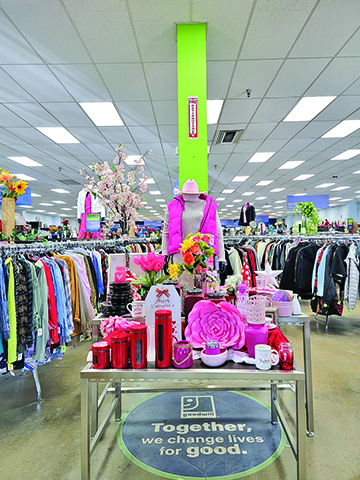
Goodwill of Colorado helps support people and its communities through 25 workforce and community programs.
Thrifting has re-emerged as a popular trend driven by a shift toward sustainable, eco-conscious, and budget-friendly choices. According to Goodwill’s annual reporting, Goodwill Industries reached record revenue of $7 billion in 2025 across its more than 3,400 North American stores, fueled by a 7% increase in sales. Much of that growth has been driven by younger shoppers, including Gen Z and millennial consumers, who increasingly view thrifting as both economical and sustainable.
“There’s less of a stigma attached to shopping second-hand; that perception has flipped completely,” says Stephanie Bell, the brand manager of Goodwill of Colorado. “Now, there is more of a status and cache in finding a unique item. People love the thrill of a thrift and saving money at the same time.” And as prices continue to climb across the country, many shoppers are turning to secondhand stores as a practical way to stretch their budgets, putting stores like Goodwill right in the center of this trend.
Yet beyond the bins of donated goods and the shopping among a treasure trove of unique items, there is an organization with a broader mission. Goodwill retail stores are part of a nonprofit system designed to support individuals, families, and communities by funding a wide range of programs and services that help people find employment, build job skills, and pursue education.
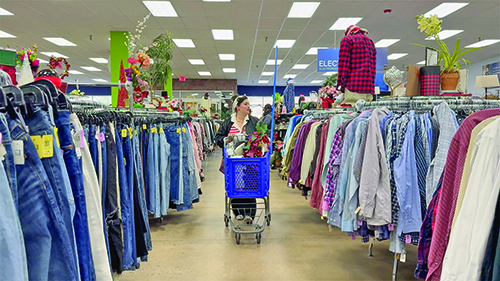
Shopper thrifting at the Glendale Goodwill store.
Goodwill of Colorado, the state’s oldest thrift operation with a nonprofit mission, reinvests much of its revenue into these programs that support local communities. “About 90 cents of every $1 made goes back into the community,” says Bell.
Goodwill of Colorado operates 25 workforce and community programs across the state, supporting more than 143,000 Coloradans in 2024 alone, including veterans, seniors, individuals with disabilities, and those who have experienced incarceration.
One of the organization’s most notable initiatives is the Excel Center in Aurora. The school is the state’s first tuition-free high school for adults, developed through a partnership with the Colorado Department of Education, and offers adults the opportunity to earn a high school diploma at no cost, along with childcare, career coaching, and flexible scheduling designed for adult learners. Since launching in Colorado, the Excel Center has graduated a growing number of students, with more than 100 earning diplomas since August 2024 alone.
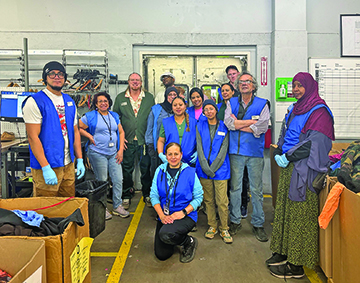
Patrick Spaulding and his team at the Leetsdale Goodwill store in Glendale.
Working alongside Goodwill’s Career Development Services, the ReHire Colorado program helps individuals facing barriers to employment successfully return to the workforce. Today, more than 3,000 people are employed by Goodwill across the state, many through the organization’s fair-chance hiring practices that prioritize opportunities for those who might otherwise struggle to find work. According to Goodwill, roughly two-thirds of its social enterprise employees reported experiencing a barrier to employment before joining the organization — challenges that can include disabilities, language barriers, past incarceration, or extended gaps in work history.
The impact of these programs is often evident in the stores themselves. At the Goodwill location on Leetsdale Drive, serving the Glendale and Cherry Creek communities, about 55 employees make up a workforce rich in diverse backgrounds and life experiences. Team members speak six or seven different languages, and the staff includes refugees, individuals with disabilities, and people working to rebuild their careers after incarceration.
Patrick Spaulding, the store’s manager, said providing opportunities for people from diverse backgrounds is one of the most rewarding parts of the job. “We hired a refugee from Chad who speaks very little English, and this was her first job in America,” Spaulding said. “Just because you don’t speak English doesn’t mean you can’t work.”
Spaulding also recounts many success stories of the store’s employees who have turned their lives around through career advancements within the organization, as well as four individuals who came through partner programs like CW STEP (Colorado Works Subsidized Training and Employment Program) — one of several programs that collectively saw more than 43,000 individuals in 2024 receive free job training, career coaching, and placement for those with financial challenges and who haven’t been in the workplace for a while.
The stores themselves rely heavily on community donations. Clothing and textiles make up roughly 60% of donated goods, while electronics are among the least commonly donated items.
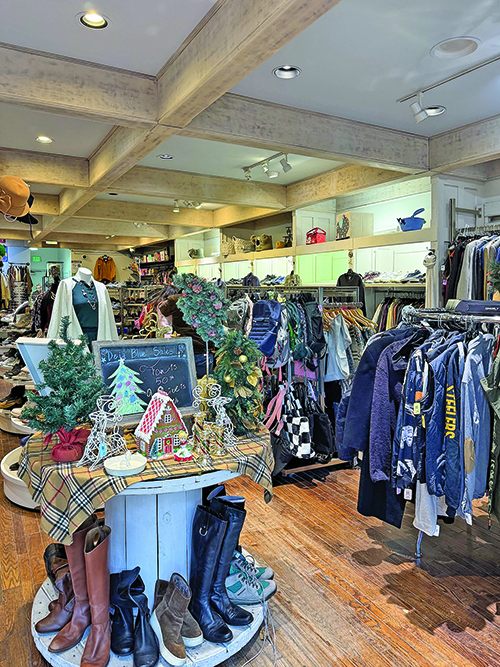
Goodwill of Colorado Déjà Blue Boutique in Cherry Creek — the only Goodwill boutique in Colorado.
“There are very few things we don’t take,” Spaulding said.
For shoppers and donors alike, that means everyday choices can have a ripple effect. Donating unwanted items keeps usable goods out of landfills, while shopping secondhand helps fund programs that support education, job training, and employment opportunities across Colorado.
It turns out that what is better for the planet is also better for local communities and improving people’s lives.
So, the next time you consider throwing something away — or buying something new — it may be worth remembering that a donated sweater or a thrifted find can do more than save money. It can help support your community.