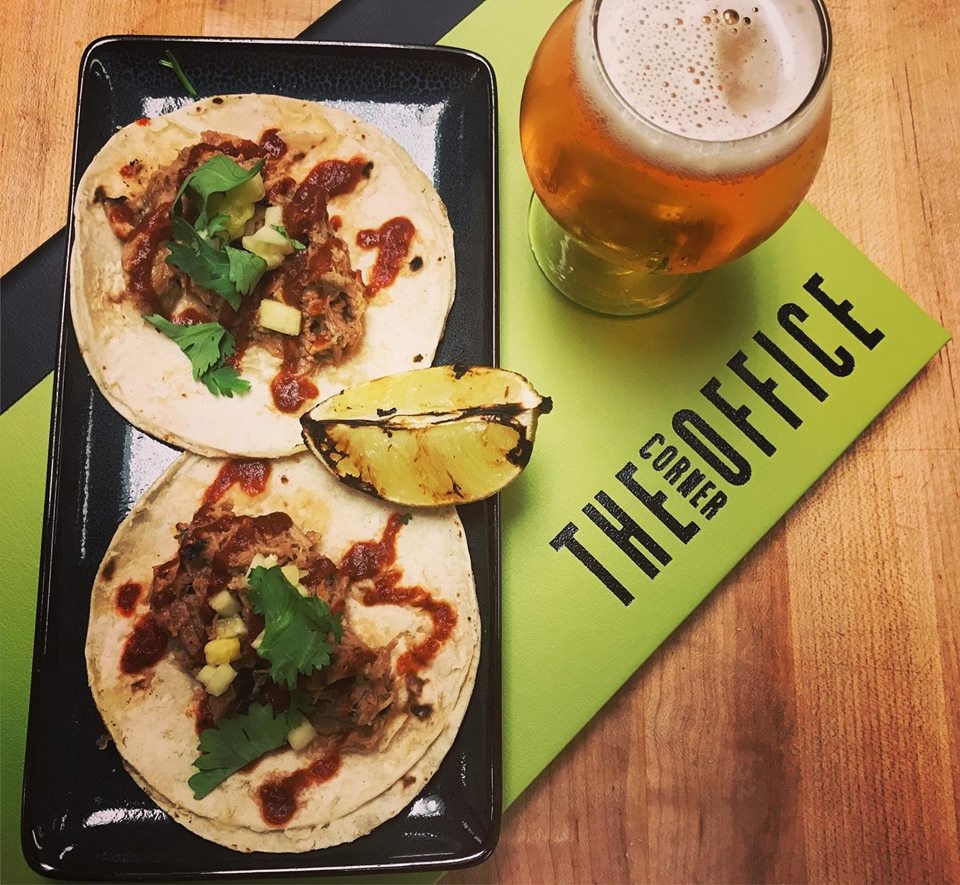
Beer Brunch at The Corner Office


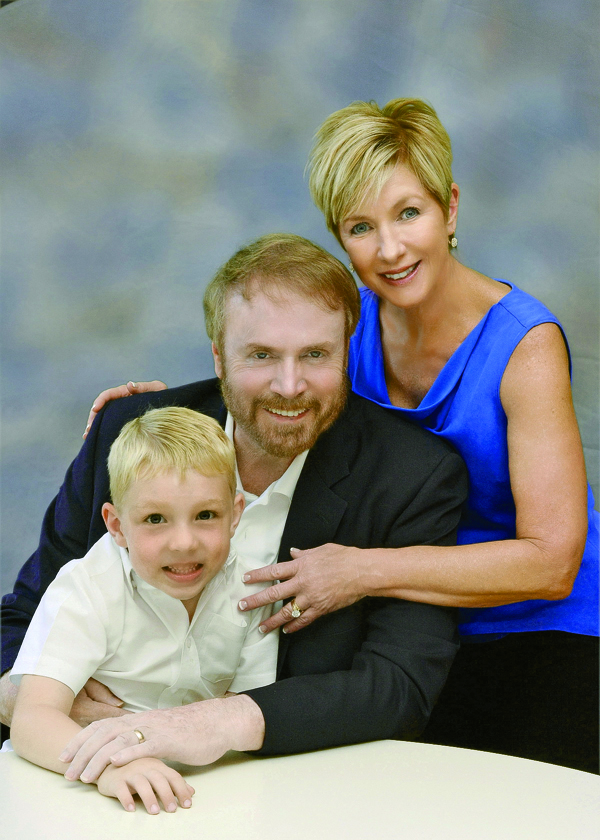
by Mark Smiley
Chuck Bonniwell, the Publisher of the Glendale Cherry Creek Chronicle, and his wife Julie Hayden, an Emmy award-winning investigative reporter formerly with Channel 7 and Fox 31 News, have taken over the critical afternoon drive time slot (4 p.m. to 7 p.m.) for 710 KNUS radio. They have replaced longtime radio icon Steve Kelly and Krista Kafer, a semi-regular columnist for The Denver Post.
Kelly is retiring from radio work and reportedly has acquired a home in Florida. Kafer has indicated that she is looking into other openings both in and outside of radio.
Bonniwell and Hayden already do a top-rated Saturday morning show for KNUS, Weekend Wake Up with Chuck and Julie, which will continue. Thus Bonniwell and Hayden will be doing three hours of live radio on 710 KNUS six days a week.
The timing of the show is fortuitous as Hayden just won the third Emmy award of her television career on Saturday, July 15, 2017, for a story she did for KDVR television last year about the death of a baby due to neglect at a child care center. Hayden announced several month s ago she was leaving KDVR television after 30 years in the business in order to help with her daughter’s cable television programs as well as take on independent programs.
“Everything has come together perfectly for me,” stated Hayden. “You really don’t want to be an on-air television reporter forever. No matter how well you take care of yourself at some point it becomes clear you are working with people less than half your age. I was able get out winning another Emmy, while at the same time having great opportunities in independent television, radio and the Chronicle.”
For his part Bonniwell views the drive time slot at 710 KNUS as an extraordinary adventure which may have a limited shelf life. “I have a full-time job running the Glendale Cherry Creek Chronicle and I have a separate law practice,” said Bonniwell. “Also, Julie and I didn’t have Rev [their 6-year-old son] so he could be a latchkey child. Having a hit radio show on Saturday morning is just fine. Doing radio full-time is not what I had contemplated, but the opportunity was presented to us and so we agreed to ride the wave for a little while anyway.”
710 KNUS came to dominate the talk radio world in Denver, after longtime radio legend Peter Boyles came to the station four years ago, after being fired by 630 KHOW as a result of a minor altercation with his longtime producer Greg Hollenback. KNUS has a smaller radio signal than its major competitors 850 KOA, 630 KHOW and 560 KLZ.
But the star power that Boyles brought over to the station has totally altered the talk radio landscape, in part because more and more listeners utilize their computer or mobile device to pick up shows. Boyles was recently the subject of a highly positive piece on his career by Mike Roberts in Westword.
Bonniwell and Hayden had a popular Saturday morning show on 850 KOA for several years until they were let go as part of a massive nationwide cost-cutting plan to save Clear Channel Radio (now iHeartRadio) from having to go into bankruptcy. The national radio giant which owns hundreds of stations had crippling indebtedness imposed on it as part of the acquisition of it by Bain Capital Partners (Mitt Romney’s old firm) and Thomas H. Lee Partners for $26.7 billion in November of 2006. iHeartRadio lost $300 million last year.
Salem Corporation which owns 710 KNUS also owns stations across the country but is a much smaller enterprise and is, according to SEC filings, profitable.
What is it like for a married couple to do a radio program together six days a week? “Luckily we have a great time together on and off air,” noted Hayden.
Bonniwell weighed in, “We have an enormous amount of fun and I think it comes across on air. We are there to entertain our listeners. I have my opinions, Julie has hers, our guests have theirs and the listeners and callers have theirs. We don’t pretend to have any corner on truth and any and all opinions are welcome. If Julie and I took ourselves and our opinions too seriously it could be contentious, but luckily we don’t … at least most of the time.”

Defiant Neighborhood Advocates Demand Action, Final City Council Vote Scheduled August 14
by Glen Richardson
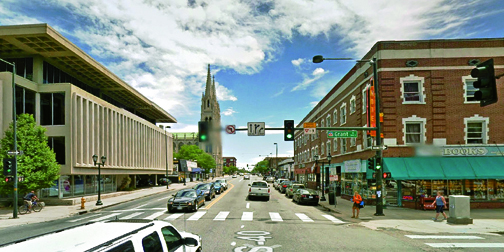 Colfax Avenue is one the oldest and most prominent streets in all of Denver and was originally called “Golden Road” and then “Grand Avenue.” In 1868 in order to curry favor from the powerful Speaker of the U.S. House of Representatives, Schuler Colfax, the city renamed the street “Colfax Avenue.” The renaming doesn’t appear to have helped much as there is no record of Schuyler Colfax ever doing anything for the city of Denver.
For a half century, there is no major commercial street that has been more ignored and non-funded than Colfax Avenue by the City and County of Denver. The street technically runs 26.5 miles through the cities of Aurora, Denver, Lakewood and Golden. But the stretch that is particularly denigrated is the eight miles running east from Sheridan Boulevard near Sloan’s Lake to Monaco Boulevard. The Denver Police Department is accused of dumping all of Denver’s social ills on this corridor including drugs and prostitution.
Bond Program
But notwithstanding that non-help, the eight-mile stretch has once again starte d to prosper. The mayor of Denver and the City Council have been mapping out what to include in the proposal of its massive almost billion-dollar bond issue to be presented to the voters in November. The Colfax Corridor was allocated a somewhat pitiful $20 million for improvements, but that is better than the usual nothing. The money would go to make the corridor more walkable and pedestrian friendly allowing more of a m
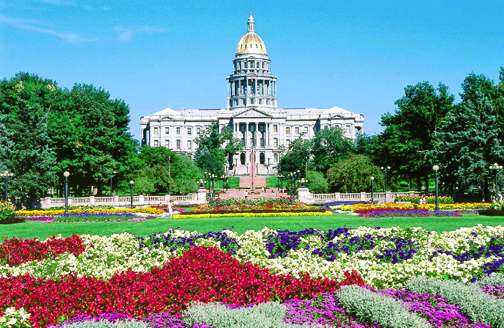 ixed use main street feel.
Another $55 million was to be shoveled to the always greedy RTD for Bus Rapid Transit (“BRT”) from Broadway to Yosemite. Colfax east of Monaco will also get paved and have improvements related to BRT.
Last month the Colfax Corridor was, however, given the short straw once again when the proposed bonding money was cut back by Mayor Hancock’s staff from $20 million to a mere $6 million. This time however, the businesses in the form of BIDs a nd nearby residents decided to fight back. They argued that without the original $20 million critical infrastructure would not be met and it eliminated items designed to make it a comfortable, walkable main street for the tens of thousands of Denver residents who live, work and go about their rounds there.
The enormous commotion raised by the Colfax Corridor advocates in fact worked, and the mayor’s staff restored the original amount in final recommendation to the City Council. But it isn’t over yet: City Council will make their final vote on August 14. If approved by the City Council and later by the voters in November it will be the first major public improvements on Colfax Avenue in 50 years.
All the city plans envision Colfax as a walkable, vibrant and safe main street that attracts people. Until now the reality hasn’t matched the vision because Colfax was designed and is maintained as a state highway. There are many lanes, the intersections are apart, with no landscaping or pedestrian lighting — all of this encourages motorists to speed. Colfax is now the city’s top crash corridor, with 10 pedestrian deaths in 2015-16.
“We have a once-in-a-generation opportunity to invest in the main street vision that has been on the books for so long,” says Hilarie Portell, executive director of the Colfax Mayfair BID. “If we make the area more comfortable and safe for people, we will attract more customers and more neighborhood-serving businesses.

Traffic, Flood Mayhem
The Mayfair BID is proposing a modest set of improvements, including enhanced pedestrian crossings, lighting, street trees and landscape, trash cans, bike racks and benches. These pedestrian-friendly improvements also reduce traffic speeds, promote stronger property values for businesses and homes, and create more local jobs and tax revenues for the city.
Parts of the Colfax Mayfair BID and adjacent neighborhoods are in the flood prone Upper Montclair Storm Water Basin. There is simply too much pavement and the old, small, underground pipes can’t handle heavy rainstorms. The Mayfair BID’s streetscape plans also include green space at intersections and 200 street trees. Fortunately these critical environmental upgrades have been restored to the bond package.
Portell’s point: These outcomes are precisely why the city has invested more than $40 million in Brighton Blvd. (20 blocks) and $37 million on South Broadway (17 blocks) in recent years. The current bond list also includes $23 million to improve five blocks of Washington St. north of I-70 and $16.7 million for a seven-block stretch of West 13th Ave. Apparently the Mayor has now found the additional $14 million for eight miles of our city’s iconic main street!
If Not Now, When?
It has taken 30 years for the four BIDs to organize, do the planning, accumulate funds for long-term maintenance costs and get the Colfax Pedestrian Improvement projects now on the bond list. Known as the Colfax Collaborative, the group is made up of four BIDS located along the corridor. They are from East to West the: Colfax Mayfair, Bluebird, Colfax Ave. and West Colfax. They continue working together on common challenges and opportunities on Colfax, including the safety and comfort of those living, working, shopping and socializing in each area.
Returning Colfax funding to the full $20 million supports the 15 neighborhoods representing 75,000 neighbors and six city council districts. Furthermore, it is projected to add 110,000 new jobs and as many as 25,000 new residents along the corridor in the coming years.
“Our BIDs are comprised of civic-minded business leaders who tax themselves more to make Colfax Ave. a better place for everyone,” adds Colfax Mayfair BID’s Jamie Harris. “As a group, we’ve already invested nearly $250,000 and have committed to spend millions on long-term maintenance. We are ready to partner with the city to bring Colfax to the next level as a truly great street.”
Councilman Chris Herndon adds: “This is an important investment in the character and usability of Colfax and one that I hope will have a ripple effect in encouraging reinvestment along the corridor and in the surrounding neighborhoods.”
Is Valley’s Main Drag At Turnaround Junction?
Colfax is a broad and bustling thoroughfare that in the past attracted hustlers and hipsters, not money and business. But despite the street’s hard-scrapped soul, construction projects keep popping up — especially on West Colfax. Could the Go Bond money be enough to cure its notorious hangover?
Colfax Ave., of course, is the official home office of Denver’s more than 10,000 city-county employees as well as the State Capitol building.
The old Denver post office building here has even attracted business. New York financial’s OnDeck Capital recently leased 72,000 sq. ft. The Fillmore Auditorium, the Ogden and Bluebird theaters, Twist & Shout and the Sie FilmCenter are all located along the strip. So is the McNichols Bldg. and Civic Center Park.
Furthermore, the street has always had “good bones” and wonderful neighborhoods, according to many BID officials, local businesses and residents the Chronicle asked about the street’s outlook. The $20 million in bond proceeds is but a fraction of what is needed for the Colfax Corridor’s lofty goals, but it is at least a start.

Every month, but especially during the summer, flowers add enjoyment and meaning to our lives and community. Across cultures and time they speak a universal language of enjoyment, respect, appreciation and love. They articulate our underlying need to reach out, to bond, and to express compassion, concern and understanding.
This is the 50th anniversary of San Francisco’s Summer of Love. That era’s Flower Power theme is still relevant and, in fact, is as significant and timely today.
Here is our bouquet of choices for shopping, dining and entertainment to add beauty, vitality and enjoyment to inspire a smile and feeling of joy to each day:
3 Wednesdays blossom with music at the Shady Grove Picnic Series with the Rocky Mountain Jewgrass, The Deltaz, La Pompe Jazz & Atomga at Four Mile Park Aug. 2-23, 6:30 p.m. Information: 303-777-1003.
3 Fashion flowers with an adult and kids Serenity Project fashion show at Wings Over The Rockies Aug. 5-6, 7 p.m. Information: 719-640-7469.
3 Love blooms on stage each weekend as On Golden Pond plays the John Hand Theater in Lowry Aug. 7-28. Information: 720-530-4596.
3 Chill out tasting food and enjoying wine at Cherry Creek North’s Food & Wine along Fillmore Plaza Aug. 12, 6 p.m. Information: 303-394-2904.
3 For a love affair between wine, food and music make Brik on York this summer’s hangout. You’ll enjoy global wines, Neapolitan pizza and Italian-influenced fare in exposed-brick digs. Information: 303-284-6754.
3 Wilting in the heat? Locally owned Cherry Creek Shade & Drapery can keep you cool, offering consultations on sun-blocking shades, screens, shutters plus custom draperies and blinds. Information: 303-355-4223.
3 Enjoy ice cream and the Six Foot Joe & The Red Hot Rhinos concert at The Gardens on Havana Aug. 22, 6 p.m. Information: 303-360-7505.
3 Become a budding collector buying at Artists In August Show at Wings Over The Rockies Aug. 27, 10 a.m.-4 p.m. Information: 303-344-0481.
3 Enjoy a bouquet of beer from 20 breweries showcasing their top brews at Glendale’s Bruises+Brews Beerfest at Infinity Park Aug. 27, 12-4 p.m. As the City says, “beer and rugby are better together.” Admission includes a ticket to the RugbyTown 7s tournament (The “bruises” part!). There will also be a few distilleries and a couple of hard ciders available. Join rugby fans and beer aficionados. Information: glendalebeerfest.com.
Each summer flowers beautify nature and the scenic view around us. Flowers have been radiating, exuding and symbolizing peace throughout the millennia. Rooted in opposition to the Vietnam War, the Flower Power movement was centered in San Francisco’s Haight Ashbury district. Hippies living there were dubbed “flower children.”
The area became the focal point of psychedelic rock music. In the summer of 1965, the Beatles’ hit single All You Need Is Love served as the movement’s anthem.
As you enjoy flowers this summer, consider their ongoing potential to express the best of human character and action. Flowers offer much more than just beauty. They embody our hopes and wishes that transcend place and time. As the First Lady of Flowers Lady Bird Johnson often suggested: “When flowers bloom so does hope.”
The Valley Gadfly can be reached at newspaper@glendalecherrycreek.com.

 by Daniel Foster, Esq. and Michael Gates, Esq.
Small and mid-size business owners beware, you are in the crosshairs. After the changes in Colorado law in January 2015 opening the door to discrimination suits against employers with fewer than 15 employees, the number of claims being filed by employees against their employers has skyrocketed. Filing lawsuits against an employer has turned into a cottage industry and can be quite lucrative. (Note: if you are an employee of Foster, Graham, Milstein & Calisher, LLP you can disregard everything I am saying!)
The reality is there are many valid complaints an employee can have with his/her employer and in many of those circumstances a rational discussion between the parties can resolve most issues. Yet there are some cases that cannot get resolved and end up in court. Some make sense, many others do not. Small, and even mid-size, business owners know you are struggling to run your operations, pay your bills, fix the copier (again, ugh!), market new business, and somewhere in the middle of all of this you have a disgruntled current or former employee complaining that he/she was treated unfairly, or worse, illegally, by you or one of your managers. If you mix in a highly aggressive attorney and encouragement from friends and family, it can be a recipe for real headaches and financial strain.
So, you say, “Thanks Danny for cheering me up, but what’s a small business to do?” Great question! And many of the solutions are easy ones. As I have previously explained, our law firm, Foster, Graham, Milstein & Calisher, LLP, is fortunate to have many exceptional lawyers. One is our partner Michael Gates. Michael’s practice focuses on employment law for small and mid-size businesses and he has some words of encouragement and help for you, as well as an opportunity to learn what you can do, face to face for free. Take it away Michael.
Thank you, Danny. I will give you an example of something vexing many employers right now. In January 1806, John Adams wrote a letter to Benjamin Rush labeling Alexander Hamilton the “bastard brat of a Scotch peddler.” Adams was so fond of this label, in fact, that he used it at least twice more in correspondence referencing Hamilton. Not to be outdone, John Quincy Adams referred to Thomas Jefferson as a “slur upon the moral government of the world.” Something about apples and trees. Even across the Pond, Winston Churchill on Prime Minister Clement Attlee: “He is a modest man with much to be modest about.” Benjamin Disraeli said of William Ewart Gladstone, “[i]f Gladstone fell into the Thames, that would be a misfortune, and if anybody pulled him out, that, I suppose, would be a calamity.” While our friends speaking the Queen’s English may be somewhat more refined, there truly is nothing new under the sun.
Today, employers must deal with a workforce with social media accounts who have been taught they can change the world 140 characters at a time. Every employee has his/her own little platform to announce to the world their views on any topic, including expressions of disagreement with those who do not share their beliefs. The sad truth is that it has become easier and easier to resort to shaming, insulting, and demonizing those we do not agree with on any topic. And, the result can be devastating to employee morale and, in some cases, to the employer’s business directly. Words like “snowflake” have made their way into mainstream public discourse. Social media provides a platform to call people names you would never say to their face, like “stupid” or an “idiot” or even a “special kind of stupid.” We live in a world where we are told we are important and that our views should be expressed, and express them we do. History will judge what we may have sacrificed in the process.
In the meantime, employers have to deal with an ever more outspoken workforce. We have been extremely fortunate here at FGMC to co-exist as conservatives and liberals, Democrats and Republicans, religious and non-religious, without resorting to that level of communication. (Though we have not been tested with an admitted Raider fan…yet.) Not every employer is so lucky. The truth is, the level of insults, shaming and demonizing, whether aimed directly at a person or indirectly at a group of people, can and will affect employee morale, productivity, and, in some cases, safety. Political and, even, hate speech are a reality for every employer.
What can an employer do to protect their company when it comes to this activity? What are other landmines that employers face on a daily basis that with a little guidance can be avoided? Sexual harassment, ADA compliance, FMLA, wages, etc. The exposure is significant and most small and medium sized businesses do not have the ability to hire in-house counsel to provide legal advice and direction. Small to mid-size businesses, who have limited in-house human resources capacity, are a particularly ripe target and can quickly find themselves living on the edge and hoping for the best. For the small to mid-size employer, we see a number of easily avoidable, recurring issues/mistakes:
At FGMC, we focus on employment solutions for the small to mid-sized employer here in Colorado and would be delighted to help you! Being an employer in 2017 is much different than 1997, 2007 or even 2016. There are many traps an employer can find themselves in and it’s critical to know many of these dangers before you fall into them. We encourage all business owners, small, medium and large to join us at our first FREE Employer’s Boot Camp where we will give you many pointers about how to avoid exposure and protect yourself and your business. We will have two lunch sessions at our office – the first on Tuesday, August 22 and the second on Wednesday, August 23 from 11:30 a.m. to 1 p.m. Each session will be capped at 12 people. We will even throw in the lunch! Please RSVP so we can make sure you have a spot (mgates@fostergraham.com or ndale @fostergraham.com) and reserve your space for either the 22nd or the 23rd today. I look forward to meeting you and discussing your employment solutions.
Danny is a managing partner of Foster, Graham, Milstein & Calisher (FGMC). His practice focuses on personal injury. The law firm of FGMC, located in Cherry Creek, is a full service law firm focusing on: criminal defense, personal injury, real estate, litigation, liquor licensing, construction law, tax/estate planning, bankruptcy and zoning. This article does not create an attorney-client relationship and is for informational use only (what do you expect from an attorney!