by Mark Smiley | Nov 21, 2016 | Feature Story Bottom Left
by Amy Springer
 Once upon a time, oh who am I kidding, on a beautiful Sunday this October, we were in Indio, California, to attend the Desert Trip festival, or as it is more poignantly known, “Oldchella.”
Oldchella is, essentially, a three-day music festival for old people, with performances by the Rolling Stones, Paul McCartney, Bob Dylan, Neil Young, The Who, etc. You get the picture. The performances lasted for hours and by day three, some in our group had had enough. We mustered up a small group for the festival finale, which was to be closed out by Roger Waters, a founder of Pink Floyd.
My family prepared for what we thought would be a pretty garden-variety concert. Our musician son had tickets for the pit, and Mr. Waters had promised a special show that he would play only twice, once that night and the second time a week later during the second weekend of Oldchella. He also promised some sort of “state of the art” sound system and a visual show. Ya, whatever, a concert is a concert, right?
Not so fast. I’ll start with the sound. If you’re old like me, you remember when the original Star Wars was released and a new sound system was debuted. It started in the back of the theater and then reached a deafening crescendo with “The Audience is Listening!” We sure were. Well, Mr Waters’ sound system made that sound like a couple of cans connected by a piece of string. I mean, at times it sounded like an entire fleet of low flying helicopters were landing on your head… in a polo field… with 80,000 plus people in attendance. It consisted of numerous towers of speakers strategically placed throug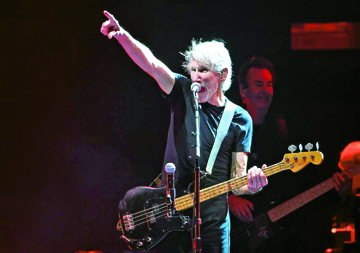 hout the venue. The effect was as if you had been dropped into Vietnam during an air raid. And that was just the beginning.
Visually, the show was indescribable. The best I can do is say it felt like a 3D IMAX production, deftly created by Salvadore Dali, with the score being played live by Pink Floyd to perfection. There were lasers, flying pigs, reality bending optical illusions and pointed references that were sometimes ugly, like the images of human trafficking accompanying the song “Money.”
The musicality was such that our musician son opined that Mr. Waters should consider changing the name of the band to something along the lines of “a group of the most well prepared and talented musicians in the world, and oh, also that guy from Pink Floyd.” And it wasn’t like Roger was conceited or suffered from self-aggrandizement. Nope, when it was someone else’s turn, he simply stepped aside. The same can’t be said of the other geezer performers. At one point, he even had a disabled veteran play lead guitar on one of his songs, which brings me to the “comfortably numb” part of this story.
If one thing is abundantly clear, it’s that Mr. Waters is obviously a pacifist and a man of strong moral convictions. His repeated references that he is a voice to all victims rings true. I mean, this man puts his money where his mouth is. He works with disabled veterans and victims of war and crimes. He freely admits his mistakes when he’s wrong, like when he prohibited members of Pink Floyd from using the band name in later years. He is opinionated and speaks his mind. So why, then, did the majority of the crowd empty out of the venue before he played his great hit “Comfortably Numb”?
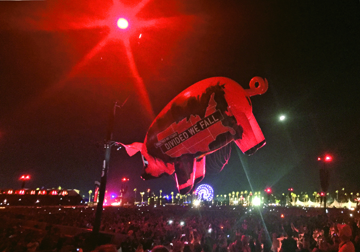
To understand, you probably have to go back to earlier in the show when he played “Pigs (Three Different Ones),” prominently featuring the word “charade.” During this particular song, the giant screens behind the stage showed various and sundry images of Donald Trump, some with him literally vomiting money, others with his face painted a la Andy Warhol with garish lipstick and eyeliner, images of him as a pig, and culminating in disturbing direct quotes of Trump being flashed across the screen. As recorded, the song itself is nearly 12 minutes long, and the onslaught against Trump in the live performance lasted longer than that. The crowd went wild, especially when a giant pig balloon was unleased with a skull morphing into Trump’s face imposed with the words “Racist Sexist Pig” among others on one side, and “together we stand divided we fall” on the other.
The excited reaction of the crowd was understandable not just because of Trump’s recently-surfaced embarrassing Access Hollywood audio/videotape, because that the show was in deep-blue California, but also because the show was on the night of the second presidential debate. The debate where Trump gleefully promised that one of his first acts as President would be to en-sure Hillary Clinton was incarcerated. No due process, no deference to the numerous Republican-controlled investigations into her alleged wrongdoings which led the FBI Director (also a Republican) to publicly acknowledge that no reasonable prosecutor would prosecute the case against her. Trump’s attitude — “to the guillotine,” to the cheers of his supporters in attendance at the debate, was pretty scary stuff and the Oldchella crowd was anxious to vociferously express its displeasure.
But then, shortly thereafter, Roger Waters blasted Israel and the reaction wasn’t quite so, shall we say, positive. Waters has a bit of a history in this regard, and to most, it isn’t pretty. He’s an avid supporter of the BDS movement (Boycott, Divest and Sanctions), a pro-Palestinean anti-Israel hate group that urges artists and business people to cease doing business with Israel. He refers to Israel as “occupying” the West Bank, and has tried to personally shame performers into participating in his cultural boycott of the nation. Ironically, The Jerusalem Post recently noted that many of the Oldchella performers, including The Rolling Stones, Bob Dylan, Paul McCartney and Neil Young “have all been victimized by and explicitly rejected BDS pressure, including personal appeals from Waters himself.” Some bands claim they even received death threats after refusing to bow to the BDS’ demands. I’m sure it made for some interesting moments backstage at the festival.
In the same October 19 article, The Jerusalem Post described BDS like this: “Though it often presents itself as a movement working to achieve Palestinian rights, to the founders and leaders of the BDS movement it is merely a tool to end the existence of the State of Israel. This violent aim is sometimes reflected in the tactics of boycott supporters.” It’s pretty safe to say that this narrative is likely shared by most, if not all, western nations.
But to simply shun Waters and leave his show in exodus for expressing these unpal-atable views misses the point. Waters is, in my opinion, woefully ignorant when it comes to the Israeli/Palestinian conflict. While it may be tempting to characterize it as a classic case of David vs. Goliath, the analogy does not work unless you are prepared to accept Goliath as the huge, friendly neighbor who just wants to get along and David, despite his miniscule size, is rather intent on ensuring Goliath suffers a painful and untimely death. Waters’ speech was offensive to the point where many in the crowd simply could not stand by and take it anymore. When he was finished, I turned to my husband and said “I wish he hadn’t said that.” But we didn’t leave.
We didn’t leave because we understood from the show that Waters is not just a pacifist, he is also an activist. He does fantastic work with wounded veterans, including American veterans. His father was a soldier killed in World War II, and he performs benefit concerts to raise money for veterans’ causes. In 2012, he reported to the Boston Herald that he shares “enormous empathy with the men [veterans]” and added, “I’ve been around the sense of loss and what loss from war can do to people.” It must make sense to him that the loss and suffering of the Palestinian people equates to the loss from war, all wars.
Had we walked out after Waters’ BDS proclamation, after recognizing his courage in relentlessly calling out Donald Trump or being a “charade” and a “pig,” our hypocrisy would have been on full display. Just because one is a fan of his music doesn’t mean that we care what Waters thinks about anything. Nonetheless, it’s difficult not to admire the fearlessness he displays when expressing his own opinions and his charitable tendency to put his money where his mouth is. Mark Zuckerberg recently faced a similar quandary when questions arose regarding Facebook board member Peter Thiel’s support of Donald Trump. In an internal memo, Zuckerberg pointed out that while he/the company “care[s] deeply about diversity” … “[t]hat’s easy to say when it means standing up for ideas you agree with. It’s a lot harder when it means standing up for the rights of people with different viewpoints to say what they care about. That’s even more important.”
Although I have been on this planet for many years, an important lesson reemerged that October night, one that Mark Zuckerberg knows and I thought I knew, but I guess I really didn’t appreciate. If you admire someone’s talent and views when they agree with you, you really can’t ostracize or hate them when they don’t. Each view is potentially worthy of merit and consideration, no matter how unpalatable it is.
Amy Springer is a senior litigator with Springer and Steinberg, P.C. specializing in complex divorce litigation.

by Mark Smiley | Nov 13, 2016 | Featured Stories & Advertisers
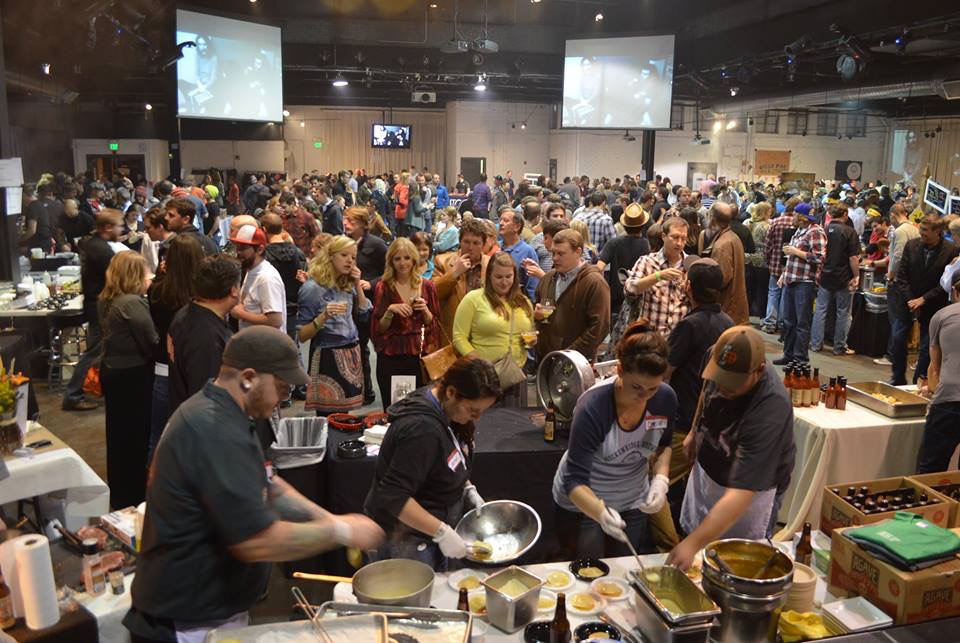
Chef and Brew is Denver’s Premier Beer and Food pairing competition and festival, bringing together Colorado’s top chefs and local craft brewmasters. Over 20 craft brewers and chefs will team up to create the ultimate beer and food pairing.
Guests will enjoy unlimited samples of all dishes and beers and cast their vote for the coveted People’s Choice Award. Each chef prepares two small bite dishes and each brewery samples a small pour of two of their finest.
Chef and Brew is a true test of partnership between a chef and a brewers art.
Visit www.chefandbrew.com for more information or to buy tickets.
by Mark Smiley | Oct 21, 2016 | Feature Story Bottom Left
 Enjoy Warmth, Good Cheer By Shopping In Spots That Make Everything Nice About The Holidays
Neighborhoods in the Cherry Creek Valley are awesome shopping destinations featuring charming main streets, independent boutique and retail destinations. As we head into the holiday season, area neighborhoods are buzzing with excitement. To help you enjoy shopping, we’re excited to introduce you to some of the extraordinary retailers on streets and neighborhoods in the Valley. Without further ado, here are our gift guide picks to make shopping delightful.
Best Of Broadway
Like its eateries and entertainment spots, businesses on Broadway are pretty cool. Along this roadway that has long been a major transportation corridor, retailers are finding bright and witty ways to bring a unique flavor to shopping. Among buildings and shops being renovated you’ll discover great gifting ideas.
Paradise Baggage: Located on the south end of Broadway (4442 S. Broadway), this store has more than 35 years experience matching travel goods to the needs of shoppers. Join them on Nov. 5 for A Night Of Wishes to raise money for Make-A-Wish Colorado, 6-9 p.m. There’s a silent auction plus in-store specials with 100 percent of the money raised from a silent auction and 15 percent of sales donated. Information: 303-320-4646.
Brushstrokes Studio-Gallery: Located at 1487 S. Broadway it  is the artistic home of painters John K. Harrell, Kit Hevron Mahoney, Anita Mosher and Kelly Berger. From representational to abstract, the artists’ work covers a gamut of styles and subject matter. Select from original fine art and giclee reproductions. Watching the process unfold is a treat for holiday shoppers at this warm, welcoming studio-gallery. Information: 303-871-0800.
Ebanista: Shop a superlative collection of furnishings and objects de’art at this store in the Denver Design District (595 S. Broadway, unit 101N). See Ebanista’s interpretation of European classic furniture and custom upholstery, textiles, rugs, pillows and mirrors, There are also oil paintings, rock crystal chandeliers, lamps, silver, bron zes and ceramics, all characterized by a distinctive quality. Information: 303-282-1690.
The Wizard’s Chest: This family-owned Castle at 451 Broadway is filled with holiday magic for all ages. Wind-up toys rattle across tabletops, a young engineer buys her first solar robot kit, and a group of friends conquer an army of orcs in the corner. There are magic tricks, books, jigsaw puzzles, puppets, stuffed animals and science toys. The Gathering and Pokemon have become a ritual in the store’s open-play area. Information: 303-321-4304.
Paulino Gardens: Make this garden-greenhouse center at 6300 N. Broadway your holiday shopping and decorating hot spot. They sell live Christmas trees in several sizes and heights. You’ll also find poinsettias, evergreen boughs, wreaths and garlands. Also select from indoor-outdoor plants, pots, tools, fire pits and books. Gift certificates are available and never expire. Information: 303-429-8062.
Cool Colorado Blvd.
For shoppers and commuters this thoroughfare is simply “The Boulevard.” Officially it’s State Highway 2, but as it enters the metro area it becomes Colorado Blvd. From the 9th and Colorado project on the north through Glendale to Hampden Ave. this north-south strip is in the crosshairs of developers with an appetite for new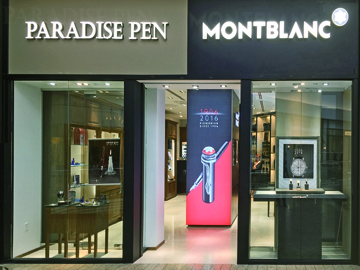 retail space.
Adams & Jane: Whether updating your home for the holidays or looking for home furnishing gifts this store is the place to stop. Offering home furnishing plus design services, the shop is in the Century 21 Plaza at 1350 S. Colorado Blvd. (soon relocating to Shops at 9th Avenue, 899 Broadway). Principal Amy Adams understands the relationship between interior design and the customer’s lifestyle. Information: 720-550-8230.
Colorado Gold Mart: Looking for holiday cash? Glendale’s only full service jeweler and watchmaker, located at 1124 S. Colorado Blvd., will loan you money on gold jewelry, diamonds, Rolexes and vintage watches. Information: 303-692-0553.
Dardano’s Shoes: For 70-plus years and four generations Dardano’s has specialized in comfort footwear, accessories and shoe repair. For yourself or as gifts you’ll find more than 60 brands of footwear and accessories to choose from in this expanded retail space at 1550 S. Colorado Blvd. Information: 303-692-9355.
Right Time Watch Center: You better watch out if you’re planning to give a timepiece for the holidays. Time is ticking away but we’re telling you where to find hundreds of brands of new and used timepieces. This watch shop at 1585 S. Colorado Blvd. has been in business since 1979 and is devoted to all phases of time products. Information: 303-691-2521.
Glinting South Gaylord
One of the oldest shopping districts in Denver, you’ll encounter shops converted from late 19th century houses. The district’s quaint shops offer unique gifts, fine art, fashion and more. The block is located between Mississippi and Tennessee Avenues.
Arts At Denver: This Old South Gaylord gallery exhibits oil paintings by more than 30 Colorado artists in a welcoming environment. Shop their annual November-December holiday shows. Information: 303-722-0422.
Hanna By Design: Choose from contemporary jewelry and art in this distinctive Old South Gaylord setting. Located at 1061 S. Gaylord St., this gallery of jewelry and art is two blocks west of University between Tennessee and Mississippi Avenues. Information: 720-502-5459.
The Tended Thicket: If you’re looking for beautiful gifts and gardening item s this store at 1034 South Gaylord is a must. They have so many items that you really have to take your time strolling through this quaint gift shop. Information: 303-722-6815.
Mile High Holiday Mart: Choose from unique and exclusive items at this Nov. 11-13 shopping event at the Gates Field House located at the intersection of Asbury Ave. and South Gaylord St. Their award-winning cookbooks are also wonderful holiday gifts. Information: 303-692-0270.
Cheery Cherry Creek
To be sure Cherry Creek isn’t the walkable neighborhood it once was and treasured retailers have abandoned the district because of rising rents and construction. Nevertheless, there’s still an exceptional mix of classic and contemporary shopping spots worth the hassle.
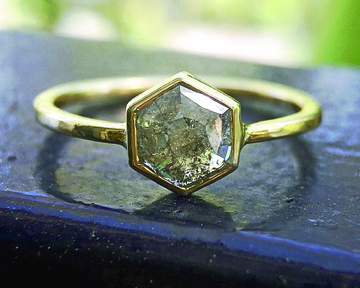
Steve Rosdal Jewelers: Rosdal has been a Denver jeweler for more than 40 years, and has an intimate knowledge of diamonds, fine jewelry, and watches. Located at 231 Milwaukee St., his SHR Jewelry Associates cater to individuals looking to buy or sell jewelry. Select from the highest quality certified, conflict-free loose diamonds and estate jewelry. They also have the expertise and experience needed to locate stones that meet the most exact requirements. Information: 720-379-6505.
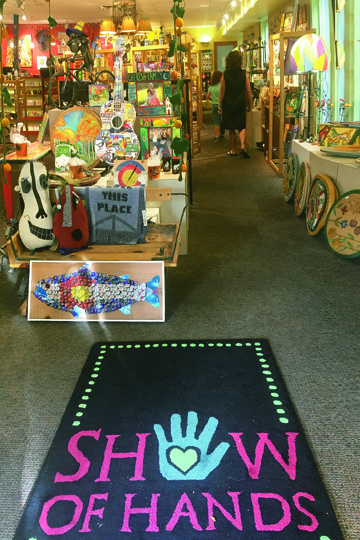
Show Of Hands: This unique gift shop at 210 Clayton St. showcases handmade crafts, jewelry, wall art and furniture. Choose from a fun selection of items beautifully handmade for gift giving, collecting and decorating. Information: 303-399-0201.
Paradise Pen & Montblanc Boutique: This new store in the Cherry Creek Shopping Center is known for its high-end pens. Located on the upper level near the mall’s expanded wing, shoppers can also find a line of luxury watches and jewelry. Information: 303-329-3200.
Adornments: A boutique women’s shop offers an artistic style of clothing and accessories. Nowadays a district rarity, this shop has been in Cherry Creek for 24 years. Located on 2826 E. 3rd Ave. between Fillmore and Detroit, owner Helen Wicker and her staff can help shoppers tap into the holiday spirit with selections and gifts to adore. Information: 303-321-7992.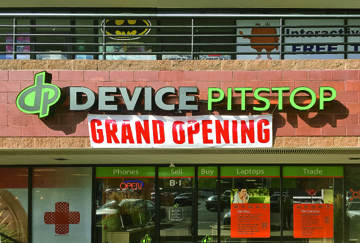
Dan Sharp Luxury Outerwear: Shop this salon at 218 Steele St. and be dazzled by fur, cashmere and other luxury winter wear in an atelier that also deals in vintage jewelry. Select from European coats and wraps made of shearling, cashmere, leather and fur. There are also pieces made from classic, as well as non-traditional fabrics and treatments. Information: 303-333-6666.
Mad Peaches Med Spa: Looking for perfect holiday gift(s)? Gift certificates to Mad Peaches (75 S. Madison) impress both women and men. Moreover they can be used toward services, products and boutique items. The receiver gets to decide! You can pick them up or call and they will send them to recipients. Information: 303-474-4436.
Glowing Glendale
A shopping and sporting Mecca, Glendale is a 384-acre enclave surrounded by Denver. Despite its seemingly small stature, this village has a big personality, and has built itself to reflect that while remaining grounded. Known as Rugby Town USA and home of Infinity Park, the ambitious G180 development is anticipated to make Glendale the Valley’s premier retail, entertainment and dining icon.
The Bookies: A bookstore like no other, this community focused, independent store at 4315 E. Mississippi Ave. is a holiday shopping bonanza. Home to over 100,000 titles, you’ll find something for everyone. Pick from children’s books, craft and science kits, board games and a carefully curated adult section. Information: 303-759-1117.
Device Pitstop: Just opened in Glendale’s Skyline Plaza, this store buys, sells, trades, repairs and upgrades computers and mobile electronic devices. The store at 760 S. Colorado Blvd. B1 allows you to buy gently used, refurbished or repaired devices as gifts. Select from computers, smartphones, iPods, laptops and tablets. Information: 720-398-9045.
Central City Opera: Give family and friends gifts to next summer’s Central City Opera (July 8-Aug. 6). Gift cards can be purchased for any amount. The Opera’s Box Office is located in Glendale’s Wells Fargo Bldg., 400 S. Colorado Blvd., Suite 525. The elite music festival is less than an hour away and the company offers opera favorites, American works, plus new and rarely performed pieces. Information: 303-292-6700.
Cost Plus World Market: Looking for gifts that are diverse and distinctive? This retail store at 770 S. Colorado Blvd. has an eclectic array of imports. Choose from unique gifts, furniture, home decor, imported rugs and curtains. There’s also specialty foods and wine. Information: 303-758-0530.
by Mark Smiley | Oct 21, 2016 | Glendale City News
by John Arthur
Writer for and on behalf of the City of Glendale
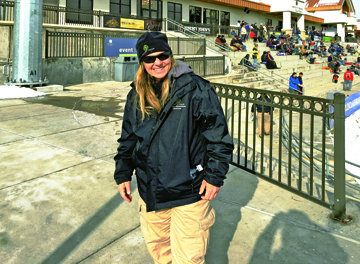 Over the final weekend of August, while central Colorado basked in late summer sun, the Serevi RugbyTown 7s Tournament roared in Glendale. In its fifth year of competition, the three-day tournament featured 20 teams (including teams from all five U.S. Military Branches) playing for a $10,000 winner-take-all purse. Rugby 7s, a quicker variation of traditional 15-a-side Rugby Union play, features two seven-minute halves and puts the importance of a team’s speed, strength, and stamina at the fore. From August 26-28, the RugbyTown 7s Tournament saw 62 matches, with the underdog Glendale Raptors clawing their way to an impressive second place finish overall.
The excitement for rugby was palpable in Glendale, with thousands of fans in attendance, but the success and growth that the Serevi RugbyTown 7s Tournament enjoyed was no accident. The organization, planning, and execution of the event are the product of the acumen of a highly skilled and dedicated staff, with Director of Facilities and Stadium Operations Kieran Nelson at the helm. Working alongside her colleague, Stadium Operations Manager Michael Hoff, Nelson has produced hundreds of local community and private events, as well as national and international rugby games and tournaments at Infinity Park.
A Colorado native, Nelson spent her college years in the Pacific Northwest, working in politics, human resources, and fundraising before transitioning into event planning at Infinity Park. Asked about what goes into planning an event like the RugbyTown 7s Tournament, Nelson shrugged, “What doesn’t? We begin planning a year in advance, and everyone in the City of Glendale is involved with the production of an event like this. It’s amazing the amount of effort and teamwork required. It takes a village.” Responsible for virtually every logistical aspect of the tournament, Nelson’s role is paramount. “This is probably the premier 7s tournament in the country. Every year we outdo ourselves and take it to a new level — we’re creating new rugby fans.”
This year, the RugbyTown 7s Tournament was accompanied by Glendale’s Bruises and Brews Beerfest, which featured 20 breweries and attracted nearly 1,500 attendees. Beer and rugby: two Colorado staples that certainly go better together.
For an event at Infinity Park, Nelson coordinates the staffing of guest services, security, and in-stadium food and beverage vendors, determines layouts, tent locations, and all necessary event rentals, while also working closely with the marketing team for promotion. Infinity Park Event Center staff coordinate the logistics for the VIP reception and post-tournament banquet, working closely with the stadium staff to ensure everything runs smoothly from beginning to end. Glendale Public Works maintains the fields, including the award-winning stadium pitch, practice fields, city parks and the Festival Plaza.
Deputy City Manager Linda Cassaday oversees the entire tournament, from initial invitations to tackling the arduous task of coordinating travel and lodging for teams, referees and staff who fly in for the tournament. City employees all dig in to assist with everything from managing incoming deliveries to set-up and filtering through all the invoices and payments that need to be made pre- and post-tournament.
As Nelson says, “This is truly a team effort.” With just herself and Hoff as full-time stadium employees, an event like the Serevi RugbyTown 7s Tournament sees the number of contracted staff balloon to as many as 250. While a typical Raptors game might require 40 guest relations and security staff, with an additional 20 personnel working on webcast and audio/video production, daily staffing for the RugbyTown 7s tournament saw double those numbers — the scale and scope of Nelson’s involvement is truly impressive. “It’s exhausting to plan an event like this,” she said, “but I thrive on it. The minute the first teams start to arrive, the first tents go up — that energy creates a buzz felt throughout the city.”
Though she admits to enjoying every aspect of her work, the Director of Facilities does have a life away from Infinity Park. Much of Nelson’s time outside the office is currently spent coordinating another im-portant event — her daughter’s transition to college.
She and her husband also enjoy Colorado’s ever-growing craft beer scene and 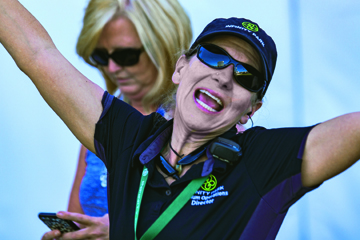 spending time with their pets. Asked about her career at Infinity Park, Nelson is reflective. She left a position she enjoyed with National Jewish Health to explore a contract event planning role at Infinity Park in 2009: “It was a huge risk for my family, but it fascinated me and we decided to take the leap. It was amazing from day one.” Never intending to become involved in this type of work, she loves her job and is, clearly, quite good at it. Nelson also recognizes the importance of Infinity Park, “It’s the keystone of all of the things that are happening in Glendale, and I’m proud to have been on the ground since the beginning. The growth has been incredible and it will only continue.”
With the continuing expansion of 7s tournament play, and rugby’s popularity in the U.S. climbing quickly, Nelson’s gamble on Infinity Park has clearly paid off. That pay-off extends to fans and guests as well, as any attendee of the thoughtfully and expertly planned events at Glendale’s crown jewel can attest.
by Mark Smiley | Oct 21, 2016 | Featured Stories & Advertisers