by Mark Smiley | Aug 1, 2014 | Uncategorized
(BPT) – Summer temperatures can be notoriously hard on your car. Whether it’s a summer road trip or your daily commute to work, you could potentially find yourself stranded on the side of the road with an overheated engine or driving with no air conditioning. While you can’t prevent normal wear and tear on your vehicle, it is possible to take preventive measures to protect your car from unfortunate and inconvenient break downs. Here are some simple maintenance tips for you to keep your car cool before the temperatures get any higher.
Check the air conditioning (AC) – Ideally you should have the air conditioning in your 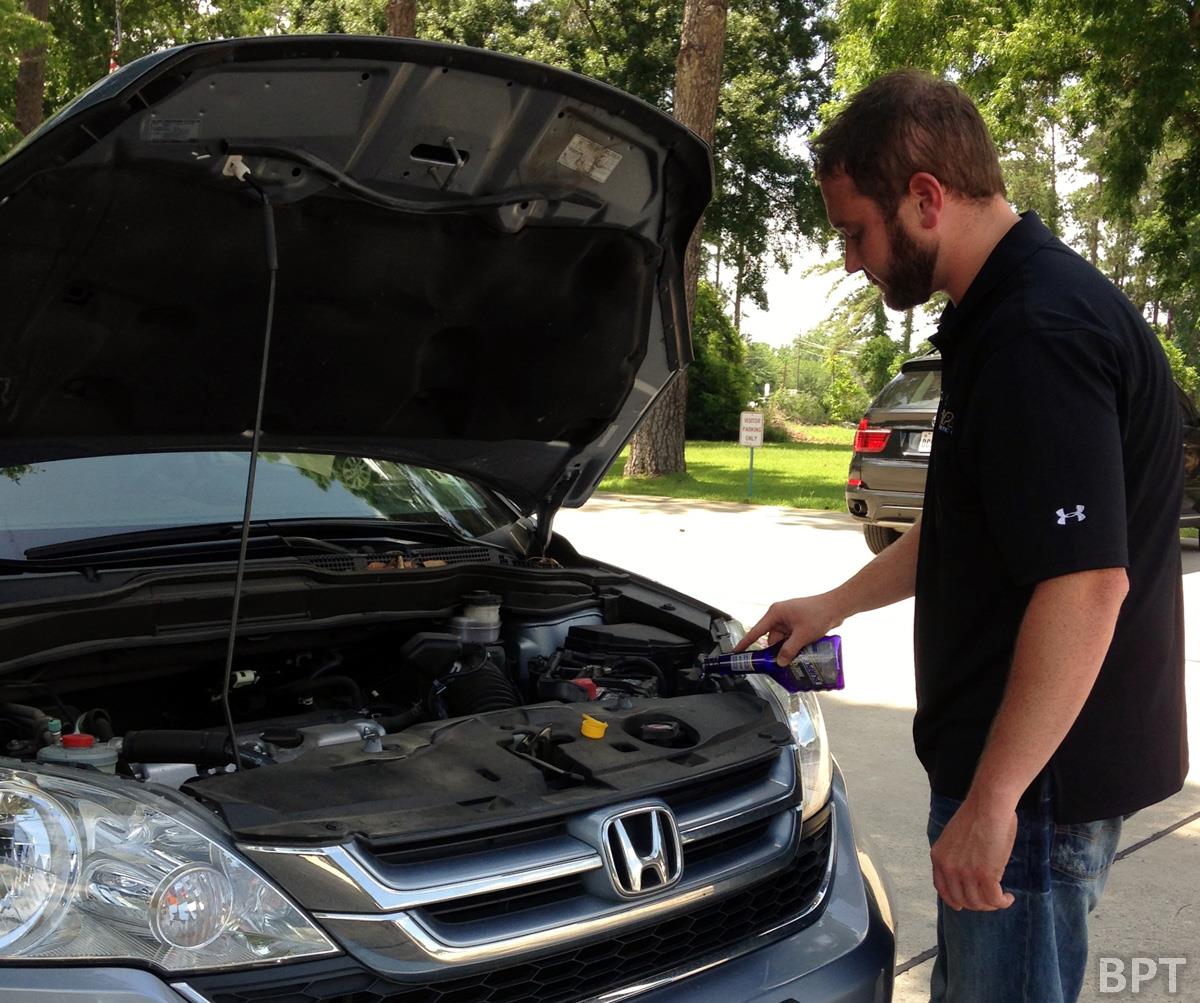 vehicle checked before the warmer months begin but chances are you didn’t notice your AC wasn’t blowing cold air until you turned it on for the first time. The key to keeping your AC working correctly is to ensure all the components are working and there are no leaks. These components include the compressor, condenser, evaporator, pressurized refrigerant, valves and hoses. Have your system inspected and make sure your technician or mechanic is trained and certified in diagnosing and repairing air conditioning systems. He or she should be looking for worn seals and o-rings, loose fittings, cracked or damaged belts and connections.
Refresh the fluids – Whether it’s a summer refresh or you’re getting the car out of storage for the first time this season, be sure to change the oil and the filter before you head out on the road. You should also and check other fluids such as transmission, steering, coolant and brake fluid that may either need replacement or topped off.
Keeping it cool – If you haven’t checked your coolant levels recently, the general rule is to flush the radiator and add new coolant at least every two years. Consider using a radiator coolant additive, like Royal Purple’s Purple Ice, during hotter months. The high-performance radiator conditioner can be used with anti-freeze or straight water. Using Purple Ice will prevent overheating, keep the system clean and extend the life of the water pump.
Taking these simple steps to make sure your vehicle is in good working order during the hot summer months will allow you to enjoy your ride instead of sweating it out on the side of the road.
by Mark Smiley | Aug 1, 2014 | Travel
by Mark Smiley
Ken Horwege is a legend in the local newspaper scene in the Cherry Creek Valley having started with the iconic Up the Creek newspaper in 1974, as one of publisher Stan Janiak’s first employees. Utilizing his skills learned as an Air Force captain in charge of public affairs he became the newspaper’s illustrator, photographer and column writer. In 1977 he shifted over to Southeast Denver Graphics where he has worked on dozens of publications from Rocky Mountain Christian to Colorado Country Music and for the last two decades on the Glendale Cherry Creek Chronicle as photographic and artwork enhancer.
A free spirit, Horwege has never married despite a lifetime of flings and at age 72 it does not look like will ever become the “marrying kind.” He has filled his free time with an incredible array of activities from being one of the state’s top clog dancers to attending conventions and historical re-enactments in full regalia. He has a room full of authentic uniforms and costumes which allows him to time travel from the American Revolution to World War II and out into space to Star Trek’s Klingon planet of Kronos.
Ken Horwege was born May 30, 1942, at Ft. Benning, Columbus, Georgia. Ken attended grade and high school in St. Francis, Kansas, graduating in May 1960. He attended college at the University of Kansas, graduating in May 1964 with a Bachelor of Fine Arts, Commercial Art degree.
At KU, he was in the Air Force Reserve Officers’ Training Corps; he was named as a distinguished AFROTC Graduate, and commissioned as a second lieutenant, Air Force Reserve. In October 1968, he was assigned as a Public Affairs Officer at Cannon Air Force Base in Clovis, New Mexico. Ironically, this is the base where my dad, Paul Smiley, served from 1968 to 1972. Ken wrote the public relations operations plan for the base conversion from F-100 to F-111 aircraft operations.
Ken was honorably discharged from the Air Force in October, 1970. “I was too outspoken. I think I pissed off one too many colonels.” Upon his discharge, he moved to Colorado to become a ski bum. From 1971-74, Ken drove a taxi.
His many hobbies keep him fit and healthy. Into his eighth decade, Horwege doesn’t show any signs of stopping. He indicates he has never been sick a single full day in his entire adult life. “I have my annual medical check once a year and otherwise I don’t see a physician any other time during the year,” declares Horwege.
As far as retiring, he declares “You’ve got to be kidding. Retire to what. I love my life and I love working at Southeast Denver Graphics. I have never been a person who likes to sit still and do nothing. The only time I plan to stop working is when they put me six feet under the ground.”
Horwege became interested in dancing in 1979, when he won the dance contest at his 20th high school reuni 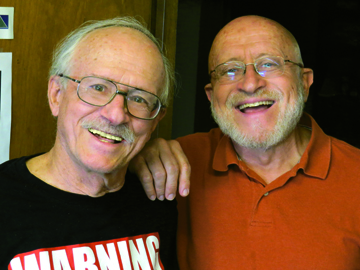 on. After winning, he decided he needed more formal lessons to continue. He took classes at Colorado Free University. In 1983, Horwege joined the Hoofin’ High Country Cloggers, a group founded in February 1979. His first performance was that same year for the People’s Fair at East High School.
The Hoofin’ High Country Cloggers performs all across the country at festivals and private events, including conventions, weddings, and other gatherings. Routines vary from intricate four-person dances to spectacular six- and eight-person dances. Clogging is a type of folk dance in which the dancer’s footwear is used musically by striking the heel, the toe, or both against a floor or each other to create audible percussive rhythms, usually to the downbeat with the heel keeping the rhythm.
The group has performed at the People’s Fair, Taste of Colorado, and Rocky Mountain Bluegrass Festival, among others. Perhaps one of their most notable performances was at the Walnut Valley Festival in Winfield, Kansas, in 1991. They danced to the music of the original Dixie Chicks who had been playing together for just two years at the time. The band was formed in 1989 by Laura Lynch on upright bass, 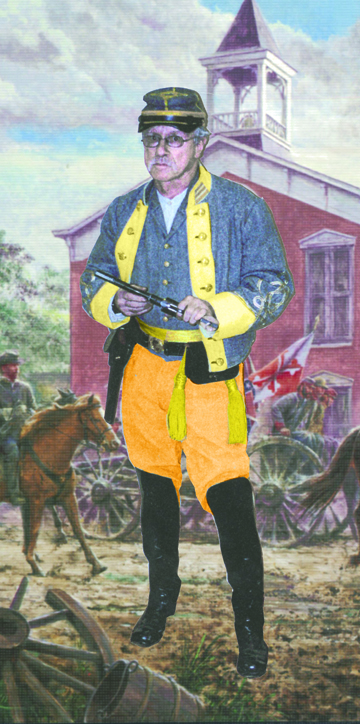 guitarist Robin Lynn Macy, and the multi-instrumentalist sisters Martie and Emily Erwin.
In addition to performing with the cloggers, he is also part of the Denver and District Pipe Band, a group of musicians and dancers enjoying the music from Scotland, Ireland, and beyond.
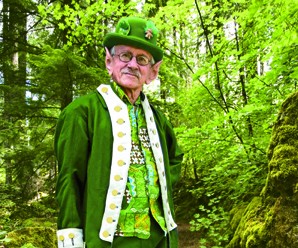
Another interest for Horwege is dressing up in costumes. His favorite holiday since he was a kid is Halloween. He has always been fascinated with it. In 1985, Horwege met Rocky the Leprechaun in Telluride which inspired him to dress up as a leprechaun. Since 1982, Rocky (Brougham) has been the Luck Leprechaun at all Bronco home games and five Super Bowls.
Since his days as a unit historian in the Air Force, Horwege has been interested in old war uniforms. He dresses in full uniforms that date back to the American Revolutionary War, World War I, and World War II, to name a few. In fact, when he attends military balls and other individual vignettes, he corrects others who may not be completely authentic in their dress code. “If I see stripes on a uniform that are not accurate, I correct them,” said Horwege.
Horwege also enjoys dressing as a Klingon from the Star Trek series and attending conventions such as Comic-Con. The biggest thrill for Horwege has been meeting William Shatner (Captain Kirk), Leonard Nimoy (Mr. Spock), Peter Mayhew (Chewbacca from Star Wars), and David Prowse (Darth Vader from Star Wars). He would most like to meet Patrick Stewart someday, who played Captain Jean-Luc Picard on Star Trek the Next Generation and Professor Charles Xavier in the latest X-Men movies.
Horwege is an advocate for being social but you won’t find him connected to any social media platforms. He enjoys traveling and performing with his groups. He doesn’t have to answer to anyone and he likes it that way. His strongest advice is to stay fit, healthy, and active and “if it ain’t broke, don’t fix it.”
by Mark Smiley | Aug 1, 2014 | General Featured
by James Bowie
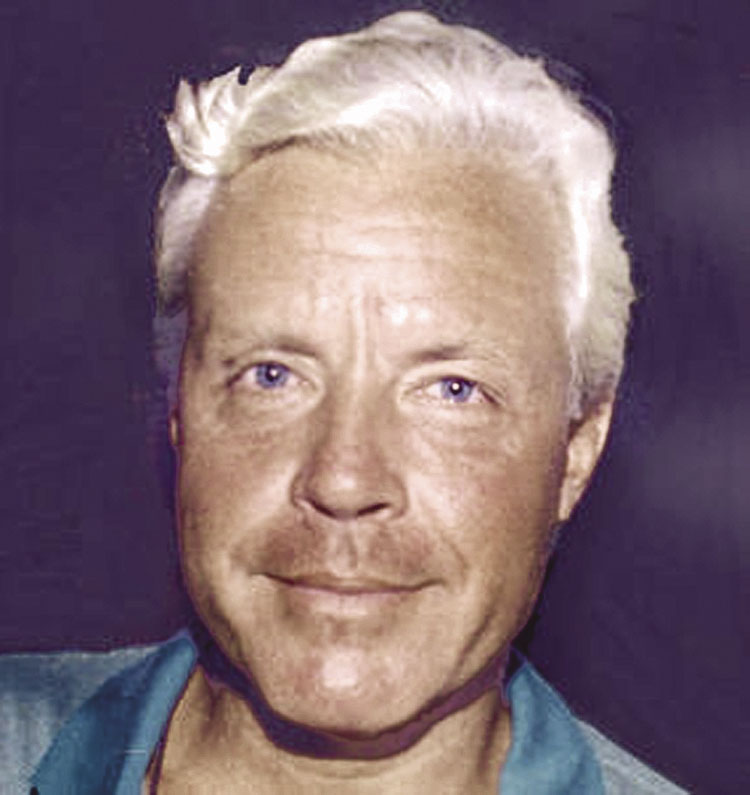
Former Glendale City Manager Veggo Frederick Larsen II died at age 61 at his residence in Palmetto, Florida. The cause of death was not reported other than it was “unexpected.” He was city manager of Glendale in tumultuous times from October 1999 to May 2002. After leaving Glendale he joined a recycling firm in Texas. It does not appear that he was employed at the time of his death.
Larsen was born to a prominent family in Hamden, Connecticut, and was a graduate of the Wharton School of Business at the University of Pennsylvania. He had two brothers and two sisters. The sibling he was closest to, Eric Larsen, passed away several years ago. His grandfather and namesake, Veggo F. Larsen, was president of the Connecticut State Golf Association in 1956 and 1957 and helped to instill a love of the game of golf into his grandson. His father, Edwin Veggo Larsen, was a real estate developer and predeceased his son by less than two years. Prior to becoming the city manager of Glendale, Larsen was in the real estate business in Colorado and then the New York area.
In the spring of 1998 the Glendale businesses and residents formed a political group called the Glendale Tea Party and swept its slate of candidates to office in the City Council. That fall a new city manager was to be chosen. Chuck Bonniwell (publisher of the Glendale Cherry Creek Chronicle) was an old friend of Larsen and proposed him for city manager.
Larsen described his selection in an article in Westword concerning the initial get-together of the six city manager candidates and city officials: “When Chuck’s girlfriend shows up and gives me a big hug. Oh, they knew. They knew there was a rat in the woodpile — they just didn’t know which one.”
Bonniwell’s remembrance of the event was somewhat different. “I supported him along with a majority of the City Council. They were not really any hidden agendas. He was the leading candidate for the city manager position, but he certainly could have unimpressed the council members in which case they would have chosen someone else. Veggo always had a wonderful way of making the mundane seem very fun and dramatic.”
Larsen later led a highly publicized revolt against his original supporters. In 2002 Bonniwell and other members of the Glendale Tea Party supported a new set of candidates who prevailed at the ballot box in 2002 and fired Larsen. Bonniwell noted, “Veggo was an immensely engaging and intelligent individual who could have been an extraordinary city manager in Glendale or anywhere else. But he never wanted to be beholden to anyone, which is fine, but in the end it meant he never worked for or with anyone for very long. He had a job he could have retired at many years later. Instead he was on the street once again looking for employment after just three plus years.”
Former Glendale Mayor Mark Smiley remembers Larsen’s extraordinary gift with words, “He was a National Merit Scholar in high school and was always making up palindromes [words or sentences read the same forward or backward, i.e. civic] when he got bored at City Council meetings. He could be wonderfully fun.”
Present mayor of Glendale and Colorado gubernatorial candidate Mike Dunafon remarked, “I always liked Veggo even after he stabbed everyone in the back. He had everything going for him, but could never quite put it all together. He was missing that piece that makes very talented people successful, which is to see things from more than one’s own limited perspective, no matter how bright you are.”
One of Larsen’s accomplishments while city manager of Glendale was to establish a relationship with the city of Playa del Carmen, Mexico, which became the official “Sister City” of Glendale in 2004. He got the then Glendale Fire Department to donate a fire engine, that the department was in the process of decommissioning, to Playa del Carmen. He even drove the truck down to the Mexican city, a distance of almost 1,700 miles.
Bonniwell summed up, “Veggo was a little like Andy Dufresne in the movie Shawshank Redemption with Playa del Carmen being his Zihuatanejo. Unfortunately, like all of us to a certain extent, the bars of his Shawshank Penitentiary were imposed on him by his own mind. Unlike Andy Dufresne he never really escaped that self imposed prison.”
Larsen left 75 percent of his estate to the “Make a Wish” Foundation.
by Mark Smiley | Aug 1, 2014 | Main Articles
Wine, Ales On Rails And Dinner Excursions
You’ve seen the signals: Freeway traffic, construction slowdowns, plus long hours at the office. It’s summertime and as that old Cole Porter tune seems to sugge st, now’s the time to Get Out of Town!
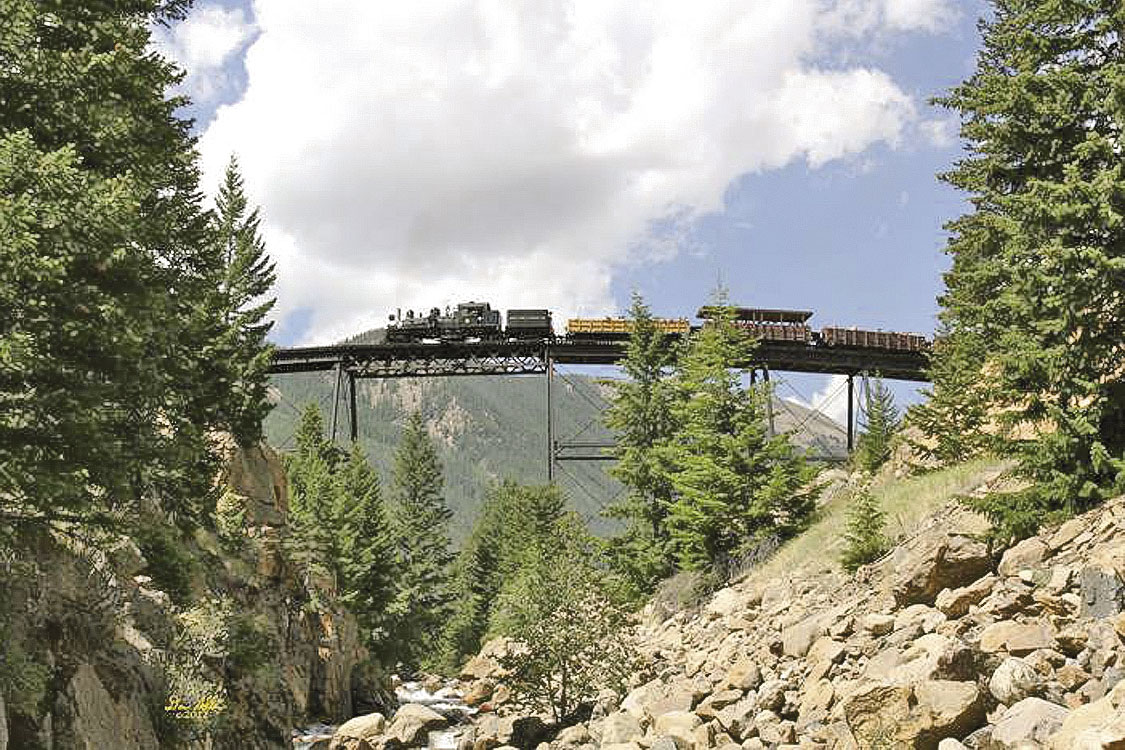
Here’s a cool thought: How about a sojourn through time, natural beauty and a railroad experience that you won’t find anywhere else? The Georgetown Loop Railroad is the encounter you’ve dreamed about while waiting through those Denver traffic delays — beautiful backcountry splendor you can view while relaxing over wine or dinner. Not only is it close to home, but you can choose from a number of unique packages and programs that will help you quickly lose track of time.
One of the most popular is the Georgetown Loop Dinner Train departing from Silver Plume at 6:30 p.m. (6 p.m. in Oct.), and heading down to Georgetown during the first course. After a brief stop at the Devil’s Gate station, you’ll enjoy dinner atop the Devil’s Gate high bridge overlooking historic Georgetown. Along with a complimentary glass of wine during dinner there is a fully stocked bar. Dessert is served during the travel back to the original st ation. Dinner trains are offered most Fridays and Saturdays through October.
Wines, Ales & Mines
Also extremely well liked are the Wine and Hors d’oeuvres Trains that received rave reviews last year. Thus this year new and exciting wines from vineyards across the world have been added to share with travelers. These are matched with a selection of light culinary accompaniments to please the palate. Enjoy this while sitting in enclosed coaches atop the Devil’s Gate High Bridge above beautiful Clear Creek.
There are also evening trains known as Ales on Rails that are offered throughout the summer and fall months, and are a fun and casual way to enjoy the Rocky Mountains. Voyagers enjoy dining on light culinary fare paired with Colorado micro brew beers.
Adventure trips such as the Tunnel to Another Time mine tours are available. From now thorough the end of September explorers can enhance their train rides with an optional walking tour of the Lebanon Silver Mine, located at the halfway point on the railroad. The tour takes you 500 feet into a mine tunnel bored in the 1870s. Guides will point out rich veins of silver and tell you about early-day mining. The temperature inside the mine is a constant 44 degrees Fahrenheit, so bring a jacket or buy one in well-stocked gift stores. The tour also includes visits to the manager’s office, the miners’ change room and the tool shed. Information: 888-456-6777 or www.george townlooprr.com.
by Mark Smiley | Aug 1, 2014 | Main Articles
Attorney David Lane Calls Settlement Little More Than ‘Hush Money’
by Mark Smiley
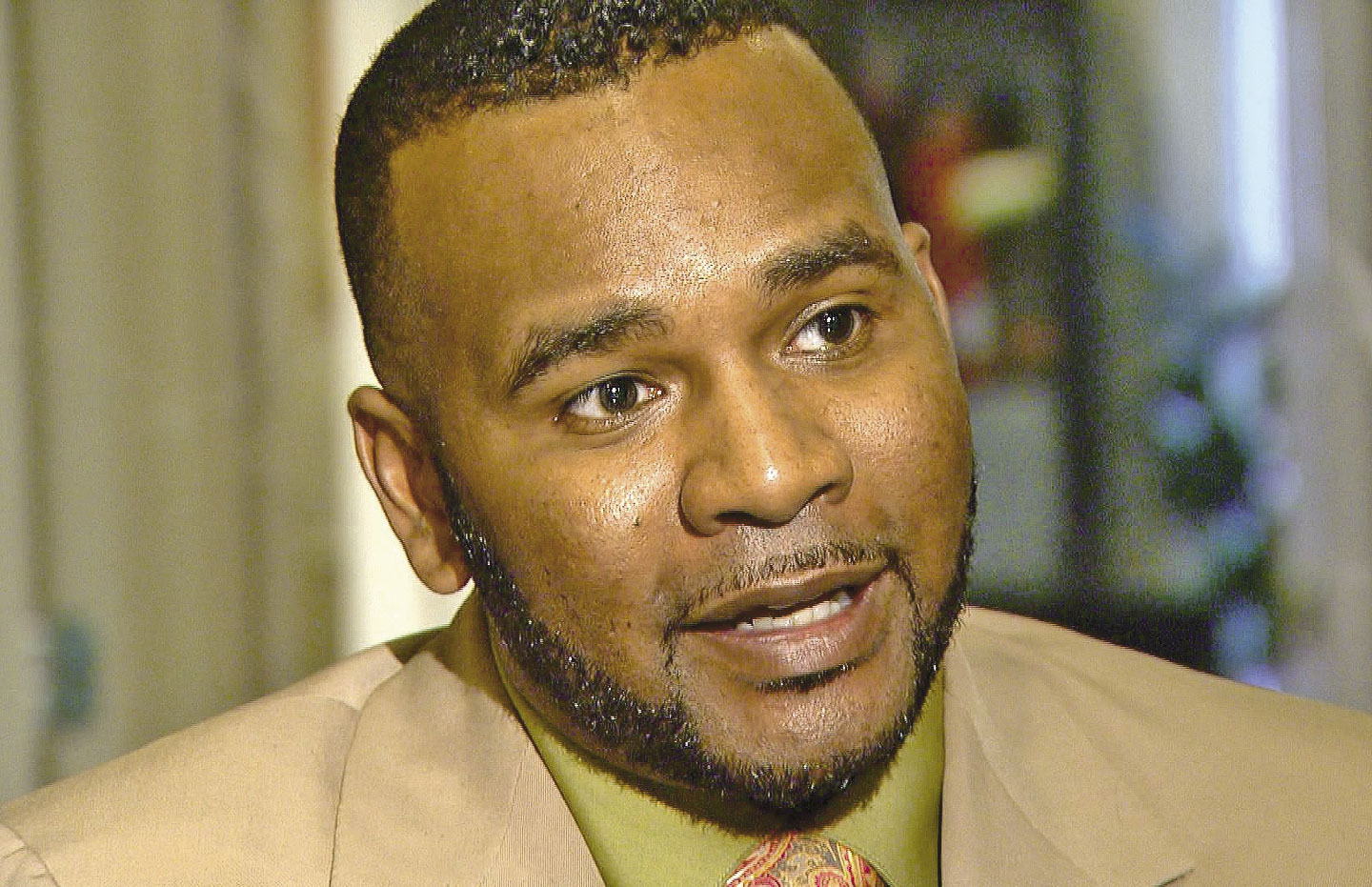
The City of Denver announced the largest civil suit settlement in the municipality’s history at $3.25 million to former city jail inmate Jamal Hunter. The settlement appears to have made Hunter and his attorneys Rathod|Mohamedbhai LLC happy, but few others. The settlement has received federal court and City Council approval. Federal District Court Judge John L. Kane preconditioned his approval to a myriad of reforms, all of which the City of Denver has agreed to perform.
As more videotapes have been revealed showing more sheriff’s deputies abusing inmates at the city jail, the settlement has been met with little enthusiasm. Well-known litigator David Lane blasted the city saying the settlement was little more than hush money and declaring, “They will pay any amount to avoid the embarras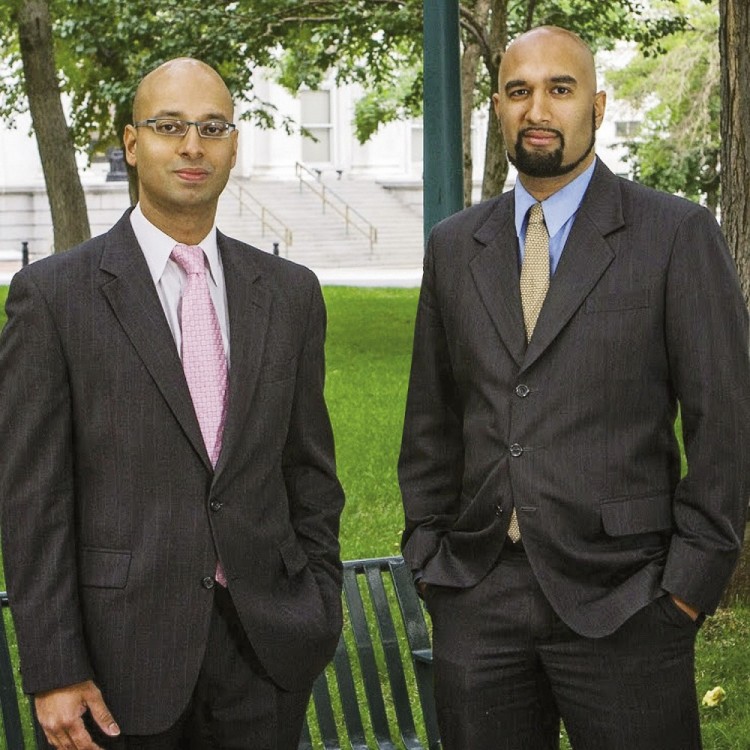 sment of exposing their officers to public scrutiny.”
Critics indicate it is not just the police officers and sheriff’s deputies that the city has to be embarrassed about and cover up, but now it is also their city attorneys and district attorneys. Veteran Assistant District Attorney Stuart Shapiro was caught running an apparently fake investigation on one of the sheriff’s deputies for the purpose of witness intimidation and tampering utilizing two Denver police sergeants from the Internal Affairs Bureau.
Court watcher, Linda Pierson, noted, “An entire criminal witness tampering and intimidation scheme was being run out of the City Attorney’s Office — and not a single charge of any kind has been brought to date against the assistant City Attorney, the Denver police officers or even the sheriff’s deputy they were supposed to be investigating. Unbelievably sad.”
The unfolding scandal has, however, resulted in an ever increasing number of self- imposed external reviews of the various legal and law enforcement agencies. Rec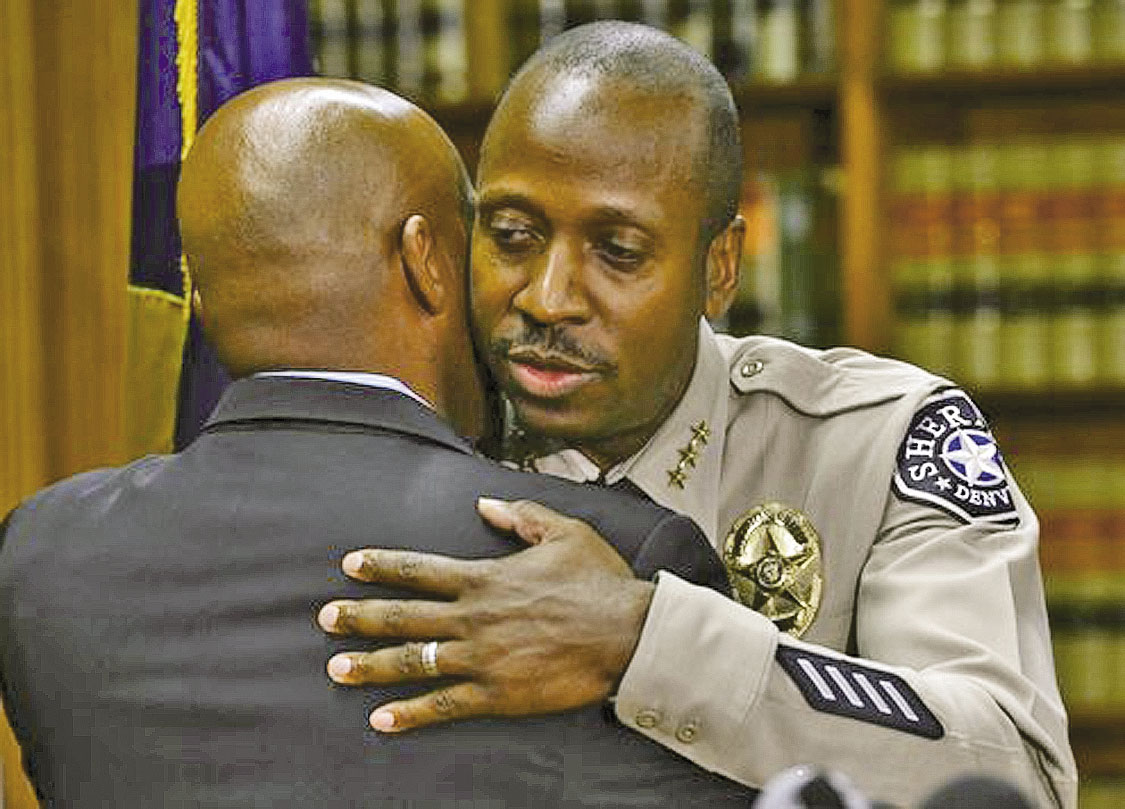 ently demoted Sheriff Gary Wilson had four task forces underway to give recommendation while the Denver Human Services is reviewing the Sheriff’s Department’s policies and procedures. Mayor Hancock got into the act announcing his very own independent review of the Sheriff’s Department by a yet to be determined entity. City Attorney Scott Martinez in turn announced an independent review of his entire office, including himself, by a local law firm to be determined by “competitive bidding.”
Observers were quick to dismiss the sudden scurry of investigations. Trish Abbott noted, “It is standard operating procedure when you are in damage control mode. Governor Chris Christie employed it in his Bridgegate scandal and Hillary Clinton did the same for Benghazi. They will all be whitewash reports wrapped around a scam settlement within the original sham investigation.”
Abbott went on to note, “As part of the whitewash there will be dozens of recommendations from a myriad of reports that will be enthusiastically adopted by the City Attorney’s Office, the Sheriff’s Department and the Police Department none of which will make an iota of difference. Nothing will change. Scott Martinez will get to repeat his almost comical mantra that attorneys at the City Attorney’s Office are held to nothing but ‘the highest of professional standards.’ Mayor Hancock will get to hug whomever is his latest choice for sheriff and call him the ‘best sheriff in the country’ just like all of his other sad sack choices for the same position. Plaintiffs’ attorneys will continue to make millions while every egregious mega settlement will be characterized as one more chance for ‘Denver to move forward.’”
Other observers note that one of the main problems is that no one has ever been held accountable or acknowledged error within the City and County of Denver. City Attorney Scott Martinez began his press conference on the settlement insisting that the multi-million dollar payout was not an admission of liability or wrong-doing. Mayor Hancock demoted Denver Sheriff Gary Wilson while emphasizing he did nothing wrong and it was his department as a whole that had let him down. Not a single Denver sheriff’s deputy or police officer has been charged with excessive force in this century.
It is expected that the multi-million dollar settlement will result in a significant number of new lawsuits being filed. David Lane is scheduled to take to trial in September the wrongful death case of homeless preacher Marvin Booker killed in a jail house scuffle with sheriff’s deputies, but that too is expected to settle for millions of dollars.
In June alone the number of jailhouse complaints has risen over 30 percent. “It is time to take the Brink’s truck up to City Hall and empty out the city treasury,” declared Abbott. “Everybody and anybody the sheriff’s deputies have kicked around at the jail over the last few years is going to sue and collect, and every indication is that the number of such people is going to be quite high. The sheer incompetence and venality of the Sheriff’s Department, the Police Department, the City Attorney’s Office and the District Attorney’s Office is staggering. Every attorney in the plaintiff’s bar is licking their lips to get in on the action.”
Attorneys indicate that the key to getting a multi-million dollar settlement out of the city  will be to try to obtain the internal e-mails over the last seven years between the City Attorney’s Office and the Internal Affairs Bureaus of the Police Department and the Sheriff’s Department.
“Those documents are pure gold,” stated Scott Brock. “The fact that Judge Kane might order their production is what brought the city to its knees in the Jamal Hunter case. No one believes that Stuart Shapiro is the only one in the City Attorney’s running what appears to be a criminal operation. There are present and former members of the City Attorney’s Office all over Denver that are very concerned. The multi-million dollar Hunter settlement will look like peanuts in a few years. There are going to be a lot of very rich former city jail inmates running around this city, not to mention their lawyers.”