(BPT) – Before COVID-19, you probably didn’t put much thought into washing your hands. A bit of soap and a quick lather seemed adequate. Now, hand washing is center stage as a main step to fight the spread of the virus and help people of all ages stay healthy.
Regular hand washing is one of the best ways to remove germs, avoid getting sick and prevent the spread of germs to others, according to the United States Centers for Disease Control and Prevention. This not only helps with the COVID-19 virus, but also helps protect you from other viruses, such as cold and flu germs.
COVID-19 is efficiently killed with soap and water, which is why the CDC recommends scrubbing your hands several times a day. However, parents and caregivers may struggle with getting their kids to wash their hands the right way. From impatient toddlers to distracted teens, hand washing may not be happening correctly.
To help your family wash their hands the right way and have fun while doing it, the health experts from Colgate offer some simple steps to consider:
Step 1: Have a family meeting
Talking about hand washing casually won’t make a lasting impression. Hand washing is important, especially during the pandemic, so give it the attention it needs by calling a family meeting. Talk about how hand washing kills germs and stay positive, saying how your family wants to be a part of the solution in preventing the spread of COVID-19.
Step 2: Discuss proper hand washing
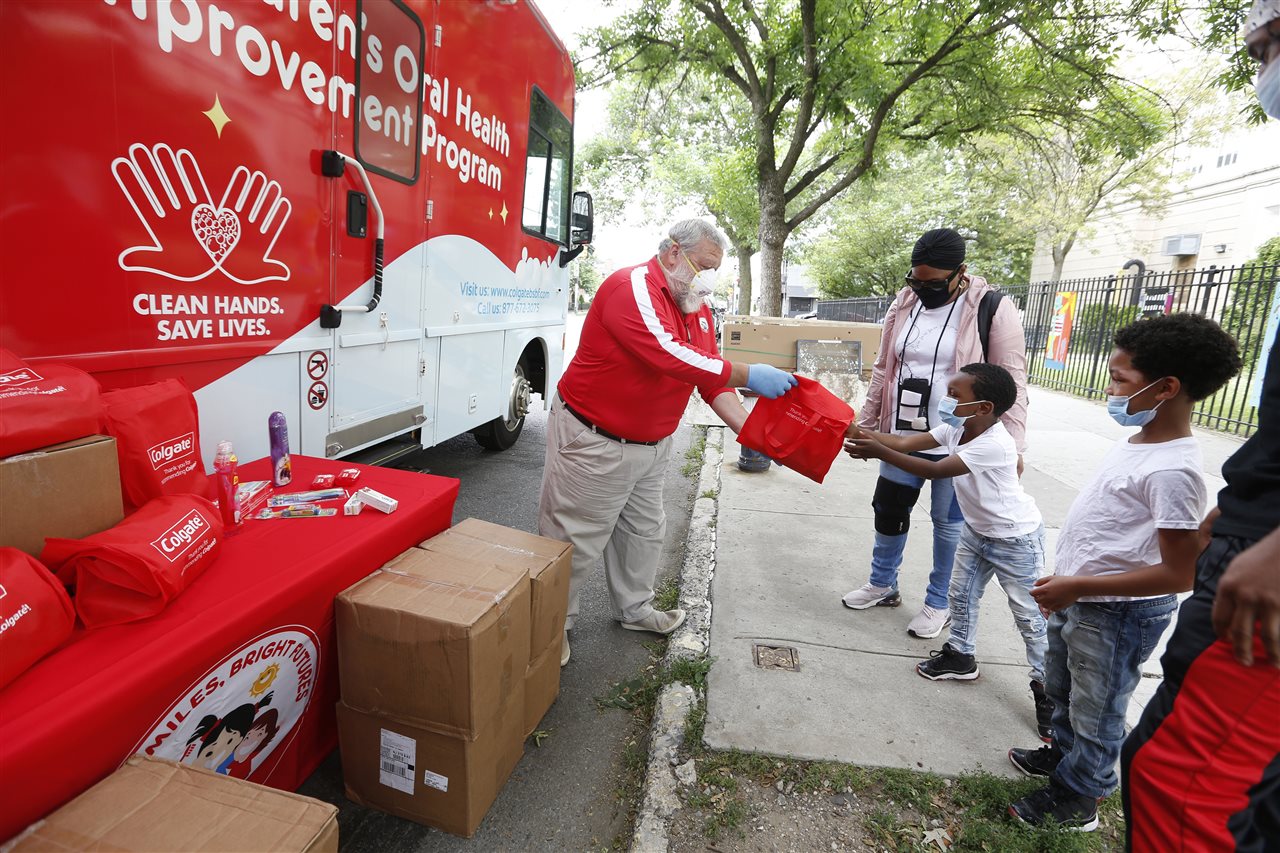
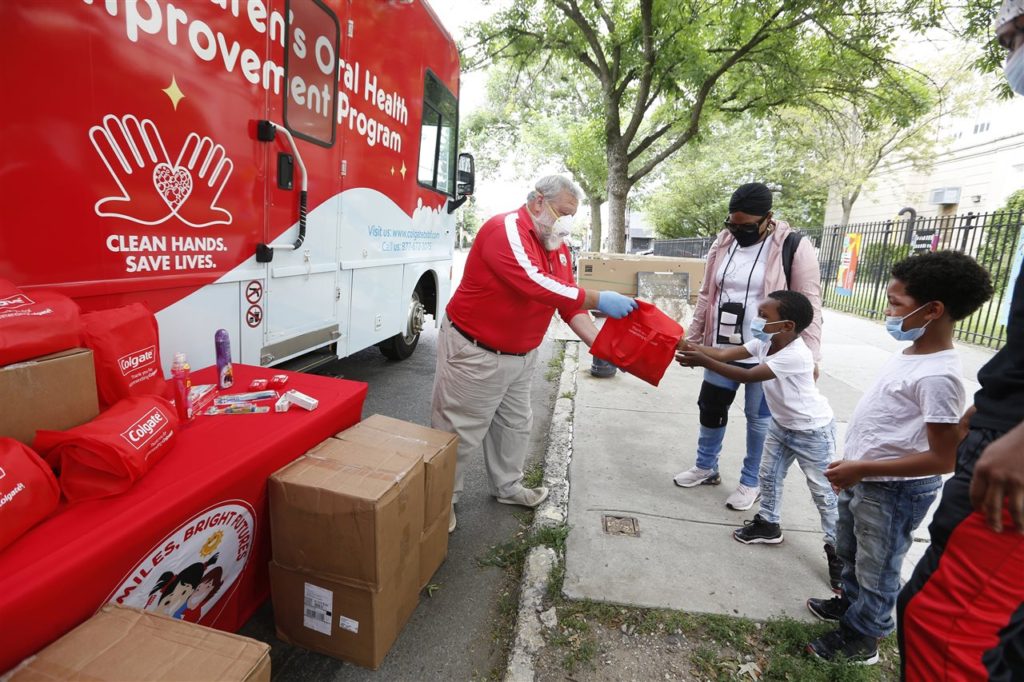
Proper hand washing is simple once you know how to do it. First, wet hands with clean water. Apply soap and scrub the entire hand for at least 20 seconds, including between the fingers. Finally, rinse and air dry or use a clean towel. Availability of soap and washing correctly is essential. That’s why Colgate is donating 1.4 million bar soaps distributed in the U.S. as part of the #SafeHands challenge, featuring instructions for effective hand washing. The bar soaps, along with other health and hygiene products like toothbrushes, toothpaste, and body wash, will be delivered to food banks and school lunch programs nationwide via Colgate’s trademark Bright Smiles, Bright Futures mobile dental vans. In total, Colgate’s product donations across the country is valued at over $8MM.
Step 3: Make it fun
What’s typically the hardest part of proper hand washing is the length of time. To make hand washing fun, sing a tune for that length of time. For example, sing “Happy Birthday” twice to hit the mark. Or, customize a favorite nursery song and sing it for that length. To the tune of “Row your boat” sing: “Wash, wash, wash your hands. Wash them every day! Scrub with soap, rinse it down, wash those germs away!”
Step 4: Praise and rewards
Make hand washing a part of children’s responsibilities, much how they are expected to make their bed and read daily. You may want to add posters and other reminders to help the family remember the importance of hand washing. Remember, positive reinforcement and recognizing a job well done goes much further than scolding when stressing new habits. You may even decide to set up a rewards program; for instance, young children get a sticker every time they wash their hands.
Mixed race woman washing her hands
Step 5: Be a role model
When encouraging your family to adopt healthy habits, it’s best to lead by example. Wash your hands regularly using the correct procedures. Sing loud and proud so people know you’re doing it for 20 seconds. Show it’s a priority for you so your family knows it should be a priority for them.
For more information on Colgate’s support of the #SafeHands Challenge and their global impact of donation more than 25 million products globally, visit ColgatePalmolive.com.
Regular handwashing is one of the best ways to remove germs, avoid getting sick, and prevent the spread of germs to others.
Pandemic Sparks Sweet Pop-up Music Series; Families Swing, Sway To Beat Of Groove Machine
by Glen Richardson
Music drifts on the breeze through the Valley’s quiet Cory-Merrill neighborhood on a Friday night. A group of musicians perform under a clutch of trees in front of a home as people flock to listen. They hear the unmistakable low-pitched sounds of a bass guitar, its tones forming the rhythm. Often dubbed as “feeling the beat,” the instrument’s sounds seem to vibrate through the encircled crowd.
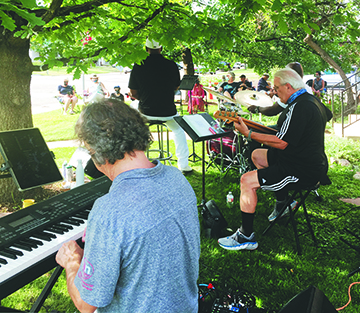
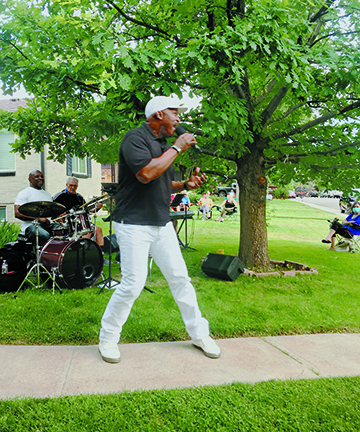
Serenading In The Shade: Musicians play under a clutch of trees in front of a home in the Cory-Merrill neighborhood. The Friday night pop-up music series lifts the neighborhood’s spirts with amazing music and good times.
Standing or sitting on lawn chairs at homes adjacent and across the street, families are enjoying the music coming from a quartet of musicians known as the Groove Machine. Some break out in song while others dance in the street. The music seems to soothe, inspire and reassure the crowd.
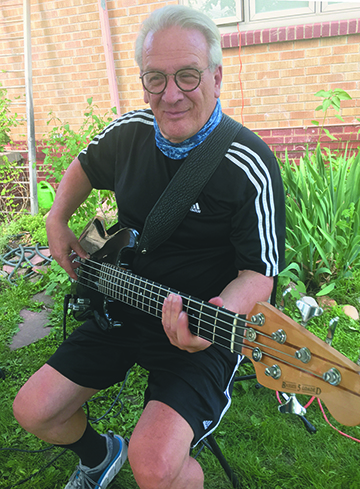
People are rocking to the guitar tones coming from neighborhood bassist Frank Baier. No novice, he has performed with the Bee Gee’s, Jackie Wilson, the Coasters and Brook Benton among others. Belting out ballads and familiar ditties for the growing crowd is singer-entertainer Odell Stroud. The troubadour with an infectious smile and soothing presence wows residents with his singing style and versatile range. A few recognize him as Officer O’Dell in episodes of Rocky’s Auto commercials that have been a part of the Colorado media landscape for more than two decades. The gathered neighborhood audience expresses its gratitude with storms of applause during and following 90 minutes of music.
Sparking Spirits
With social events, wedding and music concerts shut down by the pandemic, Baier worries about the emotional toll it is taking on musicians. He has a Deano Quartet, the FTM Jazz Trio plus a Tony Bennett Tribute Group in addition to the party-dance band Groove Machine. Between not gigging or being able to practice he was becoming jittery and edgy. That’s when his wife Christine suggested the idea of a neighborhood pop-up music series. Christine and Frank are both on the Cory-Merrill Neighborhood Association board of directors.
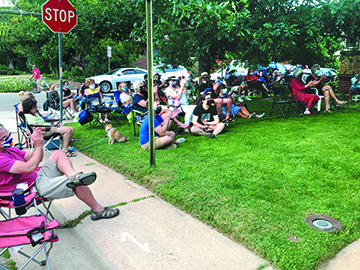
Concert On The Lawn: Great music in a community environment delights young and old alike on Friday evenings. Folks stand or sit on lawn chairs at homes adjacent and across the street to enjoy the sunset concerts.
Initially Frank wasn’t keen on the idea but the more he considered the notion the more sense it made. In a time when things are uncertain he was certain it would be a good way to ease the anxiety for both himself and his fellow artists. Musicians, after all, thrive on live performances. Moreover, they had plenty of time on their hands. Plus the music series would bring the neighborhood together while offering a rewarding, enjoyable way to practice and get creative.
In City Council District 6, the Cory-Merrill community is tucked between University and Colorado Boulevard south of Bonnie Brae and east of Wash Park. Neighborhoods are historically and architecturally defined by bungalows and classic ranches. Newer homes are larger, often accented with Victorian tiling and mission-style stucco.
Talented Performers
On the musical keyboard for the Groove Machine is pianist and Denverite Tim Greenhouse. He has participated in Switzerland’s prestigious annual Montreaux Jazz Festival plus played with stars such as Bob Hope. Locally he has appeared with Hazel Miller, Lannie Garrett and the Arapahoe Philharmonic.
Baier’s Bass Beat: Cory-Merrill board member and bassist Frank Baier hosts sunset serenades with his band Groove Machine. The music man, his guitar and band are having a direct and positive impact on the community.
Influenced by the Bootsy’s Rubber Band and the Dizzy Gillespie Sextet, Groove Machine’s drummer is Doug Bainbridge who toured for several years around the Pacific Rim. He worked another half-dozen years as a drummer-percussionist on television in South Korea before returning to the U.S.
Valley’s musicians have always actively supported each other, whether they benefit or not. Odell Stroud, for example, is the lead singer with the five- to10-piece party band Montage but he and Baier have often collaborated over the years. Thus when asked by Frank, he didn’t hesitate to join the pop-up music series. When drummer Bainbridge couldn’t make a recent neighborhood series, Montage’s drummer Skip Lynch — aka Skippy Dee — jumped in to hold the pocket down for the group. He has gigged with flautist Bobbie Howard — who gave him the stage name Skippy Dee — as well as The Platters, Miki Howard, Surface, and many others.
Pandemic’s Impact
The detrimental effects of the pandemic on the music industry here and around the globe are loud and clear. The Valley is home to some of the best music and concert venues in Colorado. While the local market lags behind entertainment cities like New York and LA, Denver has one of the largest per-capita ticket markets on earth. But based on current guidelines a venue the size of the Levitt Pavilion — which has a 7,500 capacity — can only admit 175 people for a concert.
Spirited Singing: Crooner Odell Stroud — lead singer for Denver’s Montage Band — belts outs songs at sunset series. His singing style and versatile range lifts peoples’ spirits and brings joy during pandemic times.
Most of this summer’s outdoor music concert series have been canceled. They include the Shady Grove Picnic Series at Four Mile Historic Park plus the summer concert series at the Denver Botanic Gardens, both produced by Swallow Hill Music. Mid-level indoor venues such as the Ogden Theatre and Fillmore Auditorium depend on major promoters AEG Presents and Live Nation, respectively. At the Ogden, seven Aug.-Sept. live performances have been cancelled, while at the Fillmore a dozen have been postponed or cancelled.
The Colorado Symphony still hasn’t confirmed a date or when they will resume full-capacity and live concerts. Already more than a dozen autumn Symphony concerts have been canceled through November. Among them are the Cleo Robinson 50th Anniversary Celebration and the Halloween Spooktacular in November. Additional coronavirus casualties include the Vienna Boys Choir Concert and the Ten Tenors Home for the Holidays concert.
Music Magic
In these pandemic times music lifts the spirits and is doing so in the Cory-Merrill neighborhood. As one attendee put it, “As a community we are appreciative and better off. Their music is exceptional and they are helping to hold up Colorado’s music scene, inspire others and create opportunities.”
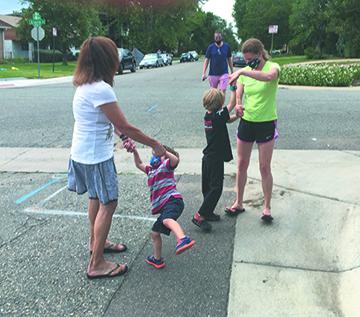
Getting In The Groove: Families swing and sway to the sounds of local band Groove Machine in Cory-Merrill neighborhood. When the tone and touch of Baier’s guitar is added people get up and their feet start to move.
The musicians say doing the Friday night gigs has raised their mood while improving their music and dispositions. For his part, Frank admits “I didn’t realize how much I missed collaborating with the other musicians and playing for people.”
The sunset serenades are free but contributions to a fund kitty are welcome. The bi-weekly Friday night concerts — Thursdays when forecasters predict blustery weather — are from 6 p.m. to 7:30 p.m. Information: frankdbaier@gmail.com.
Average Rent In Q2 Declines To Just $1,506 Per Month; Nearly Every Age, Size Of Apartments Saw Drop In Rent Prices
by Glen Richardson
For the first time in more than a decade average rents in Denver fell in the second quarter of 2020. The last time average rents dropped year over year was in the first quarter of 2010, according to the Apartment Association of Metro Denver.
Blockbuster Buildup: The Bromwell, an apartment complex along the Speer Blvd. corridor, is among the apartments that are just opening. It adds another 171 homes onto city’s constant apartment buildup.
The coronavirus economy combined with new apartments coming on the market burst Denver’s decade-long rent bubble. New construction added 1,170 units in the second quarter, including 936 in the metro area alone. Released July 21, the rent data was conducted for the Apartment Association by DU’s Daniel School of Business and Colorado Economic Management Associates.
Compared to Second Quarter 2019, average rents dropped to $1,506 per month, a $30 monthly decrease or a $360 annual decline. Taking an optimistic point of view, Mark Williams, Executive Vice President of the Apartment Association, says that is good news for future renters. “Not only are rents not climbing, they went down for all but one floorplan type. There were decreases in all categories, except for two-bedroom, one-bathroom units. This is likely because a renter who had an extra bedroom has added a friend to his or her lease.”
Metro Wide Drop
The decrease in rent was consistent across most geographic areas or 24 of 36 submarkets. Nearly every age and size of apartments saw declines in rental prices.
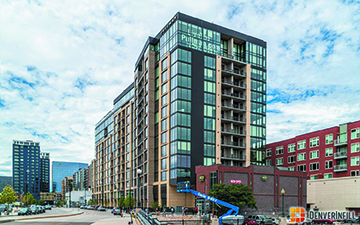
Enormous Pull: With 14-stories and 142 homes, The Pullman Apartments on Wewatta St. in the Union Station neighborhood is among new apartments that have opened in Denver. New construction added 1,170 units in the Second Quarter helping to burst city’s decade-long rent bubble.
Newer properties saw the steepest drop in rental rates. Apartment complexes built in 2010 or later have average rents of $1,840, a $105 drop from the previous quarter.
Properties built in the 1970s remain the least
expensive to rent, averaging 20% less than the average rental cost for all apartments.
Virus Specific Data
The Second Quarter survey was modified to collect COVID-19 specific data, asking about delinquent patterns for the months of April, May, and June 2020. The results demonstrate that delinquency was very low, with a majority of rental providers responding that 95% of renters paid their rent.
“The Q2 report continues to show relative stability in the apartment market,” Williams notes. Adding, “which was difficult to predict at the start of the COVID-19 pandemic.”
Over the past several months, housing providers have worked closely and diligently with residents who were impacted by pandemic hardships to create flexible payment plans and create solutions that were a win-win for everyone involved.
Vacancies Flat
The Denver metro apartment market added 1,170 new units, a net positive absorption of 3,801 units for the second quarter. In the Second Quarter, discounts and concessions were steady, coming in at $84, compared to $88 in the first quarter.
Gold Standard: While apartment construction slowed in the second quarter, building continues unabated in nearly every neighborhood. This 17-story tower will house 373 apartments in the Golden Triangle neighborhood.
“That means that 3,801 more apartments were rented than in March 2020, when the COVID-19 situation started to evolve, indicating that demand for rental housing is still very strong,” Williams points out.
The survey found the average overall vacancy was 5.1%, which is down from 5.9% in the previous quarter, but virtually flat compared to a year ago. This is in line with historical patterns, which show slightly higher vacancies in the first quarter compared to the second and third quarters.
More Units Opening
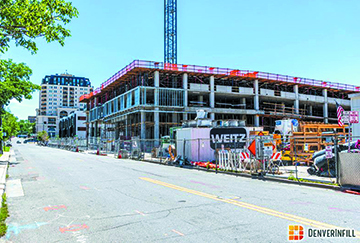
New blockbuster apartments are expected to open in the weeks and months ahead and will likely continue to impact rental rates. In LoDo, Market Station, a new full block development will add 225 apartment homes. Another big complex, this one a 17-story tower with 373 homes will open before yearend at 10th and Acoma in the Golden Triangle neighborhood.
Pint-Size Property: This five-story micro-apartment complex nearing completion on Adams St. in Cherry Creek could be one answer to the coronavirus economy. The 37-unit complex has apartments ranging from 300-800-sq.-ft. in size.
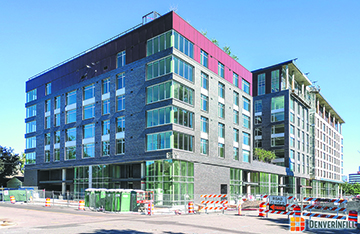
Two new developments are also nearing completion along the Speer Blvd. corridor and expected to open this year adding 413 apartment homes. The Modera West Wash Park with its two sharp points will add 242 apartments averaging 864-sq.-ft. in size. Then at Speer and Logan, The Bromwell will add another 171 homes with leasing beginning to get underway.
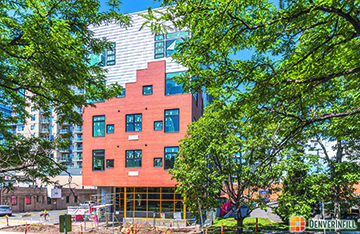
In Cherry Creek North a five-story micro-apartment complex is nearing completion at 135 Adams St. Depending on price, the 37-unit complex ranging from 300-800-sq.-ft. in size could become a popular coronavirus economy size-style. Despite the new apartments opening and additional projects being proposed, construction of new apartments did slow in the second quarter. Year over year construction during the period totaled just 8,978 units, the lowest number since the second quarter of 2016.
Rental Assistance Rises
Denver is using Federal COVID-19 relief funds to more than triple rent and utility assistance, trying to keep people housed now that Denver’s eviction moratorium has ended. The City Council has approved adding $5 million to the housing assistance fund that started the year with a budget of $2 million.
The coronavirus economy has sparked a sharp increase in the demand for rental assistance. Britta Fisher, who heads Denver’s housing department, says the assistance program helped 996 households last year and had already assisted 704 through May of this year. “This clearly shows that households, including families, are feeling the stress of this economic and health crisis,” she says.
In the past grants have paid up to 80% of rental assistance. City Council, however, has approved eliminating the requirement that recipients pay a portion of the housing cost and now 100% of rent will be covered. Denver’s housing department says this should allow the program to more quickly get funds to residents who need rental and utility assistance.
Rent Relief Donations
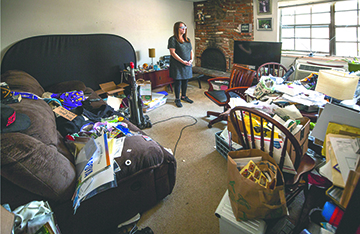
Moving Experience: Coronavirus economy and health crisis is forcing many apartment renters to move. Many are relocating to less expensive apartments or downsizing to smaller units to cut cost. (Photo by Kevin J. Beaty/Denverite)
With requests for rental assistance up sharply and showing no sign of subsiding, it is becoming increasingly clear that city-federal assistance programs won’t be adequate. In May an apartment landlord group raised $74,000 from its members to establish a rent relief fund. The funds will be doled out to people to have lost income or suffered illness due to the coronavirus pandemic.
The Colorado Apartment Association which contributed $25,000 to the landlord fund is also asking other Valley residents and businesses to contribute. Funds would go to a Resident Relief Foundation to help “Coloradans help Coloradans.”
The foundation initiative is hoping to raise $10 million for rental assistance. The foundation notes that demand is so high during the current health-economic crisis it is only taking applications from tenants facing imminent eviction. The Denver Apartment Association is an affiliate of the Colorado Apartment Association.
Councilwoman Candi CdeBaca is a favorite of ours on the Denver City Council. It is not that we agree with all of the positions or actions of the self-identified Marxist, but she actually tries at times to make a difference in improving the lives of everyday Denverites. Over half of the City Council is owned and operated by high-density developers who, of course, also control Mayor Hancock.
CdeBaca is leading the fight to save Park Hill Golf Course as open space against Council members like Kendra Black, Chris Herndon and Stacie Gilmore who can’t wait to turn Denver into a fully paved urban jungle for the fun and profit of high-density developers.
Thanks to CdeBaca’s unwavering support, Councilwoman Amanda Sawyer’s proposal that the City Council must approve mayoral appointments will go to ballot this fall, a badly needed reform we strongly endorse.
CdeBaca has many other ideas and reforms and she is the exact opposite of the do-nothing City Council members during the first eight years of Hancock’s maladministration. One idea of CdeBaca is to replace the Denver Police Department with an unarmed “Peace Force” without the power to arrest. That idea went down by an 11 to 1 vote, most Council members giving their usual excuse that they had not had enough time to consider the same.
For decades the Denver City Council has approved paying out tens of millions to settle police excessive force lawsuits without ever considering what could be done to remedy the problem. As reporter Robert Davis points out in this issue [Deep Roots: Why It’s So Hard To Fire A Police Officer For Misconduct In Denver, starting on page 5], the problem goes way back in Denver’s history.
Getting rid of the police may sound nice to some, but the actual results would not be pretty. In Seattle’s so-called “Chop Zone” this summer there were no Seattle police, but that did not result in a “Summer of Love” as predicted by Seattle Mayor Jenny Durkan, but rather a melee with plenty of violence. We doubt that CdeBaca’s “Peace Force” will bring peace, but rather privatized violence which will drive the average citizen out of Denver.
But that does not mean we should do nothing. The reforms instituted by the State legislature this past summer are a good start, but are not enough to solve Denver’s police brutality problems. Some huge percentage of the brutality cases come from an amazingly small number of police officers in Denver. Everyone knows who they are, but no one can drive them out of the police force.
The solution is surprisingly simple. Change the City Charter and abolish the “Civil Service” system which only apples to the Denver police and fire departments. All other city employees come under the regular “Career Service” system. The Civil Service system was put into the City Charter in 1904 by then Mayor Robert Speer to protect all of the brutal and corrupt police and fire employees that he once was in charge of as police commissioner and fire commissioner. He depended upon them to become mayor. So he wanted to make sure they could not be fired.
Get rid of the 116-year old Civil Service system and put it under the Career Service system and abracadabra the entire extremely expensive Rube Goldberg contraption to protect corrupt and brutal cops goes away. Of course, firing a bad average Denver employee is not easy, but is comparatively simple compared to getting rid of a bad cop under the Civil Service system. The reform will save millions in lawsuit settlement costs.
Will any Council member dare to take on the relatively simple solution. Well certainly not the Mayor’s cronies on the City Council, but Council members like Candi CdeBaca and Amanda Sawyer just might have the guts to do so. Here’s hoping.