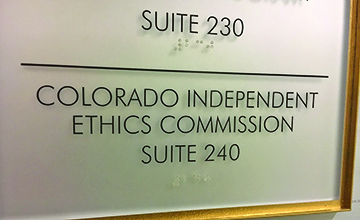
by Charles Bonniwell | Mar 21, 2023 | Main Articles
PART I
by Charles C. Bonniwell

David vs. Goliath: The little town of Glendale is fighting the IEC for the rights of all citizens and home rule cities in Colorado.
The City of Glendale and its officials have been caught in a maze of Star Chamber proceedings before the Colorado Independent Ethics Commission (IEC). They have been fighting for eight long years with no end in sight over a minor mix up in a City Council meeting in May of 2015. They, like almost anyone and everyone who has appeared before the IEC, have tales of woe to tell.
The IEC was created when the Colorado voters approved Amendment 41 to the state constitution titled “Ethics in Government” in 2006, promoted by now Governor Jared Polis, who was then co-chair of “Colorado for Clean Government.” Polis was made a multi-millionaire due to his mother’s floral business and objected to usually poorly paid politicians and bureaucrats getting gifts or any benefit worth more than $50.
Limitless Power
All Powerful: The IEC, a little-known bureaucratic entity, has become so powerful, that even the biggest political heavyweights are no match for it.
But the key to the Glendale quagmire and the horror shows of many who find themselves before the IEC was a little noticed catch-all provision of Article XXIX, Section 5, which says that the IEC can “hear complaints, issue findings, and assess penalties … on ethics issues … under any other standards of conduct and reporting requirements as provided by law.” Under an expanded interpretation of that provision the IEC may one day control the entire state, including doctors, lawyers, architects, judges, and anyone else if it wishes.
The key to the IEC assuming more and more power over the state and its citizens was to do it slowly while hopefully not alarming the courts or the media until it became too powerful to stop. The IEC stayed under the radar until a lawyer, Bill Leone, who headed up a New York firm’s white collar crime unit in New York City, was appointed by Governor John Hickenlooper. The appointment was to his everlasting regret. The IEC is composed of five members, one appointed by the Governor, one by the State House of Representatives, one by the Chief Justice of the Colorado Supreme Court, and one by the other four commissioners. No more than two members can belong to the same political party.
Leone
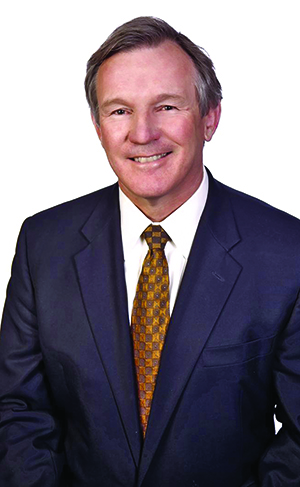
Power Is Where Power Goes: New York lawyer Bill Leone ruled over the IEC for eight years with an iron fist and crushed all who appeared before the organization.
Considered by his critics to be a narcissist megalomaniac, Leone began expanding the IEC powers in every direction after his appointment. A former interim U.S. Attorney, he was considered for firing by the U.S. Justice Department. He was passed over for a permanent position. Nominally a Republican, Hickenlooper believed he was, in reality, a Democrat he could safely appoint.
The IEC would eventually become known by political insiders as a place where ethics was ignored but where you could destroy your political opponents no matter how powerful. One of those shadowy lawyer insiders was a Democrat interim Secretary of State Bernie Buescher, appointed by Democrat Governor Bill Ritter when Republican Mike Coffman resigned as Secretary of State in 2009. During his two years as Colorado Secretary of State he learned he could bring devasting charges on minor matters to destroy political opponents. He brought that knowledge to the Denver law firm of Ireland Stapleton in an “of counsel” position in their Grand Junction office.
The Meatgrinder
The IEC’s power comes from the fact that the IEC acts as judge, jury, and executioner, with no checks or balances. All one has to do is file a complaint, no matter how trivial, claiming any minor conflict of interest or gift over $64. The IEC, behind closed doors in secret meetings, determines if it has “jurisdiction” which depends on arbitrary, obtuse standards of which there is little rhyme or reason, but appears to be whether the members politically like or dislike the target citizen.
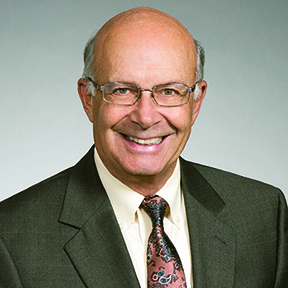
Insider: Bernie Buescher, a shadowy lawyer, is believed by those in the know to be an expert in the dark arts involving the IEC.
If they would like to go after the target citizen, they appoint an investigator which is normally its executive director Dino Ioannides, or it is farmed out to private investigators. The accused have no rights or protection. The IEC decides whether it wants to go ahead or not and if so an attorney from the Colorado Attorney General’s office acts as prosecuting attorney with the IEC as the judge and jury. The complainant who has started the process has no role or obligations and is not required to spend money. The target citizen faces tens of thousands or even hundreds of thousands of dollars in fees if he or she wishes to fight the complaint.
If the IEC finds for its own attorney and finds the target guilty, then it imposes its penalty, which for gifts, is twice the amount of the gift, but in other cases who knows. While the target citizen is often facing a couple of hundred dollars fine they must also pay massive attorney fees, which is why most target citizens simply fold and admit guilt regardless of the veracity of the complaint. If by some miracle you are found not guilty of the complaint, you are not entitled to a reimbursement.
The complainant incurs no costs in the proceedings and has the thrill of its political opponent pleading guilty to an ethics complaint. If the target citizen does fight the charges, they will incur the huge legal fees and will likely be found guilty by the IEC kangaroo court. If the IEC doesn’t take the case you still have the advantage of politically embarrassing your political opponent/ citizen target by filing an ethics complaint.
Scott Gessler
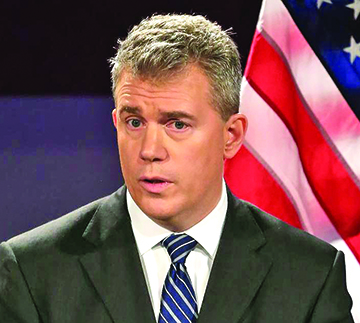
Victim: As Colorado Secretary of State, Scott Gessler became the first victim of the IEC’s expanded powers.
The first political whale that was captured by Leone and the IEC was Republican Colorado Secretary of State Scott Gessler. He had flown to Tampa in 2012 to attend and speak at the “National Election Law Seminar,” a two-day continuing legal education conference. Under Colorado law, each of five statewide elected officials, including the Secretary of State, has access to a modest annual discretionary fund to spend “in pursuance of official business.” Left-leaning Colorado Ethics Watch filed a complaint asserting it did not consider Gessler’s trip in furtherance of official business and charged that Gessler had failed to turn in receipts for another $117 taken from the discretionary fund.
The Colorado Supreme Court in 2018 in Smith v. Gessler shot down the argument that the IEC’s jurisdiction was limited to “matters of gifts, influence pleading, and standards of conduct, and reporting requirements that expressly delegate enforcement to the IEC.” Instead, the court bought hook, line, and sinker that jurisdiction of the IEC covers any complaints “under any other standards of conduct … as provided by law.”
Gessler’s legal fees fighting the IEC, which were covered by the state, eventually reached approximately a half a million dollars. The total fine was only a little over one thousand dollars. The IEC as a political monster was born. Political insiders, both Republican and Democrat, knew that filing a complaint with the IEC would likely bankrupt a target citizen if they sought to fight it.
John Hickenlooper
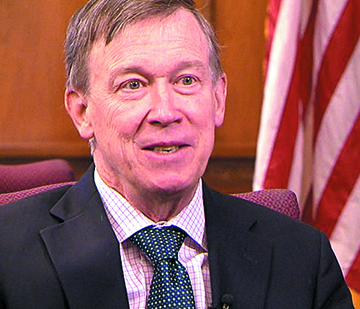
Victim 2: Former Governor John Hickenlooper was so broken by the IEC, that he stopped fighting in order to end the proceedings.
After Leone’s four-year term was up on the IEC in 2017, Governor Hickenlooper apparently refused to reappoint the power-hungry Leone. So Leone went to the Republican president of the Senate, Kevin Grantham, to reappointment him for another four year term. Hickenlooper was about to learn about political payback from the now all-powerful IEC and Commissioner Leone.
Hickenlooper had traveled at various times on planes of friends while he was governor. Hickenlooper was running for U.S Senate against incumbent Republican Cory Gardner. Republican operatives like fomer Republican Speaker of the House Frank McNulty had seen what Democrats had done to Scott Gessler and decided two could play the game. They had Republican interest groups file a complaint for those trips and other items and Commissioner Leone was waiting with bated breath.
Even the former Governor did not have any chance against the IEC, even with the state covering his legal fees involved in fighting the IEC. When he refused to comply with the IEC subpoena, the IEC went to court and the judge ruled his refusal was in contempt. Hickenlooper refused to testify and basically laid over so as not to delay the inevitable, as he was suffering politically. He incurred a fine of $2,750 but at least was free from the political monster that the IEC had become.
Part II Next Edition
In Part II next month, learn how the IEC regularly rolls over average citizens without a thought. Learn how the Village of Glendale was trapped in the IEC meatgrinder, and how it has tried to fight off the all-powerful IEC.
by Mark Smiley | Mar 21, 2023 | General Featured
by Mark Smiley
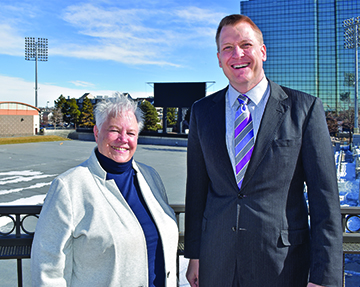
Changing Of The Guard: The City of Glendale transitions from outgoing, retiring City Manager Linda Cassady, to incoming, Council appointed City Manager Chuck Line.
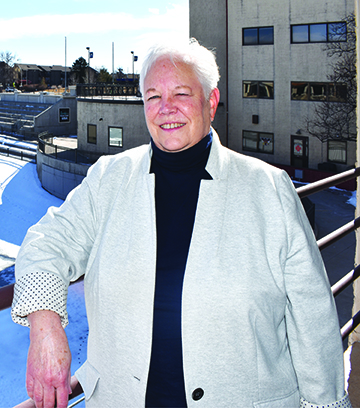
Outgoing City Manager: Linda Cassaday started her career with the city in 2003 and has been City Manager since 2019. She retired from the City, effective March 31, 2023.
After Glendale City Manager Linda Cassaday announced her retirement, the Glendale City Council appointed longtime city executive Chuck Line to succeed her. Line came to the city in 1999 where he served as the Community Development Director until 2004. He then assumed the role of Deputy City Manager in August 2004, a title he has kept until now.
Chuck Line has worked under four city managers during his tenure. Veggo Larsen, Cliff Dodge, Jerry Peters, and Linda Cassaday have been instrumental in Line’s career. “Veggo Larsen taught me if I knew where I was going to die, I would never go there, and he also taught me what not to do as a city manager,” said Line, incoming City Manager, City of Glendale. “Cliff Dodge taught me a lot about the inner workings, especially of the state and the legislature, because he had spent so much time in the legislature, and understanding how the impacts of the different legislation comes down.”
“Jerry [Peters] taught me about interpersonal relationships with different people. He was probably one of the most intuitive people that I’ve known on understanding people and having empathy and understanding people’s motivations and thoughts. And then, Linda [Cassaday] has taught me how to manage the inner workings of the city and how to properly manage projects and to implement them. I would say I have some really good examples. And also, all of those city managers, outside of Veggo, had good relationships with the city council.”
Chuck Line assumes the position of City Manager during a time of stability and growth. For example, the 4 Mile District, a 10-acre entertainment district, located in the heart of downtown Glendale, which has been envisioned for over 20 years, is expected to be completed on his watch.
“I am making this transition with a Mayor [Mayor Mike Dunafon] that has been around a long time, who has the same policy objectives as staff, and the rest of the council,” said Line. “Everyone gets along and we have a very stable council and Mayor during this whole time period.”
Linda Cassaday, outgoing City Manager of Glendale, gives a glowing endorsement for Mr. Line. “Chuck is incredibly bright and has been at the city longer than I have,” said Cassaday. “Chuck and I have worked really closely, especially over the last four years. This is a natural progression and it is going to be great for the city.”
Cassaday started her career with the City of Glendale as a consultant in November 2003. Previously, she was a CPA and in public accounting, mostly on the audit side of things. She specialized in governments, non-profits, and low-income housing tax credits. She became Finance Director in May 2004. Cassaday escalated to Deputy City Manager, and has been City Manager since 2019. Her last day with the city was March 31, 2023.

New City Manager: Chuck Line has been with the City of Glendale since 1999. He became City Manager on April 1, 2023.
Cassaday had a hand in many projects in her nearly 20 years at the City of Glendale. What is she proud of the most? “The whole transformation of the city with the building of Infinity Park,” said Cassaday. “It wasn’t my vision . . . but it was fun to be part of the team who built the stadium, event center, and sports center. All of that has transformed Glendale.”
The most challenging time during her tenure was when the COVID-19 pandemic hit. “I would say that 2020 was the most challenging timeframe because the new rules were coming out so quickly and unfortunately the Governor’s office did not involve the municipalities with communication,” said Cassaday. “Often we would find things out from our businesses and residents first. That was challenging.”
“The biggest thing during COVID was we wanted to be a resource for our businesses,” said Line. “It is hands down the hardest external thing that businesses ever had to deal with. They were burdened and we didn’t want to create additional burdens on them. We wanted to be that bridge between all of the different agencies that were putting out requirements.”
Cassaday will have an adjustment as she moves to the warmer climate of Florida. Cassaday was born in Denver and has never lived outside of Colorado. She has lived in Colorado Springs, Greeley, and Denver. “It is a little daunting to move from Colorado to some place different,” said Cassaday. “I can’t imagine a Christmas at 75 degrees but it will be a fun new adventure. It is going to be a huge adjustment. I am used to getting up early in the morning. It will be nice to wake up when I wake up.”
“Linda is probably one of the hardest workers I have ever known,” said Line. “She intimately understands not only the finances of the city but also has a really good sense of how to diplomatically talk to the different department heads about the interactions that they have with the inner workings of the city.”
Chuck Line grew up in Nebraska, and graduated from the University of Nebraska Omaha in May 1993 with a Bachelor of Science in Marketing. He then received a Master’s in Business Administration from the University of Nebraska in 1996. He graduated from the University of Denver School of Law in 2004 while working at the City of Glendale.
Cassaday admits that the team she has been surrounded by has helped her achieve, “In terms of what I can take away, it is just all of the people that I have worked with,” said Cassaday. “We have such a great team in Glendale. It is unusual in city government to find staff that cares as much as they do and works as well together as they do. It has truly been an honor to work there.”
Part of that team is Public Works Director Josh Bertrand who started at the city in 2007. He will now serve as Deputy City Manager under Line. “Josh has been great,” said Cassaday. “He came to us as the first turf manager when we built the stadium. He was involved in what kind of grass we needed to plant and what kind of maintenance and equipment we needed. Josh has been an integral part of this since he started in 2007. He has been a great team player not just in public works. Josh has always felt that he was a part of the bigger circle of people in the city. That is what made him an ideal choice as Deputy City Manager.”
Also promoted is Kieran Nelson, who will now serve as Director of Infinity Park Operations. Line looks forward to working with his new team. “It is my opportunity to create those same relationships with Keiran [Nelson], Josh Bertrand, Ken Lecrone [Finance Director], Chief Haskins [Chief of Police], and to have that same type of interaction where we can bounce things off of each other,” said Line. “We can make decisions as a group. All of these people are incredibly talented and they are knowledgeable and they make good decisions and it is important for me to utilize them.”
“All of these pieces are covered,” said Cassaday. “Infinity Park is a huge part of the city’s operations between the stadium, the events center, and the sports center. And Kieran takes on all of the facilities. It is a really good team that has worked together for the last several years.”
“The metropolitan area is undergoing challenging times,” said Mayor Mike Dunafon. “We have a great team in Glendale to meet those challenges and prosper.”
by Valley Gadfly | Mar 21, 2023 | Main Articles
Hippity Hoppin’ Down The Bunny Trail To Easter, Rebirth, New Life, And Spring’s Egg’stra Special Season
by Glen Richardson

Easter Brunch Bunch: Families celebrate the holiday at indoor-outdoor restaurant gatherings, including brunch in the regal 19th-century dining room at the Brown Palace Hotel downtown.

Colorful Easter Character: The Bible makes no mention of this long-eared, short-tailed character, nevertheless, the Easter bunny is a prominent symbol of Christianity’s Easter holiday.
Easter — April 9 this year — has become a charming Cherry Creek Valley tradition bringin’ baskets full of fun spring things to do ranging from egg hunt extravaganzas and bunny bolts to scrumptious spring feasting. Along with Easter Sunrise Service at Red Rocks and city-wide church services, the holiday is anchored by Passover which starts at sundown April 5 and ends April 13.
The holidays coincide with “Bud-Bust” — tell-tale signs that spring is upon us — as the Valley revives and reinvigorates after the colder months. Bees start buzzing as grass begins to grow again and flowers bloom.
From church services and colorful events to Easter eating, the Chronicle has found copious choices beyond dying eggs to keep you hoppin’ into spring:
Easter Services
Red Rocks Sunrise Service
Service is at Red Rocks Amphitheatre in Mor

Hatching Hunts: A tradition since 16th-century Germany, children search for decorated eggs a various Valley sites including Glendale’s Infinity Park Turf Field and Four Mile Historic Park.
rison, April 9. Gates open 4:30 a.m., pre-worship music at 5:30 a.m., service begins at 6 a.m. Speaker is Father Michael Nicosia, Priest at the Ecumenical Catholic Communion, Aurora. Music is by Blood Brothers, a folk, country, and worship music quintet. Information: 303-825-4910.
Augustana Lutheran Church
Located at 5000 E. Alameda Ave., Augustana’s Easter Garden will be in full bloom with music by the Easter Brass and Augustana’s Chancel Choir, 8 a.m.

April Showers Spark Flowers: Rain showers spark the beginning of flowers and plants to really start blooming. Symbolizing a fresh start, daisies and sweet peas are the flowers of April.
Information: 303-388-4678.
Catholic Basilica Of The Immaculate Conception
Holy Week at the Basilica on the corner of Logan St. and Colfax Ave. has the church’s most beautiful liturgies. Holy Saturday Vigil is 8:15 p.m., Easter Sunday Mass is at 8:30 a.m., 12:30 p.m., and 6:30 p.m. Information: 303-831-7010.
Saint John’s Cathedral
Cathedral is seat of the Bishop of the Episcopal Diocese of Colorado at 1350 N. Washington St. Service is at 10:30 a.m. with music by St. John’s School & Adult Choir. An Easter egg hunt follows from noon to 12:30 pm. Information: 303-831-1350.
University Park United Methodist Church
Church located at 2180 S. University Blvd. has 7 a.m. sunrise service on the Colgate Lawn followed by traditional worship in the sanctuary 9 a.m.-11 a.m. Information: 303-722-5736.
Assumption Of The Theotokos Cathedral
Greek Orthodox Easter — celebrated Sunday after Passover’s first full moon — is April 16 at the Cathedral in Glendale. Divine Liturgy, 9:30-11 a.m., ritual Greek Easter Dance (Cretan), 12:30 p.m.; Pan Orthodox Vespers, 5 p.m. Information: 303-388-9314.
Passover

Spring Services: In addition to Easter Sunrise Services at Red Rocks, St. John’s Cathedral (pictured) and churches city-wide celebrate with special services, music, and the ringing of church bells.
Judaism Your Way
Community Seder at Denver Botanic Gardens April 8, 5-8 p.m. Rabbi Caryn Aviv and Amanda Schwartz led Seder will feature High Holiday songs and Seder classics. Information: 303-320-6185.
Temple Emanuel
Passover day one service is April 6 followed by Young Family Pesach April 12. Temple’s Passover Seder is a buffet style dinner catered by Cohen’s Cuisine in the Social Hall April 5, 6 p.m. Seder will be led by Rabbi Joseph Black, Cantor Elizabeth Sacks, and Rabbi Emily Hyatt. Information: 303-388-4013.
Easter Egg Hunts
Glendale Sports Center
Egg Hunt is April 1 at Glendale’s Infinity Park Turf Field, 10 a.m. Hunts are for kids in three age groups: ages zero-three; four to six; and seven to age 12. Parking is available on the northeast corner of Kentucky & Cherry. Information: 303-639-4711.
Four Mile Historic Park
Hunts April 8 are at 9 a.m. and again at 1:30 p.m., beginning with Puppet Shows at 9:15 a.m. and 1:45 p.m. Morning Little Kid Egg Hunt is at 10 a.m. followed by Big Kid Hunt at 10:30 a.m., shadowed by a Magician at 11 a.m. Doors close at noon. Afternoon hunt doors open at 1 p.m., Little Kid hunt is at 2:15 p.m., Big Kid Hunt 2:45 p.m., with Magician at 3:15 p.m. Afternoon hunt closes at 4:30 p.m. Victorian Egg Rolling Contest, Musical Egg Chairs & Crafts all day. Information: 720-865-0800.
Stapleton Egg Scramble
The Stapleton Master Community Assn. annual scramble is April 1, 10 a.m. The first scramble is for children six and older (Parents not allowed); followed at 10:15 a.m. by ages zero to five, parents allowed. Information: 303-388-0724.
Easter Brunch
Bistro Vendome
Relocated from Larimer Square to 2267 Kearney St. in Park Hill, restaurant is expected to again feature Easter brunch. Anticipate omelets, Crepe Vendome, other popular selections, and their Chocolate Croissants. Information: 303-825-3232.
Edge Restaurant
Hop over to the Edge Restaurant & Bar in the Four Seasons Hotel downtown April 9, 9 a.m.-2 p.m. Featuring a raw bar, appetizers, salads, several entrée options, plus a carving station. Information: 303-389-3050.
Ellyngton’s
Appreciate breakfast and Easter brunch in the restaurant’s regal 19th-century dining room at the Brown Palace Hotel. Choices include waffles, pastries, omelets, salads, sushi, grilled meats, many more choices. Information: 303-297-3111.
Fire Restaurant
Experience brunch in one of the most desirable indoor-outdoor Easter settings at the ART Hotel on Broadway, 10 a.m.-2 p.m. Spring omelets, much more, plus a Bunny Menu for the kids. Information: 720-709-4431.
Local Jones
For a tasty holiday morning in Cherry Creek North, do brunch at this classic bistro in the Halcyon Hotel. Always delightful, choices usually include cinnamon rolls, roasted lamb shank, and more. Information: 720-772-5022.
Washington Park Grille
Enjoy a laidback ambiance at this Old S. Gaylord St. eatery with low-key dining room, lounge, and patio. Warm atmosphere with yummy choices such as waffles, omelets, a crab benedict, and more. Information: 303-777-0707.
Easter Dinner
Culinary Dropout
Eatery on E. 9th Ave. is offering two additional items on Easter weekend plus the regular menu. Standard items include Rainbow Trout, Squash Ravioli, and Fried Chicken. Information: 720-799-0190.
Humboldt Kitchen
Serving a special Easter Dinner featuring Herb Roasted Prime Rib from 3 p.m.-8 p.m. A holiday brunch is offered from 10 a.m.-2 p.m. The regular menu also available. Information: 303-813-1700.
Le Bilboquet
Restaurant on corner of 3rd Ave. & St. Paul in Cherry Creek offers dinner on Easter, plus a buffet. Last year’s choices were grilled chicken, Spaghetti & Meatballs, and Mac & Cheese. Information: 303-835-9999.
Monaco Inn Restaurant
Serving noon to 8 p.m., restaurant is featuring Colorado Spring Leg of Lamb with Greek potatoes, Greek Salad, and Avgolemono Soup. Menu also has other Greek & American specialties. Saganaki appetizer, plus homemade baklava or galaktoboureko for desserts. Information: 303-320-1104.

by Glendale Sports Center | Mar 21, 2023 | Glendale City News
As a parent, one of the most important — and sometimes challenging — things you may do is advocating for your child’s physical and emotional well-being. Childrens’ voices aren’t always heard, and sometimes they need adults to speak up on their behalf.
How To Advocate For Your Child At school
Being involved in your child’s education plays a powerful role in their academic success. If you’re wondering how to advocate for your child at school, keep in mind that you and your child’s teacher should work together to develop plans that make the school experience as positive as possible. Regular communication with your child’s teacher can help shed light on any problems or issues your child is having in the classroom, as well as assure you how your child is doing in school.
How To Advocate For Your Child In Social Settings
If your child needs help with bullying, it might be time for you to step in. When bringing up an ongoing issue with another parent, have the conversation privately rather than in front of other people. Begin by asking the other parent for their help. Don’t blame or shame, just stick to the facts and try to avoid using the word “bully.” Admit that you may not have the whole story (there are always two sides), so be open to what the other side is. You might even mention how awkward you feel bringing up this topic. Focus on working together to find a resolution that works for everyone. If the bullying doesn’t stop, follow up with the parent again.
In addition to directly communicating with other parents, have regular communication with school personnel. Ask your child’s teachers, coaches, and guidance counselors how your child is doing socially and emotionally at school and within their peer groups. If the bullying is happening at school, they need to be made aware so they can help. Lastly, be sure to keep tabs on your child’s online presence and make sure they’re using social media safely to help prevent cyberbullying.
How To Advocate For Your Child In Healthcare
Your child has rights as a patient and you also have rights and responsibilities as a parent. Some of those rights include taking part in all decisions regarding your child’s care and treatment, asking questions freely, whether to ask to see another doctor, get a second opinion, or change doctors or hospitals, and asking for things to be explained more clearly if you don’t understand fully.
At home, parents can prepare their child for an upcoming medical experience by being honest and informative. For example, if a child needs to visit their primary care doctor for a vaccination, parents can inform the child a few days beforehand. They might say, “It’s important to keep your body healthy, and part of that is going to the doctor even when we feel well, so they can help us continue to feel great in the future.” Then, as the appointment nears, parents can explain the vaccination procedure step by step, with sensory details, such as “first, you’ll feel cold soap that cleans your skin,” and “next, you’ll feel a poke that lasts less than 20 seconds.”
For more information around advocating for your child’s well-being, check out the full article here
To learn more ways you can keep kids healthy from Children’s Hospital Colorado experts, join five area YMCAs in the Denver metro area for Healthy Kids Day on Saturday, April 29. More details at https://denverymca.org/healthy-kids-day.