by Teresa Kutt, VP of Marketing and Communications, YMCA of Metro Denver
2020 has been a tough year for everyone. And it’s not over yet. Our country was fraught with a pandemic, and we also experienced our share of political and societal unrest. Despite these challenges, there are still many reasons to be thankful.
Close up of gratitude word with pen on notebook
This list is not meant to minimize the harsh reality of 2020. Many people have lost loved ones. Jobs. People are struggling financially and emotionally. But today, we’d like to shine a light on the positives in the Denver community and all around us.
1. People helping people
Often, helping others can be a good way to get our minds off our own worries. Since the pandemic hit in March, there have been countless stories about how people in the Denver community have been helping others since then.
Too numerous to list, support ranges from monetary help to giving of one’s own time. Thankfully, key organizations in the community, including the Food Bank of the Rockies, Mile High United Way and the YMCA of Metro Denver, just to name a few, have been helping to those in need to stay connected, healthy and to keep their bellies full.
2. Furry friends find new homes
The demand for new furry friends across the state, as well as nationally, has skyrocketed. With an increasing number of people spending more time at home, many individuals and families decided the time was right to expand their families; many cats and dogs have now been placed in their fur-ever homes throughout Colorado.
3. Creativity blossomed
Creativity experienced a resurgence during self-isolation.
Artwork: New murals popped up throughout the Denver community. Inspiring works of art were created to bolster positivity, as well as to acknowledge and support healthcare workers and others on the frontlines of the pandemic.
Sewing: Many people dusted off their sewing machines and brushed up on their stitching skills to make masks for essential employees, as well as family members and friends.
Cooking: Cooking and baking also gained popularity in households across the country. Not only does trying out a new recipe provide entertainment, it also provides comfort and sustenance.
Virtual Connection: It wasn’t only schools that went virtual; many musicians, artists and museums opened their performances, shows and collections virtually, allowing individuals, families and students to explore new places and things from the comfort and safety of their own homes.
4. Family Time
For families regularly caught up in the rat race, 2020 has presented them with more time at home to connect, to spend time together and to enjoy each other. Many families in the Denver community report an increased sense of connection and communication among each other since the pandemic began.
Is there something you’re particularly grateful for? Please share it with us!
To learn more about health and fitness programs at the YMCA of Metro Denver, visit https://www.denverymca.org/.
Cory Gardner — Rumor has it, this is straight out of Ripley’s Believe It Or Not, this sock puppet is thinking about running for governor. For God’s sake, stop now.
Ken Buck — As they said in the Marlon Brando classic, On The Waterfront, a one way ticket to Palookaville, for being the only state in the country that the blue wave actually hit. Good job State GOP.
Lauren Boebert — Who has emerged as the face of the real Republican Party. Went up to Mount Rushmore, met Donald Trump, showed up at a fundraiser I went to this summer packing a gun. You go, girl. In my world you are the face of the Colorado Republican Party. But they will cut her throat just like they did Tom Tancredo’s.
Jared Polis — What do you give a man who has everything and has a lock on a second term if those GOP idiots really do run Cory Gardner. Let’s find another Coors brother, Walker Stapleton, Bob Beauprez, Bruce Benson, or some other stooge that would never be seen wearing a Trump hat. Good luck.
Michael Bennet — Will he and John be roomies? Hope you’re not challenged by Lauren Boebert. But see what we’ve said about the Republican Party. Don’t worry dude, you’re safe.
John Hickenlooper — Thank his lucky stars that hard hitting Cory Gardner never put up any resistance to defeat the weak sister of the Democrat Party himself. Dude, you caught a break. Welcome to the U.S. Senate.
Tay Anderson — How in the world do you think all of the antics that you’ve pulled in the streets of Denver have anything to do with educating the children and grandchildren of Denver? The spotlight is not the place for an educator, but I repeat myself.
Kyle Clark — Are you and the missus going to be cooking the Christmas goose for the armed security guards who protect you from the dumpster burning, dangerous Trump supporters? Man, that’s laughable.
Susan Cordova — the just resigned Superintendent of Denver Public Schools. One-way ticket to Dallas. Have a nice day.
Colorado Republican Party in general — In the words of Joseph Welch to Joe McCarthy during the McCarthy hearings, “At long last, have you no shame?” What this Party needs is a major infusion of testosterone, growth hormone and gunpowder.
Patrick Neville — One of the hopes of the Colorado Republican Party. But don’t worry folks they will shipwreck him as soon as they can.
Ted Trimpa — Aka the Sword of Soros. Great year, my friend. Thank you, all the best.
Your Denver Broncos — The team that continues to buy Harvey Steinberg new cars.
John Bandimere — A great man who had a very hard year. He deserves our Merry Christmas.
Your Local Health Departments — It is amazing how we place tremendous power in the hands of so few and in the words of Winston Churchill, never have so many been screwed by so few.
Candi CdeBaca — Is she Denver’s future? Does Denver have a future? And truly how can it be worse than Michael Hancock?
Michael Hancock — Now that you’ve screwed up the mayor’s job for everyone else… Congratulations.
CDOT – RTD Combo — Seriously how do you screw up everything you touch?
Mayor of Glendale, Mike Dunafon — Job well done. Ever think about running for governor?
Denver Police Chief Paul Pazen — That junior G-man kit. The gift of the truth that someday you’ll tell people where you were hiding the day Antifa thugs beat people up in Civic Center Park. Shame, shame, we know your name.
Brother Jeff — For years and years of appearing on the radio station with me and pissing off the Mile High City, you da man.
Beth McCann — For you and the mister, a can of fire starter. Let’s see if this guy ever does a day.
Elite competitors will have a new avenue to showcase their athletic talent. Taking place November 17 through 21, Glendale is hosting an invitation-only crossover camp that is designed to attract top athletes from non-rugby sports and teach them how to play rugby. The brainchild of Glendale’s Director of Rugby and Manager Mark Bullock, the crossover camp will focus on recruiting American athletes who could become star rugby players.
Photo by Justin Purdy
“The majority of elite athletes in the USA were playing university sports and then would go on to the NFL, NBA, NHL, or the Olympics for track and field, wrestling etc., if good enough,” Bullock explains. “The thought was, why not recruit those elite athletes to rugby once they have completed their university eligibility and/or were cut from professional teams.”
According to Bullock, other rugby teams are at the top of the world rankings because they have elite athletes playing for them. Conversely, the USA has done poorly in the Rugby World Cup over the years because the competitors have been good rugby players but not top athletes. He adds, “We want to change the equation. In the past, our top USA Men’s National Team players have all come from other sports.” By effectively converting elite athletes (who have previously been in scholarship university sports programs) into rugby players, Bullock hopes to mold them into World Cup-worthy competitors.
New Method Of Recruitment
For those unfamiliar with the rugby world, and to use pop culture as an example, the notion of an athlete crossing over from one sport to the other has historically gone well. In The Cutting Edge, a college hockey star trains hard and becomes a gold medal-winning Olympic figure skater and, in Cool Runnings, track runners work hard and become a competitive bobsled team. But in real life, some might question whether or not a former track star, or former hockey, basketball, or baseball player can turn into a competitive rugby player. Based on the trial camp Bullock ran in 2018, he is confident it will work.
“We trained for a week and then played in the Aspen Ruggerfest where we lost our first two matches but improved each game,” he remembers. “The last two matches we won quite readily as the players got better acquainted with the game, and how it is played, demonstrating that we can make the transition. Now our goal is to transition the players into a professional team to ultimately compete in a foreign competition and develop players for the USA National Team.”
In preparation for the crossover camp, Bullock and his staff created a database comprised of approximately 3,000 athletes from collegiate football, basketball, wrestling, track and field, along with players from the NFL, XFL, CFL, and other sports. Additionally, similar to Cool Runnings, Bullock and his staff have worked with the USA bobsled program and learned about how they recruited crossover athletes for their program. By researching university athletic program websites, coach contacts, NFL websites, and team sites, they were able to accumulate a comprehensive list of athletes and then watched video, spoke to coaches, and found methods to contact the players who fit their criteria.
Photo by Seth McConnell
Intriguing Sport
When asked whether these athletes are excited about rugby or if they know anything about the sport coming into the camp, Bullock says that so far, he has seen a mix. He explains, “Some have played, some have seen the sport, and others have just heard of it. One example is a wrestler, who recently graduated from Stanford, told us he was intrigued by the sport and really liked the ‘pile of guys in the middle,’ referring to a scrum. And he wanted to be right in the middle of it.”
Another example comes straight from the Glendale coaching staff. Defense Coach and Director of Amateur Rugby Luke Gross was a Division One basketball player on scholarship at Marshall University and was randomly asked to play rugby while he was a graduate student. He accepted the offer and within a year he was on the USA National Team, earned a contract to play professionally in Europe, and ultimately played 12 years as a professional rugby player in England, Wales, and Italy.
Talent Goes A Long Way
Overall, Bullock’s goal for the crossover camp is to offer players professional contracts following the camp, and for these players to develop to the point where they are able to represent the USA and make the team a contender at the Rugby World Cup. He says he expects a minimum of 40 athletes to attend the camp and contract offers will depend on performance during the camp.
“This is an experiment and we have a hypothesis that we can convert crossover elite athletes to become a high-performing rugby team,” Bullock explains. “Not all hypotheses work out 100 percent but we will adjust and learn along the way, just as the athletes we will be introducing to the game will learn.”
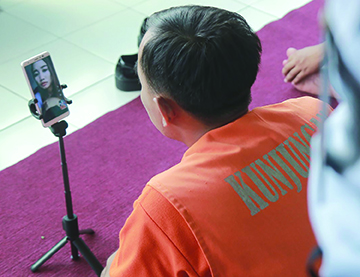
While county jails across the country were restricting inmate phone calls, video chats with family members, and in-person visits because of COVID-19, staff at the Denver County Jail found new ways to keep their inmates connected to their systems of support.
Remote Visits: Remote visit capabilities for inmates were expanded to seven days per week.
Relying on mobile hotspots for Wi-Fi, jail staff allowed inmates to use laptops and tablets to converse with their support system outside the jail, at times for free or at a reduced rate.
Funding for the program came from a $340,000 grant from the Caring for Colorado Foundation and Denver City Council, which approved the purchase of additional video and phone monitoring software from Securus Technology, LLC, less than one month after Mayor Hancock issued his public health emergency declaration in March.
Major Rick Guerrero, who oversees operations of the county jail, credits the decision to decrease the inmate population and the facilities’ sanitation protocols were the keys to successfully implementing this program.
“We are very sensitive to the needs of our community and those in our care, especially in uncertain times like during the pandemic,” he told the Glendale Cherry Creek Chronicle in an interview. “That’s why it was so important for us to build strong bridges and make sure inmates didn’t lose their ability to connect with the outside world.”
A report authored by the Prison Policy Initiative (PPI) in September found the pandemic caused detention facilities in several states to restrict inmate communication programs like free phone and video calls and family visits.
“The stress of the pandemic means that most families need more communication than normal,” the report reads. “People with friends or family behind bars need to stay up to date on their loved ones’ health and provide emotional support, especially given that chronic illnesses that make people vulnerable to the virus are more common behind bars.”
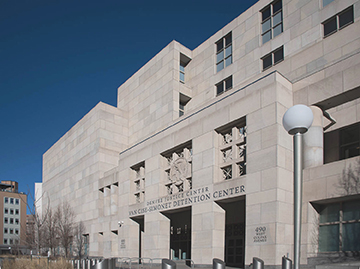
Fully Operational: The phone lines at Denver’s Van Cise-Simonet Detention Center remained in operation from 9 a.m. to 9 p.m. daily, even when the jail experienced its most serious COVID outbreaks over the summer.
Carrie Stanley, DSD’s program director, added another layer to this analysis, describing the responses as counterproductive and especially harmful to inmates with mental health or substance abuse issues facing strenuous reentry programs.
“People are worried about what was happening in the community, about how to connect with people over the internet versus going into their offices,” she told the Chronicle. “Successful reentry programs rely on keeping inmates in connection with positive support systems.”
Phone Calls
The report found county jails in states like Alaska, Pennsylvania, and Vermont, that had completely ended phone calls for their inmates.
Meanwhile the phone lines at Denver’s Van Cise-Simonet Detention Center remained in operation from 9 a.m. to 9 p.m. daily, even when the jail experienced its most serious COVID outbreaks over the summer.
Inmates placed in administrative segregation were allowed the same communication privileges as inmates in general population.
Guerrero says the lower inmate counts allowed county jail staff to closely ensure inmates practiced social distancing at the phones. Inmates and staff also split responsibility for cleaning the phones three to four times per day.
However, increased supervision was not the only cost borne by connecting inmates with their support systems. PPI’s report found that “one in three families with an incarcerated loved one go into debt paying for phone calls and visits, and half struggle to pay for basic housing and food needs.”
Securus charges a fee per minute usage to inmates who call their families via telephone or video service. The average cost of a 15-minute call in Colorado is $14.85, well above the national average cost of $5.74, according to the Prison Policy Initiative.
In Denver, phone calls cost $.08 per minute and $9 for a 30-minute video call.
“In-person” Visits
It’s been 15 years since inmates in Denver County Jail could hug their loved ones during visits. Instead, visitors come to the jail lobby to use a phone and video system that connects to the housing units.
Report: A report by the Prison Policy Initiative (PPI) found the pandemic caused detention facilities in several states to restrict inmate communication programs like free phone and video calls and family visits.
Under normal circumstances, these visits are 30 minutes long and are only allowed from Friday to Sunday between 12 and 8 p.m. Visits at the Downtown Detention Center are similarly restricted.
Once the pandemic hit in late March, DSD restricted visitor access to their lobby and increased inmate visitations to 7 days per week, thereby creating a need to expand their remote visit capabilities.
Securus provided DSD with coupons for free virtual visits so families without computers can still visit with inmates. Between April and June, DSD gave out 450 coupons, according to Stanley.
Securus also provided compassion credits to inmates with family members who were ill or who had passed for free video calls.
“The people in our care often don’t have access to their family members for most of the time they’re here,” Stanley said. “In terms of the pandemic, we saw an increase in inmate family members who got sick or passed.”
To help inmates grieve, DSD individualized its chaplain services. Before the pandemic, as many as 20 inmates could see the Chaplain at the same time. Now, DSD only allows eight in a room together and has suspended all volunteer religious providers.
Kites And Staff Communications
Inmates don’t just communicate with people outside detention facilities. In Denver, inmates use a color-coded kite system to communicate their needs with jail staff. Inmates submit a yellow kite to communicate a problem with staff and a green kite for health services requests, according to the inmate handbook.
Kites are sent to responsive departments depending on the request. For example, all kites concerning communications with the phones or video chat lines are directed to the Accounting Department.
Stanley said the jail maintained enough staff to process kite requests, and improved their efficiency in many cases.
“Our people were keenly aware of the need for communication. There’s really a lot of compassion on this team,” she said. “We know this pandemic has increased anxiety for many people in our care, so we had to increase our efforts.”
Stanley and her team also addressed inmate anxieties by increasing their rounds in the housing units from once a month to once per week. This allowed program staff to take a more personalized approach to their jobs, and gave inmates more chances to ask program staff about reentry programs, lining up a safe home, and other means of survival outside of jail.
“The pandemic has really taught us that people respond better if you focus on them as an individual rather than as a group or housing unit,” Stanley said.