
St. Andrews Village




by Charles Bonniwell
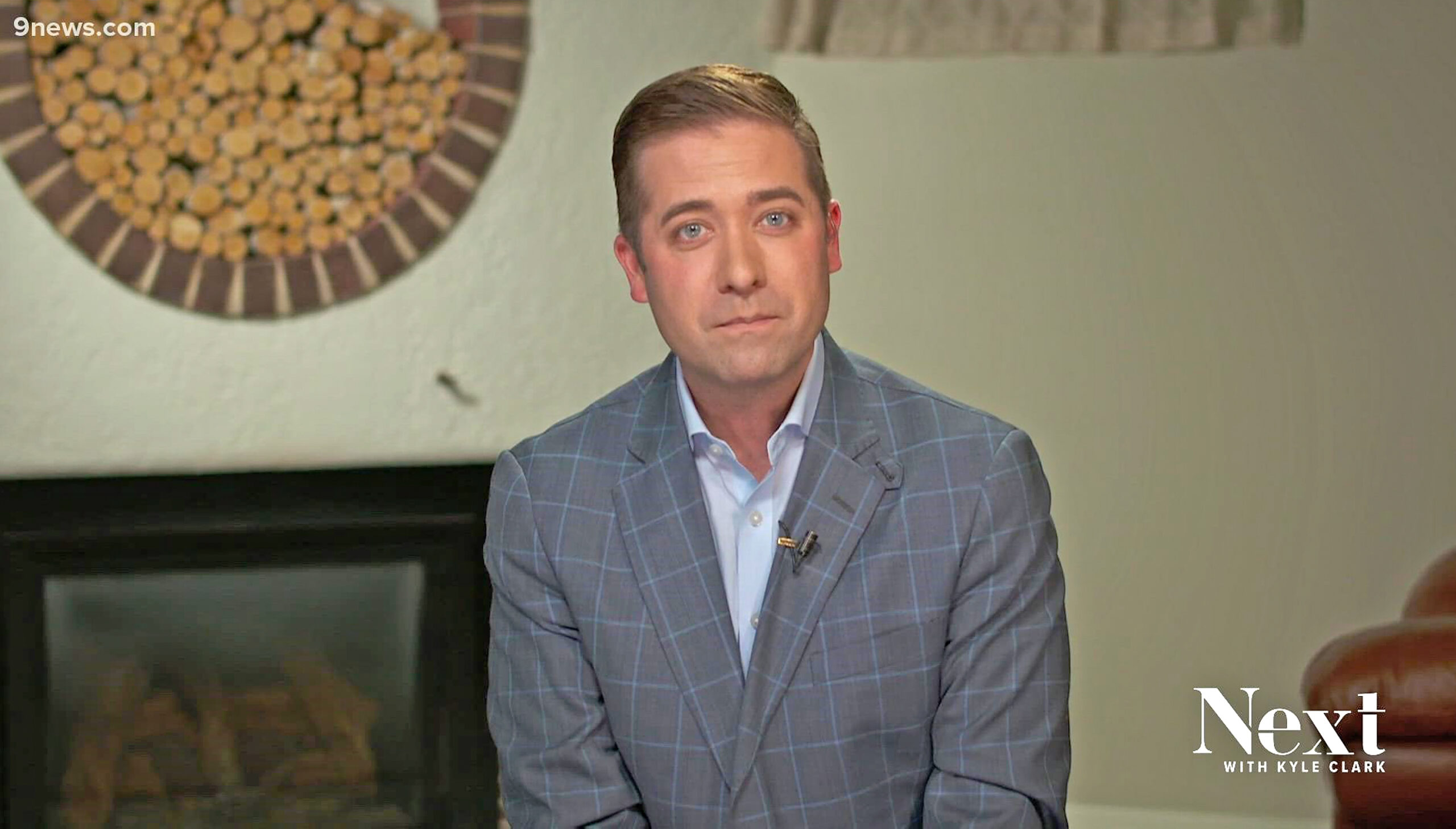
Divider: Critics say Channel 9 News anchor Kyle Clark has instigated class warfare over Alameda Avenue in order to boost his slumping ratings.
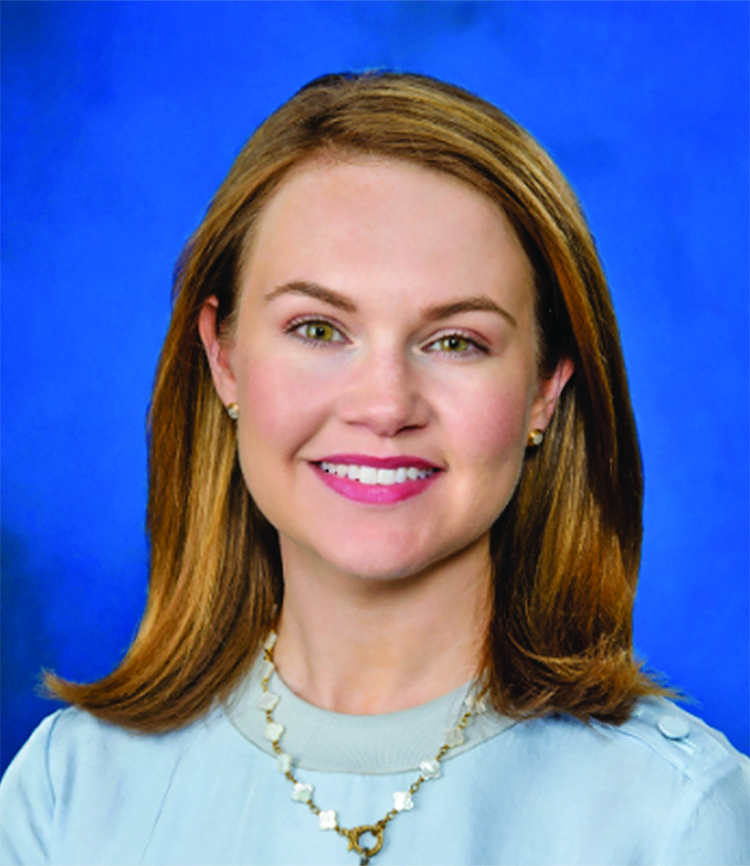
Unlikely Hero: Jill Anschutz, daughter-in-law of Colorado’s richest man, has become a surprising popular advocate for many everyday Denverites.
Denver’s hard progressive left and its media advocates, headed by Channel 9’s Kyle Clark, have decided to flex their increasing muscle to go after and try to crush the middle-class homeowners, small businessmen, and everyday commuters who once were important voices in the city, all over a relatively short one-mile, 10-block stretch of East Alameda Avenue in the East Washington Park area.
Opposing Clark and his powerful allies is an unlikely voice for the middle class, Jill Anschutz, the daughter-in-law of Colorado’s richest man, Phil Anschutz. Although she married into a rich family, she herself did not come from a wealthy background.
She graduated magna cum laude with a journalism degree from Taylor University, a small Christian liberal college in Indiana, before moving to Denver, where she met Christian Anschutz around 2015. They have several children together.
Repurposing Project
“While my name might stand out, this is not about me,” Anschutz has indicated. “It is about hundreds of neighbors and businesses who are concerned about negative unintended consequences from the initial design of the Alameda Lanes Repurposing Project.”
The war between the two sides relates to the Department of Transportation and Infrastructure (DOTI) “Alameda Lane Repurposing Project” for Alameda Avenue between Franklin and Downing streets.
On November 7, 2025, DOTI came out with its plan for public comment, with implementation to begin in late 2026. The existing road has two lanes in each direction. It acts as a major thoroughfare for east-west traffic in that portion of the city. The plan would have cut the street down to a single lane each way. It would add dedicated left-turn lanes at various intersections and install medians and bollards at others to eliminate left turns altogether.
DOTI declared the goals of the plan were to reduce crashes, provide pedestrian safety, and improve accessibility, and of course no one believed them. Critics of the city administration believe that many, if not most, of the city’s plans have a real purpose hidden behind politically correct bromides.
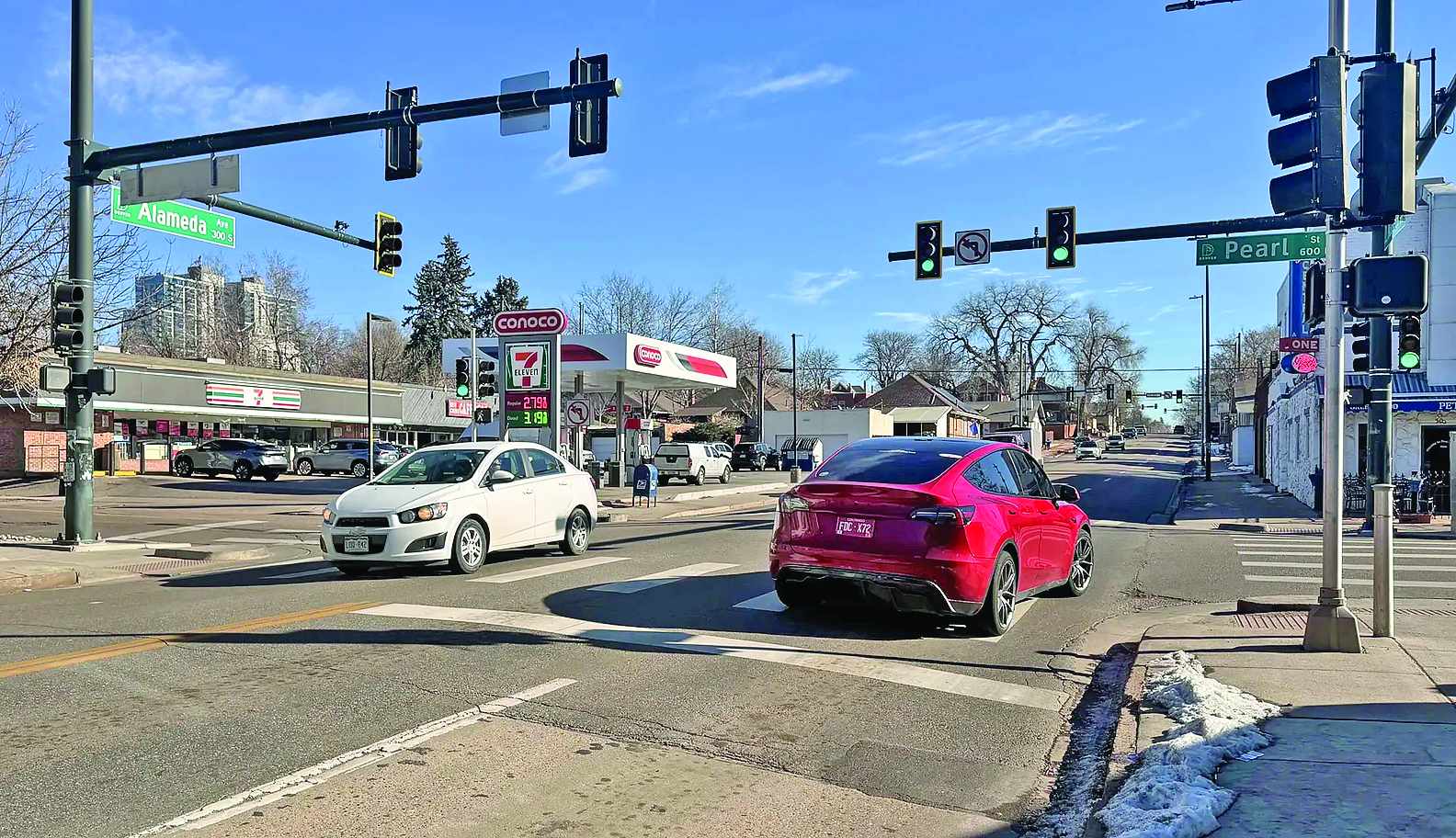
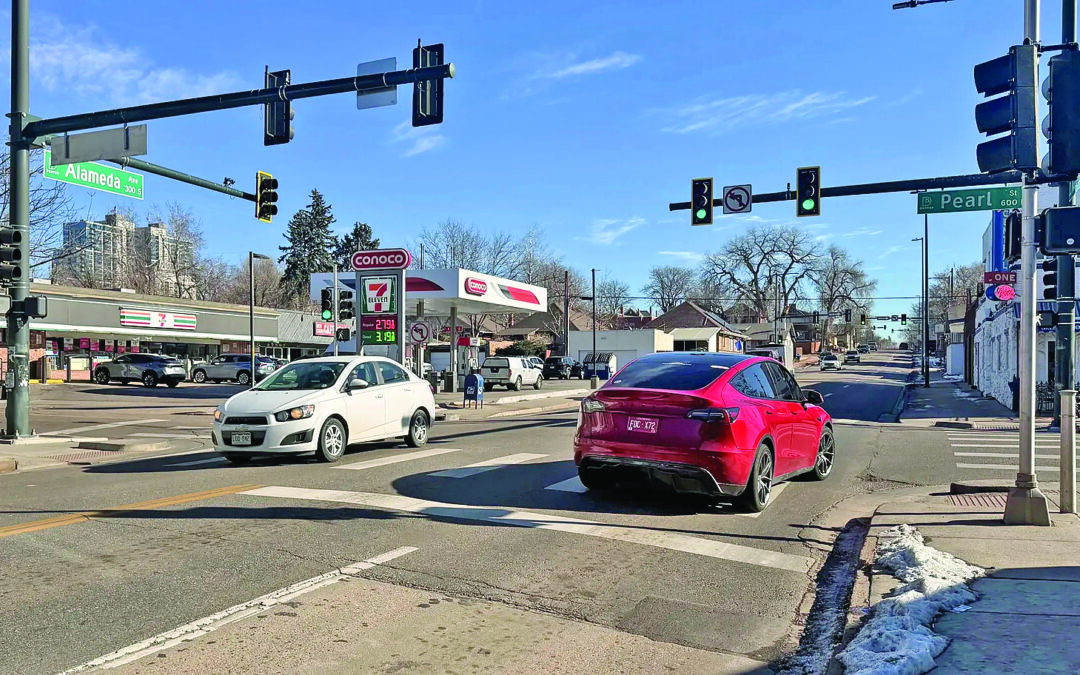
Busy Traffic: The one-mile stretch along Alameda Avenue that is subject of DOTI’s repurposing project has many fender bender accidents but no reported fatalities or serious injuries.
The idea that “safety” is the overriding concern of Kyle Clark or his adherents is somewhat ridiculous. Given the number of lights and stop signs on this one-mile track of roadway, cars drive very slowly. While there are various accidents reported, they are overwhelmingly fender-bender-type accidents; there have been no reported fatalities or serious injuries.
The real fight is about competing visions of what kind of city Denver should be.
Ideal Choked-Up City
Some members of the Denver City Council and the City Administration believe cars are a baneful influence on a city. By reducing cars and car traffic, they believe it would help in fighting climate change and create a more egalitarian society where everyone is made to ride bicycles, walk, or take public transportation in the form of buses or trains. That would create an idealized “15-minute city.”
But what about middle-class families for whom cars are an enormous benefit to their lives, along with small businesses that depend on car traffic? To the hard progressive left, they are what the “kulak” farmers were to Stalin’s Russia in the 1920s — an impediment to true progress that needs to be liquidated.
If given their druthers, the hard left would simply ban cars within the confines of the city, but that is not politically viable at the present time. Instead, in the name of “safety,” “sustainability,” “accessibility,” “affordability,” etc., driving in Denver must be made as unpleasant as possible to get people to cease using cars.
One method is making parking as difficult as possible, so Denver did away with an all-parking requirement for any new project. Another method is making driving as unpleasant as possible by creating as much traffic congestion as can be imposed.
On many major thoroughfares in Denver, including Colfax Avenue, Federal Boulevard, and Colorado Avenue, DOTI and/or CDOT have ongoing projects whereby the number of traffic lanes is to be reduced and substituted with bus or bike lanes.

Pitch Battle: Admirers of Jill Anschutz have come to view her as a modern day Molly Pitcher in Anschutz’s battle against what they view as the Godless mercenary hords of Kyle Clark. Shown above is Molly Pitcher in the revolutionary war battle of Monmouth in 1777.
For other thoroughfares such as Alameda Avenue, in the name of “safety,” the number of lanes is reduced to create a left-turn lane and create congestion on the remaining lanes.
Opposition Arises
After the city’s proposed plan was issued in November 2025, a group headed by Jill Anschutz entitled Act for Alameda was formed, representing homeowners in the area, small businesses along Alameda Avenue, and commuters who used Alameda as an east-west corridor to get across the city.
The group sent a letter to Denver Mayor Mike Johnston opposing the plan, indicating that the project would potentially create massive traffic congestion, pouring cars onto residential side streets where families and children would be walking. Moreover, to the extent that safety was actually a concern, there were less disruptive ways to lessen the fender-bender accidents on the road.
Jill Anschutz, who owns a home just off Alameda Avenue, was a logical person to lead the group. She had been a long-time marketing, public relations, and messaging consultant, and was now a freelance communicator and project director. She even hired a lobbyist for the group with experience dealing with DOTI.
Anschutz and Councilmember Kevin Flynn were able to point out that in 2012 the exact same lane reduction was implemented by DOTI and was so disastrous that the road was quickly adjusted back to its present configuration.
Plan Modification
DOTI then came up with a modified plan that kept all four lanes but converted some spans into “turn pockets” for drivers turning left. Advocates indicated the modified plan would provide less congestion while still making the road “safer.”
Normally that would have been the end of the matter, but Channel 9’s Kyle Clark latched onto the fact that Act for Alameda was headed up by Jill Anschutz, a born-again Christian and the daughter-in-law of Colorado’s richest man, Phil Anschutz.
Kyle Clark Weighs In
Channel 9 was for many years Colorado’s leading television station and was dubbed “mommy news” for its female-oriented soft news orientation. But over the last decade, ratings for local television news have dropped precipitously, particularly for Channel 9 News.
In 2016, NBC affiliate KUSA-TV decided to stop being “mommy news” and go hard left, with long-time employee Kyle Clark being the anchor not only for the 9 o’clock and 10 o’clock news but also for his own weeknight show, Next with Kyle Clark. With a hard-left agenda, the station and Clark attracted national attention, appearing on Jimmy Kimmel Live, and Clark was featured and interviewed on MSNBC by Rachel Maddow and on CNN.
But in recent times, Clark and Channel 9 News fell significantly behind FOX31 KDVR in ratings. Clark reveled in being called “a virulent anti-Christian bigot” and a “commie.” Clark, in order to regain ratings, had to return to his progressive hard edge, and evoking class warfare over Alameda Avenue seemed like a perfect avenue to do so.
His virulent attacks on Anschutz and her use of a lobbyist to plead the homeowners’ case caused a media frenzy. The Denver Post, in an article with a headline “PR Nightmare for Mayor Mike Johnston,” revealed that Clark and Alameda Avenue helped “trigger a maelstrom of critical media coverage, the resignation of a member of the Transportation and Infrastructure Advisory Board and, late last month, a formal letter of protest from a majority of the City Council.”
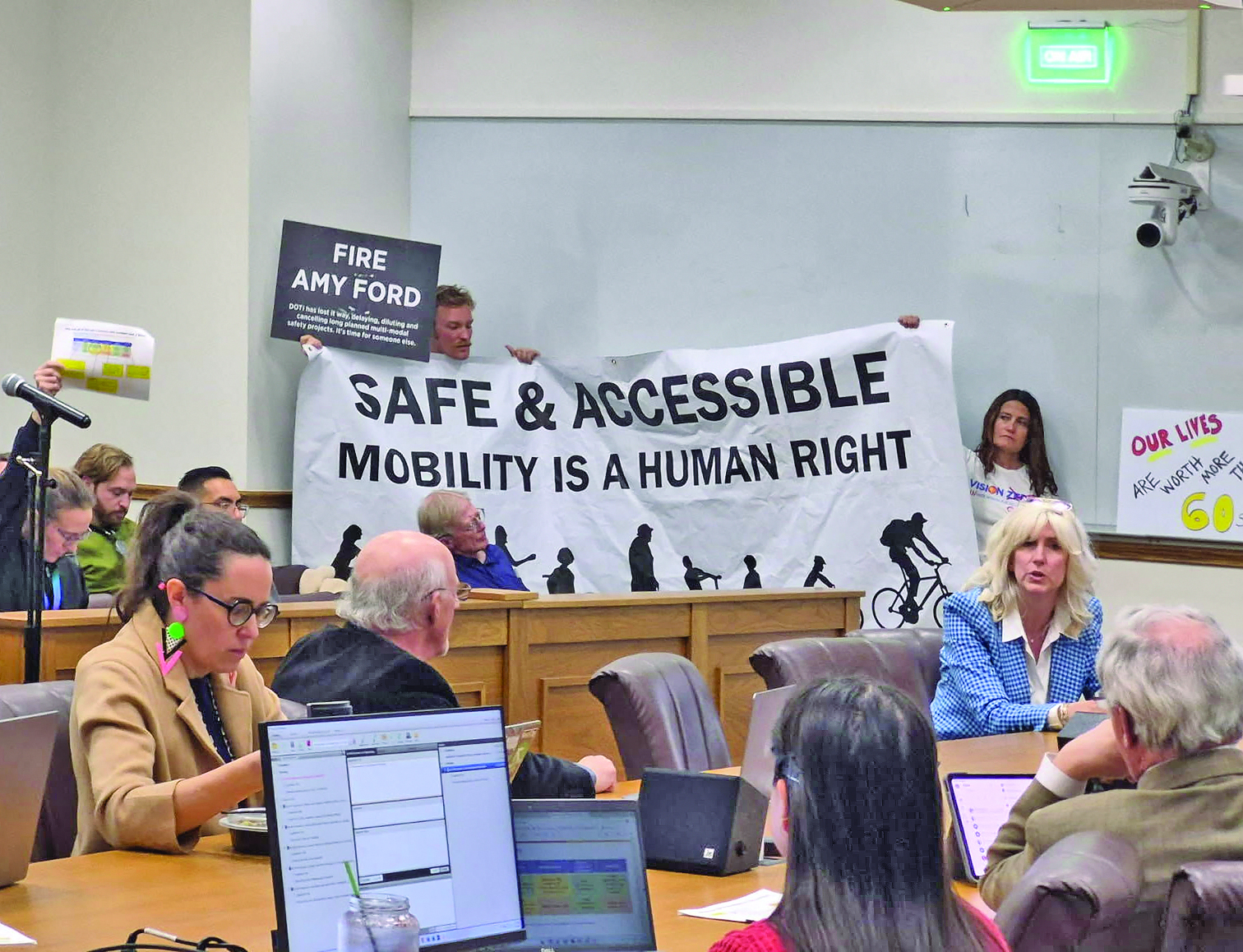
Official Under Fire: DOTI Executive Director Amy Ford seen here at a recent contentious city council meeting in Denver.
But the ugly onslaught on Jill Anschutz did not make her back down as Clark had expected. Her friends indicate that, growing up in a strong Christian family, she was taught that when you stand up to a powerful bully like Clark, you can expect to be persecuted.
One More Plan
Clark, by trumpeting that the city, in coming up with a revised plan, had bowed to Jill Anschutz because she had married into a rich family and therefore the city was “lifting certain voices over others,” used a class warfare tactic that worked to cause DOTI to announce in January that it would backtrack again into demonstrating one, if not both, of the proposals.
But testing the “safety” of both of the proposals is, of course, somewhat useless since safety was never the actual issue. The Alameda Avenue controversy is a clash of political wills between the hard left, who ultimately want a car-free Denver to the greatest extent possible, and middle-class homeowners and small businesses that want a livable city for families, particularly those with children.
For the hard left, Clark is their champion. For everyday Denverites, they finally have their own hero, Jill Anschutz.