by Amber Wyatt | Sep 29, 2026 | General Featured
by Amber Wyatt
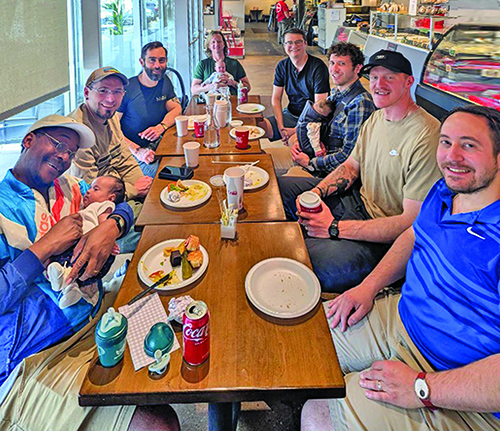
Abbas and Babbas participants meet on a Sunday at Zaidy’s Deli.
For many new parents, the first years of raising a child can be both joyful and isolating. While mothers often have access to a variety of support groups and parenting networks, fathers can find it more difficult to connect with others navigating the same stage of life. The Staenberg-Loup Jewish Community Center (JCC Denver), located at the intersection of Leetsdale Drive and South Dahlia Street, is working to change that with the launch of Abbas & Babbas, a free community program created specifically for dads of infants and toddlers.
The program is part of the JCC’s expanding First 36 initiative, which supports families from pregnancy through a child’s first three years. While many of the organization’s prenatal and postnatal offerings have traditionally focused on mothers and caregivers, Abbas & Babbas recognizes that fathers also benefit from dedicated spaces to build friendships, exchange advice, and navigate the challenges of early parenthood together.
The name combines the Hebrew word “Abba,” meaning father, with the familiar English word “Baba,” creating a welcoming title that reflects both Jewish tradition and the diverse families who make up the Denver community.
The program alternates between two types of gatherings every other week. Tuesday evening sessions feature facilitated conversations led by a licensed therapist, giving fathers an opportunity to discuss topics ranging from sleep deprivation and work-life balance to relationships and the emotional transition into parenthood. These conversations are designed to create a supportive, judgment-free environment where participants can openly share both successes and struggles.
On alternating Sundays, the group trades the meeting room for more casual outings. Fathers and their babies gather at parks, museums, restaurants, and other locations throughout the Denver metro area, providing opportunities to socialize while spending quality time with their children. Babies are welcome at all events, and no registration is required, although advanced sign-ups help organizers plan attendance.
The program reflects a growing understanding that fathers play an increasingly active role in raising young children and also benefit from meaningful peer support. Research has shown that strong social connections can improve parental well-being, reduce stress, and ultimately strengthen family relationships. By creating intentional spaces where fathers can connect with one another, the JCC hopes to foster lasting friendships that extend well beyond the early years of parenting.
Although rooted in Jewish values of community, kindness, and inclusion, Abbas & Babbas welcomes fathers of all backgrounds. The JCC has long positioned itself as a community resource serving the broader Denver population through educational, recreational, cultural, and wellness programming, regardless of religious affiliation.
The addition of Abbas & Babbas complements a growing lineup of family-focused offerings at the JCC, including prenatal education, breastfeeding support, caregiver-and-child classes, early childhood education, cultivating sleep routines, and the Community Baby Closet, which provides essential supplies to families without excluding fathers. Together, these programs aim to support parents through every stage of early childhood, from pregnancy through the toddler years.
As Denver continues to attract young families, initiatives like Abbas & Babbas demonstrate how community organizations are adapting to meet the evolving needs of modern parents. By recognizing that fathers also need connection, encouragement, and community, the JCC is helping ensure that no parent has to navigate the challenges of early childhood alone.
Abbas & Babbas meets every Tuesday evening at the JCC Denver, 350 S. Dahlia St., with alternating Sunday social gatherings held throughout the metro area. Participation is free, and fathers with babies or toddlers are encouraged to attend.
by Amber Wyatt | Sep 29, 2026 | Glendale City News
by Amber Wyatt
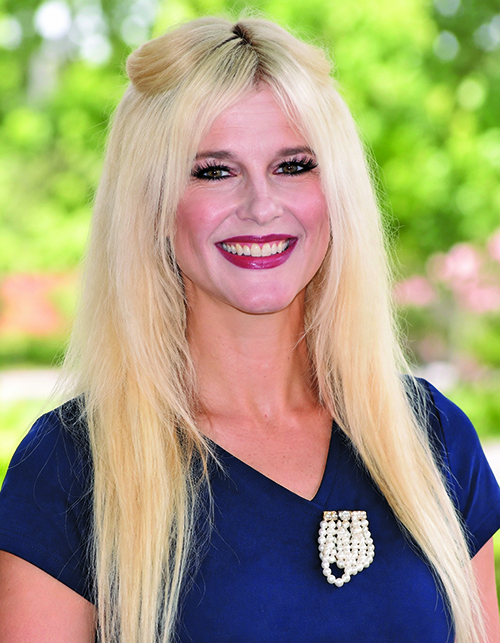
Republican Candidate for CD1: Christy Peterson
For the first time in nearly three decades, Denver voters will choose a new representative for Colorado’s 1st Congressional District this November. But the contest is about more than replacing longtime U.S. Rep. Diana DeGette.
It also raises a question that has dogged Republicans in overwhelmingly Democratic Denver for decades: Can Republicans, unaffiliated voters, and Democrats uncomfortable with their party’s nominee ever coalesce around a single alternative?
This year, they will not have only one alternative.
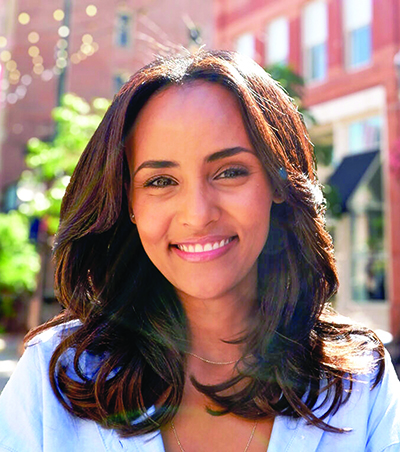
Democratic nominee Melat Kiros, Republican Christy Peterson, and unaffiliated candidate Dr. Shimon Blau headline a crowded November ballot that also includes Libertarian Chad Humphrey and Unity Party candidate Christopher “Critter” Milton. The multiple candidacies mean voters who do not support Kiros have several places to go — rather than a single challenger around whom they might consolidate.
That dynamic is particularly notable this year because Kiros is not a conventional establishment Democrat. The 29-year-old first-time candidate identifies as a democratic socialist and is a member of the Democratic Socialists of America. In June, she defeated DeGette, one of Colorado’s longest-serving elected officials, by more than 13 percentage points in the Democratic primary.
Kiros has said democratic socialism, to her, reflects a belief that government has a responsibility to meet people’s basic needs. Her platform includes Medicare for All, universal child and elder care, the Green New Deal, and making utilities publicly owned.
Democrat Candidate for CD1: Melat Kiros
International affairs have also become a significant part of the discussion surrounding her candidacy. Kiros has taken positions on Israel and Gaza that have drawn criticism, including from some Democrats. Axios reported in August that Democratic congressional nominees Dwayne Romero, Eileen Laubacher, and Jessica Killin said they would not endorse Kiros, while U.S. Rep. Jason Crow congratulated her on winning the primary but had not endorsed her campaign at the time of the report.
That makes the 2026 race an unusual test for Denver Republicans and political independents. A Democratic nominee well to the left of DeGette might appear to create an opening for voters looking for a more centrist alternative. Instead, those voters have multiple choices.
Peterson, 41, was the only Republican seeking her party’s nomination. The South Denver resident works in office management and accounting for a construction company and has centered much of her campaign on fiscal issues and public safety.
“I will work on reducing federal debt while helping our American farmers & ranchers sustain long-term production,” Peterson says.
“Supporting our local Police Departments with funding, training, and resources is my top priority,” Peterson says. She argues that improving public safety is important to Denver’s economic health and that a stronger business climate can create jobs and greater economic self-sufficiency. She also connects crime with some of the increasing costs confronting residents, including automobile and property insurance.
Her stated goal is “to make Denver a safer, more prosperous city for everyone.” But Peterson is not alone in trying to attract voters who want an alternative to Kiros.
The race changed significantly in July when Blau, a Denver physician specializing in pain management, qualified for the ballot as an unaffiliated candidate. Blau gathered more than 2,200 signatures in only a matter of days. State election officials determined that 1,918 were valid, comfortably exceeding the 1,500 required to qualify.
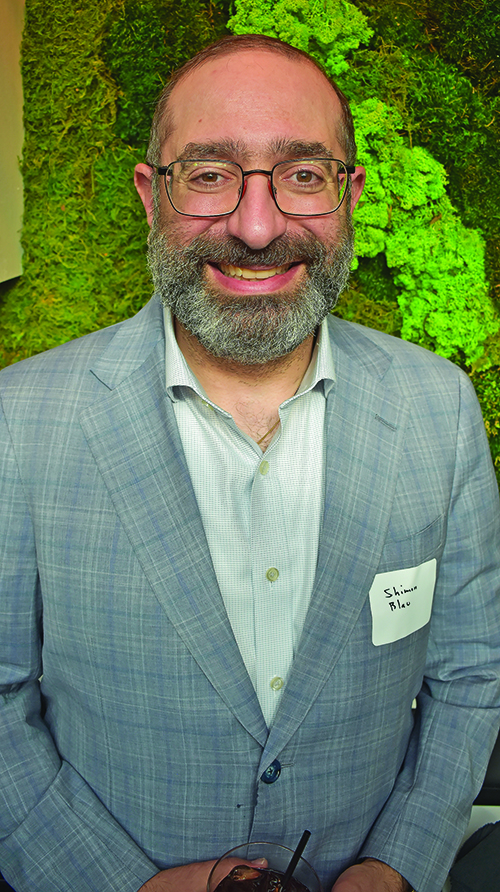
Independent Candidate for CD1: Shimon Blau
Born and raised near Sloan’s Lake, Blau is explicitly presenting himself as a more moderate alternative. He has described himself as leaning left on social issues and right on fiscal matters and has made affordability a central issue.
“Working families are being squeezed and having to make difficult choices between healthcare, housing, and food,” Blau told the Chronicle.
His platform also demonstrates why the contest does not break neatly along traditional partisan lines. According to Colorado Public Radio, Blau supports a long-term path toward universal health care, free childcare, and removing corporate money from politics, while saying he differs sharply with Kiros on other issues.
A Republican Drought Dating To Nixon
Perhaps the most striking historical fact about the race is just how long Democrats have controlled the 1st District.
A Republican has not represented Colorado’s 1st Congressional District since January 1973 — more than 53 years ago.
Republican Mike McKevitt won the seat in 1970 and served one term, from January 1971 until January 1973. Democrat Pat Schroeder defeated McKevitt in the 1972 election with 52% of the vote. She would go on to represent the district for 24 years.
When Schroeder retired, DeGette succeeded her. DeGette was first elected in 1996 and took office in January 1997. Thus, with the exception of McKevitt’s single two-year term, the district has been continuously represented by Democrats since 1951: Byron Rogers from 1951 through 1970, Schroeder beginning in 1973, and DeGette beginning in 1997.
That history helps explain the challenge facing anyone running without the Democratic nomination.
The district, which encompasses virtually all of Denver along with Glendale and portions of Arapahoe County, has become one of the most reliably Democratic congressional districts in Colorado. In 2024, for example, DeGette defeated Republican Valdamar Archuleta by 55 percentage points.
One Alternative, or Several?
That history also makes the presence of both Peterson and Blau particularly interesting.
Republicans seeking to compete in the district face a mathematical and political problem: Their traditional base alone has not been enough to win. Any serious challenge to Democratic control would therefore require support beyond registered Republicans, including unaffiliated voters and potentially Democrats dissatisfied with their nominee.
Yet the 2026 ballot provides those voters with several alternatives rather than one.
Peterson offers voters a traditional Republican candidacy emphasizing public safety, federal spending, and economic issues. Blau is trying to occupy a different lane, presenting himself as politically independent and more moderate while agreeing with Democrats on some social and economic policies. Libertarian and Unity Party candidates offer still more choices.
That leaves an unusual political picture: Kiros has critics to both her right and within the broader Democratic coalition, but those critics are not represented by a single opposing candidate.
Kiros, meanwhile, has demonstrated that her politics have substantial support among Democratic primary voters in Denver. Her victory was not merely the product of an incumbent stepping aside. She defeated DeGette, who had represented the district since 1997, after building a grassroots organization that her campaign said knocked on approximately 100,000 doors.
The primary also provided evidence of a broader progressive constituency in Denver. An analysis reported by Axios found significant support for progressive candidates across several Democratic primary contests, while candidates associated with the Democratic Socialists of America have increased their influence in the city’s politics.
So the general election presents competing political stories. One is the remarkable durability of Democratic control of Denver’s congressional seat. Another is Kiros’ successful challenge to Denver’s Democratic establishment and the ideological change her nomination represents. A third is whether voters who consider themselves somewhere between democratic socialism and traditional Republican politics see Blau’s independent candidacy as an alternative.
And hovering over all of it is 1972. Richard Nixon was president. The Watergate break-in had occurred only months earlier. “The Godfather” was in movie theaters. And Mike McKevitt was the Republican congressman representing Denver.
Pat Schroeder defeated him that November. No Republican has represented Colorado’s 1st Congressional District since.
More than half a century later, Denver voters will decide whether the district continues its long Democratic tradition under a very different kind of Democratic nominee, or whether one of the alternatives on a crowded ballot can break that streak.
Election Day is Nov. 3.
by Editorial Board | Sep 29, 2026 | Editorials
Editorial —

Voter’s hand holding a YES vote ballot, inserting the vote card into the ballot box. Concept image of democracy and the election process for corporate election, board election, and governmental or business policy decisions. Voters making their selection and voting through a proxy ballot. Photographed in horizontal format.
The 2026 ballot will be arriving in registered voters’ mailboxes in a few weeks and a “beast” of a ballot it is. Voters will have many elective offices to fill from governor, attorney general, secretary of state, etc., to state house and state senate seats. Voters must also choose whether or not to retain various judges. In some jurisdictions there will be municipal and county offices to fill.
After completing the section on political and judicial offices the voter will have just begun his or her voting task. There are a record number (14) of ballot measures, 13 of which were proposed by citizen initiatives, as well as, one placed on the ballot by the state legislature.
The Colorado Blue Book is sent out to voters which is supposed to be an official, nonpartisan guide on ballot measures, purportedly to give voters neutral and clear information. But like all things involving humans, it has been corrupted over time, but what else is new?
The bilingual version (English/Spanish) of the Blue Book runs 260 pages. It looks more like a paperback version of the 19th century novel War and Peace than a concise voters’ guide.
We are not fans of ballot elections, but we feel sorry for any voter who goes to the polls to vote in person who isn’t already sure of how he or she is going to vote.
Partisan-oriented voters have, in the past, often simply voted all “Yes” if they are Democrats, as ballot measure in the past have tended to grow government and its revenues, while Republicans have voted “No” hoping for the opposite.
No such luck this year. Both liberals and conservatives have placed measures on the ballot including ones that are in effect mirror opposites.
Denver voters will be voting on a proposed mil levy increase for area schools, placed on the ballot by the dysfunctional Denver Board of Education, which tax is opposed even by The Denver Post. Both Denver and Glendale residents will vote whether to have a sales tax increase to support Colorado Front Range’s “train to nowhere” known as CoCo.
Who knows what mood voters will be in by the time they get to the energy measures (2K in Denver and 2B in Glendale) asking voters in those two municipalities to approve 20-year franchises with Xcel Energy to use municipal rights of way and streets for energy lines.
There is almost no opposition to either measure in either town. Glendale’s City Council voted unanimously to send the measure to its voters while Denver City Council passed theirs by an overwhelming 10-2 margin. Both city councils fought hard to extract concessions from Xcel on issues important to their citizens. Both cities will, over the terms of the agreements, receive millions of dollars they can use to underground power lines, upgrade parks and open space, and various other important city programs.
We suggest that once you get your ballot you turn to the municipal section and vote “Yes” on 2K in Denver and 2B in Glendale. You can then begin the long slough through the rest of the ballot.
Here’s hoping that the two measures that virtually everyone agrees should pass, do in fact pass.
— Editorial Board
by Mark Smiley | Aug 20, 2026 | General Featured
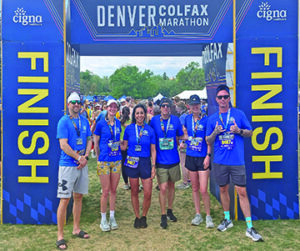 For the nineteenth year, Glendale fielded a team in the Government Relay category of the Colfax Marathon. This year’s team finished with its best time in eight years, placing 29th out of 72 teams. Representing Glendale (left to right) were Sergeant Shaun Farley, Community Development Administrator Hannah Forbes, Victim Services Coordinator Victoria Chavez, Mayor Pro Tem Storm Gloor, Essentrics instructor Jenny Bertrand, and Officer Anthony Donaldson.

by Amber Wyatt | Aug 20, 2026 | Glendale City News
by Amber Wyatt
Large-scale intricately designed sculptures crafted by hand.

From the Houston Lanterns installation.
When Bright Nights illuminates Four Mile Historic Park, visitors enter a world of glowing color, towering forms, and intricate displays. Yet behind the spectacle is another story, one measured not only in lights, but in hundreds of hours of skilled human labor.
Produced by Tianyu Arts & Culture, the large-scale illuminated installations are the result of a painstaking process that combines a centuries-old Chinese lantern-making tradition with modern engineering and contemporary artistic design.
Long before the lights are switched on, artisans begin with hand-developed concepts that must ultimately work within a real landscape. Designs move from sketches into steel-frame construction, followed by electrical wiring, fabric application, detailed painting, and final assembly. According to Tianyu, a single display can require more than 200 hours of work and involve approximately 25 skilled artists.
The result is an art form that remains strikingly dependent on human hands at a time when automation and digital tools are transforming creative industries. Among the artists carrying that tradition forward is Jiang Guanghong, a Tianyu master artisan with more than two decades of experience in lantern design, fabrication, artistic direction, and international project leadership.
For Jiang, creating an illuminated installation involves far more than reproducing a drawing at a larger scale. Artists and fabricators must understand how a structure will appear from different angles, how fabric will behave when stretched across a steel framework, and how light will change the colors and details once the sun goes down. Those skills are only developed through years of hands-on practice.
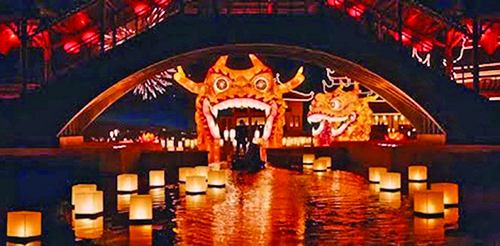
The casino scene in James Bond’s Skyfall featuring Jiang Guanghong’s work.
The tradition at the center of Tianyu’s work is closely associated with Zigong, China, a city internationally known for elaborate lantern-making. While the materials and technology used in modern installations have evolved, the process still draws heavily on skills passed from one generation of artisans to the next.
Today, those techniques are being applied to installations created for audiences far beyond China. Tianyu’s projects have appeared across the United States, Europe, and Asia, requiring artisans to consider not only artistic traditions but also the architecture, terrain, and character of each location. That means a display created for a historic Denver landscape may require different artistic and structural choices than one installed in a European garden or a modern urban setting.
Jiang’s career illustrates how far the tradition has traveled. His international work has included major installations on several continents, and one of his award-winning lantern creations was selected for use by the art department of the James Bond film “Skyfall.”
Despite that international reach, the underlying process remains intensely physical. Steel must be shaped into complex forms. Electrical components must be carefully integrated. Fabric must be fitted to perfectly engineered frames, and painted details must hold their visual impact before and after illumination. It is a balance of art and engineering, with technology supporting rather than replacing the craft of the artisan.
That balance may be part of what gives Bright Nights its appeal. Visitors experience the finished displays as immersive environments, but each glowing figure represents countless individual decisions made by designers, welders, electricians, fabric artists, and painters. At Four Mile Historic Park, the spectacle offers Denver audiences an opportunity to encounter a tradition that has crossed generations and continents while continuing to evolve.
Bright Nights may ultimately be remembered for what visitors see after dark. But behind every illuminated structure is something less visible: a network of skilled craftsmen keeping a living cultural tradition alive, one piece of steel, stitch of fabric, stroke of paint, and flash of light at a time.
by Mark Smiley | Jul 23, 2026 | Editorials
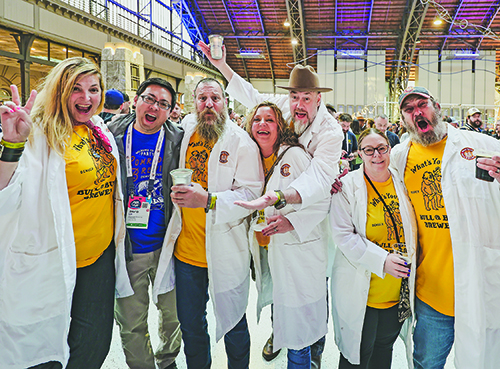
Best in the World: Bull & Bush Brewery team members celebrate their award-winning performance at the 2026 World Beer Cup in Philadelphia, along with David Lin, owner of Comrade Brewing (second from left). The Glendale brewery earned a gold medal for Ghoul Fuel: Rum Diaries Edition and a silver medal for Kauai Pie, adding two more international honors to Colorado’s rich brewing legacy.
Bull & Bush Brewery is celebrating 55 years of serving award-winning craft beer, classic pub fare, and unforgettable memories with a full day of festivities on Saturday, August 8. The anniversary celebration will feature exclusive beer releases, special whiskey selections, brunch with DJ High Deaf, an evening performance by Colorado favorite DeVotchKa, and commemorative merchandise honoring Glendale’s most beloved family-owned brewpubs.
Bull & Bush Brewery, one of Colorado’s most iconic family-owned brewpubs, is proud to celebrate its 55th Anniversary, marking more than five decades of serving exceptional handcrafted beer, classic pub fare, and elevated hospitality located in the heart of Glendale.
The 55th Anniversary celebration will take place on Saturday, August 8, 2026, featuring a full day of festivities, including an evening celebration with live music from Colorado’s very own DeVotchKa.
Guests attending the anniversary celebration can look forward to:
- Exclusive 55th Anniversary beer releases
- Special anniversary whiskey selections
- Brunch with DJ High Deaf
- Evening live music with DeVotchKa
- Commemorative merchandise
“For 55 years, Bull & Bush Brewery has been more than a restaurant or brewery hub where friendships are made, milestones are celebrated, and traditions are passed from one generation to the next,” said Erik Peterson, Minister of Progress at Bull & Bush Brewery. “We’re incredibly grateful to everyone who has supported us over the years, and we’re excited to celebrate this milestone with the community that has made it all possible.”
Since adding its brewery in 1996, Bull & Bush Brewery has earned numerous awards at prestigious competitions, most recently:
- Gold Medal, 2 Silver Medals, and 3 Bronze Medals 2026 US Open Beer Championship
- Gold Award and Silver Award 2026 World Beer Cup
- Gold Medal 2025 Great American Beer Festival
- 2025 Grand National Champion and Brewery of the Year at the US Open Beer Championship
Bull and Bush Brewery is located at 4700 Cherry Creek Drive South in Glendale. For more information, visit www.bullandbush.com.