by Regan Bervar | Nov 19, 2021 | Editorials
“There’s always an easy solution to every problem — neat, plausible and wrong.”
 by Luke Schmaltz
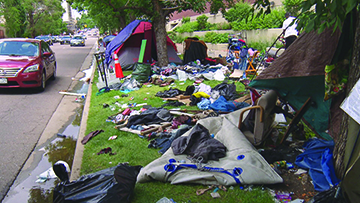
Although camping in public areas has been “illegal” in the city of Denver since 2012, the homeless presence is expanding, tent cities are widespread, and the encampments are perpetuating crime, illegal drug use, and wholesale danger to everyone in the immediate vicinity.
A 2019 attempt to overturn the urban camping ban was unanimously voted down by 83%. Yet, while the sporadic sweep of encampments continues, often it is not until a deadly situation has arisen such as with the Morey Middle School encampment last year, and the encampment at 11th and Ogden on Capitol Hill, which was recently dismantled after a gun battle within the camp finally inspired action by the Denver Police Department.
In a June 30 public statement outside a women’s homeless shelter at 4600 East 48th Avenue, Denver Mayor Michael Hancock stated, “An episode of homelessness should be no more than a brief, one-time circumstance, and we must do everything in our power to stabilize our most vulnerable neighbors,” he said. “House keys have more power to change lives than a tent.” During this speech, the mayor also announced a new housing and homeless strategy — a five-prong plan which includes purchasing motels and hotels and turning them into supportive housing, extending housing voucher programs, adding more sanctioned camping sites, increasing the availability of housing, and adding more eviction protection and rental assistance.
Multiple Culprits
Homeless In Neighborhoods: It is widely known that anyone can camp out on the streets of Denver without legal consequences.
The City of Denver is allocating more funds than ever before to deal with the homeless crisis; the solutions, however, seem to be missing the mark. Although there is some truth to the observation that homelessness is caused by an inability to afford a place to live, it is far likelier that the situation is the result of a more complex combination of circumstances.
If housing was the sole issue, then the myriad sanctioned shelters offering beds, showers and meals would be — at the very least — having somewhat of an impact on the growing problem. Yet, contrary to the expected result, the solution at hand seems to be having a reverse effect. Perhaps it is not working because it is not accurately addressing the problem. The current policy is akin to a Band-Aid on an ax wound, a cup of water on a forest fire, a moldy biscuit into the hand of a starving person in a country with no shortage of food.
You Don’t Say
Once it is accepted that the causes of homelessness run deeper than a simple lack of places to live, the discussion can continue. Among the many possibilities are four standouts which deserve consideration: Drug addiction, the lack of healthcare for the mentally ill, an experimental (and failing) approach to law enforcement policy, and a populace that is vastly divided on the imminent threat and what it means to self-police.
Just Take Two
The prescription drug boom of the early-to-mid 2010s created millions of addicts as doctors, using the tried and true “misdiagnose and overprescribe” approach, made handsome amounts of money in kickbacks from pharmaceutical companies. Finally, under intense pressure from the DEA and the public at large, the FDA began imposing tighter regulations in 2014. In the case of the near 50 million patients who were prescribed opioids in 2013 alone, this created a growing tide of addicted users of painkillers such as Demerol, Vicodin, and Oxycontin.
A June 2021 report published by drug abuse.gov cites extensive studies which link heroin use to prescription pills and their increasing unavailability. The report explains, “… almost half of all opioid deaths in the U.S. now involve a prescription opioid … Research now suggests that misuse of these medications may actually open the door to heroin use. Some also report switching to heroin because it is cheaper and easier to obtain than prescription opioids.” Someone addicted to opioids who turns to street drugs may not have both feet in the gutter, but they have definitely begun to step off thanks to the medical/pharmaceutical industrial complex.
It’s All In Your Head

Refuse To Be A Victim: Most people living near an illegal encampment do not understand the level of potential danger they are in.
The saying “homelessness causes addiction and addiction causes homelessness” gets thrown around a lot in discussions like this, and the term “mental illness” can be substituted for “addiction” with great accuracy. It has long been acknowledged that mental instability is an underlying contributor.
In fact, a report published in July 2009, by the National Coalition for the Homeless states, “Serious mental illnesses disrupt people’s ability to carry out essential aspects of daily life, such as self-care and household management. Mental illnesses may also prevent people from forming and maintaining stable relationships or cause people to misinterpret others’ guidance and react irrationally. This often results in pushing away caregivers, family, and friends who may be the force keeping that person from becoming homeless. As a result of these factors and the stresses of living with a mental disorder, people with mental illnesses are much more likely to become homeless than the general population (Library Index, 2009). A study of people with serious mental illnesses seen by California’s public mental health system found that 15% were homeless at least once in a one-year period (Folsom et al., 2005). Patients with schizophrenia or bipolar disorder are particularly vulnerable.” Yet, nowhere in Mayor Hancock’s five-prong plan to address homelessness is there mention of mental health services.
Police Paralysis
 Intense public pressure and widespread scrutiny after the 2020 Downtown protests have forced Denver police officers and those in surrounding districts to adopt a hands-off approach to fighting crime. Police departments are having to operate in a fire department-type capacity where they respond only if a citizen calls rather than use proactive tactics such as patrol, stop, search, etc., to reduce crime. This policy has placed normally actionable crimes such as drug dealing, drug using, assault, theft, and public evacuation of one’s bodily wastes on “low priority” — sending a signal to campers that there is a new era of lawlessness afoot, it’s a free-for-all drug party and there are no consequences for committing many types of crimes.
What’s more, a new group of policy influencers are at work known as The Denver Task Force to Reimagine Policing and Public Safety. This group is comprised of activists and youth ministry leaders as well as individuals from civil rights, faith-based, policy advocacy, and youth services organizations. They have put together a 53-page report of a total of 112 recommendations on how the police at large can better serve the communities in which they work. Strangely, not one of the 140+ members is a police officer or has any experience whatsoever in the business of fighting crime.
Their recommendations were recently submitted to Denver City Council, who will review and determine the next course of action. Movements such as this reinforce the message to the criminal element that more bureaucratic red tape is on the horizon, police will have to continue to “look the other way,” and the consequence-free camping, drugging, stealing, and raping party can continue indefinitely.
It Takes A Village

Opioid Addiction: A prescription for painkillers can lead to opioid addiction, to illegal drugs, and then to living on the street.
It is unfair and inaccurate to label someone as a criminal because they are homeless. As stated above, they could be suffering from addiction, mental illness, or economic hardship which resulted in them not having a place to live. Yet, it is downright ignorant and just plain stupid to think that homeless encampments do not contain a criminal element. As anyone who has had a camp pop up on their block can attest — theft, harassment, assault, muggings, and the widespread presence of hypodermic needles all increase in the area exponentially.
Yet, citizens are divided on taking a unified stance that these phenomena are bad for the neighborhood, and some go so far as to verbally attack their housed neighbors who are not in favor of the denigration of the community. What’s more, without an overt police presence, citizens must protect themselves from predators and the sad fact is that most people do not know how to fight, or even the basics of self-defense. The lack of a unified community mindset and the clear signs that most people cannot defend themselves send yet another signal to people living in illegal camps that it is ok to do as they please because nobody on the block is willing or able to do anything about it.
So, as you drive past the camps in your city, in your neighborhood and on your block and wonder why it is happening, you may want to look past the obvious conclusion of economic hardship and take a further glimpse into causal factors. Instead of blaming the homeless, blame the doctors and pharmaceutical companies, blame inherent human craziness, blame the bureaucrats, and yeah — blame yourself.

by Glendale Sports Center | Nov 19, 2021 | Glendale City News
 Here Are 3 Tips To Stay Balanced
by Jennifer Lease, RD, CDN, Director of Nutrition Initiatives, YMCA of Metro Denver
Are thoughts of all the holiday sweets and treats causing you stress?
Do you feel like you can’t enjoy your favorite holiday foods when you’re working on your health?
Are you worried that what you eat during the holidays will throw off progress toward your goals?
You’re not alone!
The holiday season is a time of celebration that usually comes with lots of sweets, treats and traditional dishes that feel indulgent. It can be difficult to find balance during the holidays — wanting to enjoy all the foods you love while being mindful of your health.
You might hear that word balance and feel frustrated by it. What does it even mean? Balance means enjoying nutritious foods most of the time, while giving yourself grace (and space) to enjoy those sweets and treats.
So, how can you find that balance during the holidays and enjoy your favorite foods without the side order of guilt? Here are some tips:
- Balance your plate and practice portion control — You can enjoy a bit of everything with some balance and portion control. Plus, you’ll feel better after the meal, too! The basics of a balanced plate include protein, veggies, and a starch or grain. Try filling half of your plate with veggie dishes and then take a smaller portion of the others you want to try. Holiday dishes tend to be heavy, starchy foods, so don’t forget to add some protein like turkey or chicken to your plate to create that balance. Then, enjoy every bite!
- Move your body — Move your body, not because you think you should make up for eating those holiday treats, but because movement makes you feel good both physically and mentally. Movement can set a positive mindset for the day and the after affect is the feeling of doing something good for your body. Movement also helps with digestion. If you’re feeling super stuffed after a holiday meal, some exercise can help you feel better. Remember, it’s important to find exercise that you enjoy and that truly feels good for you. Exercise is often looked at as punishment for eating “badly,” but it’s really part of a healthy lifestyle that contributes to your overall well-being.
- Remember that every day is a new day — A healthy lifestyle should be sustainable. This means having flexibility and leaving space for the foods you enjoy. You don’t need to “compensate” for what you eat at the holidays. You don’t need to work out for three hours the next day to make up for last night’s meal. Instead, make the intentional choice to enjoy what you want and to be present in the holiday season. Each day is an opportunity to get back on track with your regular eating habits and routine.
Do you want to take the guesswork out of nutrition and work to set realistic healthy lifestyle goals? The nutrition team at the YMCA of Metro Denver can help. Reach out at nutrition@denverymca.org or visit us at denverymca.org.

by Regan Bervar | Oct 22, 2021 | Editorials
by Luke Schmaltz
Seven Officers who hold this badge may soon be left empty handed.
An embattled Denver Police Department is learning firsthand what it means to operate under a mayor who insists on politicizing a private medical issue.
On August 2, 2021, Denver Mayor Michael Hancock issued an edict declaring that all city employees as well as some key private sector workers had until September 30 to get vaccinated for Covid-19. This, of course, includes police officers — seven of whom have refused to comply with the vaccination order. The group is currently taking legal action against the mayor’s office while facing disciplinary measures as well as termination of their employment.
Thinning Out A Skeleton Crew
Court documents show an injunction filed against the city by officers Dewayne Rodgers, Les Tucker, David Curtis, Bart Stark, Jonathan Christian, Nick Elliot, and Rich Ziegler. The suit was an 11th-hour attempt to dispute the vaccine mandate which, if not complied with, will result in 10-day unpaid suspensions followed by dismissal if not followed by the end of that time. At a time when theft, vandalism, assault, break-ins, drug trafficking, and trespassing have reached a fever pitch in the downtown area — it seems rather counterintuitive to sanction the wholesale termination of police officers who are making a choice which they consider to be a private medical matter.
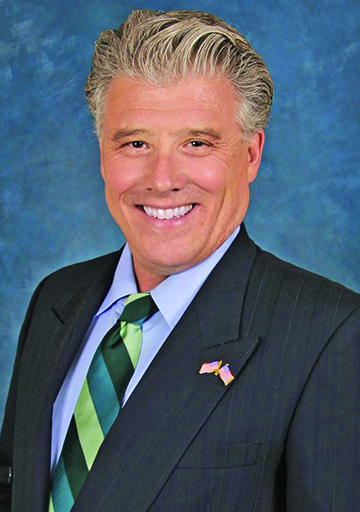
Attorney Randy Corporon, PC represents the seven Denver cops disputing the vaccine mandate.
Attorney Randy Corporon, PC, represents this group of police officers. He moved to block the mandate before District Court Judge Shelley Gilman on Wednesday, September 29. Judge Gilman dismissed the case, however, stating that the court had no authority over the issue because the officers did not exhaust all of their administrative remedies before taking the matter to court. Specifically, this would have been to first petition to the Denver Department of Public Health to overturn the mandate.
Red Tape Blues
In the meantime, Corporon has filed an administrative complaint with the Denver Department of Public Health (DDPH), and he is currently awaiting notice of a hearing being set. “The only thing they told us,” he begins, “is that they will set a hearing and they will let us know 10 days before that hearing.” Corporon feels that DDPH is deliberately hindering the appeal in order to goad the defiant officers into compliance. “The mystery of their process is whether they will expedite this or drag their feet,” Corporon explains. “The thing about these government entities and these big companies is that the longer they drag it out, the more people will just cave and get the shot.” Corporon explains why he took the matter to court before all administrative remedies were exhausted. “We believed that we had legal exceptions based on the exigency and the urgency, [as well as] the futility of going through that petition process first, but the judge disagreed.”
The immediate, blaring, disconcerting issue is the loss of qualified, able-bodied police officers at a time when the circumstances call for all hands on deck. When asked if he thinks the mandate will spur a mass-migration of police officers from the DPD, Corporon explains, “As much as I hate the practical result of it, I hope so. I don’t see any [other] way to stop this incredible, omnipotent, growing government power grab unless people don’t bite the bullet, accept the consequences and move on,” he says. “Some of these police officers are great cops with tons of experience and I’m sure they would be welcomed in other places like Texas or Florida or in cities that don’t try and force an untested treatment into people’s bodies.”
No Pain No Gain

Many contend that the COVID vaccines are experimental drugs which can cause adverse reactions.
Corporon further explains why resistance from the people in the trenches is the best way to counteract government overreach. “The short-term pain will be worth the long-term gain if more and more people stand up,” he says. He then goes on to explain the collective concerns among his colleagues and clientele about the vaccines, “I worry about the long-term effects. If somebody has the vaccine and new strains of the virus come on, is their body going to react improperly? We have heard about risks to reproductive systems, and for people who are giving this to their kids … God almighty,” he attests. “I have cases in my office now where divorced parents and even parents who are still together are fighting legally whether to vaccinate their kids as young as 10 years old.”
Corporon goes on to express his outrage about the wholesale public adoption of these untested treatments. “I am baffled by the media propaganda, the fear and the blind trust in unelected bureaucrats and so-called scientists who change their own positions constantly,” he says “I just had a news crew over here interviewing me about the Eric Coomer defamation case. Of course, they show up masked and they wouldn’t come inside my building because they found out I was unvaccinated. I’m not sick, plus, they have masks on, and we are maintaining a distance of six feet apart. OK — we can stay out here in the rain, it’s fine with me.”
While the charge to overturn the mandate seems daunting, Corporon maintains that a positive outcome for his Denver police officer clients is not out of the realm of possibility. “The best outcome would be an agreement that the orders were issued in error and that they would be rescinded. Of course, you can’t un-vaccinate people but, at the very least, you could restore cops who’ve lost their jobs and you could restore their pay.”
The counterproductivity of the issue is typical of Denver politics where counterintuitive policies and backward thinking are the order of the day. It would seem that in an effort to “protect” citizens from harm by mandating vaccination for police officers, the populace is being left even more exposed to danger by firing the cops who want to be there to serve and protect.
by Regan Bervar | Oct 22, 2021 | General Featured
“When the going gets weird, the weird turn pro.”
by Luke Schmaltz
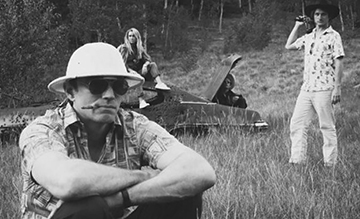
Fear and Loathing in Aspen — a forthcoming film set in Colorado’s most notorious mountain town — is packed with parallels to current issues, rich with the warm, grainy texture of 20th Century celluloid, and thick with finely tuned, bittersweet irony.
Unlike predecessors, this film offers a more subtle, nuanced interpretation of the outlandish escapades of the late writer — Hunter S. Thompson. Director Bobby Kennedy III delivers a concise, thoughtful, and well-rounded narrative of Thompson’s 1970 run for Sheriff of Pitkin County, Colorado, on the Freak Power ticket.

Hit Movie: Fear and Loathing in Aspen is a direct hit with many of today’s hot-button issues.
In one scene, Thompson (masterfully played by Jay Bulger) says, “The freaks — they’re everywhere … and they can vote.” He continues his commentary on the local counterculture with more poignant observations, “One of the main things I’ve learned out here is there are all kinds of very capable people wandering around with no place to use their energy. If we can put this energy to work, we’ll have a helluva tool on our hands.”
Throughout the piece, Bulger, who bears an uncanny resemblance to his subject, manages to deliver a convincing portrayal of Thompson while somehow avoiding the character tropes, overblown mannerisms, and hyper-exaggerated speech patterns Thompson’s persona has elicited from those who have portrayed him in the past. Here, viewers are treated to a glimpse into the psyche of a deeply complex character without having to endure the gallivanting around and flailing about of cinematic forebears. Rather, Bulger delves deeper into the humanity of the character, using a somewhat even-keeled anchor point to mount emotional plunges and manic ascents.
Visually, the film pays on-target homage to the wobbly, hand-held 8mm footage that captured many moments of the actual events in the story. Kennedy masterfully rotates between smoothly edited, narrative scenes, and grainy handheld sequences that, were it not for impeccable continuity, could be mistaken for amateur found footage from 1970.
Parallels Abound
Although the story is 50+ years old, the film zaps a cattle prod to a number of today’s hot-button issues. Thompson’s Freak Power party runs the very essence of a grassroots political campaign, echoing current political concerns such as voter reluctance, voter suppression, and election fraud. Meanwhile, the “freaks” of the Aspen Valley — fringe-dwelling refugees of the status-quo — are eerily reminiscent of the drug-addled tent-dwellers of today’s Denver, although in the movie they represent heroism, positive change, and social evolution. And then, there are the conservative gentrifiers who are systematically overtaking Aspen and making Thompson’s proposed utopia an all-but-impossible pipedream. Given the overrun, overdeveloped, and overpriced state of Pitkin County today, it makes you wonder how vastly different that sector of Colorado would look had Thompson been victorious.
A Brazen Platform
Portrayal: Actor Jay Bulger delivers a nuanced, spot-on portrayal of a pop culture legend.
As one would expect, his platform was as sweeping and rebellious as the man’s reputation. “We will sod the streets at once” he begins. “Rip up all city streets with jackhammers and use the junk asphalt, after melting, to create a huge parking and auto storage lot on the outskirts of town. We will change the name of Aspen, by public referendum, to Fat City, to prevent land rapers, greedheads, and human jackals from capitalizing on the name ‘Aspen.’ Aspen, Colorado, would no longer exist, and the psychic alterations of this change would be massive in the world of commerce. By this approach, making hundreds or even thousands of individuals personally responsible for protecting the animals, fish, and birds that live here, we would create a sort of de facto game preserve without the harsh restrictions that will be forced on us if these bloodthirsty geeks keep swarming in here every autumn to shoot everything they see.”
Acerbic, To Wit

In Character: Jay Bulger stays entrenched in character throughout the film.
Alas, the irony that Bobby Kennedy III deals out to viewers is deeply poetic. He skillfully helms a cinematic vehicle that is clearly aimed at the establishment, the status quo, the Good Ol’ Boys Club that his grandfather and great uncle (Bobby and John F. Kennedy) attempted to topple.
While the outcome of Thompson’s run for Sheriff of Pitkin County is well known, Fear and Loathing in Aspen is not to be dismissed for simply retelling the bittersweet parable of an American underdog. Lest it be forgotten, this country was founded by rebels with revolutionary thinking and radical solutions. As Bulger soliloquizes at the end of the third act, “If you ever get the chance to sweep the fatbacks off their feet, don’t f@*k it up.”
Fear and Loathing in Aspen is indie filmmaking at its finest, hearkening back to the glorious cinematic movement of the 1990s where formula, big name actors, plotless blather, and CGI sensory overload were not the order of the day. This film deserves a fair shot at the permaculture, for sheer entertainment value as well as historical significance. Should you crave a cinematic experience that requires a bit of thinking, a fair modicum of empathy and a healthy sense of the ridiculous — this film is for you.

by Mark Smiley | Oct 22, 2021 | Travel
Pitmasters From Across The Country Served Their Award-Winning BBQ To Attendees
by Mark Smiley
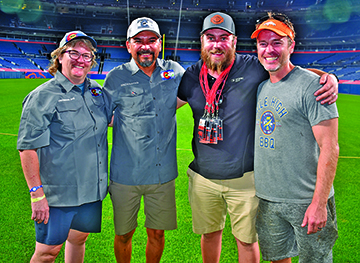
Friendly Competition: The two Colorado BBQ restaurants that were part of the 3rd Annual BBQ Festival in Denver posed with Alex Knight, Sales Representative with sponsor Ole Hickory Pits. From left to right: Jodi and Keith Segura, Woodhill Small Batch BBQ; Alex Knight, Ole Hickory Pits; and Jason Ganahl, GQue BBQ.
Some of America’s most award-winning BBQ pitmasters descended upon the Mile High City for the 3rd Annual Denver BBQ Festival which was held September 17-19, 2021, in the parking lot at Empower Field. They served their BBQ to attendees over the course of the weekend.
Ole Hickory Pits was a major sponsor of the event and they provided commercial pits for all pitmasters to cook on throughout the weekend. Ole Hickory Pits manufactures and markets state-of-the-art commercial, competition, and residential barbecue smoker ovens, in addition to barbecue equipment, sauces, seasonings, and lifestyle products.
A total of 12 pitmasters from eight states served over 30,000 pounds of meat. This festival is not a competition, just an opportunity for attendees to purchase BBQ they would not normally be able to acquire in town.
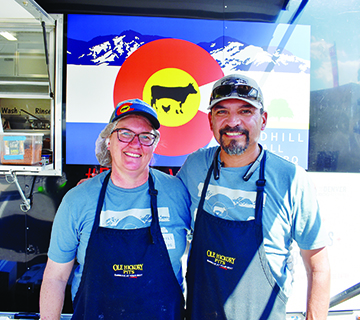
Local Favorite: Jodi and Keith Segura from Woodhill Small Batch BBQ had the longest lines of any of the restaurants in attendance at the 3rd Annual BBQ Festival.
However, two local favorites were on hand, GQue BBQ and Woodhill Small Batch BBQ. Having hometown advantage must have helped Woodhill Small Batch BBQ from Littleton. They were the only BBQ pitmaster that needed extra barricades set up on Friday night due to long lines. “We didn’t anticipate having the longest line last night [Friday, September 17],” said Keith Segura, co-owner of Woodhill Small Batch BBQ. “I guess it was hometown advantage.”
Segura grew up in Sterling, Illinois, in a subdivision of 20 homes on a farm. As a kid, he fondly remembers pig roasts and eating sweet corn with salt and butter. “That memory was always in my mind ever since I was a kid,” said Segura. “I said when I grow up to be an adult, I want to do that same thing.”
And do the same thing he did, along with his wife Jodi, whom he met when she pulled him over for speeding when she was on state patrol. Now, they enjoy running the food truck and catering business together. The name Woodhill comes from Jodi’s family’s farm name in Illinois. And the name Small Batch comes from when they first started out and only did small batch BBQ for breweries such as Breckenridge Brewery.
Now, you can find Woodhill Small Batch BBQ’s truck at Max Taps Brewery in Highlands Ranch (November 13), and Living the Dream Brewery in Littleton (November 20). There you can surely find brisket and ribs which are Segura’s favorite meats to smoke. And you may also find their famous “twinkie” which has jalapeno stuffed inside with bacon wrapped on the outside.
For more information, visit www.woodhillsmallbatchbbq.com or on Facebook and Instagram @woodhillsmallbatchbbq.
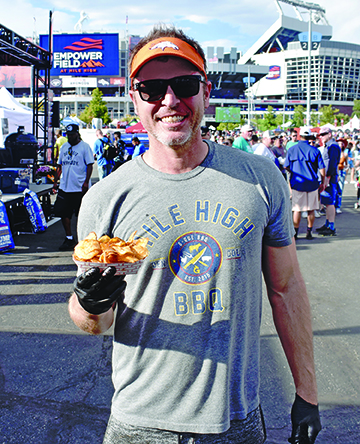
Championship BBQ In Colorado: Jason Ganahl, owner of GQue BBQ in Colorado, displays his famous homemade kettle chips at the 3rd Annual BBQ Festival in Denver.
No stranger to great BBQ, Jason Ganahl, owner and pitmaster of GQue BBQ, is proud to be the only championship BBQ restaurant in Colorado. It opened its first restaurant in Westminster six years ago. GQue also has locations inside Empower Field, Park Meadows Mall, and a new location in Lakewood opening next month. “We are out here sharing our food with everybody else,” said Ganahl. “We are spreading the wonderful flavor of smoked meat like BBQ sauce.”
Ganahl rejects the idea that Colorado has a hole in great BBQ in the state. He concedes that the perception is that places like Kansas City, Memphis, and St. Louis have the solid reputation of good BBQ that you can find every five miles. “I think over time, over the course of the next 8-10 years, hopefully more and more people will appreciate what I’ve long appreciated, being from the Midwest, and that’s the flavor you get from a delicious piece of smoked meat,” said Ganahl.
Once that reputation builds it will force each BBQ establishment to elevate its game which Ganahl welcomes. “We eliminate the word complacency from our vocabulary,” said Ganahl. “Success is rented every single day. You have to go out there and earn it. I feel like if we show up every single day and we cook the food the way it’s intended to be cooked, and we deliver it in an inviting and appreciative way, then the sky is the limit. That is the challenge with multiple locations, and lunch and dinner service.”
For more on GQue BBQ, visit www.gquebbq.com or follow them on Facebook and Instagram @GQueBBQ. Visit their website and sign up for their email alerts to receive a coupon for a free pulled pork sandwich.
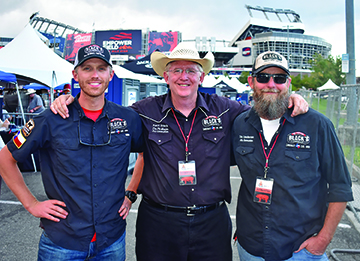
Black’s Barbecue: From left to right: Barrett Black, fourth generation owner of Black’s Barbecue; Kent Black, third generation owner of Black’s Barbecue; and Eric Lenderman, Manager, Operations at Black’s Barbecue, served their famous brisket and sausage at the 3rd Annual BBQ Festival at Empower Field.
Another well-established BBQ restaurant with multiple locations in attendance was Black’s Barbecue, the oldest BBQ restaurant in Texas. Black’s was started in 1932 in Lockhart, Texas, which is known as the official barbecue capital of Texas. Black’s Barbecue was originally founded as a meat market and grocery during the Depression after a poor farmer and cattle rancher named Edgar Black made a handshake deal with a friend who wanted to open a meat market.
As third generation pitmaster Kent Black explains, his grandfather Edgar had heart problems and asked his son, who was an accountant for Exxon, to help at the restaurant for six weeks while he recovered. Six weeks turned into 50 years of growing the business. Edgar Sr. died in 1962, at which point Edgar Jr. and his wife Norma Jean took over the business. Edgar Jr., who passed away in 2017 at the age of 91, left the restaurant to Kent who now runs Black’s Barbecue’s four locations along with son Barrett.
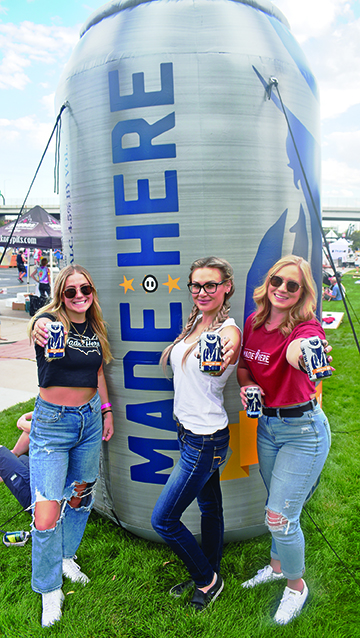
Sponsor: Made Here beer was a sponsor of the 2021 Fest
And Kent’s mom, who is 90, still comes into the Lockhart restaurant from time to time. “She’s the boss,” said Kent Black, owner and pitmaster of Black’s Barbecue. “When she walks into the restaurant, it is like Elvis walking in.” All of the side dishes at the restaurant are based on her recipes.
Black claims his father was the first to barbecue brisket in the 1950s. And now, that is Black’s Barbecue’s signature dish. Black’s Barbecue’s homemade sausage was also served at the BBQ Festival. The sausage recipe has remained the same over 90 years and they make it in small 100-pound batches.
For more information or to order meat to be shipped to your home, visit www.blacksbbq.com.
Having generations of pitmasters working side by side and eventually taking over the business is common in this tight-knit world. That is true for Leslie Roark Scott, known as the BBQ Princess, who learned from her dad at a young age. Her dad was an award-winning pitmaster and as a teenager, Roark Scott learned how to cook ribs and would present them to judges. Her dad let her fly on her own and face the judges’ questions by herself.
That built her confidence and allowed her to become the first female to win a grand championship on the Memphis circuit back in 1992. She remembers driving four hours from college to help her dad at a competition. “BBQ is what tied us and kept us tied together,” said Roark Scott, owner and pitmaster of Ubon’s Restaurant in Yazoo City, Mississippi.
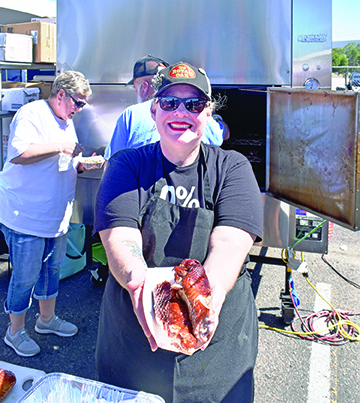
BBQ Princess: Leslie Roark Scott from Yazoo City, Mississippi, was among one of the 12 pitmasters serving her BBQ over the September weekend.
Ubon’s opened in 2004 and in 2011, Ubon’s began participating in festivals. “About 10 years ago, we slid into the festival scene because what we figured out is where our joy comes from is watching people get excited about food that they haven’t tried before, and offering them an experience that’s hands-on,” said Roark Scott. “I also have the chance to leave Mississippi and shine a different light on my home state. I really feel like festivals like this make people more aware [of good BBQ]. If you’ve never had really good brisket and you get here and you eat brisket from Black’s, you say I’m not putting up with crap anymore.”
For more information on Ubon’s Restaurant, visit ubonsbbq.com and follow them on Instagram and Facebook @Ubons.
Blues Hog Barbecue made a big splash at this year’s festival with music playing and a whole hog on the pit (of which they handed out samples to attendees in line). Blues Hog was the 2021 World Champion in pork shoulder and they served this dish along with a pineapple slaw. Their customers from back home came [Washington, Missouri] to help prepare and serve the food.
“When we go to these regional events, we like to get our customers involved so they can enjoy it,” said Joey Machado, Marketing Director for Blues Hog Barbecue. “Denver is a really nice event. They get about 30,000 people over the whole weekend. I was leery because of the year that it is. That maybe we wouldn’t get as many people as we thought were going to. We honestly have had a ton.”
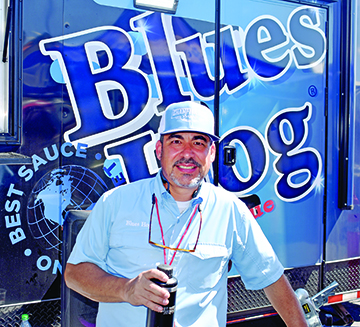
Blues Hog: Joey Machado, Marketing Director for Blues Hog Barbecue always learns something new at competitions and festivals.
Blues Hog makes sauce, seasoning, and charcoal, which are all available for purchase on their website and select stores in the Denver Metro area. When asked about the secret to good BBQ, Machado had a quick answer. “The secret to BBQ is passion,” said Machado. “The willingness to make mistakes is what makes you really good at BBQ. You can go online, you can watch YouTube videos, you can read books, and do everything else. But if you’re not making mistakes in your backyard and understanding what you have to do, that’s it, that’s the best way to learn BBQ. At the end of the day, I BBQ to put smiles on people’s faces.”
There were plenty of smiling faces at this festival. Mark your calendar for Father’s Day weekend in 2022 as the 4th Annual Denver BBQ Festival will roll into town again. Visit www.denverbbqfest.com for all information and updates.

by Glendale Sports Center | Oct 22, 2021 | Glendale City News
by Jessica L. Giffin, MPH, CHES, NBC-HWC, Director of Health Partnerships, YMCA of Metro Denver
November marks the beginning of the holiday season — a festive time when our thoughts turn to re-connecting with friends and loved ones to celebrate the holidays. During the colder Colorado months, we are gathering for celebrations that take place indoors and, as we know, that can put some of us at greater risk. Did you know that older adults with diabetes or pre-diabetes can be at higher risk for becoming very ill, particularly with COVID-19?
During November — National Diabetes Awareness Month — it is a call to action for those at risk but there are some steps you can take to protect yourself.
Get Vaccinated
According to a study by the U.S. Department of Health and Human Services, coronavirus vaccines have prevented 265,000 infections, 107,000 hospitalizations, and 39,000 deaths from the virus in the first five months of this year.
Older adults with multiple underlying medical conditions are most at risk of serious illness. Throughout Denver and the state, there are many sites where you can get immunized. Check the Colorado Department of Public Health and Environment at covid19.colorado.gov for answers to frequently asked questions about the vaccine and convenient location of vaccine clinics.
Take Precautions While Traveling
Even though you may be vaccinated for COVID-19, there are rare breakthrough cases. In recent domestic travel guidance, the Centers for Disease Control recommends for those who are vaccinated to wear a mask and take precautions like hand washing and social distancing and then self-monitor for symptoms post-travel. For those who are unvaccinated, the recommendation is to take the same precautions in addition to getting tested 1-3 days before travel and 3-5 days after travel.
Reduce Your Diabetes Risk
Your age, lifestyle, and being overweight can put you at risk for diabetes. Taking a risk test or asking your doctor for a blood test. Type 2 diabetes doesn’t have to be permanent.
If you have prediabetes, there are things you can do to prevent or delay Type 2 diabetes. Consider joining the YMCA Diabetes Prevention program. Trained staff can help you make healthy food choices, get physically active and, in turn, lose weight, all of which can make a big difference! For those with Medicare Part B and United Health Care Advantage, the YMCA program is covered. Learn more and connect with our team at denverymca.org.
Stay healthy and safe this holiday season and beyond!