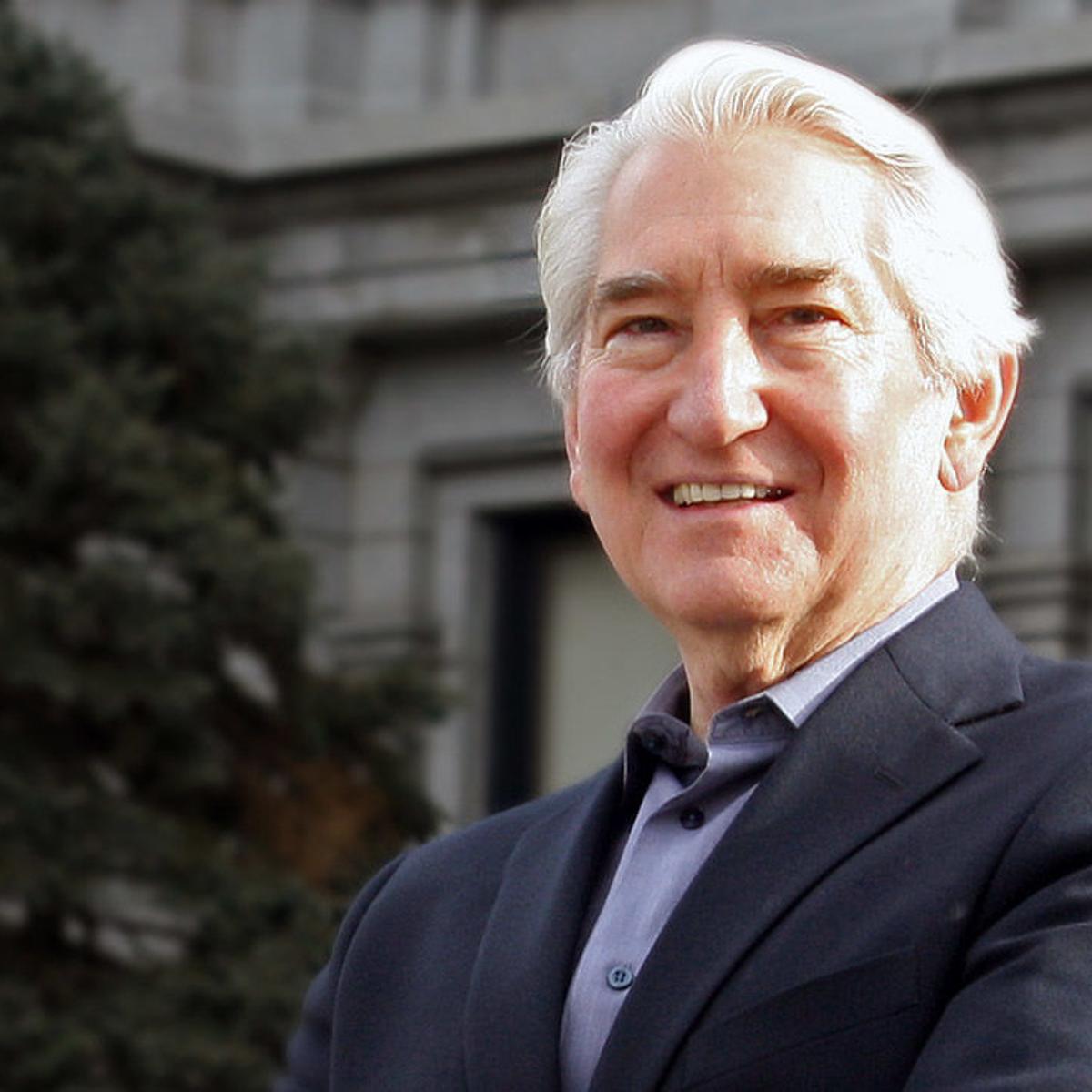
Dan Himelspach is running for a seat in Colorado House District 6, and he could have never predicted the circumstances he would be facing when he was one of the first to launch his campaign for the primary set for June 30, 2020. COVID-19 has impacted the plan to reach voters but that is not stopping Himelspach. “What we’ve tried not to do is whine and cry in our beer,” said Himelspach. “How can we still accomplish our goal? Those that do the best can adjust to it and live in the new world we are in.”
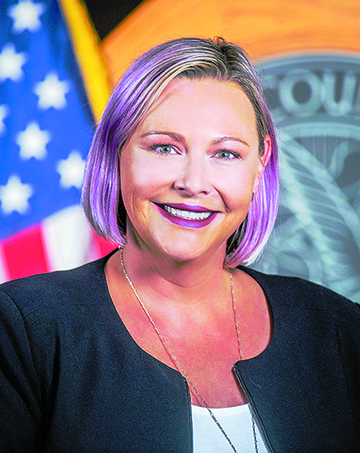
Creative Campaigning: Dan Himelspach is running for State House District 6 in Denver and has had to alter the way he gets his message out to voters. He hosted a Zoom Town Hall with officials from Rose Medical Center on April 1, 2020.
One of the things Himelspach did was organize a Town Hall via Zoom with Denver City Councilwoman Amanda Sawyer that invited the community to learn more about Rose Hospital during this pandemic. Joining Himelspach and Sawyer was Ryan Tobin, President & CEO at Rose Medical Center and Andrew Weinfeld, MD, Chief Medical Officer.
“Rose [Hospital] is such an important part of this community and I wanted them to toot their horn,” said Himelspach. “I want them [Rose Hospital] to succeed but I also want everyone in the district and neighborhood to know what they truly have to offer. They’re a phenomenal organization that’s been here for a long time. The community, to a large extent, grew up around them. They are one of the major anchors in this community.”
Himelspach is one of those community members who has been around a long time. He is a Denver-based Colorado business leader and practicing attorney with over 30 years of experience specializing in mediation and negotiation. Living in House District 6 for over 40 years, Himelspach has formed several successful businesses including a family-owned business that sells high tech products to brain researchers all over the world. Not a professional politician hoping to climb the political ladder, Himelspach is running for office in the spirit of servant leadership with a hope to bring his unique mixture of negotiation and business skills to Colorado’s legislature.
Himelspach hopes to be one of the elected leaders to help Denver get through the pandemic. “Leadership is going to make a difference,” said Himelspach. “Strong leadership will go a long way.” Dan also has respect for people and this country. “People really by and large want to do the right thing,” said Himelspach. “This country is a strong country and we have a lot of resources compared to other countries around the world. We’re going to be fine and the individual spirit is strong here but it’s going to be a struggle for two or three years I think.”
In the two years since Mayor Michael Hancock’s administration implemented Denver’s Vision Zero Action Plan, the city appears no closer to making its streets safe for pedestrians and multimodal transportation than when it began.
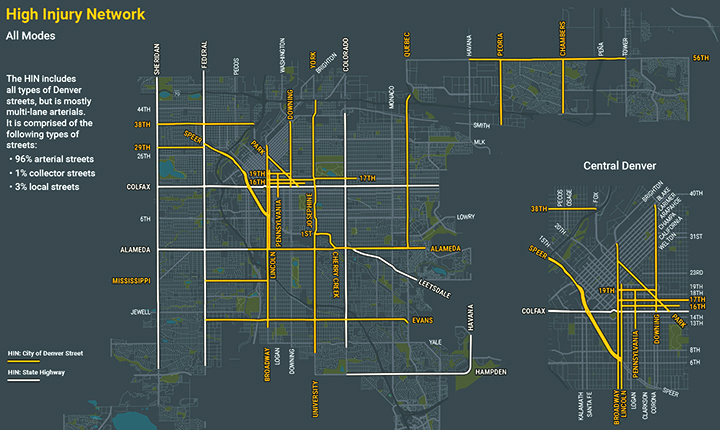
HIN: Reducing crashes on Colorado’s High Injury Network (HIN) of roads is a goal that seems unreachable given current traffic trends.
Even though nearly 70 percent of Denver residents still support Vision Zero, according to a survey conducted by the Denver Streets Partnership, the results of the program, critics claim, are hard to justify.
According to the 2019 Vision Zero Report, traffic-related fatalities increased by 15 percent from 2018 while serious bodily injury resulting from crashes also increased. In contrast, Denver cited several case studies purporting to show that Vision Zero has made a positive impact. Those include setting up automated speed and distracted driving enforcement at the intersection of 6th and Lincoln, adding 24-hour transit-only lanes on 15th and 17th streets downtown, and improving signage at the 20th street and I-25 interchange.
However, these case studies show that Denver is focusing on solving only one side of a double-edged problem. While Vision Zero aims to eliminate traffic deaths by 2030 by focusing on infrastructure improvements and behavioral causes affecting Denver’s traffic-related deaths and serious injuries, Denver is only focusing on the infrastructure.
As an example, the report says the presence of a photo radar van at 6th and Lincoln for five days reduced excessive speeding (10+ mph) by 21 percent. But, reducing the number of overall speeding tickets has not influenced the frequency of accidents occurring at that intersection. Denver still lists the intersection as a hotspot for fatal accidents on its Vision Zero Data & Trends website.
Denver’s case studies also do not address the fact that most accidents do not occur at intersections and are not caused by speeding. In fact, over 40 percent of Denver’s accidents occur because of distracted driving, according to the Colorado Department of Transportation (CDOT). The Vision Zero Data & Trends website also shows that most accidents occur in neighborhoods and on arterial streets.
Low-Hanging Fruit
The mixed messaging around Vision Zero has also caused some residents to believe the city is just going after low-hanging fruit to make it seem like it is doing more to protect pedestrians.
In May 2019, Mayor Hancock lamented that not enough was being done to protect Denver’s pedestrians during a memorial ceremony for those who lost their lives in traffic crashes.
“Every one of those lives lost is unacceptable and preventable,” Hancock said before listing the safety improvement projects the city is undertaking. Those include adding 19 miles of bicycle lanes and 12 new traffic signals.
One of the ceremony’s attendants, Michelle Roche, who lost her son after a reckless driver hit him in 2014, told Streets Blog Denver that the ceremony itself seemed like a propaganda campaign to make the city seem like it’s doing more to prevent traffic-related deaths.
“If you ask me, that little trickle of dollars that they’re putting towards the action plan … it’s like in marketing, we would call that greenwashing,” she said.
In its 2019 budget, Denver allocated just $2.6 million to implementing the recommendations of the Vision Zero Action Plan, accounting for less than 10 percent of funds allocated for transportation improvement projects. In 2020, Denver allocated just $1.65 million for the same cause.
Since the ceremony, Denver announced it will add up to 124 miles of bicycle lanes throughout the city and is upgrading 15 intersections across Colfax Avenue, one of Denver’s busiest streets. The Department of Transportation and Infrastructure (DOTI) announced the upgrades consist of adding “bollards and paint to shorten crossing distances for people on foot and to carve out places where pedestrians can stop in the middle of the street.”
But, residents living along Colfax aren’t impressed with the upgrades. The bollards will cost $120,000 alone, and there is no guarantee they will improve safety.
One resident who walks Colfax regularly told The Denver Channel that he worries about his safety because drivers on Colfax don’t watch out for pedestrians.
“My neighbor got hit by a car down the street, I’ve yelled at several drivers because they’re not looking when I’m crossing over, they’re making turns without looking both ways,” he said.
Colfax is one of several streets listed on the High Injury Network (HIN) — the corridors in Denver with the highest number of fatal and injury crashes. HIN roads account for just five percent of the total roads in the city but have seen more than 40 percent of the crashes since 2013. Other HIN roads include Broadway, University and Evans.
Federal Intervention
Denver’s problems with Vision Zero haven’t gone unnoticed by people living outside the Centennial State.
In December 2019, the US Department of Transportation (DOT) sent officials to meet with CDOT, DOTI, and the Denver Police Department to discuss means of improving Denver’s Vision Zero plan.
Among the concerns raised by DOT officials during the meeting was increasing rates of fatalities among pedestrians and bicyclists and other vulnerable road users. DOT found this fatality rate increased by 23 percent from 2018.
DOT’s nationwide data also showed that 76 percent of pedestrian fatalities occurred overwhelmingly after dark, 38 percent occurred when many pedestrians had some alcohol in their systems, and 74 percent occurred when they were outside of intersections. Half of accidents involving bicyclist fatalities occurred after dark, while only 26 percent of such accidents occurred with some alcohol in their systems.
“We clearly have more work to do to ensure that Denver’s transportation safety needs are met,” said James Owens, acting administrator of DOT’s National Highway Traffic Safety Administration (NHTSA). “I’m confident that with the help of our safety partners, we can make the Denver area one of the safest in America for pedestrians, bicyclists, and motorists.”
In the past three years, NHTSA awarded Colorado $46 million to address its road safety concerns. Even so, nearly 600 people across the state were killed in traffic-related incidents in 2019, according to statistics from CDOT.
So far in 2020, 57 people have been killed in crashes.
Project Expansion
While Denver struggles to achieve its Vision Zero goals, the Denver Regional Council of Governments (DRCOG) plans to expand the program to become more regionally focused. DRCOG claims this approach will help cities and communities in the metro area deal with increasing traffic deaths.
“Vision Zero switches safety from being solely the responsibility of roadway users to a shared responsibility of system designers and roadway users,” the agency said in its announcement of the plan. “It is inevitable that roadway users will make mistakes, so roads should be designed to ensure these mistakes do not result in severe injuries or fatalities.”
However, the principles of Vision Zero and the implementation seem to be out of line with each other. Last year, DRCOG reported 242 fatalities resulting from crashes across DRCOG’s service area which includes Adams, Arapahoe, Boulder, Broomfield, Denver, Clear Creek, Douglas, Gilpin and Jefferson counties. This total is more than one-third of traffic-related fatalities reported in the state.
Denver admits there is still work to be done and plans to focus on improving the HIN in 2020. But, residents are still waiting for the program to make an impact.
The Denver Public School system is seemingly hell-bent on embedding a sense of irony into its students.
skills of children and the awareness of the world in which they live are systematically countering those efforts by exposing kids to potentially toxic levels of lead.
A Well-documented Threat
It is known throughout the developed world that lead can be harmful and even fatal to human beings — especially children. Yet, its presence remains in the water flowing into many schools (and homes) in Denver, across Colorado and throughout most urban sectors of the United States.
Old Buildings: Long standing buildings, like Denver’s East High School built in 1924, sit atop buried poison.
According to a recently published “key facts” page on the World Health Organization (WHO) website: “Young children are particularly vulnerable to lead poisoning because they absorb 4–5 times as much ingested lead as adults from a given source.” The report goes on to describe a series of effects exposure to lead can have on kids, stating “… lead can affect children’s brain development resulting in reduced intelligence quotient (IQ), behavioral changes such as reduced attention span and increased antisocial behavior, and reduced educational attainment.” Further, the WHO states that lead exposure causes renal impairment, anemia, hypertension, immunotoxicity and damage to reproductive organs and that all effects — be they behavioral or neurological — are irreversible.
The Underlying Problem
The primary source of lead-tainted water that is being pumped into drinking fountains, sinks and kitchen areas in schools lies hidden. It does not come from the municipal source, rather, it is picked up in the service lines running from the main municipal water conduit and into a network of pipes made of — you guessed it — lead. Most buildings erected (approximately) between the late 1940s and the early 1980s are serviced by lead pipes. While proactive measures in places like Madison, Wisconsin, and Lansing, Michigan, have completely removed lead pipes from beneath homes and schools, the American Water Works Association estimates that six million lead service lines remain in use nationwide — affecting anywhere from 15 to 22 million people. Additionally, the presence of lead in school drinking water can come from pipe fittings, fixtures and the soldering in brass pipe joints.
Tainted Water: Retrofitted filters can temporarily block tainted water.
As far as Colorado is concerned and Denver in particular, many schools in current operation were built between the “lead window” cited above and contain some if not all of the lead-leaching components mentioned thereafter. The WHO and the Centers for Disease Control (CDC) both contend that no level of lead in drinking water is safe for children. Similarly, Zeke Campbell, Denver Water Director of Water Quality and Treatment, states on the DPS Takes Proactive Approach to Lead Testing Video that: “There is no safe level of lead. The most important thing you can do is have a test done.” Visit the following website to view the video: https://facilities.dpsk12.org/ 2016/11/21/leadtesting2017/.
Meanwhile, the EPA claims that water containing any measure that is at or below 15 parts per billion (PPB) is safe for human consumption — even children. Recently, Denver Water conducted a comprehensive testing initiative of all drinking water fixtures across the entire Denver Public School system. Over 3,300 samples from 160 schools were tested which revealed that most facilities have traces of lead in the majority of their faucets, drinking fountains and kitchen fixtures — some revealing levels of lead near or past the 15 PPB minimum set by the EPA. Water fountains and bottle filling stations testing near 15 PPB were partitioned off and retrofitted with filters which, while offering a temporary solution, do not remove the fact that there are lead pipes beneath the school structure. Ironically (once again), the EPA is the government agency which must grant Denver Water permission to dig up, remove and replace the underground pipes — a project with a price tag in the hundreds of millions.
An Ambitious Plan
Recently, Colorado Public Radio and The Denver Post cited article have reported that Denver Water has presented a plan to the EPA for doing exactly that. Beginning sometime in 2020 (theoretically) the plan would “issue tens of thousands of water filters … make adjustments to water chemistry, increasing the pH value from 7.8 to 8.8 and replace all lead lines in all areas served by Denver Water.” While this initiative undoubtedly springs from good intentions, none of the above measures can commence without pending EPA approval.
Standards: The EPA sets the standards, yet hinders progress
A precursor to this solution was proposed last year by the Colorado Department of Health and Environment. The proposal has been criticized because it called for Denver Water adding orthophosphate to the entire municipal water supply. While this element is an algae growth-promoting nutrient, it can also be harmful in high doses. The measure is already in use in Philadelphia, New York City, and Washington, D.C., and has reduced lead levels because orthophosphate clings to the inside of lead pipes — forming a sort of barrier between the water and the would-be leaching lead. However, it has been determined that it would cost a fortune to purchase, treat the water, then extract it from the effluent before adding it all over again — far more than simply replacing the lead pipes.
The plan was scrapped for the current strategy of testing fixtures and installing filters while Denver Water waits for the EPA to approve the pending proposal. Meanwhile, students and teachers hope the water filters are being changed at the appropriate intervals. Any student or teacher who does not bring pre-filtered water from home risks absorbing an unhealthy or even dangerous level of lead.
After several years of changes and setbacks, the Glendale 180 project is moving forward with a new real estate developer and a new timeline. Lincoln Property Company, a Dallas-based international real estate firm, is slated to break ground on the 268,000 square-foot mixed-used development in December 2020. An experiential retail, entertainment, hotel, and office destination, Glendale 180 will be the largest cohesive entertainment district in Colorado. It will also be among the first in the state to offer an open container law that allows for the common consumption of alcoholic beverages throughout the development. Further setting the project apart, Glendale 180 is expected to be the only entertainment district in Colorado where tenants have the ability to remain open until 4 a.m.
“The combination of Glendale’s central location and its reputation as a commercial-driven municipality makes Glendale 180 a desirable destination for the region’s growing population and businesses alike,” says Lincoln Property Company Vice President Hunter Brous. “We’re grateful to the City of Glendale for their partnership throughout this process and are eager to activate this new district with retail, dining, and entertainment experiences that are next to none.”
Founded in 1965, Lincoln Property Company is considered one of the most respected and diversified service firms in the United States. A key reason behind the City of Glendale’s decision to select the company for the Glendale 180 project was the firm’s experience with developing The Star, near Dallas, Texas, that is home to an entertainment district and the Dallas Cowboys’ headquarters and training facility.
“After visiting The Star, it was clear that Lincoln Property Company understood the sports/entertainment connection and would capitalize on the relationship between Infinity Park and Glendale 180,” says Glendale City Manager Linda Cassaday.
Experience Glendale
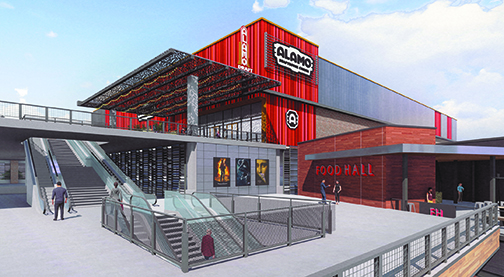
Featuring over 21,000 square feet of office space, over 134,000 square feet of restaurant and retail space, a 160-key hotel, and a 43,000-square-foot movie theater, Glendale 180 will also include free structured parking, an outdoor climbing wall, and a central outdoor plaza designed to support year-round programming.
“With Glendale 180 we are creating an experience and a gathering place,” Cassaday explains. “Major holidays will be celebrated there and people can look forward to food fairs, festivals, concerts, and fitness events. In short, we are creating a new downtown Glendale with this project.”
Bordered by Virginia Avenue to the north, Cherry Creek South Drive to the south, and Cherry Street to the east, Glendale 180’s dynamic, pedestrian-friendly design includes direct access to the Cherry Creek trail. Glendale Deputy City Manager Chuck Line says that a path will be developed to accommodate pedestrians and bicyclists, and that the green space will become an integral part of the project as a whole.
New Tenants
For those wondering why Glendale 180 has taken so long to come to fruition, Cassaday says that the City of Glendale was waiting for the right developer who really understood what the project was all about. Line adds, “The City could have sold the property to a big box store but we chose not to do that because it wasn’t going to serve Glendale well. Instead, we held out for an entertainment district and we are glad we did.”
As for the retail tenants, two have signed on so far: Alamo Drafthouse Cinema has leased 43,000 square feet and Food Hall by Hospitality Alliance has leased 25,000 square feet, including 10,000 square feet of patio space, for their first Colorado location.
Boasting the “best cinematic experience in the world,” Alamo Drafthouse celebrates cinema by pairing their movie-going experience with quality food and drinks. Each location is fitted with multiple types of projection equipment to accommodate both new and classic films. They show a variety of movies and the menu features burgers, pizzas, salads, snacks, and desserts prepared fresh from locally sourced ingredients. Additionally, every Alamo Drafthouse location highlights and promotes the best local craft breweries.
With offices in Las Vegas, New York, and Dallas, Hospitality Alliance is a consultancy and management group comprised of experts in different areas of the hotel and food and beverage industry. They are responsible for the Plaza Hotel Food Hall in New York City and the Discovery District redevelopment of AT&T’s new headquarters in downtown Dallas. The company also assists with concept development, leasing, construction project management, hiring, and training.
Vintage Glendale
While the experiential entertainment district is new in many ways, in other ways it’s bringing Glendale back to its roots. During the 1960s and 1970s, the city was home to a variety of now vintage establishments that attracted the masses. Colorado Mine Company (home of the “Fool’s Gold” which was Elvis’ favorite sandwich), Cork ‘N Cleaver, Celebrity Sports Center (owned by Disney), Cooper Theater, The Riviera (The Riv), Soda Straw, Sportspage, The Lift, and Tommy Wong’s Island are long gone but fondly remembered. Additionally, Andy’s Smorgasbord became Shotgun Willie’s Country Western Bar which is now Shotgun Willie’s Show Club and, almost five decades later, Bull and Bush Pub and Brewery is still a favorite.
“With this project, Glendale will regain its position as the premier entertainment hub of the metro area and we’re confident that we’ve found the right partner in Lincoln Property Company to turn that vision into a reality,” says Glendale Mayor Mike Dunafon. “From an exciting retail tenant mix and a central location to unprecedented trail access and more, Glendale 180 will usher in Colorado’s next generation of entertainment-based experiences.”
It appears that some segments of American society are unaware that various flus sweep through this country, starting late fall each year, killing 30,000 to 70,000 people. Even though flu shots are provided free every year, approximately half the population does not even get vaccinated. True, the flu vaccines are only approximately 46% effective, but to cut your risk of getting the flu in half would appear to be an extremely good idea.
Now comes the coronavirus (for which there is no vaccine yet), as well as, an assortment of other flu viruses. The coronavirus appears to be highly contagious but not particularly deadly for anyone other than seniors with weakened immunological systems.
At least some of the persons who have died from complications of the coronavirus would also be at high risk if they contracted any of the other flu viruses going around this year. Many also had relatively short longevity expectations.
What has been unique about the coronavirus is the governmental response to it, both here in the United States and abroad. Here in Colorado, Governor Polis ordered all ski resorts closed for at least 30 days, all dine-in services at bars and restaurants, as well as closing gyms, casinos, theaters, coffeehouses, cigar bars, brewpubs and distillery pubs. All schools have been closed until at least April 17, 2020. None of the seven states contiguous to Colorado have adopted all of these draconian measures.
In 2009/2010 the swine flu, that originated from Mexico, infected 60.8 million Americans and killed 12,429. However, in Colorado, no such drastic measures were undertaken. Why? Some millennials point out that the swine flu overwhelmingly affected and killed the young while the coronavirus devastates those in the boomer generation and older. Millennials also note that the brunt of the economic hardships in Colorado that result in inevitable recession as a result of the economic stoppage will be borne by younger adults who are just starting new businesses or just entering the workforce. Conversely, they note among most of the politicians’ leadership positions in Washington, both parties are septuagenarians.
Governor Polis declared at his press conference announcing the mandated shutdowns that “Colorado is open for business.” Really? Is he talking about internet businesses where he made his tens of millions or perhaps the business of building high density apartment complexes throughout the Front Range? For the most part other portions of the economy are going to be very much challenged. The oil and gas industry, already reeling from ever-increasing restrictions imposed, is going to be further decimated by record low prices across the world. Tourism in Colorado is all but shut down for an indeterminate period of time, along with it the hotel and resort industry in Colorado, and, of course, the sports sector of the state economy.
Trump at the national level can just simply print another billion dollars in stimulus money while adding more billions of dollars to the national debt. But Polis on the other hand, cannot deficit spend at the state level. He will find that by a stroke of a pen, he can close businesses throughout the state, but he has little or no power to revive an economy spiraling into a recession.
While the number of coronavirus cases are increasing at a rapid rate in Colorado, they are far eclipsed by the all-time record-breaking rate of those attempting to claim unemployment in the state in response to the Governor’s proclamation. “We’re seeing one-day or likely one-week and two-week spikes like we never saw in the Great Recession,” Jeff Fitzgerald, the state’s unemployment insurance director notes. Rest assured the ripple effect from the governor’s proclamations are just beginning.
Is the economic devastation of the State of Colorado necessary? On the one hand it is difficult to blame politicians like Polis for fearing political retribution if they don’t get ahead of the curve on the spreading worldwide pandemic. Politicians started forbidding gatherings of more than 500, then 250 and now no more than 10. Countries like Italy have quarantined the entire population, while others like South Korea did not shut down the economy but mandated the wearing of face masks. Despite what some in the media are telling you, the Centers for Disease Control and Prevention (CDC) respirator masks, made to the specification of N95 or greater, can be effective in limiting the spread of the coronavirus. To date, South Korea has been more effective in controlling the spread of the virus than Italy, with all of its quarantines.
In addition to accepting the 34,100 flu deaths last year Americans also accept the fact that 38,800 die on our roads every year without an afterthought because we do not want to go back to the horse and buggy days. At some point rather than simply forcing the closing of business after business and forcing a recession on what was once a vibrant economy, those who make the decisions in Colorado, need to study what works and what does not. Politicians need to start making the hard decisions and not simply taking the easy out. The coronavirus deaths in Colorado as well as the much more numerous flu deaths will begin to recede as spring turns to summer while the self-induced economic recession will not.
We are now well into the first year of
Mayor Michael Hancock’s final and desultory third term. Ugly high-density and
poorly constructed apartment buildings are still going up everywhere, while
parks and open space are destroyed and predatory bike lanes arise that severely
impede the flow of traffic in the city, making some neighborhoods far less
enjoyable and livable than just five years ago. The mayor continues to spend
much of his time in Atlanta, where he can engage in his favorite pastime,
chasing skirts, far from the scrutiny of the citizens he rules.
What is different in his Honor’s third term
is the 13-member City Council that acts like an actual city council and not
simply a rubber stamp Politburo for a tin pot dictator. Incredibly in the
entire time in office as mayor he has not vetoed a single piece of legislation
aside from his recent veto of a form of a pit bull ban, approved by the City
Council by a 7 to 4 margin. It will take nine votes to overcome the veto. Even
Governor Polis is opposed to the legislation. He shared a picture of him and
his pit bull on social media.
We don’t particularly like City Council
feeling the need to legislate various aspects of many people’s lives either,
but that is not the point. In his first two terms, the city council members
would not dare to pass anything that he did not approve of for fear of
retribution. Perhaps the sudden signs of political courage are a result of Mr.
Hancock being a lame duck mayor who can’t run for another term, unless, of
course, he pulls a “Bloomberg” at the last minute.
But we think it is more of the makeup of
the members of the present council. In 2015 the citizens of Denver elected four
potential rebel new council members — Wayne New, Rafael Espinoza, Kevin Flynn
and Paul Kashmann — who defeated the choices of the mayor and the high-density
developers. The citizens hoped and expected the new members to fight the good
fight but, in fact, nothing changed. Rafael Espinoza behind-the-scenes urged
and virtually begged his fellow council members to once, just once, stand up to
the mayor, but they simply would not.
The election last spring also brought in
four new potential rebel council members — Chris Hines, Candi CDeBaca, Amanda
Sandoval, and Amanda Sawyer — who most council observers expected to be
co-opted just like the 2015 class. But they greatly underestimated Ms. CdeBaca.
She had upset Albus Brooks who was not only the close friend and political ally
of the mayor’s, but the favorite to be the next mayor of Denver. A radical, she
wasted no time in informing the mayor that there was a new sheriff in town and
she was not going to be one more poodle council member.
Amanda Sawyer crushed another close ally of
the mayor, Mary Beth Susman, in District 5 in the 2019 election. She was viewed
by some as not having the grit of Ms. CdeBaca and perhaps far too dependent on
her political sisters from Emerge, a program that trains Democrat women for
local political office, and which helped her get elected in 2019.
But by and large Sawyer has demonstrated
that she is made of the right stuff. One of the problems with the prior
councils is they let the mayor’s staff and appointees push them around. The
mayor’s men and women had little or no respect for what they viewed as weak and
cowardly elected officials on the City Council.
Employees from Denver’s Department of
Transportation and Infrastructure (DOTI) were regularly showing up late for
meetings, leaving early and failing to provide information about projects.
After nine months of this type of conduct Councilwoman Sawyer had enough of it.
She went to Human Resources and the Mayor’s Office to complain that this
conduct was putting her constituents in danger. When they laughed her off, she
further indicated that she would vote against any and all DOTI projects until
the situation was remedied.
The mayor was shocked. He was simply
treating City Council members in the same manner he always had. He quickly went
to sycophantic Denver media to trash her, which they did. The DOTI Executive
Director Eulois Cleckley told the press that the whole matter “really boils
down to a personality conflict.” That is to say that Ms. Sawyer is very
difficult to work with, which would surprise anyone who knows her. Cleckley
went on to declare, “I was a little disappointed. Having tactics like this that
potentially can delay our services or projects. It actually hurts our ability
to do what’s right for the city and county of Denver.”
Ms. Sawyer said she felt she was being
attacked essentially for being a whistleblower. She declared “that this has
turned into a campaign to smear me so that this changes the conversation, and
that’s not fair.” She is of course right. Sawyer backed down about the voting
part, but she had placed a marker about how she expected to be treated on
behalf of her constituents.
Next time she needs to bring along a few of
her fellow council members who need to let the mayor’s personnel know that
Council members are the elected officials and not them. We await that day which
we hope will occur in the very near future.