
by Mark Smiley | Apr 25, 2016 | Travel
by Megan Carthel
 Glendale and Denver residents have been getting Naked and Afraid.
Bree Walker, Glendale resident, was Naked and Afraid in the jungle of Honduras, right along the Conrejal River.
“I got really bored one day and just filled out a paragraph online, and then I guess I qualified to go,” Walker said. “And then, a month later I was on my way.”
When Walker filled out that paragraph, she signed up for Naked and Afraid. It’s a T.V. show designed to put survivalists to the test mentally and physically. Contestants are thrown into remote locations for 21 days with only one item each and no clothes or shoes. They’re left to make their own shelters, hunt and gather their own food. Two strangers meet for the first time and have to survive together — naked.
While being naked was a shock at first to Walker, eventually everything became routine — even feasting on the philodendron fruit which can leave third degree burns along the throat if not picked at the right time.
“It became a daily routine and a lot simpler than we have here,” Walker said. “I loved not having the Internet, and I loved not having a phone, or doing my hair or makeup or anything, or what I am going to wear today.”
Walker and her partner Clarence were in the Honduras jungle during monsoon season and a blood moon, meaning light of any kind was hard to come by. Walker found refuge and sunlight near the river at what she called her “breakfast rock.” To prepare for the show, she ran the dirt trails by Arrowhead barefoot and packed on an extra 17 pounds by eating paleo meals every hour and a half. Those extra pounds didn’t last long — she lost 25 pounds throughout the entire experience. Walker made it 14 out of the 21-day challenge due to hypothermia and a 106-degree fever among other complications.
Walker and Clarence were inserted into the wilderness in late September 2015, just about a month after Walker’s 30th birthday — a present of sorts to herself.
“I think it helped me find myself because turning 30 just made me feel like, do I really know who I am, and what can I really put myself through? What can I really conquer?” Walker said.
Walker discovered her own inner strength, realizing she could do much more than her partner could. After her experience she said she threw away the body shaming and pressure society often puts on women. Her journey in the jungle taught her she was stronger and more independent than she thought, something she wants women and girls to see within themselves.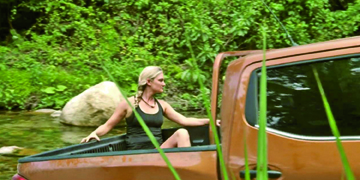
“Don’t let anybody tell you not to do something. Go try it and find out for yourself because you’re strong enough,” Walker said.
Walker isn’t the only local resident who was strong enough to be naked and afraid. Matt Wright, a Denver resident and survival expert, also went on the show. His episode aired April 24, 2016. Wright’s episode was filmed in Thailand in November 2014. When it came to being afraid, he wasn’t, but when it came to being naked, things were a little different at first.
“You really realize you have nothing to defend yourself,” Wright said.
Both Walker and Wright said being naked made them feel more vulnerable, but any awkwardness quickly dissipated as the focus switched to survival, food, water and shelter.
“When I was out there, the most peaceful thing was that those were the four things I had to worry about. That was it. Yeah, it was tough as heck, but if I was there a little bit longer and would’ve had that warmth, it would’ve just clicked,” Walker said.
And when it comes to the partners?
“It was the hardest forced relationship you could imagine,” Wright said.
The camera and sound crew only film the contestants a few hours each day, and for the remainder of the time, they are completely alone. Wright said his partner became his best friend because she was his only friend. Wright didn’t forget about his girlfriend Brooke back in Denver however. On the show he recorded a proposal to her after reading a special note she sent with him tucked away in his knife. Their wedding is set for late July.
Walker’s partner was a little more distant — they didn’t share a shelter, a first in the show’s history. Her partner refused consolation by Walker when he was frightened in the middle of the night by growling in the jungle — his own stomach growling. While Wright may have been more prepared than his partner was, they worked together to survive, and he gained a new outlook on people.
“[The experience] opened up a huge window where I believe now anybody is capable of anything,” Wright said.
Wright’s outlook on negative situations has changed too, frequently seeing that “it could be worse.” For Walker, being back in the real world made her realize how much everything was about time and that she was born under a wandering star.
Despite hundreds of bug bites, lost weight, infections and hospitalization, Walker and Wright say they would do the show again “in a heartbeat.” Walker’s show will air May 29 on the Discovery Channel.n

by Mark Smiley | Apr 25, 2016 | Glendale City News

GLENDALE, CO – APRIL 9: Glendale Raptors vs Santa Monica at Infinity Park in Glendale, Colorado on April 9, 2016. (Photo by Seth McConnell)
by Kurt Woock
Writer for and on behalf of the City of Glendale
While winter means skiing for many Coloradans, for the the Glendale Raptors Rugby Academy (GRRA) it means more rugby, just like spring, summer, and autumn. The first months of 2016 have been filled with teaching and learning across the Denver metro area.
Jenna Anderson is the youth rugby coordinator for the Raptors. When talking with her, her enthusiasm about the benefits rugby holds for positive youth development is unmistakable. One quick glance at her calendar, and one quickly sees the extent of her dedication to sharing all the programming the Glendale Raptors Rugby Academy offers.
One recurring entry is the Raptors In The School program. Jenna, along with coaches and players from the Glendale Raptors teams, travels to schools during the day to teach rugby basics during P.E. classes. “We see as many kids as we can fit in,” she said. “So far, we’ve seen about 1,500 kids since the end of January.” She said some students have had some exposure to rugby, including attending games at Infinity Park, but have not had formal instruction in the rules and proper playing techniques. To that end, students aren’t the only ones learning at these events: P.E. teachers also learn about teaching rugby in their classes in order to bring one of the country’s fastest growing team sports to future classes.
For the first time ever, the GRRA also offered a more immersive school experience for students interested in learning more. Students at University Park Elementary were able to sign up for a six-session, after-school rugby program. Look for this opportunity to appear elsewhere in the future.
Middle school students are of particular importance to the GRRA mission. Learning effective and safe techniques from the ground up is easiest at that age. Anderson said that middle school is also a key time to introduce students to the value of developing skills in multiple sports. She said there is a trend of students choosing to “specialize” in a sport, often before they even reach junior high. This specialization comes at the expense of becoming a well-rounded athlete.
The issue is larger than rugby. Although it might seem logical to assume that a student who devotes 20 hours a week to a particular sport will have a leg up over another student who devotes 10 hours to two different sports, the opposite is actually
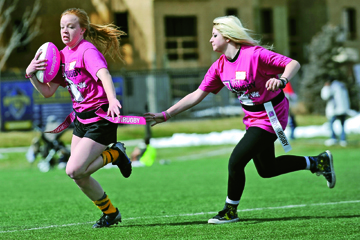
Glendale Raptors girls Try On Rugby event on Saturday, April 5, 2014 at Infinity Park. Photo by Seth McConnell
more likely. Avoiding specializing too early actually increases the likelihood for success in the sport a student might eventually end up specializing in.
Students who develop skills in more than one sport don’t separate the things they learn in each into silos. Instead, the mental and physical skills they pick up in one sport can be applied to all the others. Think of it as cross pollinating. A football player might become a stronger tackler after learning about tackling in the rugby tradition. A basketball player’s sense of court awareness could develop more deeply after learning how rugby players see the field. The possibilities are endless.
In addition to bringing rugby to schools, the Glendale Raptors Rugby Academy has been busy holding events at Infinity Park. A first-of-its-kind tackling clinic took place in early April. Anderson said the clinic will become a part of GRRA’s regular programming.
Raptors coaches, including head coach Andre Snyman, were on hand to teach safe, effective tackling techniques. Two sessions in total were held, one for 8-11-year-old boys and girls and one for 12-18-year-old boys and girls. Anderson said that the clinic attracted coaches and football players in addition to rugby players.
“It doesn’t matter what sports you play,” she said. “Players learn the original styles of tackling with the shoulder and not your head.” She said rugby tackling skills have been embraced by the Seattle Seahawks, among other organizations. She’s also seen kickboxing, soccer, and cross country athletes benefit in various ways.
While some GRRA programs are meant as introductory or beginner programs, Anderson is quick to point out that GRRA offers an incredible opportunity for those looking to make their mark at the game’s highest levels. Raptors head coach Andre Snyman said the ability to work with the Raptors coaches and have access to the country’s premier rugby facility is a one-of-a-kind opportunity top prep students should seriously consider, and one that many have already taken advantage of. He said that beyond physical development, players will leave with a higher rugby I.Q. At GRRA, they’ll learn what it takes to take their game to the next level.
As winter turns to spring, Glendale Raptors Rugby Academy will continue to offer rugby opportunities of all kinds. April meant the beginning of Try League, for K-9 boys and K-8 girls. Anderson is also excited for the girls-only “try-on rugby event.” It’s a girls rugby clinic for those aged 8 to 18, from beginner to advanced. Participants are encouraged to bring a friend with them to play the sport together.
The programs provided by GRRA continue to give Denver’s youth a positive, encouraging environment in which to grow. Thousands have already taken advantage in 2016. And, as the year continues, more and more families will become part of the Raptors family.
by Mark Smiley | Mar 25, 2016 | Glendale City News
by Marco Cummings
Writer for and on behalf of the City of Glendale

GLENDALE, CO – MARCH 12: Raptors vs Belmont Shores at Infinity Park in Glendale, Colorado on March 12, 2016. (Photo by Seth McConnell)
Just before the halfway point of their 2016 Pacific Rugby Premiership (PRP) campaign, the Glendale Raptors record remains an unblemished 5-0 in league play. With a handful of dominating performances to start their season, the Raptors’ find themselves on familiar footing atop the PRP table and look poised for a repeat of their championship performance from 2015.
“I’m very happy with where the team is at the moment,” Raptors head coach Andre Snyman said following a 63-7 victory over Belmont Shore to open up the team’s slate of home games in March.
It’s been coming together quicker than expected for the Raptor’s gaffer, which has given both the team and the coaching staff confidence as they look to finish the season strong.
“From a coaching standpoint, I think it took us the whole season to try and get the whole team prepared for the Final last season. It took us 10 games to get the guys all on the same page,” Snyman explained. “This season, for some reason, it just feels to us that the team is all on the same page after five games. In terms of chemistry, the environment and the way they’ve trained, it’s been better. That’s great.”
The challenge is maintaining that momentum for the games remaining in the PRP regular season.
“The downside is trying to keep it there and not get complacent,” Snyman explained. “It’s halfway through the season. They can’t switch off and assume it’s going to be a highway cruise to the final.”
But the Raptors have dealt with their fair share of challenges thus far, including a rigorous four-game road tilt to start the seaso
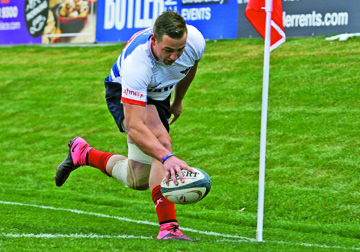
GLENDALE, CO – MARCH 12: Raptors vs Belmont Shores at Infinity Park in Glendale, Colorado on March 12, 2016. (Photo by Seth McConnell)
n.
“Obviously it’s four weeks in a row of travel. It takes its toll on the boys,” Snyman said of the challenge. “It’s tough, but I’m proud of the boys for sticking to it.”
In addition to the rigors of travel, Glendale has had to deal with the challenge of missing some of its best players for the early part of the season. Raptors captain Zach Fenoglio, along with young talents Chad London, Niku Kruger and Hanco Germishuys missed the first four games of the PRP season while taking part in the America’s Rugby Championship with the USA Eagles.
Despite this, the Raptors didn’t miss a beat, winning all four of those matches on the road. It’s been a testament to the depth that Snyman and his staff have built within the club.
“We anticipated it,” he said of the absence of his USA Eagle players. “We had a good idea which players would be a part of it and we trained accordingly. We’ve tried to bring future players into those positions and we’ve been very fortunate to have depth within the club. It’s very good.”
International duty still often comes at a price to the club, however. Fenoglio suffered a neck injury while with the Eagles at last year’s Rugby World Cup. The ailment lingered throughout the start of the season until Fenoglio made his debut in 40 minutes of action against Belmont.
“It was nice to see him back on the field with his leadership and the way he played coming off of an injury,” Snyman said of Fenoglio’s performance in that game. “He looks good. He’s not 100 percent fit but he’s working really hard on that. He played a solid 40 minutes.”
Additionally, the high profile of international rugby has made Glendale’s best players targets for the newly formed Professional Rugby Organization (PRO Rugby).
“Unfortunately we’re going to lose those players with the PRO league. Niku, Chad and Hanco won’t be playing with us,” Snyman said. “We’re in a fortunate position that the players that took their place are the same players that are going to step up and finish the season for us. I’m confident that the players are good enough to keep the momentum moving forward.”
Overcoming adversity is as much a part of rugby as overcoming one’s opponent. If the Raptors’ early returns are any indication of what lies ahead, this year’s team looks to be primed for another run to the final.
“You can’t just run on the field and expect to win. You’ve got to always be prepared for a fight,” Snyman concluded. “We’re just going to focus on the task at hand. We’re going to take things a game at a time and edge our way closer and closer to a position in the final.”

by Mark Smiley | Mar 25, 2016 | General Featured
by Mark Smiley
 The annual Cherry Creek Chamber luncheon was held on Wednesday, March 2, 2016, at the JW Marriott Hotel in Cherry Creek North. The well attended luncheon had back by popular demand Brian Voight, CEO of Denver Botanic Gardens, as the master of ceremonies, whose quick wit and charm once again enlivened the event.
Walter Isenberg, the CEO and co-founder of Sage Hospitality Resources, was the keynote speaker. He told about his humble beginnings and attending Cornell University where he obtained a degree in hospitality management. He decided he wanted to go to Cornell based on a strong recommendation from a fellow dishwasher who had never even graduated from high school. Today Sage Hospitality operates over 60 hotels and 10 independent restaurants in over 20 different states. Among the hotels it operates is the JW Marriott in Cherry Creek where the event was held.
Isenberg emphasized that in the hospitality business, like many other commercial ventures, the attitude and enthusiasm of the employees is everything. He relayed a story about going into a competing hotel which had a sign above the check-in desk which indicated that the customer was king, but, in fact, the staff treated you like you were an annoyance. He knew from that experience he did not have to worry too much about that hotel as a competitor.
Saying that employee attitude and enthusiasm is key is one thing, Isenberg noted, but actually creating an atmosphere where employees can thrive is another. He stressed that it takes hard work and actually caring about it yourself as CEO, along with others in top management, to help make it happen.
The Sage Hospitality CEO also delved into the fact that the country has had 72 months of growth as modest as it might be and the law of business cycles had not been made obsolete as the 2008 financial crash painfully demonstrated. He also remarked that the hospitality industry is something of a canary in a coal mine in that a downturn in the hospitality business often presages a dramatic downturn in the economy as a whole. After his remarks Isenberg received a standing ovation from  the appreciative audience.
Another hit was the presentation from Chamber Executive Director Christine Des Enfant who gave a detailed overview of the growth, or some would say overgrowth, of the Cherry Creek North area with information provided by, inter alia, Peter Staab, Senior Managing Director of Newmark Grubb Knight Frank who produces a quarterly Cherry Creek Market Overview. (See detailed map of Cherry Creek Projects Underway on Pages 16-17.) Included in Des Enfant’s presentation, for levity, was an official Cherry Creek Area Monopoly Board.
Des Enfant noted that there are at least three new office buildings being built and three new hotels including the Halcyon at 245 Columbine which will be seven stories high and contain 133 rooms. The hotel is being developed by Insenberg’s Sage Hospitality.
What was amazing to many in the audience was the number of new apartment and condominium buildings being constructed including the 12-story CODA at 100 Steele Street containing 185 units scheduled to be finished this summer.
In the gift bag provided to attendees was a handy color coded “Your Easy Guide to Parking” in Cherry Creek North just in case you were feeling a “perceived lack of parking” in the area.
Capping off the luncheon were the annual awards. Jessica Bachus, founder of Dolls for Daughters accepted the award for Nonprofit of the Year. Dolls for Daughters and Kenzi’s Kidz work to support underprivileged children and their families in Colorado by providing toys, food, and more during the holidays, school supplies and clothing during the scho
 ol
ol
year, and assisting families through community outreach, financial planning and professional support.
Fascination St. Fine Art at 3rd and Detroit took home the hardware for Business of the Year. The gallery features original paintings, sculpture and limited edition artwork by the finest regional, national and international artists.
The Community Leader of the Year went to Cindy Patton, the Parking and Planning Manager of Denver Public Works. An attendee who had been stuck in traffic throughout last summer by Ms. Patton’s handy work in Cherry Creek North, jokingly wondered out loud whether the other nominees for this particular award were Hays Griswold, the EPA’s on-scene coordinator for the Gold King Mine spill, or Lois Lerner of the IRS.
Finally, the Chamber’s Director’s Award went to Anna Spalding from Regus. In an emotional acceptance speech, Spalding lauded the Chamber as an incredible place to network and make long lasting friendships. For more on the Cherry Creek Chamber of Commerce, visit www.cherrycreekchamber.org.
The map, above, and legend were reprinted with the permission of Pete Staab, Senior Managing Director of Newmark Grubb Knight Frank. It was originally presented as the 4th Quarter 2015 Cherry Creek Market Overview at the Cherry Creek Chamber luncheon.
Newmark Grubb Knight Frank, a Global Leader in Commercial Real Estate, is one of the world’s leading commercial real estate advisory firms. They provide a fully integrated platform of services to prominent multinational corporations and institutional investors across the globe, as well as to occupiers, owners and developers of real estate on a local, regional and national level.
Pete Staab’s experience includes Office Leasing and Sales, Landlord and Tenant Representation, New Construction Development, and Corporate Real Estate Services. Mr. Staab can be reached at 303-260-4346, pstaab@ngkf.com, or www.ngkf.com.
by Mark Smiley | Mar 25, 2016 | Travel
Hundreds Flock To Collaboration Fest In Denver And Gear Up For Bacon And Beer Classic In April
by Phil Kummer
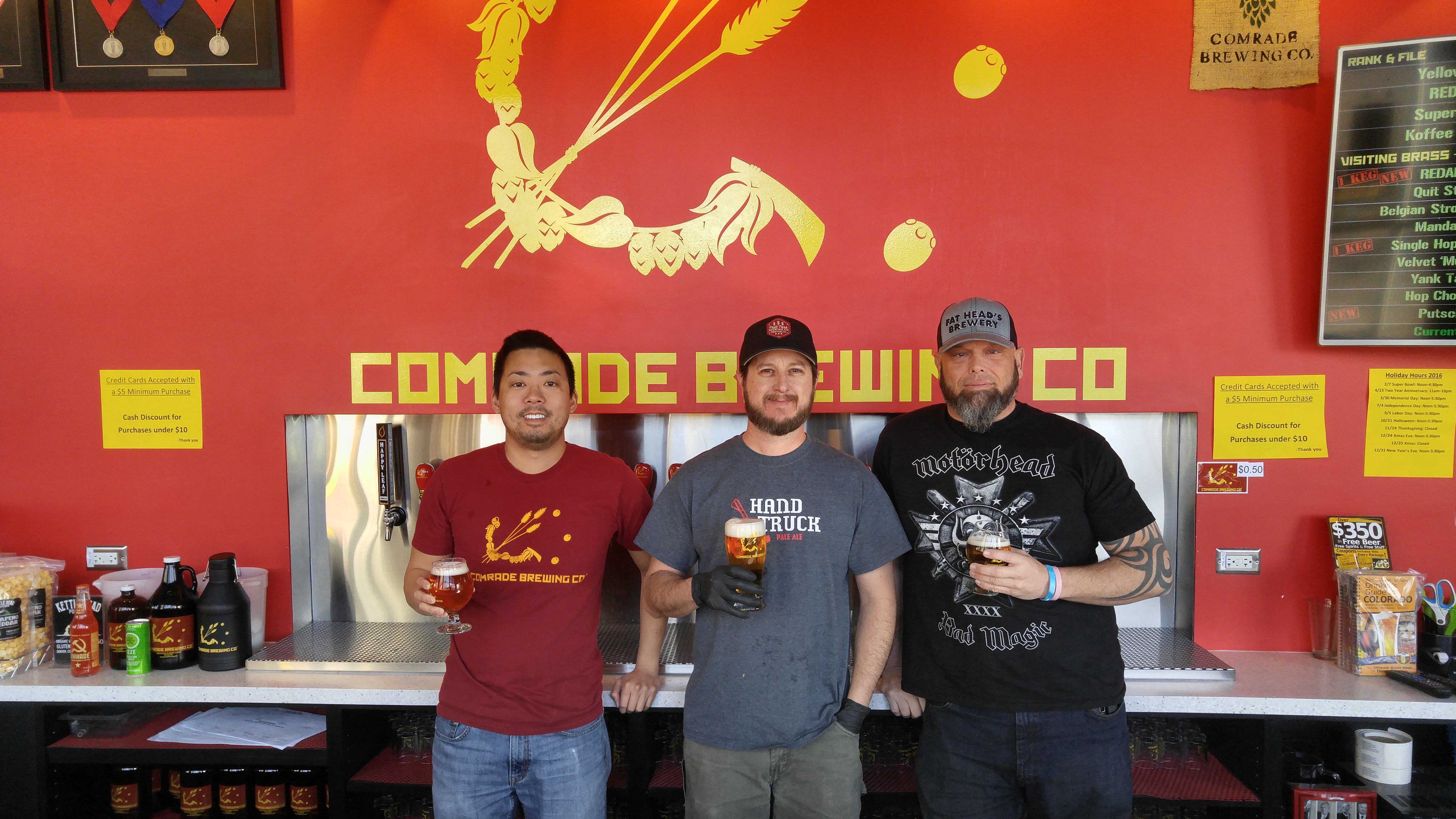
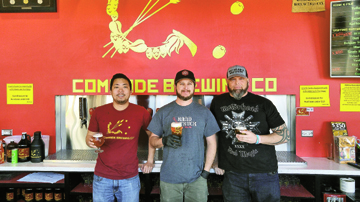
Special Blend: David Lin and Marks Lanham from Comrade Brewing collaborated with Mike H from Fat Head’s Brewery in Ohio to brew Lupulin Manifesto IPA.
Colorado has been at the heart of the craft beer explosion over the past decade and has over 235 craft breweries. Closer to home in the Cherry Creek/Southeast Denver area one can suck down some craft brewed suds at no fewer than 11 establishments, most of which are no more than a few years old.
Although craft beer is becoming increasingly popular, beer is actually one of the oldest prepared beverages and might have been made as early as 9500 BC, when cereal grains were first harvested. Archeologists have dated beer made from barley to about 3500-3000 BC in western Iran, and hops were first used in Europe around 800 AD by monks. Just about any grain, vegetable or fruit that contains sugar can undergo alcoholic fermentation and has thus been used somewhere around the world to make beer. By 2006 the global beer industry had revenues of about $295 billion, yes that is billion. It’s obvious that what ancient peoples discovered has turned out to be a pretty good idea.
This ancient beverage is now the rage and with all this new popularity comes new career opportunities, the most important being that of brewmaster. To understand this now popular occupation we consulted with David Lin, owner, and Marks Lanham, brewmaster, of the award-winning Comrade Brewing Company. They have a combined total of about 24 years in the craft beer business and most of that time has been on-the-job training. They have been running Comrade since April of 2014.
The passion for beer and beer drinking is fundamental to be a successful Brewmaster and can’t be taught. You can’t get it by going to school. It’s important to love your end product and be proud of it. It means enjoying the beer that you and other craft brewers make and sometimes having a beer for breakfast just because you feel like it.
Once you have harnessed the passion for beer there is still a long way to go to actually making a good tasting craft beer. “We make beer we enjoy drinking and what we drink, we sell,” said David Lin. Being a brewmaster is a unique combination of skills and attitudes that all play a role in one’s ability to make a highly drinkable brew. It’s like being an artist and scientist at the same time, like being left brained and right brained on demand. The brewmaster must have the creativity of a chef to develop new tastes in beer along with the skills and focus of operations director to make sure that the beer comes out just right.
The brewmaster must learn to manage his suppliers which means having good relationships with suppliers around the country to provide agricultural products. Depending on weather and harvest conditions this can be a challenge. It once took David two years of working with a supplier to get a specific kind of hops for his beer. One advantage of working in the craft brewery business is the sense of community among brewers. One brewer coming to the aid of another brewer with a needed ingredient is a common thing and helps foster a unique sense of community.
To highlight this fraternity of craft brewers, Denver recently held its 3rd Annual Collaboration Beer Fest on the club level of Sports Authority Field. Collaboration is all about sharing brewing experience and technique to join the perfect ingredients. Brewers come together to decide exactly what yeast to use with what fruit, what type of malt works best with what barrel, or what hops will contribute to the perfect aroma.
Comrade collaborated with Fat Head’ s Brewery from Portland, Oregon, as well as Cannonball Creek and Station 26 breweries. The Bull & Bush collaborated with Little Machine from Jefferson Park neighborhood in Denver. Recently crowned Best New Brewery in the United States, Weldwerks Brewing out of Greeley, collaborated with Snowbank Brewing Company from Fort Collins, to produce a barrel-aged mocha stout.
Attendees of the fest were able to sample more than 85 craft brews and some are now available in the respective tap rooms. All in all, 151 breweries from five countries and 20 states were on hand to share their rare creations.
Whether a collaboration or in a day’s work, once all of the ingredients are in hand, the brewmaster has to carefully control and monitor a biological process, fermentation, that usually takes a couple of weeks but can be much longer. This means spending a lot time at the brewery, usually 60 to 70 hours a week. This is a totally hands-on type job.
Last, but by no means least, the brewmaster has to be an absolute clean freak because he knows that contamination is the worst thing that can happen to a batch of beer. So the brewmaster spends the majority of his time cleaning tanks and equipment to ensure that everything is clean all the time. Marks  Lanham remarked, “Cleaning is 95% of the job.”
The craft brewing industry has grown so much that you can now get a degree or certificate at a few colleges here in Colorado and about dozen colleges throughout the U.S. At Metropolitan State University of Denver you can major in Brewery Operations or Brew Pub Operations. Colorado State University offers a BS in Fermentation Science and Technology and Regis University offers a certificate in Applied Craft Brewing. It appears that the art of craft brewing has come of age.
To highlight this art, after drawing sold-out crowds across the country, the Bacon and Beer Classic is coming to Denver on Saturday, April 16, for a unique gastronomic experience inside Sports Authority Field at Mile High.
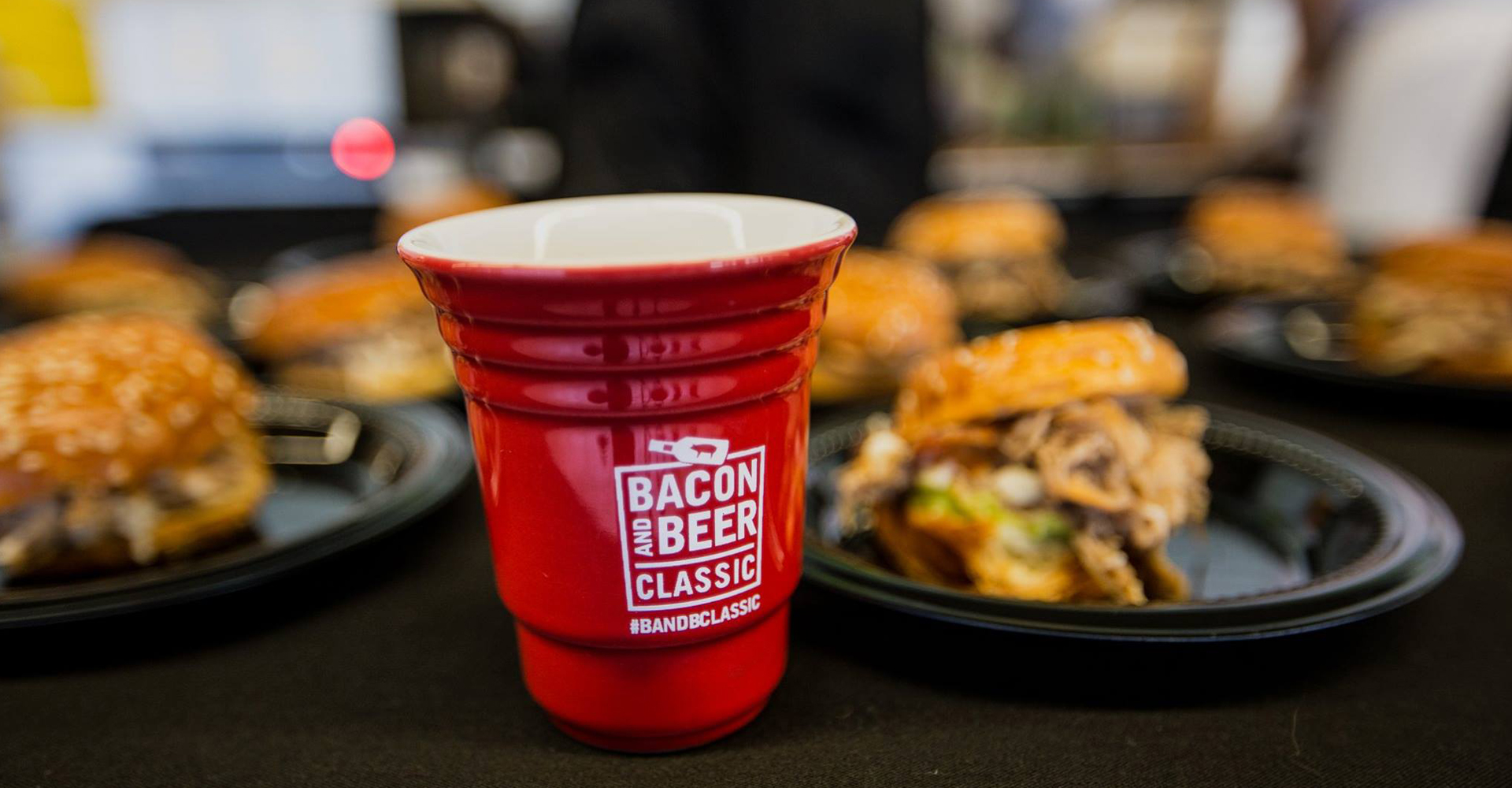
Bacon and Beer: Sports Authority Field will play host to the Bacon and Beer Classic on April 16, 2016 for the first time. Visit www.baconandbeerclassic.com for more information.
Over 30 local restaurants will provide bacon dishes and over 50 regional breweries will offer craft beer throughout the concourse. Kate Levenstien, founder of Cannonball Productions and the Bacon and Beer Classic, is looking forward to hosting the Classic at Sports Authority Field for the first time. “With some of the best craft breweries in the country, Denver is a dream city for this festival. It is easy to find an incredible selection of local brewers and restaurants. Pair that with die-hard Broncos fans and we’ve got everything all in one spot!”
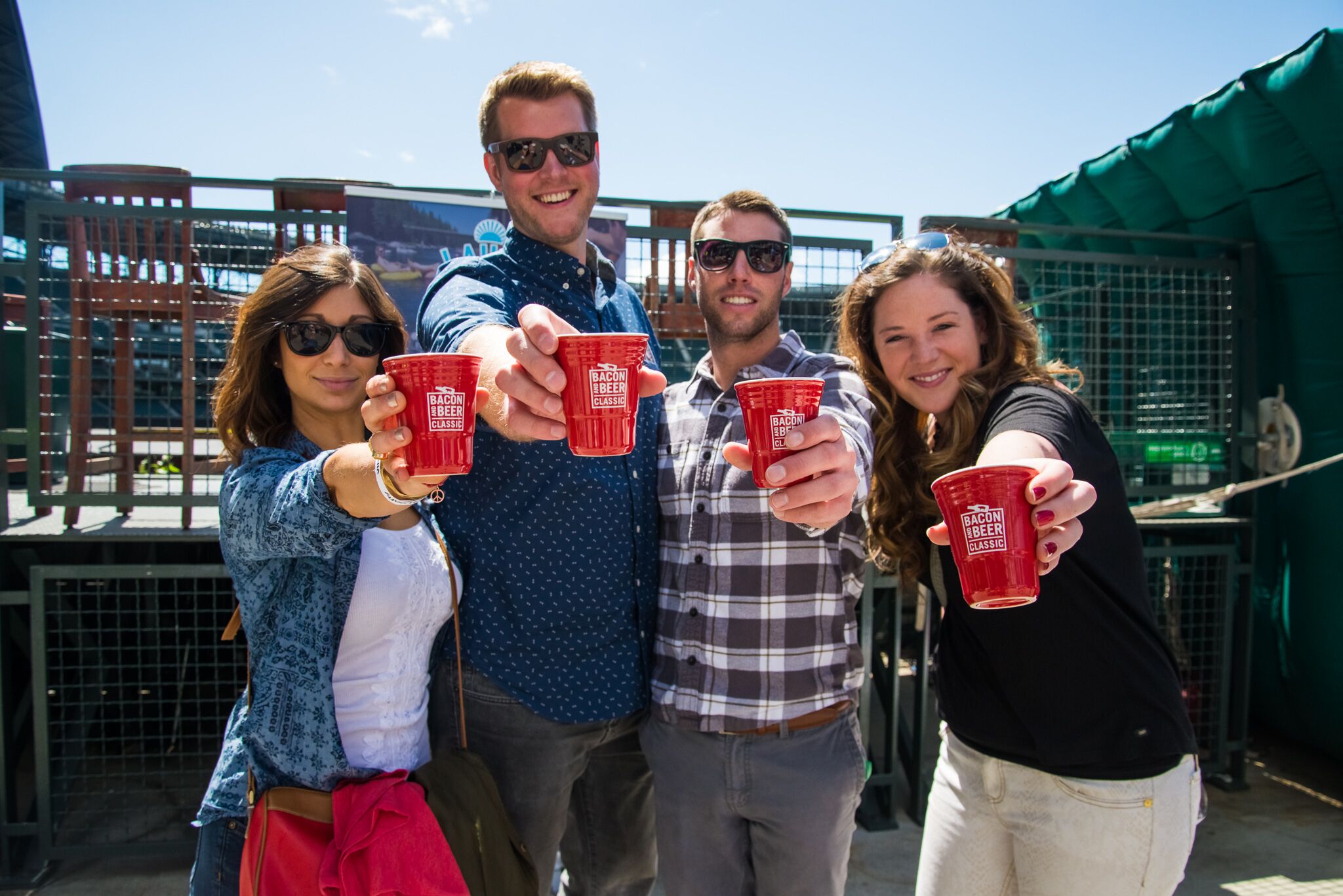
In addition to the all-star lineup of local breweries and restaurants, a panel of judges will be on site to rate the sips and tastes and award winners in select categories. The restaurant awarded the Best Overall Bacon Dish will go on to compete in the 2016 World Food Championships in Kissimmee, Florida.
So, after you’ve downed a couple of beers at your favorite craft brewery you might reflect on what it actually takes to make your favorite beverage and realize that the brewmaster could be the next rock star in your neighborhood.
by Mark Smiley | Feb 29, 2016 | Glendale City News
by John Arthur
Writer for and on behalf of the City of Glendale
 Beginning in April 2016, the Glendale Raptors Youth Rugby programs will transition to the new, more comprehensive Glendale Raptors Rugby Academy. Offering a variety of formats suitable for youth interest at all participation levels, the new program will work not only to promote rugby as a challenging, enjoyable means of pursuing personal growth, but will also provide participants a pathway to becoming players at an elite level.
To highlight the transition, Coach of the Glendale Raptors High School team Robin Roberts spoke about one of the most promising young players in rugby, Gemma Ryu. A high school sophomore playing on the Raptors 7s team, Gemma is a standout not only for her on-field performance, but also for her dedication off the field, as well as her discipline as a multi-sport athlete. Coach Roberts describes Ryu as “very dedicated to learning and improving at all levels. She has a very real passion for the sport and wants to play at the highest level she can.” In the fall season of 2015, Gemma led the 7s team in tackles, tries scored, and in creating turnovers.
Gemma’s dedication has not escaped notice. She has been announced as part of the Girls High School All American pool for 2016. To further improve her skills, Gemma is also in the process of trying out for the Flatirons Rugby Academy Team. The elite, performance and development based squad employs rugby to build life experiences and opportunities, whether at the collegiate, national, international, or Olympic level. In the first round of tryouts Gemma was in the top three for the 20 and 40 meter runs, and scored second highest in the Yo-Yo Test, a test designed to determine the physical endurance of athletes. Though teams have yet to be announced, Coach Roberts reports she is on track to make the A-side squad. Additionally, Gemma is participating in a lifting program with the Glendale coach, improving her back squat and nearly doubling her personal best bench press in just four weeks of training.
Though the power of the Raptors youth programs should not be underestimated, the commitment of athletes like Ryu is beyond compare. Her rugby accomplishments are legion, but the Colorado Academy sophomore is also a member of the school’s swim and track teams, as well as an aspiring triathlete. Outside of sport, she is a member of the school choir and an accomplished pianist. Originally from Chicago, Ryu’s experiences with the landscapes of the Midwest and Colorado have encouraged her to attend a coastal university, though as a sophomore she admits she hasn’t spent much time looking at specific schools. One thing she knows for sure — she wants to attend a college with a great 7s program. Even as a young athlete, Gemma’s outlook on the hard work required to excel is decidedly mature: “One thing I’ve learned from playing for Glendale and being around WPL and PRP champions is that success is never accidental. Seeing how hard all of these players work and all of the time they commit, I know if I want success for my team, I’ll have to do the same.”
Ryu’s success as part of the Glendale Raptors program is phenomenal, but not an anomaly. Two recent graduates, Caitlin Rogers and Grace Chao, have realized considerable achievement in rugby after moving on from the program, highlighting the invaluable foundation the Glendale experience offers.
Rogers, a freshman at Colby University in Maine, is a multi-position player for the school’s Division II rugby team. “In our past season, I became a starting lock, and Colby took third in the NESCRC (New England Small College Rugby Conference). At the end of the season, I was elected Vice President of the Colby Women’s Rugby Football Club, and now we’re practicing for our spring season, which will incorporate both 7s and 15.”
Chao, a former top try scorer and captain of the Glendale squad, attends Harvard University, where she plays alongside another former Glendale High School rugby teammate Maya Learned. Reflecting on her first season of collegiate play and her experience with Coach Roberts and the Raptors, Chao said, “I know for sure I wouldn’t be the athlete I am today without Robin, and this season has helped me realize what an amazing opportunity I had with the program at Glendale.”
Asked to reflect on her experience with the Raptors program, and with the accomplished athletes it has produced, Coach Robin Roberts was full of praise. “These girls all inspire me to work harder and do better to be the best coach I can for them. All I hope is that I somehow make a difference, however slight, in their lives and rugby.” If the success of Gemma Ryu and the Raptors alumni that have preceded her are any indication of the proficiency of the youth rugby programs, the forthcoming Glendale Raptors Rugby Academy, and its participants, will flourish.