by Mark Smiley | Jun 24, 2016 | Travel
by Mark Smiley
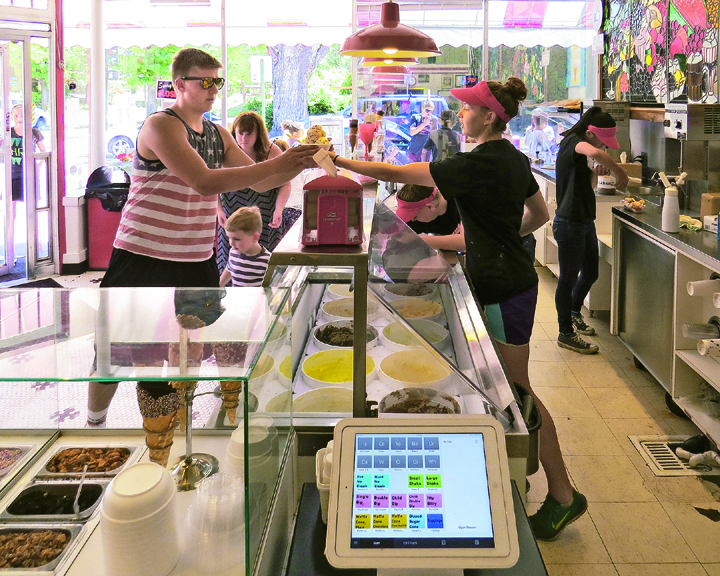
 On July 23, Bonnie Brae Ice Cream will celebrate its 30th Anniversary under the same ownership and in the same building as when it first opened. Co-owner Ken Simon estimates they have scooped 8,250,000 scoops of ice cream in 30 years. Not to mention 35,000 ice cream cakes. Simon also indicates that Bonnie Brae Ice Cream is the oldest ice cream parlor under continuous ownership in Denver.
The land that Bonnie Brae Ice Cream sits on has been in Ken Simon’s family for over 70 years. In fact, before it was Bonnie Brae, it was a Dolly Madison for decades. Dolly Madison moved into the space in 1945 and finally vacated in 1986 due to dwindling business. “As tastes changed, Dolly Madison didn’t change with them,” said Simon. “At one point in time, they [Dolly Madison] had 30 stores around the city.”
When Dolly Madison moved out, Ken and his wife Judy were faced with the decision of leasing the space to another tenant or trying their hand at opening their own ice cream shop. Ken and Judy asked Bob and Cindy Pailet, whom they met in 1975 and had real estate investments with, if they would like to join as 50/50 partn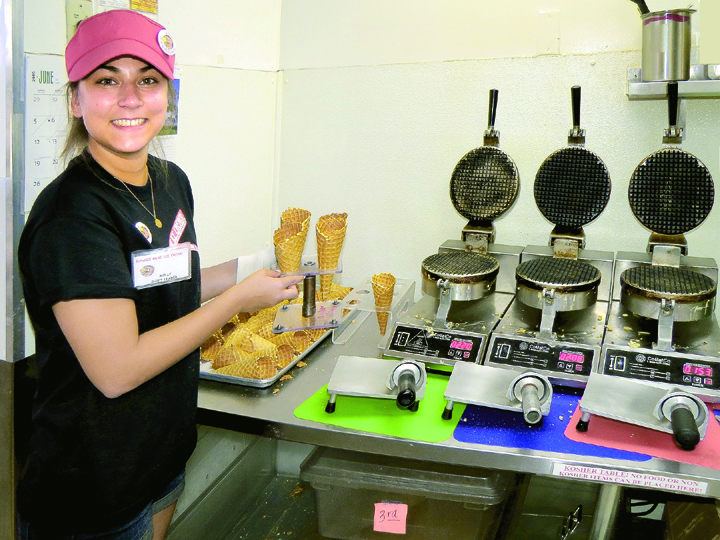 ers in the business. They agreed and the decision was made.
Judy Simon has made ice cream since she was a little girl. The two couples decided to delve into the ice cream business and took two months to renovate the space. They installed new electrical but kept the old floor and some of the old-fashioned signs you see today.
Judy took a class at Utah St. to learn how to modify her recipes for mass consumption. Her mom helped her make the ice cream in the early days making it truly a family affair. Richard Brown came on board in 1988 and after six years of assisting, he took over as head ice cream maker, a positon he holds today.
After making ice cream every day for eight years, Judy now comes in a few times per week to check on the recipes. In fact, all four owners try each batch before it is sold to the public. They also have fun coming up with recipe ideas. A new flavor is introduced every two months. In fact, some recipe ideas came from trips to Italy and France, as well as competing parlors in Colorado.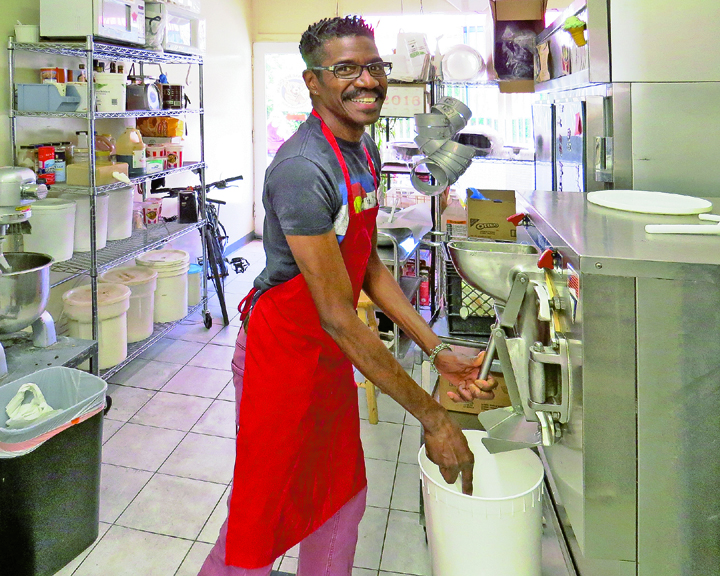
All told, Bonnie Brae Ice Cream has 130 flavors in its arsenal. Flavors rotate daily
but customers can expect 30 flavors of ice cream, two yogurts, one sorbet, and one sherbet on any given day. Sometimes, flavors are retired, but if demand from customers is high enough, they will bring a flavor back.
The most popular flavors which are always in the rotation are Capuccino Crunch, Triple Dip Chocolate, Peppermint, Vanilla, and Chocolate.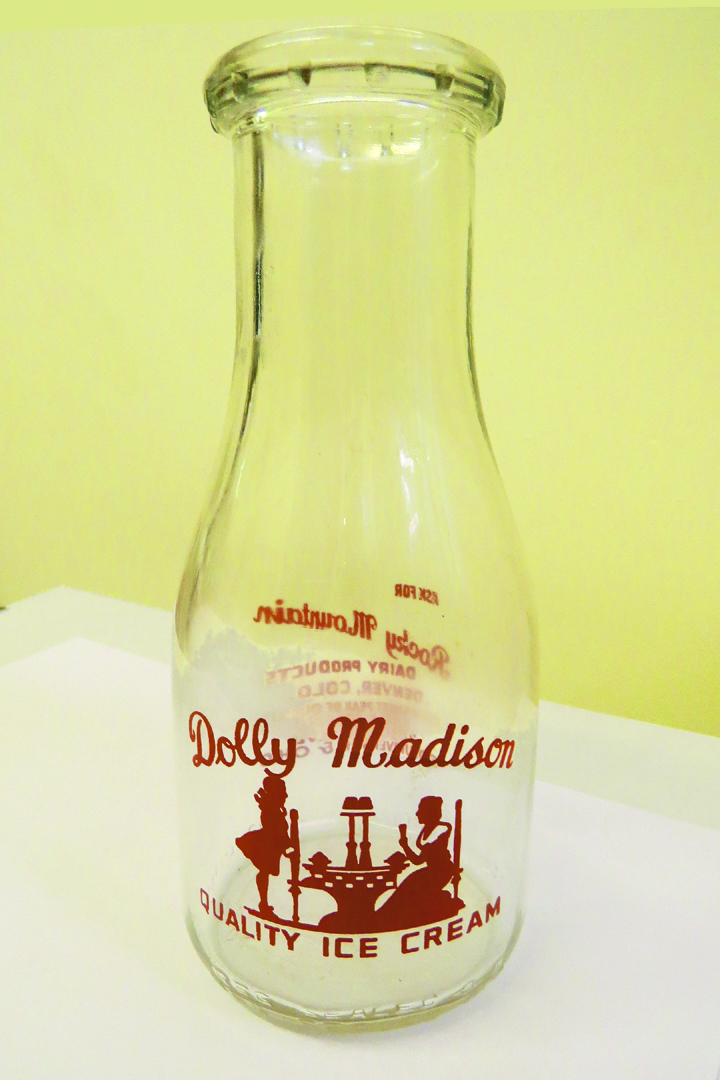
The days in the summer are hopping, as they are at many ice cream stores in Denver. It takes a lot to serve that many customers all summer and all year long. “We buy one thousand pounds of chocolate at a time and two thousand pounds of waffle cone mix,” said Simon. The ingredients are specially made for Bonnie Brae Ice Cream as well. “From day one, we decided to sell premium products,” said Simon. “We have continued to do so for 30 years.”
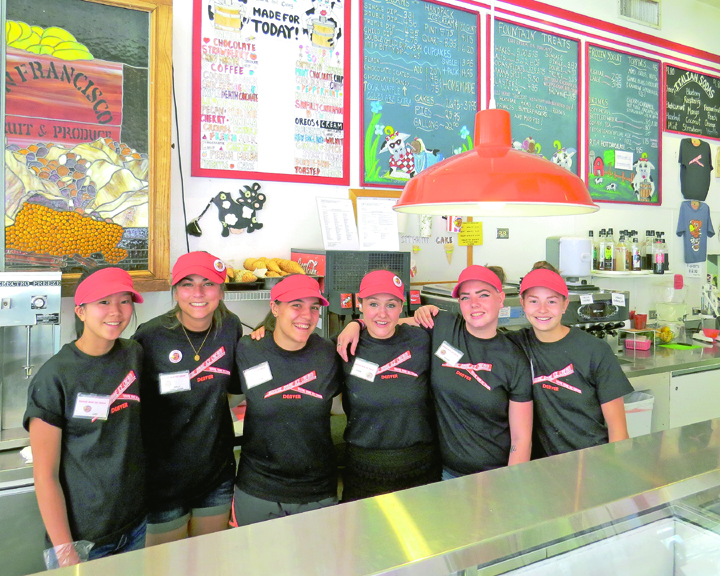
Aside from the massive amounts of ice cream they have produced and sold through the years, Bonnie Brae Ice Cream has employed over 550 people spanning three decades. In fact, some of the employees are second generation. Many have gone on to successful careers. And, there have even been two marriages of employees who met while working at Bonnie Brae.
Perhaps one of the most notable success stories comes from Joe Hencmann, one employee who started working at the store when he was 15. He worked through college and then on weekends until he turned 40 years of age. Last year, he and his wife started their own successful ice cream parlor in Sonoma, near San Francisco.
The ice cream business is competitive just like any other industry but Bonnie Brae has very good relationships with competing parlors, including Denver staples Liks and Little Man. Ken Simon is a fifth generation Coloradan. His great-great-grandfather came from Germany and was one of the early settlers who eventually opened a wholesale liquor distribution business in Pueblo.
Simon’s grandfather opened up a soda fountain distribution business in the early 1900s called Grauman Soda Fountain Company. There is still at least one operational in Lyons, Colorado today, Lyons Soda Fountain. So, Simon knows everyone in town and is almost universally liked.
One thing is for sure, Bonnie Brae Ice Cream will continue to provide what their customers expect and want. They do not plan to suffer the same fate as Dolly Madison did in 1986. They are focused on continuing to deliver premium products to their loyal customer base and evolve with the times.
Bonnie Brae Ice Cream is located at 799 S. University Blvd. in Denver. They are open Sunday to Thursday 11 a.m. to 10:30 p.m. and Friday and Saturday, 11 a.m. to 11 p.m. Visit their website at www.bonniebraeicecream.com.

by Mark Smiley | May 27, 2016 | Editorials
Four Mile Historic Park Celebration, Glendale Fireworks Top Patriotic Events

 Bang, blare, blast, boom, buzz, clap, cackle, crackle, pop, hiss, ka-boom! No wonder kids love the Fourth of July. This year the sizzle, snap and sparkle to Cherry Creek Valley patriotic celebrations begins early as the City of Glendale and Four Mile Historic Park blasts things off on July 1.
Yes, the City of Glendale’s Fireworks Show — symbol of Independence Day and one of the oldest and largest in the Valley — will light up the sky on Friday, July 1. Constantly the biggest, brightest and most extravagant fireworks, the stunning summer holiday show will begin at dusk (generally 9-9:30 p.m.). Families and friends gather at eateries, bars, patios and porches from LoDo to the Dam to view the dazzling display.
Four Mile Historic Park has always featured an Independence Day Celebration. Last year for the first time the park — a serene 12-acre historic oasis on the edge of Glendale — moved its 4th of July celebration to coincide with the Glendale City fireworks. Again this year families can bring the kids to celebrate the holiday here July 1 with old-time games, historic demonstrations, live music and horse-drawn wagon rides from 5-10 p.m. Food trucks and a beer garden will be on site. Furthermore, they can then stay to watch the Glendale fireworks show. Last entry to the park is 9 p.m. Admission is free, but there is a charge for food, refreshments and some activities. Information: 720-865-0800.
Other Fireworks
The annual Independence Eve Celebration in Civic Center Park at Broadway and Colfax is July 3, 8 p.m. It will feature a free patriotic concert, a light show on the Denver City and County Building plus a fireworks finale. Lawn seating will be available on a first-come, first-served basis, so be sure to bring blankets or low-rise concert-beach chairs. Concessions will be present on-site but families are also allowed to bring their own picnic.
The City of Aurora’s 4th of July Spectacular is July 4th starting at 4 p.m. and includes a car show and hot dog eating contest. Held at the Aurora Municipal Center on E. Alameda Pkwy., there’s also a Backyard BBQ cook-off and concert by country-pop singer Emily West. Fireworks will start at 9:30 p.m.
Professional lacrosse team the Denver Outlaws will battle it out with the Florida Launch at Mile High Stadium on July 4. Following the game there will be fireworks within the bowl — pyrotechnics paired with visuals on a 220-foot-wide, high-definition screen. Another July 4 option is Elitch Gardens where families can spend the day riding the roller coasters and water slides, followed by watching fireworks at night, startin g at dusk.
Musical Pops, Parades
If you prefer a musical holiday, what better way to celebrate Independence Day than with a free concert in City Park July 3. Enjoy the sounds of Ritmo Jazz Latino, one of Denver’s finest jazz ensembles at the City Park Bandstand, 6 p.m. Then celebrate the stars and stripes of the good ol’ U.S. of A with the Colorado Symphony July 4th at Fiddler’s Green, 7:30 p.m. The family-friendly program will celebrate America with the Armed Forces Salute, Stars and Stripes Forever, the Overture of 1812, God Bless America and a slew of other favorite hits from stage and screen. Fireworks will follow.
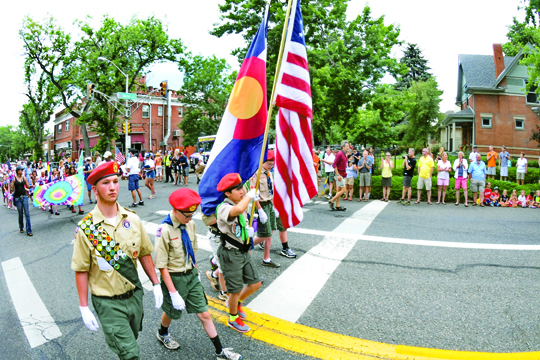
If you love a parade you’ll be glad to know that Park Hill 4th of July Parade is back. It will again be marching along 23rd Ave. from Dexter St. to Krameria beginning at 1:30 p.m. on July 4. It promises to be bigger than ever before, with marching bands, acrobats and festive floats, including a Boy Scout color guard, classic cars and the Montbello Drum Line. The parade ends at the Kearney Street Fair on the 2200 block of Kearney with sweet treats from Cake Crumbs Bakery, savory snacks, live music plus kids’ activitie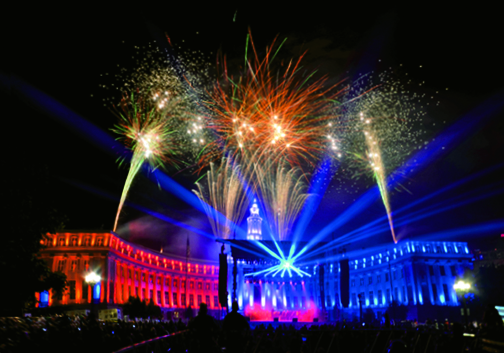 s.
s.
Finally consider starting July 4 with four miles of fun at the Liberty Run in Wash Park, 8:30 a.m. The 4 Mile Run-Walk is a competitive USATF judged race walk. A kids-only Firecracker Fun Run follows the adult run. Proceeds go to Make-A-Wish Foundation Colorado. Participants are encouraged to dress in their best Red, White and Blue get ups.

by Mark Smiley | May 27, 2016 | Travel
by Mark Smiley
Craft beer fests are popping all over the metro area and for beer enthusiasts, it seems as if there is a different one each weekend.
A sold-out crowd braved the snowy and cold weather to attend the Bacon and Beer Classic at Sports Authority Field in April. Denver is one of eight cities to host this event around the country. It started in Seattle in 2014 and they are held in sports stadiums in each participating city.
Over 20 local restaurants provided bacon dishes and over 50 regional breweries offered craft beer throughout the concourse. Guests also tried their hand at giant Jenga, struck a pose at the photo booth, battled it out on the bungee run, branded themselves with bacon and beer-inspired tattoos, and some competed in a bacon eating contest.
Much different weather drenched the first ever Craft Beer Fest at the Downtown Aquarium in May. The outdoor event in the sunny and 80-degree day featured 16 breweries including local breweries Joyride and Renegade.
This event has room to grow as the land surrounding the aquarium has room for many more breweries. Some preferred not to attend as Anheuser-Busch InBev, the world’s largest brewer, had several of its breweries on hand which are deemed as anything but craft beer.
Those in attendance, however, enjoyed the beautiful day and many good beers to sample. In addition, the breweries themselves were happy they participated and will be back next year.
One of the larger beer fests this summer will be Summer Brew Fest at Mile High Station on July 22 and 23, 2016. Each day features different breweries in a venue that lends itself to a high quality experience. Visit www.denverbrewfest.com/summer for more information.
On the weekend of August 6, 2016, Keystone Village will play host to the 20th Annual Bluegrass and Beer Festival. It’s the longest running beer festival in the state. Throughout the two days, attendees will be able to pair their favorite brews with free bluegrass music from Jeff Scroggins and Colorado, T Sisters, Lonely Heartstrings Band, Mason Town, Mandolin Orange, Tim O’Brien, Peter Rowan Band, Larry Keel Experience and more.
“This is a special summe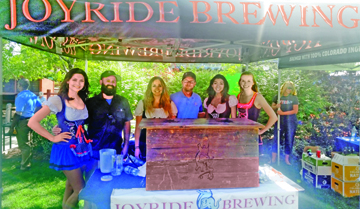 r for us at Keystone’s River Run Village,” says Maja Russer, marketing and events director for the Keystone Neighbourhood Company, the organization that coordinates and produces six summer festivals in River Run Village at Keystone Resort. “We’re proud that we were a pioneer when we started the first ‘micro-brew’ festival in Colorado 20 years ago. Since then, we’ve grown and improved the Keystone Bluegrass and Beer Festival and launched new festivals like the Mountain Town Music Festival three years ago and this year’s debut of Keystone’s River Run Village Art Festival.”
For more information on this festival, visit www.keystonefestivals.com/festivals /bluegrass-and-beer.
Also, look for our coverage on the largest beer fest in the country. The Great American Beer Fest comes to the Colorado Convention Center October 6-8, 2016. Tickets for the general public go on sale August 3, 2016. Visit www.greatamericanbeerfestival.com for more information.
by Mark Smiley | May 27, 2016 | Glendale City News
by Marco Cummings
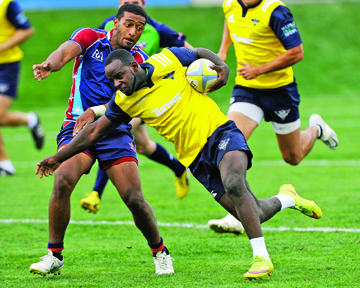
GLENDALE, CO – AUGUST 14: Raptors vs Stars Rugby during the Serevi RugbyTown 7s tournament at Infinity Park in Glendale, Colorado on August 14, 2015. (Photo by Seth McConnell)
Writer for and on behalf of the City of Glendale
With back-to-back Pacific Rugby Premiership (PRP) Championships now in hand for the Glendale Raptors, the focus shifts to the summer rugby season and a different version of a game which Glendale Mayor Mike Dunafon has called “the world’s community sport.”
Summer’s arrival also marks a new season on the rugby calendar, with the focus shifting from the Rugby 15s game of the PRP to Rugby 7s. Like 3v3 basketball or soccer, or the seven-on-seven scrimmage version of American football, Rugby 7s is a fast paced, high scoring version of the game tailored to delight spectators. This year, Rugby 7s will be placed in the world spotlight, making its debut as the newest competitive sport at this year’s Rio De Janeiro Summer Olympics.
The sport’s presence on the global stage is an exciting prospect for rugby’s growth on the local level in places like Glendale, a city which dubs itself as RugbyTown, USA.
“Sevens will be in the Olympics and it is also a major springtime competition on university campuses and places rugby out in front of the public,” explained Glendale Director of Rugby Mark Bullock. “This can lead to curiosity in 7s and, ultimately, an interest in 15s. At the lower level, it can be used as an introduction to the game due to the fact there are less players involved on the pitch at one time. At the upper level, it is a highly skilled endeavor and if we play quality sevens it can be added to recruiting players who may also play 15s.”
Growth and development will continue to be the key focus for Glendale heading into this year’s 7s season. Toward the end of the Raptors’ PRP campaign, the team was affected by the loss of some of its top players to the recently established Professional Rugby Organization (PRO) league. Play of the PRO league will continue throughout the summer, meaning Glendale’s 7s side will also be affected.
“Obviously this season, we will not have guys like Chad London, Hanco Germishuys and all of the other guys in the PRO League,” Glendale Raptors head coach Andre Snyman said of the upcoming 7s campaign. “Those guys will be committed until the end of July, so it’s going to be a different situation.”
Snyman acknowledged the new challenges his team faces in re-establishing itself, but was likewise excited at the prospect of the player development aspect they present.
“It’s going to be a different situation. We will be competitive, but it will be more of a development side than PRP level side,” he continued. “We have to really focus this summer on developing players; taking them to these tournaments so they can experience the next level.”
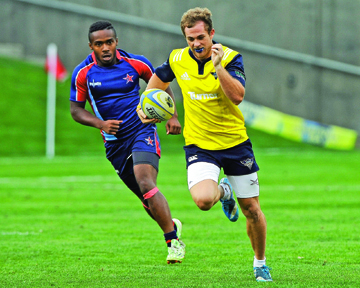
GLENDALE, CO – AUGUST 14: Raptors vs Stars Rugby during the Serevi RugbyTown 7s tournament at Infinity Park in Glendale, Colorado on August 14, 2015. (Photo by Seth McConnell)
With the experience gained this summer, the Raptors head coach is not only looking for diamonds in the rough, he’s looking to polish them into players that could contribute to Glendale defending its PRP title come Spring 2017.
“It will definitely be a good tool to prepare for the PRP season in 2017,” Snyman explained. “Last summer, Johnny Ryberg came out of the 7s mold. During the last couple of games in the PRP season this year, he stepped up and did really well. Hopefully this summer we can pick up one or two players for next season in the PRP. It will be an opportunity for players to showcase their skill and for me to groom them.”
He’ll have plenty of opportunities to do just that. The Raptors will be competing in five different 7s tournaments this summer, beginning with a trip to San Diego on June 18 at a qualifying tournament hosted by Old Mission Beach Athletic Club (OMBAC).
The following weekend, Glendale will participate at the Denver Tournament hosted at Dick’s Sporting Goods Park in Commerce City.
Glendale will then open July with a trip to Kansas City, Missouri, on July 9 for another qualifying tournament.
Later that month, Glendale will take its travels north of the border, participating in the Magnificent 7s tournament in Canada on July 24.
The Raptors 7s season will conclude with arguably what has become the pinnacle of Rugby 7s tournaments in North America. For the fifth year, Serevi RugbyTown Sevens will make its return to Infinity Park (Aug. 26-28) with 20 teams competing (including one representing each branch of the U.S. military) over the course of 70 matches for a $10,000 winner take all purse. In addition to the expanded format, this year’s edition of SRS will also feature a college level tournament.
It’s a spectacle which will be sure to delight both participants and fans once more.
“We’re excited,” Snyman said. “This year is going to be bigger than the previous years. It’s going to be big and there are some quality teams that have committed already. We’re all looking forward to it.”
Rugby 7s is a game which requires players to close faster, hit harder and dig deeper; and it will all be on display in Glendale this summer.
by Mark Smiley | May 27, 2016 | General Featured
Major Change To Virginia Village Neighborhood If Sold
by Megan Carthel
 Some big changes may be on the way for the intersection at Arkansas and Colorado Boulevard.
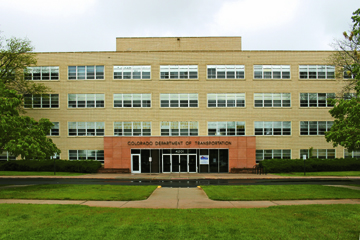
Currently, the Denver headquarters for the Colorado Department of Transportation (CDOT) offices are housed in the residential area. In an old 1955 building over 500 state employees walk the halls every day. Spokesperson for CDOT Amy Ford says mice and asbestos are issues in the current building, along with toilets fitted for elementary students, not adults.
The carpets are a faded blue and tan and green tiles lead visitors and staff through the hallways. Not everything is outdated though. Computers, large TV screens and seemingly nice, modern chairs accommodate employees with their everyday tasks. However, by as soon as early 2018, these state employees could have a new office. David Fox, property management deputy program manager, said moving locations and building a new office is a good business decision.
“I think with every business decision, there’s some idea of ‘let’s get more efficient,’” Fox said. “We can do a lot more things with amenity spaces to make things nicer for employees, but yet get more efficient with our building footprint.”
In May 2013, CDOT completed a building evaluation of four campuses, the Denver HQ, Region Four HQ, Region Two HQ and Old Aurora R1 HQ. The Region Four HQ in Greeley was recently rebuilt and relocated. The $9.9 million offices opened in November 2015.
The plan is to combine both the CDOT headquarters on Arkansas and the Region One office on South Holly. The new building design has a target of 200 square feet per employee, aimed to house around 700 employees, that’s nearly 100 square feet less per employee than the current situation. While nothing is set in stone yet, the numbers CDOT is currently working with, estimate the total cost of building a new office space at a different location at over $44 million.
“It is a class B building that we will be doing,” Ford said. “And when I say class B, this is not the Taj Mahal. This is not designed to be a monument to state employees. This is designed to be a working building where we can most effectively attract and retain our employees and do very good work.”
Ford said the funding for the project comes from a capital budget to maintain assets, which has $20 million annual, state-wide budget. CDOT would also be issuing bonds against that budget to help pay for the new building.
“This is money that would not go to fixing your pot hole or that kind of thing. This is money that’s already dedicated to keeping these assets up,” Ford said.
The other option for CDOT is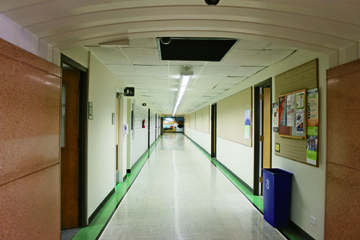 to renovate the existing building. According to a financial comparison analysis conducted by CDOT and Jones Lang LaSalle in 2014, the total cost for renovation would be just over $16 million. The same analysis showed the total net cost over a 20-year period to renovate and maintain the Arkansas location would cost around $56 million.
“We strongly believe that, ‘A,’ it’s a good business decision,” Ford said. “‘B,’ that it benefits our capacity to deliver more for the state.”
Fox and Ford said the ideal location for the new office would be within five miles of the State Capitol, visible to the traveling public and near light rail, bus and bike transportation. According to the analysis done in 2014, some potential relocation sites include the Federal Center Station, Decatur and Federal Station and I-25 and Broadway. Ford said the final location selection has not been decided, and that CDOT is keeping that information “close to the chest.”
“We’re not done yet by any stretch,” Ford said. “Nor is it a sure thing we are moving.”
For the new building to be approved, CDOT must present their guaranteed maximum price, what the land can be sold for and the price estimate to build a new office, to the Transportation Commission. The commission will hear CDOT’s case and make the final assessment later this summer. According to Transportation Commissioner District 1 Representative Shannon Gifford CDOT is negotiating with the owners of more than one possible site. The location is expected to be finalized in June. Gifford seems to be in favor of the relocation project.
“The new building is projected to save CDOT $6 million over a 20-year analysis period when compared with updating existing buildings that are past their useful life,” Gifford said. “The savings are attributable to multiple factors, including more efficient plans (reducing the gross square feet per employee); reducing the total number of buildings; using more efficient mechanical systems, windows, and insulation; and, selling 20 acres of land while acquiring only approximately three acres.”
So what would happen to the current site if it’s sold? CDOT is working with Jones Lang LaSalle, a brokerage firm, to sell the property estimated at just over $11 million according to the 2014 memorandum. Jones Lang LaSalle had no comment when the Chronicle reached out to the firm. Fox, however, said developers were interested in the land before talks about a relocation began back in 2011.
The Arkansas site is currently zoned as a CMP-EI2, or campus, educational/institutional site. This zoning allows a maximum height of 150 feet, but any part of the site within 175 feet of a protected area, usually single family homes, is limited to 75 feet. Residential, educational use and office space are allowed. The 1.16-acre parcel of land closest to Colorado Boulevard, is zoned as a S-MX-5 area, allowing for mixed use facilities and up to five stories. The communications tower that sits on the property would remain on site as it is owned by the Governor’s Office of Information Technology, and would not be sold as part of the CDOT space.
As for the Region One office site, the location is zoned as a MX-3 site. This allows buildings as high as three stories or 45 feet, and can be used in a variety of ways from single family or multi-unit housing, community centers, daycares, open space, schools, restaurants and retail, hotels and more. Of course the Denver Planning Board and certain members of the Denver City Council have proven they are happily willing to rezone properties for powerful developers with high powered lobbyists.
Paul Kashmann, the City Councilman for District 6 where the present facility is located, said if the properties were redeveloped, he would like to see the spaces used for residential developments or green space.
“I would love to see affordable residential be a part of the package on both sites. The surrounding communities have not yet gentrified, and I’d like whatever comes to support, rather than degrade the affordability of the community,” Kashmann said. “I’d love to see some additional green space. Mainly I’d hope the Arkansas development would not add big congestion to the already crowded Colorado Boulevard corridor, and I’d love for the South Holly Street site to complement both South Holly Street’s commercial opportunities as well as East Evans Avenue.”
Some residents near the Arkansas property oppose the redevelopment as worries over traffic congestion, noise and construction might disrupt their relatively quiet neighborhood.
Skylar Ocheltree and Kristen Kinnaird live together in a house across the street from the current CDOT headquarters. While they don’t mind the current building situation, they fear another large building would be put in place, bringing more traffic and congestion. Their neighbor a few houses down and closer to the building, Blake Crawford, feels just about the same, unless something can add property value to his house.
“Any additional [infrastructure], unless it raised the value of my house, is non-beneficial,” Crawford said.
Kashmann hopes to work with his constituents to determine what could go in the space of the current CDOT headquarters if the land is sold.
“Mainly folks are anxious to know what will go in on the property and are anxious to have a voice in determining the impacts on their neighborhood from whatever development does go into these large parcels. I want the community to have real impact on crafting the eventual outcome,” Kashmann said. “It would be my goal to involve the community as much as possible in future redevelopment on these sites. Whatever projects end up taking place will have some degree of impact on the community. Building in an urban environment cannot be hermetically sealed. But, as we do on a near daily basis, we will work with builders and developers to minimize the impacts as much as possible.”
by Mark Smiley | Apr 25, 2016 | General Featured
Four New Members To Represent The City
by Mark Smiley
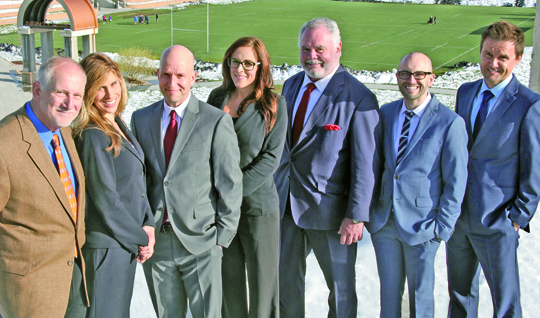
The Glendale City Council experienced a dramatic shakeup in 2016 from just a year ago. For its first regularly scheduled council meeting in April, four of the six regular councilmembers that represented the city one year ago have exited and four new members have entered. Jeff Allen, who served for eight years was term limited, Paula Bovo and Scott Franssen resigned having moved from the city, and Joe Gigglio opted not to run for another term. Mike Dunafon was re-elected as Mayor of Glendale in April for a second four year term.
Lindsey Mintz (appointed in January 2016), Scott Norquist (appointed in March 2016), Storm Gloor, and Scott Brock joined the Glendale City Council on April 12, 2016. Doris Rigoni and Dario Katardzic were the only carryovers with Rigoni appointed Mayor Pro Tem.
Glendale was founded in 1859 and is the second oldest town in Colorado, formally incorporating in 1952. One of the challenges facing Glendale is it is difficult to recruit persons to run for City Council. As the residents are often on the go, few individuals are willing to make a four year commitment to stay in the city as a councilperson.
In December 2015 an anonymous flyer was sent out titled “Glendale Needs You. Be a Hero” declaring it was “Easy to run for Mayor or City Council” and “Earn $1,000 per month for attending a few monthly meetings and get free health care.” Many assumed it was sent out by the city itself but it was not as it contained numerous misstatements of fact.
It is, of course, never “easy to run” for public office no matter where you are and it can be expensive. As a councilmember you are expected to do far more than just attend a “few council meetings.” You are expected to attend council meetings, study sessions and represent the city on various local and regional committees and boards as well as representing the city at various important county and state functions. One can expect to spend significant hours studying the issues facing the city as well as regularly meeting with and answering questions from constituents who tend to call at all different times and throughout weekends.
Councilmembers have the same health insurance as any other employee of the city, meaning they have to pay for spouses and other family members, and like any other health insurance plan these days employees are responsible for significant co-pays for medical services provided.
When the Chronicle investigated who had, in fact, sent the flyer it was traced back to Kyle Miller of the public relations firm of Stratton-Carpenter & Associates that represents Mohammad Ali Kheirkhahi and Authentic Persian & Oriental Rugs. When contacted by phone by the Chronicle on why he sent out an anonymous flyer to all Glendale residents, Kyle Miller sounded stunned that he had been found out. He declined to answer any questions. A few days later the Chronicle received an e-mail from Stratton-Carpenter & Associates asserting that the flyer was that of Authentic Persian & Oriental Rugs and other “individuals and businesses” to “ensure [the people of Glendale] have factual, truthful information about running for elected office in the City.” It did not address why the names of the persons who were behind it had not been revealed.
Former Glendale Councilman Jeff Allen opined, “It’s the usual phony, underhanded misinformation that Kheirkhahi seems to specialize in.”
Notwithstanding the misinformation in the anonymous flyer, Mayor Mike Dunafon strongly adopted the concept of getting more people to run for City Council or even mayor as he was having difficulty recruiting people willing to serve on the City Council. “It is a significant investment of time and energy to be a councilmember, and if you do not do what people like Kheirkhahi want, you can be expected to be screamed at and attempted to be intimidated.”
While several of the new members have been active in the Glendale community, none have ever served in elective office.
Storm Gloor is an Assistant Professor in the Department of Music and Entertainment Industry Studies at the University of Colorado Denver. He holds an MBA degree from West Texas A&M University. Gloor spent 13 years in music retail and wholesale, most of them as Director of Music Operations for Hastings Entertainment, based in Amarillo, Texas. He has served on several committees and participated in panels for 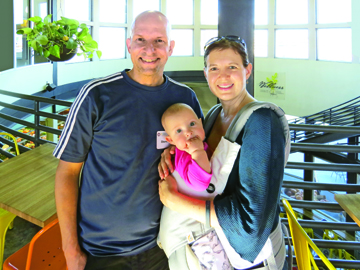 NARM (National Association of Recording Merchandisers), and is a member of MEIEA (Music and Entertainment Industry Educators Association), as well as the Americana Music Association.
“I’ve been a Glendale resident for almost 10 years and have enjoyed all of the great things about living here,” said Gloor. “There’s so much to do and enjoy, and such a rich diversity. I’m anxious to ‘give back,’ in a sense, by serving and representing the citizens of Glendale. I hope to help assure that Glendale remains a great place to live and/or work as we all pursue our life and career goals.” In addition to his duties as Glendale Councilmember, Gloor serves as the Chairman of the Glendale YMCA Board of Advisors.
Scott Norquist elevated to the City Council from the Planning Commission where he had served since February 2013, when Mayor Pro Tem Paula Bovo resigned after moving out of Glendale. Norquist is the Tax Manager for Hanson & Co. Certified Public Accountants in Denver. Norquist is experienced in many aspects of individual, corporate, partnership, trust and gift tax compliance and planning. He graduated with a Master’s degree in Taxation from the Sturm College of Law at the University of Denver and has worked at Hanson & Co. since 2006.
His undergraduate work was at California Polytechnic State University-San Luis Obispo where he earned a B.S. in Business Administration and Public Accounting.
Norquist serves on many boards including the Glendale YMCA Boa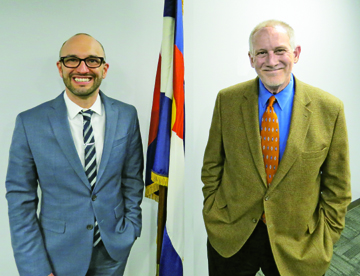 rd of Advisors and the Davis Contemporary Dance Company.
“As a council member, my goal is to represent the interest of Glendale’s citizens, and to fairly, accurately, and confidently convey their interests to my fellow council members. As a long-term Glendale resident I know where we have been, I know where we can go, and I know what it will take for us to get there.” Norquist said.
Scott Brock is another business owner in Glendale and is equally as excited to join the council. He owns Custom Executive Security whose main client is SmokinGun Apothecary. Brock served in the Air Force from 1979 to 1988 and has used his military experience in his endeavors since.
“I am happy and honored to be able to serve as a city councilman in our wonderful city,” said Brock. “It is my goal for our citizens to be able to enjoy all the benefits and opportunities the city has to offer, and to further and strengthen the business growth of Glendale in projects such as our [Glendale] 180.”
Lindsey Mintz has been part of the Glendale community for over nine years. After attending Villanova University and the University of San Diego on academic scholarships, she found herself moving to Colorado and establishing her roots in Glendale. Lindsey opened her first business in Glendale, the T-Bar, in July 2014.
Since opening, Mintz has worked diligently with the Greater Glendale Chamber of Commerce, the Glendale Police Department, and other local business owners to prepare the city for its urban revival — the G180 Project.
“I am truly blessed to have been chosen to represent the citizens of Glendale and their values and ideas,” said Mintz. I look forward to spending the next four years representing and serving them and being their voice. This is an incredibly exciting time in Glendale’s history. The G180 project has been the vision of Glendaleans for many years and I am honored to be a part of helping that vision come to fruition. Along with Rugb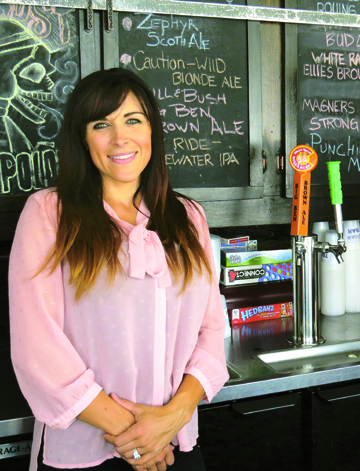 ytown USA, the G180 project will make Glendale an international entertainment destination.”
Mintz was unanimously appointed to the City Council in January 2016. Her current responsibilities include representing Glendale on the Denver Regional Council of Governments and the RTD Committee. In her free time, Lindsey loves to enjoy the outdoors — doing everything from biking, running, climbing Colorado’s infamous “Fourteeners,” backpacking, hunting, and finding the craziest obstacles races she can compete in.
The city council meets at Glendale City Hall at 950 S. Birch Street the first Tuesday of every month at 7 p.m. For more information, visit www.glendale.co.us.