by Mark Smiley | Apr 4, 2014 | Glendale City News
by Eiden Hughes
Writer for and on behalf of the City of Glendale
The 2014 Raptors in the Community Program is underway and already connecting members of the Raptors organization to the Greater Metro Denver Area. Giving back to the community is one of the club’s core values. In past years, volunteers from both men’s and women’s squads have donated their time to some of Colorado’s most-dedicated nonprofit organizations through the Raptors in the Community Program.
This year the program has evolved —Denver-based Sign Language XL takes over the title of presenting sponsor, and a new level of volunteer, the Ambassador, has been introduced.
Sign Language XL is one of the country’s leaders in digital printing, who pride themselves on their ability to provide vibrant, high resolution images on any scale and on virtually any substrate. In Denver, their finished products are visible at Pepsi Center, Dick’s Sporting Goods Park, First Bank Center in Broomfield and, of course, Infinity Park.
The Raptors have also added an advanced level of volunteer to the ranks, called the Ambassador. While volunteer opportunities are still available on a regular basis for everyone within the Glendale Raptors, the Ambassadors take their volunteerism to the next level. They will be considered the go-to representatives of the team for all outreach initiatives.
The Ambassadors, known as the Elite Eight, endured rigorous interviews and are committed to donating a minimum of four hours per month (in addition to their full-time jobs, and training, playing and traveling for rugby) to various charitable activities and outreach programs.
The Raptors Ambassadors for 2014 are: Men’s Team Captain Zach Fenoglio, Jack Haward, Joanna “JoJo” Kitlinski, Chad London, Joash Peko, Casey Rock, Gedda Rodriguez-Howard and Juliann Tordonato.
“While we had many qualified ambassador candidates, it was apparent in our interviews that these eight truly possess the leadership characteristics and communications skills that are a critical component to the upcoming community service opportunities,” said Glendale Deputy City Manager and Director of Finance Linda Cassaday. “We are proud to have them representing the City of Glendale and the Raptors in the community!”
Recently, the Ambassadors attended Centura Soup for the Soul (March 10) and they visited Children’s Hospital on March 26. Upcoming events include another visit to Children’s Hospital on April 30, and the Kids Running America event in Washington Park on April 27. There are several events slated for the remainder of the year, and new events are being added regularly through the request feature on the RITC portion of the Raptors’ website.
The “Unity” In Community
Perhaps one of the most interesting facts about the eight chosen Ambassadors is that only two of them — Fenoglio and Rock — are Colorado natives. Even so, both have left their native state at one time or another to pursue higher education, realize career ambitions, or even play rugby abroad.
The other six Ambassadors have come to Glendale from far and wide. Haward is a native of England, who first came to Colorado a year ago to play summer mountain rugby in Breckenridge. London is from South Africa, and originally came to the U.S. to attend Palmer College, where he played rugby and became a licensed chiropractor. Rodriguez-Howard rounds out the overseas group, having grown up in Bogota, Columbia, after a move across the Atlantic from Spain.
Peko, Tordonato and Kitlinski hail from the U.S. West Coast, Vermont and Michigan respectively. Regardless of their reasons for moving to Colorado, they, along with the rest of the Raptors, are all united in rugby, and are committed to sharing the sport and making a difference in the community they now call home.
“I wanted to serve as an Ambassador because it seemed like a great way to give back to the community of Glendale, as well as spread the word about the rugby programs,” Tordonato said. “The RITC program offers a unique opportunity to really engage with the community. Being more prominent locally, and really giving back to the city that funds our rugby program, will also help spread the word about our teams and draw more people to games to support the Raptors.”
Pacific Rugby Premiership forward Rock echoed her sentiments, and described the inclusive nature of the sport. “I wanted to serve as an ambassador because it’s such an exciting time to be a part of rugby. The sport is really picking up momentum in this country; not only is it a fast-paced, exciting game, but the culture of rugby is very positive and inclusive. Being an ambassador helps me feel connected to the growth of rugby’s popularity in this community and country, which I’m very proud to be a part of.”
The nature of any community is to be inclusive to its members. Connecting the City of Glendale, the Raptors rugby club and the Greater Denver community is a natural step forward as the sport becomes more prominent in the area, and throughout the country as a whole.

by Mark Smiley | Apr 2, 2014 | Editorials, Featured Articles
Can Denver’s Neighborhoods
Take Back City Hall?
Denver has been described as a city of neighborhoods. It has 78 recognized neighborhoods and many more registered neighborhood associations. There is even an umbrella organization called INC (Inter-Neighborhood Cooperation). Because candidates when running for City Council court and are always deferential to neighborhood associations, many everyday citizens think that their neighborhood associations are highly influential regarding the actions of their elected representatives. In the last few years neighborhood associations from Cherry Creek North to Hilltop to Mayfair to Congress Park to Crestmoor Park and across the city have had their innocence badly shattered.
As most people with an understanding of how Denver works know that neighborhood organizations are to be placated but the real power brokers in the city are real estate developers and powerful unions who fund and in some cases run the campaigns for city office. When citizens in the Highlands want to fight a Red Peak Properties development, or when the residents of Hilltop and Crestmoor wish to protest the giving away of open space at Lowry Vista, or when property owners in Cherry Creek North wish to slow down the massive mega developments in Cherry Creek North or when the citizens of Hampden Heights want to protest the giving away of a portion of Hentzell Park for development, they find themselves powerless with their only remedy to try to institute expensive and time-consuming lawsuits. The courts are in turn run by judges who are themselves government employees and can often be unsympathetic to groups trying to upset the established order. That is why the phrase “You Can’t Fight City Hall” is so often accurate.
The city’s Planning and Community Development Office is composed of ambitious individuals hoping to jump to the private sector with developers or are lifetime bureaucrats who do not want to rock the boat. It is difficult to remember the last time the Planning and Development Office significantly altered a project due to citizen input.
Citizens coming before City Council to fight excessive density in their neighborhoods or the giving away of parks and open space are either ignored or in some cases literally mocked or laughed at by some council members. It will take a city historian to trace back to when a real estate development project was denied by City Council by a full vote. Protesting neighborhood groups usually lose by a vote of 10 to 3 or worse. The few votes in favor of neighborhood groups are usually simply for show and to obfuscate the fact that the game is rigged.
It is a widely recognized dirty little secret that if the councilmember whose district a project is in votes in favor it will inevitably pass. If a project is not going to be approved it will never come to a vote. So if you are going down to City Hall to urge denial regarding a park or open space giveaway or a high-rise development you are almost inevitably wasting your time. No one cares what you think, most of all the city council members, except in rare instances
Next spring there will be another municipal election in Denver. The question becomes whether in that election will average everyday citizens try to take back City Hall from the unions and real estate developers who control so much of what goes on in Denver. One encouraging sign is that candidates who are not associated with the unions or real estate developers are stepping up to the plate to run for city council in the 6th and 10th Districts which adjoin each other across Cherry Creek. Charlie Brown in District 6 and Jeanne Robb in District 10 are both term limited.
In District 10 former head of the Cherry Creek North Neighborhood Association, Wayne New, has thrown his hat into the ring. For eight years Wayne New has fought developers and City Hall to try to preserve the Cherry Creek area as a place where average citizens will want to live and work. He has gotten to see up close and personal how the system really works and how stacked the deck is against everyday citizens and their concerns. He knows how much developers will pour into the campaign of whoever is their selected candidate in District 10, but is willing to fight the good fight anyway.
In District 6 anyone running will have big shoes to fill to replace Charlie Brown, who was one of the few on city council willing to listen to everyday citizen concerns and fight the mayor’s office on behalf of the good of Denver as a whole. It is rumored that Paul Kashmann, the publisher of the excellent local newspaper Washington Park — The Profile is considering running. We are readers of his regular column in The Profile and while most members of this editorial board do not necessarily share his prospective on life, we do think he would make a wonderful candidate and if elected he would be his own man on City Council.
As a practical matter, City Council has become in too many cases a type of revolving door. Many of the candidates for city council these days are simply aides or former aides to council members. They are well acquainted with the money men for the unions and real estate developers and just slide into the position assumed by the prior incumbent. A few desultory open houses with neighborhood groups and a few mass mailers and the beat goes on and nothing ever changes. Wayne New and Paul Kashmann would provide a unique perspective and at least shake up a system that badly needs shaking up. More candidates like them are needed throughout the city.
— Editorial Board
by Mark Smiley | Apr 2, 2014 | Main Articles
Colorado’s Top Butler  Tells You All About It
by Mark Smiley
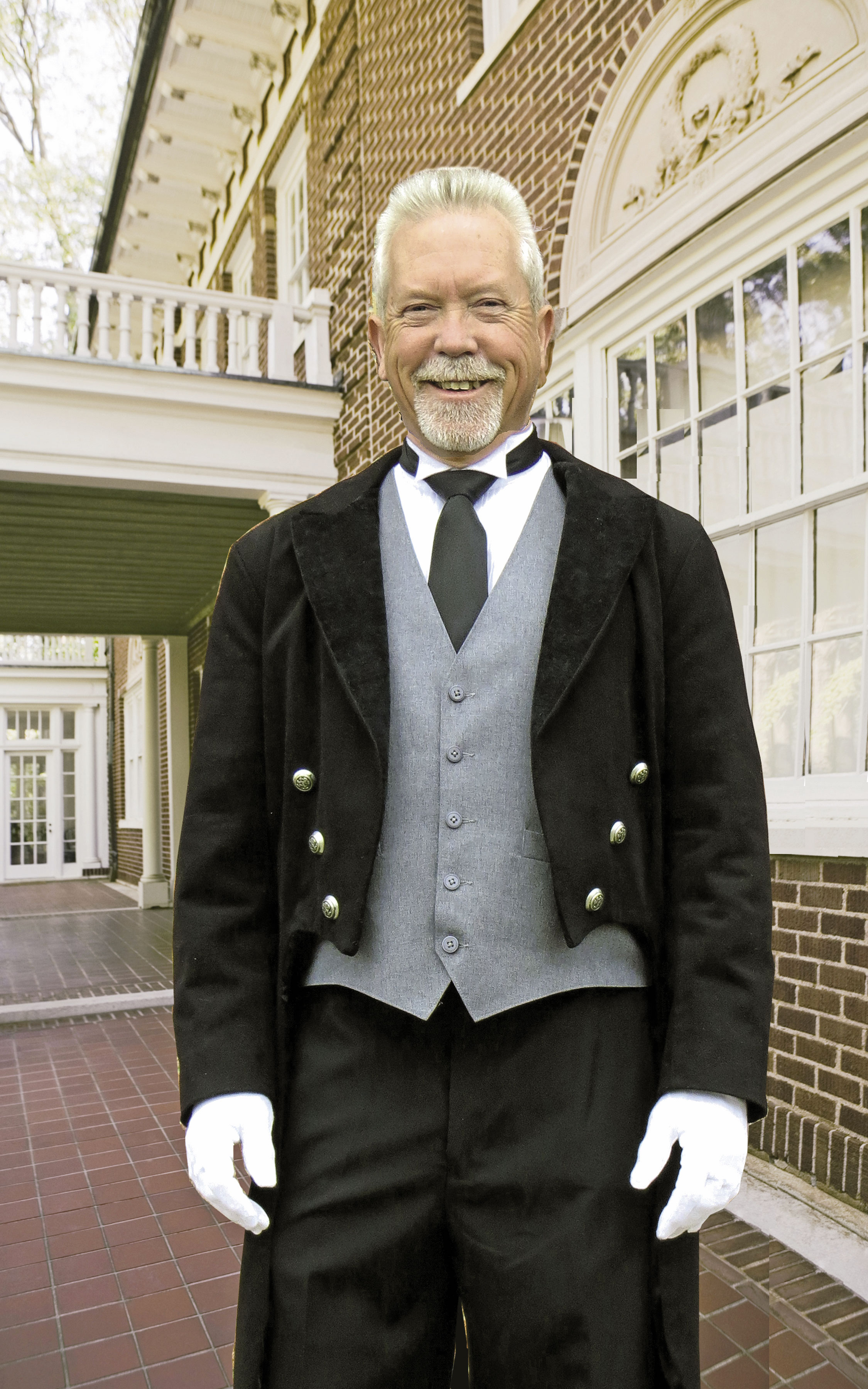
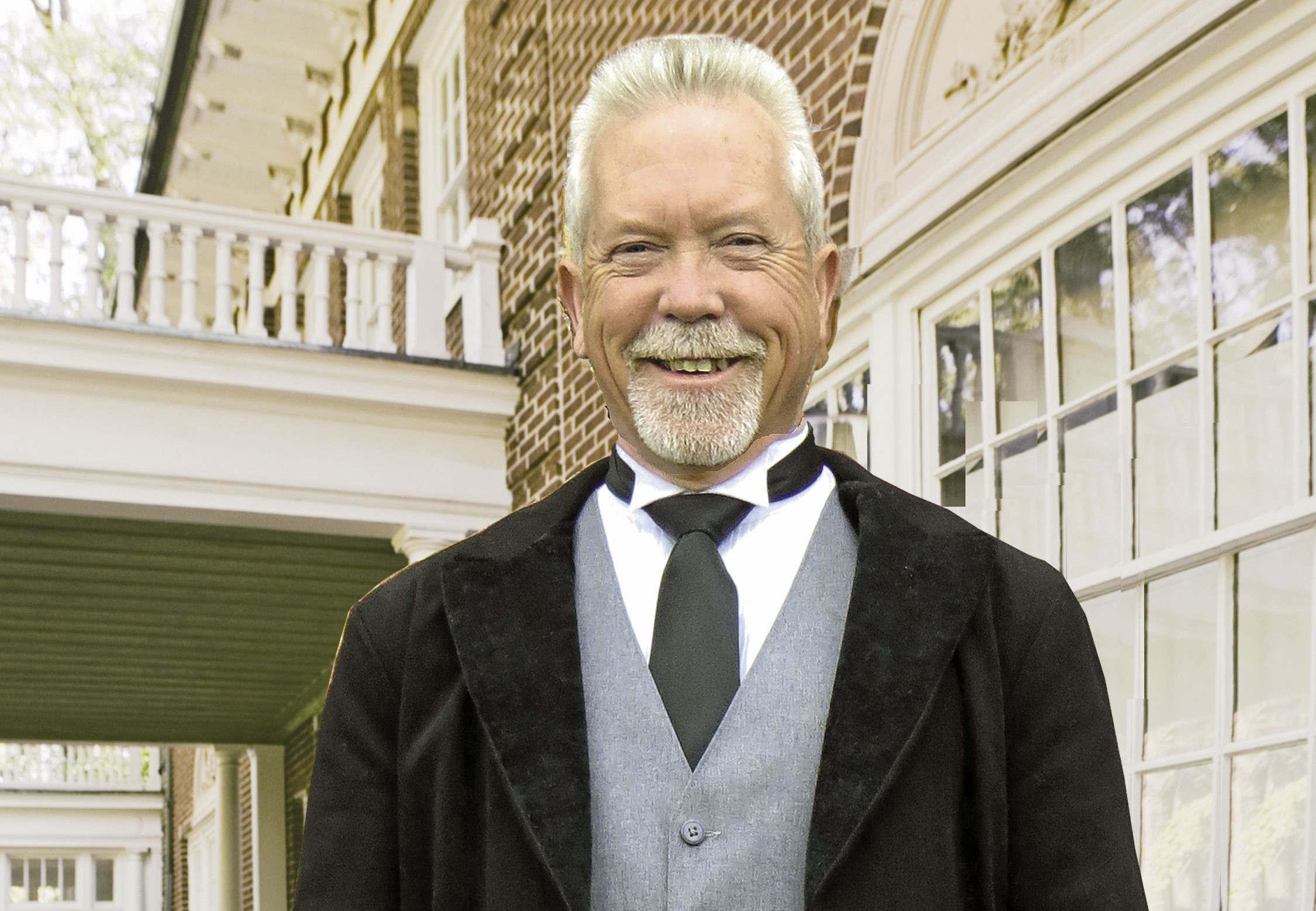
Have you ever wondered what it would be like to have a butler? Perhaps you have watched television shows such as Benson or Downton Abbey. Or you are familiar with Alfred, Bruce Wayne/ Batman’s butler. Chances are that you have seen a butler on television or on the silver screen. But have you ever wondered what it would be like to be a butler? Perry Allen, a Valley resident for decades, is a butler and explains what a day in the life is like for a butler in Denver.
Allen first became interested in becoming a butler in the late ’80s, when a limousine ride and the manner in which the chauffeur conducted himself impressed him. So, in 1988, he was one of 30 applicants for a position as a chauffeur. He was hired by a family with the addition of light duties. Those light duties were what intrigued Mr. Allen to become a full-time butler.
In 1993, Allen was placed with a family in Denver by the Starkey International Institute. The Institute, at 13th and Logan, was founded by Mary Starkey in 1990. They are a state-approved vocational institute Service Management education corporation teaching the art form of Private Service. Starkey is located in a registered historical mansion, built in 1901. This 13,000 square foot high-end private residence in the heart of Denver, is where students are invited to reside while in training and where they conduct their Household and Service Management Programs.
Allen worked for his original family for almost two decades. He was considered an Estates Manager back then because he managed his employer’s five homes. He oversaw a large staff, served as a personal assistant, went on business trips as well as family vacations abroad, and greeted guests who came to the house. One of those guests was former President Gerald Ford.
Allen recalls when the President came for a dinner party, he wanted to have a photo with Ford. The President had requested that no pictures be taken at the dinner. Allen’s employer said that it would be OK to greet the President at his car and shake his hand. When Allen reached for the car door to open it, Secret Service surrounded him and told him to back off. By the end of the evening, the Secret Service were fascinated with what Mr. Allen did for a living and Allen was interested in Secret Service’s job.
One of the most intriguing parts of Allen’s tenure with his first employer was managing a wine cellar with over 10,000 bottles. He set up a sophisticated computer system which tracked all wines coming in and going out. When they ran low on a particular wine, he would know when to reorder. “The system I implemented made it much simpler to track the wines that I needed to order and reorder,” said Allen.
In 2012, Allen decided it was time to move on to a new adventure and worked with a New York placement firm to be situated into a new position. Since 2012, Mr. Allen has been working with a new family, also in the Denver Metro area. His new responsibilities are a welcome change from his former employer. He manages one household, and a housekeeper. His duties include pet care, driving, shopping, valet service, preparing and setting the dinner table (his employer loves to cook), and cleaning up after dinner is finished. He also manages a small wine cellar.
Fascinated with the British lifestyle, and being a fan of Downton Abbey, his new employer sent him to The British Butler Institute in London to refine his skills. He participated in a one-week course where his classmates were from all over the world, including France, England, and South Africa. The British Butler Institute claims that the modern butler should have classic and contemporary butler skills. That is why it offers cooking classes, flower design classes, mixology classes and expert shoe care and valet skills as part of the one to four week programs.
One might wonder after reading this article, what kind of salary a butler would command. Salaries range anywhere from $60,000 to $300,000 per year, most with full benefits according to the Starkey Institute. It can be a lucrative position but certainly comes with its sets of demands. Allen indicated that he was always on call with his first employer. In addition, his hours can be long and the time away from his family takes its toll. However, the rewards far outweigh any of the disadvantages for Perry Allen. “It’s a noble profession, with the perks of living vicariously through the lifestyles of the rich and famous,” said Allen. He also enjoys the adventurous travel.
So who is becoming a butler these days? Individuals with double majors and even law degrees, according to butler expert Robert Davidson. “You need some intelligence, an ability to please along with some very good organizational skills,” Davidson noted. “But how many jobs offer six figure salaries to start in this country? The rich are very rich these days and they are willing to share a little bit of that wealth for the right person who can make their lives easier.”
To find out more about Perry Allen visit his website at www.perryallen.com. To learn about attending butler school you can go to the website of Starkey International Institute at www.starkeyintl.com.
by Mark Smiley | Apr 2, 2014 | Main Articles
Massive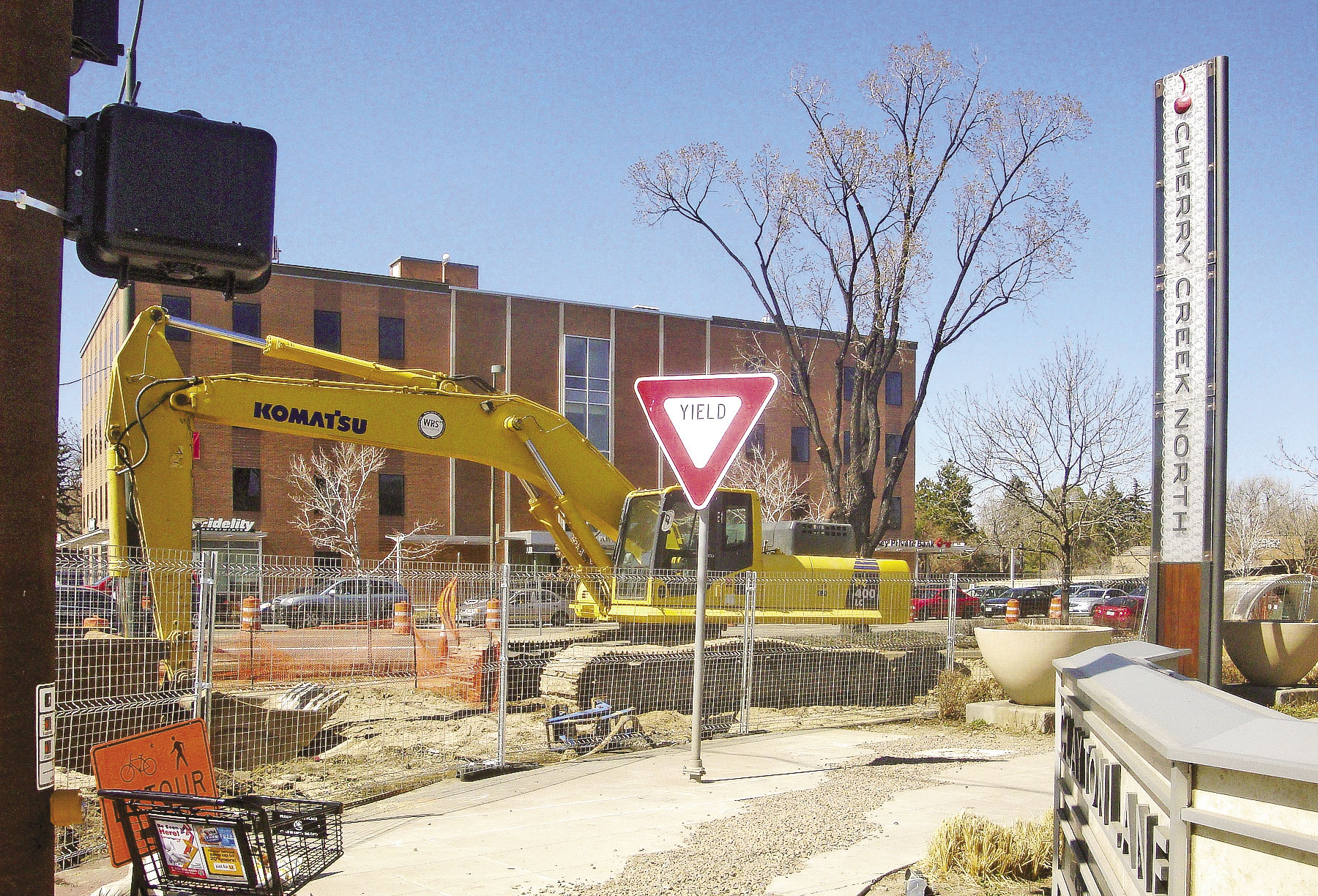 University Blvd. Projects Plus
District’s Construction Explosion Snarling Traffic
by Glen Richardson
Mega developments underway in Cherry Creek North are snarling traffic within the district while two massive projects along University Blvd. has traffic grinding to a halt. Commuters complain that during rush hour, traffic on University is nearly at a standstill for up to six blocks in all directions. Normal weekday traffic volumes along University in the Cherry Creek commercial area are approximately 50,000 vehicles per day. The two-hour morning peak period begins at 7 a.m. and ends around 9 a.m., while the afternoon peak is from 4 p.m. to 6 p.m.
Officials say the resulting traffic jams will get worse this summer for people who commute northbound along University Blvd./Josephine and southbound York/University from 6th to 2nd Avenues.
Traffic headaches within the 16-block shopping-dining district are being created, as buildings are demolished and new ground excavations begun for a half-dozen major projects currently underway. Construction related traffic tie-ups have local businesses fuming over lost sales while some report they have had to cut down on staff hours because of the slowdown. More than 11,250 employees work within the district.
University Blvd. Projects
Denver Public Works started construction in January (Chronicle, December 2013) on a new storm drain system plus a street improvement project along University Blvd. in Cherry Creek North. Additional work is taking place east of University and 1st Ave. Officials had said they would keep one or two lanes open in each direction throughout the project. However, in late March northbound University was closed at 1st Ave.
The storm drainage portion of the project is designed to reduce the frequency and impacts of recurrent, localized flooding in the Cherry Creek area. This project will add significant capacity to the drainage system. The main components include a new outfall structure draining into Cherry Creek through a new storm drainage pipe that will ultimately extend north into the Cherry Creek neighborhood.
Building Boom Congestion
The proliferation of high-rise buildings under construction in Cherry Creek North is also causing problems for both district shoppers and businesses. Traffic slowdowns and stoppage due to construction is not only clogging streets but it is also paralyzing business as shoppers and residents flock in and out of the district. In addition, construction vehicles and equipment are monopolizing traffic lanes and parking spaces, reducing the already congested road capacity.
The biggest traffic slowdowns are along 1st Ave. where work is underway on the enormous FirstBank building at St. Paul. Just east of that project on 1st Ave., construction is creating traffic congestion, where the 12-story Steele Creek Apartment project is being built, at the intersection of Steele that has always had traffic flow problems. Adding to the streets woes will be construction traffic as the RH Gallery project gets started to replace the former Saks Fifth Avenue space along 1st Ave.
Perfect Storm
Cherry Creek North shop owners, restaurants and other businesses say the work along University Blvd. plus the massive building projects within the district are creating substantial business difficulties. Furthermore the timing of projects particularly along University couldn’t have been worse. “The spring and summer months are our busiest time other than Christmas and they waited until we were starting to get busy and started closing down streets,” said one retailer. Added another: “This is the perfect storm!”
On the positive side, at Ten Thousand Villages on 3rd Ave. next to the 250 Columbine development, manager Charlotte Otto says that while it has impacted business, customers are still coming in. “We are finding ways to thrive despite the challenge. Our loyal customers have been a huge strength.” Many in the district, while declining to give their name or that of their business, say on average they have seen foot traffic drop 15-20 percent, with sales off 10 percent. Owners and managers also say they felt shut out of construction decisions, including the timing of work.
A customer in one shop told the Chronicle, “We were so determined to make it we drove around the detours three times before we found the correct turn into the store.” The manager at one business stated that while driving down 2nd Ave. going to FedEx kinkos, construction flaggers refused to let him make the turn until he became belligerent. Businesses and restaurants all complain that employees are late to work. What once took two minutes now takes 20. Moreover, they note it is increasingly difficult for both customers and employees to find parking. One business along University/York noted they had seen escalating road rage and fender benders plus cars cutting through their parking lot. Several businesses told the Chronicle they had just received notification via a pamphlet of the upcoming closure of Josephine. The reaction of one manager: “Oh my God!”
Cherry Creek’s Woes
Benefit Competitors
The traffic jams throughout Cherry Creek have not escaped the notice of the area’s competitors. Jeff Estey, a restaurant entrepreneur who owns three restaurants in Old Gaylord by Washington Park (Wash Park Grille, Max Gill and Grille and Agave Taco Bar), drives his child to the Cherry Creek area for lessons and knows well the traffic woes the area is suffering from. He began a radio advertisement campaign developed by Entercom which notes the parking and traffic problems in Cherry Creek due to construction and invites potential diners to come to the Washington Park area where those issues are not impediments for customers. He states, “Our idea was not to be malicious, but rather poke fun at Cherry Creek’s woes and give people a pleasant alternative.” Restaurants and shops in Glendale are considering similar advertising campaigns.
The City and County of Denver anticipates that the street and storm drainage work will be completed by November of this year. By that time the first of the already approved mega developments will begin to be completed. The effect of those developments on traffic and parking is unknown as the city declined neighborhood requests to perform studies on their impacts.
by Mark Smiley | Mar 13, 2014 | Main Articles
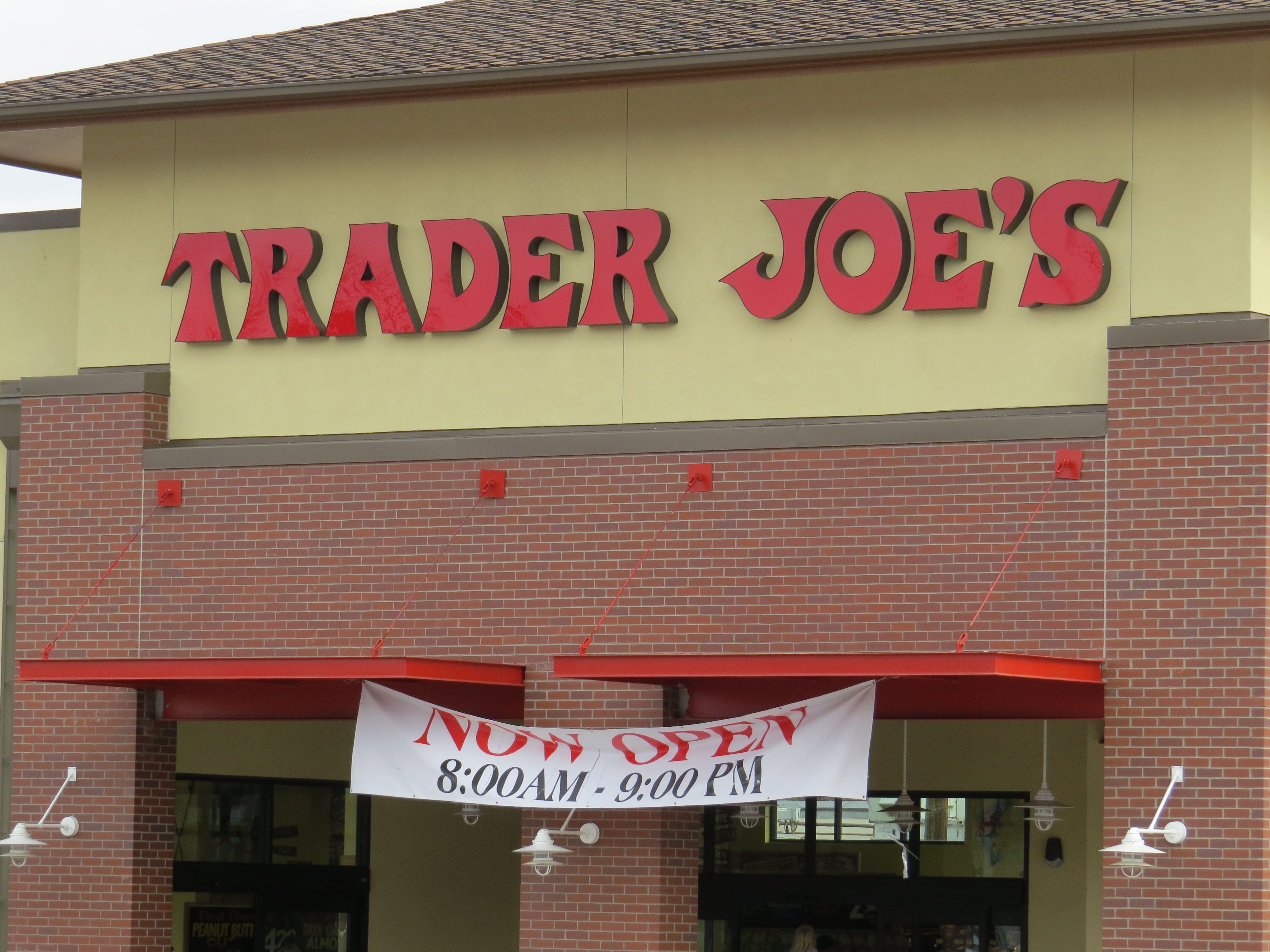
Trader Joe’s Parking And Traffic Problems Mar Opening
Lack Of City Planning Enrages Neighbors; Petition Drive Started
by Charles C. Bonniwell
The opening of Trader Joe’s at East 8th Avenue and Colorado Boulevard on Valentine’s Day was widely anticipated by neighbors and fans of the specialty grocer. A nearby church even put out a banner declaring “Welcome to the Neighborhood — Trader Joe’s.” But the mood has definitely soured due to what critics call an absence of any meaningful traffic planning or engineering by the city.
Shopper Peter Colussy declared, “It’s an absolute zoo.” Local resident Mary Martin said that, “On Saturday, we just sat in front of my window and watched the chaos.” For Martin it took 15 minutes to just get out of her driveway. Other residents complained not only of the horrific parking but broken wine bottles and shopping carts left on the streets and on residents’ lawns.
One resident described the area around Trader Joe’s to be like the movie Road Warrior, while another individual told KDVR television, “Fighting, actual fighting in the streets over parking spaces. There were two ladies up here and there was yelling and horns were honking and, oh, it was a mess.”
Mary Tirrell who lives near Trader Joe’s notes that in the very short time since the store has opened she has had her car side swiped three times.
While nearby businesses have enjoyed the increased foot traffic, many are taking draconian steps on the parking overflow. Julie Perlmutter was one of four persons who got her car towed after parking in the U.S. Bank lot and going over to Trader Joe’s. “There are tow trucks everywhere. The second you walk to Trader Joe’s you’re gone.” Shoppers who have gotten their cars towed have to get transportation to the tow lot and pay $280 to get their car back. Perlmutter succinctly noted, “It sucks!”
Homeowners near Trader Joe’s who have their homes for sale are finding it difficult to find buyers. Mary Martin has taken her home off the market noting, “It doesn’t look good for a potential buyer to come and see that this is not a quiet street anymore.”
Critics are generally split on who is to blame for the mess that 8th and Colorado has become. Some point to Trader Joe’s itself. Robert Meer points out, “Trader Joe’s is like this all across the country. They construct the minimum amount of parking allowed under the law and once they get in it’s the neighborhood’s problem. They know it is going to be a mess and they just don’t care. They are ‘Trader Joe’s’ and everybody else can just stick it.”
The headline in the Miami Herald concerning the Trader Joe’s which opened in Pinecrest was “New Trader Joe’s store creates traffic mess; 55 cars towed.” In Dallas WFAA-TV’s story on Trader Joe’s was “Traffic and Parking are Concerns at Trader Joe’s Newest Dallas store.” Similar headlines are appearing across the country wherever Trader Joe’s operates according to critics.
Other businesses and neighborhood groups are looking squarely at the alleged lack of planning by the City and County of Denver.
The site has 70 parking places which meets the minimum required by the city code, but appears to be clearly inadequate for the large numbers of enthusiastic shoppers and the fact that the 8th and Colorado is and will be the only Trader’s Joe with a liquor license in the state.
Mary Martin stated, “I don’t think enough planning went in to prevent this from happening.” Resident Joanne Bader has been circulating a petition which would require the city to immediately do traffic and engineering studies to help mitigate the problems and has over 140 signatures of residents, shoppers and business owners.
“It’s too late,” stated Jeremy Kruze. “Once they didn’t require adequate parking or traffic flow in the planning process the city gave away the ball game. Seventy parking places for the only Trader Joe’s in Colorado with a liquor license is a joke. All they had to do at the planning department was go online and find all the problems that Trader Joe’s created and in those cities that have much greater parking requirements than Denver.”
Some point to the chaos that the city’s Community Planning and Development Department is in. After a series of lower level resignations, the Executive Director Rocky Piro resigned on February 7, 2014. He had moved to Denver only two years before from Seattle to take the position. Mayor Hancock and Piro have refused to state why he resigned and whether he was asked to by the mayor. Brad Buchanan, an architect who was the chairman of the citizen appointed Planning Board, has taken his place.
“It’s a mess down there,” said Kruze. “You don’t really have a functioning department anymore to look out for the neighborhoods and the citizens. Companies like Trader Joe’s can get away with almost anything and there is no one to stop them.”
He adds, “If you think there are parking and traffic problems now just wait until they finish with the already approved projects in Cherry Creek North. The lack of adequate planning for traffic and parking by the city for those projects is really unbelievable. Trader Joe’s is just a taste of what the future will bring for the residents of southeast Denver.”
Some residents have directed their anger at the area’s Councilwoman Mary Beth Susman for not taking a more pro-active role regarding Trader Joe’s. She has stated, “There are opportunities when and if parking for residents becomes problematic due to commercial uses that you can get special resident parking permits like those in Cherry Creek North.”
At Councilwoman Susman’s biannual town hall meeting at Mizel Museum on February 27, it was standing room only with many of the people attending to discuss the Trader Joe’s problems. Susman indicated that she wanted to wait for six months to see whether the parking and traffic issues lessen. The councilwoman’s remarks did not please some at the meeting and her approach was summed up by Channel 9 anchor Kyle Clark as “We can’t fix the problem until the problem goes away.”