by Amber Wyatt | Apr 1, 2026 | Editorials
by Amber Wyatt
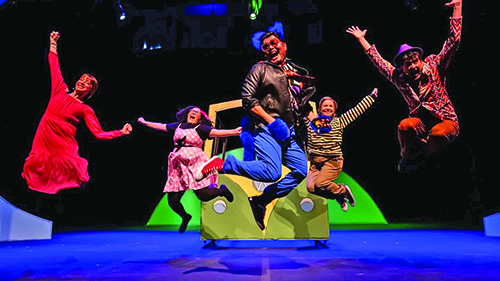
The cast as Jimmy learns the importance of honesty.
At the Denver Children’s Theatre, whimsy is not simply a stylistic choice, it is a philosophy. This spirit was on full display in the recent production of Pete the Cat, a vibrant, 50-minute musical that blended imagination, mentorship, and community into a singular theatrical experience. Presented under the umbrella of the Mizel Arts and Culture Center, the show exemplifies how youth-focused performance can be both playful and profoundly impactful.
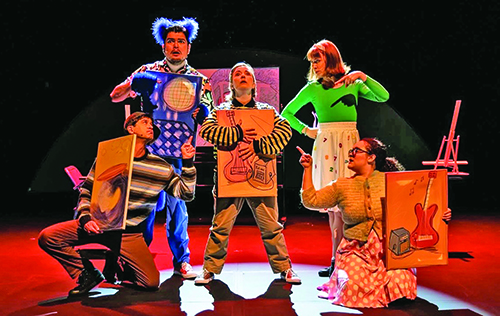
Directed by Matthew Zambrano, Pete the Cat leaned into creative minimalism. In a bold artistic decision, the production featured limited physical props. Many times, actors relied entirely on pantomime, miming instruments, books, and even telephones, inviting young audiences to co-create the world unfolding before them. “Theatre for Young Audiences is some of the bravest
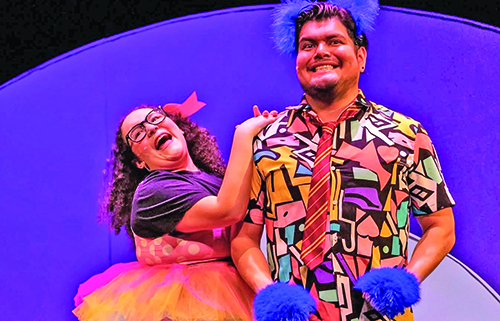
Guzman and Enriquez in one of the show’s final scenes.
work being done,” Zambrano noted, emphasizing that when the goal is to inspire empathy rather than chase reviews, the results can be transformative.
That transformation begins with the performers themselves. Brandon Guzman, who plays Pete in the production, brings both technical precision and heartfelt enthusiasm to the stage. Guzman’s journey into theater began at Florida’s Manatee School for the Arts, where an encouraging teacher first recognized his potential. From portraying Bernardo in West Side Story to earning a BFA in musical theater from the University of Tampa, his path has been marked by dedication and adaptability from the start.
After an early stint in New York was interrupted by the pandemic, Guzman found renewed momentum in Denver. Since arriving in 2025, he has built an impressive résumé, with performances ranging from On Your Feet! at Town Hall Arts Center to Frozen at the Arvada Center. Yet it is his work in Theatre for Young Audiences that seems to resonate most deeply. Having toured bilingual productions across multiple states, Guzman understands the importance of representation. “It allows kids to see themselves in the story,” he shared, underscoring the inclusive power of performance.
Equally compelling is the journey of Izzy Enriquez, who plays Olive, a warm and supportive sibling character in Pete the Cat. A recent graduate of Texas State University, Izzy discovered her passion for theater through a blend of storytelling and visual art. Initially hesitant about the vulnerability required in dramatic acting, she found confidence through musical theater’s structure and discipline.
Her move to Denver marked a turning point. While working as a stagehand at Elitch Gardens, she discovered the audition for Pete the Cat through the Colorado Theatre Guild. For Izzy, Theatre for Young Audiences is more than performance, it is access to profound influence. “It’s about meeting audiences where they are,” she explained, reflecting on the importance of making theater approachable and meaningful for all children. Her portrayal of Olive captures the show’s central themes of belonging and acceptance, offering young viewers a character who embodies kindness and encouragement.
Behind the scenes, the production is part of a larger mission driven by leaders in the community like Tim Campbell. Through his work with the Mizel Arts and Culture Center, Campbell helps bring cultural programming to nearly 100,000 people each year. His vision is rooted in connection: creating spaces where diverse communities can come together through shared artistic experiences.
Entire cast of Pete the Cat at Mizel’s Denver Children’s Theatre.
“Live theatre invites audiences into something communal and alive,” Campbell said. “For children especially, it opens the door to creativity, learning, and confidence.” With programs like Pete the Cat, that door is flung wide open, welcoming first-time theatergoers and seasoned patrons alike to a crash course in performance art.
What makes this production particularly memorable is its ability to balance entertainment with intention. From pre-show activities that encourage children to guess mimed objects, to post-show “encore talks” that demystify lighting and sound design, the experience extends beyond the stage. It becomes educational, interactive, and deeply human.
At its heart, Pete the Cat is a story about friendship, courage, and saying “yes” to new experiences. But in the hands of this talented cast and creative team, it becomes something more: a celebration of imagination and a testament to the enduring power of live performance.
In a city rich with artistic offerings, productions like this remind us that sometimes the most meaningful stories are the simplest ones, told with heart, creativity, and just a touch of whimsy where all generations can meet with a smile.
by Amber Wyatt | Feb 18, 2026 | Editorials
by Amber Wyatt
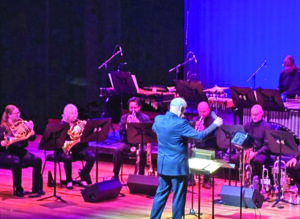
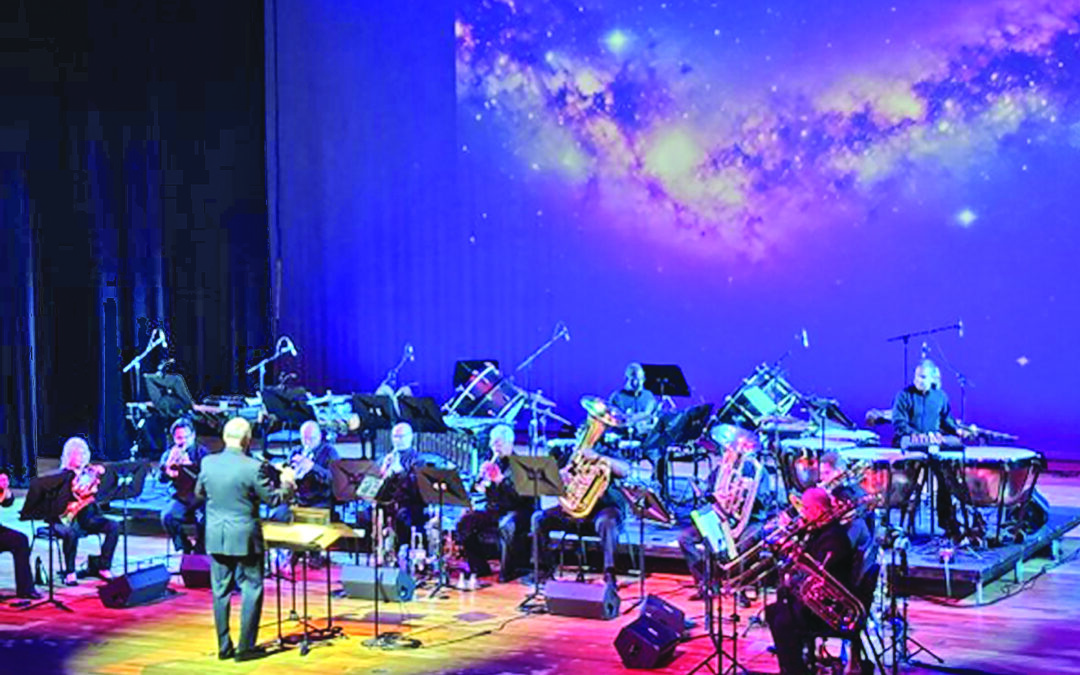
Second from left, Susan McCullough playing French Horn.
By any measure, Rhythms of the Cosmos is not your typical brass concert. Presented by the Denver Brass, the multimedia performance blends bold brass sonorities, percussion, lighting, and cosmic imagery into an immersive experience that feels as much like a journey as it does a concert. For a group celebrating more than four decades of music-making, the show is a striking reminder of why Denver Brass continues to captivate audiences across the Front Range.
Founded in 1981 by Kathy Brantigan and her husband, both tuba players, the ensemble was born from a simple desire to make music together. “We founded Denver Brass because we both played tuba,” Brantigan recalled with a laugh. “We wanted to play together. So we had to multiply out from two tubas, how many trumpets do you need to balance out? How many trombones? How many horns?” That playful curiosity ultimately grew into one of the region’s most distinctive musical organizations.
Brantigan believes the ensemble’s longevity stems from both its sound and its spirit. “Brass players have kind of a unique fraternity,” she said. “We all have similar personalities, and we love the power and the heroic sounds that brass makes. It’s really special to play with all brass, it’s a unique sound.” Far from being one-dimensional, she emphasizes that the ensemble 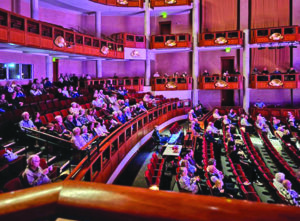 can move seamlessly from delicate and romantic to bold and triumphant. “I’ve always said goosebumps are guaranteed,” she added. “There are moments at our shows you don’t forget when you go home.”
One of the musicians who has experienced the entire arc of the ensemble’s history is French horn player Susan McCullough, the only remaining original member. “As long as we’ve been in existence, around 45 years,” she said when asked how long she’s played with the group. McCullough describes Denver Brass concerts as constantly evolving. “Everything we do is completely different from the last. One show it’s classical, the next time it’s jazz, then funk. What style is your show? Everything,” she shrugs.
That stylistic freedom is on full display in Rhythms of the Cosmos, which features music inspired by space, time, and motion. Trumpeter and composer Sean Schaffer Hennessey contributed original works to the program, including Guardians of Time. “It’s a tough show,” he admitted. “Brass players get tired, but it went really well.” For Hennessey, the appeal of Denver Brass lies in its emotional breadth. “Each show is kind of a roller coaster through emotion,” he said. “There’s a heart to this group. We take music that’s often orchestral and bring it into a whole different realm.”
The concert’s cohesion owe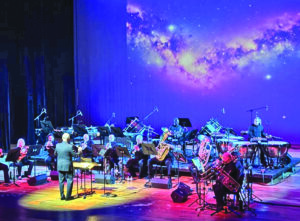 s much to conductor Warren Deck, former principal tubist of the New York Philharmonic, who joined Denver Brass after moving to Denver in 2002. Deck’s path to conducting was unconventional. “I never conducted anything,” he said. “I just sat in orchestras and watc
 hed my conductors. One day these guys said, ‘Why don’t you conduct?’ and I heard ‘yes’ come out of my mouth.” His approach reflects the ensemble’s adventurous spirit. “You never know what you’re going to get,” Deck said. “That versatility is worth checking out.”
Behind the scenes, Executive Director Becky Wilkins helps shape the show’s narrative arc with Kabin Thomas and Andy Wolfe. “It starts with the theme,” she explained. “For this one, we were talking about rhythm, and we added space.” From there, she works on sequencing the music and layering theatrical elements that curate an experience, lighting, imagery, and sound design, support the audience’s emotional journey. “It’s more than just a concert,” Wilkins said. “It’s a show. You experience all these elements and let the music really sink in, it becomes an almost spiritual event.”
One of the most striking moments features ambient sound recordings from Mars, paired with imagery that evokes isolation and discovery. “The images really took me there,” Wilkins said. “They’re the frosting on the cake, helping convey the story.” Kabin Thomas, narrator of Rhythm of the Cosmos and on-air morning show host and producer at Colorado Public Radio’s Classical station, drives each work to the next, “Space,” Thomas leads, “The final frontier.”
As Denver Brass looks ahead, that spirit of innovation continues with their fans that follow every show. One attendee I spoke with during intermission named Ginny, remarked “I can’t wait for Celtic Mania! The Cosmos is quite different for Denver Brass.” “Rhythms of the Cosmos stands as a powerful reminder of what the ensemble does best,” attendee Richard tells me, “Challenges expectation, stirs emotion, and invites audiences into unforgettable moments.”
If you missed Rhythms of the Cosmos, there’s still plenty to look forward to. Denver Brass continues its season with Celtic Mania on March 7th and 8th at 2:30 p.m. at the Newman Center, followed by Pulse of America on May 17th at 2:30 p.m. at Bethany Lutheran Church. Each performance offers a distinct musical experience, showcasing the ensemble’s precision, and unmistakable energy.
As Brantigan put it simply, “There are magical moments you remember from our shows, and they last.”
by Amber Wyatt | Feb 18, 2026 | General Featured
by Amber Wyatt
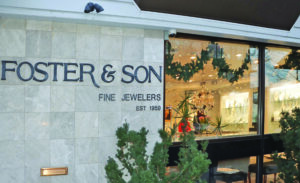
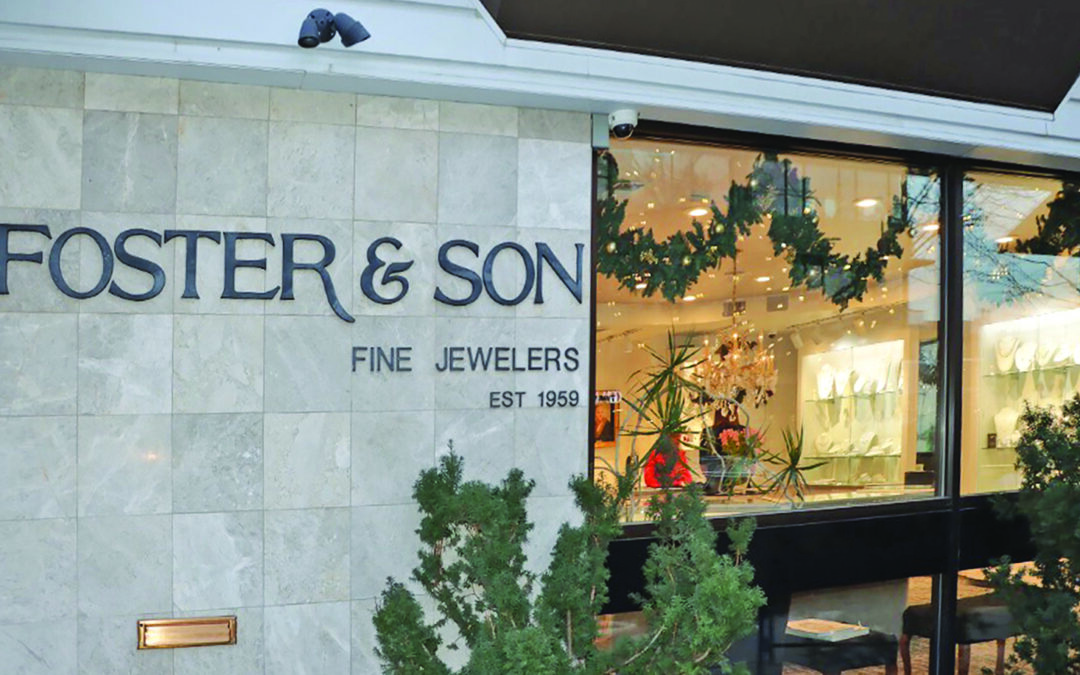
The iconic facade of Foster & Son Jewelers where craftsmanship, heritage, and brilliance meet.
By any measure, Cherry Creek North has changed dramatically over the past decade. New mixed-use developments rise where parking lots once sat, national brands rotate in and out, and office foot traffic ebbs and flows with rapidly growing technology. Yet tucked between luxury storefronts and minimalist façades are artisans who have quietly shaped the district’s character for decades. Their stories reveal not just resilience, but a deep commitment to community.
Few businesses in Cherry Creek can trace their roots as deeply as Foster & Son Jewelers, a family-owned institution that has been serving the neighborhood since 1959. Long before Cherry Creek became a nationally recognized retail destination, Patricia Foster, known to most as Patty, opened a small jewelry shop in Cherry Creek called “The 14 Karat,” an ode to the 1859 Gold Rush to the Rockies. At the time, the area was still defining its identity, and Patty’s shop quickly became a trusted fixture for craftsmanship, honesty, and glamour.
As Cherry Creek grew, so did the business. Patty’s son, Brien Foster, joined the team in 1987, bringing a new generation of expertise, with his wife Cindi. Together they worked hard to preserve the values that built the shop’s reputation like reliability, community-involvement, and elegance. With the duo’s involvement, the store evolved into Foster & Son Jewelers, a name that reflects both its family roots and its long-standing commitment to quality. Today, Brien’s son Tucker and his wife Katie Foster continue to lead the business, the third generation of the Foster family to work behind the counter.
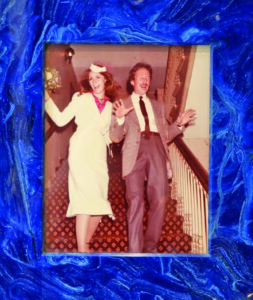
Brien and Cindy Foster on their wedding day.
Last week, I spent about an hour catching up with Tucker Foster at Foster & Son Jewelers, along with his wife, Katie, and it was one of those conversations that reminds you how much heart and history live inside a family business. Tucker lit up talking about his specialty, Cuban link chains and studded-out grills, and even showed me a few custom pieces he’s currently crafting for a local celebrity whose name, of course, could not be disclosed. A testament to how times have changed.
We also talked about the importance of lineage and carrying the Foster legacy forward, a tradition that has shaped the brand for generations. The couples’ daughter Sadie proudly holds the title of dynasty princess for now, but Tucker assured me that role is only temporary and that an heir to the Foster throne is very much in the plans. Katie shared many of the family anecdotes with me, like the tale of Brien assembling the glistening centerpiece of the store, a chandelier Patty ordered in China which came entirely with Chinese instructions.
Tucker not only has a hand in shaping the business, because, “In many ways,” he admits, “the business shaped him.” Tucker shared stories from his childhood that felt like something out of a movie: making bows for the gift-wrapped jewelry pieces customers bought for their loved ones, then sneaking around the corner to the old Wizard’s Chest location to hunt for Pokémon cards. Today, he and Katie are building their own chapter of the Foster story keeping both the craftsmanship and the family tradition alive but adapting effortlessly to the changes 67 years in the making.
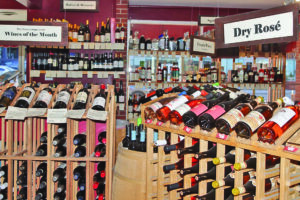
An eclectic selection of wines.
 In an era when many jewelry purchases are made online or through national chains, Foster & Son remains a traditional, full-service jeweler, offering custom design, repairs, appraisals, and fine jewelry curated with care. “While it’s awesome to go to Tiffany and Co and the blue box is absolutely stunning,” Tucker said, “you can get a better experience that’s more personalized and less expensive working with a family jeweler.” Their relevance lies not only in longevity, but in relationships. Many customers have been coming to the store for decades returning for engagement rings, anniversary gifts, family repairs, and milestones that span generations.
“In the past, value was in effort. Today, it’s in a brand name,” Tucker says. Oftentimes that brand is a symbol of something. People who shop with Foster and Sons wear the symbol of community, importance of family, and supporting a legacy. Brands like Tiffany & Co, however, charge customers substantial amounts just to wear the name.
That sense of trust has allowed Foster & Son to adapt as Cherry Creek’s retail landscape has shifted. While the neighborhood has seen luxury brands come and go, the Foster family has remained anchored by personal service and expertise that cannot be replicated online. Their in-store experience emphasizes conversation, education, and comfort, values that resonate in a district increasingly focused on experience-driven retail.
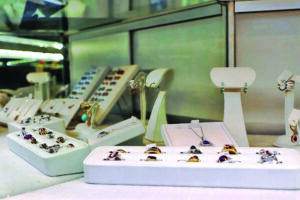
Front counter display of various jewelry types.
Foster & Son’s continued presence also reflects Cherry Creek’s evolution from a neighborhood shopping area to a dynamic cultural district. Through decades of development, economic shifts, and changing consumer habits, the store has remained a constant, quietly shaping the character of the area as much as responding to it.
The story of The Vineyard Wine Shop begins with its founder, Robbie Wilson, who established the shop in 1971 after falling in love with wine while living in California. As Clif Louis explains, “Robbie Wilson was the original owner, he got moved over to San Francisco, fell in love with wine, came back to Denver and said, ‘I want to open a wine store!’”
What began as a modest basement operation, accessible only through an alley, quickly became something special. “In 1971 to get to the front door, you’d come down the alley, go through the door, and down the stairs. It was only 500 feet of space to put wine,” Louis recalls, adding that Wilson’s wife Val handcrafted the stained glass windows and shelving that remain in the shop today. From the start, The Vineyard offered a thoughtful, intimate environment focused on discovery and quality rather than convenience.
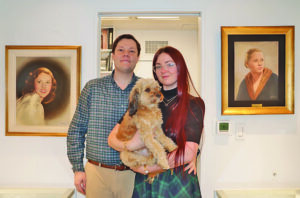
Tucker, Katie, and Sadie Foster.
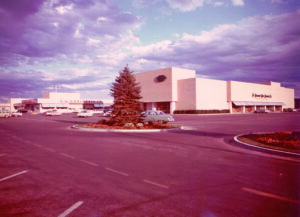
The Cherry Creek Mall photographed around 1960.
The second chapter of The Vineyard’s history began when a young Clif Louis entered the picture in the early 1980s. Driven by a lifelong appreciation for wine sparked by his father who “was stationed over in France, he fell in love with French wines, we always had wine at dinner, and dad let me pick the wine.”
Louis approached Wilson looking for work. “I said, ‘I’ll do anything. I just want to learn about wine.’ So he hired me as the stock boy for $4 an hour,” Louis says, noting how quickly he realized how much there was to learn about the industry. After just a year, Wilson offered a life-changing opportunity. “He said, ‘Clif, why don’t you buy me out?’ and I bought him out slowly over three years.” Louis explains.
From that point on, Louis carried forward the same philosophy of accessibility, warmth, and expertise that Wilson had built. “We weren’t the big box mentality. We didn’t want to force customers to buy a $100 bottle when a $20 bottle was just as good,” he says. “We weren’t snooty wine people. We like to sell wine to drink it.”
Under Wilson and Louis’ leadership, The Vineyard became deeply rooted in Cherry Creek’s retail culture as a staple of high society. Louis’ wife Rosella owned The Brass Bed for decades, and today their children continue the multi-generational tradition with White Peacock just down the street. “We both got into retail, and then my kids got into retail, so it really became a family thing here in Cherry Creek,” Louis shares.
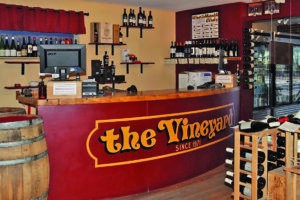
The Vineyard Wines original front counter.
Today, The Vineyard remains anchored by the kind of personal service that can’t be replicated online. “Everyone who works here is taking wine classes, they’re trying to get their degrees in wine,” Louis explains. “When a customer comes in, they talk to somebody. We help them find exactly what they like.” And despite assumptions about Cherry Creek pricing, value remains central. “People think we only sell $100 bottles of wine, and that’s not the case. Most of our wines are around $20,” he says, emphasizing the shop’s commitment to quality at every price point.
That personal connection has helped The Vineyard weather major shifts in retail, including grocery stores entering the wine market. “When they passed the law allowing wine in grocery stores, that hit our sales pretty bad, probably down 30%,” Louis admits, yet he remains confident in what sets The Vineyard apart: “In the big box stores you just pull wine off the shelf. Here, everyone’s an expert. We talk, we educate, we connect.”
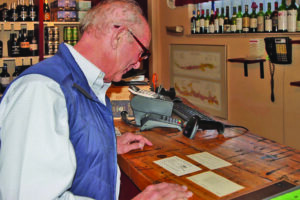
Clif Louis looks back on old mailers the company distributed.
Despite evolving development and competition, Louis has no plans to leave. After more than four decades, what keeps him rooted isn’t foot traffic or trends, it’s loyalty, history, and relationships built bottle by bottle. “We’ve had very loyal customers. A lot of them know my first name,” he says simply.
As Cherry Creek continues to modernize, The Vineyard stands as proof that progress doesn’t have to erase craftsmanship. Behind its shelves of carefully curated wine is a legacy built on curiosity, community, and conversation, one that continues to carry forward the spirit Robbie Wilson first poured into a small basement shop back in 1971.
Below: Current heiress of the Foster family business, Sadie Foster, daughter of Tucker and

by Amber Wyatt | Jan 16, 2026 | Main Articles
Fire Threatened Historic Inga’s Alpine Tavern
by Amber Wyatt

Blazing Inferno: The Leetsdale Drive fire was the largest in Denver for decades but fortunately resulted in only one fireman being injured
A five-alarm fire tore through the Harker Heights apartment complex under construction along Leetsdale Drive along the Glendale-Denver border on Friday evening, January 3, sending thick black smoke into the sky, knocking out power for nearby blocks, and forcing evacuations on the border of Denver and Glendale.
The 283-unit development was scheduled to open in May, but officials said the building had not yet been outfitted with a sprinkler system or interior drywall, allowing flames to spread rapidly through exposed construction materials. At one point, the fire sparked a smaller blaze behind the neighboring Sherwin-Williams paint store, which crews quickly extinguished.
Individual Arrested

Suspect: Convicted felon Tony Becerra of Aurora was arrested in connection with the five-alarm fire on Leetsdale Drive.
It was the largest fire in Denver in decades and encompassing an area equal to four football fields. With unusual alacrity the Denver Fire Department (DFD) announced on January 14, 2026, that they had arrested Tony Becerra, 38, of Aurora as a result of a joint arson investigation of the DFD and the U.S. Bureau of Alcohol, Tobacco, Firearms and Explosives.
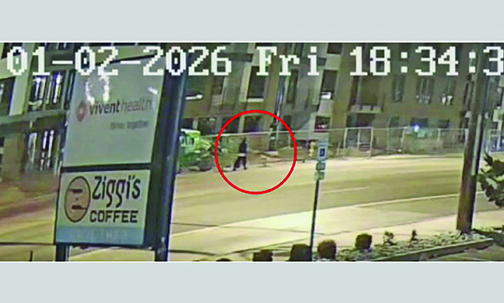
Surveillance footage has the suspect entering and leaving the construction site shortly before the fire started and other cameras tracked his movements after leaving the site. He is shown carrying a black bag. The exact origin and cause of the fire have not yet been determined.
Becerra had been previously convicted of felony trespassing and had an active warrant from June 2025 for failing to appear for another trespassing charge. In keeping with Denver city policy his immigration status was not revealed.
Evacuations And Power Losses
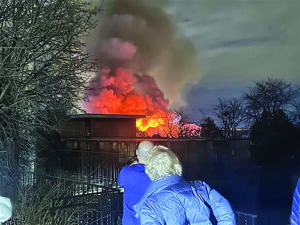
Neighborhood Watch: Homeowner watched and worried as the fire roared. Homes on East Dakota Ave. on the north were noticeably damaged.
Roughly 1,000 Xcel Energy customers lost power as firefighters battled the flames, and the Glendale Police Department opened an overnight shelter at the Glendale Event Center for people displaced by the evacuation orders and outages.
Denver Police issued evacuations for residents of about 10 to 15 homes behind the construction site, where residents watched the fire climb high above rooftops.
“It looked like the building was blowing up,” said South Hilltop resident Caitlyn Molner, who lives directly behind the site. “I saw the flames in the reflection of my refrigerator.”
Molner said she and her husband fled with their four-month-old baby and dogs within minutes as the heat intensified near their home.
“I was afraid our house was going to burn down,” she said. “The firefighters did an incredible job keeping it out of our home.”
Historic Tavern Narrowly Spared

Photo by: Caitlin Spano
For many neighbors, the fire carried an additional fear: that it might destroy Inga’s Alpine Tavern, a longtime community fixture next door to the burning complex. The tavern sits in a building that dates back to 1954 and has served multiple generations of residents as both the neighborhood and the surrounding business corridor evolved.
“I’ve never seen one like it in Denver,” said Jeff Hansen, whose family built the structure in the 1950s and now owns it. “We’re just grateful Inga’s made it.”
The restaurant’s owner, Mary McKnabb, said she was not on site when the fire broke out, but her son Peter, the manager on duty, called her shortly after flames erupted nearby.
“About 10 minutes later the police showed up and told them they had to evacuate immediately,” McKnabb said. “Fire trucks were blocking Leetsdale. The parking lot was almost inaccessible.”
McKnabb said her son secured the business quickly before leaving, unsure what would remain by morning.
“He told me, ‘Mom, I thought the place wouldn’t be here tomorrow,’” she said.
Although the building survived, smoke and disruption have affected business operations in the days since. Inga’s lost power and connectivity, forcing the tavern to operate on a limited basis.
“We have a backup internet that sort of works,” McKnabb said. “We can run credit cards, but we can’t print receipts or kitchen tickets. We’re handwriting everything.”
Residents Describe Intense Heat, Smoke Damage
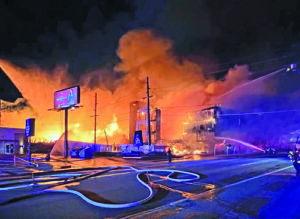
Hose Deployment: Fire engines capable of pumping 1,000 gallons of water a minute had to be refueled at least four times during the night of the fire.
In the South Hilltop neighborhood behind the construction site, residents described flames reaching an estimated 100 feet and heat strong enough to threaten nearby homes. Alan Rivoir, who lives just behind the site, said he was away in Littleton when his landlord called to warn him.
“He said, ‘The building behind us is burning down and the heat is intense,’” Rivoir said.
Rivoir rushed to make arrangements for his three dogs as evacuation orders spread. He said his home did not catch fire, but smoke from burning construction materials caused significant damage and required full remediation.

Fire’s Remnants: Residue from the five alarm Leetsdale fire highlights the destruction and loss brought about by the event. Photo: Kevin J. Beaty
“The wind saved us,” Rivoir said. “If it had shifted, those 100-foot flames would have wiped out our whole block.”
Fire Contained After Heavy Response
Firefighters used heavyweight equipment to move debris as crews worked to fully extinguish hot spots. Officials reported that 156 firefighters responded and that several engines capable of pumping 1,000 gallons of water per minute had to be refueled at least four times overnight due to the scale of the blaze.
Hose Deployment: Fire engines capable of pumping 1,000 gallons of water a minute had to be refueled at least four times during the night of the fire.
Following the fire, nearby businesses began reopening as conditions improved. Inga’s reopened to serve residents returning from evacuations who did not want to cook.
The Jewish Community Center remained closed through January 4 to prevent smoke from entering the building, while air purifiers ran throughout the facility. In a statement, the center thanked first responders and said it was collecting items of appreciation for nearby fire stations, including fresh challah bread.

Frightful Flames: Flames from Leetsdale Drive apartment construction site fire flare above the nearby Greek Orthodox Cathedral
The Assumption of the Theotokos Greek Orthodox Metropolis Cathedral, located nearby, said it did not sustain smoke damage.
Questions remain as investigation continues
The cause of the fire has not been officially determined. Investigators said they were considering all possibilities, including reports of fireworks in the area.
The property is owned by Embrey, a Texas-based real estate investment company. Federal investigators from the Bureau of Alcohol, Tobacco, Firearms, and Explosives are assisting, deploying a National Response Team that includes certified fire investigators, explosives specialists, engineers, and forensic chemists, along with an accelerant detection canine.

Photo by: Zachary Roulier
Despite the destruction of the unfinished apartment complex, many residents expressed relief that the fire did not spread further into surrounding businesses and homes.
“Thank you to the firefighters, because I don’t know how all of these homes aren’t burned down,” Mark Lampert told Denver7. “I mean, seriously, it’s a miracle.”
For Molner, the memory of the night still feels unreal.
“We were lucky,” she said. “So lucky. And we owe everything to the firefighters who kept it from getting worse.”
by Amber Wyatt | Oct 20, 2025 | Travel
by Amber Wyatt
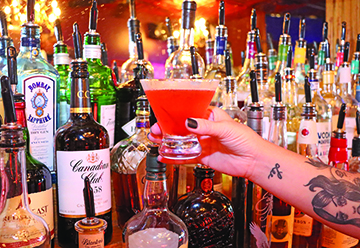
The Skinny Dip: A classic cocktail with a lemon twist, known as The Skinny Dip, awaits at The Bar Car, where the vintage ambiance and neighborhood camaraderie make every sip feel like home, no matter where you’re from.
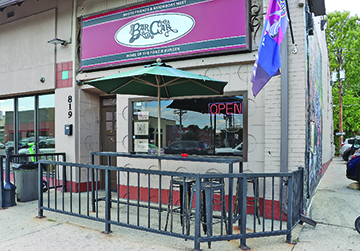
Cozy Patio: The Bar Car at 819 Colorado Blvd. welcomes locals with its cozy patio, signature menu, and the promise of good times where “friends and neighbors meet.”
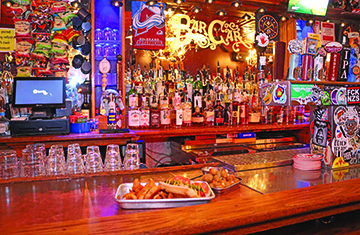
Neighborhood Favorite: With a lineup of craft beers, top-shelf spirits, and hearty pub fare, The Bar Car continues to be a favorite neighborhood stop for both drinks and bites.
On a stretch of Colorado Boulevard better known for fast traffic than lasting community, BarCar has carved out something rare: a true neighborhood bar that doubles as a second home. For majority owner Victor Muñiz and part-owner Andrew Callahan, the mission is clear — create a space where locals feel seen, safe, and connected.
“Working at BarCar is working at a neighborhood spot that is truly a neighborhood spot,” Callahan said. “It is for the neighborhood, by the neighborhood. Most of us live close by.” For Callahan, who has lived in the neighborhood for over a decade, the bar is both a livelihood and a love letter to the community.
That grassroots spirit is built into the very structure of the business. Unlike most establishments, BarCar is largely employee-owned. “We are a mostly employee-owned bar,” Callahan explained. “Almost all of the investors, except for I think one right now, are employees of the bar. We’ve told our entire staff that if they work with us for a couple years and want to become an investor, we’re open to that. That is a path they can take.”
This model has given the bar an unusually high level of buy-in from its team, especially from veteran bartenders who appreciate the stability and the opportunity to shape the place where they work. “Having the opportunity to become financially invested is a big plus,” Callahan noted. “Not a lot of places always offer that.”
That sense of ownership translates directly to hospitality. Muñiz, who also owns the Owl Saloon, describes BarCar as nothing short of a dream realized. “It’s my dream come true,” he said. “Everything about it — friends, family — it’s just a great place to be all the time.”
For Muñiz, the family feel isn’t a metaphor. It’s the guiding principle. “We created a community where we have your makeshift family here,” he explained. “That’s what it’s about. That’s what bars are about in my opinion.”
That philosophy manifests in everyday moments. Neighbors use BarCar as a meeting place before concerts, after games, or just to catch up on life. “A lot of people come before they do other things in life and meet up here or afterwards,” Muñiz said. “Honestly, I think that’s the best thing we do — we keep the neighbors together.”
The idea of BarCar as a community hub is reinforced by personal milestones. When Callahan married his wife, who also works in the hospitality industry, they hosted their wedding reception at another venue — then, naturally, the celebration moved to BarCar. “At around 9:30 or 10, most of the people at our wedding, who were industry workers as well, showed up here,” he recalled. “It became quite a big party to have the neighborhood people getting married, you know?”
Muñiz, who spent years as a bartender and server before stepping into ownership, says that lived experience informs his leadership. “I believe in a bartender-driven industry,” he said. “I know we could have extra staff, but at the end of the day, it’s a staff of people that care and like doing what we do.”
That tight-knit crew has weathered challenges together, particularly during the pandemic. “Coming out of COVID, we had a lot of employees that we needed, and we’re back to the hardcore seven,” Muñiz said. “That’s how we built this bar before COVID, and then we’re back to that again. It’s seven people that give a shit.”
And that’s exactly the vibe patrons notice. BarCar feels less like a business transaction and more like a gathering in someone’s living room — with better cocktails. “We want to be there for everybody that’s looking to have a good time in a cool, comfortable environment,” Muñiz said. “We’re all about being a safe place for people to come and hang out and not worry about the bullshit life has.”
The menu reflects that same spirit of neighborhood hospitality. During my visit, longtime bartender Brandy mixed me a Skinny Dip — a smooth, subtly sweet cocktail built with Deep Eddy sweet tea vodka, a squeeze of lemon, and just enough water to keep it light. It was the kind of drink made for conversation, and sure enough, I enjoyed it while chatting with Callahan and the cook, Will, who proudly shared that the kitchen rotates its cheese curd flavors. The current favorite? Dill pickle. Naturally, I had to try them. Crisp, golden, and tangy, the curds carried just enough bite to spark a round of laughter as the basket quickly disappeared among us.
That theme of comfort and camaraderie carried right into lunch. I went for a proper Chicago dog, stacked with the traditional fixings, and paired it with sidewinder fries that were as hearty as they were shareable. To balance it out, Brandy slid across the bar a Jabroni Negroni — the house’s playful take on a classic. Made with Hendrick’s gin, Campari, and sweet vermouth, the cocktail leaned pleasantly bitter and sour, a bold counterpoint to the rich food and the easy banter flowing through the room.
As Callahan put it, “This neighborhood bar — we focus on just making sure everyone’s taken care of. Everyone knows each other around here. And everyone that’s new to the neighborhood, we always welcome them in.”
On Colorado Boulevard, where strip malls often outnumber handshakes, BarCar has become something enduring: a place where the beer is cold, the people are warm, and the neighborhood spirit is alive and well