
by Mark Smiley | Oct 19, 2026 | Travel
Two million pounds of ice will transform the Aurora resort into a frozen wonderland beginning November 20.
by Mark Smiley

Christmas At Gaylord Rockies: The annual holiday celebration returns to Gaylord Rockies Resort & Convention Center in Aurora from November 20, 2026, through January 3, 2027. This year’s festivities feature the debut of ICE! inspired by Disney Tim Burton’s The Nightmare Before Christmas, along with a variety of seasonal attractions and family-friendly entertainment.
The magic of the holidays is taking shape at Gaylord Rockies Resort & Convention Center in Aurora, where 40 master ice artisans from Harbin, China, have arrived to create a spectacular frozen attraction inspired by Disney Tim Burton’s The Nightmare Before Christmas.
The elaborate display, known as ICE!, will feature more than 2 million pounds of ice carved into larger-than-life sculptures depicting memorable characters and scenes from the popular film. The attraction opens November 20, 2026, and continues through January 3, 2027, as part of the resort’s annual Christmas celebration.
Creating the 17,000-square-foot frozen wonderland is no small undertaking. Over five weeks, the artisans will spend more than 12,000 hours transforming approximately 6,000 massive blocks of ice into intricate sculptures, some towering more than 30 feet high.
Armed with chainsaws, grinders, handsaws, chippers, and other specialized tools, the artists will bring the film’s distinctive characters and settings to life with remarkable detail.
“This is one of the most exciting moments of the year at Gaylord Rockies, as the arrival of our ice artisans marks the beginning of the transformation into our Christmas experience,” said Matt Marshall, general manager of the resort. “This year is especially exciting because guests will experience Disney Tim Burton’s The Nightmare Before Christmas in ice! for the very first time.”
The artisans traveled more than 5,700 miles from Harbin, a city internationally recognized for its spectacular ice and snow sculptures. Often called China’s “Ice City,” Harbin is home to the renowned Harbin International Ice and Snow Sculpture Festival, one of the world’s largest winter celebrations.
Frozen Holiday Magic: Jack Skellington takes center stage in ICE! featuring Disney Tim Burton’s The Nightmare Before Christmas at Gaylord Rockies Resort & Convention Center in Aurora. The spectacular attraction features more than 2 million pounds of hand-carved ice and opens November 20, 2026, running through January 3, 2027.
Gaylord Hotels has partnered with artisans from Harbin since 2001, bringing their specialized skills to holiday attractions across the United States.
Each member of the team has a particular role in the creative process. Some use chainsaws to shape enormous blocks of ice, while others carefully carve delicate details by hand. Working from an extensive 300-page design book, the artisans create everything from tiny decorative elements to massive, towering displays.
Visitors to this year’s attraction will enter beneath the mischievous grin of Jack Skellington before making their way through the hauntingly whimsical world of Halloween Town. Familiar characters, including Sally, Zero, Dr. Finkelstein, The Mayor, and the mischievous trio Lock, Shock, and Barrel, will appear throughout the frozen experience. The Halloween Town Band will also be represented in ice.
The attraction is maintained at a chilly 9 degrees Fahrenheit to preserve the sculptures throughout the holiday season. Guests will also have an opportunity to watch ice-carving techniques at the Artisan Demonstration Showcase, offering a closer look at the craftsmanship behind the elaborate display.
ICE! is the centerpiece of Christmas at Gaylord Rockies, which features additional seasonal entertainment and holiday activities for families and visitors of all ages. The attraction opens November 20 and runs through January 3, 2027, at Gaylord Rockies Resort & Convention Center in Aurora.
Tickets, hotel packages and additional information are available at ChristmasatGay lordRockies.com.

by Mark Smiley | Oct 19, 2026 | General Featured
by Mark Smiley
For TruSox owner Dave Banning, the idea seemed simple: donate socks and gloves his company could not sell to people who needed them. Instead, he says, Colorado tax rules made giving the merchandise away more expensive than throwing it in the trash. The experience became one example of the regulatory frustrations that eventually prompted him to move his company’s Colorado operations to Kentucky.
TruSox makes premium performance socks with proprietary grip technology designed to keep athletes’ feet stable inside their shoes. Its products are used by professional and other high-level athletes. The socks retail for about $55 a pair, or $70 for a wool version, and Banning insists that customers receive flawless merchandise.
During manufacturing, heat can reveal imperfections in the knitted socks. Banning estimates that 3% to 4% of merchandise becomes unsuitable for retail sale. The company also had excess ski gloves, including perfectly usable sizes retailers no longer wanted. Rather than discount those products and potentially undermine his brand, Banning wanted to donate them to homeless shelters.
That is where he encountered Colorado’s use-tax rules. TruSox purchases socks as inventory intended for resale, without paying sales tax at that stage. According to Banning, when the company removes merchandise from inventory to donate it, the state treats that as a taxable use. Discarding the same merchandise, he says, would not trigger the additional tax.
The distinction struck Banning as absurd. His company had already lost its investment in products it could not sell. Donating them could add a tax bill to that loss. “Why would I pay additional tax?” he asked. “I’m losing every penny I have in this product.”
Banning understands why rules prevent businesses from buying goods tax-free and then using them for their own benefit. But he questions applying the same treatment to unsellable goods handed to a nonprofit. “No one could explain what ‘use’ my business received for goods that we were wanting to donate,” he said in a follow-up email. “We were losing 100% of our investment to begin with, much less an additional ‘use’ tax levied by the state.”
He sought help from state Sens. Jeff Bridges and Lisa Cutter. Banning stresses that both lawmakers took his concerns seriously and worked diligently to find an answer. Over roughly a year and a half, he says, they communicated with the Colorado Department of Revenue, trying to clarify the rules and identify a practical solution.
“They were really good about trying to figure out what and why all this,” Banning said. He does not consider the dispute partisan and does not blame either senator for the outcome.
Instead, he says the experience raised a larger question about accountability in state government. “One of the central issues is elected officials not being able to get results from unelected bureaucrats that are writing and imposing regulations that were passed by the same elected officials,” Banning wrote. “It appears these bureaucrats have more power than the elected officials.”
Banning said he was told the state collected more than $1 million annually through this category of taxation and was reluctant to surrender that revenue. He also recalls Bridges recognizing the irony: public programs may spend money securing socks and gloves for shelters while a company offering similar goods for free faces a tax consequence.
One proposed workaround, Banning said, was to accumulate $10,000 worth of seconds before donating them. But storing that much unsellable merchandise would consume warehouse space. He wanted to deliver a box or two to a shelter as items accumulated, not stockpile pallets waiting to meet a threshold.
“I wanna drop a box once a week at the shelter when they need it,” he said. He wasn’t seeking a special financial benefit, he added, only a way to keep useful products out of landfills and get them to people who could use them.
The tax dispute was not the sole reason TruSox left Colorado. Banning cites an accumulation of regulations and employment costs that made competing with companies in other states increasingly difficult. He does not necessarily oppose measures such as paid family leave in principle, but says their costs matter to businesses competing nationally.
By Banning’s estimate, 99.9% of TruSox’s business was outside Colorado. He kept operations here largely because he grew up in the state. Ev
entually, that personal connection was not enough. About two years ago, he moved production to Kentucky. TruSox now has no Colorado employees.
The departure eliminated approximately 15 to 20 local jobs, many of them entry-level production and shipping positions. B
anning knows one small company’s move will not dramatically alter the state’s economy. His concern is what happens when many employers make the same calculation.
“The state’s not gonna miss my 15 or 20 dinky little jobs,” he said. “But if there’s enough people like me that say, ‘We’re done, we’re out,’ you’re gonna start seeing it.”
Unlike restaurants or repair shops that depend on local customers, manufacturers serving national markets can relocate production and shipping. Banning believes policymakers should consider the cumulative consequences of those decisions.
“It’ll be 20 here and 40 there and 10 here and five there,” he said. For TruSox, the decision is final. “I finally had enough.”
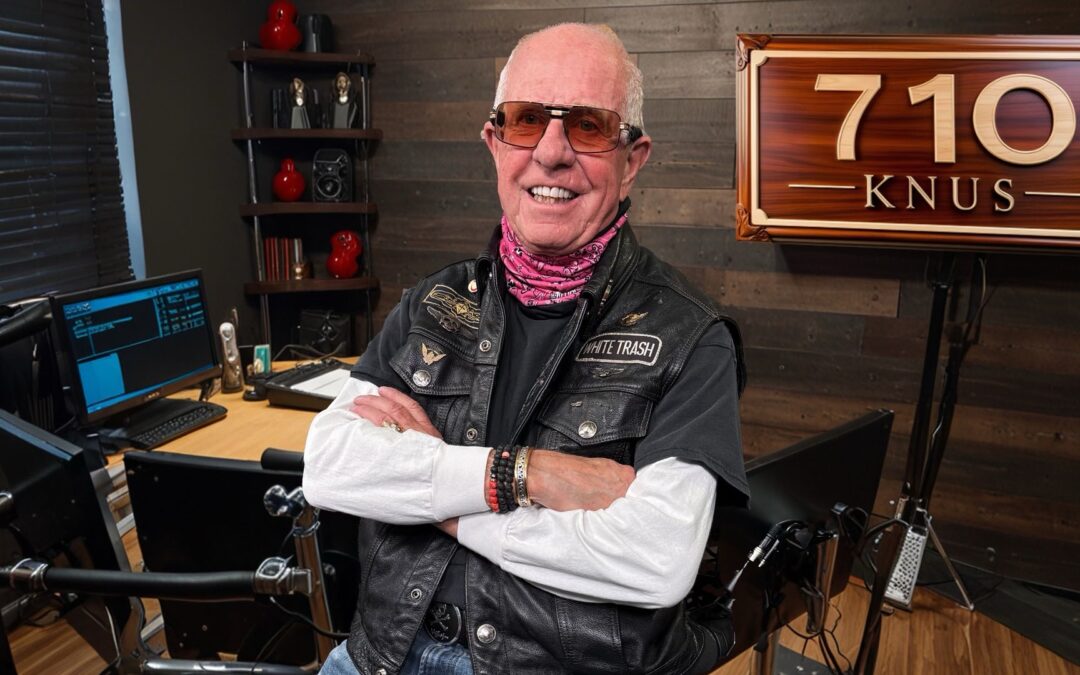
by Peter Boyles | Oct 19, 2026 | Blasting with Boyles
 Those were the words of old Blue Eyes, and they now are the words of 83-year-old Green Eyes.
I was a huge proponent of the COVID vaccine, telling my vast radio audience to get the shots. Now, these many years later, what does the evidence tell us?
First of all, begin with Dr. Fauci’s appearance before the House, looking much like Frank Costello at the Kefauver crime commission hearings. At least mob boss Costello told the senators more than Fauci when he said, “At least I paid my income taxes.” Fauci didn’t reveal it at the time, but we now know, thanks to his diaries, that even he suffered a blood clot after getting the vaccine.
So, what could go wrong? What about long-term damage? Major national academies’ reviews found evidence of a link between Pfizer and several claims, including heart attacks and other suspected conditions. And remember, they call their own balls and strikes. There seems to remain insufficient evidence to reach firm conclusions. But that doesn’t mean everything has been ruled out.
In the aftermath of me riding the needle three times, I had a mild stroke and then a brain bleed. And apparently, I’m not alone. The other important questions seem to be broken down between the different manufacturers of the COVID shots and their effects on heart, brain, and overall health. The honest answer is that different COVID vaccines did not have all the same risks. I read a 2024 review by the National Academy of Science, Engineering and Medicine. They confirmed some serious side effects and other suspected links, and found the evidence was insufficient for many remaining questions.
Effects on our hearts, heart rhythm procedures and abnormal heart findings.
That sounds a lot like me. Effects on the brain and nervous system. Ask my radio audience and the people who read this column if that hasn’t come shining through.
Permanent brain damage? The evidence is not yet there, but it doesn’t rule out neurological damage. And remember that every possible long-term symptom has not been explained.
When you read these studies—and I’m not educated enough to be the arbiter—they seem to have conclusions without having conclusions.
Heart attacks, blood clots, long-term illness, and fatigue. Some people reported ongoing health problems after COVID vaccinations, and researchers continue to study these cases.
I don’t know about you, but flu season has come again. And so, what’s my bottom line? The mystery risks differ by vaccine, age, sex, and medical circumstances. But I think I got knocked out of the box by three times going to see the health provider, and now you can simply tell me what worries you the most: getting COVID, or what the evidence really doesn’t actually show but a hell of a lot of people now feel?
Happy Thanksgiving.
by Ashe in America | Oct 19, 2026 | Feature Story Bottom Left
ASHE IN AMERICA
— OPINION
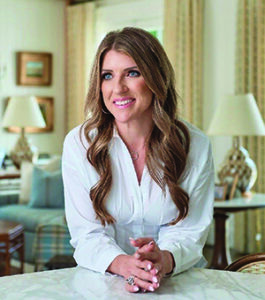
standwithallison.com
Governance is about decision rights.
“…the sovereign will of the citizens — freely expressed at the ballot box and formalized by the competent electoral authorities — constitutes the sole foundation of the legitimacy of public power.” — US State Department, Shield of the Americas.
In September, I received a phone call from an old friend asking me to chat with Allison Madrigal (standwithallison.com), independent candidate running for House District 38.
The pitch interested me.
It was post-partisan. It was solutions-oriented. It was refreshing.
While I believe elections are fake, I have long said that I believe they are our most important narrative battlefield for reclaiming American decision rights for the people. That’s why I still vote — why I believe it’s still an important vehicle for change in the greatest country in the history of earth.
So I decided to do the interview. The full discussion is on my substack (asheinameri ca.substack.com), and edited for length below.
***
How did you decide to get into this race?
“I ran an anti-trafficking organization, started it, and ran it for 11 years. And it was last July that the Lord spoke very clearly to me to get everything off my plate because he had something new for me. It took me about six months to bring in new leadership for Rescue America. I got a call one evening in March and the caller said, ‘Hey, I’d like you to pray about something.” … I was like, okay, Lord. If you want me to do this, you’re going to have to show me.
A week or two after that call, I remembered I was registered unaffiliated. When I moved here in 2021 for Rescue America, when I was registering to vote, I was going to check Republican, but the Holy Spirit said, ‘Stop, unaffiliated. It’s strategic.’ I didn’t even really remember that until I was considering running.”
It was too late to change your registration anyway… Would you have changed it to Republican if you could?
“The first week and a half, when I was planning to run but didn’t remember that I was unaffiliated, there was this yucky feeling nagging at me. And I felt, “Okay, this is not the Lord. This is bad. The minute that I remember, I was registered unaffiliated, that feeling went completely away. I asked the Lord, ‘What is that? And He responded, ‘Now you know that you’re not under a political spirit.’ And I literally felt it in my physical body. I later learned that 46.8% of HD38 are registered unaffiliated. So no, I would not have changed.”
The party labels definitely come with baggage in Colorado. Tell me about your platform.
“I started Rescue America in 2014. The Lord called me out of corporate America, opened my eyes to trafficking in America, and then gave me everything to start a rescue hotline. Rescue America is a 24×7 hotline that gets survivors, victims, out of their situation and places them in long-term safe homes…
Working with trafficking victims for the last 11 years, there’s so much I learned. You think you understand an issue until you start working with the victims. Getting to the cause and bringing in redemptive solutions in order to heal a trafficking victim is a journey. I believe they’re one of the hardest populations to heal — you’ve got to heal their mind, their body, their spirit. It has to be a trifecta, right?”
Those same core issues with trafficking branch into homelessness and mental health and addiction, don’t they?
“Every facet of society. Getting to the redemptive solutions on all these interrelated issues is the foundation of my platform because of my work with Rescue America… What I’ve learned in trafficking, and how it relates to the whole of society, refocuses solutions on how we give people a hand up and not a hand out.”
Right now it’s a system of systems with the NGOs at the center…
“Exactly. You have to look at the NGOs. Are they producing outputs or outcomes? Are they creating sustainable life change with what they do? There’s a lot of organizations and, yes, there are ones that are corrupt, but there’s also a lot of organizations doing good work. But even then, they’re not creating life change. So what are we actually funding?
The one thing running unaffiliated, my only commitment is to do what the Lord asked me to do. I don’t care if they kick me out. I’m not taking funding from any of them, and I’m not sold out to anybody… I’m sold out to the Lord.”
What does representation mean to you?
“I can promise I am going to tell you the truth. I’m going to be available to listen. I will be available to hear the people and listen to them and, where I can, take those issues to the legislature and fight for their outcomes. If I can promise you anything, this is what I can and will promise you: I will tell you the truth. I will tell you what’s going on in the legislature. I will not sugarcoat anything. I will say it as is.”
***
I am not in HD38, cannot vote for Ms. Madrigal. But I wish I could, and I wish we had more post-partisan, solutions-oriented candidates running for office throughout the state.
Governance is about decision rights. We should always be intentional in handing those out.
Read the full interview at asheinamerica.substack.com.
Ashe Epp is a local writer, host, and activist. Find all her work at linktree.com/asheinamerica.