Denver’s Hale neighborhood is an historic
community tucked between Colorado Boulevard and Holly Streets to the west and
east, respectively, and Colfax Ave. and 6th Ave. to the north and south. This
relatively quiet area is fairly unique in that the north/south grid is
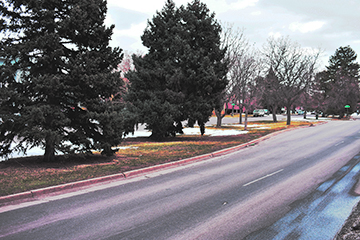
diagonally distinguished by a tree-lined, two-lane, median-separated stretch of
picturesque road called Hale Parkway.
Redesign: The Hale Redesign Project would rip up westbound lanes of the parkway and render them permanently unusable.
Gone But Not Forgotten
Development in the area began in the 1930s
and, as geography would have it, a creek flowed on a northwest/southeast angle
through marshland along the path where Hale Parkway now exists. The creek was
part of the Upper Montclair Basin runoff system, directing rainwater toward the
Platte River basin to the northwest. By the 1940s, the area was developed, and
the old riverbed was wiped away and soon-to-be forgotten by residents, but not
by topography. When heavy rainfall hits the area, the one-time natural waterway
can be quickly transformed into a saturated urban thoroughfare with flood
levels up to three feet high.
A Diagonal Asset
Today, the marshlands have been replaced by
mostly residential structures along with the significantly large Rose Medical
Center and University of Colorado Hospital campuses. Hale Parkway is a local
treasure, boasting a series of lush, park-like medians that are home to a total
of 80 large, mature trees and 40 smaller trees and shrubs. Hale Parkway is one
of just 35 designated parkways and boulevards across the Mile High City recognized
as such by the Denver City government. This stretch of road gives the community
a distinctively quaint feel, as its diagonal trajectory works as a cohesive,
common feature which unites the neighborhood.
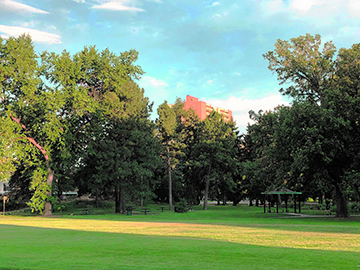
Neighborhood Amenities: Hale Parkway runs adjacent to neighborhood amenities, including Lindsley Park.
An Extreme Scheme
The redesign project proposed by the Urban
Drainage and Flood Control District (now the newly-branded Mile High Flood
District [MHFD]) holds drastic measures for the parkway. These initiatives
which would effectively diminish the purpose and function of the roadway and
the appeal of the area at large. The plan calls for the permanent removal of
the two north lanes carrying traffic west from 8th Avenue to Colorado Blvd. The
removal of features would also include the grassy park-like medians, all flora
and foliage therein as well as several dozen parking spaces (65 total) for area
residents. A series of large drainage pipes would replace the lanes, spaces and
medians while east/west traffic would be funneled to side-by-side opposing
lanes in place of the two existing eastbound lanes. Local property owners are
highly upset that the redesign would severely diminish real estate values.
Meanwhile, the explosive growth of the area has residents at large concerned
with an imminent traffic congestion problem. As the number of inhabitants is set
to increase, the redesign would decrease the area’s ability to effectively
accommodate all the new traffic.
Violation Of Internal Rules
Further, the proposed measures are in
blatant breach of the Denver Design Guidelines published by the City and County
of Denver in 2005. Page 14 of the guide pledges to “Respect and preserve the
historic or original design of the parkway or boulevard. Components of the
original design usually include the street cross section, tree lawn, median (if
appropriate), adjacent street pattern, building setback and private yard,
building siting, topography and plantings.” Also, a subsequent section claims
that the city will “Preserve the spaces and relationships that are part of the
original or historic parkway or boulevard construction including the continuous
open space created by the building setback.” Clearly, the MHFD is proposing to
infringe on the very rules set by its parent authority — the Denver City
Government.
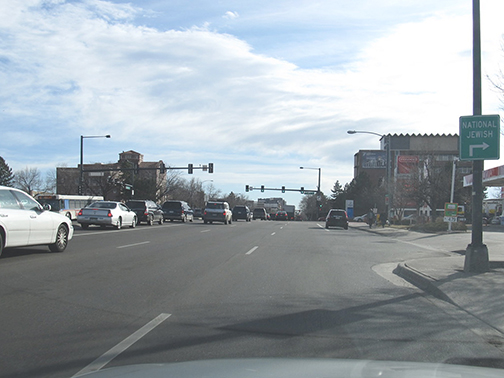
Colfax View: The view on Colfax Ave eastbound heading toward the Hale neighborhood.
Plausible Alternatives?
With the Cherry Creek waterway located just two miles to the south and flowing northwest to the Platte River, it would seem that returning an unassuming one mile stretch of road in Hale to its former watershed function is inconsequential. Some residents are imploring MHFD to consider alternative means of managing rainwater overflow in the area. Others are outraged, seeing the beauty-sacrificing redesign as a grossly lopsided and ultimately futile misappropriation of taxpayer funds. Aligning with this viewpoint is not difficult. Driving through Hale trying to visualize the proposed measures put into place is like imagining a jagged, diagonal tear through the cross stitchings of a gorgeous tapestry; unsightly, unnecessary, and utterly without purpose.
Paula Bovo: Glendale City Council member and Mayor Pro Tem from 2010 to 2016. Partner in prominent Glendale law firm Bovo Law.
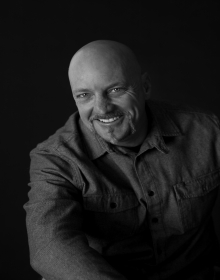
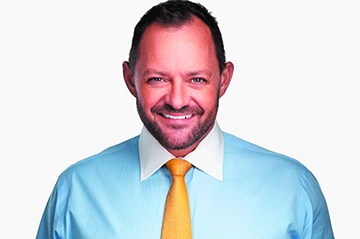
Todd Bovo: One of the top litigators in Glendale with Bovo Law.
Paula and Todd Bovo are one of Glendale’s
most prominent power couples. She was a council member and then Mayor Pro Tem
of the city from 2010 to 2016, with a publicly expressed aspiration to become
the governor of Colorado. He started one of the city’s most well known and
aggressive personal injury firms with offices in the penthouse of the Cherry
Creek Plaza at 650 South Cherry Street. They were married in 2009. Paula was
also an attorney and she became his legal partner in the Bovo Law firm. She
helped prepare cases for trial and he usually acted as lead counsel in court.
The couple were frequent guests at civic, social and charitable events in Glendale
and Denver.
Marriages, of course, can turn sour and the
circumstances can be greatly aggravated when the couple are also business
partners. For the Bovos it is now full out warfare in and out of court. She
publicly and in court pleadings alleges that he is a domestic violence
perpetrator against both her and the couples’ two children. He in turn
vigorously disputes those claims and asserts that she is a serial liar and
person who regularly betrays the trust of those around her.
Their allegations and counter allegations
have spilled over into public and professional arenas.
Court Documents
Public records show the Arapahoe County
Sheriff’s Department has responded to the Bovo home twice on domestic violence
calls. Both times officers left without arresting anyone, an unusual result in
these kinds of cases.
In a May 2017 incident Paula Bovo called
911 claiming her husband was destroying property inside their home. The report
indicates that she videotaped Todd “yelling and cussing” but adds “she stated
at no time did he threaten her or the kids and did not physically touch her… .”
Deputies left without making any arrests.
According to another Arapahoe County
Sheriff’s Report, Paula Bovo called 911 again in March 2019, saying, “She is
scared he (Todd) will hurt her.” Reporting officers say Paula told them Todd
said, “I’m going to kill you” and that he was “going to burn the house down.”
Officers say they talked with Todd on scene who denied making any such threats.
Officers noted the Bovos “both had conflicting stories” and that neither could
be confirmed. Responding officers wrote, “We could not substantiate that a
crime had occurred” and once again left without making any arrests.
Abuse allegations rose again in divorce
proceedings when Paula Bovo sought a restraining order against Todd Bovo. But
that was thrown out in a May 2019 decision by an Arapahoe County Judge who
ruled, “Based on the evidence and testimony presented to the court …. the court
hereby dissolves the temporary protection order as to all parties.” The judge
also cancelled a second hearing that had been set on the same allegations.
It is in those proceedings where the
accusations shift into Paula Bovo’s public and professional life. The Glendale
Cherry Creek Chronicle has obtained two subpoenas issued by Todd Bovo, one to a
prominent Denver attorney and the other to KCNC Investigative Reporter Brian
Maass for them to appear at the May restraining order hearing that was
subsequently dismissed by the Judge. In court filings, Paula claims the subpoenas
are Todd’s efforts to harass her. But he claims they go to the heart of her
credibility issues.
Alleged Assault On Boat
Boat At Cherry Creek Reservoir: Pictured is the boat owned by the Bovos which is at the center of the sexual assault allegations.
The attorney, who the Chronicle is not
naming, consulted with the Bovos’ law firm on a civil case in 2018. Todd says
in August of that year Paula told him she was meeting the attorney at the
couple’s boat docked at Cherry Creek Reservoir. She apparently bought several
bottles of wine for the rendezvous and the two of them cruised on Cherry Creek
Reservoir. Todd claims when she came home, she was extremely upset and crying
and claimed the attorney sexually assaulted her. Todd said she did not want to
call police but in later months frequently mentioned the alleged assault to
other people.
Mike Smith, a paralegal litigator who works
with both Paula and Todd Bovo at their law firm, said she had also told him the
attorney sexually assaulted her on the boat in the Cherry Creek Reservoir. “It
was a few days after she met (the attorney) at the dock at Cherry Creek State
Park and she was upset and finally expressed she had met (the attorney) there
and that things were okay for a moment but that he approached her and forced
himself on her, specifically sticking his tongue down her throat,” said Smith.
Smith continued and indicating that Paula told him she pushed the attorney away
adding that she appeared very upset as she told the story. “Emotionally you
could tell she was distraught, something was clearly bothering her, weighing
heavy on her,” said Smith.
Both Smith and Todd Bovo say Paula talked
about the alleged assault on other occasions and even told an investigative
reporter. KCNC’s Brian Maass interviewed Paula Bovo as a legal expert on an
unrelated story that ran January 31, 2019. Todd claimed Paula told him that
after the official interview ended, she told Maass the attorney sexually
assaulted her. Smith said she told him the same thing. “After the Brian Maass
interview, she said she had discussed it with Brian Maass and he now knew the
situation,” said Smith. “Just that she had told him the same story as far as
what happened at the dock, that Brian Maass now knew the story.”
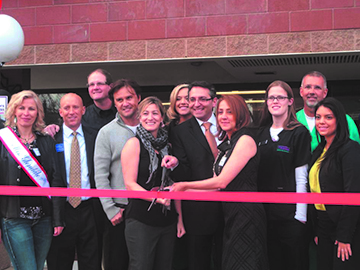
Ceremony: Former Mayor Pro Tem Paula Bovo cuts the ribbon at Doctors Express on Colorado Blvd. (now called AFC Urgent Care) when it first opened.
Paula denies ever making such a claim. She
said, “(The attorney) never sexually assaulted me and I never said that to
anyone.” She adds, “And if anyone says I did they are not telling the truth.”
When the Glendale Cherry Creek Chronicle
contacted reporter Maass he said, “I’m not going to be able to help you out on
that.”
But Todd Bovo and Smith stand by their
stories, adamant that Paula made the sexual assault allegations on numerous
occasions.
Todd Bovo says it’s not right that someone
with Paula’s stature in the community can keep making what he calls false
allegations with potentially devastating consequences to him and others.
Show Cause Hearing
Paula Bovo’s professional credibility has
been questioned before. In a July 2019 Federal Court order by Judge William
Martinez regarding a civil case Paula was involved in, the judge took the
unusual step of threatening to sanction her. According to the court document,
Judge Martinez identified at least four instances in which Bovo “willfully
misrepresented the Complaint, either by making false assertions about the
contents of specific paragraphs or by asserting, without citation, that certain
things had already been alleged.” The Judge ordered Paula to “show cause why
she should not be sanctioned” for misrepresenting what was in the Complaint.
In September 2019 the Judge decided not to
sanction Paula, writing, “Ms. Bovo accepts responsibility for her actions and
displays what the Court finds to be genuine and appropriate contrition.” Ms.
Bovo withdrew from the case on February 17, 2020, along with Mr. Bovo.
The FBI
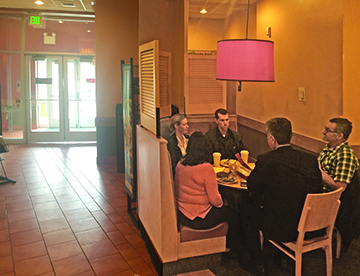
Collusion: A picture taken October 6, 2015, at Panera Bread on Colorado Boulevard north of Yale. At the back of the booth, left to right, are FBI Special Agent Kimberly Milka, and FBI Special Agent Jonathan Grusing; at the front of the booth, left to right, are the owners of Authentic Persian & Oriental Rugs, Nasrin Kholghy, Mohammad Ali Kheirkhahi, and Saeed Kholghy.
Todd Bovo asserts not only was Paula a
confidential source for negative stories about Glendale by Brian Maass while
she was the Mayor Pro Tem she also was a source for the FBI in connection with
an apparent FBI investigation involving the City of Glendale in early 2016.
An undercover FBI agent using the fake name
of “Charles Johnson” showed up in Glendale. He was posing as a private
investigator and knocking on the doors of citizens who made public comments
about a proposed development at Colorado Boulevard and Virginia. The residents,
who felt threatened and harassed reported “Johnson” to Glendale Police. Johnson
was carrying multiple motor vehicle licenses from different states. The police
arrested Johnson for failure to have a required private investigator license
but the charges were dropped when the FBI intervened demanding all charges be
dismissed. Johnson was apparently a top undercover agent who was outed during
the Bundy trial in Nevada where he claimed to be a documentary film producer
obtaining incriminating statements from the Bundy family members. The case
against Cliven Bundy was thrown out by Federal District Court Judge Gloria
Navarro for “flagrant prosecutorial misconduct.”
It was never clear what the FBI was
investigating in Glendale. However, Jonathan Grusing, a top special agent for
the FBI, was photographed with the principals of the Authentic Persian and
Oriental Rug Company who were demanding and suing the city to be able to build
a massive apartment building on the land on Colorado Boulevard and Virginia
Avenue. Todd Bovo says unbeknownst to other City Council members, Paula was
regularly meeting with the FBI during this time. He says he does not know what
she said but notes Paula was eventually forced to hire a criminal defense
attorney to represent her on the matter. According to a Fee Agreement dated
February of 2016 the attorney was hired to “provide legal representation of
Paula Bovo… in the pending investigation by the state and federal authorities
in the State of Colorado… pertaining to the investigation and any pending
charges related to Glendale municipal government activities.”
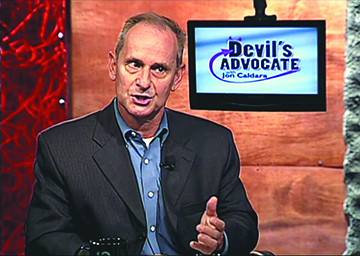
KCNC Investigative Reporter Brian Maass: Two people claim Paula Bovo says she told Maass about the alleged sexual assault on the boat at Cherry Creek Reservoir.
Whatever the FBI was looking into, the
investigation seems to have ended and the only person ever arrested was the
undercover FBI agent Johnson.
Reaction
Jeff Allen, COO of the Greater Glendale
Chamber of Commerce, who was on the City Council with Ms. Bovo, stated: “If the
former Mayor Pro Tem Bovo was acting as a source for Brian Maass for his
negative and unfair stories about Glendale and while secretly meeting with the
FBI without informing the City Attorney or her fellow council members, she
utterly betrayed our trust and I am, for one, ashamed of her.”
The Chronicle reached out to Ms. Bovo for
her response to the allegations and any other information she wished to
provide. In response she sent the following statement: “As a victim of domestic
violence and a mother of young children, I find it reprehensible that my
ex-husband and the Cherry Creek Chronicle have chosen to inflict more harm upon
me and my children by sharing my private life and story for the benefit of
revenge; due to ongoing lawsuits I cannot comment further.”
Todd Bovo noted: “It breaks my heart to see
the mother of my children and soon to be ex-wife continue to make allegations
that couldn’t be further from the truth. Paula’s claims are insulting and
offensive to the true victims of domestic violence. “
The next court date on the dissolution of the marriage of the Bovos is a four-day hearing for permanent orders scheduled to start June 23, 2020.