
by Editorial Board | Sep 29, 2025 | General Featured
Guest Editorial

Bianka Emerson
by Bianka Emerson
Bianka Emerson is President of Colorado Black Women for Political Action and is a gubernatorial appointee to the Environmental Justice Advisory Board for the Colorado Department of Public Health and Environment.
In America, turning on the kitchen faucet for a safe glass of water should be a given, not a gamble. Yet for far too many communities already burdened by environmental hazards, that simple act comes with fear and uncertainty
The tragedy of Flint, Michigan, is never far from mind, even here in Colorado. Every time I fill a glass, I want to trust that the water is safe. I want to trust that the taxes I pay, and the water bills I shoulder, are funding a system built to protect my health, not quietly threaten it. And I want my family, friends, neighbors, and people I fight for every day to share same trust.
But too many of us can’t.
One reason is simple: we don’t even know how many lead pipes still exist in our drinking water system. That uncertainty is the shadow of Flint, a reminder that what we don’t know can harm us.
And lead isn’t the only danger.
Polyvinyl chloride, or PVC, is one of the materials commonly used for pipes in drinking water systems today. PVC is promoted by the industry as a quick fix, but that convenience comes at the expense of long-term public health. Especially because there is an ugly truth that gets buried in the sales pitch by the plastics industry: PVC contains toxic chemicals that can leach into our drinking water. And as with lead, the communities most likely to bear the risks are the same ones already overburdened by environmental hazards.
This is a clear case of environmental inequity, with the heaviest burdens falling on communities already overexposed to pollution and under-protected by infrastructure.
PVC is made from vinyl chloride, a known human carcinogen. Its production releases dioxins and other dangerous byproducts into the air, often in or near neighborhoods with limited resources and political influence. From manufacturing to disposal, PVC leaves a toxic footprint. And when used in drinking water systems, the danger doesn’t stop at the factory gates as chemical additives can migrate into the water itself, especially as the pipes age, degrade, or are exposed to high temperatures.
The push for PVC fits right into this inequitable pattern. When city councils and utility boards opt for PVC, they’re making long-term decisions. And when those pipes begin to degrade, as all plastic inevitably does, it won’t be the contractors or suppliers who suffer the consequences: it will be us who are drinking water laced with endocrine-disrupting chemicals; it will be elders with compromised immune systems; and it will be pregnant women, children just starting their lives, and babies, all of whom are uniquely vulnerable.
What’s worse, PVC production itself is an environmental justice disaster. Look at Cancer Alley in Louisiana, an 85-mile stretch of the Mississippi River lined with more than 150 petrochemical plants. Many of those plants, including PVC manufacturers, operate in communities where residents face some of the nation’s highest cancer rates due to chronic industrial pollution. Residents there suffer some of the highest cancer rates in the nation. The same corporations making the PVC pipes pitched as “safe” for our water are also polluting the air these communities breathe.
Drinking water utilities in Colorado should adopt a precautionary principle: if a material poses a plausible risk to human health, it doesn’t belong in our drinking water systems. Safer alternatives exist, and they don’t come with the same long-term health liabilities.
Second, communities must have a seat at the table in infrastructure decisions. Too often, these choices are made behind closed doors, with little public notice or opportunity for input. Residents deserve transparency about the materials being used in our water systems and the health risks they carry.
Finally, we need national standards that address the environmental justice dimensions of water infrastructure. The U.S. Environmental Protection Agency should not only regulate chemicals leaching from drinking water pipes but also consider the life-cycle pollution of materials like PVC, especially in vulnerable communities. The EPA is already investigating the human health risks associated with vinyl chloride, which tells us just how dangerous that chemical is.
For generations, the health of marginalized communities has been the price of cheap infrastructure. PVC is just the latest chapter in that story. We have the knowledge, the resources, and the alternatives to write a different ending, and it’s one where safe water is a universal right, not a privilege reserved for some.
The pipes we choose today will carry water into our children’s bodies for generations. Let’s make sure those pipes carry life, not poison.
by Jeff Shultz | Sep 22, 2025 | Travel
by Jeff Shultz
The South Metro Fire and Rescue will seek voter approval for a 3 mill property tax increase in hopes the increase will help the emergency agency overcome a huge anticipated budget shortfall in 2026 and beyond.
The proposed ballot question will appear on the November 4 general election ballot for voters in Arapahoe, Douglas, and Jefferson counties.
Currently the district has a property tax rate of 9.25 mills but changes in the law has created a potential budget shortfall for the fire and rescue district.
The SMFR Board of Directors discovered the budget shortfall when the board met last year to plan its 2025 budget.
“That timing followed the passage of HB 24B-1001 in the special session, which significantly reduced property tax revenues for fire protection districts like ours,” said Jim Albee, SMFR Board Chairman.
“As we reviewed our long-term financial projections, it became clear that without action, South Metro would face a $16 million shortfall by 2026 and a projected $270 million gap over the next decade.”
In addition to the budget shortfall created by HB 24B-100, SMFR would need an extra $34 million annually to maintain its level of service to communities and retain staff.
Albee has served on the SMFR Board for five years and has been the board chairman for the same amount of time.
“My commitment has been driven by a deep belief in the importance of the life-saving services we provide and a responsibility to ensure we remain financially sustainable for the future,” he said.
According to Albee, the property tax increase would provide the needed $50 million to give SMFR the needed funds to maintain its current levels of service while also giving SMFR additional funds to operate from.
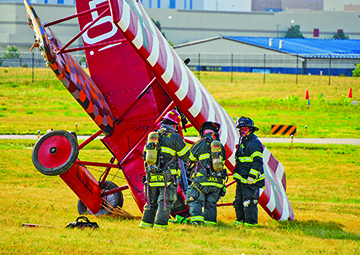
Plane Crash: On Friday, August 22, 2025, South Metro Fire Rescue and the Arapahoe County Sheriff’s Office responded to a single-engine biplane crash at Centennial Airport. The pilot safely evacuated the plane.
“While a portion would cover necessary administrative functions that support public safety, the majority would go toward critical service delivery, equipment, apparatus, maintenance, and facilities to ensure we can meet our community’s expectations.”
Albee said the district’s staffing and equipment costs are the district’s two highest budget items.
“Over 80 percent of our budget is tied to personnel,” Albee said, noting that if additional funding is not secured staff reductions would be “unavoidable.”
“Reductions could impact personnel, which would directly affect response times and service delivery, and programs.”
Equipment costs and maintenance would have to be prioritized, he added
“Over the past few years, we’ve seen cost increases ranging from 40 percent to nearly 80 percent on critical gear and apparatus.”
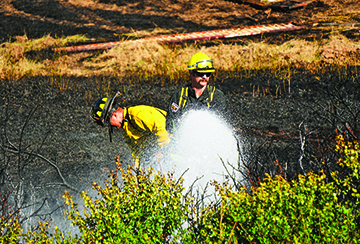
Grass Fire: On August 12, 2025, South Metro Fire Rescue and Douglas County Sheriff’s Deputies responded to a vegetation fire near 11032 Cottontail Lane in unincorporated Douglas County.
The rising costs for equipment is one of the biggest reasons for SMFR seeking additional funding. Some equipment cost increases include:
- The cost of a new fire engine has risen from approximately $725,000 in 2019 to $1.3 million today. Our fire engines, medic units, and other apparatus are replaced according to our Fleet Capital Replacement Schedule that looks at useful service life and the age of our fleet to determine the appropriate time for replacement.
- A 100-foot hose has increased from about $660 to nearly $930.
- Bunker gear, which includes a helmet, jacket, protective pants, boots, and gloves, is essential to protect our firefighters from carcinogens encountered during emergency responses.
“Each firefighter is required to have two full sets of bunker gear, and these must be replaced every five years for safety compliance,” Albee noted.
“The cost of one set has risen from $3,660 six years ago to over $5,120 today — a 40 percent increase.”
“Ensuring our teams have the proper protective equipment, reliable apparatus, and advanced medical tools is fundamental to maintaining safety for both our personnel and the public.”
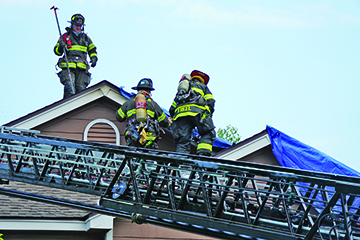
House Fire: South Metro Fire Rescue and Douglas County Sheriff’s Deputies recently responded to a single-family residential house fire on Eagle Valley Way in Highlands Ranch. Engine 20 arrived to find smoke coming from the roof and quickly pulled a hose line to extinguish the fire.
As part of their long-term planning, the SMFR board is identifying areas of growing populations within the district for possible new stations. “We anticipate adding two new stations over the next five to 10 years to help maintain appropriate response times and meet community needs,” Albee said.
Meanwhile, Albee says there are no expansion plans by the district. “Our immediate priority with any new revenue is to stabilize and sustain current services for the communities we serve today.
“While future expansion could always be considered, it is not in our current plans and would only be done with careful planning, ensuring we can maintain our high standards of service without compromising financial sustainability.”
Albee and the board see the property tax increase as an investment in the three counties (Arapahoe, Douglas, and Jefferson) the district serves.
Currently, the fire district’s ISO rating, which is used in determining property insurance premiums, is at its best level and passage of the property tax increase will ensure the rating to stay where it is at now.
“Our current ISO rating is Class 1, the highest possible, which reflects the strength of our operations. “Additional funding will provide the best opportunity to maintain this rating through continued investment in staffing, training, equipment, and facilities.
“Maintaining a strong ISO rating helps keep insurance costs lower for residents and businesses and reinforces our commitment to excellence.”
If the ballot measure fails this November, then the board will have some difficult decisions to face.
“Those difficult decisions could include slower response times due to fewer firefighters on crews, potential delays in station openings, and closure of some existing stations.”
Further cost cutting measures could include a reduction in specialty services such as wildfire, water rescue, hazmat, and technical rescue
photos courtesy of SMFR
by Jeff Shultz | Sep 22, 2025 | General Featured
by Jeff Shultz
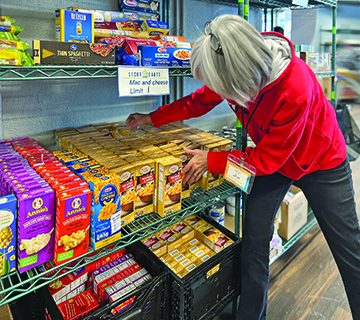
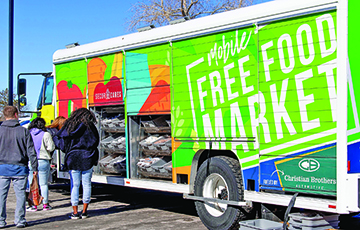
A volunteer at SECORCares works at restocking shelves at the food bank’s Free Food Market, located in Parker. The market serves approximately 450 families per week.
Depending on what side of the aisle you sit on, the bill known as “One Big Beautiful Bill” is either good for Colorado or will have a negative impact on the state. According to the House Ways and Means Office the bill will help families across the nation, including Colorado.
The typical family will get up to $10,900 in additional take-home pay and workers will see increased wages up to $7,200. According to the House and Ways Means Office, households earning less than $100,000 will benefit from a potential 12 percent tax cut.
However, rural Colorado families may not see all of the benefits of The BBB.
According to The Bell Policy Center, a non-profit group who monitors economic mobility in Colorado, the bill will have a devastating impact on Colorado’s rural communities.
According to BPC, rural areas in Colorado, especially those in southeast Colorado, are some of the poorest in Colorado.
“It’s important to recognize that income is not equally distributed across Colorado,” BPC said.
BPC reports that urban, suburban, and mountain resort communities have high concentrations of upper income families. To pay for the tax cuts in the BBB, according to Bell, the bill makes huge cuts to long-standing social safety net programs such as Medicaid and Supplemental Nutrition Assistance Program (SNAP).
SNAP is an important revenue source for one Douglas County area food bank.
SECORCares is a food bank service that reaches approximately 3,000 families per week through its three free food programs in Arapahoe, Douglas, and Elbert counties.
“At our brick-and-mortar Free Food Market, we currently serve about 450 families each week,” according to Brie Dilley, Executive Director of SECORCares.
“Beyond the Market, we extend our reach through two additional programs: our Mobile Market, which brings food directly into neighborhoods, and Food for Thought, our backpack program providing school-aged children with nutritious food to take home for the weekend,” she said.
SECOR’s Mobile Market delivers food directly into neighborhoods. SECORCares is a food bank service that reaches approximately 3,000 families per week through its three free food programs in Arapahoe, Douglas, and Elbert counties.
The backpack program is a partnership with 35 schools in the three county region SECOR serves.
Dilley added the proposed changes to programs like SNAP may cause some families to push the panic button. “The greatest impact of these changes is felt by the people we serve. Reductions in social safety nets often push families from ‘barely scraping by’ into full-blown crisis.”
“Unfortunately, reducing and/or complicating SNAP benefits does not diminish food insecurity, it shifts the burden from the government to the nonprofit sector,” Dilley added.
Proposed changes to such programs are coming at a bad time for SECOR, as the demand for SECOR’s services has increased over the past three years.
Dilley said between 2022 and 2023 SECOR experienced a 200 percent increase in helping area families.
“We attribute this dramatic rise to the trifecta of inflation and economic instability, the Denver-area migrant crisis, and the end of COVID-19 emergency allotments,” she said
Dilley added that the demand has remained so high it has forced SECOR to place a cap on its services.
“While it’s difficult to project exactly how many more families we would serve if we expanded appointment slots, our best estimate is an increase to around 600 families each week in our Free Food Market — about 150 more than we currently serve,” she said.
Sadly, SECOR is seeing a troubling trend, Dilley added.
“We are also seeing a growing number of returning guests — families who had once relied on us, found stability for a few years, and are now back.”
Dilley said SECOR welcomes them back with “open arms” but their stories are heartbreaking.
“Many believed they had reached steady ground, only to find that stability wasn’t quite enough to withstand today’s economic challenges,” she said.
SECOR is primarily dependent on private donors and local grocers through SECOR’s grocery rescue program.
According to Dilley, both sources provided more than 1.2 million pounds of food for guests last year. “Sadly, we are now seeing a decline in both of these critical areas. Grocery rescue donations are down significantly, and we’re hearing from more and more donors who — because of the same economic pressures our guests face — must scale back their giving,” Dilley said.
“One of our favorite stories to share has always been about former guests becoming donors. Unfortunately, in this season, we are also seeing the reverse.”
For more information on SECOR visit www.secorcares.com.
Photos courtesy of SECORCares
by Amber Wyatt | Sep 22, 2025 | Glendale City News
by Amber Wyatt
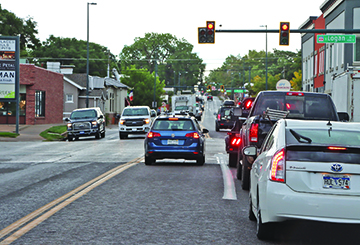
Intersection at Alameda and Franklin westbound where two lanes expand into four lanes.
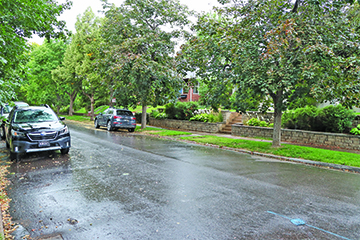
Neighborhoods west of Alameda between Corona and Downing.
Residents of the Washington Park area are voicing strong opposition to a city plan that would reduce traffic lanes on Alameda Avenue. The proposal, spearheaded by Denver’s Department of Transportation and Infrastructure (DOTI), aims to reconfigure the busy corridor between Downing Street and Franklin Street. But neighbors argue the changes will worsen congestion, harm local businesses, and push traffic deeper into residential streets.
At the heart of the plan is a major reconfiguration of Alameda’s lanes. Currently, the road has two lanes in each direction. DOTI intends to cut that down to a single lane each way, adding dedicated left-turn lanes in certain stretches and installing medians with bollards to restrict some left turns altogether.
“They’re going to take out two traffic lanes,” explained Jill, a member of the grassroots coalition Act for Alameda. “So it will be one lane, east and west. And then with the space they gain in some places, they’re going to put left turn lanes.”
The city’s rationale is safety. By slowing traffic and streamlining turn lanes, DOTI believes the project will reduce accidents. But residents say the plan ignores how much traffic Alameda carries — especially as a vital east-west connector to and from I-25.
“This is a super heavy section,” Jill said. “When they’re taking traffic lanes out, it is going to be a lot busier. So you’re going to have a lot more cars squeezed into one lane. We’re basically worried that congestion will get significantly worse.”
The Act for Alameda group formed in May after learning of the project, which was initially scheduled to begin in June but has since been delayed to September. The group’s website includes a letter for residents to sign, directed to the mayor, outlining their concerns.
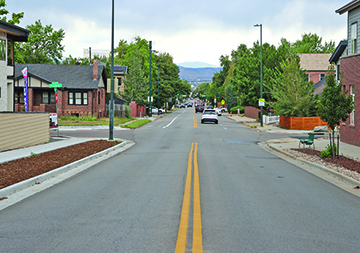
Preexisting turn lanes on Alameda between Logan and Franklin.
One major worry is neighborhood traffic diversion. If Alameda becomes choked with cars, drivers may opt for narrower residential streets. “We’re very worried about the number of cars that’ll be diverting through the neighborhoods,” Jill said. “Maybe Alameda itself gets slightly safer, but you’re shifting the safety problem into these narrow streets where you’ve got a lot of dogs and kids.”
Safety for emergency responders is another concern. “There’s a fire station right on the northeast corner of Wash Park,” Jill noted. “We’re worried that if Alameda just becomes gridlock during peak times, it also makes those emergency response times a lot slower.”
The group isn’t opposed to all aspects of the plan. In fact, they welcome certain safety improvements. “We are all for better school zone markings. They want to lower the speed limit — we’re fine with that. They want to put in a flashing crosswalk. All of those things directly point to making pedestrians safer,” Jill said. “It’s really the removal of the lanes, reducing road capacity, that just does not compute for us.”
Adding to frustrations, residents point out that the stretch of Alameda west of Broadway is already under heavy construction, with lane reductions and bike lanes being installed. Business owners in both areas worry that prolonged projects will drive customers away.
Jill suggested that if DOTI wants to spend its bond dollars, it should focus further west, where accident rates are higher. “This section of Alameda is considered part of the high injury network, but it is in the lower tier,” she said. “The higher risk, less safe areas are further west. We would love to see them do stuff there.”
Complicating matters is Denver’s rapid growth. A massive residential project is already underway on the site of the old Bed Bath & Beyond at Cherry Creek Mall, with plans for roughly a thousand apartments. “It’s not like there are signs there’s going to be fewer people needing Alameda,” Jill said. “It’s going to be more drivers in five years, not less.”
For long-time residents like Jill, who has lived in Wash Park for nearly 20 years, the plan feels like déjà vu. She recalled that the city tried a similar lane reduction about 15 years ago, only to quickly reverse course. “They have tried to make changes in this area before,” she said, “but it’s essentially been the way it is now.”
With construction looming, Act for Alameda continues to push for dialogue. “We have not heard directly from DOTI,” Jill said. “The only indication we have that they’re hearing us is that they’ve already delayed the project once.”
For Wash Park neighbors, the fight is far from over. As Jill put it, “We just think that it’s too significant of a constriction of the road to actually make things safer. They’re going to spend all this money, make all these changes, and just create new safety issues.”

by Editorial Board | Sep 19, 2025 | Editorials
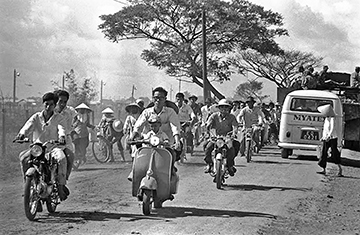
The Life in Saigon in the 1960s, by François Sully
Seldom, if ever, has Denver’s progressive Mayor and the majority of the City Council annunciated that the solution to a problem in the city is to let the “free market decide.” But now, all of the sudden, they have advocated that the solution to parking woes in Denver is henceforth to let the free market decide. For future developments or redevelopments there will be no city mandated parking minimums. Developers will be the ones to decide what, if any, parking is necessary or advisable for their projects.
What has caused this sudden change of philosophical outlook? The answer is obvious. The powers to be believe that many preternaturally greedy and short-sighted Denver developers will elect to provide the least amount of parking possible hoping to cannibalize off neighboring businesses or on-street parking. That will make automobile use in the city even more problematic.
But why do Denver’s planners and political class dislike cars? They believe, inter alia, automobiles are a major source of carbon dioxide contributing to climate change which will eventually destroy the planet. They also believe that automobile-oriented societies adversely affect the poor who can’t afford a car or drive cars that necessarily reflect their socio-economic status.
Cars also facilitate urban sprawl. Progressives correctly note the densely packed areas tend to be far more likely to lean left and favor increased governmental solutions to societal problems. Cars also provide a certain degree of personal freedom for people to travel where and when they wish. Individual freedom, however, is not a value prized by progressives.
An advantage to Denver’s approach to parking is that the city is looking to let an ever-increasing number of city employees go. Traffic engineers whose job it is to make car traffic flow more easily are now expendable as the city wants to make traffic more congested. As hard as that is to believe in some respects it is obviously exactly what is being planned. The number of traffic lanes on major thoroughfares in the city such as Colfax and Broadway are being reduced. On neighborhood streets, bollards and striping are intended to be “traffic calming devices” making traffic flow more difficult.
In turn dedicated bicycle lanes are expanding across the city. It appears the vision for urban transportation are buses, bicycles, and walking. For those old enough to remember, that was the transportation mode for Saigon, Vietnam, circa 1965.
Do most people want to live in or visit a city whose transportation plan reflects that of 1965 Saigon? Tax revenues for Denver have been steadily dropping but the city does not appear to care. The city depends on Coloradans coming to shop and recreate. By making the city less friendly for cars it makes it less likely people will come visit.
City planners indicate they would like to see Denver be a place where the concept of a “15-minute city” becomes a reality. In such a place daily necessities are all accessible by a 15-minute walk or bike ride from home. The peasants in Germany and the serfs in Russia in the 12th century lived in 15-minute communities. American coal miners were forced to live in company towns in the late 19th century.
Throughout history so-called utopian communities turned out to be lousy places to live. Denver’s city planners may be doing the same to Denver in their quest to make it a “15-minute city.” Only time will tell.
— Editorial Board
by Valley Gadfly | Aug 22, 2025 | General Featured
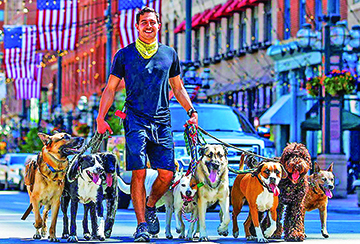
Denver Ranked The Fourth Most Popular For Dogs; Wash Park’s Furry Scurry Is Nation’s Largest Dog Walk
by Glen Richardson

Wading Woopie: Dogs love to run and play at off-leash dog parks, especially those such as Cherry Creek State Park that involves water. Photo: Cris Dornbusch
Dogtown Denver: The nation’s fourth most popular city for dogs with a dog population of 158,000, there’s one dog for every four people.
Denverites really love dogs, and few leave Fido behind when they’re going out on the town. It’s not what the “D” in Denver stands for, but it might as well be. The nation’s 2025 fourth most popular city for dogs, canines are great buddies for the Mile High City’s active lifestyle.
With an affinity for big dogs, Labrador Retrievers are Denver’s most popular breed. Other favorites include German Shepherds, Golden Retrievers, Bulldogs, and Rottweilers. Denver’s total dog population is a whopping 158,000. Denver’s current people population is around 711,400, that’s at least one dog for every four people
Canines are celebrated here as loyal companions. Many local owners believe that dogs are a catalyst for a healthier, happier Denver. Besides, most pups, mutts, and pooches are incredibly cute. Moreover, it’s not uncommon for shoppers to be greeted at the door of retail stores by an excited dog. The city, of course, does have dog issues ranging from crowded animal shelters to attacks by off-leash dogs.
Holidays With Dogs
The holidays are even more special here because four-legged friends get to join in the fun. Many seasonal events and holiday light displays welcome dogs, making it easy to include them in your favorite traditions. From glowing gardens to festive parades, the city lights up with opportunities to celebrate together. Whether you’re exploring a walk-through display or strolling through a holiday market, you dog can be right at your side.
While not every night is open to dogs, The Denver Zoo’s annual Zoo Lights hosts special nights for pups and their parents. Those evenings include access to the dazzling displays, photo-ops, and festive treats for both owners and their dogs. Keep an eye on the zoo’s event calendar to get tickets, since these nights tend to sell out fact.
The annual Winter Wonderland in Cherry Creek North offers a festive atmosphere with music, lights, and dog-friendly outdoor spaces. The area is decorated with glowing trees and art installations that make a great backdrop for holiday photos with your dog. You’ll enjoy the crisp winter air with your dog by your side.
Many of Denver’s holid

Halycon Hound: Dogs and their owners are given first-class treatment, and a host of amenities at the Halycon Hotel in Cherry Creek North.
ay markets and pop-up events are dog-friendly, especially those held outdoors. The Christkindl Market at Civic Center Park allows leashed dogs and offers a lively European-style holiday experience. Your pup can enjoy the sights and smells, while you browse artisan gifts, try seasonal treats, and enjoy live music. Markets are usually busiest in the evenings and on weekends, so plan accordingly if your dog prefers a quieter crowd. It’s wise to bring along water, treats, and waste bags.
Dog Friendly Places

Holiday Time: During the holidays dog owners are encouraged to give the gift of time and attentiveness to their dog(s).
The city has a selection of places where your best friend can go with you. Denver’s home to numerous locally crafted beers and most of the breweries have dog-friendly patios. Pizzerias, coffee shops, and sites serving some of Denver’s best hot dogs and burgers also welcome dogs, sometimes with special treats.
Shoppers are encouraged to explore stores and have a good time at many events and retail stores in Glendale and Cherry Creek. Dogs, for example, are invited to bring their owners along to Denver’s doggy social event of the year, Pets on the Plaza in Cherry Creek North. The event is a fundraiser for the Denver Dumb Friends League.
Bird Dog, a dog-friendly rooftop happy hour is held on the last Wednesday of each month at the Halcyon Hotel in Cherry Creek. Neighboring Glendale has five dog-friendly hotels. PetSmart’s Glendale location offers dog training. Classes can help your young pup or older dog learn to behave at home or on the go.
Dogs Versus Kids
How many of your friends have dogs versus kids?
Across the metro area, the number of “dog parents” is steadily climbing. Approximately 50% of Mile High’s residents own one or more dogs versus only 20% of metro homes with children under the age of 18.
In Glendale-Cherry Creek neighborhoods and across metro Denver, there are more people living with pups than human children. Simply stated, more and more people are choosing to raise pups instead of kids.
Furry Scurry
Furry Scurry in Wash Park is the nation’s single largest dog walk. The event raises money to help the Dumb Friends League care for 20,000 homeless dogs and other pets.
Held in May this year, dog lovers and

Shopping Spree Sidekick: Dogs are pampered in Cherry Creek, and many stores offer bowls of water or delectable treats. There are 11 dog-friendly shopping areas in Denver.
their four-legged friends enjoy a two-mile walk around beautiful Wash Park.
Dog demonstrations, contests, refreshments, plus food trucks attract dog owners to support Dumb Friends League’s mission of ending pet homelessness and animal suffering.
Dog Shows
Every year the Colorado Kennel Club — the club meets monthly on the first Tuesday of the month at Veterinary Specialty & Emergency Hospital, 7:30 p.m. — hosts one of the largest conformation shows in the country. The show offers both agility and obedience performance trials, as well as barn hunt and dock diving.
Another premier dog event is Denver Dog Days held in September or October at Sloan’s Lake Park. MaxFund animal shelter is the 2025 beneficiary. It’s a fun dog show with a live DJ plus puppies available to adopt. The mid-season challenge for dog athletes features a 5K and 10K event, plus a half mile marathon. Courses wind northeast along the scenic Big Dry Creek Trail.
A new Dog Days of Summer was launched this year on Larimer Square featuring live music, splash pads, adorable dog adoptions, plus free goodies for dogs. Whether you’re a proud dog parent or just love being around happy dogs, it’s another way to spend a summer day full of smiles, splashes, and good vibes.