
by Mark Smiley | Aug 31, 2015 | General Featured
by Brent New
Writer for and on behalf of the City of Glendale
This fall the reigning champions of the Women’s Premier League will play inside the multi-million-dollar, state-of-the-art Infinity Park stadium. Looking to defend the title, the Glendale Raptors Women will play all four of their home games inside the stadium, on soft, luscious grass. Home games against the San Diego Surfers (September 12), the Oregon Rugby Sports Union (October 10), Berkeley All Blues (October 24) and Beantown RFC (November 7) will begin at 3 p.m, and will include full stadium production and will be webcast on the RugbyTown USA website.
“The team is very excited to play in the stadium,” said Taryn Brennan, the team’s co-captain. “We always enjoy having the opportunity to use the facilities at Glendale. It gives us a chance to get the community excited about women’s rugby and fill seats in the stadium.”
Where the Raptors play, however, should be only part of their increased popularity this fall — winning should be a reason too.
If you haven’t been tuned in, the Raptors’ WPL team haven’t lost a match in more than 10 months, a streak that could be extended this fall.
“I don’t know how much we focus on it, but it has been a good ride,” Rachel Ryan said. “We are proud of what we’ve accomplished but not satisfied.”
When Ryan, Brennan and their teammates look back on this accomplishment, a win streak that started with a WPL championship, and continued through an undefeated developmental season in the spring, it’s impossible to forget how it started: A controversial 13-7 semifinals loss to the Atlanta Harlequins.
A defeat that would never hold up.
In reality, the Raptors didn’t play well enough to win that day, yet the Harlequins were forced to forfeit for using an ineligible player and the Raptors moved on anyway.
Then-coach Michael Fealey said he didn’t know how to feel about it at the time.
“It feels strange,” he said.
Either way, it had the Raptors, perhaps the biggest beneficiaries in recent WPL history, moving on and winning the championship over the Twin Cities Amazons a day later.
There, of course, is still controversy surrounding it to this day.
“It’s something that fuels us. We didn’t choose for it to happen like that but we want to prove ourselves,” Ryan said.
Years from now, when looking back on the loss that never was, some of the critics will fade and some will not.
What’s undeniable, though, is that the second chance also served as the springboard moment to maybe the best year in Glendale women’s rugby history.
“Some people said we didn’t deserve it. It was frustrating. There were people hiding behind computers, telling us we didn’t deserve it,” Raptors veteran Jeanna Beard said. “We know we deserved it. We know the fight it took, we know we’re champions.”
New women’s coach Mark Bullock, meanwhile, says it is time to move on.
When asked about it in the offseason, the rugby expert downplayed the importance of the streak and said it was not what his team was focused on going forward.
“Every team is different,” Bullock said. “We’re different than the team that won last year. And we’re different than the team from the spring. From our standpoint, there is no pressure to repeat or be undefeated, or whatever. We want to get better and play at our highest potential.”
He’s right, in that the 2015 team will look far different than the team that won in 2014.
Fealey, for one, has since been replaced by Bullock, who took over after Fealey resigned last January. Jenna Anderson, Jen Montoya and Jamie Burke have since retired. And Mary Pezzulo has been moved off the active roster after she injured her ACL on the first day of fall practice.
“A lot of veterans will not be on this squad,” Bullock said. “We’ll need some players to step up in leadership roles and some already have.”
The Raptors do return Ryan, Joanna Kitlinski, Laura Miller and Sarah Chobot — who were named to the USA Eagles roster over the summer, as well as Hannah Stolba who returns to the team after she missed the spring season hiking the Appalachian Trail.
And from the spring season, they bring back breakout stars Denali Graham and Fatima Chavez, who should help the team’s overall speed in Bullock’s up-tempo pace.
“I’m super excited for the players we have,” Bullock said. “We have high expectations of how we perform.”
When asked for goal-oriented expectations, Bullock went just short of mentioning another championship.
“I guess the goal would be to get to the semifinals,” he said. “If you do that, you have a chance.”
The Raptors should know that better than anyone.

by Mark Smiley | Aug 31, 2015 | Glendale City News
by Marco Cummings
Writer for and on behalf of the City of Glendale
GLENDALE, CO – AUGUST 16: Denver vs Serevi Selects during the Serevi RugbyTown 7s tournament at Infinity Park in Glendale, Colorado on August 16, 2015. (Photo by Seth McConnell)
In his nearly two decades of playing the game of rugby, Fiji international Waisale Serevi became known around the globe as the “King of Sevens” for his prowess in the fast paced, seven-a-side version of the game.
Therefore, it’s fittingly appropriate that the tournament which bears his namesake, the Serevi RugbyTown Sevens (SRS) has become the crown jewel of sevens tournaments in North America.
For the fourth-straight year, Glendale, Colorado, the city that’s become synonymous with the moniker RugbyTown USA, hosted the three-day event (Aug. 14-16) and with 17 teams from around the world once again competing for a $10,000 cash purse, the event proved to be as enticing as ever for players and fans alike.
“This is all we’ve waited for. This is as good as it gets in North America and it’s some of the best rugby around the globe,” Glendale Mayor Mike Dunafon said of this year’s competition. “It’s what makes the Serevi RugbyTown Sevens such an important tournament. It is the essence of the future of the game of rugby.”
Following a disappointing campaign in which the Raptors fell short of their goal of qualification for this year’s Men’s Club 7s Nationals, the local club entered the tournament with something to prove not only to fans and opponents, but to themselves. By the weekend’s end, the team felt they had proved their point, stringing together competitive showings and results en-route to a fourth place finish in the field of 17.
“It was a great show of character. For us to be a local club side and to take fourth place, I’m happy with that,” Glendale Raptors head coach Andre Snyman said. “We’re disappointed but holding our heads high. I’m very proud of them for the way we played.”
It was a quarterfinal loss to eventual tournament champions and crosstown rivals, the Denver 7s, on the final day of the tournament which would derail the Raptors’ chances to win this year’s SRS Cup and the prize money that went with it.
Denver defeated a team which also bore the Serevi name, the Serevi Selects, 28-24 in an exciting final match, which proved to be an emotional win for Denver captain Maximo DeAchaval.
“We stuck together, we played together, and we finished together. We did everything together. My boys did it,” Denver captain Maximo DeAchaval said postgame. “[Serevi Selects] have great players and are great guys. We love playing them, hate playing them but it’s always a pleasure. We’re pretty happy.”
This year’s edition of the tournament also featured a new element. An inaugural high school tournament alongside the senior action, with the Glendale Raptors U-18s competing for the first time with seven other junior teams. The junior Raptors fared decently, with three wins and 12 points in the table. But it was visitors Atlantis who would win the High School Championship, defeating the Utah Lions 31-26 in the final.
Opportunities to watch local rugby sides compete against all-star and select sides from around the country and international locals wasn’t the only draw for fans to come out to Infinity Park. The Military Championship, which pits teams from each branch of the U.S. Military, has always been a fan favorite and staple of SRS.
Teams from each branch of the armed forces competed for positioning in Pool A, and after Day 1 of the tournament, Army and Air Force rose to the top. On Day 2, Army would defeat Air Force twice, 22-12 to win the pool and 43-12 to win the Military Final, marking the Black Knight’s third Military Championship in the four years of the tournament.
“It’s definitely our goal to win the Armed Forces Championship. Every year it’s a new team and a new competition so it’s just about 12 guys coming together as part of the All-Army family and getting the result that we wanted,” said Army team captain Andrew Locke.
The awards didn’t stop there. In addition to the SRS Cup, $10,000 purse, High School and Military Championships, teams also fought for the SRS Plate, Bowl and Shield awards.
Northeast Academy defeated Negro Y Azul 26-19 to win the Plate. Atlantis surprised the USA Collegiate All-Americans to win the Bowl by a score of 22-17. In the Shield Final, dark horse Bermuda also put on a show to beat Mexico Serpientes by a score of 19-15.
“It’s wonderful to have this kind of talent brought together for us to play against,” Atlantis coach Chris Ryan said. “The tournament is fantastic.”
That particular match was one  for seventh place in the tournament, but it was a true indication of the field’s quality from top to bottom, pitting the tournament newcomers against the 2013 SRS Champions.
“When you play a group like that, you’re playing the best of the best,” Ryan said of the All-Americans. “There’s a lot of future USA Eagles in that group and it was an honor to play against them.”
And with the competition becoming better and better each year, the anticipation will only grow stronger in the coming months while fans of rugby in North America anxiously await the fifth edition of the Serevi RugbyTown Sevens.
by Mark Smiley | Aug 31, 2015 | Travel
by Josh Schlossberg
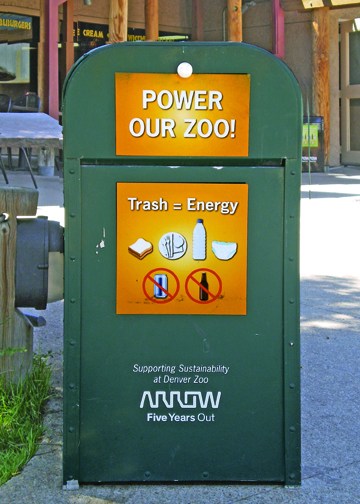
The Denver Zoo is more than halfway through the construction of a first-of-its-kind energy facility to be fueled by elephant manure and trash — including plastic and food scraps — that would provide 20 percent of the Zoo’s electricity, and heat its elephant exhibit.
The self-described “greenest  zoo in the country” is framing its plan to convert millions of pounds of annual waste into an alternative fuel source as an environmental leap forward that will help it achieve its goal of Zero Waste by 2025.
Critics, however, including local residents, the Rocky Mountain Chapter of the Sierra Club, the former director of the American Environmental Health Studies Project, and a U.S. Environmental Protection Agency (EPA) scientist, voice concerns ranging from air pollution, undermining of recycling and composting efforts, and environmental justice issues.
The Denver Zoo declined requests by this reporter for a tour, interview, or statement for this article.
Green Light For Green Energy?
The Zoo’s “biomass gasification system” has been 10 years in the making, developed by Zoo staff in partnership with the City and County of Denver, National Renewable Energy Labs, Colorado Department of Public Health and Environment (CDPHE), Colorado School of Mines, and University of Colorado.
The facility, which is 50 to 75 percent installed, according to minutes from a June 3, 2015, Denver Zoological Foundation meeting, is located in the Toyota Elephant Passage Exhibit on the Zoo’s southern boundary, adjacent to Duck Lake in City Park.
The project has undergone technical review by CDPHE and the City Council, received its construction permit, and is awaiting approval for an air permit. The State also issued water quality and sewer use permits, though a wastewater permit will not be granted until the facility is operational and liquid waste can be analyzed for potential contaminants.
Fuel To The Fire
The Denver Zoo gasifier will source its fuel from 750,000 pounds of elephant dung per year, along with 3 million pounds of waste from the zoo and outside sources, including: wood chips, food waste, waste paper, biodegradable plastic, non-biodegradable plastic, aluminum and other metals, according to a June 20, 2013, email exchange between EPA and CDPHE. Denver Zoological Foundation minutes state that fuel will be “87-89% biomass depending on the season.”
The materials will be shredded, dried, and converted into pellets and exposed to high temperatures in a low-oxygen environment to create a combustible synthetic gas (syngas), that will be mixed with natural gas to power generators, supplying 20% of the Zoo’s electricity. The leftover heat will run through pipes to heat the Toyota Elephant Passage Exhibit.
The facility is permitted as a controlled partial combustion system, with some aspects of the technology kept from the public as trade secrets. Trash and biomass gasifiers are still in the experimental stages and “not yet proven in commercial applications,” according to the National Renewable Energy Labs.
While the Zoo has avoided the use of the term incinerator, the EPA-funded Combustion Portal defines an OSWI (Other Solid Waste Incinerator) as “incinerators that due to their small size or other characteristics are not covered under other incinerator air emissions regulations.” The Zoo’s Engineering Design and Operations Plan (EDOP) states that the Zoo will follow the OSWI requirements, while referring to the “incineration (thermal conversion) of waste material.”
The construction permit issued by CDPHE explains that the facility will utilize a thermal oxidizer — which the EPA refers to as a thermal incinerator — for start up and shut down, where excess gas will be combusted in a flare.
Zoo staff will remove tars that build up in the scrubber and send them through the gasifier. Up to 60,000 pounds of ash per year will be a byproduct of operations, which will be landfilled.
The Solution To Pollution
The facility’s potential impact on local air quality and effects on public health is the main concern of neighbors.
According to the construction permit, the facility can emit up to the following levels of air pollutants per year: 6.3 tons of particulate matter (PM), 6.3 tons of PM 10, 6.3 tons of PM 2.5, (which can cause lung disease), 14.6 tons of Nitrogen Oxides (respiratory problems), 0.22 tons of Sulfur Dioxide (respiratory), 9.3 tons of Volatile Organic Compounds (which are carcinogenic), and 31.8 tons of Carbon Monoxide (reduces oxygen to heart, brain, and tissues).
The Zoo will also emit small amounts of dioxins, which, according to the EPA, are “highly toxic and can cause cancer, reproductive and development problems, damage to the immune system, and can interfere with hormones.”
Paul Connett, PhD, former director of the American Environmental Health Studies Project and author of the book Zero Waste Solution, spoke at the Ford-Warren Branch of Denver Public Library on July 30 about the health and environmental impacts of trash incineration and gasification.
“You should not be conducting such experiments in a residential area or near exotic animals that may be super sensitive to some of the air pollutants,” said Connett of the Zoo’s gasifier. “This project can only be considered an ongoing experiment.”
Joan Seeman, Toxics Issue Chair of the Rocky Mountain Chapter of the Sierra Club, said the group “does not support the Denver Zoo’s waste to energy incineration system.”
“It has proven impossible for industry to develop a combustion process that does not produce unacceptable toxic and hazardous air emissions,” said Seeman.
Bridget Walsh, a City Park neighbor, and one of the leading voices against the Zoo’s facility, said the Zoo’s presentation of the facility to the public has been “lacking in detail about serious health and safety risks.”
The siting of the facility has also attracted the attention of the federal government. Kendra Morrison, environmental scientist for the U.S. Environmental Protection Agency’s Air Permitting, Modeling, and Monitoring Unit, wrote in a June 19, 2013, email to CDPHE that that facility is being built in the “heart of the city near sensitive populations, both in terms of EJ [environmental justice] communities and ecological populations.”
Environmental justice, as defined by EPA, includes “fair treatment and meaningful involvement of all people regardless of race, color, national origin, or income.”
Waste Not, Want Not
The Denver Zoo characterizes the facility as part of its plan to achieve Zero Waste by 2025. However, Zero Waste International Alliance, which has adopted a peer-reviewed internationally accepted definition of Zero Waste, defines it as products or processes that “conserve and recover all resources, and not burn or bury them.”
Kate Bailey, Program Developer for Eco-Cycle, a community recycling processor and Zero Waste advocacy organization based in Boulder, doesn’t buy the Zoo’s Zero Waste claims.
“We believe that materials should be recycled or composted first,” said Bailey. “Our understanding is that this facility is taking away some of these materials that can be recycled and fed to the plant instead, undermining current recycling efforts.”
Currently, the 750,000 yearly pounds of elephant manure is routed through an undisputed Zero Waste pathway, A1 Organics. The industrial composting company based in Eaton, Colorado, has been processing the material into compost for soil amendments for years.
“We’ve enjoyed our relationship and loved the product and always been willing to compost it,” said Bob Yost, Vice President and Chief Technical Officer for A1 Organics.
The 60,000 yearly pounds of ash produced by the facility, destined for the landfill, will contain varying levels of heavy metals including arsenic, barium, chromium, cadmium, lead, selenium, and silver. Other waste byproducts include scrubber residues, which consist of tars, liquids, and acids.
Passing Gas
Though the gasifier has been advertised by the Zoo as an alternative energy facility powered by renewable energy, it will also burn up to 7 MMBTU/hr of natural gas, along with trash and manure.
According to a plaque at the Zoo, Encana Oil & Gas gave $500,000+ to the project, while Pioneer Natural Resources (which closed its Denver office in May) made a $25,000-99,000 financial contribution, to “show the public how natural gas can solve both economic and environmental challenges.”
Western Energy Alliance, “the voice of the Western oil and natural gas industry,” donated “under” $25,000. On its website, the Alliance refers to “overregulation at the federal level” of oil and gas production, including the controversial practice of hydraulic fracturing or fracking for natural gas. Mesa Energy Partners, an oil and gas development firm, also contributed “under” $25,000.
Safety First
Aside from the routine emissions from the facility, some neighbors worry about accidents that may pose a risk to the public.
The Zoo produced a January 2014 document detailing what would happen in case of an “upset condition,” which can involve temperature or pressure exceedance, high levels of carbon monoxide or hydrogen, or other malfunctions and errors. In these cases, the gas would be directed through a release valve on the roof of the facility or through the flare, and operations would be shut down.
Waste-to-Energy Plant Process Safety Challenges, a 2011 study from the UK, notes that gasification facilities involve safety issues similar to chemical process plants, warning of “explosion hazards, fire hazards and toxic gas.”
Intelligent Energy for Europe, a project of the European Commission to support renewable energy, delineates some dangers of gasifiers in their 2009 document, Final Guideline for Safe and Eco-Friendly Gasification, specifically “increased hazard potential due to the fact that a potentially explosive, toxic and combustible gas mixture is produced and consumed.”
“Poisoning, danger of suffocation…and pollution of the environment and plant vicinity,” from the release of hazardous gases and liquids, are noted. Where pressure builds up, gas can escape into the atmosphere resulting in a “toxic atmosphere.”
Toxic liquid escapes can lead to environmental hazards and pollution.” If flammable, there is the risk of formation of “a combustible vapour cloud.”
Green Or Gross?
The Denver Zoo has invested millions of dollars to generate a fifth of its electricity through its waste stream, and in doing so, has gotten pushback from locals, advocacy groups, and scientists. Will the Zoo’s installation of this experimental “waste-to-energy” facility ultimately enhance the Zoo’s green profile, as intended, or will it sour relationships with Denver residents, neighborhood associations, and environmentalists?
Many questions remain in regard to sustainability, air pollution, and environmental justice issues surrounding the project and resident complaints of the Zoo’s unwillingness to communicate with them only fuel the controversy.
Since Zoo officials have chosen not to engage in further dialogue with Denver residents nor speak with the media, unless the project falls through, it seems that questions will only be answered once the facility is up and running.

by Mark Smiley | Aug 31, 2015 | Editorials
 While the country as a whole is in a slow growth mode, Colorado is booming and the Denver real estate market is going wild. Denver has been rated the hottest home buying market in the entire country according to the Standard & Poor’s city home price index. Finally all of those in the political and big business coterie are going to get their chance to tax the lumpenproletariat into a spending oblivion. Yes, it’s true that because of the annoying TABOR Amendment to the state constitution, the little people must approve new tax measures, but that is where the more recent marriage of the politicians and big business comes in handy.
In more antediluvian times the business class often opposed new taxes sought by the political class. That was before big business learned that new taxes could be fun and profitable. Take for instance sales tax and property tax hikes. Big business figured out how to direct a significant portion of those taxes to themselves in the form of “tax increment financing” and tax rebates. A perfect example is the Colorado Regional Tourism Act which was designed by Colorado Springs businessman Steve Schuck to have the public pay for his proposed NASCAR race track in Aurora. When his project fell through, the folks from Gaylord Entertainment in Nashville glommed on by hook and by crook all of that potential tax money for their proposed Aurora hotel. Sure it got tied up in litigation, but someone had to take the public for a bath.
Government entities are prohibited by law to spend money to back new tax initiatives so business groups like Colorado Concern and the Denver Metro Chamber of Commerce foot the bill provided mem bers of the Chamber and Colorado Concern get their cut of the action. We here in Denver love new taxes of virtually any sort as our esteemed mayor knows. When Mayor Hancock planned to quietly move the National Western Stock Complex from Denver to Aurora for the benefit of the incredibly greedy Gaylord Entertainment, he proposed that the move be paid by Denver taxpayers and not those in Aurora. Killjoy City Councilman Charlie Brown managed to thwart that con job, but few doubt that if it had gotten to ballot we Denver voters would have approved it despite the fact that it would have significantly harmed the city as a whole.
Now is the time to get any and all new taxes approved as the voting taxpayers are feeling flush. Moreover, Hancock and the City Council are counting on the contention that Denver voters are probably too dumb to figure out that massive increase in home values also means that there will be a massive increase in the property taxes we have to pay. If you live in an apartment complex don’t worry you won’t miss out on the fun as your landlord will simply add the cost of the tax increase along to you by bumping up your already exorbitant rent.
But we have to act fast, as those future property tax increases will become apparent to even the dullest homeowner in a couple of years. Where will all that increased property tax money go? It will go right to employing more municipal employees and provide large raises to one and all but in particular those represented by public employee unions. Don’t worry your city councilmember already voted herself/himself a hefty raise last year which will kick in over the next couple of years.
The Denver City Council as a whole is doing its part in the courageous tax effort. Just this last month it voted to put a .08 percent sales tax increase on the ballot for the so called Denver College Affordability Fund that will reimburse nonprofit organizations that provide scholarships as well as paying down the loans of graduates saddled with debt. So do you think you will ever see any of that money? Well, of course not. Only the politically connected need apply which of course includes the children and relatives of elected officials. O.K. you had to a pay a small fortune for your own college degree and that of your kids so why should you have to also pay for the politically favored to go to college? Because that is the way it works and if you are even thinking about voting “no” it proves you have no community mindedness or human compassion.
But what about the things like the hotel tax and the car rental tax. Can’t we raise those too? Don’t worry the mayor and the City Council have a massive proposed bond issue to pay for a makeover of none other than the National Western Stock Complex. At least because of Councilman Brown the National Western Complex will remain in Denver at least for a little while.
But what about also adding on some more taxes to our load through the auspices of the state? Now you’re thinking smart. A new group entitled “Building a Better Colorado” has been formed according to The Denver Post headed by none other than our beloved octogenarian, bipartisan, philanthropist Daniel L. Ritchie. Forget about the fact that some who know him call him a smug, unctuous Harvardian snob who loves to turn up his nose at anyone who doesn’t have a net worth of at least eight figures. This time Ritchie is working hard for all of us in coming up with a whole plethora of new state taxes we can approve this fall and next in order to build a better Colorado for himself and his business buddies. Hopefully, by our next issue we will know more about some of the fruits of his and his group’s Herculean labors on our behalf. Yes, if we can all work together we can take the average Denver taxpayer for a ride she/he will never forget or recover from when the good times end as they inevitably will.
— Editorial Board
by Mark Smiley | Aug 3, 2015 | General Featured
Beating the stress of back to school: what you can do to help your anxious student
(BPT) – Do you or your child have the back-to-school blues? If so, you’re not the only ones. Saying goodbye to slower summer days can be difficult. For almost three months, you have felt free from the structure of the classroom and the accompanying homework. When the upcoming school year rolls around, it’s common to feel some sadness. For children who suffer from anxiety, this stress may be harder to handle, and it may stem from more than just pop quizzes and earlier bedtimes.
These children need extra attention as the new school year draws near. The best thing you can do to prepare your child is to give the gift of your time and attention. Instead of dwelling on things like tests and homework, talk about how to make the transition into the exciting new school year the best it can be.
Lauren Zimet, director of the Early Insights Healthy Foundations Program, is a mother herself and has pinpointed the top four back-to-school tips and tricks to make the transition easier. These tips will help to reduce the stress and tension felt by you and your child, not only for the first weeks of school (the hardest time to adjust) but throughout the year as well.
1. Connected communication. Engage in a conversation with your child and ask what he or she is excited and concerned about for the upcoming school year. Give your child the freedom to speak openly and avoid asking too many questions at once. You’ll know you are connecting when he starts volunteering information. When you listen to your child, and he can see the genuine interest and attention in your eyes and through your body language, he will feel more comfortable discussing the upcoming year.
2. Creative calendars. Planning ahead makes adults feel prepared, which is a huge de-stressor. The same goes for your child. Younger children only need a day or two to look forward to their big day. Older children may benefit from discussing the year weeks before the first day, especially if those conversations include working on things like organization, planning, prioritizing, and sequencing (those important executive functions of the brain).
3. Visualize the goal. Get specific and help your child visualize the first day of school. Have your child tell you or draw out the sequence of the day, from waking up in the morning, to dressing in an outfit chosen the night before, to what she’ll be enjoying as her brain-boosting energy breakfast. The more your child can visualize her routine(s), the more she will be at ease when the big day finally arrives.
4. Load up on brain food. Breakfast is coined “the most important meal of the day,” and rightly so! Food is the fuel for the brain and body, and the quality of the fuel matters. Whatever you choose to give your body and brain each morning will enable you to do a certain level of thinking. American breakfasts are often unbalanced, heavily favoring carbs, which are only a tiny part of the good-breakfast equation. Encourage your child to pick a protein each morning, as well as fruit, veggie, and healthy fat and carb options. From there, complement his or her diet with an omega-3 fatty acid supplement from a reputable fish oil company like Nordic Naturals. Omega-3 fatty acids have been found to help soothe anxious brains as well as support the entire nervous system, so don’t miss out on this simple improvement opportunity. Research on omega-3 fatty acids can be found at www.omega-research.com.
The new school year is on its way and while this time of year may cause some children to feel anxious, there are things you can do to help. Employ any of the suggestions above to help your child start feeling more excited about the new school year with each passing day.

by Mark Smiley | Aug 3, 2015 | Glendale City News
by Marco Cummings
Writer for and on behalf of the City of Glendale

Photo by Seth McConnell
One of the biggest rugby events of the year returns to RugbyTown USA this month when Glendale hosts the Serevi RugbyTown Sevens (SRS) International rugby tournament August 14-16, 2015, at Infinity Park.
Seventeen teams from across the nation and the world, including teams from each branch of the United States Military, will compete in 50 rugby matches over the three-day period for a winner-take-all $10,000 prize.
“It’s our fourth year hosting so we’re quite excited,” said Glendale Raptors head coach Andre Snyman.
“It’s a unique tournament. Quality players come from all over the world: some from overseas, some local and some nationally based. It’s really a good opportunity for players to measure themselves against some quality teams. There’s always a surprise team that comes out of it, so I can’t wait for this year.”

USA Falcons vs Denver in the Cup Final during day three of the Serevi RugbyTown 7s at Infinity Park in Glendale, Colorado. Photo by Seth McConnell
The SRS tournament serves as a grand event to conclude the summer Rugby 7s season, a format which offers more fast paced action and explosive offense compared to the traditional 15 a side rugby union format seen during the Pacific Rugby Premiership season. It offers both a challenge for the Raptors and a delight to local fans.
“It’s tough for a club side to compete against teams with 12 All-Star players. I’m just trying to help the boys and get our team up to par,” Snyman said of the challenge. “There’s good teams coming in. Pretty much all the other teams are select sides. I’m busy recruiting players to strengthen our side. Unfortunately we’ve had some injuries and hopefully the players will be back on track for Serevi.”
One of those All-Star programs, Stars 7s Rugby, is excited to participate at Serevi RugbyTown Sevens for the very first time.
“Last year I attended Serevi RugbyTown 7s for the first time as several of our Stars players were playing for the programs involved. I was impressed with the competition and the quality of play,” said Star 7s Director Elizabeth Entwhistle. “As Stars Rugby 7s is building our program, we’re looking to play in the best competitions possible with a professional setting and SRT7s sets the benchmark for the men’s 7s game.”
This year’s action kicks off August 14 with Free Fan Friday, beginning with pool play competition divided amongst four different pools.
All five military teams will compete in Pool A. Tournament hosts Glendale will compete in Pool B alongside the Bermuda National Team, Stars Rugby 7s and Upright Rugby Rogues. Pool C will feature locals Denver All-Stars, newcomers Atlantis Rugby, Northeast Olympic Development Academy and Mexico Serpientes National Team. Rounding out the tournament field in Pool D are the Serevi Selects, Texas-based Negro y Azul, Collegiate All-Americans, and the Bahamas National Team.
Tonga withdrew from this year’s tournament, but this year’s tournament is far from lacking in international representation.
“Bermuda Rugby is extremely proud of our partnership with Serevi Rugby, and our participation at the SRS tournament in Glendale is a highlight in our calendar, and a focal point for the development of our 7s program,” said Bermuda coach Jonathan Cassidy.
New to this year’s tournament is a boys’ high school tournament, which will take place on the Infinity Park Sports Field adjacent to the men’s tournament. This year’s inaugural participants include clubs such as Atlantis, Utah Lions, Serevi Institute, Rogue River (Canada), Rocky Mountain Rebels and the Raptors Academy being featured.
At the conclusion of Friday’s matches, a Fallen Rugger Ceremony will take place on the pitch.
On Saturday, August 15, pool play will continue followed by the High School Cup Championship at 3 p.m. and the Armed Forces Championship at 3:56 p.m. Cup and Bowl quarterfinal matches round out the competition on Saturday afternoon.
The Armed Forces Championship has become a staple of the tournament and a highlight of the weekend for fans and participants alike.
“As Marines, our primary attraction to this tournament is the opportunity to square off with our fellow services in the Armed Forces Rugby Championship,” U.S. Marines Rugby coach Major Russell “Bubba” Strange said. “What makes it even sweeter is that Glendale hosts a first-class event that we could never replicate on a military base, and we expose our players to a higher level of rugby than what they are used to seeing.”
The second day of the tournament will also see the return of the Glendale’s Bruises and Brews Beerfest with an impressive lineup of Colorado craft brews and distilleries from 12 to 4 p.m. Tickets for the Beerfest are just $35 and include entrance to all rugby matches held Saturday.
Sunday’s events will have implications for all tournament trophies including the SRS Shield, Bowl, Plate and Cup with games kicking off with a Shield Semifinal at 12 p.m. Championship matches will begin at approximately 3:30 p.m. culminating with the Cup Final set to kick off at 5:14 p.m.
Tickets for all events during the three-day weekend of rugby 7s action can be purchased by visiting the website at: rugby townusa.com/serevi.