by Mark Smiley | Aug 3, 2015 | Travel
by Mark Smiley

Many families in the Cherry Creek Valley with young children sooner or later have to make the momentous decision of whether to take the kids to Disneyland in Anaheim, California, or Disney World in Orlando, Florida. In the last 14 months, I have experienced both theme parks. Now Chronicle readers will be able to compare the two parks and my recommendation will be shared to help you decide if you are torn between the two.
When my family and I traveled to Disneyland in May 2014, we flew Southwest Airlines non-stop into Ontario International Airport. This airport is much less congested than LAX and is about a one hour drive from the park. When visiting Disney World in Orlando, we flew into Orlando International Airport. Flights are approximately $100 more per roundtrip ticket to Orlando. If you are staying at a Disney Resort in Orlando, you are transported from the airport to your resort and Disney reclaims your luggage for you. The next time you see your luggage is in your room.
Surprisingly, there is little difference in the amount of travel time to either destination which most families consider before booking a trip. It takes about one and a half hours extra to travel to Orlando. However, the inevitable California traffic jam significantly cuts into that 90 minutes you save.
Weather is, of course, a factor and in general Anaheim is much cooler and more comfortable than Orlando. Orlando can get very hot and humid during the summer which makes for an uncomfortable day at the park, and hurricane season starts in the fall. Also, be prepared for a rainstorm in Orlando. It rains just about every day so a rain poncho is necessary. Make sure you bring one with you as they are very expensive inside the park. Hands down, Anaheim wins in the weather column.
One of the major factors in making the decision between the two parks is cost. Certainly there are more options to add on to a stay at Disney World, such as more expensive lodging, dining, and more parks to visit. But, comparing admission prices, a one day ticket to the Magic Kingdom in Orlando is $105 for adults and children under 10 are $99. Disneyland will run you $99 for adults and children are $93. Children under three years of age are always free at either park. When Disney World opened in 1971, a ticket cost $3.50.
On the other hand, those that want to be immersed in Disney culture and tune out the outside world for a week or more, can easily find a lot to do within Disney World. My family and I spent an entire day at Magic Kingdom in Orlando and then the next day, tackled Hollywood Studios, Magic Kingdom, and Epcot in the same day. Epcot has a fireworks and light show at 9 p.m. every night so those with younger children can make their way to Epcot and still be tucked in at a re asonable hour. The Magic Kingdom show for instance, doesn’t begin until 10 p.m.
Disney World sprawls across 43 square miles, which is approximately the size of San Francisco and only 35 percent of the land has been developed to date. Walt Disney purchased all of the property under different business ventures for a total of $5 million. Now, Disney World features four theme parks: Magic Kingdom, Epcot, Animal Kingdom, and Hollywood Studios. It also has two water parks, 27 resort hotels, four golf courses, and Downtown Disney featuring restaurants and shopping. If one person were to stay in every resort room on the property, it would take 68 years to accomplish.
By comparison, Disneyland is much smaller, covering 160 acres. It includes Disneyland Park, Disney California Adventure, Downtown Disney, and three hotels. Disneyland just celebrated its 60th anniversary while Disney World opened 16 years later in 1971. Disney is the number one amusement park corporation in the world drawing over 134 million visitors each year between the two resorts.
Since the Magic Kingdom in Orlando was based on Disneyland, the two parks are very similar in layout and share some — but not all — of the same attractions. And even when both parks offer the same rides, there are always differences. For example, the Splash Mountain and Pirates of the Caribbean attractions at Disneyland are longer and considerably different from the Disney World versions. My four-year-old daughter Eleanore wasn’t able to tell the difference.
When visiting either park, you enter at the Main Street Railroad Station and walk down Main Street U.S.A. toward the 77-foot-tall Sleeping Beauty Castle at Disneyland or the 189-foot-tall Cinderella Castle at the Magic Kingdom. At each park, the castle is the main hub, from which you can take paths to Fantasyland, Adventureland, Frontierland, or Tomorrowland.
As you would expect, given Disney World’s much larger size, there are many attractions at Disney World that you won’t find at Disneyland Resort. What might be less obvious is that there are also some key attractions at Disneyland that are not available at Disney World. At Disney California Adventure, for example, the entire Cars Land is unique to Anaheim. Disneyland features three rides that Disney World does not have: Indiana Jones Adventure, California Screamin’, and Matterhorn Bobsleds. All told, the Magic Kingdom in Orlando has only 10 more attractions than Disneyland despite its larger footprint.
Waiting in long lines scares most parents. Children don’t exactly relish it either. Both parks use the Fastpass+ system which is included in the cost of your theme park ticket. FastPass+ is a ride reservation system and is designed to moderate wait times at popular attractions. Somewhat like making a dinner reservation at a restaurant, FastPass+ allows you to make a reservation to ride an attraction at a Disney theme park. You can request a specific time, such as 7:30 p.m., or you can let the FastPass+ system suggest some times. You wait in an entirely separate line and I did not experience a wait longer than 10 minutes for a ride that had a posted wait time of 60 minutes or more.
You can reserve three Fastpasses in advance of your trip to Disney World and when you have completed all three rides, you can go to a kiosk and obtain one more. After completing that ride, you can request another and Disney offers a limitless supply. Popular rides are difficult to reserve so I recommend reserving your rides 60 days in advance and 90 days in advance if you are staying on the property. These Fastpasses are linked to your admission ticket and you scan in your ticket or wristband before entering the line.
Disneyland works differently. They use a printed ticket system and they are available to obtain at the attractions themselves. They are only available the day of issue. I definitely recommend familiarizing yourself with the Fastpass+ system before you embark on your trip and make your reservations early.
While vast, Disney World is easy to get around via an excellent complimentary transportation system. Getting between theme parks and resorts generally requires a 10- to 30-minute shuttle on a bus, ferry, or monorail.
Due to its smaller size, Disneyland is manageable without bus shuttles. The hotels are within walking distance of the theme parks, and the entrance gates to both parks are separated by about 100 yards.
The other difference between the two parks is the types of visitors. The most obvious is that Disneyland has a higher percentage of locals. The park draws less people than Disney World, with a large majority of them being people that live within a couple hours drive of the park. Disney World draws many more tourists from all over the world and most fly in or have to travel a much longer distance.
Many of the guests at Disneyland have grown up and are second or third (and some cases more) generation visitors visiting on a regular basis. Disney World has seen a growing number of these types of visitors thanks to Disney Vacation Club and similar programs, but it still is not the same as Anaheim.
For the novice and those who have never been to either theme park, I recommend going to Disneyland in Anaheim. It allows you to experience the magic of Disney without being completely consumed by it. It is more cost effective, the weather is better, and the surrounding area has a lot to offer beyond Disney.
For those who want a more complete Disney experience, Disney World is your ticket. If you want a complete turnkey Disney experience and have budgeted for it, there is no place quite like Disney World and all it has to offer. One of the best times to visit is the first week in December when temperatures are moderate, kids are in school, and the lines are shorter.
Whatever you choose, Disney offers a wide variety to pick from for those who want magic sprinkled on them or for those who want a magic shower. For more information on these parks, visit www.disney parks.disney.go.com.

by Mark Smiley | Aug 3, 2015 | Editorials
On July 20, a brand new Denver City Council was sworn into office. A majority of the members of the Council (seven) are new. The Denver City Council over the last decade has increasingly been seen by the citizens it purports to serve as utterly corrupt and controlled by real estate developers and unions that fund most of the members’ campaigns. Few people believe that the public quasi-judicial hearings before the City Council are anything more than a form of kabuki theater, with the decisions made behind closed doors prior to the hearings, in violation of state and local law. The public now knows that their participation before the City Council is a sham.
 A lawsuit filed by seven citizens, Whitelaw v. The Denver City Council, Case Number 2015CV3247, threatens to unmask the entire corrupt process by which zoning decisions are made in the City and County of Denver. It is assumed the office of the City Attorney will do anything and everything it can to prevent this case from ever getting its day in court. The City Attorney’s Office played a similar blocking role in the case of Hunter v. The City and County of Denver. In that case the City Attorney’s Office’s role in hiding evidence and conducting phony investigations concerning the Denver Sheriff’s Department and the City Jail were exposed. As a result, the City Attorney Scott Martinez was threatened by Federal District Court John L. Kane to have his law license revoked for his part in the cover-up.
A key difference in the two cases is the Hunter case was in United States District Court while the Whitelaw case is in the District Court for the City and County of Denver. It will take a Denver state court judge who is as brave and intrepid as Federal District Court Judge John L. Kane to ferret out the dishonesty that takes place on land use votes at Denver City Hall. Is there such a person on the state bench? If the past is any indication it is not encouraging. In case after case state court judges appear to be part and parcel of the cover-up, refusing to allow even a single instance for a claim to ever go to a jury. But it took years and years of Sheriff’s Department malfeasance at the City Jail before the Hunter case reached the desk of Judge Kane and then everything blew up. Before the Hunter case many people also assumed reform at the Sheriff’s Department was virtually impossible.
What about the City Council reforming itself and the way it conducts business? On the encouraging side, the voters voted in three individuals — Rafael Espinosa, Wayne New and Paul Kashmann — dedicated to reforming the system, as well as an auditor, Tim O’Brien, who is not under the control of Mayor Hancock and real estate developers. But there are 13 members of the Denver City Council. Six returning council members rushed in the final days of the old council to approve every corrupt decision possible before the new council members were sworn in. In addition the Mayor and the developers were able to elect two new members, Kendra Black and Stacie Gilmore, who good government advocates have labeled the “Dirty Duo” for their absolute craven obsequiousness to the most revolting aspects of the Hancock administration.
Part of the problem and the difficulty of the system reforming itself is that some of the checks and balances that were built in the City Charter have been thoroughly compromised. The City Charter provides for an 11 person citizen Planning Board pursuant to which residents can bring their thoughts and concerns and the Board, in turn, advises the mayor and Denver City Council on land use matters, including planning and zoning. Unfortunately under the Charter the mayor gets to appoint every Board member. Mayor Hancock, instead of appointing representatives the community has chosen, developer controlled hacks and people under his control are appointed. At one time, being on the Planning Board was considered an honor, but today is a black mark disqualifying a former member for elective office in Denver as Anna Jones found out in this last election in her race against Wayne New.
In theory Denver employees and elected officials are supposed to, under the City Charter, “adhere to high levels of ethical conduct so that the public will have confidence that persons in positions of public responsibility are acting for the benefit of the public.” A five person board is supposed to enforce the Denver Ethics Code. That has become a joke. The only thing that citizens can be assured of is that the persons appointed to the Ethics Board by the mayor and the City Council are void of any personal ethics or they would not have been appointed to the Board in the first place. The Board’s latest disgrace, in a long line of disgraces, is its opinion concerning Councilwoman Stacie Gilmore, a close friend of the mayor and wife of the acting head of the Denver Parks and Recreation Scott Gilmore, who is also a close friend of the mayor.
Some people assumed that being on City Council while your husband heads up Parks and Recreation would present various conflicts of interest — but, not a problem. On cue, the Ethics Board issued an extraordinary opinion coming to the absolute opposite conclusion.
The Ethics Board claims its hands are tied by a too permissive Ethics Code including the conflicts of interest rules and that it will be making recommendations to beef it up. We would suggest that the Ethics Board recommend abolishing itself as it has lost any and all credibility with the citizenry who now knows it serves only as a fig leaf for approving the most corrupt of practices of the Denver city government.
Is the government of the City and County of Denver in fact capable of reforming itself? The answer is probably not anymore than the Sheriff’s Department was capable of reforming itself. As a result, the citizens of Denver should watch with a careful eye all the developments in the Whitelaw case as it may represent the last great hope for honest government in land use decisions in the City and County of Denver for quite a period of time.
— Editorial Board

by Mark Smiley | Jun 25, 2015 | Glendale City News
by Marco Cummings
Writer for and on behalf of the City of Glendale

Raptors vs Northeast 7’s in the Plate Final during day three of the Serevi RugbyTown 7s at Infinity Park in Glendale, Colorado. Photo by Seth McConnell
Just as the seasons change from spring to summer, so will the seasons change for the Glendale Raptors.
The team will have had little time to rest on the laurels of their first Pacific Rugby Premiership (PRP) championship, as the focus now shifts to summer and the start of the competitive Rugby 7s season, which will culminate with the Serevi RugbyTown Sevens (SRS) Tournament hosted at Infinity Park Aug. 14-16.
Nevertheless, within the Raptors’ camp, the team’s first PRP championship in two seasons continues to be celebrated within the walls of RugbyTown USA. Capping a season of ups and downs for Glendale, the team successfully avenged last year’s finals loss to San Francisco Golden Gate (SFGG) by bringing home the city’s first title via a 25-11 win on May 16.
“You’ve got to show a lot of grit when it comes down to it,” Raptors captain Zach Fenoglio said. “I really felt that we put our hearts on the line and it led to a PRP championship.”
One of the biggest challenges for the Raptors during the 2015 PRP campaign was injuries. The biggest blow came when USA Eagle Ben Tarr went out with a season-ending knee injury which required surgery for the prop. Additionally, center Armandt Peens dealt with an ankle injury down the stretch, but made a return in the final.
Another major challenge for Glendale was the constant shifting in and out of the lineup by Fenoglio and fellow USA Eagles Chad London and Nick Wallace, who were often away on international duty. Those who stayed behind with the Raptors fared well however, securing a spot in the PRP final and paving the way for the trio’s triumphant return.
“All of the guys with Glendale truly approach everything with a professional attitude,” Fenoglio said. “I give a huge credit to the team getting the job done while we were away.”
A huge help to the cohesiveness of the group was veteran Mose Timoteo. The 38-year-old scrum half was signed from SFGG in the offseason and helped a second club to a PRP championship in as many seasons.
“That’s the great thing about rugby. When you lose a brother, you come into a new environment and gain brothers,” Timoteo explained. “You have guys that you fight with and will fight for you. To win two [PRP finals] is a dream.”
The PRP season offered a chance for veterans like Fenoglio and Timoteo to step up and shine on a regular basis. In the 7s format, young players often have an opportunity to shine and hone their game for the PRP. Last year Cody Melphy proved to be one of the summer’s standouts who later found himself in contention for playing time in the PRP.
“[The 7s format] gives us an opportunity to see new players in different positions, try new combinations, and look at new structures and game plans,” Glendale head coach Andre Snyman explained. “We’ve got local guys like Cody Melphy. He’s always steady, a good young player.”
The Pacific Rugby Premiership provides a structured and traditional 15-a-side format with a strong focus on defense and structure. Rugby 7s proves to be perhaps a more fluid, dynamic and offensively based game.
Last summer Glendale competed in tournaments including the Denver 7s, Heartland 7s and Omaha 7s in their quest to qualify for Club 7s Nationals, but fell just short of the goal. This year, the Raptors will once again look toward a Nationals berth.
Capping the 7s season will be one of the nation’s premier 7s tournaments, the Serevi RugbyTown Sevens hosted at Infinity Park. For the fourth consecutive year, 17 teams from around the world will come to Glendale to compete for a $10,000 winner-take-all purse.
“The SRS tournament continues to grow in stature as we enter the fourth year of the competition,” Raptors director of rugby Mark Bullock said. “There are more international teams competing and the USA military teams have raised the standard of their play.”
In addition to the overall purse and SRS Championship, teams representing each American military branch — the Marines, Navy, Air Force, Army and Coast Guard — will look to compete for both the overall tournament and military championships.
“We would not be fit to call ourselves Marines if our goal was anything less than winning the Armed Forces Championship,” said USMC coach Major Russell “Bubba” Strange.
A high school tournament has also been brought on as a new addition to SRS, with clubs such as Atlantis, Utah Lions, Serevi Selects, Rogue River (Canada), Rocky Mountain Rebels and the Raptors Academy being featured.
“I think this tournament is great. It brings some international players and some great national players together to play against each other and compete,” added Snyman. “[SRS] gives the players an opportunity to compare themselves against the best and show off their skills.”
So no matter what time of year it is, spring or fall, summer or winter, 15s or 7s, it’s always the time of year for rugby in RugbyTown USA.

by Mark Smiley | Jun 25, 2015 | General Featured
by Mark Smiley
The Bill, Hillary and Chelsea Clinton Foundation (originally founded in 2001 as the William J. Clinton Foundation) came to Denver in the form of CGI America conference at the Sheraton Denver Downtown Hotel from June 8-10 and the Glendale Cherry Creek Chronicle was in attendance. It was the second consecutive CGI America event in Denver with the annual conference moving to Atlanta next June.
This year’s conference in Denver attracted wide national media attention as the Clinton Foundation has come under attack because of a book titled Clinton Cash by conservative author Peter Schweizer whose criticisms have been expanded upon by various liberal media outlets including The New York Times and The Washington Post. The critical press attention clearly had an effect as attendance was reduced from 1,500 attendees in 2014 to 1,000 this year and the number of financial sponsors reduced from 35 to 13. While President Clinton and Chelsea attended this year, former Secretary of State Hillary Clinton chose to remain in Washington and work on her presidential campaign.
Enthusiastic Attendees
 But the negative media attention concerning the Clinton Foundation did not appear to dim the enthusiasm of those attending this year’s CGI America conference. Very few people from the Cherry Creek Valley were fortunate enough to attend the event as it was restricted to Clinton Foundation members only as well as invited speakers and the press. Membership in the Clinton Foundation is similar to an exclusive country club and by “invitation only,” costing $20,000 annually ($19,000 of which is tax deductible according to the Foundation).
Membership in the Clinton Foundation entitles your organization to one person attending the annual Clinton Global Initiative (CGI) held in New York City every fall. Not just anyone from your organization can attend; you must be a “CEO, chairman or executive director” to be permitted to attend the event in New York. CGI America is one of at least four offshoots of CGI including: CGI Latin America, CGI Middle East and Africa, and CGI University. The CEO restriction was apparently significantly relaxed for the Denver event.
One might ask what an attendee can gain from attending. Gwendolyn Rodriguez of the startup company Venture In Network (VIN), which sets out to increase the success rates of startups, specifically those led by women and minority entrepreneurs, commented: “I would love to leave with part of a team and of course funding is important. I would love to get commitments from people who are passionate about strengthening the entrepreneurial ecosystem.”
Denver’s Scaled Down Occasion
CGI Middle East and Africa held their event in May at a five star resort, the Palmeraie Palace in Marrakesh, Morocco, which includes a championship 18 hole golf course. The event became controversial when it was learned that government controlled phosphate mining company OPC paid the Clinton Foundation $ 1,000,000 to sponsor the event. OPC has been accused of human rights violations by the Robert F. Kennedy Center for Justice among others.
The CGI America event held in Denver was a much more down home event than that held in Morocco. The big, sponsored event in Denver was simply an “evening of science and STEM trivia” coupled with “beer education” sponsored by CA Technologies.
Prince Of Darkness Holds Court
 Denver had to pay approximately $500,000 to the Clinton Foundation to hold the event, which was raised by Steve Farber, a principal in the law firm of Brownstein Hyatt Farber Schreck, LLP. Farber has been called Denver’s “Prince of Darkness” for his behind the scenes manipulations of Denver government. He is considered second only to Oakwood Homes founder Pat Hamill for his control over Denver Mayor Michael Hancock. His firm represented Mayor Hancock in 2011 concerning charges he was a patron of houses of prostitution in Denver, including Denver Players/Denver Sugar. Both Farber and Hamill are important directors of Colorado Concern, an organization of wealthy corporate CEOs who seek to directly influence Colorado politics.
Farber was very much in evidence at the event. His table was front and center and he would stand up to receive visitors dressed to the T in what one attendee called his “Mafia don pinstriped suit.”
Well Run Event
If one thing was abundantly clear it was that the Clinton Foundation knows how to hold a conference with details both large and small attended to with incredible professionalism. If you were not previously aware that the event was being held at the Sheraton Denver Downtown Hotel you would think that the hotel was called the “CGI America.” The signage overlays for the event seemed almost permanent and were ubiquitous.
If you ever looked confused about where you were supposed to go, a friendly volunteer would approach and point you in the right direction. Volunteers were dressed in what one volunteer humorously called their “Jet Blue Flight Attendant uniforms.” They seamlessly directed attendees to empty chairs at the crowded luncheons. The media room was sumptuously laid out for the always ravenous press.
Television Interviews
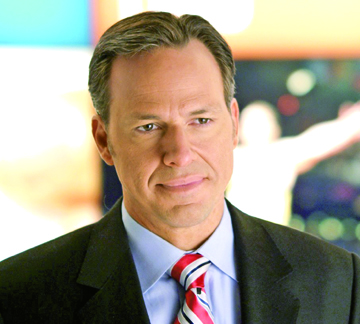 One of the highlights of the conference were the television interviews of former President Bill Clinton by CNN and Bloomberg News on the last day of the event. The CNN interview was for the kickoff of Jake Tapper taking over from Candy Crowley on CNN’s Sunday “State of the Union” show. The print media were escorted to the interview room and given a handout declaring that there was a “news embargo” on the interview and that no one could report on what was said until after airing of interview on Sunday. That proscription was roundly ignored by various members of the press.
The problem for the press was that the interview by Tapper was bland and verging on embarrassing for Tapper. There were no tough questions and no interesting information was obtained in the 20 minute interview. Prior to the taping Tapper gushed over the former President telling him how great he looked and informing him that he didn’t look a day older since he last met him over five years ago. One member of the print media whispered — “Is he planning to ask him out to a prom?”
Immediately after the CNN interview former President Clinton went next door for a live television interview with Betty Liu who was clearly somewhat in awe, but at least was more professional and obtained some interesting information, including that Clinton would probably not do paid speeches for the time his wife was President. “No, I don’t think so…because once you get to be president, then you are just making the daily story,” said Clinton. “I will still give speeches, if I’m asked to do so,” without accepting honoraria for them.”
Clinton went on to say that he believed the Republicans would choose for their candidate whomever they thought was most electable as they always seemed to do. While Ms. Liu would not get an Edward R. Murrow award for courage in journalism for her interview she clearly had a great deal more gumption than a somewhat timid Jake Tapper.
The Clinton Foundation made sure that both television interviews had audiences of Clinton admirers exclusively and who laughed and applauded on cue. If it is charged that the Clintons know how to manipulate the press to their advantage, it was on clear display at CGI America 2015.
Commitments To Action
 The stated purpose of CGI America is to bring together leaders from the business, philanthropic, NGO and government sectors to come up with Commitments to Action which are to be “new, specific and measurable” to help the poorest and most vulnerable in America. The fact that CGI does not provide any money whatsoever for the poor and vulnerable but spends all of its money on administrative costs and holding conferences like CGI America Denver has brought CGI under extensive criticism. CGI in turn states that it is not its job to provide money or grants but obtain Commitments for Action from others that come to its conferences.
During the festivities former President Clinton or Chelsea would announce new Commitments to Action, some of which were arranged prior to the conference and some formulated at the conference. He or she would bring on stage the participants in a Commitment for Action for recognition and a photograph with the former president or his daughter. In the June 10 press release from the Clinton Global Initiative Press Office it asserted that CGI America 2015 had resulted in 79 new Commitments to Action which would cause to happen among other things:
- Nearly 210,000 jobs being created or filled
- More than 126,000 girls and women to be positively impacted
- More than $11.3 million of new capital invested or loaned to small and medium-sized enterprises
- More than 111,000 students will gain access to STEM education opportunities
- More than 1.2 million people will receive access to training programs
Former President Clinton personally added that because of the efforts at CGI America 2015, “more than 1.6 million people will be better off.” Some critics denigrated the press release and the President’s remark pointing out that CGI America’s jobs claim alone would constitute approximately 10 percent of all new jobs likely to be created in the United States this year. Other critics noted that the Clinton Foundation had basically made the Clintons extraordinarily financially wealthy while claiming to help the poor, and wondered whether at least some of the participants in the Commitments to Action were going to try, in fact, to emulate the Clinton family model.
But some participants scoffed at the criticisms. Gwendolyn Rodriguez from VIN, who was referenced earlier, found the conference particularly beneficial and was able to obtain commitments and partnerships from high profile attendees. “I learned a lot about the work going on to make our nation greater from the people who lead those efforts,” said Rodriguez. “Together we discussed the challenges and opportunities that exist and what we are going to do about it. I checked off a lot more than the list I came in with, so the conference was worth it for me and I will be excited to do it again next year.”
by Mark Smiley | Jun 25, 2015 | Editorials
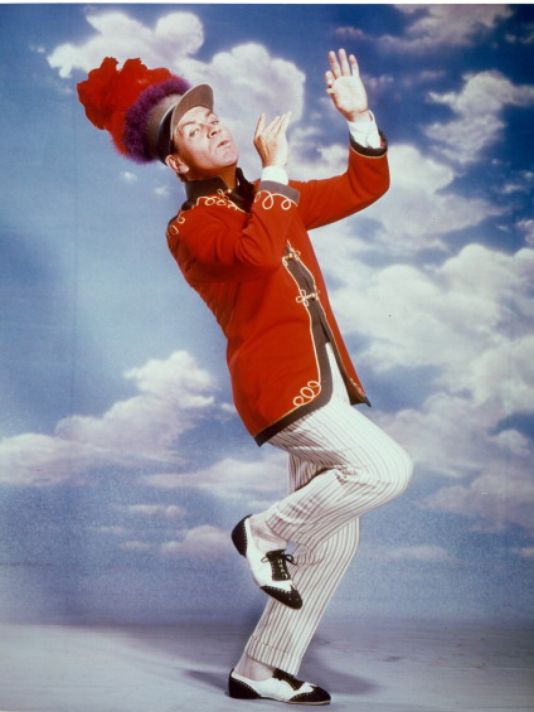
In the 1957 musical The Music Man by Meredith Wilson, the protagonist Professor Harold Hill pulls a scam on a small Iowa town to sell non-existent musical instruments and lessons for a boys band he claims he will form to thwart off the purported malicious effects of a pool hall in the town. In the award-winning melody “Ya Got Trouble” Professor Hill breaks into song including the lyrics:
Well, ya got trouble my friend, right here
I say, trouble right here in River City
. . . .
Pockets that mark the diff’rence
Between a gentleman and a bum,
With a capital “B”
And that rhymes with “P” and that stands for pool!
One of the reasons that the musical became so popular is that underlying premises have some believability concerning human nature. The Institute for Justice is a Virginia-based non-profit public interest law firm that somehow managed to lose by a 5-4 margin in the Supreme Court of the United States the case of Kelo v. City of New London whereby the court perniciously authorized the use of eminent domain to seize private property for the benefit of other private citizens in the name of economic development. The Institute has been raising money off its massive legal incompetence ever since.
The Institute for Justice was formed in 1991 by Clint Bollick and University of Denver Law School graduate “Chip” Mellor with seed money from moneyman Charles Koch of the famous, or infamous depending on your political views, Republican Koch Brothers. The Institute has revenues of only $18 million and must engage in endless money raising which depends on taking on highly public fights with municipalities and other governmental entities.
That is where Glendale comes in. The city sent out an innocuous notice that it was going to reauthorize the right of eminent domain for its urban renewal authority as it had in 2004 and 2013. Except this time the Institute for Justice had come to town. The Institute convinced the owners of Authentic Persian and Oriental Rugs on Colorado Boulevard that Glendale must want to condemn their three to five acres for its “Riverwalk” project renamed “Glendale 180.” Except no one in Glendale apparently has any plan whatsoever to condemn the Kholghys’ or anyone else’s property in the city.
As reality doesn’t matter when you are ginning fake outrage, a massive publicity campaign went out to save the Kholghys’ property from a condemnation that is never going to occur. Camera crews from all major stations descended on the city as well as reporters from The Denver Post and other publications in the metropolitan area to report on and to condemn the non-existent condemnation of the Kholghys’ property.
When Phillip Applebaum from the Institute came before the Glendale City Council to pontificate, it was assumed he was an attorney since he did not identify exactly what he did. But lo and behold he is, in fact, an “Activism Coordinator” who took over the publicity campaign. He wanted the Chronicle to know that the Institute was not “retained” by the Kholghys for legal work but his department is instead engaged in “grassroots activism” whose ultimate goal we assume is fund raise over a made up crisis in Riverwalk City.
Of course the Kholghys are hardly innocent dupes. They bought the land in 2006 from Jimmy O’Connor after they saw an article in The Denver Post that the city was planning an entertainment development along Cherry Creek to be called the Riverwalk. They overpaid for the property, but they assumed that the Riverwalk project would greatly increase the value of the land, as landowners along Cherry Creek helped plan the entire project. It has been indicated that they want $20 million or more for property worth half that amount. They are apparently hoping they can raise enough of a ruckus that the city can cheat its own taxpayers and pay them whatever they want.
For any redevelopment project to work the city needs tax revenues to help pay for roads and other improvements. According to state law Glendale can capture county and special district taxes for the project, provided there is so called “blight” which East Virginia Avenue clearly fits.
The Institute for Justice somehow convinced the Kholghys that a finding of blight, like the existence of a pool hall in River City, is the devil’s work and even helped organize a Saturday event to protest the assertion of “blight,” even though it would be helpful in any re-development of the Kholghys’ property by the Kholghys themselves. The Kholghys have brought at least two lawsuits against Glendale regarding the non-existent condemnation plans. The media in Denver, like the parents in River City, can however be easily conned and panicked into running to help prevent a non-existent threat.
Glendale, at its last City Council Meeting, approved a Downtown Development Authority that includes most of the southern side of East Virginia Avenue along the creek excepting the Kholghys’ property. Apparently the rest of the landowners want a project even if it doesn’t include the Kholghys.
In the end, the Kholghys will have spent a small fortune on frivolous lawsuits against the city for a non-existent threat of condemnation and their property will be worth considerably less not being part of Glendale 180. The one group that will gain will be the lawyers as well as the Institute for Justice with Phillip Applebaum as Activism Coordinator in an updated version of The Music Man crooning:
Well, ya got trouble my friend, right here
I say, trouble right here in Riverwalk City
. . . .
Blight marks the diff’rence
Between a gentleman and a bum,
With a capital “B”
And that rhymes with “C” and that stands for condemnation!
The Kholghys will be free to develop their property in any way they see fit except having to obey the zoning laws of the city just like every other landowner in the city. In the past the Kholghys seem to believe they are above the laws that apply to everyone else including providing parking and open space for any redevelopment. As with The Music Man one cannot help but admire the con the Kholghys and the Institute for Justice have pulled off on the media. But in the end most of the residents and businesses of Glendale hope that the Kholghys get what they justly deserve and that the laws are fairly and honestly applied to them as they would be applied to anyone else. The Institute in turn, will leave Glendale to go on raising money off of other made up River City crises, all the while losing legal cases that should never have been lost in the first place.
— Editorial Board

by Mark Smiley | Jun 18, 2015 | Travel

by Mark Smiley
Cirque du Soleil’s newest touring show, Kurios — Cabinet of Curiosities, has rolled into town with 65 trucks and 2,000 tons of equipment as the 35th installment of the franchise since 1984. The show is set up under the 62 foot high big top in the west lot of the Pepsi Center and performances run until July 26, 2015.
The show, which features 46 artists ages 21 to 37 and over 100 costumes, is the newest installment in the lineup of shows. It is the chance to see astonishing feats of agility, flexibility, strength, balance, coordination and inventiveness. Kurios evokes the eerie world of a 19th-century carnival. It’s a shadowy universe inhabited by strange, and vaguely ominous creatures, such as an accordion man, a serious chap with a cosmic pod for a stomach and a little woman who resembles Angela Lansbury. The production’s settings and costumes suggest a mad scientist’s laboratory and fantasies in the late 19th century.
The stage is one of the lowest of all Cirque du Soleil big top shows. It is only 24 inches high. This decision was made by director Michel Laprise so that the artists are closer to the public. The props on stage include coppered Victrola record players, a clanging vintage clock, anti que electric lights, odd robot-like characters with pod faces and bulbous metal midsections. This is a museum-worthy assemblage, created from recycled bits and pieces of leather, metal, old gramophones and typewriters, turbine engines, piping and tubing.
Of course a Cirque du Soleil show would not be complete without acrobats, contortionists, jugglers, and death defying acts, one of which is a dashing chair balancer at a levitating dinner party, and a goggle-wearing aviator who uses his biplane as a platform for a balancing act that has him perching on a gyrating tower of cylinders and planks. James Eulises Gonzalez who performs on the Rola Bola is the only artist who cannot be replaced if stricken ill or injured. He is the only person in the world who can perform this feat.
Kurios also features comedy from the cheeky verve of the ensemble. However, David-Alexandre Després wins laughs as both the overeager suitor of a lovely young woman plucked from the audience, and as an uncannily realistic and raunchy pussycat who won’t leave the poor girl alone. Cirque du Soleil has not deployed clowns often but this show adds one.
“Let’s not forget we are still a circus …,” said Bruno Darmagnac, artistic director of Kurios, “…and since the beginnin g the company made a statement to never ever use any animals in our productions, which is something often expected from a circus. In that sense we went, ‘NO, we will never do that, but clowns..YES.’ And this one is a very special clown. And different. We don’t even call him clown, we call him the comic.”
Cirque du Soleil was cofounded by Guy Laliberte and it is now one of the biggest live entertainment groups in the world having performed 35 shows in front of nearly 150 million spectators in more than 300 cities on six continents. He has been aiming to revitalize his company, known for its intricate circus shows as its creative guide.
Laliberte started out as a street performer in Quebec, walkin g on stilts and breathing fire. He founded Cirque du Soleil in 1984 when the Canadian government awarded him a $1 million contract to develop a celebration for the 450th anniversary of the discovery of Canada. Now, Cirque du Soleil has close to 4,000 employees, including 1,300 performing artists from close to 50 different countries.
Darmagnac indicated that Laliberte is involved with every show before it premieres. Shows are put together and then performed in front of Laliberte for final approval. Darmagnac describes this process as “entering the lion’s den.” Each act is meticulously choreographed and Laliberte will either approve each act, make changes, or eliminate it altogether. It makes for a tedious process but each employee of Cirque knows what to expect and knows the final product will be something audiences will enjoy.
Darmagnac has been with Cirque du Soleil since 2011 and before joining Cirque, was the co-creator of FLIC FLAC, a modern traveling circus in Germany. He is excited about the new show. “Allegria [the traveling tour prior to Kurios] was 20 years old. This one is new and the energy is completely  different,” said Darmagnac. “This one [show] really wanted to put humans on stage, with a face and with this steampunk look. Lots of people can relate to it and it will not go out of fashion for a long, long time.”
Kurios was written and dir ected by Michel Laprise, and features bright and breezy songs by composer-music directors Raphaël Beau and the duo Bob & Bill. The songs are upbeat, unpretentious numbers reminiscent of 1930s French jazz, buoyantly performed by a small, eclectic ensemble. The music kept the audience engaged and complemented the acts.
They’re a few of more than a dozen acts in a show that runs close to 2-1/2 hours, including one intermission. The audience at the Denver premiere gave the artists a standing ovation. Kurios — Cabinet of Curiosities tickets can be purchased at www.cirquedusoleil.com/kurios.
All photos: © Martin Girard shootstudio.ca