by Mark Smiley | Mar 18, 2022 | Main Articles
Easter Won’t Fall Until Day After Full Moon On April 17
by Glen Richardson
Easter Sunday is uncommonly late this year, falling on April 17 for the first time in 62 years. The holiday will keep us waiting in 2022, but not because of disruptive supply chains, instead blame the moon.
Christian tradition sets the holiday on the first Sunday after the first full moon occurring on or after the vernal equinox, the start of

April’s Full Moon: The first full moon of spring is Saturday, April 16. Known as the Paschal full moon, it is pushing Easter to the 17th for the first time in 62 years.
spring. This year, the first full moon of spring — the Paschal full moon, Christians call it — comes on Saturday, April 16, pushing Easter and Valley Sunrise Services to the 17th.
Just after the March 20 vernal equinox occurs, spring shifts into overdrive as flashy, flamboyant, and fe minine fashion flares into an Easter parade of runway shows. Floaty floral outfits and pretty dresses from quality labels that ooze romantic style, parade on the catwalk of Denver’s Ephemera Fashion West Runway Show at ReelWorks March 27, 5 p.m.-2 a.m. That’s followed by seven nights of Denver Fashion Week with 250 models, April 3-10. Forbes Magazine has proclaimed the Valley’s annual spring showcase, “One of the fastest growing American fashion platforms.”
Spring Fashion Parade
LoDo-based fashion designer Brooks Luby whose outfits are on parade in this year’s Ephemera show, tells the Chronicle, “Soft, free flowing garments in neutral and bright colors are in this year.” Making women feel special for spring and summer since 1974 — the designer-couturier with a studio at 1616 14th St. — Luby adds, “Natural fabrics that are easy to wear and breathe in the heat of summer make women feel confident while being comfortable and stylish.” Information: 303-573-3801.
Then April kicks off Denver Fashion Week with a series of runway shows bringing together designers, models, stylists, and show-goers. Unique to Denver and the Cherry Creek Valley, this year’s events are at the Forney Museum of Transportation on Brighton Blvd. and Void Studios on S. Bannock St. Produced by 303 Magazine — a Denver online lifestyle daily — the event opens by bringing back its kids’ fashion show on April 3 from 3-6 p.m. at Void

Easter Beauty: This linen sheath dress by LoDo-based fashion designer Brooks Luby is perfect for Easter. It is seasonless, has pockets, and can go day to date night.
Studios. Introducing the fashion world to kids ages 8-13, the event will showcase some of the Valley’s top kids’ boutiques.
Designs featured on the following days during the week-long fashion event include Streetwear, Wardrobe, Local Couture, National-International, and Sustainable. The week concludes by showing lifestyle clothing lines from outlets at Castle Rock April 10, 4-8 p.m. Two days later on April 12, the Spring Brass Ring Luncheon-Fashion Show is at the Hilton City Center beginning at 10 a.m. The Children’s Diabetes Foundation fundraising event features LA-based designer Lourdes Chavez who worked for famous fashion house Travilla before launching her own line in 2000. Information: 303-863-1200.
Easter Shopping
Cherry Creek North is known for its fashion boutiques and Adornments at 2826 E. 3rd Ave. is recognized for its unique and artistic fashions. Ladies credit longtime staffer and now owner Consuelo Diaz-Nasios as having a discerning eye for fashionable and flattering cloth
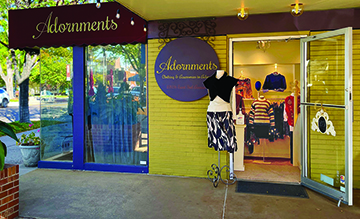
Shopping Season: Cherry Creek boutique Adornments on E. 3rd Ave. is known for its unique and artistic fashions. Spring womenswear by Igor Dobranic — designer behind the IGOR fashion brand — is among spring selections on display, at right.
es. Information: 303-321-7992.
Offering a distinctive assortment of top women’s designer and contemporary collections from all over the world, MAX Clothing at 250 Columbine is considered one of the district’s style leaders. Information: 303-321-4949.
One of the Valley’s most iconic men’s and women’s specialty stores is Lawrence Covell established in 1967. Located at 225 Steele St., many fashion brands make their Colorado and, in some cases, national debut here. Whether you’re looking for preppy, eclectic, Bohemian, sexy, conservative, classic, or hipster they offer something special and different. Information: 303-320-1023.
Red Rock’s 75th Easter
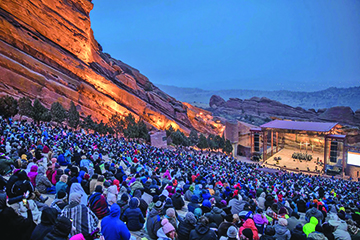
Following a virtual service last year, the 75th Easter Sunrise Service at Red Rocks Amphitheatre — the most renowned sunrise service in the nation — will rise again as an in-person gathering on April 17. Gates open for the non-denominational service at 4:30 a.m., music begins an hour later, followed by worship service at 6 a.m.
Rockin’ Red Rocks Easter: Following a virtual service last year, the 75th Easter Sunrise Service at Red Rocks Amphitheatre will rise again as an in-person gathering on April 17. Gates open at 4:30 a.m., worship service begins at 6 a.m.
As the sun begins to rise above the naturally occurring geological phenomenon — this year at 6:19 a.m. — a capacity crowd is expected. The Colorado Council of Churches will again produce magnificent music and a stunning sermon that changes the jaw-dropping sunrise into a performance not to be missed.
The Rev. Dr. John Yu, lead pastor of Aurora’s True Light Community Church, will deliver this year’s gospel message in the dramatic setting. He is the 2022 president of the Pastors’ Assn. of Korean
Churches in Denver and serves on the National Caucus of Korean Presbyterian Churches. Information: 303-825-4910.
The Valley’s other major Sunrise Service is the Western States Easter Observance at the Denver Scottish Rite Masonic Consistory, 1370 Grant St., 6-9 a.m. Seating 500, the Consistory is a unique worship experience. Moreover, attendees can enjoy a hot breakfast in the Consistory’s dining room following the worship service. Information: 303-861-4261.
Scrambling For Eggs
Glendale Sport Center’s Easter Egg-stravaganza is at Infinity Park’s turf field April 9, 10 a.m. Bring your camera and Easter Basket for the free event that has three prize eggs with special surprises. Event features three age groups — ages 0-3, ages 4-6, and 7-13, all startin

Catwalk Glam: Flashy, flamboyant and feminine fashion flares into an Easter parade of runway shows this month. Photo is from Glam Night during a prior Denver Fashion Week. The seven nights of glamour with 250 models is April 3-10.
g at the same time. Information: 303-639-4711.
Stapleton’s annual Egg Scramble is April 9 at Runway 35, 10-11:30 a.m. Children ages 0-5 start at 10:05 a.m. with one parent allowed per child. The next wave is at 10:20 a.m. for ages 6 and older (parents not allowed). Event has an Easter bunny, food trucks, a magician, a balloon artist, and a face painter.
Cook Park Recreation Center hosts a Bunny Eggstravaganza on April 16 at the park on Cherry Creek S. Dr. from 10:20-10:50 a.m. Take pictures, play games, and go on an Easter egg hunt. Information: 720-865-3400.
by Mark Smiley | Mar 18, 2022 | Main Articles
Audit Of City Council Operations Muzzled By Gilmore, Torres; Council Strips Auditor’s Subpoena Power After Suit To Force Audit
by Glen Richardson
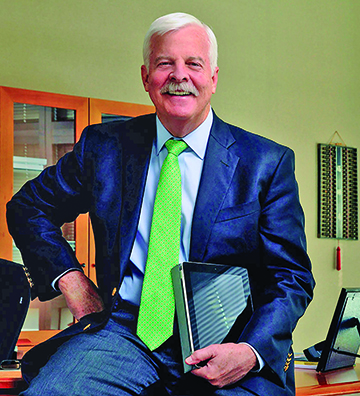
Watchdog O’Brien: Pending audit of City Council operations has been halted by Auditor Tim O’Brien, CPA, because leadership refuses to comply with required audit standards.
Efforts by Denver’s top watchdog — City Auditor Timothy O’Brien, CPA — to begin a pending audit of city council operations stalled because the leadership refused to allow his office to comply with required audit standards. The audit had been planned for more than a year after some of the council members requested the audit. As the Chronicle went to press O’Brien sued City Council to force an audit and as a result Council members voted to repeal the existing subpoena power ordinance (see sidebar article on page 4).
O’Brien insists that interviews with council staff members be conducted without their bosses nosing in. Each city council member receives $264,000 to pay the salary of staff and to operate their office. Council President Stacie Gilmore and President Pro Tem Jamie Torres, however, refuse to allow staff interviews without a senior staff member or an attorney present. Gilmore says they will work with the Auditor’s Office to “resolve the issue in the next year.”
That’s apparently how long the duo and newly appointed City Council Executive Director Bonita Roznoa think it will take to correct or cover-up problems O’Brien and his staff might uncover. Appointed in January, she fills the revolving door position that has been vacant since Aug. 2020 when her predecessor was fired after less than a year in the position. The position oversees the six legislative service staff, helps with budgeting, plus other personnel functions. She was council operations manager for Sacramento, Calif.
Menacing Bosses
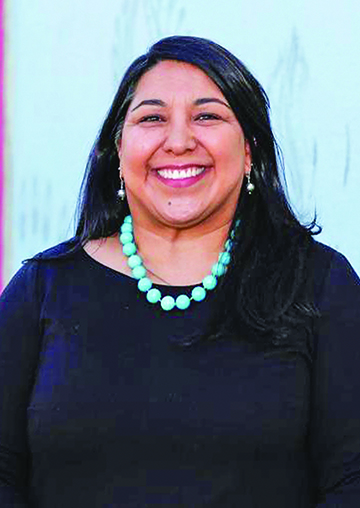
President Pro Tem Torres refuses to allow City Auditor to interview staff without a senior staff member or an attorney present.

Council President Gilmore
“Council leadership won’t allow their own staff to have open and honest conversations with my audit team,” Auditor O’Brien explains. “This intimidating behavior throws a wet blanket on our audit work.”
Consider, as an example, a council boss or lawyer interrupting an interview with, “what he or she meant to say…” — just as the audit team was questioning something suspicious or agenda squabbling. What a nerve-wracking weight it would have on a staffer that was about to become a whistleblower.
“My authority as auditor comes from the people,” Auditor O’Brien continues. “The people voted to update the charter and require that we follow Generally Accepted Government Auditing Standards. This requirement is not subject to change by the City Council.” He adds that conducting unrestricted interviews with staff is a standard step in performance auditing.
Out Of Sync Values
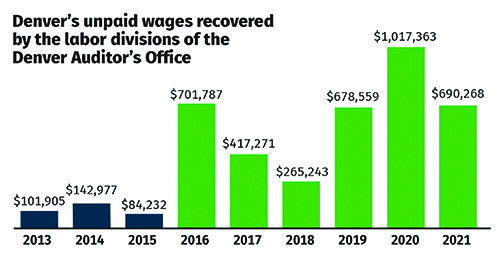
Wage Recovery: The labor division of Denver Auditor’s Office has recovered more than $3.7 million in unpaid wages in the last six years.
In an era of increasing public scrutiny of city services and integrity, performance
auditing provides critical information needed for accountability. There are currently city auditors in 116 major cities in the U.S. and Canada.
O’Brien says that while other city agencies have made similar requests, his office is typically able to explain why having a staffer present during interviews is not appropriate and persuade the agency to agree. “I hope they talk it over and change their minds,” he concludes. “I can’t conduct the audit under their standards. That doesn’t make sense.”
Local citizens the Chronicle talked to agree: “They’re out of sync with the core values of Denver. Those in elected positions should be truthful, frank, and candid. That’s what we expect of them plus it’s part of their job. It’s also why voters elected them.” A few added they fear this kind of cageyness would lead to increased public mistrust of Denver’s city government.
Subpoena Power Stalled
The City Council’s Finance & Governance Committee directed by Chair Kendra Black and Vice Chair Robin Kniech has likewise rejected — at least temporally — Auditor O’Brien’s request for subpoena power. They halted forwarding the proposal to the full city council for approval but agreed to reconsider on April 20.
O’Brien is seeking the subpoena power to speed up audits of outside groups that receive money from the city — the Denver Zoo and Denver Art Museum are examples — plus private companies accused of violating minimum-wage laws. O’Brien says delaying those audits costs the city about $10,000 per week.
The Downtown Denver Partnership, Metro Chamber of Commerce, and Colorado Competitive Council oppose the measure. The business groups say the 21-day response time the bill allows them is too short. They’ve also expressed concerns about city government demanding payroll records from businesses. The council committees want O’Brien to meet with the groups to discuss their concerns before allowing the proposal to move forward.
Chat Changer
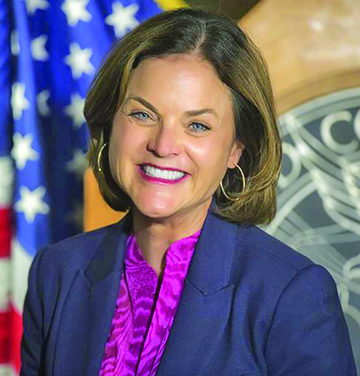
Subpoena Brownout: Finance & Governance Chair Kendra Black has at least temporarily refused to forward Auditor’s request for subpoena power to the full city council for approval.
Councilman Jolon Clark said he was worried information gathered through subpoenas might be leaked to the public by an audit. O’Brien, however, noted that when investigating wage complaints, none of the information has made it into the hands of the general public. Moreover, he adds that almost all companies accused by credible wage-enforcement complaints cooperate with the city.
Furthermore, O’Brien says that the new authority his office would get will assure that minimum wage and city contract cases he gets but is unable to resolve could come to a conclusion. “I think subpoena power changes the conversation,” O’Brien conveyed to the committee. “It puts the burden on the agency or the contractor.”
District 10 Councilman Chris Hinds — he represents Cherry Creek, Cap Hill, Cheesman Park, Country Club, the Golden Triangle, and Speer — says he likes the bill. But he adds, because O’Brien didn’t initially meet with business owners representing the trio of groups, “I too would be willing to keep this in committee.” Elected in a 2019 runoff, he will be up for reelection in 2023.
Digging Into Deals
The potential audit setbacks, however, aren’t slowing down the forceful O’Brien. He’s swinging big with nearly a dozen 2022 city audits. He is taking on some of Denver’s most pressing issues: How the city is managing homeless camps, residential permitting, and affordable housing.
He’s also diving into campaign finance, Denver Human Services’ child welfare placement system, plus the city’s recycling and composting programs. His agenda also includes audits of the Denver Museum of Nature & Science and Denver Water.
“Our residents are letting us know what’s most important to them, and I applaud the widespread interest in our city’s key issues,” O’Brien states. “We take the time needed to do our due diligence and fact-checking, while adhering to generally accepted government auditing standards as required by the city charter. This is how the public knows our work is of the highest quality and can be trusted.”
Subpoena Brownout: Finance & Governance Chair Kendra Black has at least temporarily refused to forward Auditor’s request for subpoena power to the full city council for approval.
Auditor Sues To Force Audit; Council Retaliates By Stripping Subpoena Power
Denver Auditor Timothy M. O’Brien filed a lawsuit to rectify the damage caused by the Denver City Council’s ordinance amendment that improperly restricts independent audit work. The City Council quickly retaliated by repealing the existing subpoena power ordinance and thus preventing an audit.
The City Council voted 11 to 1 to revoke the subpoena powers, with the lone “no” vote by Councilwoman Candi CdeBada. Acknowledging the Council chose to repeal the existing ordinance, O’Brien told the Chronicle in mid-March: “We are aware of plans in the weeks ahead to discuss restoring the subpoena power to our wage investigation work. I hope to work with council to find a solution that works for everyone.”
As for the Audit Services Division he adds: “As I have said previously, we already have the right to all records we need without restrictions, according to the Denver Charter and contract audit clauses. However, without the subpoena power to speed the process up, we will have to go back to working as we were before.”
by Jessica Hughes | Mar 4, 2022 | Main Articles
By Jessica Hughes
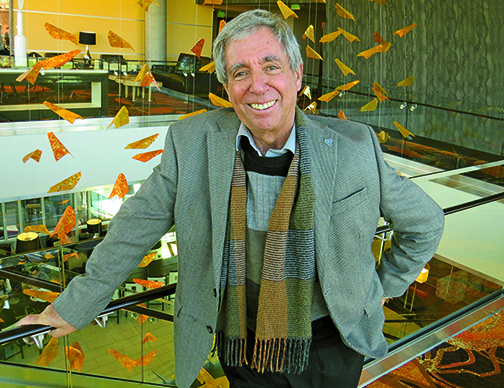
Community Icon: Larry Ambrose was a revered member of the Denver community and will be deeply missed by all who knew him.
Longtime Denver neighborhood advocate and former INC (Inter Neighborhood Cooperation) President, Larry Ambrose, passed away quietly in hospice care after his battle with cancer, on January 28, 2022.
A Pueblo native, Ambrose began his education in business with a Bachelor’s Degree in Marketing from CU, an MBA from UCLA, and a JD from the University of Denver. He started his career in the glitz and glam of Hollywood as a cabaret manager, producing a variety of shows and events, some of which made their way to CU Boulder.
For nearly 50 years, Ambrose had been involved in the formation and advocacy of Denver neighborhood groups when he and his wife, Jane, started Northwest Neighbors. Within those 50 years, he co-founded the Sunnyside Highland Jefferson Park Neighborhood Association, the INC Parks committee, and (with his wife) the Sloan’s Lake Neighborhood Association, where he served as Vice President.
With a passion for saving historic buildings in Denver, Ambrose was intrinsically involved with projects preserving Denver neighborhoods. One such initiative was a movement for citywide building height control back in the mid-1980s, where he co-chaired. He helped to preserve historic buildings in the Highlands, and most notably, he is known for moving the Golda Meir House at the Auraria Campus from total destruction to a fully restored structure now placed on the National Register of Historic Places.
Many of his contributions came through during his time at the INC where he served on the board for nine years as Secretary, Vice President, and President. Ambrose also served on numerous city planning committees and task force groups, including his time as an INC representative to the Visit Denver Olympics Civic Engagement subcommittee. Plus, he served as Executive Director for Southwest Improvement Council, whose purpose is to improve living conditions for its residents through civic engagement, health and human service programs and affordable housing.
In 2021, Larry was awarded the Inter-Neighborhood Cooperation’s Lifetime Achievement Award for his work in the surrounding communities. With this award, the legacy of Larry Ambrose will live on with his “lifetime” commitment to tackle the betterment of Denver neighborhoods.
Those who knew Larry well, spoke of him with warm words and true admiration. Bridget Walsh, who was a friend and dedicated advocate alongside Larry at INC, remembers him fondly. “He was one of our public voices for the community,” says Walsh. So much so, he had been encouraged to run for Mayor. Walsh and Ambrose were partners in many community initiatives, one of which was to stop the Denver Zoo from giving recycled water to its elephants.
“He was so smart and able to present issues in an approachable way. Larry would say the most damning things with the biggest smile on his face,” recalls Walsh, “a true advocate for the neighborhoods he served.”
Another close colleague at the INC, Jane Lorimer, reminisces about Ambrose saying, “He was a positive force for parks and open space. His dedication to an institution that advocated for neighborhoods was sincere and passionate.” A cancer survivor herself, Lorimer recalls when he was diagnosed a few years ago, “We could talk through treatments and our feelings together. His optimism and positive attitude gave him extra time with those he loved. I will miss his humor, insights, leadership, and friendship.”
Toward the end of his life, Ambrose participated in clinical trials when conventional treatments were exhausted, leaving behind his own legacy not only in how he valiantly fought for his community but also for those suffering from a similar diagnosis.
Larry’s funeral was held at Fairmount Cemetery on Tuesday, February 1, 2022. A celebration of his life will be held in early March. Cards can be sent to 1750 Meade St., Denver, CO 80204, and donations can be sent to One Sky One World at P.O. Box 11149 Denver, CO 80211.

by Regan Bervar | Mar 4, 2022 | Main Articles
“The road to hell is paved with good intentions.” English proverb
 by Luke Schmaltz
On a typical day, Dwayne Peterson awakens at 4 a.m. to go to the gym. Until recently, he would begin his day at the Colorado Village Collective (CVC)-run housing facility known as Beloved Community Village (BVC) in Denver’s Globeville neighborhood. On his way out of the gated “tiny home” enclosure, he would regularly witness other residents getting high on illicit substances, engaging in the trade of illegal drugs, and selling packages of dope through the chain-link fence. “I chose to get up early and leave the premises for the day to minimize the amount of interaction I would have with other residents,” he explains.
Peterson is a longtime Colorado resident who attended CU Boulder for undergraduate and postgraduate studies. He is a professional ballet dance instructor, teaching students of all ages and ability levels through his company, This is Dance, LLC. Four years ago, his landlord of 17 years sold the house where he was renting an apartment. The property was quickly slated to be demolished — leaving Peterson and four other residents suddenly unhoused.
An Unwelcome Guest
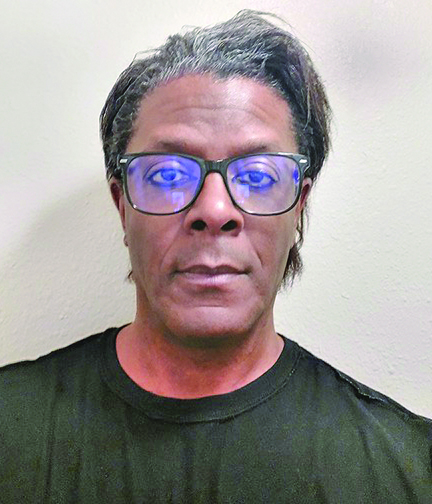
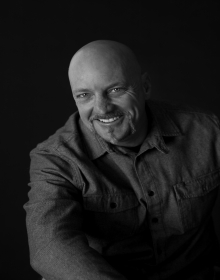
Dwayne Peterson encountered racism, violence, a death threat, and other adverse conditions at the CVC’s Beloved Community Village. Image courtesy of Dwayne Peterson
Peterson is sober with no criminal record and has never been a drug user — nor has he ever been diagnosed for mental health conditions. These factors not only made him an outcast among the BVC residents, but also made him the target of stalking, death threats, and racial attacks — which ultimately forced him to move out for the sake of self-preservation. “I was in an altercation the first day I moved in,” he begins. “There are constant disputes among residents because of the drug economy and the problems which inevitably arise” he explains.
At weekly BVC resident meetings, “there were heated disputes and physical altercations,” Peterson says. While he was quick to voice his concerns about the nonstop illegal activity, the resident-on-resident fighting, the all-night noise, and the open use of drugs — his protests fell on deaf ears as he was ignored by administrators and harassed by fellow residents. He could not shake the feeling of being constantly scrutinized by his neighbors as a non-drug user. Essentially, he was seen and treated as a rat.
Looks Great On Paper
CVC is headed by Cole Chandler, an ordained minister with a Master of Divinity (M.Div.) degree from Baylor University. He runs a non-governmental organization on a mission to “bridge the gap between the streets and stable housing by creating and operating transformational housing communities in partnership with people experiencing homelessness.” The CVC website further states, “We embody radical solutions to homelessness: housing that centers human dignity, empowerment of marginalized voices, and design solutions that are affordable, sustainable, and community oriented.” While the part about “radical solutions to homelessness” is definitely true, the rest — according to Dwayne Peterson’s eyewitness accounts — is window dressing at best.
Not What It Seems
Peterson firmly states, “Cole Chandler is lying to you. Plain and simple. The BVC is just a haven for criminal activity — a sanctuary for people to openly engage in crime — a contamination of resources and the community as a whole.” Peterson repeatedly went through the established CVC protocol for filing complaints about other residents who were making meth on site, preparing other drugs such as cocaine and heroin for distribution, and selling them directly from the property. “There was trafficking between residents and outsiders,” he says. “Exchanges were taking place right through the fence. People would drive up, make the trade and the customer would either drive off or just sit there and get high in their car before leaving.”
Blatant Disregard
When Peterson would file a complaint through the on-site “complaint portal” he would then receive notice that the situation was being investigated. “What would happen,” he states, “is that an administrator would knock on the resident’s door and casually tell them there was a complaint against them without having a discussion or conducting an investigation of the premises in question.” Essentially, the offending party was given ample time to cover their tracks, remove evidence, and come up with an excuse as to why they were being accused of drug trafficking, assault, etc. Peterson maintains, “These were haphazard investigations with unsubstantiated conclusions.”
Another instance of negligence on the part of CVC/ BVC staff occurred late one night when an outsider climbed over the fence and jumped into the enclosure to pursue a resident. An altercation ensued followed by a fight and the intruder stabbed the resident. “There was blood all over one of the decks,” Peterson explains. “Then, staffers started cleaning up the crime scene without even calling the police. The Tiny Home Village Director, Dorothy Leyba, was on site and said to a protesting Peterson, ‘We will handle this internally.’”
Rampant Racism

The CVC hosts Lifepoint Needle Exchange so their SOS residents can have plenty of fresh supplies for shooting up illicit, highly addictive drugs. Image courtesy of: Dawn McNulty
In an open letter to law enforcement and all others who should be concerned with his plight, Peterson describes a racially hostile environment where Caucasian residents repeatedly harass, threaten, and use racial slurs against African-American residents like himself. “I know of two previous individuals of color who resided at Beloved “Community” Village [who] left not because they located housing but attributed their weariness to being violated by Caucasian individuals residing at this emergency homeless shelter,” he writes. In the same letter, he elaborates further, “A current individual of color residing at this emergency homeless shelter, who continues to be violated by Caucasian individuals residing at Beloved “Community” Village and their guests, is reticent to communicate their being harassed. This individual believes [that by] reporting their being violated that they will be evicted.”
During the two years he lived at BVC, Peterson’s vigilance placed him in the crosshairs of one particularly aggressive Caucasian resident. “This person called me ‘a f***ing n***er’ and threatened to kill me by shooting me with a gun,” he explains. In the aforementioned letter, Peterson states, “I report these crimes to the city of Denver, law enforcement, and Denver City Council. Beloved “Community” Village staff, Cole Chandler, and Colorado Village Collaborative, et al have not performed their due diligence investigating these crimes. In ignoring the individuals committing these crimes, Colorado Village Collaborative, et al has only emboldened these individuals to continue their nefarious and insidious activities and lifestyles. Cole Chandler, regardless of the funding Colorado Village Collaborative, et al is receiving, is lying to the public and those he engages for funding.”
At The Crossroads
Peterson estimates that during the time he resided at BVC, he made at least 50 complaints with the Denver Police Department. “Nothing was ever done,” he explains. “That’s why I started blanketing Denver with what’s going on in BVC.” Drawing on his postgraduate-level college education, the well-spoken Peterson has drafted and sent articulate letters explaining the conditions, the lawlessness, and his specific circumstances to news outlets, lawmakers, government officials, law enforcement, and more. Peterson has recently been featured in articles by The Denver Post, Westword, and other publications. “Before I left,” he says, “They [CVC staff] became more aggressive towards me. They don’t want me talking to the Denver City Council or the press.”
At the time of this interview, 02/04/2022, Dwayne Peterson had been out of the BVC/CVC system for just two days — speaking from the parking lot of a Denver motel. His frustration is palpable, as he weighs his options for the foreseeable future. The irony of his situation is truly baffling, as a plethora of local agencies such as Colorado Coalition for the Homeless, St. Francis Center, and many others have refused to give him assistance because he is “high functioning” and “low risk.” “I was told by Colorado Coalition for the Homeless that I can’t be helped because I don’t have any problems,” he says.
To compound matters, Peterson has been diagnosed with cancer and is wary of overnight shelters. “They are unsanitary and unhygienic (think Hepatitis A, B, and C). Homeless shelters, in general, invite disease and violence,” he states. Additionally, and it should go without saying — the Covid-19 pandemic has made it difficult, and at times impossible, for Peterson to run his business which is built on in-person learning.
Reach Out
In yet another effort to remedy his situation, Peterson has started a GoFundMe campaign to raise funds so that he can secure long-term housing without having to endure the deplorable conditions in places like CVC’s properties and overnight shelters. Concerned readers who are interested in helping Mr. Peterson can donate here: https://www.gofundme.com/f/seeking-to-secure-housing.
Proliferation Of Dysfunction
Across town, the battle for the sanctity of the Lincoln/La Alma neighborhood continues, as Dawn McNulty — a resident of the adjacent Baker neighborhood — continues to fight the CVC’s recent installment of a Safe Outdoor Space (SOS) at 780 Elati St., on the outskirts of the Denver Health and Medical Center campus. Among her many concerns is the glaring reality that this property is governed by the same policies as the CVC’s other villages — including the BVC — former home of Dwayne Peterson. The fact that the Lincoln/La Alma SOS is within 1000 feet of three Denver Public School properties is in itself cause for alarm. “This is a bipartisan issue with well-intentioned, compassionate people working on both sides,” McNulty explains. “We must demand more of our city’s officials to ensure public health and safety. SOS sites are an incubator for crime and disease.”
Citizens for a Safe and Clean Denver do not want addicts and people with mental illness living next to schools and families with children. Image courtesy of Terry Hildebrandt, PhD
McNulty and fellow citizens of a group known as Citizens for a Safe and Clean Denver are staunchly against Safe Outdoor Spaces. They intend to address and remove the glaring oversights and extreme safety hazards to neighborhoods populated by families with children. As it turns out, their fight just got a whole lot tougher, as Denver City Council recently voted to allot $3.9 million of Denver taxpayer money to Cole Chandler and CVC so that they can install more city-sanction drug camps. If you think this issue doesn’t affect you, think again. An encampment of mentally ill, drug-addicted, illness enabled people could be coming to your zip code very soon. These folks do not stay in the camp all day, so they will most certainly be dropping by for a sprawl and an afternoon dope fix on your front lawn. Welcome to the new Dystopian Denver.
Adding insult to injury, the CVC enables the use and injection of illegal drugs by allowing Lifepoint/Vivent Health to distribute — for free — supplies such as syringes, needles, tourniquets, cotton swabs, cookers, and sharps containers to residents of Safe Outdoor Spaces. Also, should their assisted addiction service prove to be too effective, they supply Narcan for overdosing addicts and Fentanyl testing strips for suspicious-looking illegal narcotics that are well known among users to be deadly. Saintly enablement indeed.
Your Tax Dollars Not At Work
Meanwhile, Dwayne Peterson’s parting statements are stark, harrowing, and ring as true as the pavement under his feet. “Homelessness is being managed, not rectified. What astounds me is that no matter how much money is being thrown at it, it keeps getting worse.”

by Mark Smiley | Mar 4, 2022 | Main Articles
Glendale Launching 10-Acre Entertainment Site; Denver Planning Massive Office/Apartments/Condos On 13 Acres Of Cherry Creek Shopping Center
by Glen Richardson
Entertainment Anticipation: Glendale’s Four Mile Entertainment District is finally breaking ground this year. A concert venue, movie theater, restaurants, shops, a proposed gaming hall, a 200-room hotel and more will make the venue one of the state’s top entertainment sites.
Just 1.8 miles apart, along the north bank of Cherry Creek, two massive projects are starting to go through the respective planning processes in Glendale and Denver with very different markets in mind. In Denver, 13 acres of retail space of the Cherry Creek Shopping Center will be converted into seven 12-story tall buildings composed of offices/condos/apartments. Conversely, the Glendale Planning Commission is expected to approve a 10-acre $150 million retail Entertainment District along its portion of the north bank of Cherry Creek this month.
Destined to become Colorado’s most unique entertainment locality, the 10-acre site now officially named the Four Mile Entertainment District is finally set to break ground in 2022, provided the Glendale City Council also approves the project at its May 2022 meeting. In Denver, the $1 billion redo of the west end of the Cherry Creek Shopping Center is just beginning the planning process, with the project projected to take up to 12 years with the first phase possibly completed in five years.

Corridor Sign Concept: Rendering illustrates what the entrance to Glendale’s Four Mile Entertainment District might look like along Colorado Blvd.
GLENDALE PROJECT
The Four Mile Entertainment District, along the banks of Cherry Creek, is bounded by East Virginia Ave., South Colorado Blvd., and South Cherry St. Plans call for the project to feature a vast array of choices including a 40,000-sq.-ft. live music site, an Alamo Drafthouse Cinema, plus restaurants and pubs.
A new 200-room resort hotel with an outdoor plaza, plus exclusive retail shops and a proposed app-based sportsbook gaming hall are also planned.
One-Stop Spot
The project is being designed as a one-stop destination where friends and family gather, take a date, or just relax at the adjacent resort hotel.
Valley residents and visitors can stroll tree-lined streets, shop, liste

Alamo: Rendering shows the Alamo Drafthouse Cinema owned by developer Central Street Capital which will be an anchor in Glendale’s Four Mile Entertainment District.
n to music, or relax in landscaped outdoor plazas. Multiple indoor and outdoor restaurants will offer casual and fine dining options.
The district will feature a common consumption area where patrons can purchase drinks from different bars. With Glendale’s liberal last-call laws, clientele can buy drinks until 4 a.m. Moreover, Glendale Deputy City Manager Chuck Line suggests the area could also become the site of “Oktoberfest-type events” once the district opens.
Drive, Bike, Or Jog
Glendale and Denver take very different approaches to parking. Car friendly Glendale intends to mandate an abundant amount of parking spaces for its Entertainment District. Unlike many entertainment sites, visitors will have no trouble parking. Two large parking structures will be located within the district, and there will be a dedicated drop-off-pick-up area for Uber and Lyft.
Bordered on the southwest by Cherry Creek and its popular trail, visitors can easily walk, jog, or bike to the district.
Glendale is already Colorado’s destination for rugby and also houses some of the state’s leading event venues. In addition to the sports stadium, the enclave’s 16-acre Infinity Park is an indoor-outdoor entertainment hub.
Returning To Roots
“For the last decade, we’ve been working on trying to get this project going,” acknowledges Line. The development is designed to once again make Glendale the Cherry Creek Valley’s dining, drinking, and entertainment hot spot.
Many Valley old-timers still recall Cork ‘n Cleaver, Colorado Mine Company, The Lift, and other food and beverage spots that blossomed in Glendale’s earlier heydays. By developing the site as the Four Mile Entertainment District — Colorado’s entertainment stage stop — the transformation project will try to recapture Glendale’s bygone spirit.
Initially dubbed “Riverwalk,” the site was later named “Glendale 180” under a second false start by Lincoln Properties five years ago. Under a deal approved by Glendale’s City Council last summer, Denver-based Central Street Capital led by Rob Salazar, CEO-Founder, will develop the 10-acres of city-owned land. The investment management company invests only the funds of the family and its affiliated entities. The firm has invested in a wide variety of industries for more than 25 years. Information: Info@GlendaleEntertainmentDistrict.com.
DENVER PROJECT

Casual Connection: Vision of proposed green space with amphitheater that would connect the Cherry Creek Shopping Center’s proposed west end to the mall’s retail space on the east.
While it hasn’t been easy for shoppers and residents in crane-studded Cherry Creek North over the last few years, a mammoth skyline-altering mixed-use project named Cherry Creek West will potentially be a different story. Plans for redevelopment with a $1 billion budget for the west end of the Cherry Creek Shopping Center will make the site much taller and denser, and will face significant parking and traffic challenges.
The big changes unveiled by East West Partners as 2022 commences would add office, residential, and retail in seven structures up to 12 stories tall on about 13 acres of land at the west end of the mall. A public amphitheater with green open space will connect the Shopping Center’s east end retail space to the new development.
Makeover is expected to start with four buildings that will have approximate

Mammoth Project: Rendering submitted to the City of Denver by East West Partners shows a layout of seven 12-story buildings to replace the Cherry Creek Shopping Center’s west end with offices/condos/apartments. Parking and traffic challenges are expected to be significant.
ly 780,000-sq.-ft. of office space, plus three condo-apartment homes with about 600 units. Each structure will also have retail space. The buildings will range in stature from eight to 12 floors, or 100 to 160-feet-tall.
West End Empty
Veteran Denver-based East West Partners, whose projects include Riverfront Park and Union Station, has a leasehold with owner Buell Foundation and mall owner Taubman on the 13 acres.
The project is planned from University Blvd. on the west to Clayton St. and from First Ave. on the north to the Cherry Creek waterway. Construction of a “landscape bridge” along a section of Cherry Creek North Dr. will provide pedestrian access to Cherry Creek.

Working Wonders: Staff of developer East West Partners study images and development plans for building, landscaping, appearance, mass orientation, and usage details for creek site.
Existing mall structures on about 2.7 acres will be demolished before construction begins. That is approximately half of the new construction area site. The additional development plot is currently parking lot space. Subsequent to the decision by Bed Bath & Beyond to relocate from the mall’s west end to Glendale in 2016, the west side has been mostly vacant. Soon thereafter Macy’s Furniture Galleries and The Container Store relocated to the east end of the Shopping Center. Only Elway’s and the Boulder Running Company remain on the west side.
Talks Began In 2015
Talks between East West Partners and Taubman about the project began in 2015. By 2019 the discussions became serious with both Taubman and the Buell Foundation in 2020, according to Amy Cara, managing partner of East West Partners. Cara, managed the Denver Union Station transit hub redevelopment and much of the adjacent residential and office.
Cara expected the city to begin its review of the plan and new zoning for the property by January 2022, or earlier. She also indicates the developers will work with their traffic engineers and the Department of Transportation & Infrastructure on the very significant impacts from traffic and construction.
Other companies that will work on the massive project include Gensler, Design Workshop, and BuildMark.
by Regan Bervar | Jan 21, 2022 | Main Articles
“The smallest of actions is always better than the noblest of intentions.” — Robin Sharma
by Luke Schmaltz
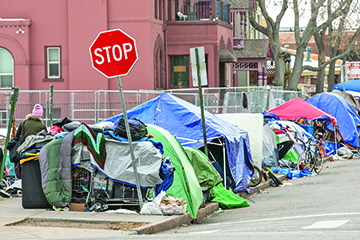
Tent-lined streets, debris-strewn sidewalks, and people languishing amidst it all — either injecting illicit drugs, relieving themselves, or walking around naked — have become unfortunate characteristics of central Denver.
According to an August 2021 report published by the Metro Denver Homeless Initiative (MDHI), 5530 individuals were unhoused or experiencing homelessness in Denver. These numbers reflect a February 2021 Point-in-Time (PIT) count, which may have fallen short of the actual numbers due to the safety issues of collecting in-person data due to Covid-19.
Of this populace, some turn to one of the numerous shelters across the greater downtown area. Others choose to “live on the street” in one of the many unsanctioned encampments in and around the city center and beyond. Yet others — perhaps the more fortunate of the destitute — have found temporary shelter in a Safe Outdoor

CVC: Colorado Village Collective is the purveyor of Safe Outdoor Spaces.
Space (SOS). The latter is a relatively novel form of addressing homelessness, and in Denver the primary administrator of such sites is known as the Colorado Village Collective (CVC).
The CVC is a Denver-based nonprofit led by ordained minister Cole Chandler, a Baylor University graduate with a Master of Divinity (M.Div.) degree. This NGO’s (non-governmental organization) boilerplate states, “Colorado Village Collaborative (CVC) exists to bridge the gap between the streets and stable housing. CVC is working to advance dignified solutions that significantly reduce Denver’s unsheltered homelessness population. Since its founding in 2017, CVC has launched five transformational housing projects, including two tiny home villages and three Safe Outdoor Spaces that have provided more than 54,815 nights of safe, dignified shelter in partnership with people coming from homelessness.”
An Honorable Pursuit
Currently, CVC maintains three Safe Outdoor Spaces. One is located on the Regis University campus in Northwest Denver, another at the Denver County Department of Human Services, 3815 Steele St., and a third, more recent site at 780 Elati in the Lincoln/ La Alma community on Denver Health and Medical Center property. This installment was pursued, in part to replace the Park Hill SOS (previously located at the United Methodist Church), and in part to offset removal of the large, unsanctioned encampment at the Four Winds American Indian Council at 5th and Bannock St. in the Baker District.
Jennifer Forker, M.Div., is the organization’s Development and Communications Director. She agrees that her organization had a busy 2021, stating, “We served nearly 300 people [last] year, a 300 percent increase over [the previous] year. We aim to serve more than 400 people in 2022. Our outcomes for 2021 include assisting 17 tiny home village residents and 47 SOS residents into more stable, permanent housing.” Forker also maintains that, “The city and the mayor have supported our emergency, temporary housing model, and we have a new contract to operate Safe Outdoor Spaces going before the City Council this month. We hope to have their support so we can carry on with our mission.”
Trouble In Paradise
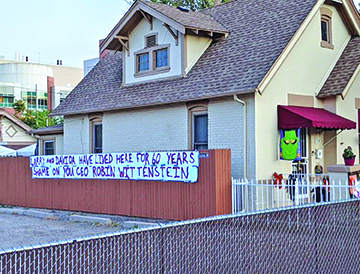
Opposed: Neighbors of the Safe Outdoor Spaces site at 780 Elati do not approve of Denver Health’s new installment.
At first glance, the CVC’s mission statement, their accomplishments, and the Denver city government’s endorsements are impressive. Yet, the SOS model is drawing scrutiny and outright criticism from residents and community leaders alike — particularly the most recent installment at 780 Elati St. The standout issues arising from the SOS model include concerns about neighborhood safety, the presence of undisclosed sexual predators, sanctioned use of illicit drugs, and inadequate solutions for citizens — people with addiction issues and mental health conditions — who require long-term comprehensive care.
Blame for the perpetuation of these concerns is aimed not only at the CVC, but even more so at Denver’s city government at large. Concerned local resident and native Coloradan Marc Spritzer sums it up succinctly, stating, “The city is, in my estimation, derelict in its duty to govern. They only enforce the laws they want to, not all the laws equally. They are not protecting citizens, including the unhoused. I would say what they are allowing them to do is even more cruel in the long run than sweeps. This is all really poor leadership — the Mayor, the City Attorney, the DA, the Judges, the city council, the State Legislators, and the Governor all have a hand in this.”
Despite this viewpoint, Britta Fisher, executive director of Denver’s Department of Housing Stability states, “Denver’s Safe Outdoor Spaces are making a difference in fostering stability, serving as a refuge to help move people from homelessness to housing. With 24-hour staffing, sanitation, support, and a myriad of services, temporary managed campsites are clearly transforming lives in our community. We are fortunate to have the Colorado Village Collaborative leading this innovative model, and the Department of Housing Stability is working to provide more support for safe outdoor spaces.”
Battlefield: Baker
Meanwhile, Dawn McNulty is a married mother of two, a longtime Baker district resident and an outspoken leader in the effort to expose and counteract the oversights of Safe Outdoor Spaces. “I personally do not see the proposed Safe Outdoor Spaces [to be] the compassionate, humane solution to Denver’s homeless problem,” she says. “In my humble opinion, it’s an interim solution that takes the pressure off the public officials.”
McNulty lives near the site of a previous unsanctioned camp at the Four Winds Tribal Council Church at 5th and Bannock. She was vocal, vigilant, and relentless in her efforts to draw attention to the hazards therein. “There was a woman with children living in a tent, and several people in the encampment openly doing illicit drugs on a daily basis,” she states. “There was vomit, human feces, urine, and needles in and around the camp, and when school at DCIS Baker (Denver Center for International Studies) started back up, I personally contacted Jolon Clark (Denver City Council) and then the Mayor’s office,” she explains. Once the camp was set to be “swept” the 780 Elati space was offered up by Denver Health to assuage the pleas for options from the Four Winds Tribal Council.
According to McNulty and other prominent community figures, the site was chosen, approved by city leaders, and the SOS build initiated with little to no engagement with the surrounding community, in spite of the fact that nearly 50 residents filed a joint appeal opposing the site. “This is when my good friend that lives in the Lincoln/La Alma community swiftly filed the appeal,” McNulty explains. “There was very little community engagement and a significant lack of transparency in the speedy process of placing the SOS site.”
Refutation Abounds
Details of this appeal are outlined in a December 6th article published by Business Den.com. In it, author Eric Heinz writes, “The 46 nearby residents claim the permit was approved outside of the authority of the zoning administrator and that the site was approved without accounting for ways to control various nuisances, such as its proximity to single-family homes, secondhand smoke, noise, outdoor lighting, littering, and pet control. They [permanent-housing residents] also have concerns about odors emitting from the portable toilets, and say that a potential homebuyer decided not to purchase in the neighborhood because of the encampment.”
Further, the La Alma/Lincoln Park RNA (Registered Neighborhood Association) released a statement on November 22, 2021, providing an in-depth expose titled “CVC Refuses to Provide Assurances to Low-Income, High-Minority Neighborhood Residents.” Here, the RNA states, “The 780 Elati site is operationally unprecedented for CVC. CVC will be operating the TSOS (Temporary Safe Outdoor Space) for the longest period of any TSOS to date. It will have the highest number of shelters. It will have the highest population of any previous site. Despite these factors and the unique characteristics of the neighborhood, CVC is unwilling to provide meaningful assurances to the neighborhood, something it has done with other neighborhoods. Therefore, the RNA reports that CVC has failed to negotiate a meaningful Good Neighbor Agreement.”
Safety Last
Homeless Camps: Encampments across the city are expanding.
Meanwhile, McNulty is quick to illustrate her growing concerns about the new SOS site in the La Alma/Lincoln Park neighborhood. “81 % of Denver voters opposed camping,” she begins. “How are Safe Outdoor Spaces any different when they allow use of illicit drugs on site?” Contrary to this, The CVC’s Jennifer Forker plainly states, “We do not allow violence or drug use in our Safe Outdoor Spaces.”
McNulty, however, provides an outright rebuttal to this, stating, “CVC Section III(O) of the Drug and Alcohol Policy in the Operational Plan for the 780 Elati encampment acknowledges there will be drug use at the site, which specifically provides for harm reduction materials available throughout the site, biohazard containers [for needles], Narcan/Naloxone, and safe use literature,” she says. “CVC allows and enables the use of illicit drugs in law abiding, tax paying, Denver citizen communities. With the certainty of mental health issues amongst this population, there is extreme opportunity for erratic, unpredictable behavior and Denver City officials are in support of this?” An exasperated McNulty continues, “Unlike prior SOS sites, CVC was unwilling to agree to Felony/Child/Violent Sex Offender resident background checks for 780 Elati Street, the Lincoln/La Alma SOS Site. Per the Colorado Sex Offender Registration Act, CVC should be required to disclose this information.”
Among McNulty’s concerns, another glaring oversight is the possibility that untrained, unqualified CVC personnel may be staffing Safe Outdoor Spaces which are occupied by people with addiction and mental health issues — since CVC claims to have personnel on site at all times. “CVC self-manages their SOS environments with 24/7 support staff, minimizing the need for police intervention,” McNulty explains. “Yet, they are unwilling to disclose incident reports to the communities [in which] they reside. This is important health and safety information for communities where the SOS sites are located, as the [SOS] residents are free to roam these communities.”
Diagnostic Prognosis

Stepping In: CVC is doing the civic duty of the Denver city government.
Currently, what it all seems to add up to is a non-governmental organization doing important civic work for the homeless which an existing and capable city government is unable or unwilling to do themselves. In the process, taxpaying, law-abiding citizens are becoming deeply concerned for the sanctity of their communities while the SOS initiative — although worthwhile — is putting but a tiny dent in the overall issue of homelessness. Ironically, it appears that just about everyone involved has, more or less, the same interest in mind: to mitigate homelessness and curtail the inhumane conditions experienced by the unhoused. The issue is pervasive and has been a forefront concern for decades. Yet, the concerns have become nuanced — and groups from one neighborhood to the next want solutions that resonate with their specific concerns. This is an instance where solidarity between HOAs, neighborhood watch groups, the Denver Police Department, SOS providers, mental health experts, and — most importantly — homeless people — could create a sustainable solution for a long-term problem.
Not to be outdone, however, the Denver Department of Housing Stability (HOST) has alas, announced their own initiative. The “Five-Year Strategic Planning Efforts” addresses all of these issues and more. The 14-point plan includes goals to “Reduce unsheltered homelessness by 50%,” “Measurably end veteran homelessness,” “Reduce the average length of time residents experience homelessness to 90 days,” and much more. Whether they can achieve these aims after grossly underperforming in this arena for decades is a subject for deep speculation. But, if you’re a betting person, it’s best to anticipate a strikeout rather than a home run.